
As a surviving member of the ‘baby boomer’ generation that commenced with the rapid economic growth following the World War II, I think we are, in a broad sense, privileged to have witnessed and experienced the happenings and consequences of about 50 years in the 20th Century and about 30 years in the 21st Century. When contemplating on the term literacy and its traditional meaning of being able to read and write from an educational perspective, I feel it fitting to cite a few real-life cases, from way back, which make me to wonder whether the above interpretation of literacy is all encompassing.
a) My maternal grandmother, who was born in 1900, did not know reading or writing, a typical feature about the female folk in that era, especially in the remote villages. Despite this apparent handicap, she successfully managed the day-to-day administration of the paddy fields and the rubber plantation, including finances, and raised three children to become worthy human beings.
b) Then there were these three young people who had migrated to Colombo with minimal formal education and started their business in humble ways to become well recognised icons of international fame in the healthcare, confectionary and rubber footwear and tyres, respectively, the latter being related to my own core field, the rubber industry.
c) Last but not the least, the late Martin Wickremasinghe, born in the late 19th century, who attended school only up to the 7th standard, wrote hundreds of books on diverse subjects such as history, anthropology, sociology, religion and literature and several novels (some of which were translated to several languages), which rightfully recognised him as a well-respected scholar and the greatest writer in Sri Lanka.
While it may be futile to compare apples with oranges, I feel that literacy has a utilitarian perspective, which can change with the social context and the circumstances. With my manufacturing background, I see a close parallel of literacy and quality. Out of the hundreds of definitions available of the latter, ‘fitness for use and the level to which requirements are fulfilled’ is applicable to literacy as well.
When going through the available information on the subject, it is noted that ‘literate’ can be traced back to the early 15th century from the Latin word literatus, meaning learned, educated and lettered. Initially, literate meant someone who was well educated, learned and acquainted with literature, and over time, as basic schooling became more widespread, the word was adapted to describe the foundational skill of reading and writing. The Oxford Advanced Learner’s Dictionary defines literacy primarily as ‘the ability to read and write’. Two core definitions for the term are identified as Basic Literacy, the fundamental ability to read and write, and Specialised Literacy, the competence, knowledge or skill in a specific subject area in which common modern applications include:
a) Computer literacy: The ability to use computers effectively.
b) Financial literacy: Understanding and effectively managing personal finances.
c) Health literacy: The capacity to obtain, process and understand basic health information and services.
It could be inferred that we, the ‘baby boomers’, currently at an advanced stage in life, cannot do without the above basic literacies, and as a minimum, the routine health check such as blood sugar, blood pressure, LDL and HDL etc. to survive and lead active lives.
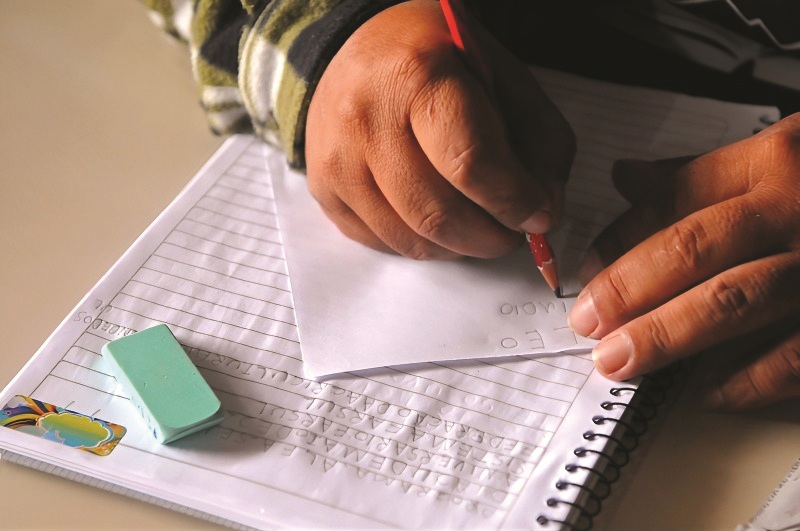
It is said that writing originated primarily out of economic necessity as the early agricultural societies grew and needed to track goods, taxes and trade. The evolution of writing from rudimentary clay tokens in to the world’s first independent writing systems in Mesopotamia, Egypt, China and Mesoamerica around 3200 BC to 3000 BC is a story that requires a deeper elucidation at a different forum.
Literacy is considered as one of the most important foundations of civilisation and has played a crucial role in human survival and existence both evolutionary and historically. However, instead of going into a deliberation of these foundational perspectives, I intend to offer some of my personal insights and recollections on this important subject over the past 60-plus years. I can recollect how at preschool stage, we were initiated into the basics of reading and writing using slates and slate pencils (made out of a silicious material) and the ‘black boards’ in the class room where chalk was used for writing. Literacy mainly meant the ability to read and write and, in later classes, in performing basic arithmetic. In schools and workplace, literacy was closely connected to formal education and subject knowledge. A literate person was one who could understand written communications, reads books and newspapers, write letters and maintain records and perform effectively in society. It was directly connected to social respectability and economic progress.
Literacy in English was considered as a rare virtue in countries which were under the British colonial rule. It was confined only to a few ‘high level’ schools in Colombo and in some major towns. Hailing from a rural background and having attended a small primary school in a remote town, I have first-hand experience of the panic and inferiority when I started secondary education in Colombo. This was especially true when we started studying for the Government (Ordinary Level Exams) in the science stream which was all in English. It was a struggle to get adapted and face the challenge, which I would say, I managed fairly well.
In those days, literacy was essentially confined to formal education and subject knowledge. Students were expected to memorise facts, understand texts and reproduce the information during the examinations. Books and libraries were the main sources of knowledge. Teachers were well recognised and respected as the primary sources of knowledge. And learning was generally a disciplined and structured process. And information, though limited, was relatively organised. I do not consider this as a deficiency or a weakness at all, because it fitted well with the societal and business expectations of those days.
I can well remember the day of my first interview seeking a job, which happened to be in the rubber industry. Instead of asking about isoprene or how the RSS (Ribbed Smoked Sheet) is made, although I managed to cram some information about the latter, I was asked about Ohm’s Law and how steel is made from iron ore. I was lucky because in our Advanced Level class, we had studied the above, and this paved way for a lifelong career in the rubber industry.
Literacy seems to be directly proportional to the rate of percolation or trickling down of the technologies to countries in our part of the world, and this was a rather slow process until the early eighties. However, mankind is evolutionary geared for ‘adaptive radiation’, which in modern jargon can be interpreted as how quickly we learn and get used to the new situations and contingencies as we meet new frontiers. According to the modern theories of cognitive learning, we acquire new knowledge through assimilation of new concepts (schemas) or by accommodation of incoming concepts into our existing knowledge. As an example, I can relate with my personal experience how my literacy in rubber technology evolved, starting as young trainee with very little knowledge on rubber. With the rapid development of science, technology and globalisation and artificial intelligence, the meaning of literacy has expanded beyond the traditional horizons.
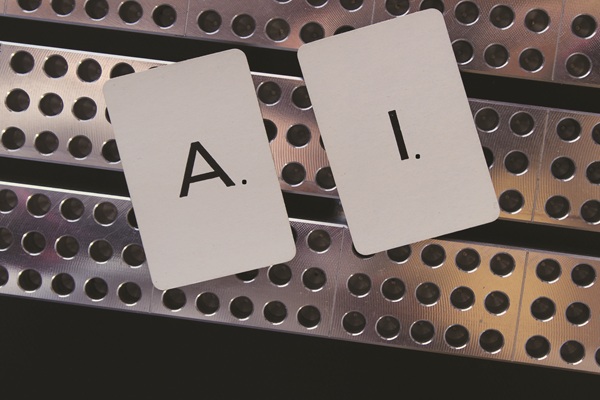
In contrast to the scenario of over 50 years ago, today’s literacy has grown to include cultural awareness, ethical understanding, workplace competence, computer literacy, digital communication and the ability to manage continually increasing volumes of information; some of them are very often recurring and sometimes redundant. Some key diversions are shown as follows:
a) Educational and subject literacy: While mathematical and scientific literacy, language proficiency and analytical thinking is essential, they go beyond memorising facts to effective application of the knowledge.
b) Cultural literacy: This has become increasingly important in this era of extending globalisation for respectful understanding and effective communications. This also includes awareness of history, religion, social values and traditions, which lamentably is declining amongst the younger generations.
c) Ethical literacy: This simply means the ability to distinguish the right and the wrong, social responsibility and taking morally sound decisions. Ethical failures can cause serious and disastrous consequences at the work place or the society.
d) Workplace literacy: Today’s workplace literacy includes communication skills, teamwork, time management, leadership, and most importantly, emotional intelligence and empathy.
Cognitive overload is another major challenge in this era of information wilderness where virtually every perceivable member of the community is inundated with vast volumes of information every moment, which often creates confusion. The human mind has limited capacity for attention and memory. Continuous digital distractions can weaken concertation, reduce reflective thinking and may affect mental wellbeing.
While the meaning of literacy has undergone a remarkable transformation over the past 60 years or so, the digital age has created opportunities as well as unpresented challenges. Modern literacy requires not only access to information but also the wisdom to evaluate, analyse and apply it effectively. Books, reading habits, reflective thinking and reliable sources of knowledge remain essential even in the era of artificial intelligence.
For many years, literacy and competency have been considered as different subjects. However, in the modern world, the demarcation between the two have been gradually getting blurred. Literacy does not simply mean how much one knows but more on how the knowledge is applied for value creation. This convergence is evident in all walks of life. Employers are increasingly seeking persons who can demonstrate competence rather than merely possessing qualifications. Competency-based education has entered the curricula of many private and governmental institutions in Sri Lanka. Conventionally, Sri Lanka is said to possess one of the highest literacy rates in the region. However, the progress achieved in many aspects of socio-economic, ethical and cultural fronts do not seem to have a matching congruence with competency.
As the American writer, futurist and businessman Alvin Tofler (1928-2016) once quoted,
“The illiterate of the 21st century will not be those who cannot read and write, but those who cannot learn, unlearn, and relearn.”
The meaning centres on the shift from static knowledge to the critical need for constant adaptability in a rapidly evolving world.
The author is a Management Counsellor from Sri Lanka.








Comments (0)
ADD COMMENT