

From Data Overload To Decisive Action
- By Nilesh Wadhwa
- October 23, 2026
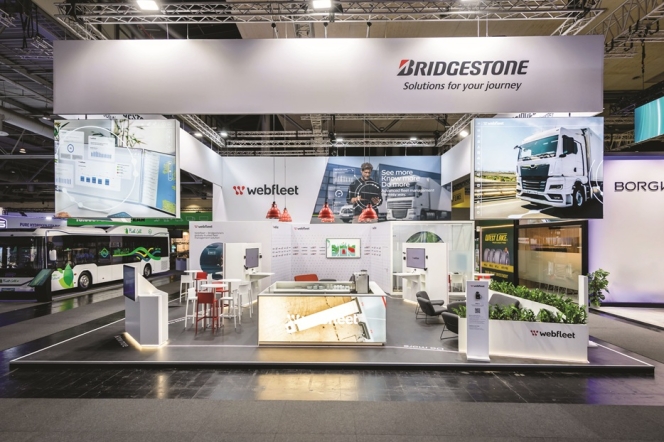
As commercial vehicle operators face mounting pressure from regulations, rising costs and the shift to electric power, Webfleet, a subsidiary of Bridgestone, is focusing on turning ever-growing volumes of vehicle data into practical recommendations that improve performance and ease the daily burden on fleet managers.
Founded in Leipzig in 1999 as one of the world’s first web-based fleet management platforms, Webfleet has grown from a pioneering software-as-a-service (SaaS) start-up to Europe’s leading solution and a core part of Bridgestone’s global offering. Today it serves drivers across more than 180 countries with AI-powered insights, electric-vehicle tools and sustainability data that turn complex operations into clearer, more efficient decisions.
In an exclusive interaction with Tyre Trends, Marc Notenboom, Director of Product Management at Webfleet, shares how the company has watched the fleet-management sector evolve over more than a quarter of a century. Interestingly, it was just last year the company marked its 25th anniversary.
From its inception, Webfleet has seen the volume of available data explode, yet the real challenge remains converting that information into meaningful guidance.
“Fleets give you more data but not more insights, which continues to be a challenge. Because of new regulations, new sensors, increasing competition and customer demands, we end up generating more data. We also have access to more data, which is growing exponentially. And then comes the real question, how do you make sense of that data?” Notenboom observed.
 Marc Notenboom, Director of Product Management, Webfleet
Webfleet obtains its information through black-box devices installed in vehicles, sensors or direct connections to original-equipment manufacturers. This includes telematics, GPS, video, driver behaviour and vehicle diagnostics, among others. The company then processes that stream to deliver fleet-management services.
The next step, he explained, is moving beyond retrospective analysis. “Insights tell you what happened and why it happened, perhaps, but not what you need to do to improve your performance. That is what we are doing now with the help of artificial intelligence (AI). For example, we analyse data, see if patterns are different or you have anomalies in your data to predict what is happening or what is going wrong. And then we also use AI to analyse our data to see how you are performing, for instance, against competition. And then give customers suggestions on how to improve on certain topics like fuel consumption or driver safety,” he said.
The industry, in Webfleet’s view, is therefore evolving from raw data collection towards insights, recommendations and concrete actions.
SHARED PRESSURES ACROSS DIVERSE FLEETS
Webfleet serves a wide spectrum of customers, from large transport and logistics operators to small fleets of one or two vehicles, service-and-maintenance businesses and last-mile delivery companies.
Each customer faces distinct operational issues, yet common themes emerge. “What they all have in common is that the amount of data and the pressure to enhance their performance is increasing a lot. And then there is the regulatory compliance pressures as well,” said Notenboom.
Performance, in this context, covers delivery times, cost per kilometre, driver wages, safety and fuel consumption – metrics that matter differently according to the sector, but all that demand continuous improvement.
One of Europe’s most persistent difficulties is the shortage of skilled drivers, which has led to greater reliance on migrant workers whose experience of road conditions may vary widely between countries.
Webfleet addresses part of this challenge through tools such as OptiDrive, which shows fleet managers how individual drivers perform on fuel use and safety. Language barriers are tackled with automatic translation features built into the driver’s work app or tablet.
“They can interact with their fleet manager in their own language, and the fleet manager can also interact back in their own language,” explained Notenboom. The same interface delivers active coaching: if a driver exceeds the speed limit, for example, an immediate warning appears. These software-based interventions help maintain standards without requiring constant direct supervision.
MEASURABLE GAINS AND EV TRANSITION
Notenboom agrees that customers understandably scrutinise the return on any additional technology cost. He reported that Webfleet users typically achieve efficiency improvements of up to 15 percent, though results depend heavily on the starting point. This ranges from fuel savings, faster turnaround, downtime reduction or improved driver behaviour, among others.
“If a company is already really good at saving fuel, then adding tools and driver coaching and technology might not change a lot. At the same time, even if it’s a small improvement, especially with the high fuel prices today, it could already translate to a lot of savings,” averred Notenboom.
The arrival of electric trucks introduces a fresh set of complexities. Research indicates that driver behaviour exerts an even greater influence on energy consumption in electric vehicles than in conventional combustion models. Smooth operation becomes critical to range, while decisions about when and where to charge add further layers of planning. Webfleet supports the transition by helping managers determine the right vehicle for each duty cycle.
“If you do long-distance transport, electric trucks are perhaps not the best option. But if you do inner-city deliveries, then electric trucks become an interesting option. And trying to find out where the optimum is, when to use Internal Combustion Engine-vehicles, where to use electric vehicles, that is also a part where we can help the fleet manager to make that decision,” he said.
On the technology package itself, every Webfleet customer receives the software platform. Hardware can be selected according to need, or in some cases, dispensed with entirely through the OEM.connect service (access vehicle data directly from OEMs via APIs), without installing extra hardware that draws data directly from the vehicle manufacturer.
“A number of customers are preferring to use OEM.connect. So that is a solution where we don’t install hardware but take the data directly from the OEM offerings,” he explained. On the other hand, where original-equipment data fall short, Webfleet’s own devices remain available.
PRIVACY, BENCHMARKING AND THE ROAD AHEAD
Growing data volumes inevitably raise questions of privacy and regulatory compliance. Webfleet adheres strictly to General Data Protection Regulation (GDPR) – a strict European Union (EU) law that protects information privacy and data rights for individuals in the EU and the European Economic Area (EEA) – requirements.
Certain categories of information can be processed only with explicit customer permission, and for benchmarking purposes, the company anonymises data so that individual vehicles or fleets cannot be identified.
A recent example is Webfleet’s Commercial Trip Monitor, which aggregates anonymised information across the entire customer base to generate comparative insights.
Looking three to five years ahead, Notenboom identified three principal challenges for the commercial-vehicle industry: the practical difficulties of electrification, the continuing shortage of drivers (with autonomous vehicles potentially addressing certain use cases over a longer horizon) and relentless competitive pressure to deliver higher quality service at lower cost.
He regards these same pressures as sources of opportunity for those able to convert them into advantage.
Interestingly, he shared that Webfleet itself continues to evaluate new markets beyond its established presence in Europe, South Africa, South America and Australia. Bridgestone’s ownership of the US-focused Azuga platform complements the portfolio, while Asia-Pacific, including India, remains under active review even if no immediate plans have been confirmed.
As Notenboom puts it, the goal is not to simply collect more information but to translate that information into clearer decisions that keep vehicles productive, drivers safer and costs under control – regardless of whether the powertrain is diesel or electric.
VMI Launches Modular COMBEXX RF System For Low-Shear, High-Quality Compound Straining
- By TT News
- November 18, 2026
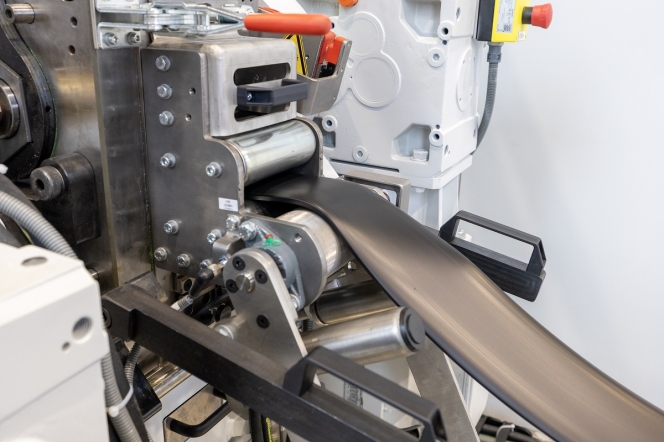
VMI has launched the COMBEXX RF (Roller Feeder) machine, a modular system that redefines integrated straining by replacing traditional extruder screws with a precision roller unit. The new system offers manufacturers a compact, energy-efficient and high-quality alternative to conventional plasticising screw mechanisms, drawing on VMI’s decades of expertise in extruder gear pump systems.
The COMBEXX RF is designed to address key challenges in modern mixing lines, namely incorporating a compound straining process within limited floor space while minimising thermal exposure. By delivering direct, low-shear feeding, the roller feed system preserves material integrity throughout the process.
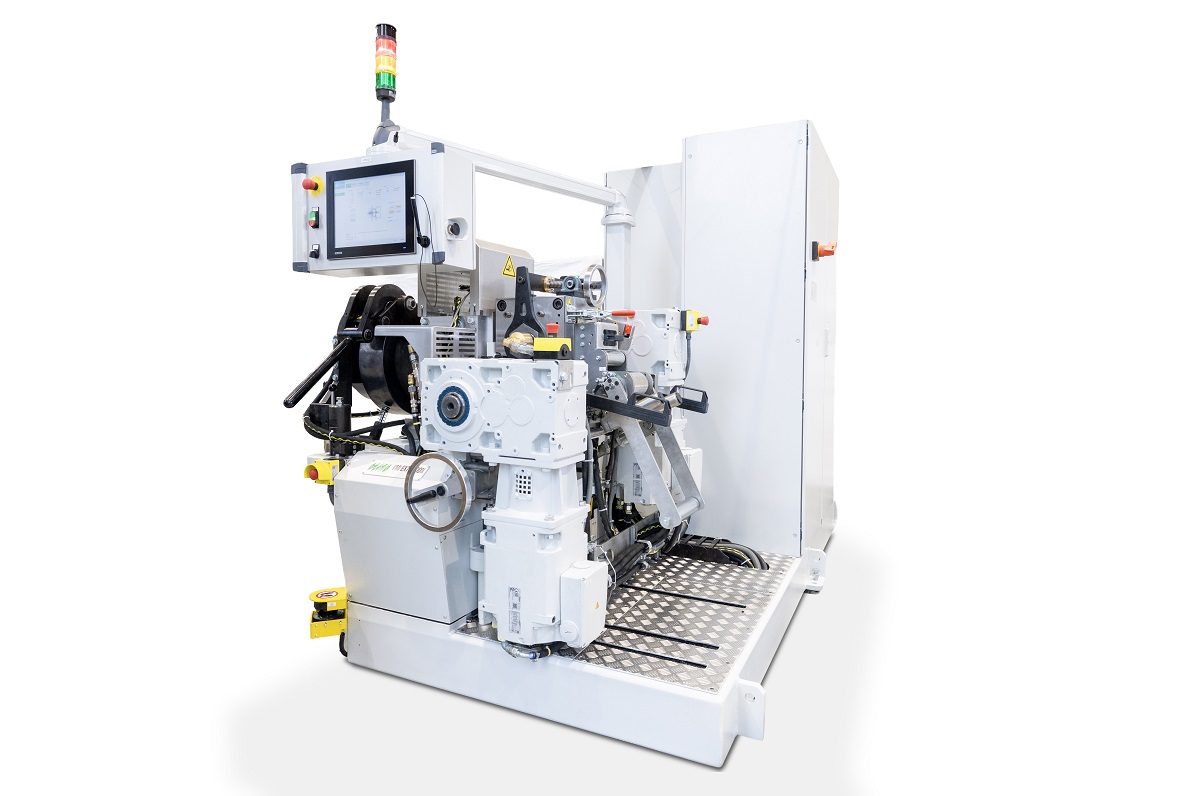
The system provides several advantages for manufacturers. Its compact design and smaller footprint improve space optimisation compared with screw-driven extruder gear pumps. Cost efficiency and quality preservation are achieved because the system eliminates the need for secondary heating, cutting energy consumption and preventing alteration of compound characteristics. The COMBEXX RF is also engineered for seamless integration into existing mixing lines and can be rapidly moved into place when continuous straining is required, with availability in different sizes and capacities.
Coen Heukshorst, Sales Manager, VMI, said, “The COMBEXX RF represents a significant step forward in how we approach integrated straining. By removing the extruder screw and relying on our proven roller technology, we are answering to current market demands. It’s a solution that fits the modern plant’s need for flexibility and efficiency.”
Michelin And Academic Partners Launch I-TireLab Joint Laboratory
- By TT News
- November 05, 2026
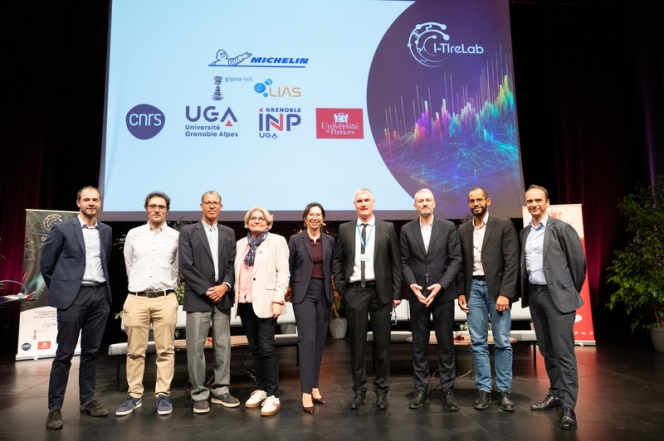
Michelin has partnered with the University of Poitiers, Grenoble Alpes University, Grenoble INP – UGA and the CNRS to launch I-TireLab, a joint laboratory combining data and modelling to pursue advances in tyres, tyre manufacturing and flexible composites. The project carries a total investment of roughly EUR 4.5 million over four years and is intended to close the gap between academic research and industrial challenges.
The laboratory pairs Michelin's expertise in tyre simulation and modelling, materials and industrial processes with the modelling, system state estimation and control methodology strengths of the Laboratory of Computer Science and Automatic Control for Systems at Poitiers and the GIPSA-lab, which unites UGA, CNRS and Grenoble INP – UGA. Though the partnership has operated for several years, I-TireLab gives it a long-term framework aimed at turning data into knowledge, decisions and actions.
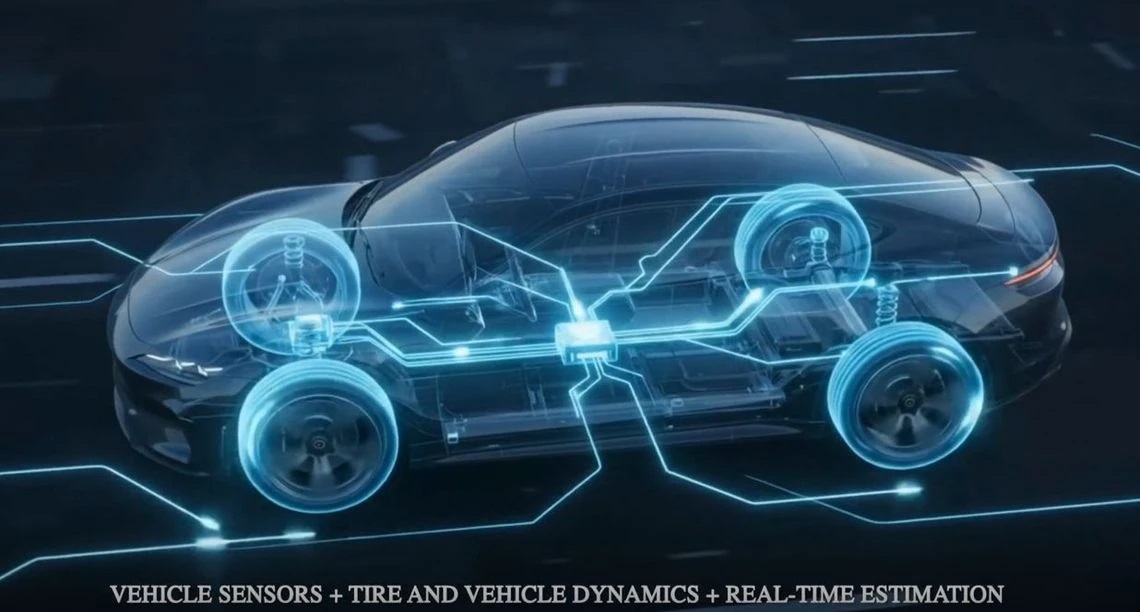
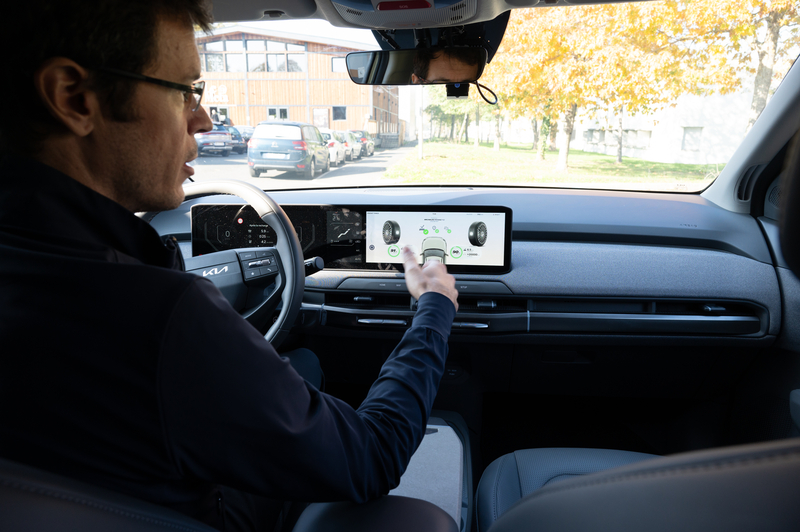
The teams combine data analysis and modelling to represent and predict the behaviour of tyres, processes and materials, then test the relevance and limits of those models through data and experimentation. Four research themes support safer, higher-performing mobility, less resource-intensive manufacturing and new applications for flexible composites.
The first theme targets a clearer view of tyre condition on the road, including real-time estimates of wear and grip using existing on-board sensors without specialised equipment. The second feeds that information into vehicle control systems, optimising braking based on tyre status and grip potential to enhance stability and efficiency. The third addresses rubber manufacturing, developing simulation and control tools to anticipate equipment operation and fine-tune settings while maintaining consistent quality and limiting waste and energy use. The fourth explores how flexible products can influence air and water flows around objects through control laws that alter component shapes.
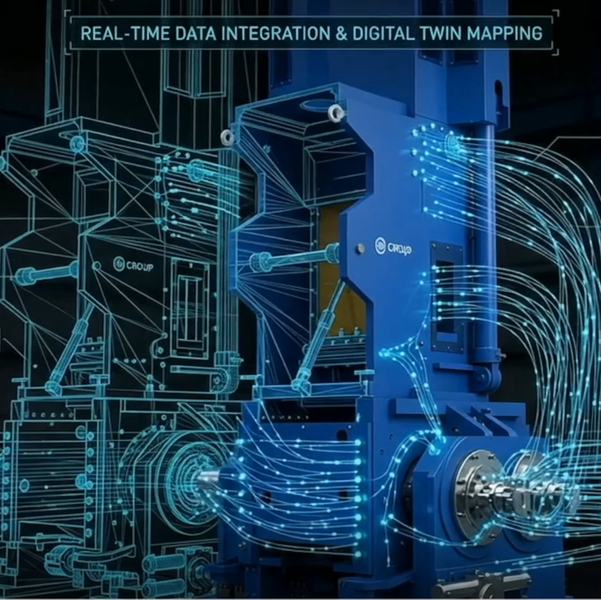

Michelin contributes product-usage understanding, data and experimental and industrial resources, while the academic laboratories supply theoretical and methodological expertise for designing and validating new approaches. The collaboration also helps train young researchers at the interface of fundamental research, experimentation and industrial needs, with access to demonstrators and partner-site tests for near-real-world assessment.
Planned applications include supporting Michelin Touch Intelligence, the tyre digital twin unveiled in May 2026 that estimates pressure, wear, load and grip in real time without extra sensors across all brands and models. Research on certain flexible composites could also inform Wisamo, Michelin's inflatable, retractable automated wingsail, whose first unit is in delivery and which uses wind to boost ship propulsion and cut fuel consumption.
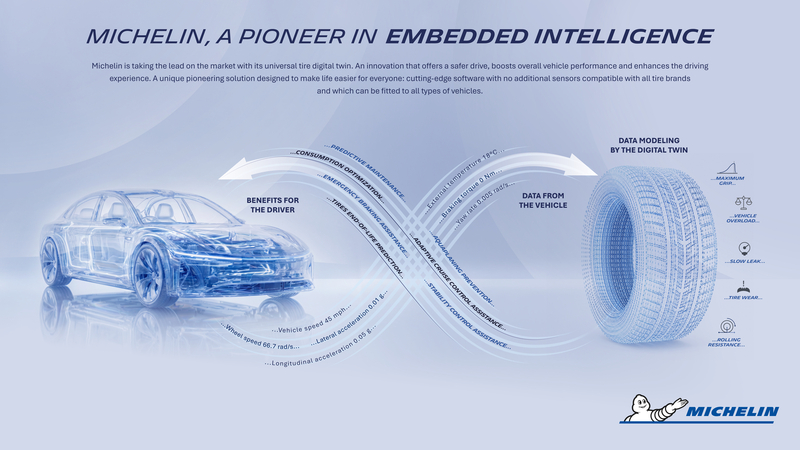
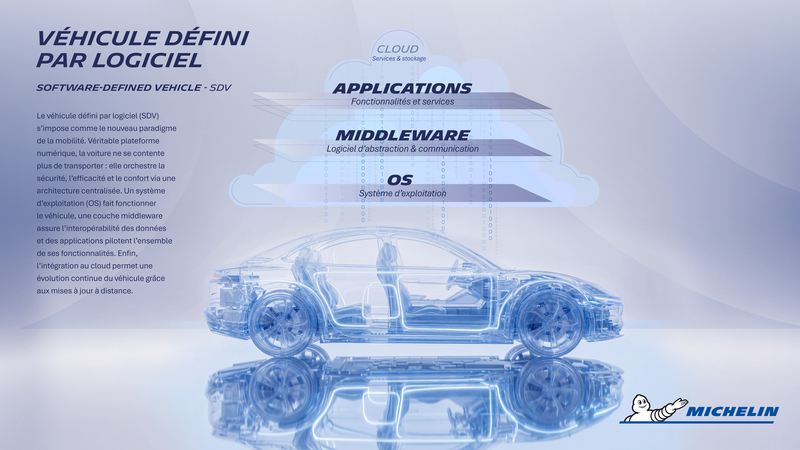
Philippe Jacquin, Michelin General Manager & Director of Research and Development, said, “I-TireLab will make it possible to turn science into real-world innovations, from tyres and tyre manufacturing to tyre-vehicle interactions. Michelin Touch Intelligence, the tyre digital twin is one recent illustration of what that means in practice: when we know more about the tyre’s status and grip potential, we can enable vehicle adjustments and optimisation.”
Guillaume Mercère, I-TireLab Director; John Martinez-Molina, I-TireLab Co-Director and Thibault Dairay, I-TireLab Co-Director, said in a joint statement: "I-TireLab brings together researchers, engineers and young scientists to make mobility safer, improve our control of tyre manufacturing, and explore new possibilities for flexible materials. By drawing on fundamental research, experimentation and industrial needs, we are developing new methods, training talents and preparing the innovations of the future, together.”
Mehdi Gmar, CNRS Deputy CEO for Innovation, said, “I-TireLab once again demonstrates that the expertise and knowledge developed in academic research laboratories – in this case, at GIPSA-lab in modelling and control of complex systems – have industrial applications. This is now the case with Michelin across very different areas: tyres on the road, rubber manufacturing and flexible materials supporting safer, more resource-efficient mobility.”
- Swarnakaruna Princeton Rubber Industries
- N Swarnalatha
- Princenton Rubber Industries
- retreading
- tyre
- Ashish Kumar Isukapati
- IFCI Venture Capital
State-Backed Capital Powers Swarnakaruna Princeton’s Expansion Push
- By Gaurav Nandi
- November 02, 2026
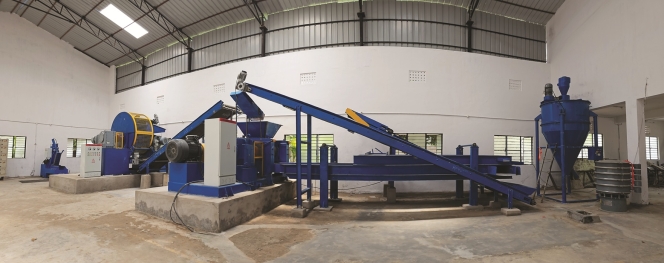
Swarnakaruna Princeton Rubber Industries has built capacity to recycle about 96,000 end-of-life tyres annually after government-backed financing helped the Visakhapatnam company transition from processing buffing waste to recycling whole tyres. The recycler is now targeting larger industrial buyers while exploring tyre imports to lower raw-material costs.
India’s push to formalise its end-of-life tyre recycling ecosystem is creating room for smaller recyclers to scale, but access to capital, machinery reliability, raw-material costs and the economics of producing higher-grade crumb rubber remain significant constraints.
Visakhapatnam-based Swarnakaruna Princeton Rubber Industries Private Limited offers a case in point. The company has expanded from a small operation processing buffing powder to a whole-tyre recycling business capable of producing around 300–400 tonnes of crumb rubber a month following financial support channelled through IFCI Venture Capital under a government-backed programme for Scheduled Caste entrepreneurs.
The business traces its roots to 2014, when Managing Director N Swarnalatha established K.S. Princeton Rubber Industries after approaching the District Industries Centre in Visakhapatnam with plans to become an entrepreneur.
The original operation had a single grinder and relied on buffing powder as its principal feedstock because it lacked the equipment required to process complete end-of-life tyres.

“The company started in 2014, but the setup was very minimal. We had just one grinder and were not capable of recycling a whole tyre, so buffing powder was our raw material,” said Swarnakaruna Princeton Rubber Industries Chief Executive Officer Ashish Kumar Isukapati.
That model began changing in 2018 when the company sought funding from IFCI Venture Capital Limited. The proprietorship was subsequently converted into a private limited company as part of the process of securing the investment. Funding was eventually released in stages, with commercial production from the expanded facility beginning in August 2024.
According to Isukapati, the project received about INR 50 million from IFCI Venture Capital, alongside a promoter contribution of INR 17.1 million. The overall project cost was approximately INR 67.21 million.
The money was deployed largely towards machinery and rebuilding and expanding the existing manufacturing premises.
Isukapati said the financing was particularly significant because conventional access to growth capital can prove difficult for first-generation entrepreneurs.
TYRES TO CRUMB
The expanded operation can process roughly 8,000 end-of-life tyres each month, equivalent to around 96,000 tyres annually, according to Isukapati. At the upper end of production, the facility can manufacture around 400 tonnes of crumb rubber a month, while recovered steel accounts for roughly 25 percent of output by weight or around 100 tonnes at that production level.
The company currently sells entirely into the domestic market, with Kerala representing its largest destination. It also supplies TVS Sundaram Industries in Chennai.
However, the economics vary considerably according to crumb size and end application.
More than 70 percent of the company’s current crumb-rubber production goes to non-tyre applications, particularly rubber-mat manufacturers in Kerala. These customers typically consume 20 and 24 mesh material. TVS Sundaram Industries takes roughly 60–80 tonnes a month, with the company supplying 30-mesh crumb rubber.
Tyre-related customers typically require finer grades such as 40, 60 and 80 mesh crumb rubber. The company has pulverising equipment capable of producing material in those ranges, but finer grinding lowers throughput and changes the economics of the operation.
“We are capable of manufacturing the higher meshes, but the overall output comes down. We have to balance which mesh we manufacture against the quantity we can produce because crumb rubber itself is a relatively low-priced product. The way to generate sustainable revenue is through volume,” Isukapati said.
That volume-quality equation has become particularly important as the recycler seeks to tap larger customers closer to its Visakhapatnam plant.
One of its main targets is HINCOL, which Isukapati said operates a facility locally and requires around 500 tonnes of crumb rubber a month. The company has so far been unable to fully address that opportunity because of the combination of volume, quality specifications and tender pricing.
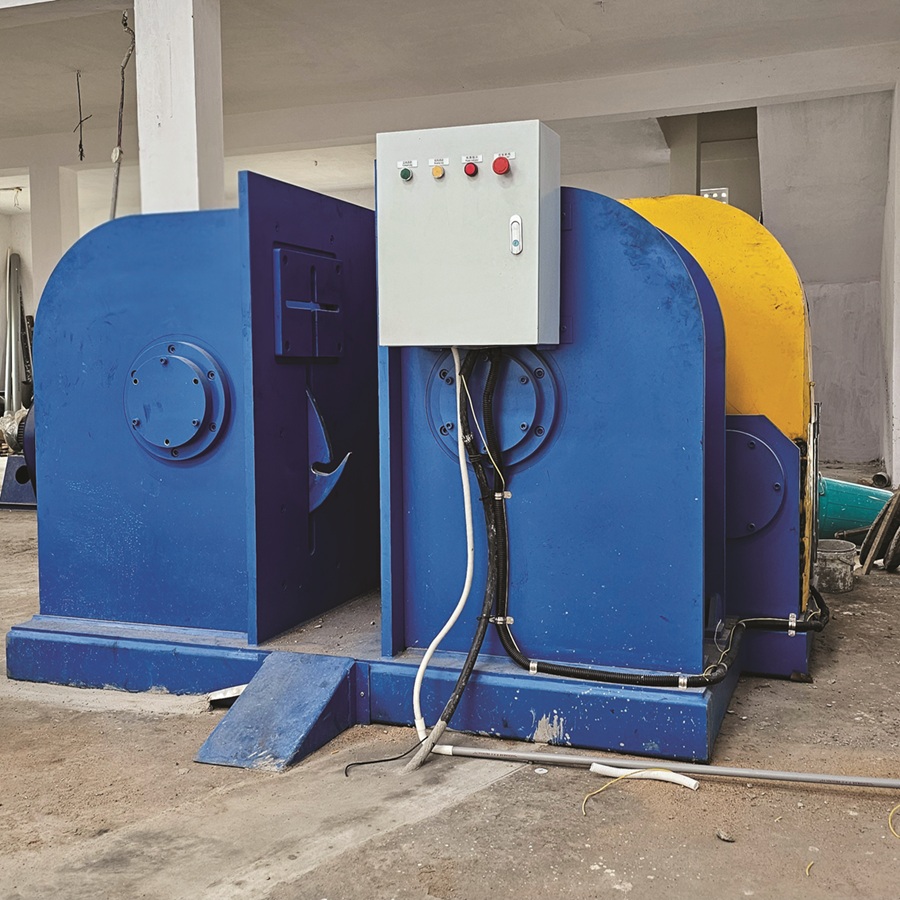
Isukapati sees similar opportunities with buyers across the eastern and southern tyre and rubber manufacturing belt. He estimates that potential demand within roughly 300 kilometres of its operation could exceed 1,000 tonnes a month.
The challenge is converting that proximity into profitable sales.
PORT OPPORTUNITY
The company currently sources a significant portion of its tyres through Andhra Pradesh State Road Transport Corporation auctions. And the company is also seeking a licence to import end-of-life tyres, a move it believes could allow it to leverage its proximity to Visakhapatnam port and reduce feedstock costs.
“We are trying to capitalise on Visakhapatnam port and have applied for an import licence. If that works out, we could spend less on raw material, which would give us an advantage in offering a more competitive price,” Isukapati said.
The company’s expansion has not been without setbacks. Location presents a significant constraint. The facility operates on a plot of about 980 square yards, where incoming tyres, finished crumb rubber and recovered steel all have to be stored and managed. Expanding towards the 500-tonne monthly volumes sought by larger customers could therefore require the company to address its space limitations.
Technical support and spare-part availability are also more difficult in Visakhapatnam than in established manufacturing clusters, Isukapati said.
BIGGER CHALLENGE
Swarnakaruna does not currently operate a dedicated research and development department. Product development and process adjustments are handled by its production manager and technical staff, while third-party laboratories are occasionally used when customers require test reports.
Beyond the company’s own expansion, Isukapati sees feedstock pricing as one of the biggest problems confronting India’s mechanical tyre recyclers.
Waste-tyre prices can rise when pyrolysis operators increase production, but crumb-rubber producers cannot necessarily pass those higher costs to customers because buyers have multiple competing suppliers.
He also called for greater policy attention to the procurement and channelisation of waste tyres, arguing that mechanical recyclers do not necessarily receive a commercial advantage for converting end-of-life tyres into reusable rubber products.
His comments come as India’s tyre-recycling ecosystem adjusts to extended producer responsibility requirements and increasing competition for waste-tyre feedstock.
For the tyre recycler, the next phase will therefore be less about simply adding equipment and more about achieving scale economically. The company is seeking cheaper feedstock, higher production, access to larger nearby customers and potentially a more formal research and development structure.
Recovered steel also remains important to the economics of the operation. Despite the constraints, he sees a sizeable addressable market around the company’s Visakhapatnam base.
“The opportunity is absolutely there. If we can get the right balance between the mesh we manufacture, the quantity we produce and the price, there is a huge opportunity out there,” Isukapati said.
- DUNLOP
- Sumitomo Rubber Industries
- SENSING CORE Technology
- Wheel Detachment Prediction Detection System
- Isuzu Motors
- Medium-Duty Trucks
Dunlop's SENSING CORE Adopted For Isuzu FORWARD Trucks
- By TT News
- October 30, 2026
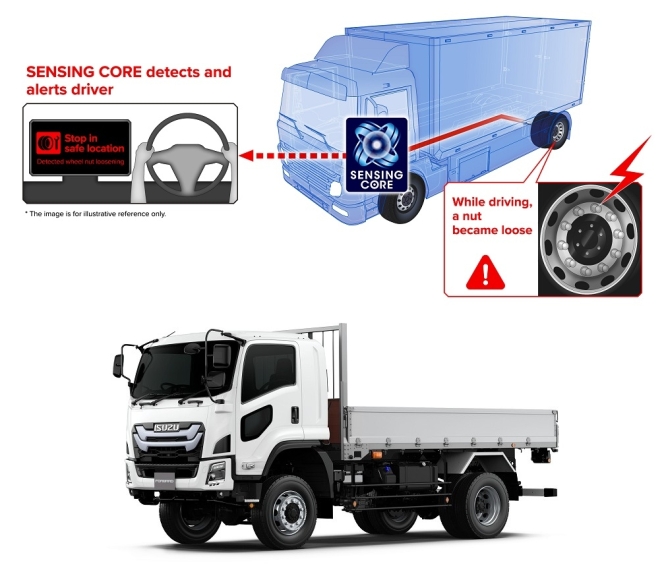
DUNLOP (company name: Sumitomo Rubber Industries) has confirmed that its proprietary SENSING CORE technology has been adopted for medium-duty truck models. The system, designed to detect the conditions of tyres, vehicles and road surfaces, is fitted to Isuzu Motors' FORWARD medium-duty trucks with a gross vehicle weight exceeding 14.5 metric tonnes, which come standard with the Wheel Detachment Prediction Detection System, one of the functions offered by SENSING CORE.
SENSING CORE is a software technology built on expertise gained from the Deflation Warning System, a tyre pressure warning system. It analyses wheel speed data generated by tyre rotation together with controller area network data transmitted through the vehicle's control system, allowing it to detect various tyre and road conditions, including tyre pressure, wear, load and signs of potential wheel detachment. The Wheel Detachment Prediction Detection System in Isuzu's FORWARD models detects loosening of wheel nuts while the vehicle is in motion, alerting the driver through a warning message and buzzer if an abnormality is found.
This capability complements conventional inspections and driver experience and is expected to play a significant role in preventing wheel separation accidents. Isuzu's FORWARD is a medium-duty truck with a broad lineup designed to meet diverse logistics industry needs, and such trucks are widely used in local delivery, long-haul transport and building and construction operations, serving as a vital means of transportation.
Operated across urban areas and major highways, wheel detachment accidents involving these trucks could cause serious harm to third parties such as pedestrians and cyclists, driving growing societal demand for improved safety. Preventing such accidents requires fundamental inspection and maintenance measures, yet drivers find it difficult to detect loosening wheel nuts while driving, making early-detection technologies essential. The provision of the Wheel Detachment Prediction Detection System to medium-duty trucks enables early detection of signs of vehicle malfunctions and contributes to further improving safety and preventing wheel detachment accidents.
Comments (0)
ADD COMMENT