

Retreading In The Age Of EPR: Latin America Between Circular Ambition And Strategic Blind Spots
- By Daniel Rojas Enos
- July 01, 2026
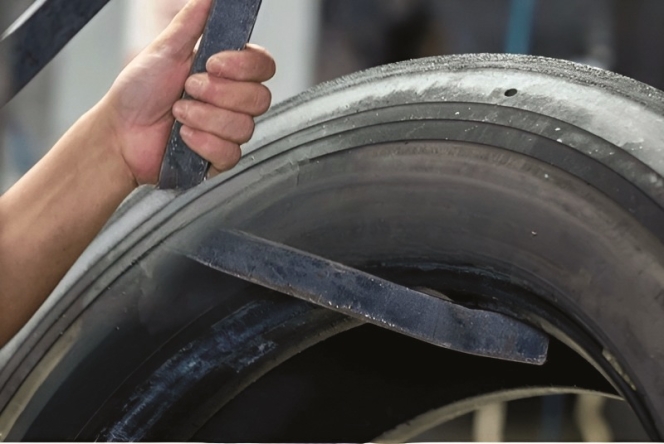
As Extended Producer Responsibility (EPR) frameworks expand globally, the tyre industry is undergoing a structural transformation. Collection systems are improving, traceability is increasing and investments in recycling technologies are accelerating. However, one critical tension remains insufficiently addressed: the speed of industry evolution is outpacing the agility of public policy. And within that gap, one key question emerges: where does retreading fit in this new circular economy architecture?
A STRUCTURAL PARADOX
Retreading represents one of the most efficient forms of resource optimisation in the tyre lifecycle. It extends product life, reduces raw material consumption and lowers emissions. Yet, in many regulatory frameworks, it is still treated ambiguously – often grouped with recycling rather than recognised as prevention or preparation for reuse. This distinction is not semantic. It is strategic. Because when policy fails to differentiate, markets fail to prioritise.
A FAST-MOVING INDUSTRY, A SLOW-MOVING FRAMEWORK
The tyre market is evolving in real time:
- Increasing penetration of low-cost imports.
- Growing variability in product quality.
- Accelerated turnover cycles.
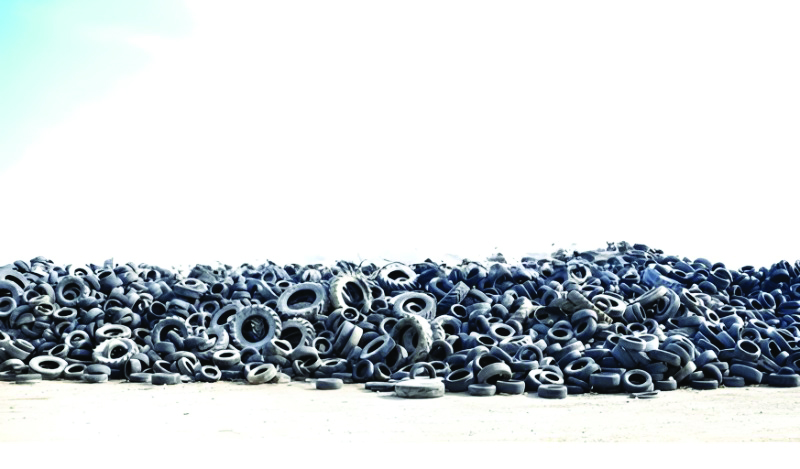
Retreading, in this context, becomes more than a circular solution. It becomes a filter of industrial quality. Not all tyres are equally retreadable. And that difference defines their real contribution to circularity. Yet most EPR systems continue to operate with uniform economic signals, failing to distinguish between products that enable multiple lifecycles and those that exit the system after a single use.
SIGNALS FROM EUROPE
Recent developments in countries like Portugal – where eco-fees applied to retreaded tyres approach those of low-cost, non-differentiated new tyres – highlight a concerning trend. Similarly, in Spain, industry representatives continue to advocate for a clearer institutional recognition of retreading within EPR systems. These cases illustrate a broader issue: circular policies can unintentionally undermine higher-value circular strategies.
THE MISSING LINK: PERFORMANCE-BASED POLICY
What is missing is not regulation. It is regulatory precision. EPR systems have successfully organised waste flows. But they have not yet evolved to reward performance within the lifecycle. This is where eco-modulation becomes critical.
ECO-MODULATION AS A STRATEGIC LEVER
Eco-modulation should not be a marginal adjustment. It should be a core industrial policy tool. Properly designed, it can:
- Differentiate tyres based on real circular
- performance.
- Incentivise durability and retreadability.
- Penalise short-lifecycle, non-recoverable products.
- Align market behaviour with system objectives.
- To operationalise this, we need new metrics.
FROM COMPLIANCE TO PERFORMANCE: A PROPOSED FRAMEWORK
The next step for EPR systems is to move towards performance-based differentiation. This could be implemented through instruments such as:
- Retreadability Index (RI)
- Performance Score (CPS)
These would measure:
- Number of effective retreading cycles per tyre.
- Structural durability and casing quality.
- Real contribution to lifecycle extension.
Under such a system:
- Tyres with higher retreadability would receive lower eco-fees.
- Products that systematically fail to re-enter the cycle
- would face higher costs.
- This is not just a technical refinement. It is a shift from:
- Generic compliance.
- To intelligent market shaping.
THE LATIN AMERICAN PERSPECTIVE
In Latin America, the stakes are even higher.
The region faces:
- Structural dependence on imported tyres.
- Strong presence of low-cost, low-durability products.
- Emerging EPR frameworks (Chile, Costa Rica, Peru, Ecuador)
Chile, for example, through its EPR law (Ley REP), has made significant progress in structuring collection and recovery targets. However, like many systems, it still faces the challenge of fully integrating reuse strategies into its economic logic. Under these conditions, retreading is not just an environmental solution. It is a strategic industrial capability.
BEYOND WASTE MANAGEMENT
Latin America has a unique opportunity to design EPR systems not only to manage waste
but to govern resources and shape markets.
This means:
- Incentivising retreadable tyres
- Strengthening local retreading industries
- Reducing dependence on short-lifecycle imports
- Building resilience into supply chains
But this requires something critical: policy agility. Because if regulation lags behind market dynamics, it will not transform the system – it will merely formalise its inefficiencies.
A STRATEGIC CONCLUSION
If EPR systems are designed without properly integrating retreading – and without differentiating based on actual circular performance – they risk reinforcing a linear logic under a circular narrative. For emerging regions, this would be a critical mistake
The discussion around repair, reuse and retreading can no longer be treated merely as a waste management issue. It is increasingly becoming a matter of industrial resilience, strategic autonomy and economic security.
As global supply chains face growing pressure from geopolitical fragmentation, logistics disruptions and volatility in raw material markets, extending the useful life of products is emerging as a strategic capability for nations and industries alike.
In this context, Right to Repair should not be understood only as a consumer right but also as an industrial policy tool capable of strengthening local economies, reducing external dependency, preserving technical capabilities and supporting more resilient production systems.
Retreading, remanufacturing and reuse are part of a broader transition where value creation is no longer based exclusively on extraction and disposal but increasingly on intelligence, efficiency and lifecycle management.
CIRCULARITY WITHOUT HIERARCHY BECOMES INEFFICIENCY. REGULATION WITHOUT DIFFERENTIATION BECOMES DISTORTION.
Final note
The future of the tyre industry will not be defined only by how we recycle, but by how intelligently we extend the life of what we already produce. And that requires alignment between:
- Industry dynamics.
- Policy design.
- And strategic vision.
In that equation, retreading must move from the margins to the centre. Because properly understood, it is not just a process. It is a strategic filter, an industrial policy tool and a geopolitical lever.
Zeon Breaks Ground On Kawasaki Facility To Speed Lab-To-Mass-Production Scale-Up
- By TT News
- October 19, 2026
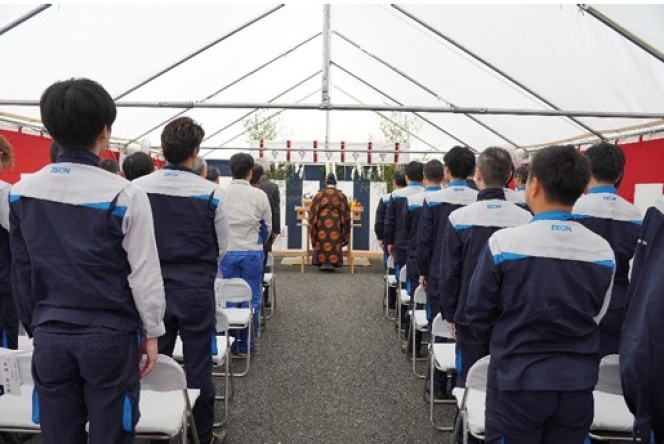
Zeon Corporation broke ground on a multi-product research and prototyping complex at the Kawasaki Innovation Frontier Port in Kawasaki City, Kanagawa Prefecture, on 16 October with a ceremony held beforehand to seek safety during construction. The company expects the complex to shorten the path from laboratory work to mass production for established and emerging businesses alike, making it central to its long-term growth strategy.
Set inside an existing building within the port's Research & Development Center area, the complex is slated to begin operating in January 2028. Its design aims to move products past the laboratory stage and into medium-scale sample output more quickly, clearing a bottleneck on the route to full-scale manufacturing.
Zeon's core production methods – polymerisation, hydrogenation, coagulation and drying – will be built into the complex, which is engineered to handle diverse manufacturing conditions and operating approaches. Beyond serving established and new businesses, the polymer design company envisions the site as a centre for technology development and a platform for rolling out new processes and operational, analytical, and measurement technologies within and beyond the company. It will eventually host development and prototyping work across a wide range of technologies, including contract prototypes commissioned by outside parties.
The Kawasaki Innovation Frontier Port is the umbrella name for the site combining the neighbouring Kawasaki Plant and Research & Development Center. The label underscores the location's role in breaking new ground by merging innovation, research and development and production and casts the Kawasaki waterfront as a port that propels innovation. Once a co-creative innovation facility begins operating in December 2026, the two sites will function as one continuous operation, turning out ever more sophisticated products and production methods and reinforcing their standing as a launchpad for technology.
Vipal Rubber Launches VT290 Tread For European Truck Market
- By TT Bureau
- October 13, 2026

Vipal Rubber has launched the VT290, a tread designed for truck drive axles used on motorways and paved roads, targeting regional and long-distance transport operations in Europe.
The product is available in widths of 240mm, 250mm, 260mm, 270mm and 280mm. It is designed to provide traction and stability on dry and wet roads, as well as in demanding conditions involving snow.
Frederico Schmidt, General Manager of Vipal EMEA, said, “The launch of the VT290 reinforces Vipal’s ongoing commitment to offering technologically advanced solutions suited to the specific characteristics of European roads and climate.” “We want to further consolidate our presence in the region, delivering a high value-added product that combines innovation, operational efficiency and safety,” he added.
The VT290 carries the M+S marking and 3PMSF certification. Its design includes side sipes and grooves intended to help remove snow and mud from the tread, improving grip on slippery surfaces.
The tread pattern is also designed to distribute engine torque more evenly, helping to reduce uneven wear. Tie bars between the tread blocks add structural stability, supporting vehicle control during driving.
Fabrício Nedeff, Commercial Manager of Vipal EMEA, said, “With the VT290, weare responding directly to the real needs of fleet operators and truck drivers, combining performance, adherence and efficiency in different driving conditions. [RS2.1]In addition to expanding options for our customers, the product strengthens business opportunities for our partners in the region,”
Vipal said the launch would expand its offering for retreaders, distributors and fleet operators in the European market.
- Association of Natural Rubber Producing Countries
- ANRPC
- Monthly NR Statistical Report
- Natural Rubber
ANRPC Publishes Monthly NR Statistical Report For August 2026
- By TT News
- October 02, 2026
The Association of Natural Rubber Producing Countries (ANRPC) published its Monthly Natural Rubber Statistical Report for August 2026, noting firmer prices in several markets. Supply constraints, stable downstream demand and persistent geopolitical and macroeconomic uncertainty shaped the month. Renewed conflict and disruptions to major shipping routes added further pressure.
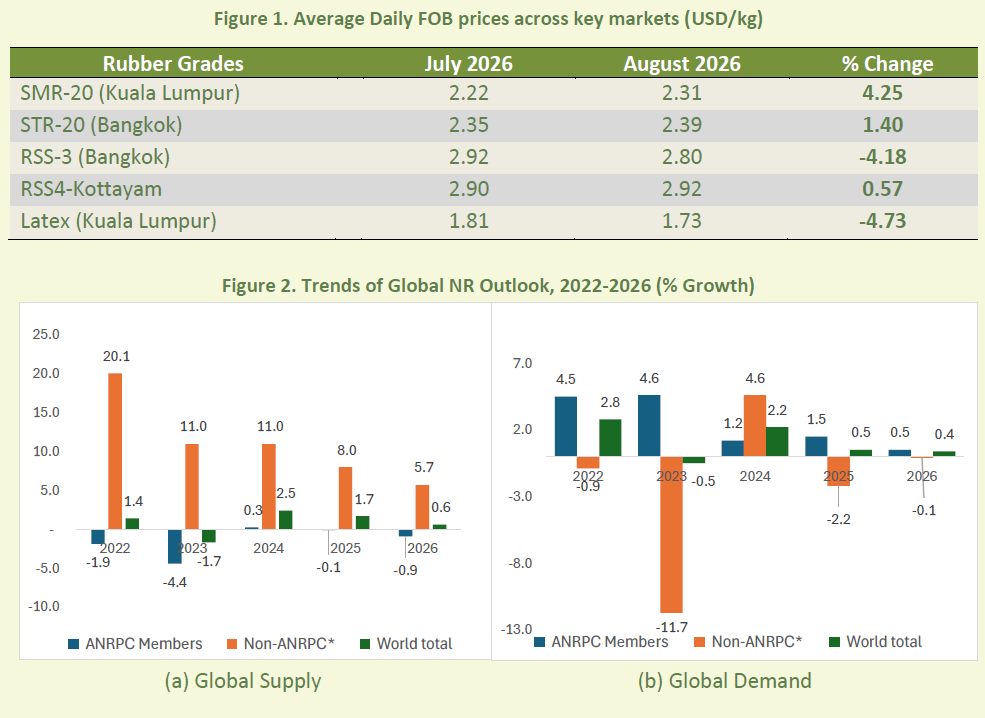
Physical prices for major grades moved in different directions. SMR-20 in Kuala Lumpur averaged USD 2.31 per kg, up 4.25 percent from July, while STR-20 in Bangkok rose 1.40 percent to USD 2.39 per kg. RSS-3 dropped 4.18 percent to USD 2.80 per kg, but RSS-4 in Kottayam gained 0.57 percent to USD 2.92 per kg. Latex-in-bulk fell 4.73 percent to USD 1.73 per kg. Brent crude averaged USD 91.08 per barrel, driven by concerns over possible restrictions on oil shipments through the Strait of Hormuz and wider Middle East instability, which raised energy supply risks and strengthened the oil market risk premium.
On trade, China's imports climbed 3.39 percent month-on-month, while India fell 10.18 percent and Malaysia dropped 8.24 percent; Viet Nam rose 5.08 percent. Exports advanced 5.63 percent in Viet Nam but declined in Thailand (-5.24 percent), Indonesia (-5.36 percent), Malaysia (-1.48 percent) and Cambodia (-1.88 percent).
Global production is projected to rise 0.6 percent to 15.039 million tons in 2026 from 14.952 million tonnes in 2025, after revisions to Thailand's 2025 output and updated 2026 estimates for Thailand, Malaysia and Indonesia. Weather, including erratic rainfall and drier Southeast Asian conditions, affected output. August 2026 production was estimated at 1.396 million tonnes, down 4.51 percent from 1.462 million tonnes a year earlier. Demand is forecast to grow 0.4 percent to 15.356 million tonnes in 2026 from 15.301 million tonnes, with the largest consumption gains expected in China, Malaysia and Cambodia. Prospects depend on vehicle sales, tyre production, shipping conditions and weather-related supply disruptions, while steady EV-linked demand supported modest growth led by China and India. The ringgit traded between RM4.02 per USD and RM4.09 per USD, and the baht between 32.68 and 33.34. The SHFE January 2027 contract averaged 18,109 CNY per tonne, up 7.78 percent month-on-month, while the SGX November 2026 contract averaged USD 2.24 per kg, up 4.32 percent.
Epsilon Carbon Advances Scope 3 Emissions Measurement Across Value Chain
- By TT News
- October 01, 2026
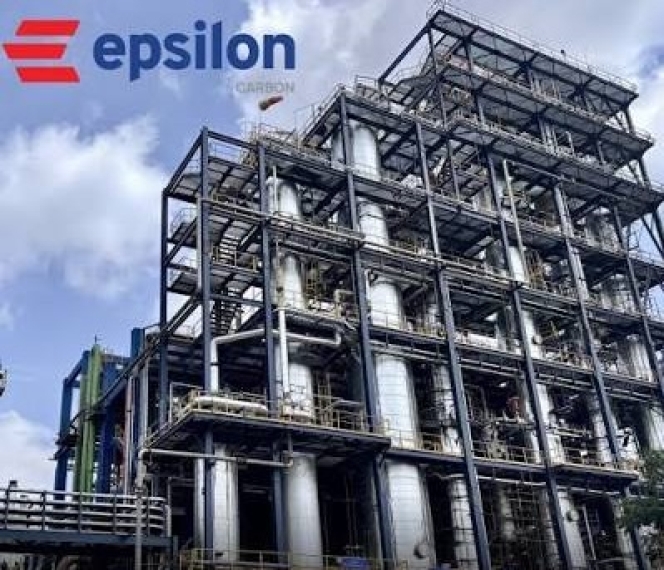
Epsilon Carbon Pvt. Ltd., a global speciality carbon and carbon black manufacturer, has broadened its emissions accounting to include value chain impacts beyond its direct operations. The move advances measurement and management of Scope 3 emissions across its supply and distribution network, according to the company.
The initiative spans Epsilon Carbon’s integrated carbon complex in Vijayanagar, Karnataka. That site has a production capacity of 500,000 tonnes per annum of speciality carbon and 215,000 TPA of carbon black. It combines carbon manufacturing with energy circularity efforts in one integrated ecosystem. The company assessed material Scope 3 categories under GHG Protocol guidelines.
Scope 3 emissions are indirect and arise from purchased goods and services, transportation, business activities and downstream product use where relevant. The assessment gives Epsilon Carbon clearer visibility into emissions outside its direct control and a foundation for spotting reduction opportunities. It builds on existing operational emissions and energy efficiency work.
The company previously reported a 98 percent Scope 2 reduction against its baseline year. A 17 MW captive power plant uses waste heat from carbon black operations, energy consumption intensity fell 6 percent from baseline, and 77 percent of energy needs came from waste heat recovery, avoiding over 89,000 tonnes of CO₂. Epsilon Carbon now emphasises supplier engagement, data transparency and circularity, aligning disclosures with global sustainability frameworks to track value chain emissions consistently and develop measurable reduction initiatives.
Vikram Handa, Managing Director, Epsilon Carbon, said, “Meaningful climate action requires us to look beyond the boundaries of our operations and understand the impact of the entire value chain. Scope 3 measurement gives us greater visibility into the emissions and enables deeper engagement with our partners and suppliers. Building this visibility will help us make more informed decisions as we scale our operations and advance our decarbonization plans.”


Comments (0)
ADD COMMENT