

Sustainability Without Compromise Still Sometime Away
- By Nilesh Wadhwa
- September 04, 2026

Sustainability has become critical for the tyre industry due to its heavy reliance on fossil-based raw materials, significant carbon footprint across the product lifecycle and the massive volume of end-of-life tyres generated annually. Shifting towards renewable, bio-based and recycled materials helps reduce greenhouse gas emissions, conserve resources, minimise microplastic pollution from tyre wear and address regulatory and consumer demands for greener mobility solutions. Without accelerated innovation, the industry risks falling short of global climate targets while facing supply chain vulnerabilities and reputational challenges.
The global tyre market is valued at around USD 290 billion in 2025 and is estimated to reach USD 299 billion in 2026 as per MarkNtel. It is projected to attain USD 387 billion by 2032, registering a CAGR of 4.39 percent during 2026–2032. Interestingly, the Passenger Car segment leads the global tyre market with approximately 42 percent of total demand. Radial tyres dominate the global tyre market with around 88 percent share. Furthermore, Asia-Pacific holds the largest regional share at approximately 37 percent.
In an exclusive interaction with Tyre Trends, C Harimohan, Head of Corporate R&D (Materials and Compounding) at Yokohama Off-Highway Tires (YOHT), shares his views on the tyre industry’s push towards true sustainability. He highlights the technical, economic and regulatory hurdles that lie ahead as the sector targets ambitious 2050 goals.
THE SUSTAINABILITY IMPERATIVE
It is no secret that the tyre industry is undergoing a profound shift, be it managing raw material supply chain, sustainability targets and geopolitical challenges, among others.
“See, I think we are undergoing a very special kind of scenario now,” Harimohan observes. While the core manufacturing process and raw material mixes have remained relatively stable, sustainability has moved from a ‘fashion word’ of a decade ago to a serious business priority.
“In the last two to three years, or let us say three to five years, we have started taking it more seriously because almost all the companies have declared that by 2050, 100 percent of the raw materials would be either renewable or recycled,” he says.
This target, however, comes with limited current visibility on delivery. Today, roughly 65 to 70 percent of tyre raw materials are derived from fossil sources, primarily crude oil.
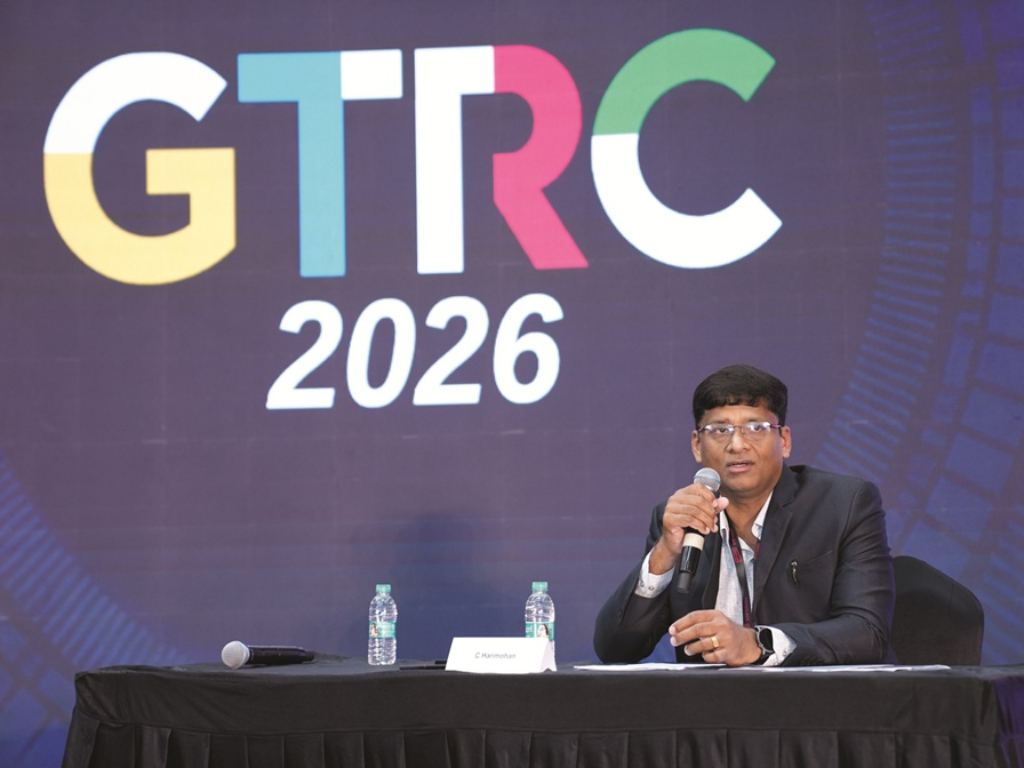
“Around 30 percent only comes from the natural rubber; the remaining major part becomes a synthetic rubber, carbon black and almost all the chemicals which are derived from crude,” he explains. The central challenge is transforming these fossil-dependent components into renewable or recycled alternatives.
Recycling, though not new, presents its own limitations. “When you devulcanise the rubber, the kind of strength it has got originally, it is dropping drastically,” Harimohan notes.
“So it is not a 100 percent one-to-one substitution of the original compound or raw materials what you have. So you cannot go beyond a level,” he shares. This creates an inherent performance compromise that undermines the very idea of sustainability if safety and durability suffer.
BALANCING PERFORMANCE, QUALITY AND PRICE
The trade-off between sustainability, performance and cost emerges as one of the industry’s most pressing dilemmas. Harimohan poses the critical question, “What about trade-off between performance, quality as well as price? Because you could have the best recycled tyre, but if it does not perform as per consumer expectations or as per what is expected from its non-sustainable tyre or what people are used to, what are the challenges that have taken place?”
Even a near-100 percent sustainable tyre remains commercially unviable at present. “I can conceptually make a close to 100 percent, if not 100 percent, you can say a sustainable tyre which is produced from only renewable or recycled materials. But then it has to be at least three to four times the cost or the price would be three to four times what it is today. But then there has to be somebody who will pay for it,” he says.
Harimohan further explains that without external pressure, market adoption will be slow. “Unless and until it is enforced by a regulatory or by government, I do not think it is going to happen.”
He believes, “Even if we can market it as sustainable tyre, unless and until there is somebody who can pay for it, I think it is not going to happen.” Nevertheless, he remains optimistic about ongoing innovation.
“Most of us, almost all the R&Ds across the world are working towards it, how to make it more and more towards that 100 percent level, but at the same time without having a damage to the performance and almost at the same price you should be able to sell it,” says the executive. He anticipates meaningful progress over the next decade or two.
SUPPLY CHAIN PRESSURES AND THE ROAD AHEAD
Geopolitical tensions have added further complexity to an already intricate global supply chain. A single tyre incorporates ‘at least 60 to 70 different raw materials’ sourced from around the world. “All the geopolitical situations are affecting significantly on all the procurement, the supply chains are getting affected and it is affecting the whole production, supply of the tyre,” Harimohan confirms. “Tyre is no different. It is getting affected.”
On the question of segment-wise adoption, he sees OEM-driven momentum leading the way. “This is happening in almost across the segments, but I feel this is a bit more driven by the OEMs. So I think it may be the PCR segment which should be moving a little far ahead of others or even the two-wheeler would be going a little ahead of other segments,” he says, noting slower progress expected in off-highway and OTR applications.
Responding to a query on new trends in the industry, Harimohan acknowledges there lies huge potential for disruptive technologies. “I feel something will come to gradually replace the tyres. Like airless tyre could be one of the examples, there can be flat tracks coming,” he remarks.
Despite the industry’s traditional inertia, he believes change is inevitable, “Even though tyre is more of like a traditional and there is a lot of inertia to change, but I think going forward, there should be or there would be something which could potentially replace tyre all together. I mean, I think we should hope for that.”
The path to a fully sustainable tyre industry is neither simple nor short, but Harimohan’s insights reveal a sector actively confronting difficult trade-offs.
With continued R&D focus and potential regulatory support, the promise of high-performance, affordable and truly green tyres is still some decades away from becoming a reality.
Zeon Breaks Ground On Kawasaki Facility To Speed Lab-To-Mass-Production Scale-Up
- By TT News
- October 19, 2026
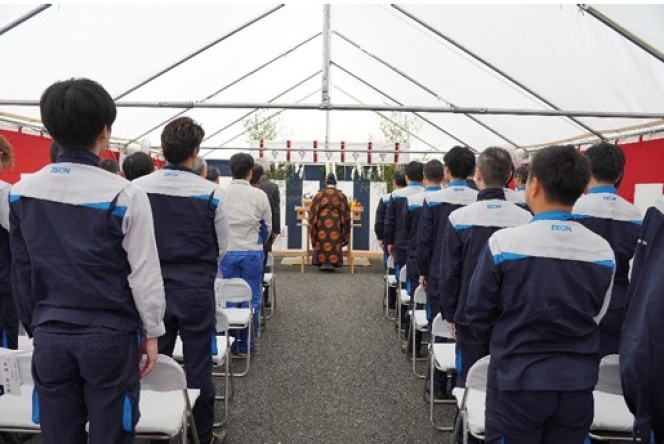
Zeon Corporation broke ground on a multi-product research and prototyping complex at the Kawasaki Innovation Frontier Port in Kawasaki City, Kanagawa Prefecture, on 16 October with a ceremony held beforehand to seek safety during construction. The company expects the complex to shorten the path from laboratory work to mass production for established and emerging businesses alike, making it central to its long-term growth strategy.
Set inside an existing building within the port's Research & Development Center area, the complex is slated to begin operating in January 2028. Its design aims to move products past the laboratory stage and into medium-scale sample output more quickly, clearing a bottleneck on the route to full-scale manufacturing.
Zeon's core production methods – polymerisation, hydrogenation, coagulation and drying – will be built into the complex, which is engineered to handle diverse manufacturing conditions and operating approaches. Beyond serving established and new businesses, the polymer design company envisions the site as a centre for technology development and a platform for rolling out new processes and operational, analytical, and measurement technologies within and beyond the company. It will eventually host development and prototyping work across a wide range of technologies, including contract prototypes commissioned by outside parties.
The Kawasaki Innovation Frontier Port is the umbrella name for the site combining the neighbouring Kawasaki Plant and Research & Development Center. The label underscores the location's role in breaking new ground by merging innovation, research and development and production and casts the Kawasaki waterfront as a port that propels innovation. Once a co-creative innovation facility begins operating in December 2026, the two sites will function as one continuous operation, turning out ever more sophisticated products and production methods and reinforcing their standing as a launchpad for technology.
Vipal Rubber Launches VT290 Tread For European Truck Market
- By TT Bureau
- October 13, 2026
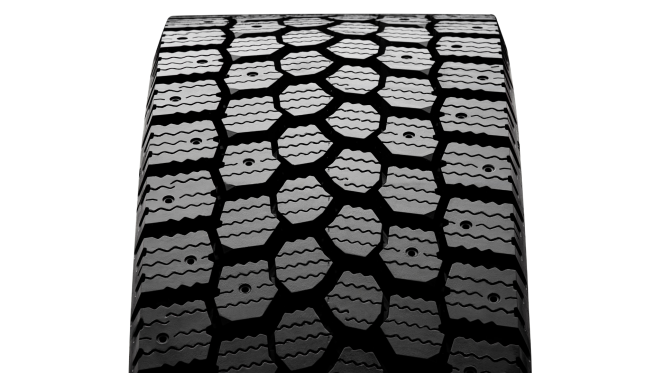
Vipal Rubber has launched the VT290, a tread designed for truck drive axles used on motorways and paved roads, targeting regional and long-distance transport operations in Europe.
The product is available in widths of 240mm, 250mm, 260mm, 270mm and 280mm. It is designed to provide traction and stability on dry and wet roads, as well as in demanding conditions involving snow.
Frederico Schmidt, General Manager of Vipal EMEA, said, “The launch of the VT290 reinforces Vipal’s ongoing commitment to offering technologically advanced solutions suited to the specific characteristics of European roads and climate.” “We want to further consolidate our presence in the region, delivering a high value-added product that combines innovation, operational efficiency and safety,” he added.
The VT290 carries the M+S marking and 3PMSF certification. Its design includes side sipes and grooves intended to help remove snow and mud from the tread, improving grip on slippery surfaces.
The tread pattern is also designed to distribute engine torque more evenly, helping to reduce uneven wear. Tie bars between the tread blocks add structural stability, supporting vehicle control during driving.
Fabrício Nedeff, Commercial Manager of Vipal EMEA, said, “With the VT290, weare responding directly to the real needs of fleet operators and truck drivers, combining performance, adherence and efficiency in different driving conditions. [RS2.1]In addition to expanding options for our customers, the product strengthens business opportunities for our partners in the region,”
Vipal said the launch would expand its offering for retreaders, distributors and fleet operators in the European market.
- Association of Natural Rubber Producing Countries
- ANRPC
- Monthly NR Statistical Report
- Natural Rubber
ANRPC Publishes Monthly NR Statistical Report For August 2026
- By TT News
- October 02, 2026
The Association of Natural Rubber Producing Countries (ANRPC) published its Monthly Natural Rubber Statistical Report for August 2026, noting firmer prices in several markets. Supply constraints, stable downstream demand and persistent geopolitical and macroeconomic uncertainty shaped the month. Renewed conflict and disruptions to major shipping routes added further pressure.
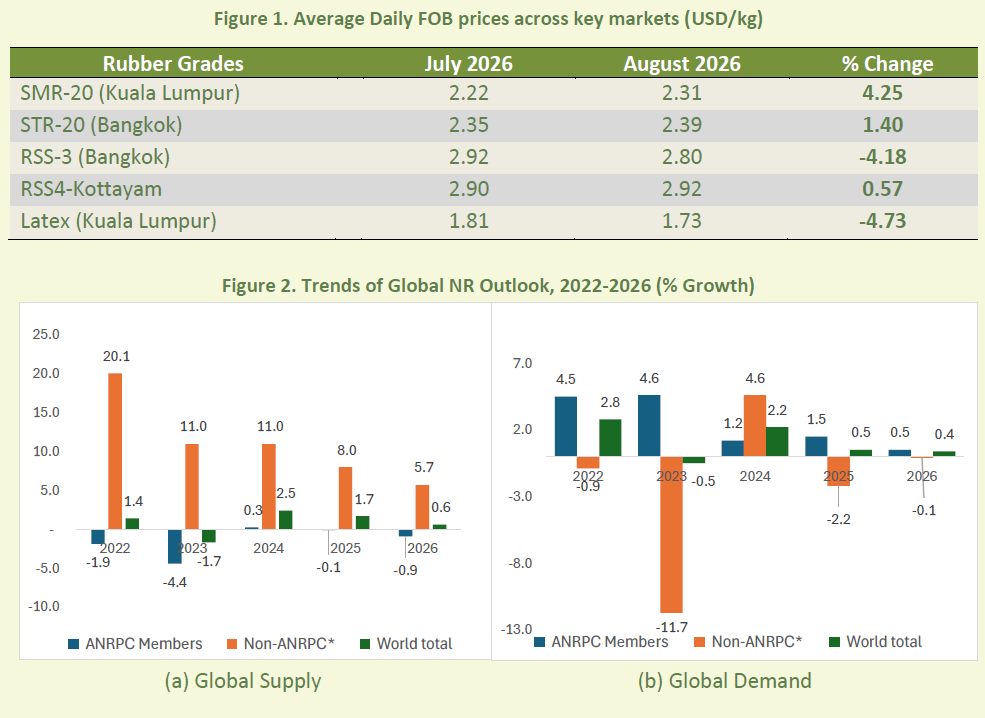
Physical prices for major grades moved in different directions. SMR-20 in Kuala Lumpur averaged USD 2.31 per kg, up 4.25 percent from July, while STR-20 in Bangkok rose 1.40 percent to USD 2.39 per kg. RSS-3 dropped 4.18 percent to USD 2.80 per kg, but RSS-4 in Kottayam gained 0.57 percent to USD 2.92 per kg. Latex-in-bulk fell 4.73 percent to USD 1.73 per kg. Brent crude averaged USD 91.08 per barrel, driven by concerns over possible restrictions on oil shipments through the Strait of Hormuz and wider Middle East instability, which raised energy supply risks and strengthened the oil market risk premium.
On trade, China's imports climbed 3.39 percent month-on-month, while India fell 10.18 percent and Malaysia dropped 8.24 percent; Viet Nam rose 5.08 percent. Exports advanced 5.63 percent in Viet Nam but declined in Thailand (-5.24 percent), Indonesia (-5.36 percent), Malaysia (-1.48 percent) and Cambodia (-1.88 percent).
Global production is projected to rise 0.6 percent to 15.039 million tons in 2026 from 14.952 million tonnes in 2025, after revisions to Thailand's 2025 output and updated 2026 estimates for Thailand, Malaysia and Indonesia. Weather, including erratic rainfall and drier Southeast Asian conditions, affected output. August 2026 production was estimated at 1.396 million tonnes, down 4.51 percent from 1.462 million tonnes a year earlier. Demand is forecast to grow 0.4 percent to 15.356 million tonnes in 2026 from 15.301 million tonnes, with the largest consumption gains expected in China, Malaysia and Cambodia. Prospects depend on vehicle sales, tyre production, shipping conditions and weather-related supply disruptions, while steady EV-linked demand supported modest growth led by China and India. The ringgit traded between RM4.02 per USD and RM4.09 per USD, and the baht between 32.68 and 33.34. The SHFE January 2027 contract averaged 18,109 CNY per tonne, up 7.78 percent month-on-month, while the SGX November 2026 contract averaged USD 2.24 per kg, up 4.32 percent.
Epsilon Carbon Advances Scope 3 Emissions Measurement Across Value Chain
- By TT News
- October 01, 2026
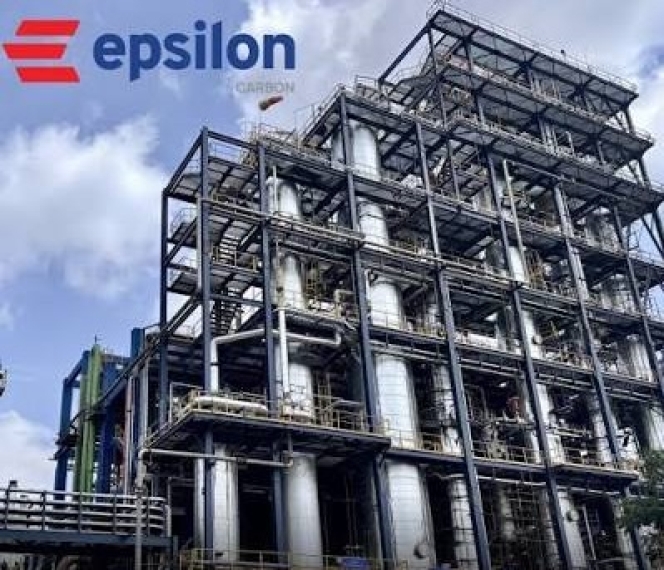
Epsilon Carbon Pvt. Ltd., a global speciality carbon and carbon black manufacturer, has broadened its emissions accounting to include value chain impacts beyond its direct operations. The move advances measurement and management of Scope 3 emissions across its supply and distribution network, according to the company.
The initiative spans Epsilon Carbon’s integrated carbon complex in Vijayanagar, Karnataka. That site has a production capacity of 500,000 tonnes per annum of speciality carbon and 215,000 TPA of carbon black. It combines carbon manufacturing with energy circularity efforts in one integrated ecosystem. The company assessed material Scope 3 categories under GHG Protocol guidelines.
Scope 3 emissions are indirect and arise from purchased goods and services, transportation, business activities and downstream product use where relevant. The assessment gives Epsilon Carbon clearer visibility into emissions outside its direct control and a foundation for spotting reduction opportunities. It builds on existing operational emissions and energy efficiency work.
The company previously reported a 98 percent Scope 2 reduction against its baseline year. A 17 MW captive power plant uses waste heat from carbon black operations, energy consumption intensity fell 6 percent from baseline, and 77 percent of energy needs came from waste heat recovery, avoiding over 89,000 tonnes of CO₂. Epsilon Carbon now emphasises supplier engagement, data transparency and circularity, aligning disclosures with global sustainability frameworks to track value chain emissions consistently and develop measurable reduction initiatives.
Vikram Handa, Managing Director, Epsilon Carbon, said, “Meaningful climate action requires us to look beyond the boundaries of our operations and understand the impact of the entire value chain. Scope 3 measurement gives us greater visibility into the emissions and enables deeper engagement with our partners and suppliers. Building this visibility will help us make more informed decisions as we scale our operations and advance our decarbonization plans.”

Comments (0)
ADD COMMENT