Continental-Engineered Tyre Adds 30 Kilometres To Renault EV Battery Range
- By TT News
- June 18, 2026
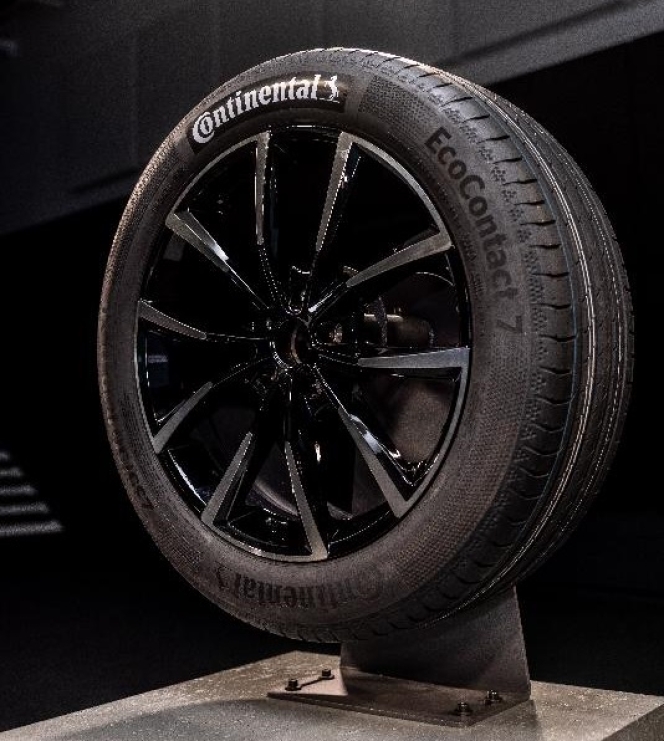
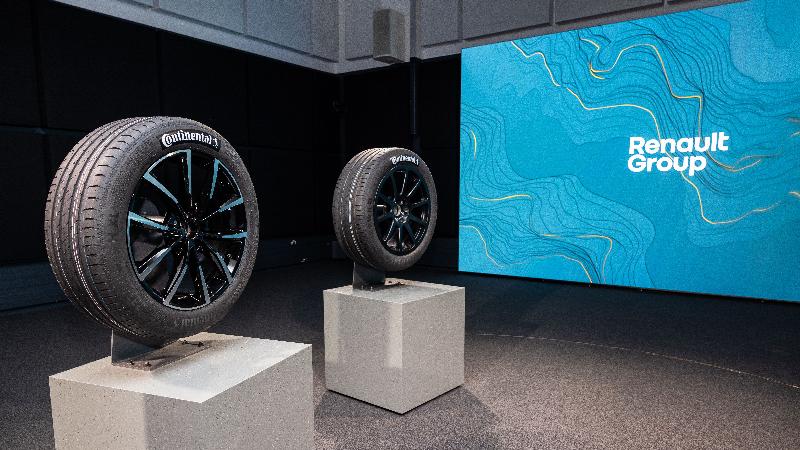
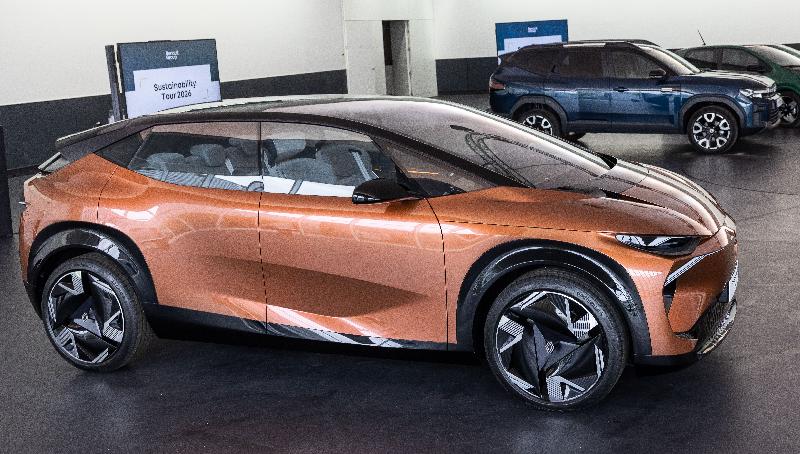
Continental has engineered a specialised tyre for French automaker Renault Group, designed to substantially extend the driving range of its electric vehicle lineup. Developed through a strategic collaboration with Renault’s innovation divisions, the new tyre achieves a rolling resistance that is up to 35 percent lower than the threshold required for the European Union tyre label’s top A rating. For an electric vehicle with a standard battery range of 500 kilometres, this reduction translates into an additional 30 kilometres per charge, a distance comparable to the journey from Paris to Versailles.
The tyre’s development began with Continental’s EcoContact 7 model, which was then extensively modified to meet Renault’s specific performance targets. Engineers implemented a uniquely formulated tread compound, a redesigned sidewall structure and an optimised internal construction to minimise energy loss. The final product was publicly presented during Renault Group’s Sustainability Tour on 8 June in Guyancourt, near Paris, showcasing how precision engineering can directly influence the efficiency and road performance of next-generation electric vehicles.
Rolling resistance remains a critical factor in vehicle energy consumption, accounting for approximately 20 to 30 percent of total energy use regardless of propulsion system. Lower resistance reduces the energy dissipated through tyre deformation and friction, a benefit that is particularly pronounced in electric cars where it directly translates to increased range. While prioritising efficiency, Continental also emphasised that the tyre maintains essential safety functions, as the tread’s friction with the road surface is vital for reliable braking and stable vehicle handling.
To achieve these results, Continental and Renault employed advanced virtual development tools, including Continental’s Driver-in-the-Loop simulator and Renault’s ROADS driving simulator. These systems allowed engineers to evaluate and refine tyre characteristics under realistic conditions early in the design phase, with seamless replication of test scenarios between both platforms. This digital approach not only accelerated the development cycle but also significantly reduced physical prototyping, enabling Continental to save up to 10,000 test tyres annually through the increased application of virtual technologies.
Dr Christian Strübel, Continental expert on the rolling resistance of car tyres, said, “Together with Renault Group, we are improving the efficiency of its new electric vehicles. Our tailor-made tyres have very low rolling resistance, which significantly increases range.”
Nicolas Champetier, VP Innovation at Renault Group, said, “Extremely low rolling resistance is key to enhancing the range of electric vehicles. With Continental, we have a strong partner by our side: thanks to our longstanding collaboration in original equipment, we can jointly develop solutions that have the potential to deliver real added value for our customers.”
TyreSafe Marks 20th Annual Briefing And Awards With Record Attendance
- By TT News
- June 18, 2026
TyreSafe commemorated its 20th Annual Briefing and Awards this week, drawing a record-breaking crowd of over 200 representatives from the automotive, retail, manufacturing, enforcement, governmental and road safety sectors. The landmark gathering took place at The Belfry, signalling a significant escalation in the collective focus on tyre maintenance as a cornerstone of national roadway welfare.
The unprecedented turnout underscores a broad-based acknowledgment that proper tyre upkeep is essential to UK's wider road safety objectives. Opening the proceedings, TyreSafe Chair Stuart Lovatt lauded the industry's unified dedication, emphasising the necessity of preserving this cooperative drive amidst an evolving policy environment. This call to action set the tone for discussions centred on the newly released National Road Safety Strategy, the first of its kind in 15 years.
Throughout the day, experts dissected upcoming challenges and potential solutions, repeatedly stressing that cohesive collaboration and a harmonised message are vital for achieving the ambitious goals set forth by the government. The formal proceedings seamlessly transitioned into an evening gala where distinguished entities and individuals received accolades for their creative partnerships, public outreach and steadfast dedication to safeguarding motorists.
The night culminated with TyreSafe bestowing its Lifetime Achievement Award upon Lisa Scott, honouring a remarkable 40-year tenure in road safety advocacy. From her origins as a Road Safety Officer to her present managerial role at National Highways, Scott's influence on educational programmes and behavioural initiatives has been profound. As a key Steering Committee member, her mentorship has been instrumental in shaping protective measures for the public. Looking forward, TyreSafe recommits to evidence-based education and advocacy to ensure the new national strategy translates into tangible, life-saving action.
2026 TyreSafe Award Winners:
Tyre Safety in the Community – Halfords
Online & Social Media – The Motor Ombudsman
Communications – Pneumatic Components Ltd
Road Safety Partnerships – Shropshire Fire & Rescue Service
Small Tyre Retailer of the Year – TMT Tyres
Emergency Services Partner – Sussex Police Road Safety Team
Innovation & Technology – Autogem Invicta Ltd
Road Safety Organisation – Driven To Improve Ltd (My Learner Driver)
Large Tyre Retailer of the Year – Protyre Autocare
Vehicle Manufacturer – Toyota (GB) PLC
Tyre Manufacturer of the Year – Bridgestone UK
Road Safety Individual of the Year – Brad Mawson, Safer Roads Greater Manchester
Special Recognition Award – Pirelli UK Tyres Ltd
Outstanding Achievement Award – Warwickshire Road Safety Partnership
Lifetime Achievement Award – Lisa Scott
Lovatt said, “This year’s record attendance demonstrates the strength and commitment of the tyre safety and road safety community. As we welcome the first National Road Safety Strategy in 15 years, it is more important than ever that organisations across our sector continue to work collaboratively, share expertise and deliver consistent messages that help save lives. The challenges ahead are significant, but together we have the opportunity to make a lasting difference.
“Our twentieth Annual Briefing and Awards was a powerful demonstration of what can be achieved when organisations come together with a shared purpose. The quality of this year’s award entries was exceptional and reflects the incredible work being undertaken across the country to improve tyre safety and road safety. We congratulate all of our winners and finalists and thank every organisation and individual who continues to support TyreSafe’s mission of reducing tyre-related incidents on our roads.”
Riding The Atmanirbhar Wave
- By Sharad Matade & Gaurav Nandi
- June 18, 2026
India’s Atmanirbharta push is reshaping the tyre industry as companies leverage domestic mineral resources and advanced processing technologies to reduce import dependence and strengthen global competitiveness. Players such as 20 Microns Limited are capitalising on this shift by developing value-added fillers that enhance tyre performance while lowering costs and emissions.
As radialisation, sustainability targets and export ambitions converge, indigenous innovation is increasingly being positioned not merely as import substitution but as a strategic lever for global market integration and long-term industry transformation.
India has witnessed a sharp rise in cross-manufacturing capabilities across industries over the past decade. Once heavily dependent on imports, the country is gradually positioning itself as a manufacturing and export hub. This transition has been accelerated by Prime Minister Narendra Modi’s call for Atmanirbharta (self-reliance).
The domestic tyre ecosystem is also benefiting from this momentum, with companies that have established strengths in adjacent sectors now entering the tyre value chain. Gujarat-based 20 Microns, a speciality chemicals company operating primarily in industrial minerals and performance additives for sectors such as tyres, rubber, plastics, Paints, paper etc., has emerged as a supplier to leading Indian tyre manufacturers including CEAT.
Speaking exclusively to Tyre Trends, K K Mishra, President – Product and Business Development at 20 Microns, said, “The shift from bias-ply to radial tyres opened up opportunities for players like us to enter the tyre industry.”

Before entering the tyre segment, the company catered to multiple industries. “We supply products for 78 different applications, so tyres were not initially a focus area for us. Our entry into the segment was largely driven by customer demand,” Mishra explained.
The company’s first offering to the tyre industry was magnesium oxide. However, tyre manufacturers were already using the material in limited quantities relative to their overall raw material consumption. While some experimented with alternative fillers, these solutions often failed to deliver significant value.
Mishra pointed out that India had traditionally exported large volumes of raw minerals such as China clay, talc, mica and other industrial minerals but lacked advanced grinding and processing capabilities. As a result, European companies imported these raw materials, converted them into high-value speciality products and exported them back to India at significantly higher prices.
Recognising this gap, 20 Microns began developing nano and value-added mineral-based products domestically.
“We registered 20 Microns Nano Minerals Limited in 2004, but commercial operations started in 2012. We introduced products gradually. Our first major offering was an anti-blocking agent, which was largely imported by petrochemical Complex. These agents are used in packaging films to prevent layers from sticking together,” Mishra said.
To manufacture the product, the company installed a delamination process capable of producing platy particles. Advanced machinery was imported from Germany, and the delaminated talc products were initially supplied to Reliance Industries.
Following this success, the company realised the same technology could be applied to other minerals.
“We introduced kaolin, which also has a platy structure. Using the same delamination process, we produced nano-sized, high-aspect-ratio particles without fracturing them,” he noted.
This development became particularly relevant as the tyre industry transitioned from bias-ply to radial tyres.
“Radial tyres require improved air retention and reduced permeability. Our delaminated nano kaolin enhances these properties. We developed a product in which each particle is separated layer by layer rather than mechanically crushed,” Mishra explained.

The company recognised that global tyre manufacturers such as Bridgestone were importing similar materials from suppliers like Imerys, encouraging it to approach Indian tyre makers.
“Our first engagement was with CEAT, where the product delivered encouraging results. This was largely due to the superior quality of Indian China clay. Following CEAT’s success, we approached JK Tyre and Apollo Tyres. After two to three years of trials and validation, our product was approved and commercial supplies began,” Mishra said.
The company is now in discussions with Bridgestone, which currently imports these materials, and securing a position in its supply chain would mark a significant milestone.
MARKET OPPORTUNITY
India’s tyre industry is expanding rapidly. While the domestic market includes several major tyre manufacturers, the global supply side for speciality minerals remains concentrated among a few multinational players such as Imerys and Thiele. 20 Microns sees this as an opportunity to position itself as a global supplier.
“After establishing ourselves in India, we have started approaching international tyre manufacturers such as Pirelli and Iris Tyres, where approvals are currently underway. Globally, the transition towards radial and tubeless tyres is driving demand for such materials,” Mishra stated.
The company claims its products help reduce costs, provide reinforcement and partially replace carbon black while also supporting sustainability objectives.
Compared to carbon black or silica, the company’s product reportedly generates only around five percent of the associated carbon emissions, resulting in nearly 95 percent lower carbon output.
Additionally, the company operates its own mining facilities, where land restoration and environmental compliance form part of the extraction process.
“Around 15 percent of carbon black in tyres can be replaced with our product. Simultaneously, air impermeability improves by approximately 13–15 percent. Typical loading levels are around 15–20 percent. This means tyre manufacturers achieve carbon black replacement along with some reduction in rubber usage because improved air impermeability allows lower rubber consumption,” Mishra explained.

Beyond large tyre makers, the company is now targeting smaller manufacturers as well. Producers of two-wheeler and three-wheeler tyres have already begun adopting these solutions.
According to Mishra, several manufacturers have also expressed strong interest, with collaborative research and development activities underway to accelerate adoption.
However, he acknowledged that large-scale application in commercial vehicle tyres, where carbon black usage is significantly higher, will take time.
“Tyres are directly linked to safety, so manufacturers are understandably cautious. There is initial scepticism regarding whether replacing carbon black or introducing China clay-based fillers could affect mechanical performance. However, as successful implementation in passenger car radial tyres becomes more visible, adoption is expected to expand into commercial tyres as well,” he said.
STRENGTHENING THE SUPPLY CHAIN
Exports currently contribute around 18 percent of the company’s total revenue, with supplies reaching 86 countries across Europe and the Americas. Mishra expects demand for delaminated products to grow three to four times over the next three to four years.
The company operates mine-site plants for kaolin, while its primary facility is located in Bhuj, Gujarat, where mining operations span 168 hectares. One mine is operational, while another is awaiting environmental clearance.
Its facilities employ advanced technologies, including cryogenic magnetic separation systems, to remove paramagnetic and ferromagnetic impurities. The kaolin slurry is processed through specialised systems to produce ultra-pure material, ensuring high-quality output.
“Indian kaolin deposits naturally offer high aspect ratios and superior platy structures. This enables two major applications. First, delaminated kaolin improves permeability and reinforcement in tyres. Second, when calcined at 1200–1,400 degrees Celsius, it can partially replace titanium dioxide, especially in paints and plastics. While this market is smaller than tyres, it still offers considerable potential,” Mishra noted.
According to the company, competition in this niche segment remains limited globally, with only a handful of manufacturers producing such specialised materials. While China competes aggressively in standard grades, the delaminated segment continues to remain relatively niche.
Sustainability has become a key focus area, as the products are derived from naturally occurring minerals that require mining and processing, yet still offer a significantly lower carbon footprint.
The company’s long-term objective is to increase the share of mineral-based fillers in tyre formulations.
“Three additional products are currently under development, including amorphous silica from diatomaceous earth and nano silicates as green tyre fillers. Delaminated talc, already supplied as an anti-blocking agent for petrochemical applications, is also being positioned by some European players as a partial carbon black substitute,” Mishra revealed.
The company recently invested INR 1 billion, fully funded through internal accruals, towards expansion. It currently operates nine plants in India along with facilities in Malaysia and Vietnam
Delaminated production capacity, currently at 400 tonnes and fully utilised by three tyre customers, is being expanded to 1,000 tonnes in response to strong global demand.
Capacity expansion is also underway in the petrochemical segment to cater to rising demand for anti-blocking agents. The company has acquired mineral assets and land in Anantapur for a talc and dolomite plant serving both tyre and non-tyre sectors, while calcium carbonate operations are being expanded in Makrana.
Expansion of the Malaysian subsidiary is expected to be funded through debt and private equity following mining asset acquisitions.
GLOBAL AMBITIONS AND FUTURE CHALLENGES
Export opportunities remain a key focus, particularly in Europe and other global markets.
“Our strategy is to first establish a strong domestic base and then expand globally through direct engagement with international manufacturers as well as distributor networks. The overseas expansion of Indian tyre companies is also creating opportunities, as approved supplier bases are being extended internationally,” Mishra said.
At the international level, concerns persist regarding the impact of replacing carbon black with China clay-based fillers on mechanical performance. However, awareness of similar global products already exists, and the company believes its 50–60 percent cost advantage could support gradual adoption despite lengthy validation cycles.
In the electric vehicle tyre segment, progress has so far been limited. Nevertheless, mineral-based fillers are recognised for offering improved flame-retardant properties, which could create future opportunities.
“Traditionally, adoption cycles in the tyre industry have been lengthy, typically taking around three years from laboratory testing to commercialisation. However, this approach is evolving following the Paris Agreement, with sustainability and circular economy goals driving greater openness towards green tyres. Artificial intelligence is also being leveraged to accelerate innovation, enhance testing and improve supply chain efficiency,” Mishra observed.
At the same time, challenges remain. The company also highlighted how readily mineral-based innovations can be replicated, leading to intensifying competition in the value-added minerals segment, where fillers are increasingly positioned as performance enhancers. While India continues to hold strength in China clay, talc, mica resources, and continues to export aggressively, imports of calcium carbonate from countries such as Malaysia, Vietnam and Egypt are also increasing.
Even as the Atmanirbharta wave drives innovation and global ambition, challenges related to validation cycles, performance concerns and rising competition persist. The ability to scale sustainably, protect innovation and build global trust will determine whether India’s mineral-based solutions evolve from cost-efficient alternatives into indispensable components of next-generation tyre manufacturing.
Liberty Tire Recycling Champions Literacy And Environmental Stewardship In Calhoun
- By TT News
- June 17, 2026
Liberty Tire Recycling has placed community engagement at the forefront of its operational philosophy, recently demonstrating this commitment through a collaborative literacy project in Calhoun, Georgia. The initiative, undertaken with Keep Calhoun-Gordon Beautiful, targeted local third-grade classrooms by combining educational support with environmental consciousness. Company volunteers actively participated by reading to students, fostering direct connections that underscored the importance of literacy while simultaneously promoting broader ecological values.
The sponsorship and hands-on efforts from Liberty Tire Recycling’s Calhoun site reflect a strategic approach to sustainability that extends beyond traditional waste management. General Manager Pam Boling observed the enthusiasm and fresh perspectives of the young participants, reinforcing the company’s belief in investing in youth as a pathway to long-term environmental progress. This educational focus is designed to empower future generations with the knowledge necessary to advance sustainable practices in their communities.


Beyond the literacy event, Liberty Tire Recycling maintains a robust partnership with Keep Calhoun-Gordon Beautiful that includes sponsorship of biannual recycling drives and tire amnesty programmes. These efforts are instrumental in diverting waste from landfills, enhancing recycling education and fortifying local sustainability infrastructure. The collaboration exemplifies how corporate entities can actively contribute to environmental stewardship through targeted, community-based actions.

Liberty Tire Recycling asserts that achieving meaningful sustainability goals requires active collaboration with local organisations and residents. By supporting grassroots environmental awareness, educational development and community trust, the company aims to inspire lasting change. Such initiatives illustrate a model where business and community interests align, working together to build a cleaner, more sustainable future through localised impact and shared responsibility.
Ninth Consecutive 1000 Miglia Partnership Underlines Vredestein’s Classic Motoring Commitment
- By TT News
- June 17, 2026
Apollo Tyres Ltd has reinforced its dedication to the historic vehicle segment by extending its partnership with the 1000 Miglia for the ninth year running, with its Vredestein premium brand serving as the event's Official Tyre Partner.
The 2026 edition of the renowned Italian endurance rally, celebrated as ‘La corsa più bella del mondo’ (the most beautiful race in the world), saw over 300 vintage automobiles traverse the legendary thousand-mile circuit between Brescia and Rome. The challenging route wound through picturesque towns and mountain passes, strictly adhering to eligibility rules that required participants to be models manufactured before 1957, mirroring the original competitions from 1927 to 1957.
Vredestein’s visual presence was prominently established across the rally's entire infrastructure, from the competitive stages to the paddock and hospitality zones, further cementing the brand's strong association with European classic motoring traditions. The competitive credentials of the brand were highlighted by former Formula 1 drivers Giancarlo Fisichella and Robert Doornbos, who piloted a Siata and an Austin Healey respectively, both fitted with Vredestein Sprint Classic tyres.

This year’s event served as an ideal platform for the entire Vredestein Classic range, which successfully merges retro aesthetics with modern compound technology to ensure superior grip and safety. The comprehensive portfolio now includes the Sprint Classic, Snow Classic, Grip Classic and Transport Classic, each engineered specifically to meet the unique demands of vintage and classic automobiles.
Udyan Ghai, Head of Marketing, Apollo Tyres Ltd, said, “The 1000 Miglia remains one of the world’s most iconic celebrations of automotive heritage, and we were proud to return as Official Tyre Partner. The event reflects the spirit of the Vredestein brand, combining timeless design, engineering excellence and driving passion. Our Classic range is designed for enthusiasts who want authentic looks alongside modern levels of performance and safety, making the 1000 Miglia the ideal environment to showcase these tyres in action.”


Comments (0)
ADD COMMENT