

Continental Tires to Invest Around INR 1 Bln in India Manufacturing Expansion
- By TT News
- June 09, 2025
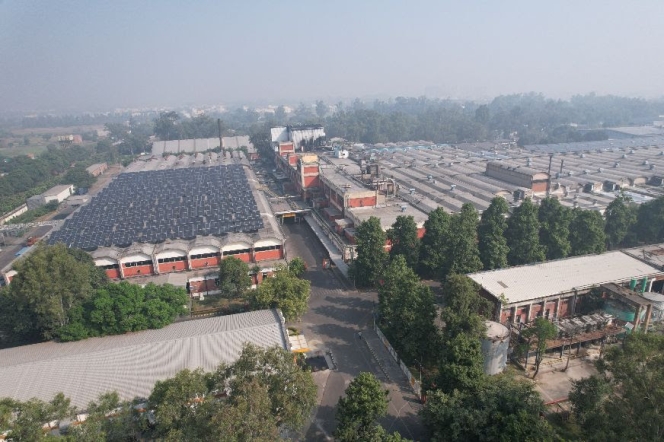
After announcing the discontinuation of the TBR tyre business in India, German premium tyre manufacturer Continental Tires announced on Monday a strategic investment of approximately INR 1,000 million to bolster its passenger car and light truck tyre operations in India as the company positions itself to capture growing demand in the world’s most populous nation.
Last week, the company announced a discontinuation of its Truck and Bus Radial (TBR) tyre business in India, citing intensifying competition and high price sensitivity in the TBR segment.
The investment forms part of Continental’s "in the market, for the market” strategy, which aims to develop products specifically tailored to Indian driving conditions and consumer preferences. The funds will enhance manufacturing capabilities at the company’s existing facilities whilst expanding its passenger car and light truck tyre portfolio.
“With our 'in the market, for the market' approach, we’re aligning our portfolio to reflect the evolving lifestyle needs of Indian drivers, from daily commutes and long-distance travel to changing expectations around comfort, safety, and convenience,” said Samir Gupta, Managing Director of Continental Tires India.
The announcement comes as India’s automotive sector experiences rapid transformation, with utility vehicles emerging as one of the fastest-growing segments. Continental said it sees particular growth potential in larger-inch and ultra-high-performance tyres designed for SUVs, 4x4s, and sporty vehicles.
The company plans to introduce the CrossContact AT2 all-terrain tyre to the Indian market this year, expanding its product range to meet evolving consumer demands.
Goodyear To Exit Chemical Business With Closure Of Last Two US Plants
- By TT News
- October 08, 2026
The Goodyear Tire & Rubber Company has approved a plan to close its last two chemical manufacturing plants in the United States, located in Niagara Falls, New York, and Bayport, Texas. This decision, made on 29 September 2026, signifies the company's complete withdrawal from the chemical sector as it seeks to streamline operations and concentrate solely on its core tyre products and services.
The decommissioning process is set to begin immediately, with operations at the Niagara Falls facility potentially ceasing by 31 October 2026. The full shutdown is expected to be largely finished by the end of 2027. This move will result in roughly 85 job losses across both sites. Goodyear anticipates total pre-tax exit charges between USD 55 million and USD 75 million, yet projects an annual boost of USD 15 million to USD 20 million to its Americas segment operating income starting in 2027.
This announcement follows the company's October 2025 sale of most of its polymer and chemical operations to a Gemspring Capital Management affiliate for USD 650 million. The Niagara Falls plant, operational since 1946, has also been under heavy regulatory scrutiny and investigative reporting concerning emissions of ortho-toluidine, a known carcinogen, which allegedly surpassed legal limits.
Kuraray America Observes Customer Service Appreciation Week 2026
- By TT News
- October 08, 2026

Kuraray America, Inc. (KAI) celebrated the critical role its customer service teams play in shaping the customer experience with the Customer Service Appreciation Week 2026, recognising them as the vital connection between customers and the many internal teams working together to deliver on company commitments.
This year’s theme, ‘The Extra Mile’, honours the dedication behind that work, including coordinating complex logistics, anticipating customer needs, connecting customers with appropriate expertise and navigating unexpected challenges. Teams bring together people, information and solutions to keep customers moving forward, often making a difference through extra follow-up, proactive updates or determination to find a solution.
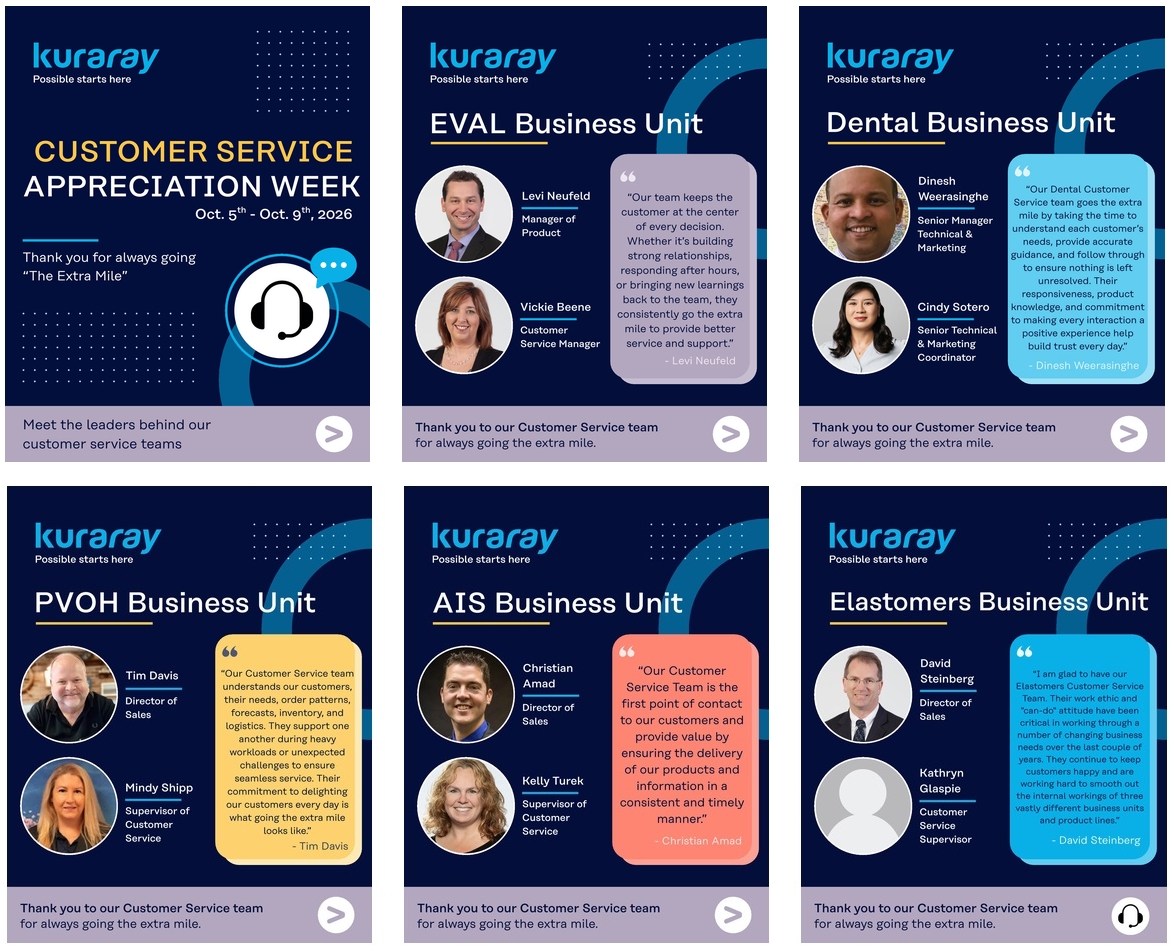
Levi Neufeld noted that the EVAL customer service team keeps the customer at the centre of every decision, a commitment shared across all service teams. For Dental, Dinesh Weerasinghe said going the extra mile means understanding each customer’s needs, providing accurate guidance and ensuring nothing is left unresolved. Tim Davis pointed to the PVOH team’s strength in supporting one another through heavy workloads, weather disruptions and unexpected challenges to provide seamless service.
Christian Amad emphasised AIS’s role as the first point of contact, ensuring customers receive needed information and products on time. David Steinberg highlighted Elastomers’ can-do attitude, which helps the team stay flexible and work effectively across three business units and product lines. Across all teams, that extra effort builds customer trust. KAI thanked each member for their responsiveness, knowledge, teamwork and care.
Hankook Tire Earns Spot On TIME's 'World's Best Companies 2026' List
- By TT News
- October 08, 2026
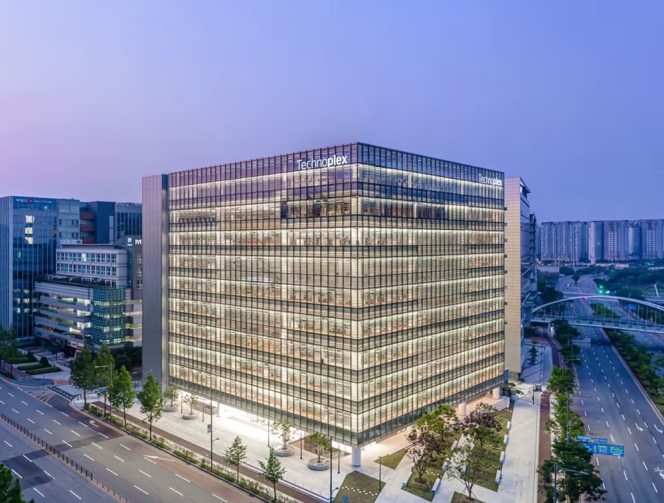
Hankook Tire, a leading global tyre company under Hankook & Company Group, has earned a place on the ‘World’s Best Companies 2026’ list compiled by the US weekly news magazine TIME. Since 2023, TIME has collaborated with global market research firm Statista to identify the world’s top 1,000 companies annually, evaluating factors such as employee satisfaction, three-year company growth and Statista’s key ESG indicators.
The selection was driven in part by sustained performance growth over the past three years. Hankook Tire’s tyre division reported revenue of KRW 10.3186 trillion in 2025, exceeding KRW 10 trillion for the first time since the company’s founding. This achievement was supported by an expanded premium-focused portfolio and stable sales in major global markets.
Sustainability management has also yielded notable results. The company has broadened its renewable energy procurement, including a long-term power purchase agreement for its Hungary plant signed in February, and now holds international ISCC PLUS certification at four production sites: Geumsan, Hungary, Daejeon and Jiaxing in China. Its recently published ‘2025/26 ESG Report’ introduced a group-wide ESG management framework and an integrated materiality assessment system, with transparent disclosure of key outcomes in sustainable materials, supply chain management and human rights.
Beyond these efforts, Hankook Tire continues creating social value through its group’s integrated ESG brand. It is advancing a ‘Mobility-Tech’ strategy incorporating artificial intelligence and data while adding eco-friendly vehicle models to its flagship ‘Vehicle Sharing’ social contribution programme and expanding it into a demand-tailored support model. The company has set a ‘2050 Net-Zero’ goal, became the first Korean tyre company to receive SBTi approval for 2030 reduction targets in 2023 and earned FIA 3-Star Environmental Accreditation in 2024. It was also named to TIME and Statista’s ‘World’s Most Sustainable Companies’ list and the Financial Times and Statista’s ‘Asia-Pacific Climate Leaders’ list in 2024.
Tegeta Green Planet Presents Circular Economy Expertise at IRF Congress
- By TT News
- October 07, 2026
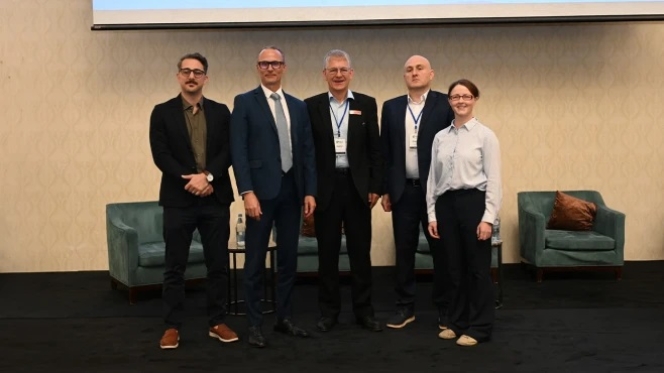
Tegeta Green Planet was represented by its director, Shalva Akhvlediani, at the 4th IRF Europe & Central Asia Regional Congress & Exhibition, convened by the International Road Federation (IRF Global). The three-day gathering assembled specialists possessing international and regional expertise, alongside public and private sector delegates and researchers, to deliberate on pressing matters concerning road infrastructure development.
Sustainable, Smart and Safe Roads for Sustainable Economic Growth served as the congress's central theme. Akhvlediani took part in a session titled ‘Sustainable Road Infrastructure: Climate Risks, Emissions and Long-Term Efficiency’, which examined methods for reinforcing the resilience and sustainability of road infrastructure across its complete lifecycle, spanning planning, design, construction, maintenance and renewal.
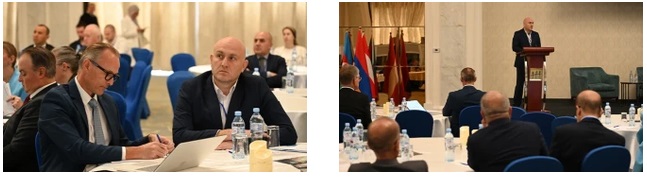
Climate change adaptation, low-carbon materials, circular economy approaches and environmental efficiency featured among the session's principal subjects, together with solutions guaranteeing road infrastructure's durable, long-term performance. Akhvlediani shared Tegeta Green Planet's expertise and outlook, noting that the company's operations accord directly with circular economy principles by converting waste into resources and advancing responsible waste management.
Operating within Extended Producer Responsibility, Tegeta Green Planet occupies a significant role in Georgia's collection and management of specific waste streams, including used tyres, waste oils and automotive batteries. This practical experience illustrates how circular economy principles can be embedded in real business and infrastructure solutions. Congress discussions additionally addressed international experience exchange and practical approaches for strengthening infrastructure resilience, environmental efficiency and long-term durability.

Comments (0)
ADD COMMENT