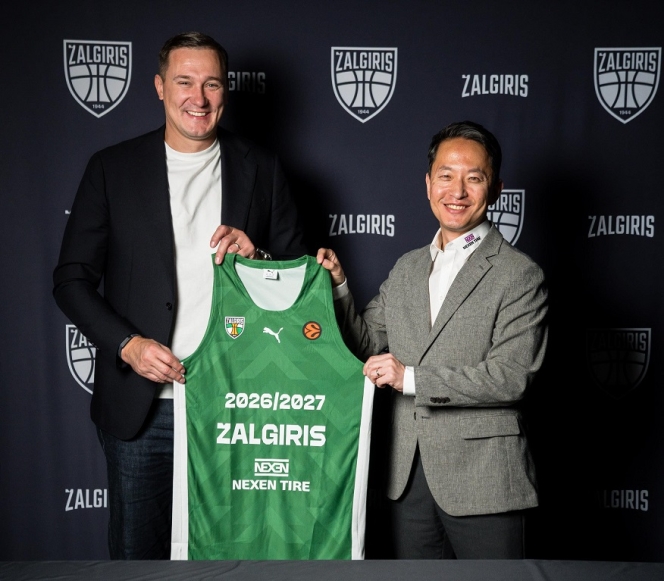
NEXEN TIRE has extended its partnership with Zalgiris, reinforcing its commitment to basketball in Europe, particularly across the Baltic region. The renewal builds on a relationship that began in 2024 and reflects the company’s broader strategy of linking its brand to performance, innovation and mobility.
The tyre maker has pursued sports partnerships as a way to connect with fans, sharing in the passion and excitement of supporting favourite teams during major matches and memorable moments. It also values the teamwork, dedication and collective achievement that define team sports, using such ties to build authentic connections and deepen engagement in key European markets. Its collaboration with clubs including Zalgiris and FC Bayern München forms part of this approach.
Under the extended agreement, NEXEN TIRE will gain greater visibility among sports fans in the region. The partnership offers branding opportunities at Zalgirio Arena, such as synchronised on-screen advertising and promotion on LED stands near the court, in a position visible on television during EuroLeague and LKL home games.
The arrangement also includes a hospitality programme allowing NEXEN TIRE to welcome guests and business partners at Zalgiris home fixtures. Through the strengthened alliance, the company aims to share its passion with more fans while raising brand awareness across the region.
Ricky Lee, Managing Director, NEXEN TIRE Poland, said, “Our cooperation with Zalgiris has developed positively since 2024, and we are pleased to extend and strengthen this partnership. Basketball has a particularly strong following in the Baltic region, making Zalgiris an important partner as we continue to grow our presence and engage with fans. We look forward to supporting the team throughout the season and doing our best to create positive experiences for both the players and their passionate fans.”
Paulius Jankunas, President, Zalgiris, said, “We are delighted to continue our cooperation with NEXEN TIRE and build on the partnership we started two years ago. NEXEN TIRE brings extensive experience in sports marketing, and we are proud to work together on creating meaningful projects and experiences for our fans. We look forward to another successful period of cooperation and to welcoming NEXEN TIRE’s guests and partners to our games and events.”




Comments (0)
ADD COMMENT