

Michelin Revenue Falls On Currency Impact As Group Maintains 2026 Outlook
- By TT News
- May 06, 2026
Michelin reported lower first-quarter revenue after adverse currency movements offset stable underlying sales, while the tyre maker maintained its 2026 guidance amid growing geopolitical and supply chain uncertainty.
Group revenue for the three months to 31March fell 5.4 percent year on year to €6.2bn, compared with €6.5bn a year earlier. Michelin said the decline was entirely due to currency effects, primarily the appreciation of the euro against the US dollar and several other currencies. At constant exchange rates, revenue was stable.
Tire volumes declined 1.4 percent during the quarter, although replacement sales improved, supported by a 3 percent increase in MICHELIN-brand tire volumes. A favourable product mix, particularly in larger premium tires, partly offset weaker original equipment demand.
The Consumer segment recorded revenue of €3.4bn, down 4.4 percent on a reported basis. Michelin said replacement sales of passenger car and light truck tires remained resilient, while original equipment sales continued to be affected by weaker automotive markets, particularly in China. Sales of 18-inch and larger tires represented 69 percent of MICHELIN-brand sales during the quarter.
Revenue in the Transportation segment fell 11.3 percent to €1.4bn, reflecting weaker original equipment demand in North and South America and adverse exchange rates. Replacement sales increased in Europe but remained subdued in North America amid a softer road freight market.
The Specialties segment reported revenue of €1.1bn, down 3.3 percent. Michelin said mining and aircraft tire sales increased during the quarter, while beyond-road activities stabilised despite continued weakness in agricultural original equipment markets.
Polymer Composite Solutions revenue rose 5.1 percent to €326m, supported by the integration of Cooley Group and growth in sealing and coated fabric activities. Michelin said the segment would continue expanding through the integration of Flexitallic in April and the expected consolidation of TexTech later in 2026.
The company said uncertainty linked to the Middle East conflict continued to create risks around global demand, raw material supply and energy costs. Michelin nevertheless maintained its financial outlook for 2026, citing operational resilience, localised production and supply chain integration.
During the quarter, Michelin also completed the acquisitions of Cooley Group and Flexitallic as part of efforts to accelerate the growth of its Polymer Composite Solutions business.
Continental Tyres Power Volkswagen Mission Efficiency To World Record
- By TT News
- October 17, 2026
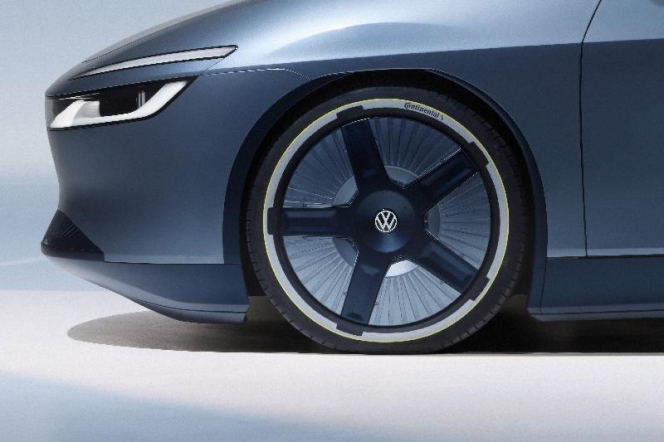
Continental played a decisive role in the world record achieved by Volkswagen's Mission Efficiency concept vehicle, supplying a specially developed concept tyre. During the drive, the near-production electric vehicle consumed just 7.51 kilowatt-hours per 100 kilometres including charging losses, or 6.89 kWh excluding them. The RID – Rekord-Institut für Deutschland certified the result on 24 August 2026, after a 1,278.36-km journey from Wolfsburg to Vienna under real-world conditions. The trip required only one charging stop and ended with 164 kilometres of remaining range.
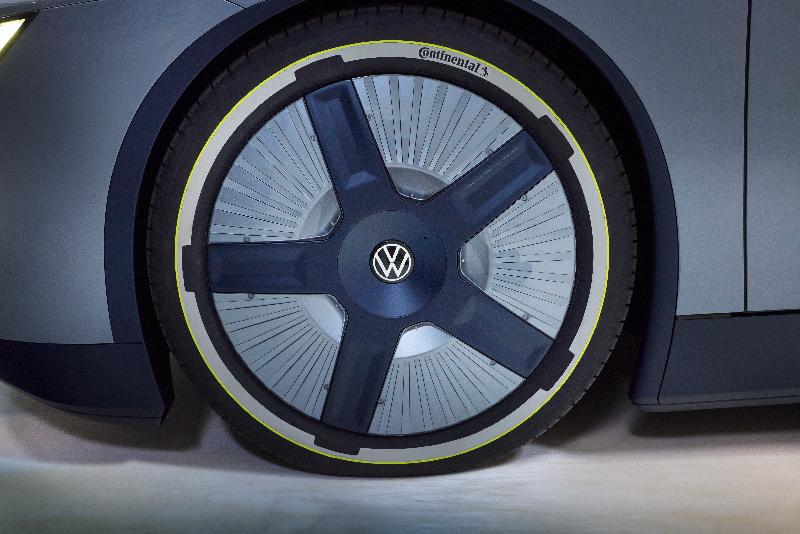
The concept tyre achieves a rolling resistance of 4.9 kg per metric tonne, roughly 25 percent below the threshold for the EU tyre label's highest Class A rating. Because about one-fifth of an electric vehicle's propulsion energy is consumed by overcoming tyre rolling resistance, this reduction is a major factor in extending range. Tyres therefore directly influence energy consumption and the distance possible on a single battery charge.
(Photo: Volkswagen AG)
Rolling resistance arises because a tyre deforms each time it contacts the road during every revolution. That deformation draws energy otherwise used for propulsion, and around 20 percent of an electric vehicle's battery energy is spent merely to overcome this effect. Continental's concept tyre builds on the EcoContact 7, a production tyre already known for exceptionally low rolling resistance.
For the record drive, the tyre was modified to Volkswagen's specifications, producing a design that deforms even less as it rolls, cutting energy consumption further and increasing range per charge. Two elements proved especially important. The sidewall follows the same design principle used in the EcoContact 7, delivering stability without raising rolling resistance. Meanwhile, the tread compound was specially tailored to the tyre's other components, working alongside the carcass and tread pattern to minimise energy losses.
(Photo: Volkswagen AG)
An additional advantage came from a new manufacturing process. During production, the initially soft green tyre is hardened in a mould under heat and pressure through vulcanisation, but Continental did not heat it uniformly as in conventional production. Instead, different areas were exposed to different temperatures, with the tread cured differently from the sidewall. This allowed each zone's properties to be optimised more precisely, resulting in even lower rolling resistance for the tread.
Rolling noise also shaped the tyre's development, and its tread pattern was specifically designed to achieve particularly low noise levels. Engineers varied the spacing and angles of the tread blocks so that the noises they generate partially overlap and cancel each other out, following a principle similar to noise-cancelling headphones. For the Mission Efficiency vehicle, this means the tyre improves efficiency while also ensuring a notably quiet driving experience, an aspect of growing importance because tyre noise becomes far more noticeable without an internal combustion engine.
The ID. Polo production car on which the Mission Efficiency is based already comes fitted with Continental's EcoContact 7 as standard, but the record project took the two companies further. Continental developed the tyre in close collaboration with Volkswagen's vehicle and aerodynamics engineers from a very early stage. The collaboration extended into the vehicle's design, with the tyre's colour-accented sidewall incorporating styling elements from the concept.
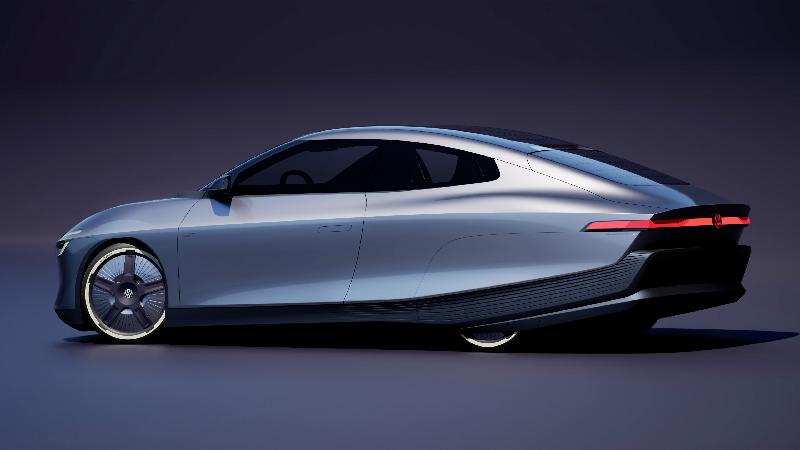
During the record drive, the vehicle set three benchmarks: the world's most aerodynamic near-production vehicle with a drag coefficient of 0.158, the most efficient four-seat electric vehicle in its class in a single controlled drive and the most economical near-production four-seat electric vehicle on an officially documented long-distance real-world drive. Largely based on production components from the ID. Polo, including its battery and drivetrain, the Mission Efficiency demonstrates the efficiency gains possible through targeted improvements to existing electric-vehicle technologies.
Dr Christian Strübel, Continental’s expert in rolling resistance for passenger-car tyres, said, “The record shows that increasing the range of electric cars does not necessarily require larger batteries. Significant opportunities lie in the successful interaction of all vehicle components. Tyres make a crucial contribution. Together with Volkswagen, we’ve demonstrated what’s possible when vehicle, aerodynamics and tyre development are aligned from the very beginning.”
- Liberty Tire Recycling
- Blessings in a Backpack
- National Childhood Hunger Awareness Day
- World Food Day
Liberty Tire Recycling Marks Third Year Of Blessings In A Backpack Support
- By TT News
- October 17, 2026

Liberty Tire Recycling has announced that its employees, business partners and supporters raised USD 195,000 in 2026 for Blessings in a Backpack, a national nonprofit providing weekend food to school-aged children facing hunger. The announcement coincided with National Childhood Hunger Awareness Day and World Food Day, marking the third consecutive year of the company's partnership with the organisation.
Funds were generated through the Liberty Cares Charity Golf Tournament and contributions from partners. The collaboration originated from employee feedback, as workers expressed a desire to support a cause addressing both children's needs and hunger – two areas Blessings in a Backpack serves.
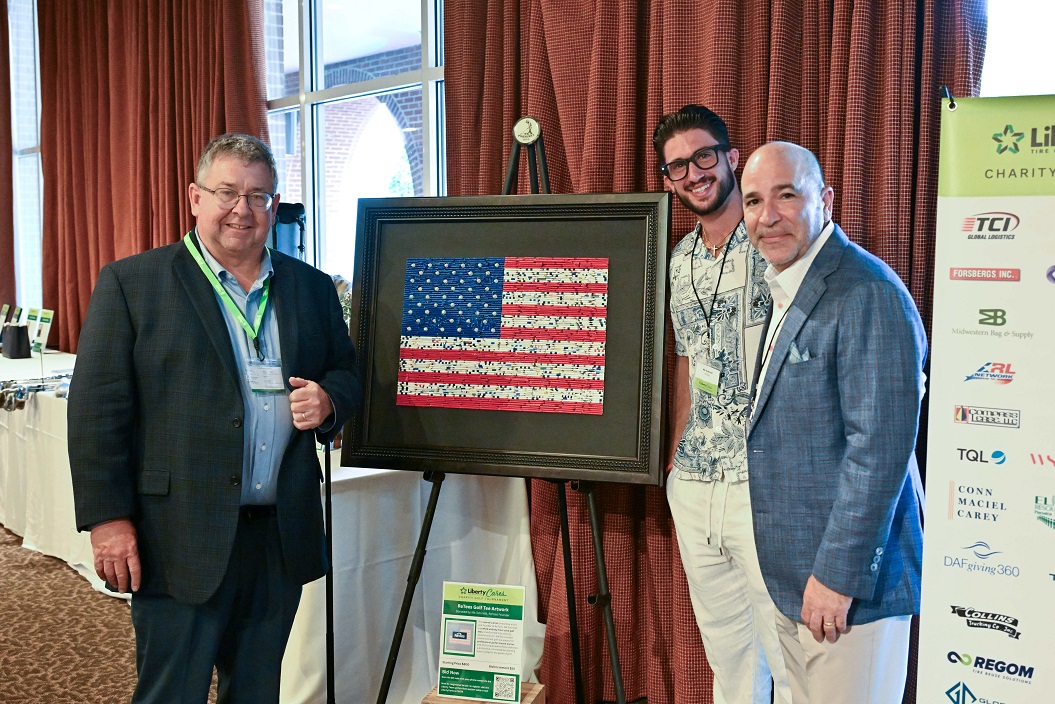
Thomas Womble, CEO, Liberty, and Charlie Alutto, Chair of the Board, at the 2026 Liberty Cares Charity Golf Tournament.
In late October, employees at five locations – Santa Fe Springs, California; Midlothian, Texas; Minerva, Ohio; Jackson, Georgia; and Portland, Oregon – will pack 6,500 weekend meal bags for local programmes. Additionally, staff companywide will create handwritten notes of encouragement for the bags. Liberty previously raised USD 87,805 in 2024 and USD 132,785 in 2025, bringing its three-year total to over USD 415,000.
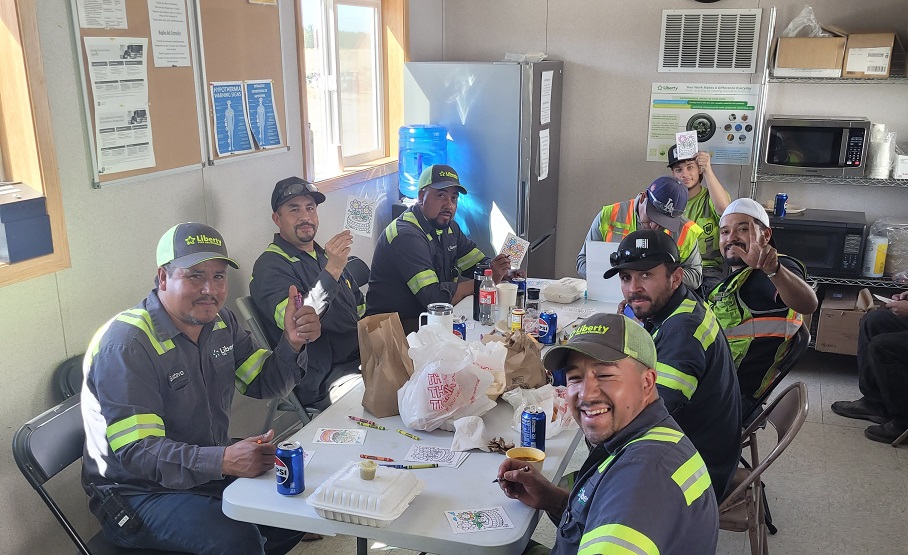
Liberty employees in Oregon write notecards for Blessings In A Backpack.
Thomas Womble, CEO, Liberty Tire Recycling, said, “In three years, we have raised over USD 400,000 and packed more than 16,000 food packs for kids in need. This is only possible with the employees at Liberty giving their time and effort to this project, and customers and partners committing their time and resources. Thank you to everyone who made this possible – I am proud to be part of this team.”
Alexis Hartman, Manager of Corporate Partnerships, Midwest, Blessings in a Backpack, said, "Thanks to the generosity of Liberty, their leadership, customers and employees as well as the outings’ donors and sponsors, over USD 195,000 was raised this year to benefit the mission and work of Blessings in a Backpack. We couldn’t be more grateful to the entire Liberty community for the care, compassion and kindness provided year after year to support children in need of our services. Thank you from the bottom of our backpacks!”
Hankook Tire Shines At 2026 Red Dot Design Award Ceremony For Design Concept
- By TT News
- October 17, 2026

Hankook Tire marked a significant design milestone on 15 October at the Capitol Theatre in Singapore, where the company was honoured during the Red Dot Award 2026 ceremony for Design Concept. The tyre manufacturer celebrated two Best of the Best accolades, with design team members present to represent the winning projects.
The recognition stemmed from the competition’s Design Concept category, where Hankook secured two top honours and four Winner awards. The winning entries, announced in August, included the i-Flex Gen 2, an airless concept tyre, and Medi Buddy, a futuristic medical mobility design. The i-Flex Gen 2 represents an evolution of the company’s airless tire research since 2015, introducing an industry-first circumferential spoke structure that improves low-noise performance and driving stability while enhancing visual appeal for future electric and autonomous vehicles.
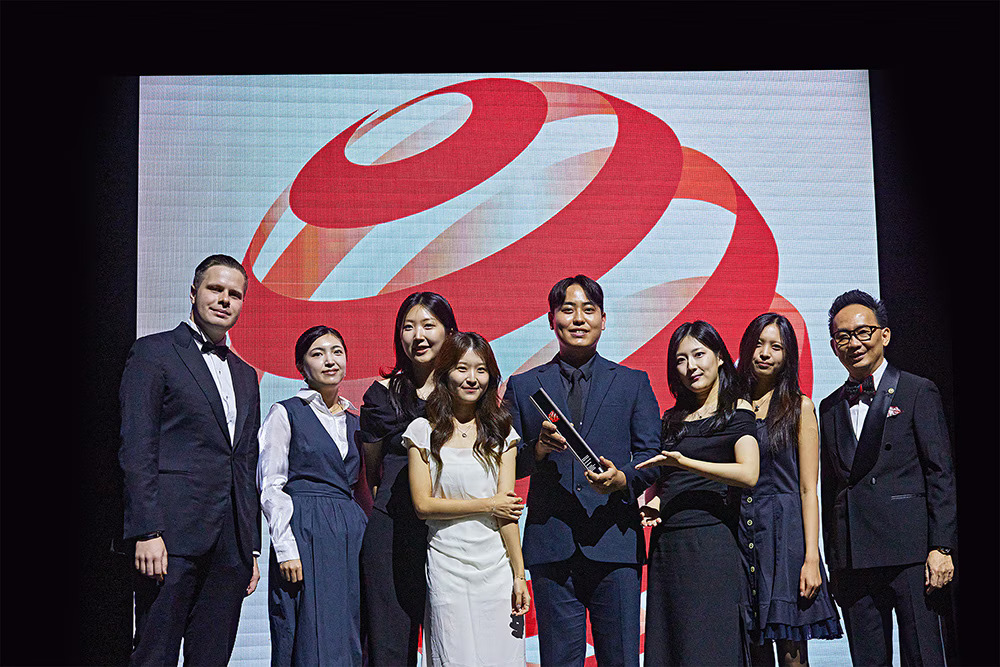
Medi Buddy emerged from an industry-academic partnership with Korea Design Membership Plus, a student talent programme managed by the Korea Institute of Design Promotion. Operating under the Mobile AI 2030 theme, the concept combines autonomous driving and artificial intelligence into an interactive smart IV system aimed at engaging hospitalised children, reducing their fear of hospitals and offering emotional comfort.
The award-winning concepts will be displayed in a special exhibition at the Red Dot Design Museum Singapore. The Red Dot Design Award ranks among the world’s three major design honours, alongside Germany’s iF Design Award and the US-based International Design Excellence Awards. Hankook previously became the first Korean company to earn the Red Dot Luminary honour in 2015, followed by the tyre industry’s first iF Gold Award in 2016 and an IDEA Bronze Award in 2017, completing a sweep of the top three global design awards.
- German Rubber Industry Association
- wdk
- German Rubber Industry
- Unaccounted Used Tyres
- Circular Economy
- Tyre Recycling
wdk: Unaccounted Used Tyres Undermine Germany's Circular Economy
- By TT News
- October 17, 2026
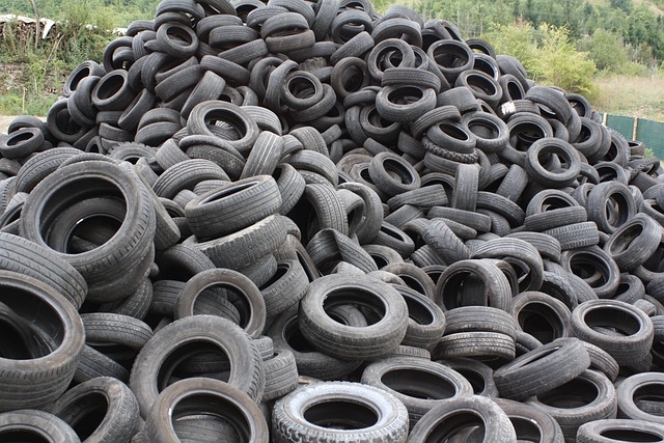
The German Rubber Industry Association (wdk) reported in Frankfurt am Main that used tyre disposal and recycling firms continue to face substantial shortages of used tyres, undermining a secure supply of secondary raw materials essential to a resilient and sustainable circular economy.
According to wdk Technical Director Stephan Rau, roughly 84,000 tonnes of used tyres were unaccounted for last year. These, and potentially far larger volumes, are suspected to have been exported outside the EU for incineration or pyrolysis under dire health and environmental conditions, removing them from German recyclers and the circular economy.
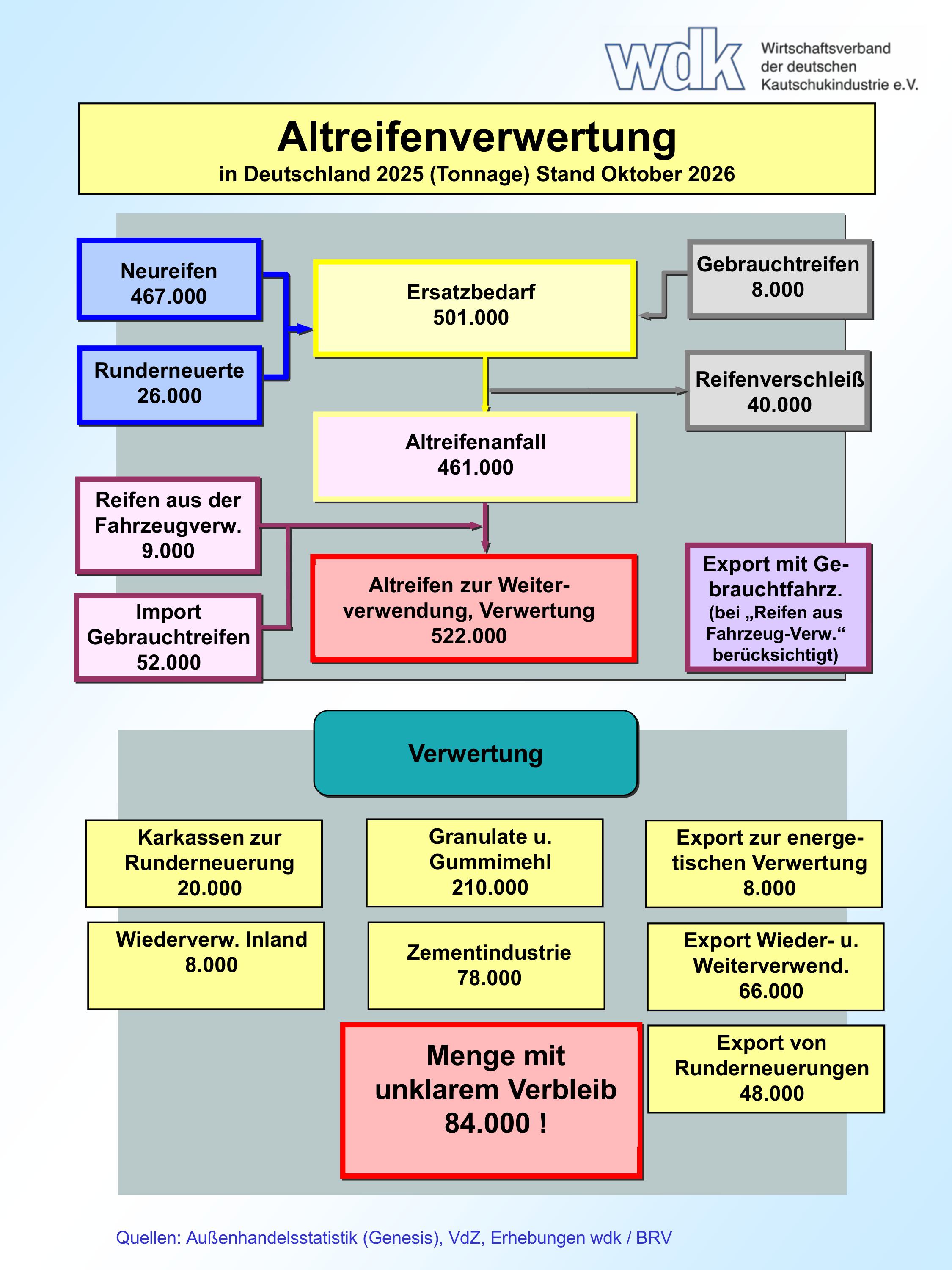
Although the loss rate has edged downward, the association argues that systematically recording waste tyres and their recycling pathways remains the most effective countermeasure. The wdk and allied organisations have urged this approach for years, describing it as easy to implement and capable of significantly strengthening the circular economy, provided political will emerges to support a functioning recycling system.
Rau also cited newly published statistics showing Germany generated 522,000 tonnes of waste tyres in 2025. Of that total, 210,000 tonnes became granules and rubber powder, now nearly triple the amount thermally recycled in the cement industry – a development the wdk called strongly positive, while noting that comprehensive quantity recording could enable substantially more tyres to be recycled.

Comments (0)
ADD COMMENT