

Sri Trang Group Hosts ‘One Sri Trang CG Day 2026’
- By TT News
- October 14, 2026
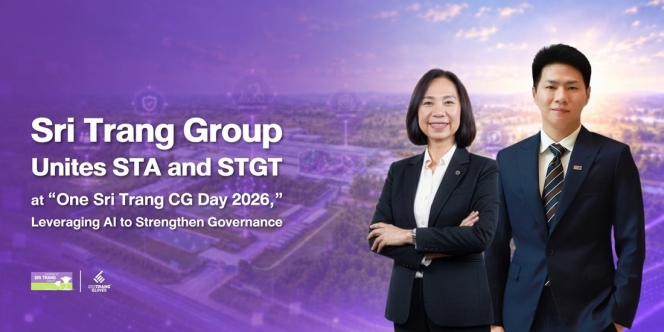
Sri Trang Group, the world’s largest fully integrated natural rubber company and the parent organisation of Sri Trang Agro-Industry Public Company Limited (STA) and Sri Trang Gloves (Thailand) Public Company Limited (STGT), concluded its flagship ‘One Sri Trang CG Day 2026’ initiative, built on the premise that strong governance underpins sustainability. The hybrid programme combined online participation with interactive training, drawing over 1,070 attendees, including directors, executives, staff and factory workers nationwide. Artificial intelligence made the material more engaging and accessible. Topics spanned business ethics, anti-corruption compliance, conflict-of-interest management, inside information handling and complaint procedures – framed as the bedrock of transparent operations that earn stakeholder trust.
Direction came from STA Executive Director Vitchaphol Sincharoenkul and STGT Chief Executive Officer Jarinya Jirojkul, who outlined the Group's governance policies and strategic priorities. Those policies provide guardrails for transparency, risk prevention, traceability and sustainable expansion, consistent with the organisation's vision and commercial goals. Both stressed that a culture of integrity and responsibility, grounded in Sri Trang's core values, buffers against pressures ranging from economic and technological disruption to natural disasters and competitive threats.
Rather than conventional lectures, organisers chose edutainment. A two-part miniseries, ‘The Domino Effect’, walked participants through real-world dilemmas in procurement, gift-giving and business hospitality, illustrating how conflicts of interest, misuse of inside information and whistleblowing cascade into consequences. AI-generated content added another layer, with virtual characters and simulated videos addressing code-of-conduct compliance, corruption, whistleblowing and complaint investigations. These dramatised situations helped staff grasp the fallout of poor decisions and recognise the right course of action, showing how AI can strengthen governance culture and broaden learning participation.
An interactive live quiz and discussion segment gave participants room to unpack scenarios and draw lessons on ethical decision-making, tied to the Group's code of business conduct and anti-corruption policy. The session reinforced the expectation that gifts be declined on all festive occasions and highlighted whistleblowing channels designed to safeguard reporters and keep identities confidential. Beyond the event, Sri Trang Group plans to continue the programme via its online self-learning platform, targeting full completion of refresher training and knowledge assessments within a month.
The effort dovetails with external benchmarks, including requirements of Thailand's Private Sector Collective Action Against Corruption, notably its top three-star CAC Change Agent status, alongside domestic and international ESG assessment standards. By tying its internal training push to these frameworks, Sri Trang Group signals that governance is not a one-off exercise but an ongoing commitment woven into how the organisation operates.
Highlighting the importance of corporate governance in global trade, Sincharoenkul said, “Transparency and good corporate governance are fundamental to business credibility, particularly within global supply chains, where stakeholders increasingly priorities raw material origins, traceability and responsible operations. Sri Trang Group is therefore committed to raising operational standards across every process so that our business partners, customers and stakeholders worldwide can be confident that every product comes from a transparent, traceable supply chain that supports our shared sustainable growth.”
Elaborating on the importance of instilling ethical awareness among employees, Jirojkul said, “Building confidence among customers worldwide depends on more than product quality. It also depends on the integrity, responsibility and commitment of every employee to doing what is right. STGT therefore prioritises embedding a corporate governance mindset into everyday work, because every action we take affects the trust that customers and stakeholders place in our organisation. When everyone upholds the same principles, we can deliver both quality products and lasting confidence to customers around the world.”
Tyrecycle Rolls Out Pilbara-Wide Recycling Programme For Mining Tyres And Conveyor Belts
- By TT News
- November 19, 2026
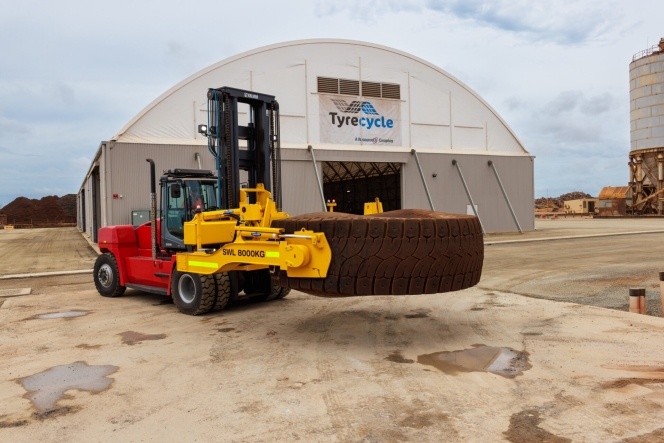
Tyrecycle has expanded its partnership with Rio Tinto to scale up recycling of end-of-life mining tyres and conveyor belts across the Pilbara, transforming a successful single-site initiative into a region-wide circular economy solution. The programme, one of the Pilbara’s largest resource recovery initiatives, diverts end-of-life materials from stockpiles and landfill into valuable inputs for new manufacturing.
The initiative began at Rio Tinto’s Gudai-Darri mine in 2024 and now operates across six sites as a scalable, fully traceable recycling solution. It supports Rio Tinto’s circular economy ambitions by ensuring end-of-life off-the-road (OTR) tyres and conveyor belts are recovered, processed and returned to productive use. Central to the programme is Tyrecycle’s purpose-built Port Hedland facility, Australia’s first dedicated OTR mining tyre recycling plant, opened in late 2024, which recovers rubber and steel for new products.
The partnership has saved over 8,000 tonnes in carbon emissions in just six months, equivalent to taking more than 3,200 cars off the road for a year. Many large OTR tyres contain enough steel to manufacture a small car, while recovered rubber is commonly used in bitumen to extend road life by 30 percent. A single large OTR tyre can improve over 230 metres of two-lane bitumen road. Tyrecycle also leverages back-freight opportunities to improve transport efficiency, reduce costs and lower logistics-related emissions.
Tyrecycle Chief Executive Officer Jim Fairweather said the expansion demonstrated how circular economy principles could be applied at scale within the resources sector, noting Rio Tinto Iron Ore’s leadership in adopting a practical solution. He said the Port Hedland facility created a long-term solution for managing mining waste streams close to where they are generated, with rubber and steel returned to the manufacturing supply chain. Fairweather said the company’s long-term vision was a seamless replacement-and-recovery model that eliminates stockpiling, simplifies logistics and ensures materials are responsibly managed from start to finish.
- Tyres Europe
- Ecodesign for Sustainable Products Regulation
- ESPR
- Tyre Ecodesign
- Digital Product Passport
Tyres Europe Urges Balanced Approach To Tyre Ecodesign
- By TT News
- November 19, 2026
Tyres Europe has outlined its position on the European Union’s Ecodesign for Sustainable Products Regulation (ESPR) framework for tyres, identifying three priorities to ensure the proposed rules are effective and workable. The organisation stresses that measures should be based on reliable, representative and quantitative data, with a clear understanding of their practical implications for tyre safety and performance. The ESPR provides the framework for performance and information requirements, with tyre-specific rules expected in the fourth quarter of 2027.
The first priority concerns tyres' environmental footprint and trade-offs between tyre characteristics. Measures improving one aspect of performance can affect grip and structural integrity under varying driving and weather conditions. Tyres Europe calls for a Balance of Performance approach protecting safety and environmental performance. It also wants Ecodesign to extend tyre life through retreading and reuse of truck and bus tyres, with public procurement and financial incentives expanding that market. Harmonised standards should distinguish tyres suitable for reuse from those at end of life.
Recycled and bio-based materials should count towards a combined target rather than separate targets, giving manufacturers flexibility to innovate. Agreed methods to verify material content must precede target-setting, and targets must reflect material availability, supply stability and cost. Harmonised EU end-of-waste criteria should clarify when recovered materials cease to be waste, easing cross-border trade and incorporation into new tyres. Rules should also recognise mass balance methods using audited records to track certified materials. Investment is needed to supply these materials at scale and competitive cost.
Any proposed restriction on a tyre material needs clear justification to avoid unintended effects on safety or performance, and restrictions should be addressed through REACH. An impact assessment is required for each category, and where recycling is the concern there must be quantified evidence that the material hinders recycling at scale. The assessment should cover the material's role, consequences of removal and replacement options, alongside a risk assessment and evidence of viable alternatives. Self-sealing technology illustrates how recycling difficulties must be weighed against safety and environmental benefits.
The ESPR should establish a practical and enforceable reporting framework ensuring fair competition, with verifiable requirements equally enforceable for all tyres on the EU market, including imports. Robust rules on traceability, allocation and auditability are needed to prevent undetected non-compliance from distorting competition, with the same standards applying to EU and non-EU manufacturers. Manufacturers need clear definitions and verifiable measurement methods, as some circular economy terms vary across legislation or are ambiguous for tyres. Timelines must be realistic, and reporting requirements must be proportionate to administrative burdens.
Digital Product Passports can support the framework if systems interoperate and sensitive business information is protected, with a segment-specific, phased approach reflecting differences in volume, value, use and traceability readiness. Passports should stay linked to the tyre's original record to support reuse and retreading, with retreaders accountable for their entries. According to the organisation, delivering these priorities can give manufacturers certainty to innovate and invest under fair, consistent single-market rules, achieving greater circularity without compromising safety and performance.
Hankook Tire Rolls Out Expanded Dealer Education Platform
- By TT News
- November 19, 2026

Hankook Tire has launched Hankook Tire Academy, an online training and education portal designed to give dealers and sales representatives a single destination for product resources, certifications and training across its portfolio.
The Academy features digital modules, expert-led live webinars and technical sessions on an optimised platform supporting on-demand learning via desktop, tablet and mobile devices. A robust incentives programme rewards participants with points for completing each module and the full curriculum, redeemable for exclusive rewards. Dealers also earn official certifications upon successful completion, highlighting their expertise and professional development.
Initially available to dealers specialising in passenger and light truck tyres, the Academy has officially expanded to the truck, bus and radial market, delivering newly launched training modules and resources tailored to those segments. The TBR expansion includes in-depth modules on Hankook Tire’s fifth-generation Smart Tire portfolio, covering long haul, regional haul and urban applications.
The expansion reflects Hankook Tire’s commitment to empowering commercial tyre dealers through targeted educational content suited to the TBR market’s unique demands. By providing advanced knowledge and practical insights, the Academy enables dealers to confidently recommend the full product spectrum and articulate the company’s distinct advantages in both PCLT and TBR markets. The initiative supports Hankook Tire’s broader commitment to advanced mobility solutions through product innovation, technical expertise and real-world performance as a top-seven global leader supplying OE tyres for more than 300 models across 50 global automotive brands, with North American growth driven by key premium and next-generation vehicle partnerships.
K C Jensen, Vice President of US PC/LT Sales, Hankook Tire America Corp., said, “At Hankook Tire, we are continuously focused on innovation and committed to learning and growth for our dealer network. Hankook Tire Academy is another opportunity for us to engage with our dealers and provide up-to-date information and resources for our full product line. Alongside activations like our Drive and Learn series, which offers behind-the-wheel opportunities to experience our products first-hand, this learning management system is a testament to our dedication to educating dealers on the technology, engineering and performance capabilities of our products.”
Mark Roe, Vice President of US TB Sales, Hankook Tire America Corp., said, “We are excited to extend Hankook Tire Academy to the Truck and Bus market and provide dealers with access to industry-leading resources and training modules. We are confident the platform will help dealers make informed decisions about Hankook Tire’s Smart Tire lineup and gain a deeper understanding of our TBR portfolio to improve performance and efficiency on the road.”
Birla Carbon Expands In Asia With New Rayong Carbon Black Plant
- By TT News
- November 19, 2026
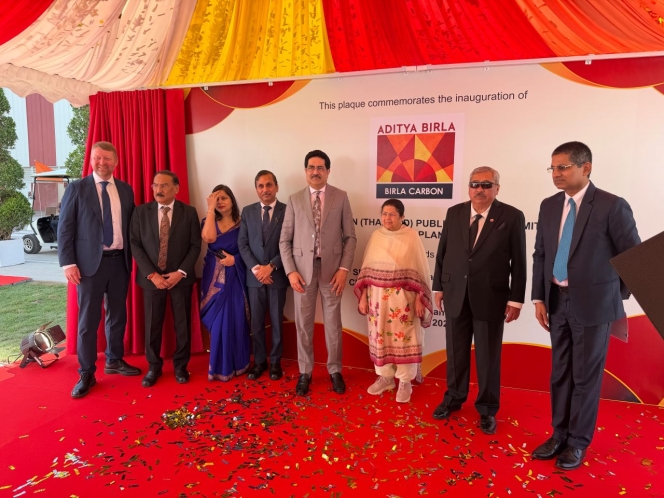
Birla Carbon has inaugurated a new 120 kMT carbon black manufacturing plant in Rayong, Thailand, a move that establishes Birla Carbon Thailand as the largest producer of carbon black in Asia outside China. The facility will produce high-quality carbon black grades for applications spanning tyres, MRGs and speciality materials.
The site was picked for its closeness to major customers, which helps cut logistics expenses, sharpen service and make supply chains more efficient in Thailand. The added capacity also boosts product availability and delivery speed while securing regional supply in Asia's expanding market. Combined with the 275 kMT Angthong site, the company's largest plant anywhere, Rayong cements Thailand's place as a key manufacturing base for Birla Carbon's Asian growth.
Rayong can be scaled from its current 120 kMT to 240 kMT. The plant runs on energy-recovery and emissions-control systems, using process tail gas to make steam and electricity, while sulphur oxide and nitrogen oxide controls underscore responsible operations. The project pushes forward Birla Carbon's worldwide expansion strategy and its push to match manufacturing capacity with customer needs and regional demand.
Kumar Mangalam Birla, Chairman, Aditya Birla Group, said, “Thailand was the first country in which the Aditya Birla Group established an overseas operation more than five decades ago. Since then, we have been a leading player across carbon black, cellulosic fibres, textiles and chemicals industries in the country. The new Rayong facility reflects our continued confidence in the country’s talent and manufacturing capabilities and represents another chapter in our longstanding association with the country and growing economic partnership between India and Thailand.”
Dilip Gaur, Director, Aditya Birla Group and Director, Birla Carbon, said, “The Rayong plant gives us a strong base in Southeast Asia, where demand and our customer base are both growing. By bringing manufacturing capacity closer to our customers, the facility strengthens our ability to support their requirements today and grow alongside them over the long term.”
John Loudermilk, President and Chief Executive Officer, Birla Carbon, said, “Rayong represents an important addition to our global manufacturing network and brings us closer to our vision to ‘be the clear leader in our industry’. At the same time, this investment is fundamentally driven by our customers. The facility strengthens our regional manufacturing capacity, enabling us to provide more secure supply and responsive service as customers expand across a wide variety of applications.”
Comments (0)
ADD COMMENT