

- TANA OY
- MULTI WASTE BUCKETS
- MWB17
- MWB23
- WASTE PROCESSING
- PRE SHREDDING
- RECYCLING TECHNOLOGY
- HEAVY EQUIPMENT
- MATERIAL HANDLING
- SUSTAINABLE WASTE MANAGEMENT
Tana Oy Unveils Loader-Mounted Waste Buckets
- By TT News
- May 06, 2026

Tana Oy is expanding its waste processing portfolio with the launch of its Multi Waste Buckets MWB17 and MWB23, positioning the products as a lower-cost alternative to standalone pre-shredders.
The loader-mounted attachments integrate pre-shredding and bag opening at the point of loading, eliminating the need for separate shredding equipment. The approach is designed to streamline operations by reducing material size earlier in the process, improving feed consistency for downstream sorting, recycling and energy recovery systems.
The company said the integrated solution can lower operating costs by cutting the number of machines required on site, reducing fuel consumption and maintenance needs and minimising unplanned downtime. By removing additional handling steps, the buckets also aim to simplify internal logistics and improve site efficiency.
The MWB units are designed for plug-and-play installation across a range of wheel loaders and material handlers, enabling operators to process waste directly at the loading stage. The system delivers a particle size of roughly 300–400 millimetre and throughput of up to 90 cubic metres per hour, supporting higher recovery rates and reduced wear on secondary equipment.
Both models feature a three-axle design intended to optimise cutting performance and material flow, supported by higher torque on outer axles and a faster central axle. Additional design elements including protected bearings and self-cleaning structures are aimed at improving durability and reducing maintenance requirements.
The MWB17 targets 10–15-tonne loaders, while the MWB23 is designed for 13–20-tonne machines, allowing deployment across varying operational scales. The company said the products can either replace or complement conventional pre-shredders as part of efforts to improve cost efficiency and sustainability in waste processing.
“Pre-shredding is the critical first step in turning waste into value. With the TANA Multi Waste Buckets, we are bringing that step directly into the loading phase making the process simpler, more flexible and significantly more cost-efficient for our customers,” says Eetu Tuovinen, Product Marketing Manager, Shredders, Tana Oy.
Field experience has shown that integrating pre-shredding into the loading phase can streamline site operations. “Customers have seen immediate benefits in terms of reduced transport needs, smoother material flow and less downtime in downstream equipment. The ability to pre-process waste on the spot changes how efficiently the whole site can operate,” says Tuovinen.
TyreSafe Partners With Hampshire And Isle of Wight’s PCC To Tackle Tyre-Related Road Incidents
- By TT News
- October 22, 2026
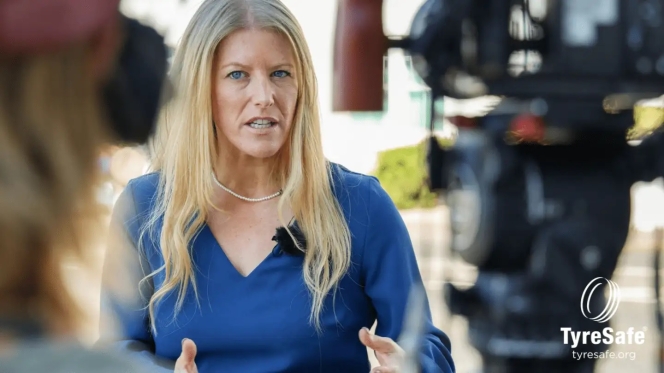
TyreSafe, UK’s leading tyre safety charity, has forged a new alliance with Donna Jones, the Police and Crime Commissioner (PCC) for Hampshire and the Isle of Wight, as part of its ongoing drive to strengthen road safety and curb tyre-related incidents nationwide. The partnership reflects the organisation's wider commitment to working with policing and other stakeholders to reduce preventable harm on UK roads.
Jones has placed road safety at the heart of her agenda, prioritising action against dangerous driving, tougher enforcement and a reduction in deaths and serious injuries on local roads. The scale of the challenge is clear from figures covering October 2024 to September 2025, during which 1,286 people were killed or seriously injured across the two areas. A dedicated Roads Policing Tasking Team, unveiled by Jones in March 2026, now targets dangerous driving and high-risk collision hotspots, focusing on the Fatal Five: speeding, drink and drug driving, mobile phone use, seatbelt non-compliance and careless driving.
In TyreSafe's view, illegal and badly maintained tyres – alongside general vehicle upkeep – deserve greater prominence within a joined-up road safety strategy that builds on existing enforcement and education programmes. The partnership opens the door to joint work between TyreSafe and the Commissioner's office on raising public awareness, encouraging responsible driving and supporting efforts to prevent avoidable road incidents. It also highlights how enforcement, education and prevention can work together, helping motorists recognise their obligations and the serious risks posed by unsafe tyres.
Crime prevention and making Hampshire and the Isle of Wight among the safest places to live nationally have also been flagged as priorities by the Commissioner. TyreSafe intends to use the partnership to back broader road safety work in the region while deepening its collaboration with policing and other stakeholders across the country, all in support of its Vision Zero goal of eliminating harm to road users caused by illegal and poorly maintained tyres.
Jones said, “Tyre safety is an essential part of keeping our roads safe. Illegal and poorly maintained tyres can put drivers, passengers and other road users at serious risk, and it is important that we do more to raise awareness of these dangers. I welcome the opportunity to work with TyreSafe to help educate drivers, encourage regular tyre checks and support efforts to prevent avoidable collisions. By working together on education, prevention and enforcement, we can help make Hampshire and the Isle of Wight’s roads safer for everyone.”
Stuart Lovatt, Chairman, TyreSafe, said, “Working with police forces and Police and Crime Commissioners is an important part of our ambition to reduce tyre-related incidents and make our roads safer. Our four strategic goals set out the changes we believe are needed, from improving enforcement and driver education to strengthening the evidence available to policymakers. We welcome the opportunity to work with Donna Jones and her team to explore how we can support greater awareness of tyre safety and encourage practical action to address the risks posed by illegal and poorly maintained tyres.”
Kumho Tire USA Broadens Original Equipment Portfolio Across North America
- By TT News
- October 21, 2026
Kumho Tire USA continues to strengthen its position as a major supplier to automakers worldwide, now providing original equipment tyres to over 40 vehicle platforms across nine brands in North America, including Nissan, Hyundai, Kia, Audi and Volkswagen. The expansion reflects growing confidence among manufacturers in the company's engineering and product quality.
The tyre maker was recently chosen as the exclusive OE supplier for Hyundai IONIQ 5 vehicles joining Waymo's next-generation robotaxi fleet in the United States. Such autonomous fleets require tyres that maintain consistent performance across thousands of miles of continuous use, with durability, efficiency and ride comfort proving essential. The Crugen EV HP71 was developed to meet both the demands of high-utilisation fleets and the specific requirements of electric vehicles.
Kumho also secured OE supply deals for select Nissan Rogue and Frontier models sold across North America, extending its longstanding relationship with the automaker. The Rogue will carry the Crugen HP71 all-season touring tyre, while the Frontier will be fitted with the new Road Venture HT all-season highway-terrain tyre, strengthening Kumho's foothold in the SUV and pickup segments.
The Crugen HP71 offers quiet, comfortable driving with year-round capability for CUV and SUV owners, using wide circumferential grooves and micro-serration technology for wet traction and hydroplaning resistance. Its EV variant accommodates heavier electric vehicles, reduces rolling resistance, handles instant torque and incorporates K-Silent sound-absorbing foam. The Road Venture HT, built for pickups and SUVs, delivers improved wet and snow traction and a 10 percent tread-life gain over its predecessor, along with Three-Peak Mountain Snowflake certification.
Shawn Denlein, President – Sales and Marketing, Kumho Tire USA, said, “We are excited to continue strengthening our OE partnerships through new fitments with both Nissan and Hyundai. The Crugen HP71 and its EV counterpart, along with the Road Venture HT, were engineered to deliver reliable, consistent performance for SUV and pick-up drivers. These selections reflect the confidence both Nissan and Hyundai place in KUMHO's engineering and manufacturing expertise.”
Continental Unveils Pogačar-Branded Collector's Edition Grand Prix 5000 S TR Road Tyre
- By TT News
- October 21, 2026
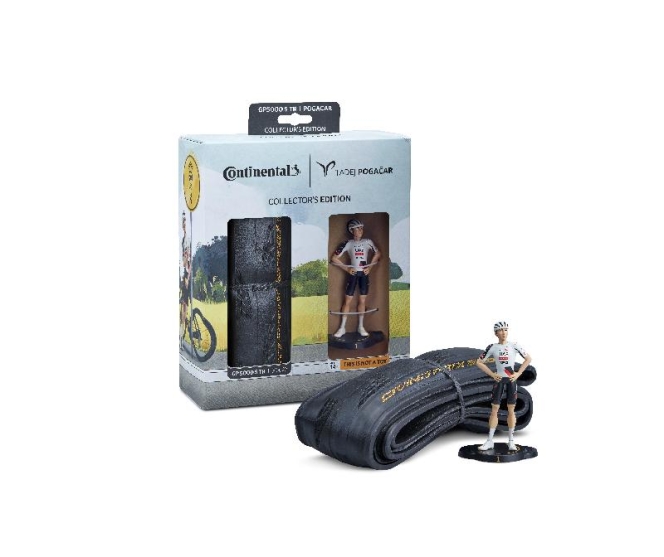
Continental has introduced a Collector's Edition of its Grand Prix 5000 S TR road tyre, a benchmark product developed alongside Tadej Pogačar, the multiple World Champion and Tour de France winner. The limited release sits within the company's ‘Share the Road’ campaign, which seeks to advance road safety, mutual respect and harmonious coexistence among all road users while delivering top-tier performance.
At the heart of the effort is ‘Pogi’, a figure the brand and Pogačar devised together. Appearing across a set of animated stories, the character conveys the central idea that the roads belong to everyone. Each limited-edition tyre package also includes a physical Pogi collectible, extending the character beyond the screen.
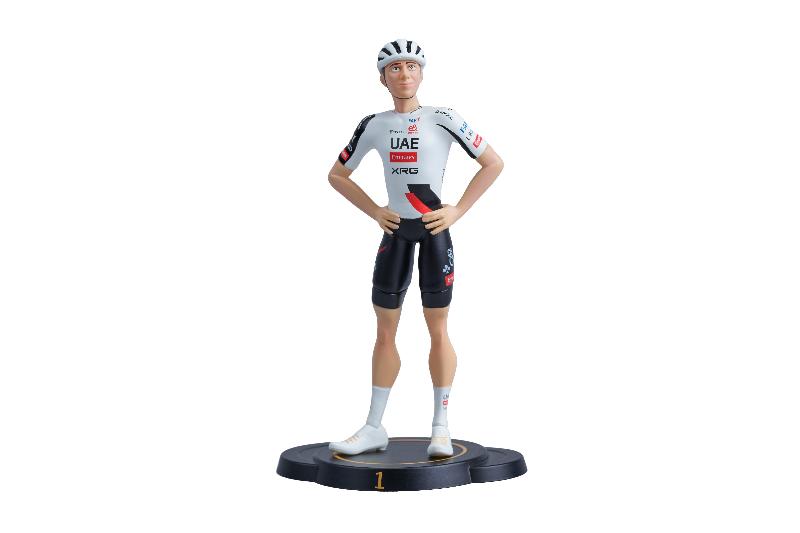
The 30-622 tyre carries custom Pogačar branding, including a dedicated Pogi logo and hundreds of miniature Tadej Pogačar logos worked subtly into the Grand Prix 5000 S TR lettering. It retains Continental's benchmark technologies – the BlackChili Compound, Vectran Breaker, Active Comfort Technology and Lazer Grip – and is aimed at both cycling enthusiasts and collectors.
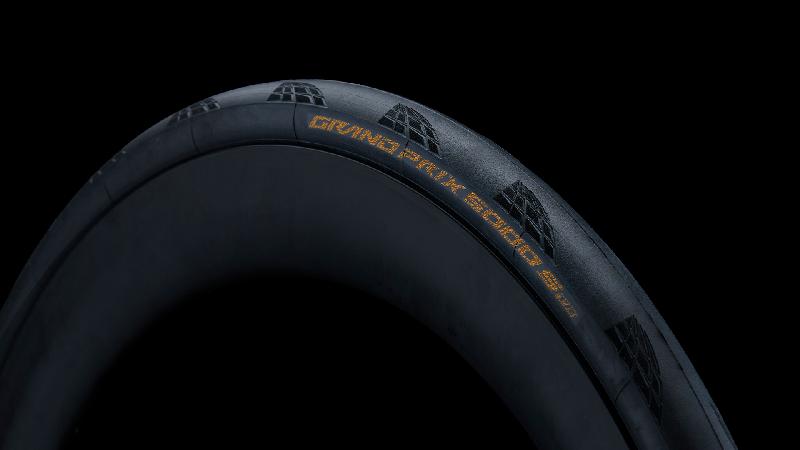
Hannah Ferle, Road Product Manager, Continental Tires, said, “The trust placed in us by world-class athletes like Tadej is both an honour and an incentive. With the Grand Prix 5000 S TR Pogačar Edition, we wanted to bring together our race-proven road performance with a meaningful initiative. Every tyre is crafted with precision to deliver the optimal balance of speed, grip and reliability while celebrating our shared commitment to making roads safer for every rider.”
DUNLOP Returns To Goodwood Circuit In Style As Revival's First-Ever Presenting Partner
- By TT News
- October 21, 2026

DUNLOP has become the first-ever Presenting Partner of the Goodwood Revival, cementing its place in the event’s history after an exceptionally successful partnership at this year’s festival. The three-day event, held from 18 to 20 September, attracted 150,000 attendees from 172 countries and marked the iconic tyre manufacturer’s most prominent presence at the circuit in nearly eight decades.
The Revival provided DUNLOP with an unparalleled platform to celebrate its rich motorsport legacy and connect with a global audience of enthusiasts, collectors and industry professionals. Its presence represented a significant milestone, returning the brand to the Goodwood Motor Circuit nearly 80 years after it first supported the venue’s opening in 1948. The comprehensive activation featured a 600-square-metre exhibition stand, VIP hospitality adjacent to the pit lane and prominent event and circuit branding throughout the weekend.
At the DUNLOP stand in the Revival’s Earls Court motor show, around 25,000 visitors experienced the brand first-hand across all three days, drawn by a trio of Ford GT MkIIs that dominated the podium at the 24 Hours of Le Mans in 1966. Attendees engaged directly with DUNLOP’s heritage, innovation and commitment to motorsport excellence, while the event’s international turnout underscored the universal appeal of the brand’s story and its enduring position within global motorsport culture. The response from visitors was overwhelming, with the activation highlighting DUNLOP’s history and racing legacy in a unique way.
The inaugural year as Presenting Partner has established a blueprint for future collaboration, resonating with an audience that values heritage, authenticity and engineering excellence. As DUNLOP strengthens its position within global motorsport, the Goodwood Revival partnership stands as a cornerstone activation, celebrating the brand’s legendary status while positioning it as an innovator for the future.
Dennis Wilstermann, Marketing Manager, DUNLOP, said, “Our stand was consistently busy throughout the three days. The level of interest in the DUNLOP brand was remarkable, and the conversations we had with customers, fans and partners were genuinely positive. We are already looking forward to returning to Goodwood Revival in 2027. We cannot wait to return to the Goodwood Revival in 2027. This year has been a powerful reminder of why Goodwood Revival matters to DUNLOP – and why DUNLOP matters to Goodwood Revival."
Hiroshi Hamada, Manging Director, Chairman and CEO, Dunlop Tyre Europe GmbH, said, “This was our first year at Goodwood Revival as Presenting Partner, and it was an unqualified success for us. DUNLOP returning to Goodwood with such a strong presence after so many years is a story in itself – one that validates our commitment to motorsport heritage and innovation.”
The Duke of Richmond CBE DL said, “We were delighted to welcome DUNLOP as presenting partner of Goodwood Revival this year. Having been an integral part of racing here for almost 80 years, the partnership reflects a shared heritage stretching back to 1948, when it was among the original supporters of the Goodwood Motor Circuit. From DUNLOP’s hugely popular stand in Earl's Court, featuring the Ford GT MkIIs that famously finished 1-2-3 at Le Mans in 1966, to its presentation of Sunday's flagship Royal Automobile Club TT Celebration race, the partnership was a fitting celebration of our shared history and passion for motorsport. We look forward to continuing that relationship in the years to come.”

Comments (0)
ADD COMMENT