

wdk Slams Government’s Bureaucracy Relief Efforts As Disappointing
- By TT News
- April 16, 2026
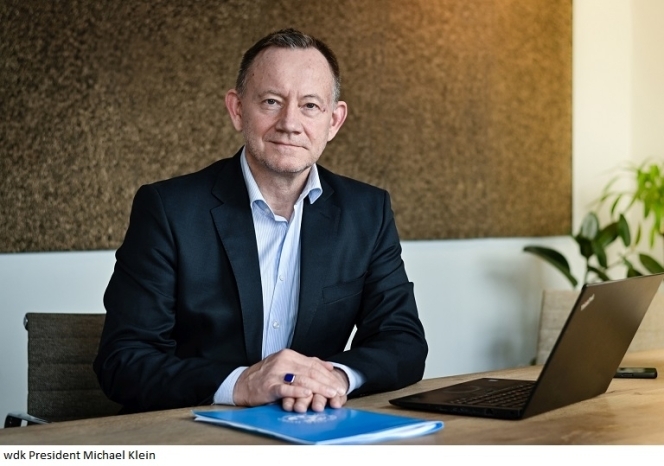
The German Rubber Industry Association (wdk) has expressed deep frustration over the federal government’s failure to act on bureaucratic relief proposals. Association President Michael Klein noted that over the last three years, German industry has enthusiastically submitted concrete ideas to reduce red tape, including 250 top proposals recently put forward by the Federation of German Industries (BDI). Despite this engagement, the government’s current implementation efforts are more than disappointing.
Klein’s criticism follows a response from the Federal Ministry for the Environment regarding faster permitting procedures under the Federal Immission Control Act. Back in 2023, the BDI had proposed simplifying the legally mandated seven plus three month process for industrial plant permits, specifically by ending the need for continuous updates to application documents. The ministry’s suggestion to introduce inter agency expert opinions as an acceleration measure is seen by Klein as a joke. Under existing law, consulted authorities already have two months to comment; if they fail, the permitting authority can order an expert opinion at the defaulting body’s expense. The ministry claims this 2024 regulation sufficiently addresses the industry’s request.
Klein argues that bringing in third party experts instead of making timely decisions creates new delays and uncertainty over costs. Even if the negligent authority is meant to pay, taxpayers ultimately foot the bill. This single issue, while seemingly minor in the broader struggle against bureaucracy, reveals the authorities’ mindset and a profound administrative lack of understanding. Since the BDI’s 2023 proposals, German industry has had to hire 325,000 additional employees just to cope with new bureaucratic demands from Brussels and Berlin.
Klein concluded that these figures speak for themselves, calling on Merz to take immediate action. He also warned that further burdening struggling companies and industrial peace with a half-baked proposal for a voluntary energy bonus is definitely not helpful. The message is clear: bureaucratic overload threatens industry survival, and real relief cannot wait.
Maxam Tire Unveils MT152 Rubber Track For Compact Track Loaders
- By TT News
- September 12, 2026
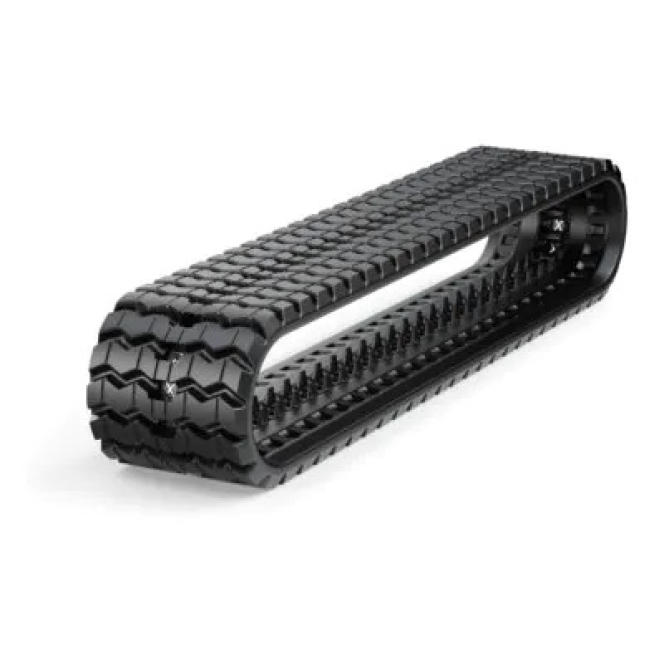
Maxam Tire has introduced the MT152 Rubber Track, a new product featuring an enhanced Z-Lug design. This track is engineered to provide exceptional traction, durability and extended service life for compact track loaders operating in demanding environments.
Building on the proven performance of traditional Z-Lug rubber tracks, the MT152 combines aggressive traction with increased tread depth and a larger footprint. This design improves wear life without sacrificing performance. It is intended for construction, site preparation and general earthmoving applications, excelling in loose ground conditions while offering the stability and durability contractors rely on daily.
The MT152 features a heavy-duty carcass for enhanced machine stability and long-lasting structural integrity under demanding workloads. Its stepped tread pattern improves self-cleaning by allowing mud and debris to expel more efficiently, maintaining consistent traction throughout the workday. A cut and tear-resistant tread compound further boosts durability in harsh conditions, while the increased tread depth and optimized net-to-gross ratio deliver longer tread life and greater overall value.
Matt Fagan, Director – Research & Development, Maxam Tire, said, “The MT152 was developed to give equipment owners aggressive traction and the durability they need to maximise uptime. By enhancing the traditional Z-Lug design with a deeper tread, larger footprint and reinforced carcass construction, we’ve created a rubber track that delivers outstanding performance, extended wear life and dependable operation across a wide range of challenging jobsite conditions.”
Birla Carbon To Showcase Expanded Asian Capabilities At RubberTech China 2026
- By TT News
- September 12, 2026

Birla Carbon will use its presence at RubberTech China 2026 to demonstrate how its operations across Asia, including China, are being scaled up to meet demand from both regional and international customers. The manufacturer of high-quality carbon materials will exhibit at the Shanghai New International Expo Center from 15 to 17 September 2026 at Booth No. W5B467.
Growth in manufacturing capacity and geographic reach underpins the company's push for greater supply reliability, responsiveness and consistency. Thailand's Rayong facility and an additional high-output Indian plant both commence operations this year. Across key Asian markets, these additions bolster dependable volume availability, sharpen the company's ability to react swiftly to changing customer demands and shorten delivery timelines by operating nearer to buyers.
A broad solutions portfolio awaits exhibition attendees. Engineered materials for mechanical rubber goods (MRG) deliver enhanced hose durability, superior belting abrasion resistance and reliable performance in anti-vibration and sealing systems. Tyre-focused carbon black grades extend product lifespan while improving fuel and energy efficiency, with Euro 7-inspired and EV-designed options covering PCR, LT and TBR applications. Low PAH grades hold certification for skin-contact and export markets, functioning as drop-in ASTM replacements. Continua SCB and SCM products permit elevated recycled and bio-based content as drop-in substitutes for conventional ASTM grades, assisting customers in advancing circularity goals without sacrificing performance.
Amit Kumar, President, Asia, Birla Carbon, said, “The Asia region is increasingly viewed as a manufacturing hub for the world, with China playing a central role in the growth of high-value MRG and tyre markets. This is making performance, supply reliability and sustainability more critical than ever for the region. At Birla Carbon, we are strengthening our regional material capacity and footprint to be closer to our customers and respond more effectively to their evolving needs. With expanded capacity and innovative solutions spanning MRG, tyres, including Euro 7-inspired and EV-designed performance materials low PAH applications, and sustainable offerings, we are well positioned to help customers enhance product performance, build more resilient supply chains and advance their sustainability goals.”
Bridgestone Brings Tyre Safety Checks To Scotland For First Time
- By TT News
- September 12, 2026

Bridgestone has expanded its road safety efforts in Scotland by hosting its inaugural dedicated tyre safety event in the region. The initiative, held at Betty’s Diner off Westfield Road in Motherwell, drew such a strong response from local motorists that additional visits north of the border are already being arranged.
Working alongside Auchinlea Tyres, the company inspected over 100 tyres during the event while offering drivers guidance on tyre safety and the value of routine checks and maintenance. The results underscored the need for such efforts, with 16 percent of tyres requiring urgent attention and a further 24 percent flagged for close monitoring.
To encourage awareness of basic tyre checking practices, ‘Become a Bridgestone Road Safety Hero’ bags were distributed, and the firm’s branded VW Buzz drew considerable interest when parked at the site. Organised by Chris Liddle, Key Account Manager for Consumer and Commercial Products, the event forms part of Bridgestone’s wider Become a Road Safety Hero campaign, which sees colleagues across the UK engaging with motorists to promote essential tyre safety messages.
Recent data reinforces the campaign’s urgency. TyreSafe estimates that 6.1 million tyres on UK roads are illegal or dangerously worn at any given time, often because tread depth falls below the 1.6 mm legal limit. Meanwhile, the Department for Transport’s Reported Road Casualties Great Britain: Final Results 2025 report showed that people killed or seriously injured in collisions involving illegal, defective or underinflated tyres rose from 169 in 2024 to 201 in 2025. For Bridgestone, events like the Scottish check transform safety messaging into practical advice, letting motorists have their tyres inspected while learning simple self-checks.
Liddle said, “This was a really important event for us because it was the first time we have taken our road safety outreach into Scotland in 2026 and the response was fantastic. We inspected 25 vehicles and 100 tyres during the event, giving us a great opportunity to speak directly to motorists about the importance of checking their tyres and making sure they are safe and properly maintained. The feedback we've received since our visit has been extremely positive, and we've already been asked if we could hold similar events with Auchinlea Tyres. That's a great indication of how successful the day was. We're now looking at the possibility of taking the Road Safety Buzz to different locations across Scotland before the end of the year, working with Scottish dealers to help engage local communities. The Buzz certainly attracted plenty of attention. It's a real head-turner and a great way of starting conversations with people about tyre safety.”
- Maxion Wheels
- Supplier Of The Year Award
- Green Wheel Award
- Akzo Nobel Coatings Ltda
- JSW Steel Limited
- Emil Frei GmbH
- FreiLacke
Maxion Wheels Announces 2025 Supplier Of The Year And Green Wheel Award Honourees
- By TT News
- September 11, 2026

Maxion Wheels has reaffirmed its dedication to responsible business practices, operational excellence and environmental stewardship by strengthening a resilient and sustainable global supply chain. The company emphasises that collaboration with suppliers sharing its values is vital for delivering long-term value to customers, communities and stakeholders while maintaining high expectations for performance in quality, delivery, sustainability, innovation and ethical conduct. The 2025 Maxion Wheels Supplier Awards recognise exceptional partners whose contributions have advanced the business and reinforced its supply chain worldwide.
Among the honourees, Akzo Nobel Coatings Ltda of Brazil received the Supplier of the Year award for the Americas. A global leader in paints and coatings, AkzoNobel supports Maxion facilities in Brazil and Argentina with liquid and powder coating technologies. In 2025, it earned an ‘A’ rating in the annual Supplier Performance Evaluation for its commitment to quality, innovation, sustainability and supply reliability.

For Asia, JSW Steel Limited of India was named Supplier of the Year. Part of the O.P. Jindal Group, JSW Steel is one of India’s leading steel manufacturers, with an annual production capacity of 35 million tonnes across six plants. As a strategic partner for Maxion India, it supports product development, operational flexibility and business growth. Its senior leadership engagement and strong collaboration helped it meet all environmental, social and governance requirements, securing an ‘A’ rating.

In the EMEA region, FreiLacke, a brand of Emil Frei GmbH & Co KG, received Supplier of the Year honours. The family-owned German coatings specialist, based in the Black Forest, supplies powder and liquid coatings to several Maxion aluminium wheel plants and supports development for both aluminium and steel applications. FreiLacke achieved Supplier Performance Evaluation scores above 97 and met all quality, ESG and governance requirements, earning an ‘A’ rating.

The Green Wheel Award for 2025 went to Akzo Nobel Coatings CZ of the Czech Republic. Based in Opava, the company is part of the AkzoNobel group and serves as a key supplier to Maxion Wheels Ostrava, providing high-quality coating solutions for wheel manufacturing while demonstrating responsible business practices.
Akzo Nobel Coatings CZ was recognised for outstanding sustainability performance, achieving a Supplier Performance Evaluation sustainability score of 24 out of 25 and full compliance with Maxion’s ESG, governance and responsible sourcing requirements. Supported by AkzoNobel’s ambitious sustainability agenda and strong transparency, the company exemplifies leadership in environmental stewardship and sustainable value creation across the supply chain.
Pia Schütz, Vice President – Global Purchasing, Maxion Wheels, said, “At Maxion Wheels, we view our suppliers as strategic partners in our success. Their dedication to quality, innovation, sustainability and operational excellence enables us to better serve our customers and continuously improve our performance. These awards recognise organisations that have distinguished themselves through exceptional collaboration and a shared commitment to creating long-term value.”

Comments (0)
ADD COMMENT