

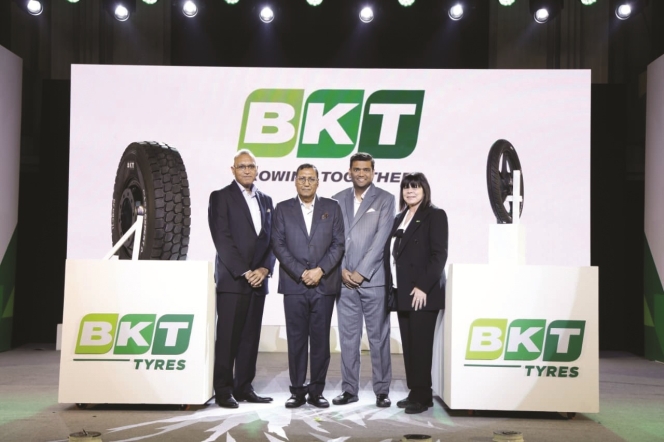
Balkrishna Industries Limited (BKT) is stepping beyond its traditional dominance in off-highway tyres with a calculated entry into India’s fiercely competitive consumer tyre market. By launching an on-highway portfolio for two-wheelers, medium heavy commercial and passenger vehicle tyre segments, the company is translating its engineering credibility and global reach into the high-volume B2C space. In an exclusive conversation with Tyre Trends, Satish Sharma, Senior President and Director of Business Development and Strategy, outlines why BKT believes the timing is right to make this move – highlighting India’s macroeconomic momentum, the company’s engineering strengths and a distribution strategy designed to challenge established industry norms
Balkrishna Industries Limited (BKT) recently entered India’s consumer tyre market with the launch of an on-highway portfolio for two-wheelers and medium and heavy commercial vehicles (M&HCV), expanding beyond its traditional off-highway tyre (OHT) leadership. The company will soon bring out its offering for the passenger vehicle space.
Speaking about the recent development, Senior President and Director of Business Development and Strategy, Satish Sharma, told Tyre Trends in an exclusive interview, “The decision was driven primarily by India’s steady macro-economic growth, making it one of the few large economies with sustained expansion.”
Confidence also stemmed from the company’s earlier success in India’s agriculture tyre segment, where it grew from negligible presence to a market leader over the past decade.
“As an Indian company with global reach, India remains a natural market. Entering the on-road tyre segment is a logical extension, leveraging manufacturing and distribution synergies including established global networks in Europe and United States for B2C markets,” he added.
The company aims to reach INR 230 billion in revenue by 2030, with about 70 percent coming from its core off-highway tyre business. The company continues to strengthen its identity as a global leader in off-highway tyres while expanding into the consumer tyre segment.
However, such ambition begs the question on strategy without diverting focus or resources from the off-highway business, ensuring that its market leadership and technological strengths in that core segment remain intact.
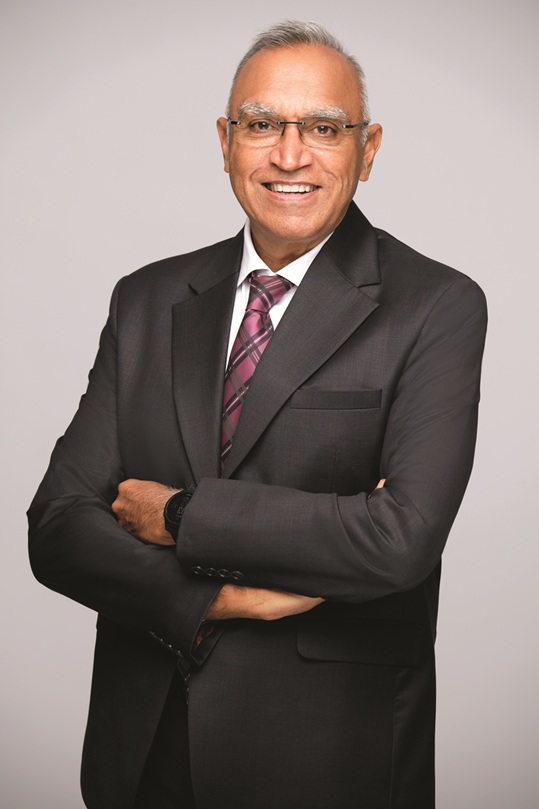 “The concern about dilution is largely unfounded because the company operates as a highly specialised organisation. Over the years, we have developed strong capabilities and deep technical expertise in markets that demand specialised engineering knowledge and a distinct business approach such as agriculture, ports, construction and earthmoving equipment,” said Sharma.
On the other hand, Sharma believes that it is relatively easier for an established off-highway tyre specialist to expand into the B2C or on-highway tyre segment than it is for traditional consumer tyre companies to build the capabilities needed for off-highway applications.
To ensure that its leadership in off-highway tyres remains intact, the company has ring-fenced the two businesses. The off-highway and on-highway operations will run independently with a completely separate team dedicated to the consumer tyre segment.
The distribution strategy will also be different. “The on-highway business will have its own distributors and channel structure and we will not rely on the existing off-highway distribution network for this segment,” he said.
In effect, everything from organisational teams to distribution channels has been designed to remain distinct while still allowing the company to selectively leverage complementary strengths where it makes strategic sense.
UNCHARTED TERRITORIES
Entering the B2C tyre space in India is widely seen as challenging, as the market is dominated by a handful of established players and is extremely price competitive.
Alluding to how the company will navigate through such uncharted territories, Sharma said, “While the Indian tyre market is indeed dominated by major players, that concentration also indicates limited brand diversity rather than excessive competition. This suggests there is still room for credible new entrants that can provide customers with more options.”
Sharma also believes that the company enters the market with an advantage because it already has a well-recognised brand presence in India. It is not a completely new or unknown player entering the country for the first time.
“Given that roughly 90 percent of the market is served by only a few companies, we see an opportunity to gradually establish ourselves by offering reliable products and expanding customer choice,” noted Sharma.
Also, India is one of the largest markets in the world for two-wheeler tyres. The company’s long-term strategy is to eventually address multiple segments, but the initial focus will be on high-volume categories.
“Building a strong distribution network requires products that move quickly and consistently through the market, making high-volume segments the logical starting point. The two-wheeler tyre market in India is largely volume-driven with enormous demand levels. Success in this segment requires deep market penetration, strong brand awareness and the ability to deliver high-quality products consistently,” explained Sharma.
As a result, the company plans to begin with two primary product categories viz-a-viz a pure on-road tyre and an on-off-road tyre. “Within these categories, several sub-segments will be introduced to address different consumer needs. This multi-product approach is designed to help build the distribution network, strengthen brand visibility and establish our operating model in the market. Additional product lines will be introduced gradually once this foundation is established,” contended Sharma.
He also believes there is a meaningful opportunity to bring more innovation to better serve Indian consumers. From a consumer perspective, introducing fresh breakthroughs in two-wheeler tyre technology could unlock new levels of performance, safety and value in the years ahead.
He believes the market is ready for new products with improved performance characteristics and superior attributes. Increased competition can drive innovation and ultimately benefit consumers.
DISTRIBUTION DISRUPTOR
The biggest challenge in the two-wheeler tyre business is reach and market penetration, noted Sharma. Unlike other tyre segments that rely heavily on specialised dealers, two-wheeler tyres are frequently purchased from nearby mechanics or small retail outlets because customers typically treat them as basic, everyday products rather than highly technical components.
He added that most riders are unwilling to travel long distances to a specialised tyre store for a replacement. This has created a highly dispersed retail ecosystem with multiple types of sellers. Over time, the market also adopted a distributor-led model that proved commercially successful and helped some leading companies expand their reach significantly.
However, that model also has weaknesses. “Many companies operate both legacy dealer networks and distributor systems simultaneously, which can lead to channel overlaps. In practice, this often results in product infiltration between territories, price inconsistencies across outlets and confusion for end customers,” stated Sharma.
He added, “Entering the market later provides an advantage because we do not carry the burden of legacy distribution structures. Instead, we plan to implement a pure distribution model from the outset. Each distributor will operate within a clearly defined territory with strong protection from channel overlap, allowing them to invest confidently in building their regional market.”
According to Sharma, this structure has already generated strong interest among distributors. Many see the opportunity as a long-term entrepreneurial venture where they can build a stable and scalable business.
He believes that this model will help the company challenge some existing distribution norms not only in two-wheelers but eventually in other tyre segments as well.
REGULATORY RESILIENCE
On the other hand, Sharma noted that the commercial tyre market must be viewed within the context of rapidly evolving regulations and policy direction. India’s decision to move directly from Bharat Stage IV to Bharat Stage VI emission norms illustrates how quickly regulatory frameworks can evolve. Discussions around future stages, along with policies such as Extended Producer Responsibility (EPR) for tyres, are reshaping how companies must approach the market.
At the same time, government policy clearly indicates a long-term transition towards greener mobility.
“We believe retreading should play a far larger role in the tyre lifecycle. Retreading extends the usable life of tyres, offering both economic benefits for fleet operators and environmental advantages for the broader ecosystem. Yet, despite its logical benefits, retreading volumes in India have actually declined in recent years,” noted Sharma.
The company intends to challenge this contradiction by promoting retreading more actively and working with customers who share the same long-term vision. Education and engagement will form an important part of this strategy.
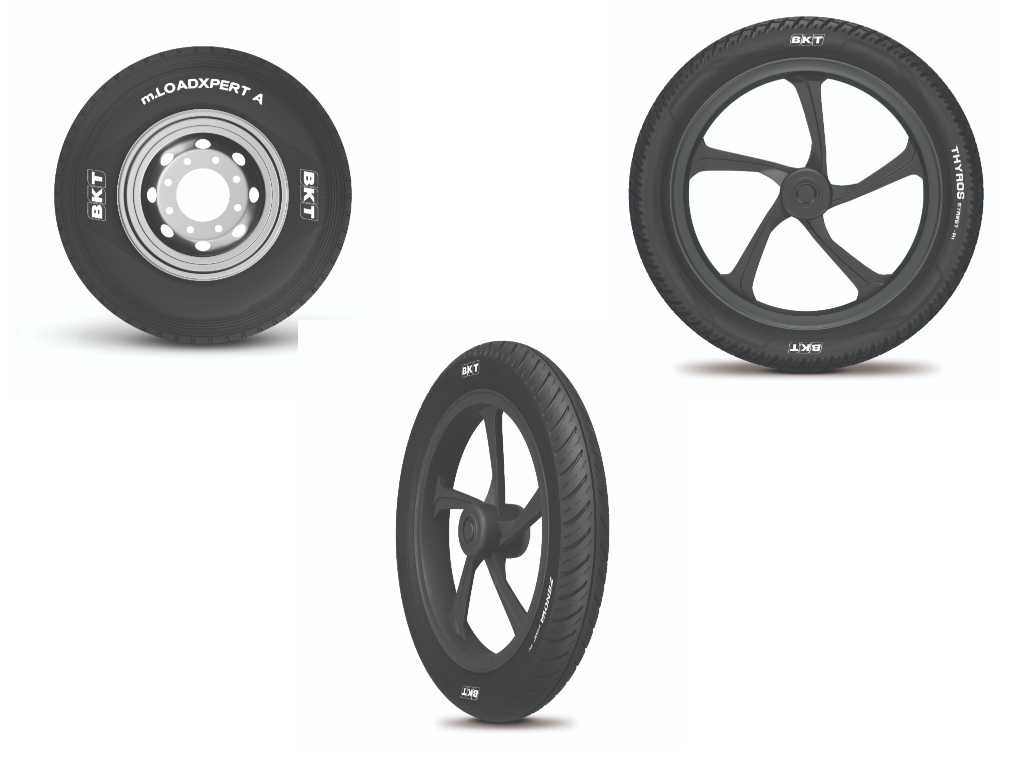 Another factor influencing product strategy is the increase in vehicle loading across the trucking sector. “Higher loads often cause tyre wear patterns that reduce retreadability, highlighting the need for better product specifications,” said Sharma.
Rather than competing directly in the most crowded segments, the strategy is to align with emerging market trends, promote technically appropriate products and raise awareness about more sustainable tyre usage practices.
RETREADING PARADOX
Sharma said Indian consumers are willing to pay more when they see value, as they tend to evaluate purchases rationally, with fleet operators focusing on total cost of ownership rather than just the upfront price.
He argued that taxation alone cannot explain the recent slowdown in retreading. Earlier, GST on new tyres stood at around 28 percent and has since been reduced to roughly 18 percent, while retreaded tyres are also taxed under the GST framework.
“The decline in retreading activity has been taking place for nearly three years, which suggests that GST changes alone cannot explain the trend,” Sharma said, noting that a large portion of the business historically operated in the informal sector. “Taxation may therefore be a convenient explanation, but it does not fully address the deeper structural issues affecting the market.”
According to him, the deeper issue lies in a structural conflict within the tyre industry, where promoting retreading aggressively could reduce demand for new tyres.
“Many manufacturers have experimented with retreading programmes or franchise models, but they rarely pursue them with the level of commitment required to develop the ecosystem fully,” he noted.
Sharma believes this gap creates an opportunity to engage with fleet operators and promote better tyre lifecycle management.
“With improved highway infrastructure, higher vehicle speeds and evolving regulatory expectations, better utilisation of retreading could benefit both the industry and the environment,” he added.
The company plans to focus on casing preservation and customer education while working with reliable regional retreaders to encourage better tyre lifecycle practices.
DEVELOPMENT AND SUPPLY
BKT already operates advanced indoor tyre testing equipment and initially utilised some of the testing infrastructure that had been developed for its off-highway tyre business while additional machines were being installed. It now has a strong indoor testing setup and continues to expand and upgrade this infrastructure to support product development.
It has also earmarked an INR 35 billion investment for expanding its on-highway tyre portfolio. While Sharama didn’t disclose a detailed breakdown, he informed that the investment will be distributed across the different business segments including off-highway tyres, on-highway tyres and carbon black based on strategic requirements.
He also said that if future growth plans require establishing technical centres or partnerships in overseas markets, the company remains open to taking those steps.
For the export markets, for the first two years, the focus will remain on building the product portfolio and preparing the range for international markets. A broader market launch through the global distribution network is expected to follow about two to three years later.
Commenting on the opportunities and challenges that the company will face in achieving the target of INR 230 billion in revenue from the current INR 100 billion, Sharma said, “Our core off-highway tyre business continues to grow strongly, particularly in India. Slower growth in certain international markets in recent years has been influenced more by geo- political developments rather than by any structural weakness in demand.”
“If those external conditions stabilise, we believe that the core business remains on a solid growth trajectory. India, in particular, continues to be a strong growth market,” he added.
Each business segment operates with a distinct strategy, and based on internal planning, the company believes achieving roughly 2.2 times growth over the next few years is feasible.
At the same time, Sharma viewed the revenue target as intentionally ambitious. “Setting a bold goal helps ensure that strategies are clearly defined, documented and communicated across the organisation so that teams understand exactly what must be done to achieve it,” he stated.
Bridgestone Appoints Stefano Sanchini As President Of Europe Sales
- By TT News
- September 19, 2026
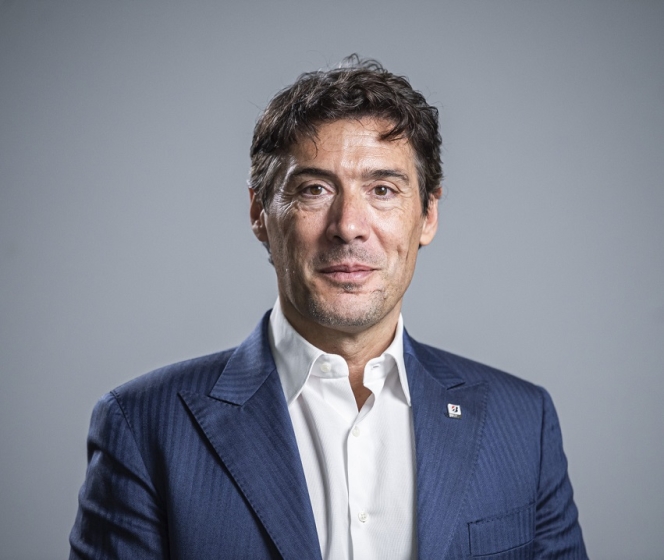
Bridgestone has announced a European leadership appointment aimed at sharpening customer focus, streamlining engagement across product groups and supporting its ongoing growth plans. Stefano Sanchini will become President, Europe Sales, effective 1 October 2026, leading the company’s European sales organisation across both Consumer and Commercial segments.
The expanded role unites sales activities spanning passenger car, truck and bus, agriculture, off-the-road, motorcycle and original equipment. Sanchini brings over 20 years of international leadership experience in the automotive and tyre sectors, with a career covering Europe, Middle East, Africa and India. Since joining Bridgestone in 2017, he has held several senior positions, including Managing Director of Bridgestone India.
Most recently, as Vice President for Consumer Replacement in Europe, he helped strengthen customer engagement, commercial performance, profitability and regional market growth. Bridgestone said the appointment underscores its commitment to customer relationships, commercial execution and simpler cross-market operations. Sanchini will pursue sustainable growth while developing capabilities and partnerships supporting the company’s long-term European strategy.
Mete Ekin, Group President EMEA, said, "Our customers increasingly operate across multiple product categories and expect a consistent experience wherever they engage with Bridgestone. By bringing our sales activities together under one European structure, we are creating a simpler, more connected organisation that will help us respond faster, collaborate more effectively and continue building strong partnerships with our customers."
Yokohama Europe Appoints Giuseppe La Iacona To Lead Southern Operations
- By TT News
- September 18, 2026
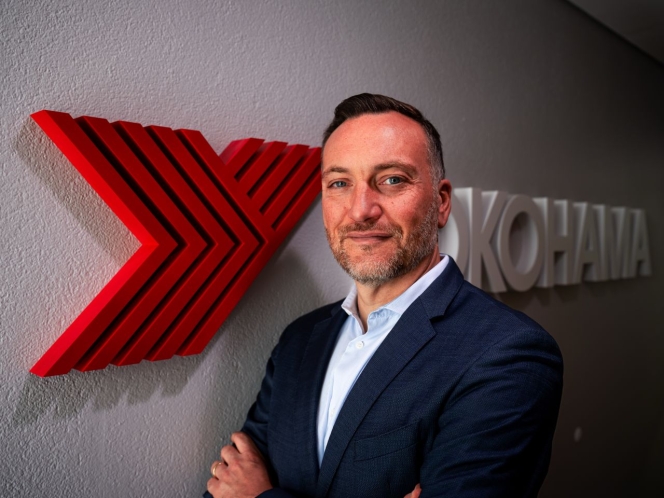
Yokohama Europe has appointed Giuseppe La Iacona to a series of senior leadership roles as the company seeks to strengthen its position across the region.
La Iacona joined the business on September 15 and will assume responsibility for supporting growth and organisational consolidation in the European market.
He brings more than 20 years’ experience in the tyre industry, spanning sales, marketing, business development, country management and international customer relations. He has held senior roles across several European markets, developing experience in managing local dynamics while driving cross-border business expansion.
Reporting to Takashi Maki, La Iacona has been appointed General Manager for southern Europe, where he will lead a newly created regional cluster covering Italy and France. The role is intended to improve coordination and operational synergies between the two markets.
He will also serve as Chief Executive of Yokohama Italia, with overall responsibility for the Italian subsidiary, alongside taking on the role of head of international customers. In that capacity, he will oversee the management and development of clients operating across multiple European markets, with the aim of creating a more consistent commercial approach and strengthening collaboration between subsidiaries.
His remit includes improving organisational alignment and fostering closer cooperation between markets and customers as the company expands its European operations.
“I am very pleased to welcome Giuseppe to YOKOHAMA Europe at an important stage in our development,” said Maki. “His extensive international experience, deep knowledge of the tyre industry and ability to work across different markets will be valuable assets as we continue to strengthen our European organisation and pursue sustainable growth.”
La Iacona said: “I am excited to join YOKOHAMA Europe and to contribute to the company’s next phase of growth in Europe. YOKOHAMA has a strong heritage, a distinctive brand and significant opportunities across the European market. I look forward to working closely with our teams, customers and partners across countries to further develop the business and strengthen our presence in the region.”
Özka Tyre Appoints Mehmet Yüksel As New Chief Operating Officer
- By TT News
- September 18, 2026
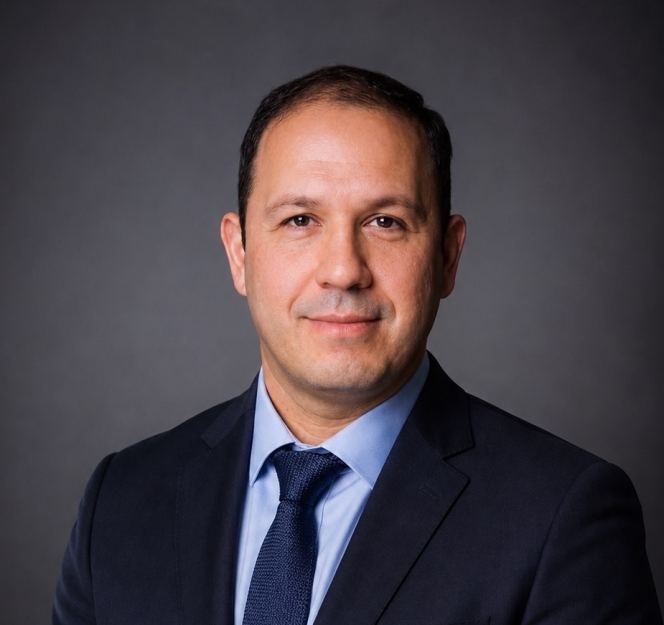
Özka Tyre, a prominent Turkish manufacturer of tyres for agricultural and construction equipment, has reinforced its leadership team as part of a broader push towards global expansion and technological modernisation in production. The company has appointed Mehmet Yüksel as its new Chief Operating Officer, bringing aboard an executive with extensive senior experience from Goodyear’s Luxembourg-based international organisation.
In his new role, Yüksel will oversee functions central to Özka’s production and operational strength. His responsibilities encompass production, quality, research and development, planning, investment and projects, electricity and maintenance, occupational safety and quality management systems, positioning him to steer critical areas of the company’s industrial performance.
Driven by investments and a focus on advancing its manufacturing strength, Özka continuously monitors shifts in the worldwide tire sector, particularly technological progress in Europe, and uses those insights to shape its future production infrastructure. As new investments prepare to elevate its output capacity and technical systems, the firm is simultaneously bolstering its organisational framework to sustain that transformation.
Cabot Names Steve Delahunt As Interim CFO
- By TT News
- September 16, 2026
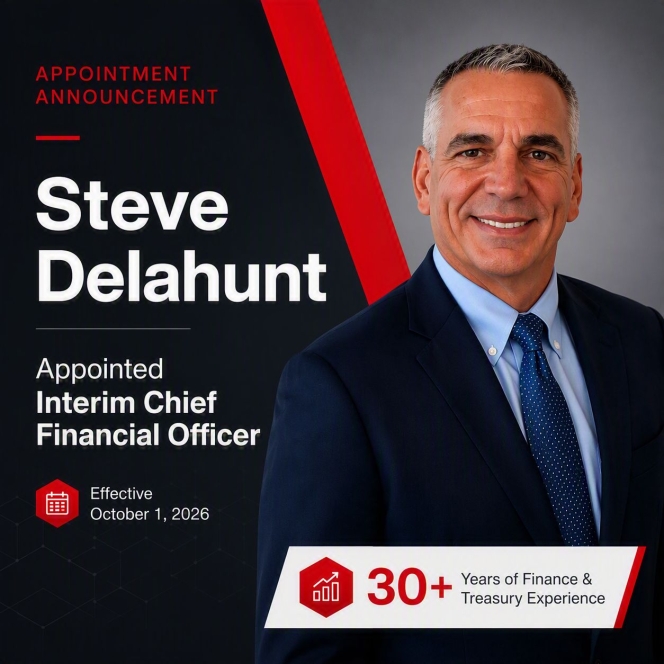
Cabot Corporation has named Steve Delahunt, currently Vice President and Corporate Treasurer, to assume the Chief Financial Officer role on an interim basis starting 1 October 2026. He will hold the position while Cabot continues searching for a permanent finance chief.
The interim appointment follows the previously disclosed leadership transition in which Erica McLaughlin, Executive Vice President, Chief Financial Officer and Head of Corporate Strategy, will become President and Chief Executive Officer on the same date. McLaughlin succeeds Sean Keohane and will relinquish her CFO duties at that time.
Delahunt brings over three decades of finance and treasury experience, including nine years leading Cabot's investor relations function through January 2026. As Corporate Treasurer, he oversees global treasury operations, capital markets strategy, liquidity management, banking relationships, risk management and pension investments. He has been central to Cabot's capital allocation, financing, investor engagement and strategic growth initiatives, as well as strengthened shareholder relations during his investor relations tenure.
McLaughlin said, “Steve is a highly respected finance leader with deep knowledge of our business, strong relationships across our global organisation and a proven track record of disciplined financial leadership. As we continue executing our strategy and building on our strong financial position, Steve’s experience, judgment and understanding of our business make him exceptionally well suited to lead our finance organisation while the Company conducts its search for our next Chief Financial Officer.”

Comments (0)
ADD COMMENT