

Cabot Corporation Names Matt Wood To Lead Reinforcement Materials Segment As Bart Kalkstein Announces Retirement
- By TT News
- June 09, 2025

Cabot Corporation announced that Bart Kalkstein, Executive Vice President and President of the Reinforcement Materials Segment, will retire on 5 January 2026 after two decades with the company. Matt Wood, currently Vice President of Global Marketing and Strategy for Cabot’s Battery Materials business, will assume the role of Senior Vice President and President of the reinforcement Materials Segment, effective 15 June.
Kalkstein, who joined Cabot in 2005, has served in numerous leadership roles across the company’s business units. He was appointed Executive Vice President in 2022 and has led the Reinforcement Materials Segment since 2016.
“Over the past 20 years, Bart has provided tremendous business leadership,” said Sean Keohane, Cabot’s President and Chief Executive Officer. “During his close to 10-year tenure as President, Reinforcement Materials Segment, he has been instrumental in delivering that Segment’s strong financial performance, driving operational excellence at our manufacturing plants, and further strengthening our leadership position as an important supplier to the tire industry. He also played a key role in developing our EVOLVE® Sustainable Solutions technology platform.”
Kalkstein will remain with the company through early January to ensure a smooth leadership transition.
Wood, who joined Cabot from BP in 2010, has held a variety of roles spanning global marketing, strategy, operations, and general management. His prior leadership within the Reinforcement Materials segment includes roles as Vice President of Global Marketing and Regional Marketing Director for Asia Pacific.
“Matt brings a well-rounded background to his new role, with deep commercial and strategy expertise, hands-on operational leadership, and a proven track record as a disciplined and decisive business leader,” Keohane said. “I have full confidence in Matt’s ability to lead the Reinforcement Materials team and deliver growth for Cabot in the coming years.”
Wood’s recent contributions to Cabot’s Battery Materials strategy have been key in positioning the business for growth amid increasing demand in the electric vehicle sector.
New Generation Driving Women’s Entry Into Recycling
- By Gaurav Nandi
- November 04, 2026
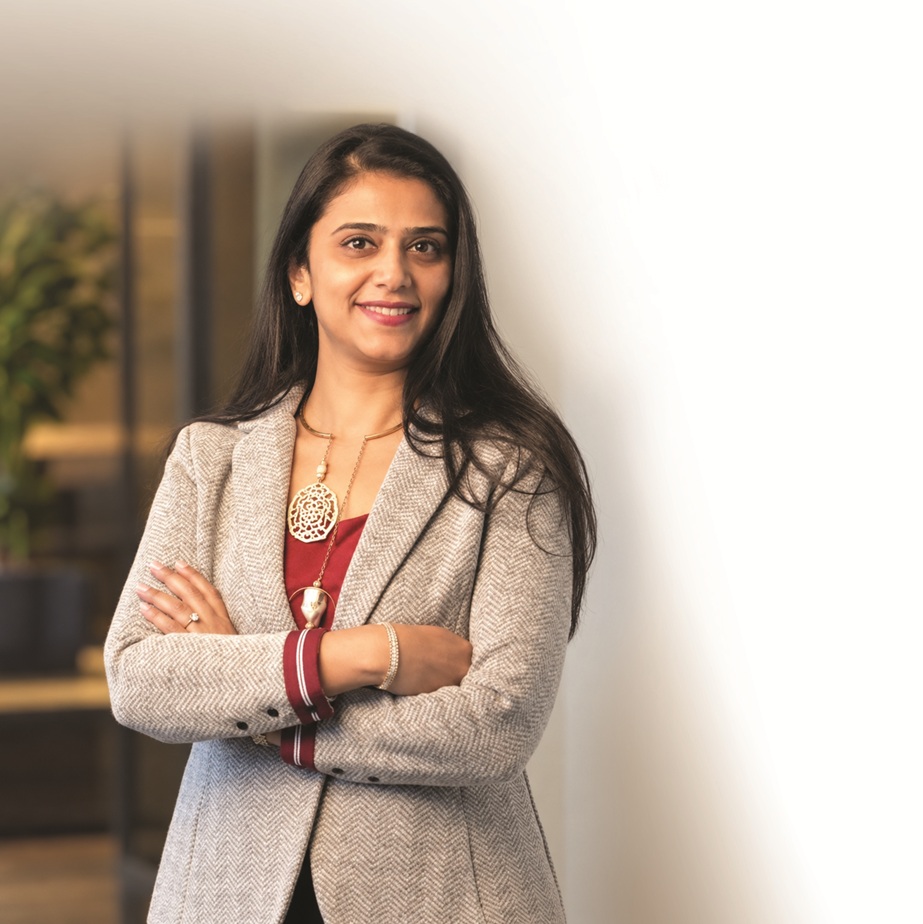
India’s recycling industry is becoming more technology-driven, formalised and commercially sophisticated, but women remain underrepresented across its operational and technical functions. GRP Ltd Executive Director Hemal Gandhi believes a new generation, increasingly exposed to sustainability and circular-economy thinking, could begin changing that equation. Recently appointed as Chairperson of Material Recycling Association of India’s Women in Recycling Committee, Gandhi is pushing for greater participation, capability building and visibility as the sector moves beyond conventional waste processing towards advanced resource recovery and sustainable-material manufacturing.
A new generation of professionals exposed to sustainability and circular-economy principles will drive greater participation of women in India’s recycling industry, according to GRP Ltd Executive Director Hemal Gandhi, who was recently appointed Chairperson of the Women in Recycling Committee at the Material Recycling Association of India (MRAI).
Gandhi acknowledged that women’s representation across the recycling industry remains limited, particularly outside conventional support functions. However, she sees an opportunity for this to change as second-generation members of recycling businesses enter the sector and younger professionals increasingly encounter sustainability and circularity through universities and education.
“A lot of the second generation has come into the business,” Gandhi told Tyre Trends, adding that the newer generation is more receptive to entering recycling because it increasingly understands the industry’s broader environmental purpose.
For Gandhi, the immediate priorities for increasing women’s involvement are participation, capability building and visibility.
She wants participation to extend beyond corporate and leadership positions into technology, operations, engineering, research and development, entrepreneurship and commercial functions.
“I’d like to encourage greater participation of women across the recycling value chain,” Gandhi said.
She added that stronger platforms for knowledge sharing and mentoring are needed, with mentor circles among the mechanisms being considered to engage a wider audience.
Visibility represents the third element as she wants greater recognition of women already contributing to recycling while strengthening connections between established industry leaders and the next generation.
The broader objective, she said, is to make recycling a more inclusive, professional and future-oriented industry and ensure women have a meaningful role in determining its next phase of growth.
“Women bring extraordinary attention to detail, discipline, resilience and an ability to see both the task and the people around it. But I don’t want women to be valued only for these qualities. I want them at the table, making the big decisions,” noted a confident Gandhi.
GRP’s own experience illustrates some of the barriers. Gandhi said women joining the company’s Sholapur operations were initially concentrated in support functions including administration and human resources.
Changing that required what she described as a ‘mindset shift’ within GRP itself. The company has since expanded their presence into manufacturing.
“We are pros at multi-tasking and know how to get the job done. We’ve successfully represented plenty of industries before and now it’s recycling’s turn to take centre stage,” she said.
Women’s representation at GRP varies across locations based on the job requirement and talent availability. The head office has the largest women participation of 28.57 percent. The reclaim rubber and Pyrova business combined contribute to about 13.30 percent with substantial women participation on shopfloor at all shifts.
The plants in Solapur and Ankleshwar show 19.32 percent and 17.81 percent, respectively, which are far higher than the industry average of 10–11 percent.
The focus is to create opportunities of women participation in the plastics business as well.
BROADENING BASE
The push for broader participation comes as India’s tyre-recycling ecosystem itself undergoes significant change.
Gandhi said tyre recycling now has strong representation within MRAI with participation increasing across the value chain. The ecosystem has expanded beyond conventional scrap processing to include collection, aggregation, mechanical recycling, crumb rubber, reclaim rubber, pyrolysis, devulcanisation, retreading technologies and downstream users.
MRAI’s tyre-focused sessions and programmes have also seen increased participation, according to Gandhi. She sees the association’s role extending beyond industry representation to providing a platform where stakeholders can engage on policy, standards, technology and development of end markets.
The next opportunity, she said, is to deepen representation across the tyre-recycling value chain.
Gandhi described India’s tyre-recycling industry as being at an inflection point with Extended Producer Responsibility emerging as a significant catalyst.
The waste-tyre framework has brought greater attention to end-of-life tyres, encouraged formal recycling channels and provided recyclers with a more structured position within the tyre ecosystem.
More companies entering the sector demonstrate growing interest, but Gandhi cautioned that regulation and creation of recycling capacity represent only the beginning.
“The next phase needs to concentrate on quality, traceability, responsible processing and end markets,” she said, adding, “Industry should not measure success only by how many tonnes of tyres are processed.”
Instead, the sector needs to examine how much material value is recovered from every tyre, the quality of those recovered materials and whether they ultimately enter higher-value applications.
She described EPR as a game changer that has established the framework, while the next challenge is developing a more transparent, technology-driven and circular system around it.
COLLABORATION OVER CONSOLIDATION
India’s tyre-recycling industry has historically been fragmented, though Gandhi believes it is gradually becoming more organised as regulations, technology and market requirements become clearer.
She drew a distinction between consolidation and collaboration.
“Companies operating in collection, dismantling, shredding, pyrolysis and retreading can have significantly different levels of technology and formalisation. The objective should therefore not simply be reducing the number of companies,” she argued.
Instead, India needs a more organised ecosystem with common expectations around compliance, traceability, quality, technology and responsible processing.
More clearly defined standards and EPR requirements will increasingly differentiate companies investing in quality systems and sustainable operations, she said.
Comparing India with more established recycling economies, 126 T Y R E T R E N D S | O C T O B E R / N O V E M B E R 2 0 2 6
Gandhi said the country has several advantages including a large domestic tyre market, substantial availability of end-of-life tyres, rubber-processing capabilities and an increasingly structured policy framework.
There is, however, no single international recycling model India can simply replicate because individual markets have developed around different collection systems, regulations and economics.
The common global direction is towards higher-value material recovery.
Products such as reclaim rubber and recovered carbon black are increasingly being developed as industrial raw materials rather than merely waste-derived outputs.
India is moving in the same direction, Gandhi said, with domestic recyclers already producing such materials and supplying to international markets.
“The opportunity is to combine India’s scale, manufacturing capabilities and entrepreneurial base with global best practices,” she noted.
EXPANDING CAPACITY
GRP, meanwhile, is positioning its recycling operations around recovering greater value from waste materials and developing applications capable of substituting virgin resources.
The company currently operates across five strategic locations and eight manufacturing units with installed capacity of approximately 122,000 tonnes per annum, according to Gandhi.
Its next step into end-of-life tyre recovery is being pursued through Pyrova Energy.
At Sholapur, GRP has commissioned a 15,000-tonne-per-annum continuous tyre pyrolysis reactor alongside an integrated crumb-rubber facility. The next phase includes expanding pyrolysis capacity to 45,000 tonnes per annum and developing recovered carbon black capacity.
The broader objective is to recover the different components of an end-of-life tyre while progressively improving the quality and value of each material stream.
Gandhi also highlighted GRP’s wider sustainability performance. She said the company reduced Scope 4 emissions by 55 percent, while the share of its energy requirements met through renewable sources increased to 48 percent from 37 percent in the previous year.
GRP has also received an EcoVadis Gold rating and published a comprehensive sustainability report covering initiatives across the organisation. It has also been recognised as a 2026 Avtar & Seramount ‘Best Company for ESG’, acknowledging its commitment to responsible business, transparency and accountability.
The direction, Gandhi said, is to recover more from every tyre, improve material quality and create additional applications for those recovered materials.
GAINING GROUND
Interest in recycled and renewable materials is increasing, although Gandhi said recycled content varies significantly depending on the material, application and performance requirements.
For reclaim rubber, she cited Rubber Board data showing domestic consumption of almost 167,500 tonnes in 2024-25, including about 67,000 tonnes consumed by automotive tyre manufacturers.
GRP supplies reclaim rubber to major tyre manufacturers globally, Gandhi said, adding that eight of the world’s top 10 tyre manufacturers are its customers.
She noted that recyclers and tyre companies need to work together from the product-development stage, developing materials and testing capabilities for specific applications and establishing appropriate quality and performance parameters.
Sustainability targets will translate into meaningful virgin-material substitution only when recycled alternatives meet requirements around quality, safety, consistency and economics, she added.
Despite India’s sizeable tyre-recycling ecosystem, Gandhi said a significant proportion of the industry continues to serve relatively lower-value applications.
“The next opportunity is to retain more of the material value contained within an end-of-life tyre by developing markets for high-quality reclaim rubber, recovered carbon black, pyrolysis products and engineered tyre-derived materials,” she noted.
Achieving that transition will require recyclers and downstream industries to collaborate on qualification, testing and application development.
Gandhi also argued that comparisons between virgin and recycled materials should move beyond price.
“Cost needs to be considered alongside performance, consistency, carbon footprint and supply security. Recyclers, meanwhile, will need to invest in process control, research and development and testing to improve performance, while scale, automation and energy efficiency will be critical to improving costs,” she contended.
NEXT PHASE
Greater standardisation and quality benchmarks will be among the most important enablers of the industry’s next stage, Gandhi said.
Tyre manufacturers and other industrial customers need confidence that recycled material purchased today will meet the same critical parameters when supplied months later.
This places increasing importance on testing protocols, traceability and credible certification.
Gandhi said standards should nevertheless avoid becoming barriers to innovation. Instead, they should be performance-based, allowing new technologies and materials to develop while providing customers with confidence around consistency and safety.
She sees MRAI as potentially playing a constructive role by bringing recyclers, tyre manufacturers, standards bodies, technical institutions and policymakers together.
GRP’s immediate priorities include scaling its next-generation reclaim-rubber business, ramping up the Pyrova Energy platform, commissioning recovered carbon black capacity and investing further in innovation and research and development to develop higher-value products and applications.
But Gandhi said her ambitions extend beyond the company.
Through her role with the Women in Recycling Committee, she wants to increase women’s participation particularly in leadership, technology and technical functions.
“The next generation of women in recycling should not just be entering the industry but shaping its technology, factories, businesses and future,” contended Gandhi.
Her message to young and aspiring women was not to make themselves smaller to fit the room but to prepare well, do the work, speak up and take their place.
That objective intersects with Gandhi’s broader view of where the Indian recycling industry is heading.
“India has an opportunity to progress from waste management towards resource recovery and sustainable-material manufacturing. Combining stronger regulation and standards with responsible manufacturing could help develop a globally competitive circular-materials industry,” she said.
For women entering the sector, that transformation could simultaneously broaden the types of careers available.
As recycling becomes more technical, formalised and closely integrated with manufacturing, Gandhi believes the new generation’s familiarity with sustainability and circularity could help accelerate that shift.
wdk Appoints Michael Berthel As New Managing Director
- By TT News
- November 03, 2026
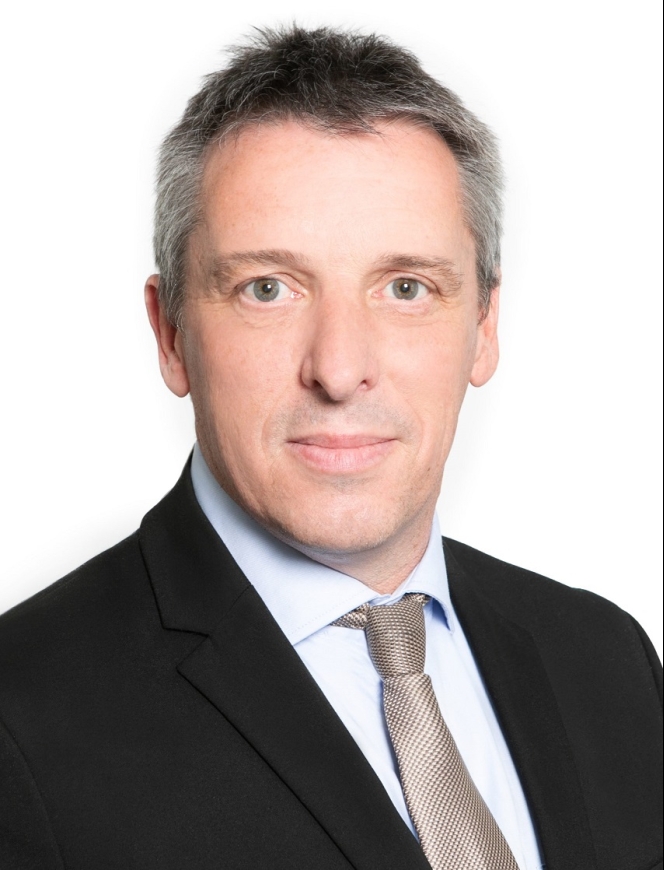
The German Rubber Industry Association (wdk) has appointed Michael Berthel as its new Managing Director, effective 1 January 2027. The decision was made by the wdk Executive Board, with Berthel set to succeed Boris Engelhardt, who is retiring at year-end at his own request after leading the association since 2011. Berthel brings deep institutional knowledge to the role, having served the wdk since 1998 and currently holding the position of Chief Economist.
Reflecting on Engelhardt's tenure, wdk President Michael Klein acknowledged the outgoing director's dedication over 15 years, noting that membership doubled during that period and the association earned worldwide recognition as the industry's voice. Klein expressed confidence that Berthel's extensive experience and strong network will further reinforce the wdk's role as the representative of the rubber industry's interests. The leadership transition is scheduled to take effect at the start of 2027.
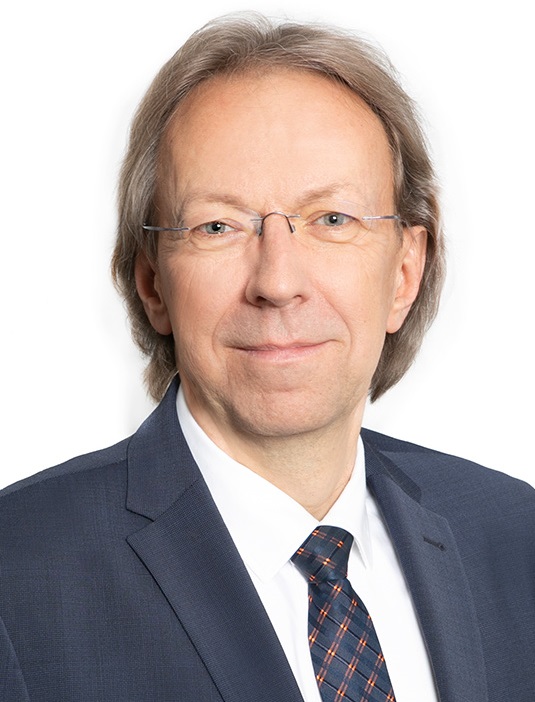
Boris Engelhardt
Michael Klein, President, wdk, said, "We thank Engelhardt for his dedication over the past 15 years. During this time, not only has the number of association members doubled, but the wdk has also become known and recognised worldwide as the voice of our industry. With Berthel, we have gained a highly experienced and exceptionally well-connected expert as Managing Director, with whom we will further strengthen our position as the representative of the rubber industry's interests."
Apollo Tyres Appoints Abhineet Kothari As India Business Head For Vredestein
- By Nilesh Wadhwa
- November 02, 2026
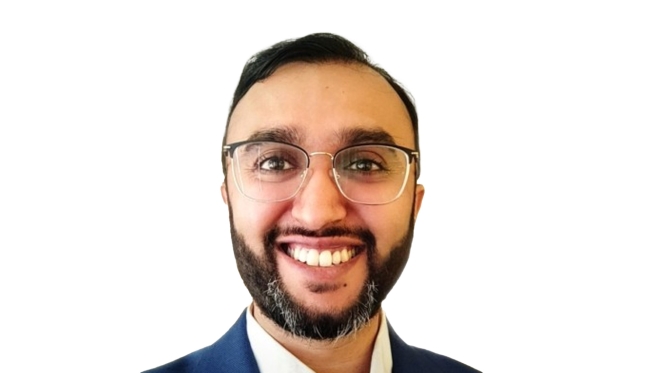
Gurugram-headquartered tyre major Apollo Tyres has appointed Abhineet Kothari as India Business Head – Vredestein Tyres, effective November 2026. In his new role, Kothari will be responsible for strengthening the presence and expanding the business of Vredestein, Apollo Tyres’ premium tyre brand, in the Indian market.
His appointment follows his tenure as Marketing Head, India and South-East Asia, at Apollo Tyres, where he led the company's marketing function after previously serving as Category Head – Passenger Vehicles.
In his new role, Kothari will focus on building the Vredestein brand, expanding its market presence and strengthening its positioning in India's premium passenger vehicle tyre segment.
Kothari brings over 13 years of experience across marketing, brand management, category leadership, sales and business management. Prior to joining Apollo Tyres in April 2024, he spent two years at Paytm as AVP – Payments, where he headed the profit and loss responsibility for the Recharge and Bill Payments business. He was also involved in brand marketing and communications for Paytm's mobile gaming business, First Games.
Prior to Paytm, Kothari spent nearly nine years with Castrol, holding various roles across category management, brand management and regional sales. His assignments included Category Manager, Senior Brand Manager, Regional Sales Manager and Brand Manager.
He began his professional career in the maritime sector as a Marine Engineer Officer with Shell Shipping, serving aboard very large crude carriers (VLCCs) and very large gas carriers (VLGCs) between 2007 and 2011.
Kothari holds an MBA in Marketing and Operations from the Management Development Institute (MDI), Gurgaon, and a bachelor's degree in Marine Engineering from Jadavpur University.
His appointment comes as Apollo Tyres continues to develop Vredestein's positioning in India's premium tyre market, leveraging the brand's European heritage and premium product portfolio to address evolving consumer preferences.
Kraton Names Seasoned HR Executive Brian Rea As CHRO
- By TT News
- October 30, 2026

Kraton Corporation, a global producer of speciality polymers and bio-based chemicals derived from pine wood pulping byproducts, has named Brian Rea as Chief Human Resources Officer. The appointment strengthens the company's leadership team as it continues to prioritise workforce development and organisational effectiveness.
Rea joins Kraton with extensive international experience in human resources leadership across multi-site manufacturing businesses. His background spans talent and succession planning, organisational transformation, labour relations, employee engagement, safety and change management. His appointment underscores Kraton's dedication to employee growth and well-being while building an organisation positioned for long-term success.
Romi Yoon, Chief Strategy Officer, Kraton, said, “We are excited to welcome Brian to Kraton’s executive leadership team. His extensive experience leading human resources across global manufacturing organisations makes him a great fit for Kraton. I look forward to his contributions as we continue to strengthen our organisation and position Kraton for the future.”
Rea said, “I am excited to join Kraton and work alongside its immensely talented global team. I look forward to helping further shape the culture, strategy and goals that will lead Kraton into the future. I am grateful to the Kraton leadership team for the opportunity to serve our employees.”


Comments (0)
ADD COMMENT