

GRI Redefines Growth Through Sustainability And Specialisation In A Volatile Global Tyre Market
- By Nilesh Wadhwa
- March 02, 2026
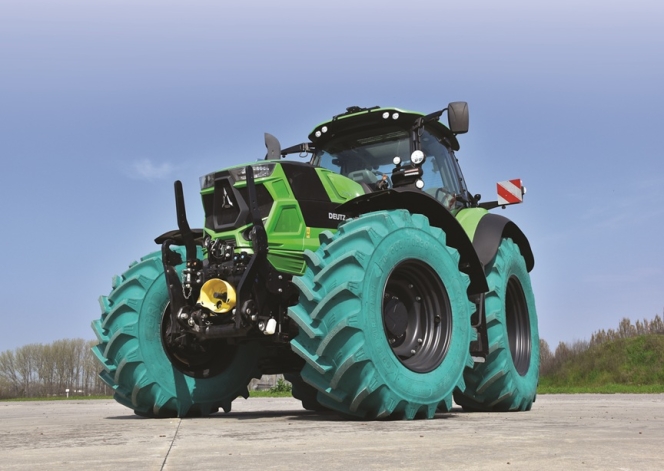
As the global tyre industry grapples with volatility and intensifying competition, Global Rubber Industries ( GRI) is sharpening its focus on specialisation and sustainability-led innovation. By prioritising value over volume, the company is redefining how growth can be achieved in complex off-highway and agricultural segments.
The global tyre industry is navigating one of its most complex phases in decades. Slowing vehicle registrations, volatile commodity prices, geopolitical uncertainty and intensifying competition are forcing manufacturers to rethink where and how they compete.
For Global Rubber Industries (GRI), the Sri Lanka–based specialist tyre manufacturer, these challenges are not signals to retreat but catalysts to sharpen focus, deepen innovation and redefine value.
In an exclusive interaction with Tyre Trends, Barry Guildford, Global Commercial Director, GRI, said, “The last couple of years have been quite challenging. Particularly if you look at the OE sector, there’s been a real downturn in the number of new vehicles being purchased. Registrations are lower, farmers’ revenues are under pressure and cash flow is a problem.”
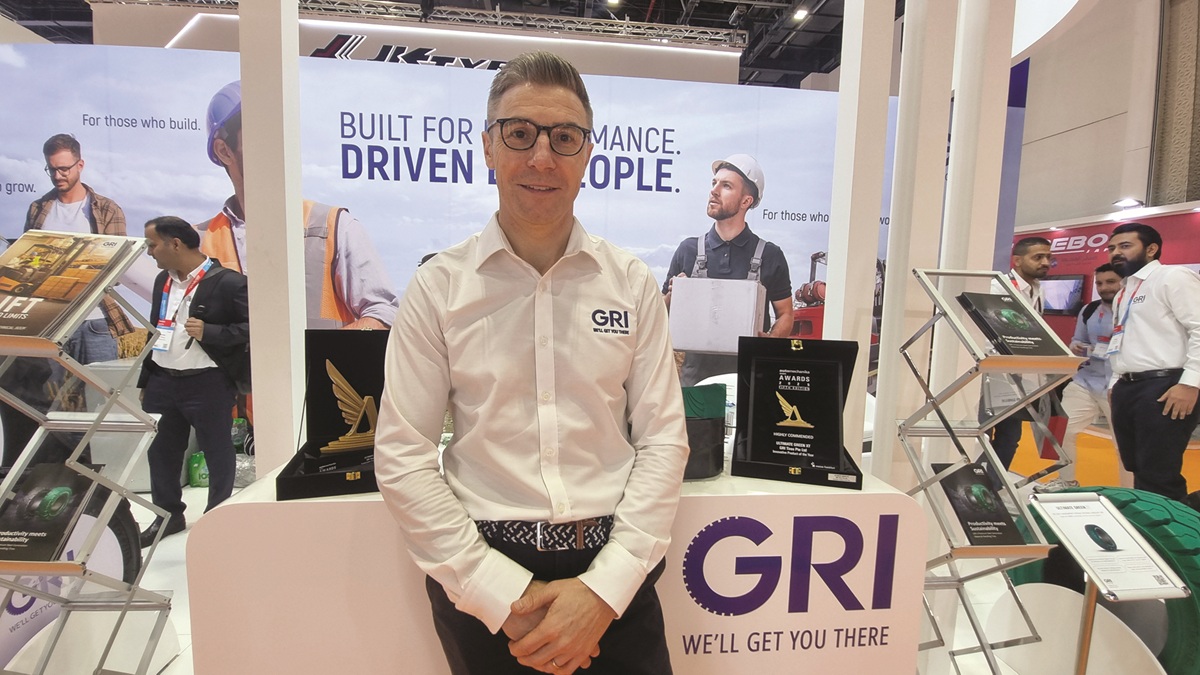 Yet, within this disruption, GRI sees opportunity – not in scale-driven volume plays but in specialised segments, sustainability-led innovation and solutions that lower total cost of ownership for customers.
A TOUGH CYCLE BUT CLEAR SHIFTS IN MARKET DIRECTION
Guildford describes the past 12 to 18 months as a period marked by belt-tightening across key end-user industries, particularly agriculture.
“When you see commodity markets for certain crops, it’s impacting revenues from the farmers. There are fewer subsidies available from regional authorities, so generally speaking, it’s been a tough 12 to 18 months,” he explained.
However, beneath the surface, the aftermarket is undergoing important structural shifts. Automation is accelerating across agriculture, while electrification is reshaping material handling.
“At Agritechnica, we saw a lot of automated driving vehicles being launched in the agricultural space,” Guildford noted. “There’s also a trend towards more VF (Very High Flexion) tyres, which is a positive trend for the industry.”
On the industrial side, electrification is no longer niche. “In material handling, especially forklifts, electrification is definitely playing a role. Traditional forklift manufacturers like Linde or Hyster are being challenged by new players from Asia offering electric solutions,” he said.
For tyre makers, these trends demand more than incremental upgrades. “The status quo in the automotive industry is completely shifting, Earlier, Chinese brands had limited penetration in global markets. Now you see many more players entering, especially in developed markets,” Guildford explained.
While this increases choice for customers, it also intensifies competition. “For us as a manufacturer, these are competitors. So it’s even more important that we focus on innovation and solutions,” he said.
SPECIALISATION OVER SCALE: LEARNING FROM INDUSTRY CONSOLIDATION
Recent years have also seen significant consolidation across the global tyre industry, with legacy players divesting businesses to concentrate on core segments. Guildford views this as part of a broader cyclical pattern.
“Many changes in the industry happen in cycles. If you look back 10 or 15 years, premium manufacturers invested heavily in the OHT space. Now some are divesting again,” he said.
In his assessment, complexity has become a decisive factor. “The OHT sector is extremely complex. There are solid tyres, pneumatic tyres, radial tyres and an unbelievable number of combinations in agriculture between tyres and rims,” he said.
This complexity, he believes, has worked in favour of focused specialists. “If you look at the premium sector’s performance in OHT, it’s clear they are losing ground to tier-two players and companies like ours,” he averred.
The reason is simple. “At the end of the day, you need to focus on where you can make money – where the value is. Large manufacturers have enormous divisions focused on PLT, UHP and truck tyres. These are high-volume, high-margin businesses,” Guildford added.
By contrast, specialist segments require deep technical expertise and sustained investment. “That’s why you’re seeing mainstream manufacturers focus more on their core channels, while specialists like GRI double down on OHT and agriculture,” he said.
For GRI, this focus is deliberate. “We are not trying to be everything to everyone. We are building leadership in the segments where innovation really matters,” Guildford said.
SUSTAINABILITY AS STRATEGY, NOT SLOGAN
Few topics have been as overused – and misunderstood – as sustainability. For Guildford, the difference lies in execution. “At first, sustainability was a buzzword. Everybody had to say they were sustainable. But now it’s being taken seriously,” he said.
At GRI, sustainability is not an add-on. “It’s in our DNA. It’s how we differentiate ourselves in a crowded market,” Guildford asserted. That commitment was recently recognised when GRI’s sustainable tyre won multiple international awards, including at ProMAT in Chicago and Automechanika Dubai. “Five or six years ago, we asked ourselves how we could create space in a crowded market. We decided to go on a sustainability journey,” he recalled.
The result was a tyre containing 93.5 percent sustainable materials, designed initially for material handling. “You never know how successful a product will be until you launch it. You design it, test it, evaluate it, place it with end users and then you get feedback,” Guildford admitted.
Winning the ProMAT award was a turning point. “That gave the company a massive boost in confidence. It showed that our R&D had developed something special,” he said.
Automechanika Dubai amplified that recognition. “Here, we are up against the world’s best manufacturers. And yet, a small entrepreneurial company from Sri Lanka has produced the world’s best tyre,” Guildford said.
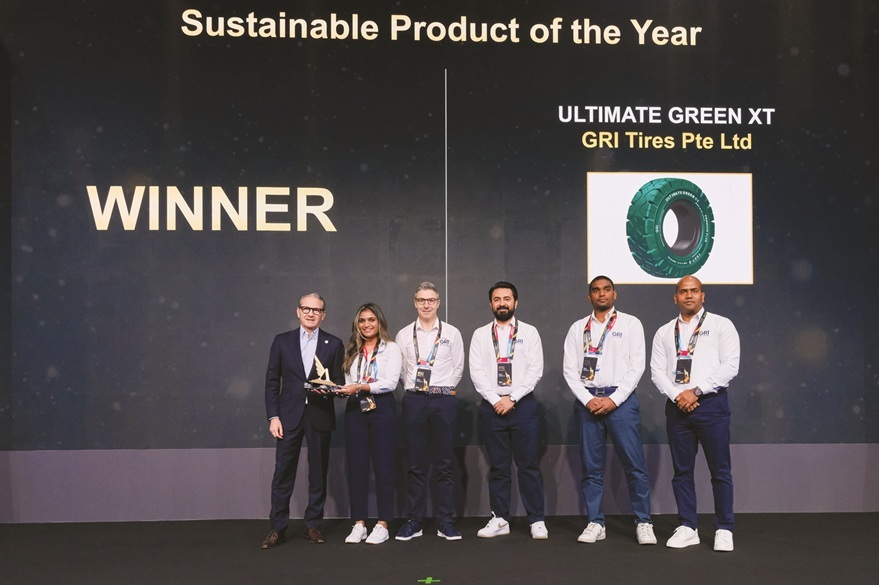 GRI won Sustainable Product of the Year and was runner-up for Innovation of the Year. “That is fantastic recognition. Not once, not twice, but three times,” said Guildford.
SELLING VALUE IN A PRICE-SENSITIVE WORLD
Despite the accolades, selling sustainable products in a cost-conscious market remains challenging.
“Sustainable tyres are not cheaper to produce. They are more expensive,” Guildford said candidly.
With higher material and process costs, GRI’s green tyre commands a premium. “You can’t bring it to market at the same price level,” he explained.
So why do customers buy it?
“Because you have to sell value. If you try to sell on price, you will always lose. There will always be someone cheaper,” Guildford replied.
The value proposition rests on performance and measurable impact. “This tyre reduces carbon emissions by 55 percent, certified by Bureau Veritas. It has 93.5 percent sustainable material, and most importantly, it performs better than a standard black tyre,” he explained.
When viewed through total cost of ownership, the equation changes. “If you compare operating costs, it’s actually the cheapest alternative. You pay more upfront, but you get it back in performance,” Guildford explained.
This mindset, he believes, marks a shift in customer behaviour. “If you always buy budget products, you never see the full benefit of premium solutions,” he said.
A FULL INNOVATION PIPELINE AND MEASURED CAPACITY EXPANSION
Looking ahead, GRI’s innovation roadmap is extensive. “We have two or three strategic roadmaps that we are working on,” Guildford revealed.
The sustainability journey is far from complete. “93.5 percent is amazing, but there is still room to go. Our R&D team is already working to push that beyond 95 percent,” he said.
In agriculture, the company is accelerating investment in advanced technologies. “At Agritechnica, we launched our steel-belted products. We will be heavily investing in steel-belted technology and VF going forward,” Guildford said.
Construction tyres are another focus area. “There are elements like L5 that we need to introduce, particularly for this (Middle East) region,” he added.
Behind the scenes, GRI is also reassessing its solid tyre portfolio and brand architecture. “The innovation pipeline is full,” Guildford explained.
Responding to the company’s production expansion plans, Guildford said that expansion will be disciplined rather than rushed.
“At the moment, we have room to grow within our existing infrastructure. We want to reach full capacity before thinking about a new plant,” he replied.
That said, growth may eventually necessitate expansion. “In a three-to-five-year timeframe, if all goes well, then yes, we may look at new facilities,” Guildford said.
As global tyre markets remain volatile, Sri Lanka’s GRI aims for clarity rather than speculative risk. By focusing on specialisation, sustainability and value creation, it is positioning itself not just to weather industry challenges but to reshape expectations within its chosen segments.
“Innovation is not optional anymore. It’s the only way forward,” Guildford concluded.
Grismer Tire & Auto Service Appoints New CEO And CFO
- By TT News
- September 28, 2026
Grismer Tire & Auto Service, a tyre and automotive service centre operator backed by CenterOak Partners LLC, has named Chris Blanchette as Chief Executive Officer and Mark Hedstrom as Chief Financial Officer. The announcement marks a significant leadership transition for the portfolio company.
Blanchette arrives with over two decades of senior leadership experience in multi-site consumer services, specialising in operations, strategy and business development. He most recently served as Chief Executive Officer of Service Minds, a residential electrical, plumbing and HVAC services provider. His background also includes serving as Chief Operating Officer of QAS, which operates Valvoline Instant Oil Change locations, along with senior operational positions at Advance Auto Parts, Bridgestone Retail Operations and Best Buy.
Hedstrom brings more than three decades of finance expertise to his new role. He previously held the Chief Financial Officer position at W.S. Connelly & Co., a multi-regional specialty distributor, and has also served as Chief Financial Officer for several private equity-backed consumer and distribution companies.
Eric Holter, Managing Director, CenterOak, said, “Chris Blanchette brings highly relevant leadership experience in the automotive aftermarket. He has led complex, multi-location organisations and understands how to translate operational discipline into sustainable growth. Together, Chris and Mark add important depth to Grismer’s leadership team as the Company pursues expansion in existing and new markets.”
Blanchette said, “Grismer’s 90-year history and the trust it has earned with customers set the Company apart. I am excited to join a business with such a strong legacy and see significant
- International Rubber Conference
- Society Of Rubber Science And Technology Japan
- James Busfield
- Nobuyuki Tamura
- Bridgestone Corporation
- Japan Rubber Manufacturers Association
- Aichi International Exhibition Center
- Aichi Sky Expo
Japan To Host International Rubber Conference After Decade-Long Gap
- By TT News
- September 25, 2026
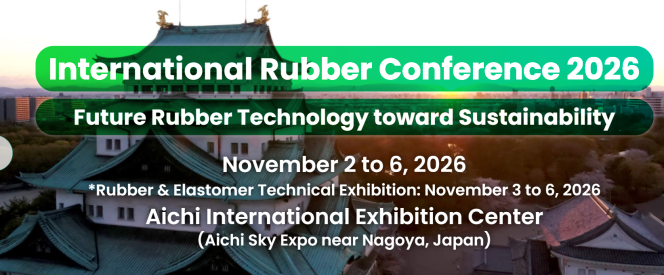
The International Rubber Conference (IRC) will return to Japan in November for the first time in a decade, with more than 271 technical presentations and over 117 exhibitors expected to take part.
The event, known as IRC 2026 Aichi, will be hosted by the Society of Rubber Science and Technology, Japan, alongside the Rubber & Elastomer Technical Exhibition in Aichi. It is scheduled to run from 2nd to 6th November, with the exhibition opening a day later and continuing until 6th November .
Held at the Aichi International Exhibition Center, also known as Aichi Sky Expo, the venue is located near Chubu Centrair International Airport and can be reached from Nagoya Station in about 28 minutes by train.
The conference programme will feature more than 271 presentations spanning rubber science, technology and industrial applications. Participants include James Busfield of Queen Mary University of London and Nobuyuki Tamura of Bridgestone Corporation, who also chairs the Japan Rubber Manufacturers Association. More than 400 delegates have already registered.
Running alongside the conference, the Rubber & Elastomer Technical Exhibition will host more than 117 exhibitors, ranging from raw material suppliers and machinery manufacturers to tyre makers and testing-equipment providers. The exhibition will be open to visitors free of charge.
The International Rubber Conference, first held in 1966, rotates annually across global host cities. The last event in Japan took place in Kitakyushu in 2016, with subsequent editions held in Haikou, Istanbul and Bangkok.
Pirelli Board Approves EUR 1 Billion US Investment Plan And Organisational Restructuring
- By TT News
- September 23, 2026
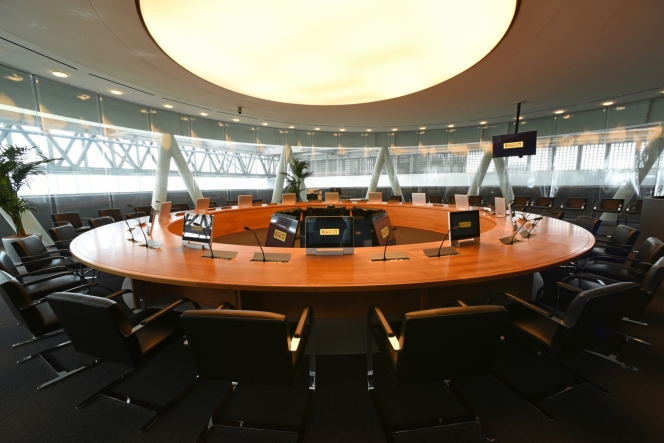
Italian tyre major Pirelli has announced a multi-year investment plan worth approximately EUR 1 billion (USD 1.2 billion) to expand its manufacturing facility in Rome, Georgia in the United States. The motion passed by majority vote, with board members Zhang Haitao, Xi Xiaohong and Wang Kun voting against the proposal.
The capital expenditure program, scheduled to begin in 2027 and will go through 2033, aims to expand annual production capacity at the Georgia site to six million tyres and create approximately 1,000 jobs.
The United States represents the largest market for high-value tyres globally, accounting for roughly 40 percent of global volumes. The project will be carried out in two phases without altering Pirelli's financial targets for 2026.
Phase one of the expansion will introduce modular robotised production systems based on Pirelli's Modular Integrated Robotised System technology, scaling annual output to three million tyres starting in 2028.
In phase two, the company will begin construction of an automated production facility to add three million units of annual capacity. The expanded plant will produce connected tyre systems, including Cyber Tyre technology, following market authorisation granted by the US Bureau of Industry and Security under Italy’s 2026 Golden Power Decree.
Alongside the investment decision, the board approved an organisational restructuring resulting in the immediate elimination of the Corporate General Management function. As part of the changes, Corporate General Manager Francesco Tanzi will step down from his executive role, maintaining an employment relationship through 31 December 2026 to facilitate the leadership transition.
Under the terms approved by the board and the Remuneration Committee, Tanzi will receive a severance payment equivalent to 13 months’ remuneration, payable by February 2027, alongside accrued rights under existing short-term and long-term incentive plans. He has agreed to a two-year non-compete covenant covering Pirelli's primary operating regions in exchange for 130 percent of his gross annual salary, paid in eight quarterly instalments. Following the end of his employment, Tanzi will provide advisory services under a two-year consultancy contract with an annual fee of EUR 350,000, plus non-monetary benefits valued at EUR 45,000.
Bridgestone Appoints Stefano Sanchini As President Of Europe Sales
- By TT News
- September 19, 2026
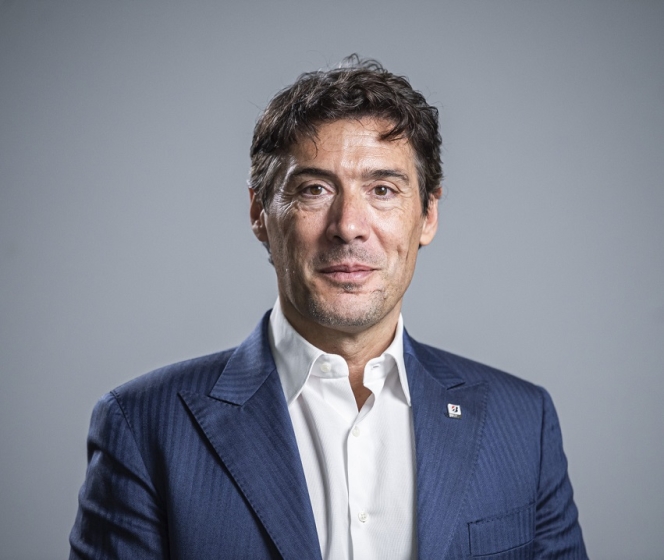
Bridgestone has announced a European leadership appointment aimed at sharpening customer focus, streamlining engagement across product groups and supporting its ongoing growth plans. Stefano Sanchini will become President, Europe Sales, effective 1 October 2026, leading the company’s European sales organisation across both Consumer and Commercial segments.
The expanded role unites sales activities spanning passenger car, truck and bus, agriculture, off-the-road, motorcycle and original equipment. Sanchini brings over 20 years of international leadership experience in the automotive and tyre sectors, with a career covering Europe, Middle East, Africa and India. Since joining Bridgestone in 2017, he has held several senior positions, including Managing Director of Bridgestone India.
Most recently, as Vice President for Consumer Replacement in Europe, he helped strengthen customer engagement, commercial performance, profitability and regional market growth. Bridgestone said the appointment underscores its commitment to customer relationships, commercial execution and simpler cross-market operations. Sanchini will pursue sustainable growth while developing capabilities and partnerships supporting the company’s long-term European strategy.
Mete Ekin, Group President EMEA, said, "Our customers increasingly operate across multiple product categories and expect a consistent experience wherever they engage with Bridgestone. By bringing our sales activities together under one European structure, we are creating a simpler, more connected organisation that will help us respond faster, collaborate more effectively and continue building strong partnerships with our customers."

Comments (0)
ADD COMMENT