

Hidden Cost In Tyre Plants: How The Rubber Moves
- By Gaurav Nandi
- October 14, 2026
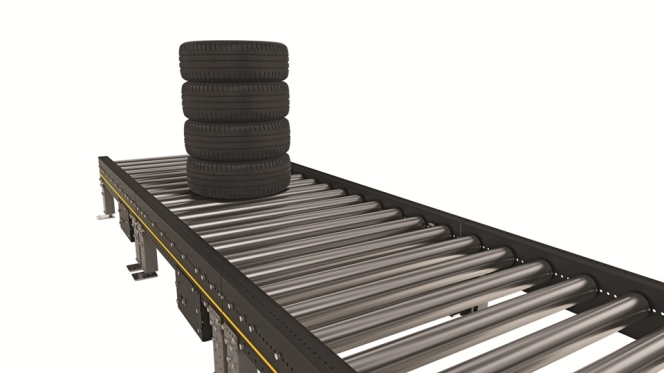
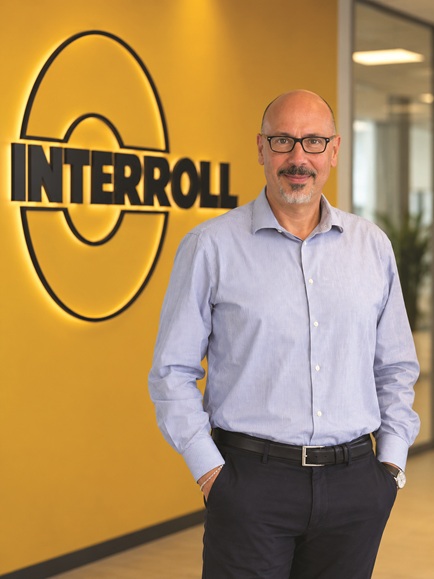
Interroll’s Gianmichele Piciocco argues that some of the largest efficiency gains in tyre manufacturing lie in the interfaces between machines, not only in the machines themselves.
Tyre manufacturers invest heavily in the best building machines and the fastest curing presses. The systems that connect them, however, are often specified late, inherited from earlier projects and seldom revisited, according to Gianmichele Piciocco, Global Strategic Business Development Manager at Interroll.
“Material flow is the backbone of the entire tyre industry,” Piciocco tells Tyre Trends. In his experience, engineers select and position process equipment first, and transport follows. The consequences emerge later, in energy consumption, maintenance stoppages and the cost of expansion. He argues that ‘we have always done it this way’ becomes a design constraint in its own right once technology, product mix, energy costs and safety expectations have changed. The examples that follow point to two closely connected areas: system optimisation during design and expansion, and lifecycle optimisation during operation.
THE LAYOUT TRAP
Piciocco says the pattern is consistent across the tyre manufacturers he advises. “In many cases, the layout initially proposed does not fully match what is ultimately implemented, often to contain the initial investment,” he says. Soon after start-up, plants may find that they need more buffer capacity, or that future expansion was not fully considered. With no floor space left, the remedy for material flow is often inclines, declines and additional levels, which can significantly increase costs.
 The alternative is far cheaper if raised early. “At the design stage, and with possible expansion in mind, it is worth asking whether small changes in machine positioning could support more effective and flexible material flow,” he says.
The issue is especially relevant in India, where sustained market growth does not always mean new greenfield plants. Expansion often happens inside operating sites, where new capacity must coexist with several generations of equipment from multiple vendors. Without a common architectural logic, each extension can add another component family, control standard and maintenance practice, increasing complexity and the potential for integration and compatibility problems.
REOPENING THE BELT QUESTION
Green-tyre transfer illustrates how convention hardens into constraint. Uncured rubber is soft and contamination-sensitive, and belt conveyors have long been the default because a continuous surface supports the tyre and certified belt materials address contamination. Piciocco does not dismiss that logic. He argues it should no longer be treated as absolute.
Left on widely spaced rollers, a green tyre can begin to deform during relatively short stops, and contact with the wrong material can degrade quality after curing. One approach being evaluated by Interroll combines closely spaced rollers, software that keeps them ‘skating’ when the line stops and transfer materials selected to meet contamination requirements. Where a roller solution suits the application, he says, component cost can be materially lower than a belt’s. Because a belt is a continuous element, maintenance work can also take longer and be more complex.
The larger benefit, he argues, is commonality. The same families of rollers, drives and transfer modules can serve both pre-cure and post-cure sections, reducing the spare parts a plant holds and the skills its teams must learn. “Who is interested in saving money in the life cycle of the plant? The user,” he says.
SAVING ENERGY BY DESIGN
Piciocco says moving from conventional 400-volt drive systems to zoned 24/48-volt roller conveyors can reduce energy use, with savings of up to 50 percent in some applications. The low-voltage architecture can also simplify installation and maintenance and reduce exposure to hazardous voltages at machine level, subject to applicable safety standards. The advantage, he stresses, comes chiefly from the on-demand, zoned operating principle, in which only the zones a product needs are active, rather than from voltage alone.
Another example concerns a leading tyre producer that wanted a more compact layout within an existing plant while retaining sufficient buffer capacity and scope for future expansion. The initial conveyor concept required several accumulation loops, curves, inclines and declines, making both engineering and installation relatively complex.
“Working together, we proposed a solution comprising a motorised ascending spiral, an overhead bridge and a gravity spiral for the descent,” Piciocco says. “Each spiral has a footprint of roughly three metres in diameter. At a height of about 7.5 metres, the motorised spiral can provide buffer capacity for approximately 25 to 40 tyres, depending on their dimensions.”
The configuration provided the required buffer in a very compact footprint, with fewer powered components and a cleaner, more modular installation. Its cost was in line with, or slightly above, the conventional solution. Piciocco says the question he put to the customer’s technology director was simple: “Are you thinking about today, or the next 10 years?”
GROWING WITHOUT REBUILDING
A brownfield expansion is not simply a matter of adding more metres of conveyor. New sections must fit existing space, controls and maintenance organisation while the plant keeps running.
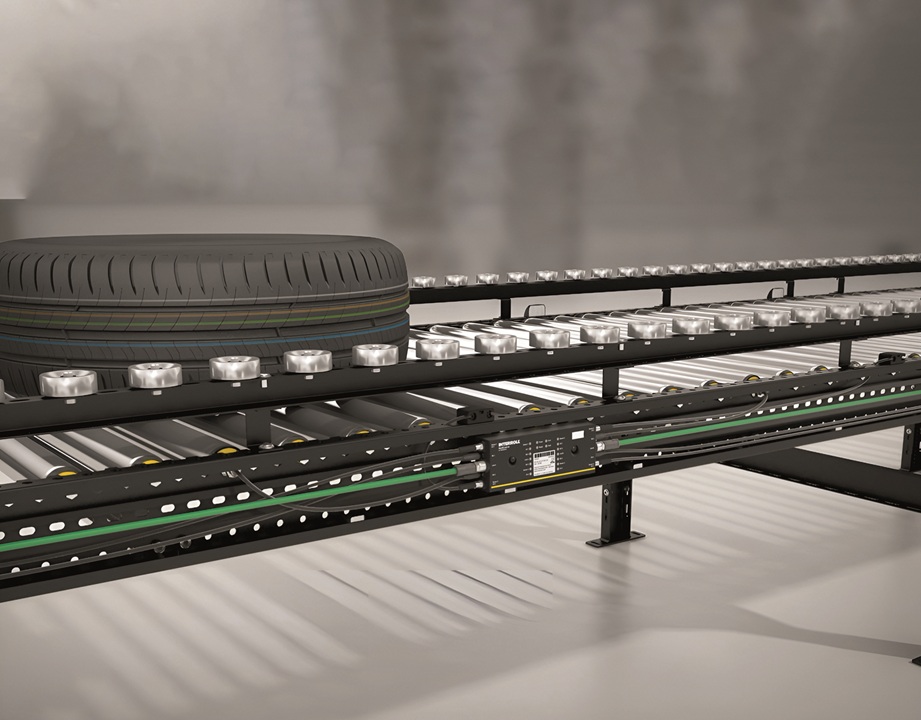
Interroll’s modular platforms, including the MCP range, are built from standard modules. RollerDrive EC5000 units, managed by MultiControl electronics, form a highly scalable and energy-efficient material handling system.
In a conventional centralised architecture, adding zones can require additional I/O, cabling and software changes. In a decentralised system, expansion means adding a module and an Ethernet connection. Independently controlled zones can also absorb small cycle-time differences and micro-stoppages without passing every interruption down the line. Upgrades follow the same logic. The 24-volt EC5000 versions rated at 20 and 35 watts with Analogue Interface (AI) can be used as replacements for the earlier EC310, supporting a more straightforward maintenance approach and the extension of existing installations.
ROUTING WITHOUT OVER-ENGINEERING
Not every route variation calls for a sorter. When tyres must be directed to testing, quality inspection, rework or the next process, Interroll’s position is that a modular conveyor backbone with targeted transfers and diverters often gives a better balance of performance, footprint and cost than a sorter built for distribution logistics. Further downstream, particularly after warehousing, higher volumes and more destinations can justify a dedicated sorter such as the company’s MC-S range.
Piciocco’s warehouse example shows the risk of getting this wrong. A large operator that stacks and stores tyres with considerable automation then needs a separate, costly sorting system to retrieve and route them. In this part of the process, he says, a solution such as Interroll’s MC-S can provide the required throughput with a more efficient layout and a significantly smaller footprint.
CONTINUITY INTO DOWNSTREAM HANDLING
Where load and duty allow, the same architecture can extend past the individual tyre. A 24/48-volt modular pallet conveyor, the MPP platform, can handle a load of up to 500 kilogrammes per metre while retaining decentralised control and zero-pressure accumulation. Rollers of 60 millimetres in diameter allow a closer pitch and more support points, which, after application validation, can reduce vertical undulation when handling tyre stacks.
Piciocco is careful not to make continuity a dogma. Above the platform’s operating envelope, robust 400-volt heavy-duty conveyors remain the correct choice.
FROM REACTION TO PLANNING
Maintenance is where Piciocco sees the most overlooked cost. When total cost of ownership and plant availability are considered, he says, maintenance and stoppage-related costs can account for around 10 to 15 percent of the overall cost associated with material flow in some applications, including labour, spare-parts inventory and lost production during downtime. “Maintenance is often treated as something that simply happens. It should not be. Much of it can be avoided,” he says.
Connected drives, such as the RollerDrive EC5000 BI with MultiControl, make more than 100 parameters available, including operating hours, cycle counts, temperature, system status and error type. If the torque required by a motor rises progressively, the system can flag an abnormal trend before it develops into a stoppage and give the maintenance team a stronger basis for planning an inspection.
Without that information, a failed motor can cause a prolonged stoppage while crews identify the source and check whether the spare part is available. With an early warning, maintenance can schedule the intervention; for an accessible RollerDrive with the spare available, replacement can take less than an hour. Piciocco calls this preventive rather than predictive maintenance. The data does not replace maintenance expertise, but it gives teams a stronger factual basis for decisions, and standard components make diagnostics and training common across the plant.
GLOBAL STANDARDS, LOCAL EXECUTION
A shared catalogue alone does not make a standard, Piciocco says. It also needs consistent selection criteria, spare-parts strategies and support after start-up. Interroll has production, engineering and service capabilities across the world’s main industrial regions, allowing global standards to be supported by local execution. Its life-cycle offering includes structured maintenance programmes, dedicated stock of critical components, periodic audits and staff training, scaled to how critical the application is.
He applies the same logic across markets. Using a smartphone as an analogy, Piciocco says the same platform can be used in a basic configuration or with more advanced functionality, depending on a plant’s needs and technological maturity. A manufacturer can therefore retain common components, diagnostics and training across sites while adapting the level of automation to local conditions.
That flexibility extends to how far automation should go. Speaking for himself, not Interroll, Piciocco says not every producer needs a dark factory. The appropriate level of automation depends on volumes, product mix, process maturity and available skills. “If people do not understand how the technology works, you can have the best technology in the world, but it will not be used properly and may even become a limitation,” he says.
REAL ISSUE
Asked what single mindset shift the industry needs, Piciocco did not hesitate. “Interface,” he says. “The machines are already quite optimised. The problem is how we serve the machine.” As individual machines become increasingly optimised, the interfaces between them play a growing role in improving productivity, simplifying maintenance, reducing energy consumption and enabling future expansion.
“Material flow should not be the last part of the engineering process,” he adds. “If it is considered earlier, we can contribute to a solution that supports optimisation of the entire plant.”
Mark Stewart Steps Down As Goodyear CEO; Roger Wood Takes Interim Reins
- By TT News
- November 09, 2026

The Goodyear Tire & Rubber Company has announced that Mark Stewart has stepped down from his roles as Chief Executive Officer and President of the company and has also left its board of directors, effective immediately. In his place, the company has installed board member Roger Wood as interim Chief Executive Officer, with Wood leading the tyre maker while a leading executive search firm helps the board identify a permanent successor.
Wood joined the board in 2023 and has spent over 30 years leading businesses in the automotive and manufacturing sectors. He was previously Co-Chief Executive of Tenneco Inc., which designs, manufactures and distributes clean air, powertrain and ride performance systems worldwide for vehicle manufacturers and the aftermarket, and he holds board seats at PHINIA Incorporated and Brunswick Corporation. As part of taking the interim role, he has given up chairing the board's human capital and compensation committee.
Earlier this year, the board set up a special committee to scrutinise the company's businesses and operations, seeking ways to lift performance and deliver more value to shareholders. Directors and management are pursuing that effort through a wide-ranging assessment of strategic and operational options, among them refining the business mix and footprint, sharpening efficiency and funding new products and capabilities that underpin long-term growth. No further updates are planned unless and until the board concludes that more disclosure is warranted or required.
In a separate announcement dated 27 October 2026, Goodyear said Jerome Rouquet will become Executive Vice President and Chief Financial Officer on 1 December 2026. Rouquet, now Chief Financial Officer at Visteon Corporation and formerly a senior finance executive at Tenneco and Federal-Mogul, takes over from interim Chief Financial Officer Scott Deakin, who will help ensure a smooth handover.
Joe Hinrichs, Goodyear Board of Directors Chair, said, "Goodyear has made meaningful progress in becoming a more efficient and focused company, and the board believes this is the right moment to transition leadership to accelerate that progress and capture additional opportunity. Roger brings extensive automotive and industrial CEO experience, deep operational expertise and strong relationships across OEMs and aftermarket customers. He knows Goodyear, understands the opportunities ahead and has the board's full confidence to bring heightened focus and urgency to execution while we conduct a thorough search for a permanent CEO. We thank Mark for his contributions to Goodyear.
"The board formed a special committee earlier this year to conduct a rigorous strategic review of the company to help strengthen performance and create shareholder value. The board, together with the Enterprise Transformation Office, is evaluating a broad range of strategic and operational opportunities, and we are committed to taking the right actions to position Goodyear for stronger performance and long-term success. We look forward to providing an update as this work progresses."
Wood said, "Goodyear has iconic brands, talented people and significant opportunities to improve performance and deliver long-term value. As I step into this role, my immediate priorities are to support our associates and customers, sharpen execution and build on the work already underway to advance Goodyear's transformation. I look forward to working closely with the board, leadership team and the Enterprise Transformation Office to advance the strategic review and translate that work into actions that strengthen performance and position Goodyear for long-term success."
Michelin Appoints Terry Redmile As Chief People Officer For North America
- By TT News
- November 07, 2026

Michelin Group has appointed Terry Redmile as Chief People Officer for Michelin North America, Inc. In his new capacity, he will direct employee-focused operations throughout the North America Region, encompassing the recruitment, growth and retention of leading talent. His appointment places a seasoned internal leader at the helm of the company's people strategy.
A veteran of over three decades with Michelin, Redmile started as a co-op student at the firm's Greenville research and development centre. His tenure has spanned roles such as quality engineer and site director at the Fort Wayne, Indiana, manufacturing plant, culminating most recently in his position as senior vice president of manufacturing operations for the Americas. He also holds an MBA from Clemson University and a mechanical engineering bachelor's degree from the Georgia Institute of Technology.
Matthew Cabe, President and CEO, Michelin North America, Inc., said, “Terry understands our business, but more importantly, he understands our employees. His foundation in manufacturing and engineering gives him a firsthand understanding of where so many of our employees work every day and what they need to succeed. That perspective will be invaluable in this role.”
Redmile said, “The strength of Michelin has always been rooted in the strength of our talented teams. I’ve had the privilege of working alongside employees across our operations, and they are at the heart of what drives us forward. I want to build on that foundation and help our people continue to learn, innovate and shape what comes next for our industry.”
Apollo Tyres Announces INR 2.92 Billion Net Profit For Q2 FY2027, Appoints Ravi Kumar Shingari As CFO
- By TT News
- November 05, 2026
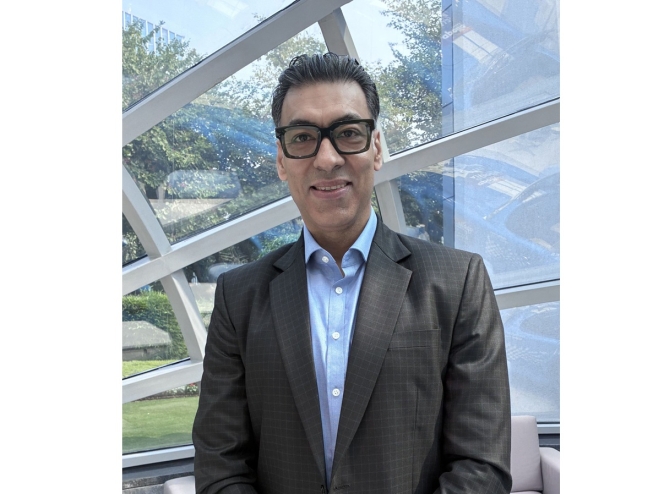
Apollo Tyres, one of the leading manufacturers of tyres in India, has reported its financial results for Q2 FY2027 and H1 FY2027, alongside announcing the appointment of Ravi Kumar Shingari as its new Chief Financial Officer, effective 4 November 2026.
In his new role, Shingari will be reporting directly to Vice-Chairman and Managing Director Neeraj Kanwar. He joined Apollo Tyres in 2018 as Group Head of Finance and subsequently managed functions across budgeting, accounts, investor relations, and legal affairs, following a 16-year tenure at KPMG as Partner in Tax and Regulatory.
The company announced that its consolidated revenue from operations for Q2 grew by 17 percent YoY to INR 79.68 billion, compared to INR 68.31 billion in the corresponding period of the previous fiscal year.
Operating profit for the quarter stood at INR 8.55 billion, while net profit grew 13 percent to INR 2.92 billion, as against INR 2.58 billion in Q2 FY26. The net profit figures include an estimated pre-tax restructuring cost of INR 260 million recorded as an exceptional item.
For H1 FY2027, revenue reached INR 153.66 billion, up 15 percent from INR 133.92 billion in H1 FY26, with operating profit closing at INR 17.23 billion and net profit at INR 6.41 billion.
Onkar Kanwar, Chairman, Apollo Tyres, said, "Growth across categories in India has been supported by our sustained rural expansion efforts and strategic association with cricket. In addition, the launch of new products in the commercial vehicle segment in India has strengthened performance during the past quarter. At the same time, geopolitical tensions in West Asia remain a headwind, resulting in elevated input costs and supply chain disruptions."
Also read: Apollo Tyres Appoints Abhineet Kothari As India Business Head For Vredestein
- Tire Technology Expo 2027
- Deutsche Messe Hannover
- VMI Group
- HF Group
- TROESTER
- KraussMaffei Extrusion
- Rockwell Automation and Siemens
- together with ARLANXEO
- Asahi Kasei
- Evonik
- Henkel
Tire Technology Expo 2027: Where Tyre Development Meets Manufacturing Reality
- By TT News
- November 05, 2026
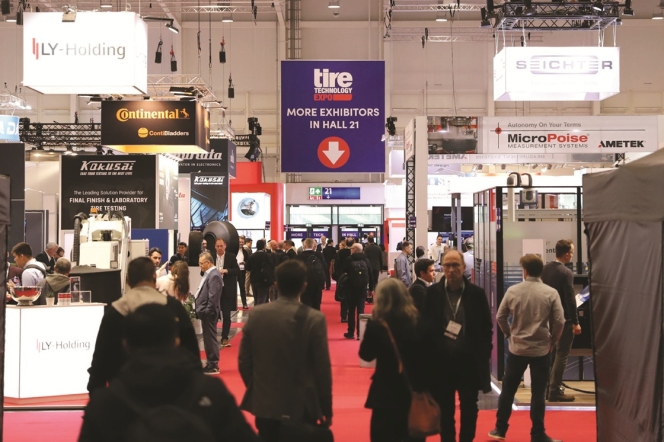
From advanced materials and compound development to intelligent production, testing, simulation and regulation, the global tyre technology community returns to Hannover on 2, 3 and 4 March 2027.
Tire Technology Expo will open its 27th edition next March across Halls 19, 20 and 21 at Deutsche Messe, Hannover. For tyre manufacturers, vehicle OEMs, material developers, production engineers, technical directors, researchers and regulatory specialists, it is one of the few dates in the calendar when the complete tyre development and manufacturing chain can be examined in one place.
That breadth is increasingly important. Tyre performance is being reshaped by changing vehicle architectures, tighter sustainability targets, evolving regulation and the growing role of data in development and production. Progress rarely depends on one isolated technology. It requires decisions across materials, design, process engineering, quality control, testing and the factory systems that connect them.
THE FULL PRODUCTION CHAIN, IN ONE VISIT
Across the three halls, the 2027 exhibition will present more than 240 technology and materials solutions. Visitors will be able to investigate raw and reinforcing materials, speciality chemicals, process oils and compound development alongside mixing, extrusion, calendering, tyre building, mould, curing and cutting technologies.
The show floor will also cover factory automation, handling and logistics, in-line measurement, X-ray inspection, uniformity and balancing, RFID, smart tyres, simulation software, lifecycle monitoring, recycling and homologation. It is a practical opportunity to assess how individual technologies perform within the wider production environment rather than viewing each stage in isolation.
A plant manager can move from dosing and mixing to material handling and process control. An R&D engineer can discuss compound properties, test methods, modelling and production feasibility during the same visit. Vehicle OEM teams can meet specialists in tyre behaviour, data acquisition, simulation and connected-tyre applications, as well as the companies responsible for turning those developments into repeatable industrial processes.
The 2027 exhibitor list is already bringing together major machinery, automation, materials and testing organisations. Confirmed names include VMI Group, HF Group, TROESTER, KraussMaffei Extrusion, Rockwell Automation and Siemens, together with ARLANXEO, Asahi Kasei, Evonik and Henkel. Testing and development expertise is represented by organisations including MTS and Applus IDIADA.
THE CONFERENCE: SUBSTANCE BEHIND THE INDUSTRY’S BIGGEST QUESTIONS
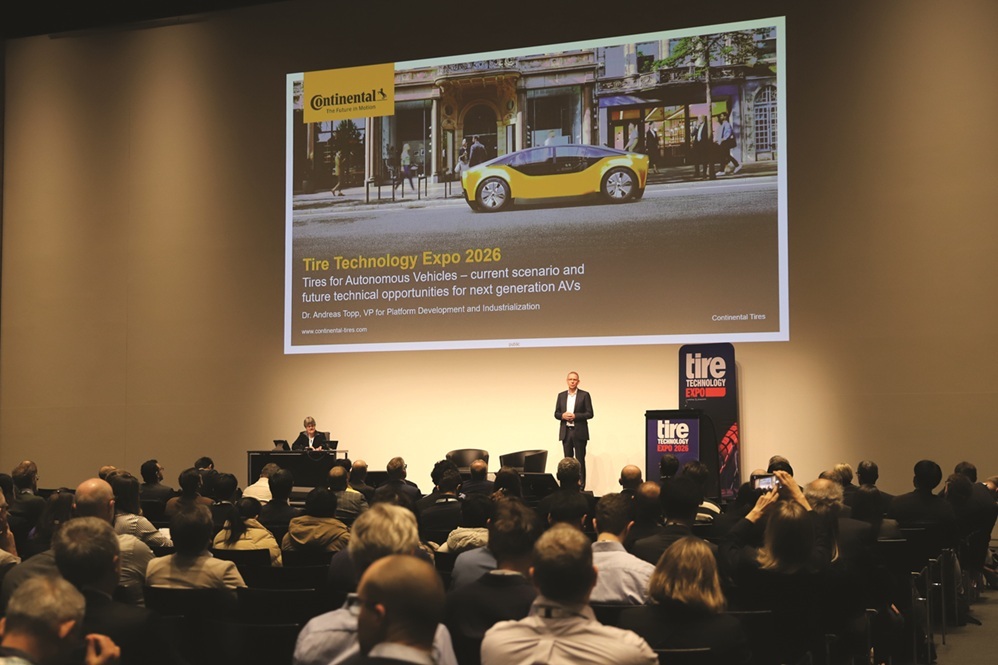
The 2027 speaker lineup is going to be released in the very near future, with the direction of the three-day Tire Technology Expo Conference already clear. The presentations will highlight the scientific, technical, business and regulatory contributions, with an emphasis on genuine insight, practical experience and application-led case studies rather than corporate presentations.
The highlighted subjects reflect the decisions now facing tyre manufacturers and their customers. They include sustainable manufacturing, circularity, retreading and material reuse; advanced and alternative materials; requirements linked to the Ecodesign for Sustainable Products Regulation, deforestation rules and homologation; tyre and road wear particles and the implications of Euro 7, including a specific focus on C3 tyres; virtual tyre development, testing, modelling and simulation; intelligent connected tyres, sensors and data applications; AI in R&D and manufacturing; supply-chain resilience; and tyre integration with electric, autonomous and software-defined vehicles.
The programme is being shaped with input from an advisory group that includes senior expertise from Continental, Michelin, Tyres Europe and the University of Twente. The conference is set to bring together more than 170 expert speakers and over 100 hours of presentations and panel discussions across three days, creating a concentrated forum for tyre makers, vehicle manufacturers, suppliers, regulators, research institutions and academia.
For delegates, its value goes beyond individual presentations. The format allows the technical and regulatory implications of a development to be tested against different viewpoints, often while the relevant materials, equipment and measurement technologies can be examined a few steps away on the exhibition floor. Delegate passes also include hospitality, private networking, access to the awards and post-event access to presentation materials. The programme and delegate registration will be released in due course.
DEVELOP SPECIALIST KNOWLEDGE THROUGH THE SHORT COURSES
Four specialist short courses will run during the event week, with the full 2027 programme and booking details to be announced. The established subject range spans tyre mechanics, mathematical modelling, regulations and reinforcement, with formats ranging from one to four days.
These courses are intended for professionals who need more depth than a conference session can provide. Previous programmes have taken participants through subjects such as tyre structure and compounding, grip and durability, finite-element and real-time modelling, tyre-road interaction, EU and UNECE regulatory frameworks, type approval, tyre labelling, reinforcement properties and fatigue testing.
For engineers, scientists, technical managers and regulatory teams, the courses provide a concentrated opportunity to strengthen knowledge that can be applied directly to current development and manufacturing work. They also offer a valuable common technical foundation for colleagues moving into new responsibilities or working across different parts of the tyre and vehicle industries.
RECOGNISING THE WORK MOVING THE INDUSTRY FORWARD
The Tire Technology International Awards for Innovation and Excellence will again place the industry’s strongest recent work under the spotlight. The 2027 awards cover 11 categories across environmental achievement, chemicals and compounding, materials, R&D, manufacturing, supplier performance, tyre concepts and finished products. Access to the ceremony is included with a visitor pass and takes place right after the networking drinks, giving the wider expo audience an opportunity to see which developments are setting the benchmark for the sector and to catch up with new and existing connections.
PLAN THE CONVERSATIONS THAT MATTER
Tire Technology Expo is built around practical progress. It is where a new material can be assessed against production requirements, a modelling approach can be discussed with vehicle and tyre specialists and an equipment investment can be examined with the engineers who will support its implementation.
The exhibition is open to tyre industry and related professionals, and visitor registration is now available. Conference delegate registration and short-course booking will open separately as the 2027 programmes are confirmed.
Comments (0)
ADD COMMENT