

Inside CEAT’S Factories Of The Future: A Conversation With Jayasankar Kuruppal
- By Sharad Matade
- October 09, 2026
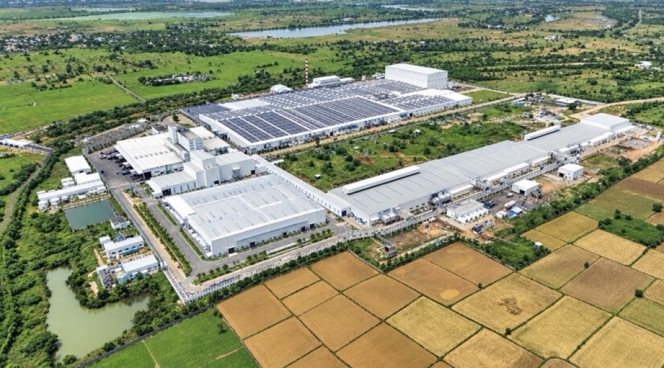
When the World Economic Forum inducted CEAT’s Chennai facility into its Global Lighthouse Network in January 2025, it made the Indian tyre-maker the first tyre brand in the world to hold two such honours – Chennai following in the footsteps of the company’s Halol plant. Add to that CEAT’s Deming Grand Prize, awarded by the Union of Japanese Scientists and Engineers for sustained excellence in Total Quality Management, and the company finds itself in rarefied company: one of only a handful of manufacturers worldwide, and the only tyre brand to hold both distinctions.
Behind these accolades sits a quieter, harder story – one of culture change, shop-floor scepticism and years of disciplined, incremental investment in artificial intelligence, the Industrial Internet of Things and automation. In an interview with Tyre Trends, Jayasankar Kuruppal, Senior Vice President, Manufacturing at CEAT, spoke on what these recognitions actually mean on the factory floor, and where the company believes manufacturing is headed next.
AWARDS AS A BY-PRODUCT, NOT THE GOAL
CEAT’s Chennai plant has posted striking numbers since its digital transformation began: a 54 percent improvement in dispatch turnaround, a 25 percent uplift in labour productivity, an 18 percent reduction in cycle times, a 31 percent improvement in operating cost and a 47 percent cut in Scope 1 and 2 emissions. Yet Kuruppal is quick to reframe the narrative around these achievements.
“The awards are lagging indicators, not the goal. What actually matters is what they force us to build: a common language for problem-solving across every plant, real-time visibility into quality and efficiencies and a workforce that trusts data over gut-feel,” Kuruppal said.
“That discipline shows up directly in the numbers – tighter process capability, better efficiencies and faster changeovers leading to shorter lead times. There is a commercial dividend too: global OEMs increasingly audit manufacturing maturity, and being part of the WEF Global Lighthouse Network gives us instant credibility in those conversations,” he added.
WHAT’S REALLY DRIVING THE INVESTMENT
CEAT has been pouring capital into AI, IIoT and automation across its plants. Is this cost pressure, premiumisation or a simple need to stay globally competitive? Kuruppal’s answer suggests it is all three, each playing a distinct role.
Kuruppal explained, “Quality, cost and efficiency is what gets the funding approved. Premiumisation is what’s shaping which lines we automate or upgrade first – you cannot hold the tolerances a premium radial demands with manual, operator-dependent processes.” According to him, global competitiveness, meanwhile, sets the ambition. “We’re not benchmarking ourselves against the best tyre plant in India anymore – we’re benchmarking against the best factories in any industry,” he added.
Asked to rank the three forces, he summarised neatly: competitiveness sets the ambition, premiumisation sets the sequencing and cost discipline keeps the whole effort honest.
REPLICATING HALOL AT CHENNAI: CULTURE OVER CODE
Chennai’s transformation built directly on lessons learned at Halol, the world’s first tyre facility inducted into the Lighthouse Network. And when asked what proved hardest to replicate, the technology, the culture or getting the underlying processes right, Kuruppal said, “Technology was actually the easiest part to copy. A use case that works at Halol can be re-deployed at Chennai in weeks.”
But the real difficulty, as per Kuruppal, was culture, people and change management. At Halol, habits such as daily data reviews, operator ownership of quality metrics and a managerial focus on coaching rather than firefighting were built steadily over several years. Chennai, by contrast, has had to replicate that trajectory on a compressed timeline, with a workforce encountering these practices for the first time.
“We had to resist the temptation to just parachute in dashboards and call it digital. We spent real time getting the underlying process standardisation right first, because AI on top of an unstable process just gives you a faster route to the wrong answer,” Kuruppal said.
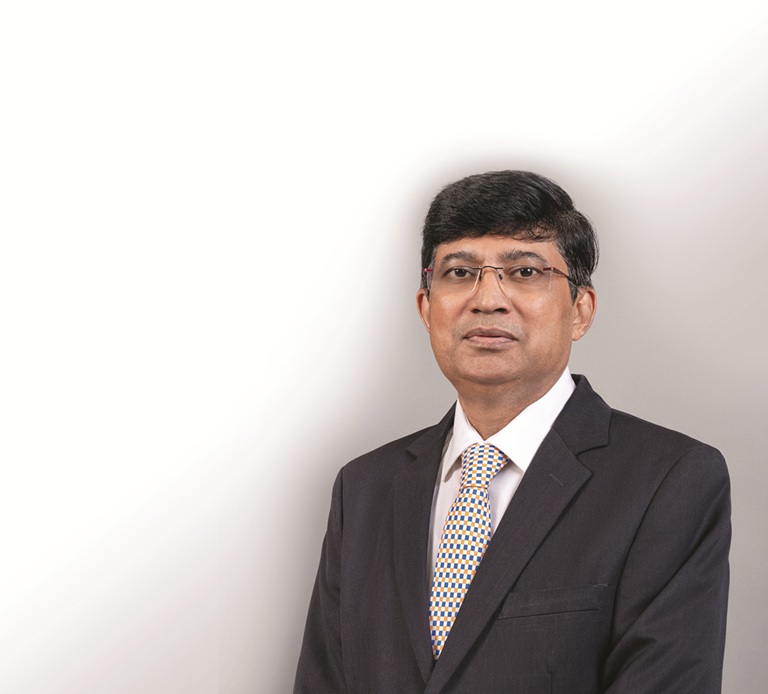
Jayasankar Kuruppal, Senior Vice President, Manufacturing, CEAT
WHERE THE RETURNS SHOW UP – AND WHERE THEY HAVEN’T YET
The productivity and dispatch gains at Chennai, he explained, hit the balance sheet in different ways. The productivity improvement lowers conversion cost per tyre and improves absorption of fixed costs as volumes grow. The dispatch improvement is more of a customer-experience story: less finished-goods inventory sitting idle, and OEMs and dealers receiving faster, more predictable delivery windows – ‘which matters a lot when you’re chasing premium and export business’.
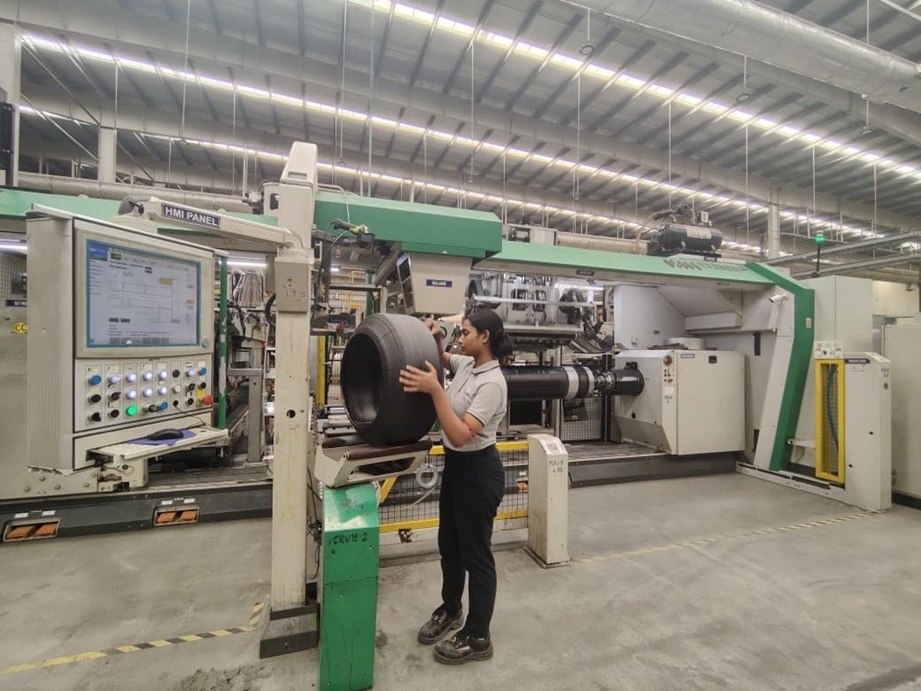 Not every initiative has paid off yet, however. Kuruppal was candid about the areas still short of return, singling out ‘some of the more exploratory AI use cases – like computer-vision pilots – which need more data cycles before the accuracy justifies scaling them further’.
QUALITY, MAINTENANCE, OUTPUT: AI TOUCHES ALL THREE
Rather than picking a single area where artificial intelligence delivers most value, Kuruppal argued that its power lies in the way it now touches quality, maintenance and output simultaneously – and that these reinforce one another. “Better quality data feeds better predictive-maintenance models, which reduces unplanned downtime, which directly lifts output,” he said. The most immediate impact shows up in more consistent product quality, higher yields and earlier detection of equipment issues. He pushed back, though, on the idea that AI at CEAT is a single flagship project: “On our floor, it’s dozens of narrow, specific use cases, each solving one operator’s or one supervisor’s actual problem.”
JUSTIFYING THE SPEND IN A MARGIN-TIGHT BUSINESS
Tyre manufacturing is not a business with room for indulgent technology spending, and Kuruppal was clear that CEAT does not fund innovation for its own sake. “Every use case has to show a clear line to quality, efficiency, cost or capacity enhancement before it gets budget,” he said. The company deliberately starts small – piloting on a single line, proving value with real production data, and scaling only what works – a discipline that means ‘the savings from scaled use cases fund the next round of pilots’. He offered a broader rationale too: in a commodity-adjacent business where raw material costs sit largely outside a manufacturer’s control, manufacturing capability itself becomes the differentiator. “If we can’t always control input costs, we can control how efficiently and consistently we convert them into tyres,” he added.
CHENNAI PLANT WIDENS ITS PREMIUM PUSH
CEAT on Oct. 1 announced an expansion of manufacturing capabilities at its Chennai plant across passenger car and SUV, commercial vehicle and two-wheeler tyres. The company said the move targets premium customers in India, Europe and North America.
What’s new
Cars and SUVs: The plant now makes the SportDrive SUV ZR22. CEAT said this makes it the first Indian tyre company to manufacture 22-inch tyres in India. It also makes the 4SeasonDrive+ all-season tyre and the CrossDrive RT rugged-terrain tyre, built for the U.S. market.
Trucks and buses: The plant can now produce seven advanced truck and bus radial sizes, including wide-base tyres that can replace dual-tyre setups, and low-profile sizes. CEAT is also scaling light truck steel radials in 15-, 16- and 17.5-inch sizes.
Two-wheelers: The SportRad Racing Slick range targets track use, and SportRad ST is a sport-touring range for motorcycles above 650cc.
“This investment strengthens our ability to compete in premium segments with products developed and manufactured in India,” CEAT managing director and CEO Arnab Banerjee said.
The 163-acre plant in Sriperumbudur, Kanchipuram, runs on connected machinery and real-time analytics. It also has a 9 MW rooftop solar installation and operates as a zero-liquid-discharge facility.
FROM PILOT TO SCALE: AN OPERATING-MODEL PROBLEM
With a large share of CEAT’s lines now running as ‘smart lines’, when asked what changes when a company moves from isolated pilots to scaling technology across multiple plants, the CEAT executive explained, “The problem changes completely. A pilot is a technology and data-science problem – get the model working, prove the use case. Scaling is an operating-model problem – standard work, training, change management, IT infrastructure that can handle load across sites and governance so every plant isn’t reinventing its own version of the same solution.”
CEAT has built what he calls a central playbook – reusable architecture, common data standards and the ability to roll a proven use case out to a new plant in weeks rather than months. “Just as importantly, ownership shifts: at pilot stage, a project team owns the initiative; at scale, it must become the plant’s own way of working, run by operations rather than a digital team sitting alongside it,” he added.
BRINGING 80 PERCENT OF THE WORKFORCE ALONG
CEAT reports that more than 80 percent of its workforce is now digitally enabled – a transformation Kuruppal admits did not come without resistance. “Yes, and I’d be understating it if I said otherwise,” he said. Crucially, he insists the resistance was never really about technology itself but about ease of operation. What worked, he explained, was making tools visibly useful to the person using them first – an operator seeing a dashboard that helps them hit their own target before it ever becomes a management reporting tool. CEAT invested heavily in shop-floor-specific training rather than generic digital-literacy courses and made a point of promoting from within, demonstrating that digital skills opened up better roles rather than closing off old ones. The company has also created new shop-floor roles beyond data scientists and engineers – ‘Business Translators’ and ‘Champions’ who act as torchbearers driving scaled implementation and wider blue-collar involvement.
CONSISTENCY, NOT JUST DEFECT COUNTS
Asked whether tighter process control has genuinely reduced defects, Kuruppal reframed the question around consistency. “Tighter process control means less batch-to-batch variation, which matters enormously in tyre manufacturing because so much of performance and durability comes down to material consistency through mixing, extrusion and curing,” he said. Real-time monitoring now catches drift early, rather than at final inspection – both a quality win and a material-efficiency win, in the form of less scrap and rework. The habit that has changed most, he said, is that quality data now drives daily decisions on the shop floor, rather than featuring only in a monthly review.
MANUFACTURING FOR A PREMIUM, ELECTRIC FUTURE
CEAT’s push into premium tyres calls for a step-change in manufacturing discipline. “Premium tyres are far less forgiving of variation, so the shift starts with tightening process capability across every stage – not just final inspection. That means more precise equipment, better process capability and closed-loop control,” said Kuruppal. In this context, flexibility takes on a different meaning: a wider SKU mix, smaller batch sizes and faster changeovers are pushing the company towards more modular manufacturing, alongside a workforce increasingly weighted towards process engineering expertise.
Electric vehicles introduce an additional layer of complexity. EV tyres must carry greater weight, handle instant torque and operate more quietly, tightening specifications around structural strength, noise and rolling resistance beyond those of conventional tyres. On the shop floor, that translates into new compound formulations requiring precise mixing, reinforced construction demanding tighter control of building machines and significantly lower tolerance for micro-variation.
CEAT’s existing leadership in the e-two-wheeler tyre segment, Kuruppal noted, is already feeding lessons – particularly on noise and efficiency – into how the company prepares lines for growing e-four-wheeler volumes in India.
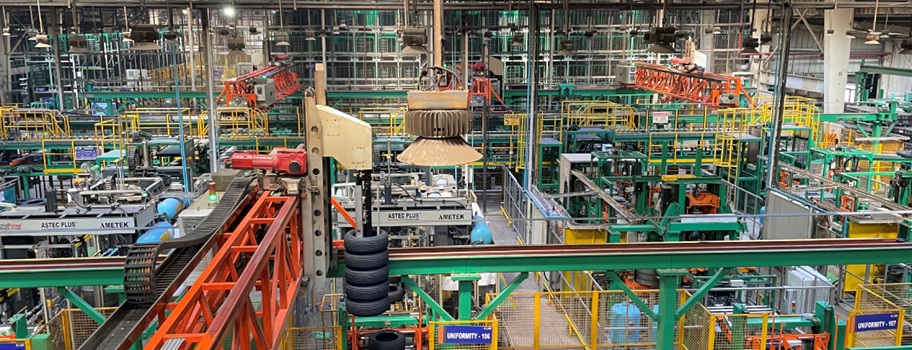 SUSTAINABILITY AND RESILIENCE, BUILT IN
Sustainability, once a separate reporting exercise, is now ‘a line item in almost every manufacturing decision’, with energy and emissions sitting alongside cost and quality when evaluating new processes or equipment – Chennai’s 47 percent emissions reduction being the clearest proof point. Resilience, too, has become as much a data problem as a sourcing one. “Real-time visibility into inventory, machine health and production schedules means we can see a disruption coming and reschedule around it rather than reacting after a line has already stopped,” Kuruppal said, pointing also to greater flexibility in shifting product mix between lines and earlier warning signals from digitised supplier and logistics data.
SPEED AS A COMPETITIVE WEAPON
Manufacturing speed and flexibility, Kuruppal argues, have become one of CEAT’s most important competitive dimensions, as OEMs compress their own development cycles and expect tyre partners to match their pace – faster prototyping, faster line trials, faster ramp-up to volume. Chennai’s faster dispatch turnaround is part of the same story. “It’s not just about making tyres faster; it’s about the whole chain from order to delivery being more predictable and quicker,” he said.
GROUND STILL TO COVER
For all its Lighthouse credentials, Kuruppal was refreshingly honest about the distance still to travel. “Being part of that network is genuinely humbling. You see factories in electronics and consumer goods running end-to-end AI-driven planning and quality systems at a level of maturity we’re still building towards – particularly in advanced analytics for demand-and-production planning and in scaling generative-AI use cases beyond pilots,” he said. CEAT’s strength, he believes, lies in shop-floor execution and quality; the next frontier is connecting that data seamlessly across the full value chain, from raw-material sourcing to the end customer.
MANUFACTURING AS A GROWTH DRIVER
Perhaps the most striking shift Kuruppal describes is a change in how manufacturing itself is perceived within the business. “Traditionally, manufacturing was viewed in this industry as a cost centre that executes what sales and product teams decide,” he said.
“Today, our manufacturing capability is directly opening up premium and export opportunities, because global customers evaluate factory maturity as part of their sourcing decision. It works in the other direction too, shaping which premium and EV products the company can confidently commit to launching. Manufacturing has moved from being an execution function to being a genuine input into growth strategy,” he added.
WHAT COMES NEXT
Looking ahead, Kuruppal frames the next horizon as connecting what CEAT has built plant-by-plant into a single, integrated digital thread – spanning raw-material and demand planning, production and distribution – so decisions are optimised end-to-end rather than site-by-site. Generative AI, he said, is increasingly being explored for process and equipment troubleshooting and knowledge capture, making the expertise of CEAT’s best engineers accessible across every plant. Sustainability, meanwhile, will be designed into new lines from the outset rather than retrofitted. “The common thread is moving from isolated smart use cases to a genuinely integrated smart manufacturing system,” he explained.
THE ONE NUMBER THAT MATTERS
Answering the question on if he could track just one metric across every CEAT plant, what would it be, he admitted, “If I’m honest, no single number tells the whole story, but if forced to pick one, it would be Overall Equipment Effectiveness – OEE.”
“As a composite of availability, performance and quality, a healthy and rising OEE generally signals that machines are running, running at the right speed and producing good tyres – which is really the definition of a plant working as it should,” he said. It has its limits – OEE alone won’t reveal a lapse in safety culture or the pace of digital adoption – which is why, in the end, Kuruppal names two figures he watches above all: OEE and safety indicators.
Michelin Appoints Terry Redmile As Chief People Officer For North America
- By TT News
- November 07, 2026

Michelin Group has appointed Terry Redmile as Chief People Officer for Michelin North America, Inc. In his new capacity, he will direct employee-focused operations throughout the North America Region, encompassing the recruitment, growth and retention of leading talent. His appointment places a seasoned internal leader at the helm of the company's people strategy.
A veteran of over three decades with Michelin, Redmile started as a co-op student at the firm's Greenville research and development centre. His tenure has spanned roles such as quality engineer and site director at the Fort Wayne, Indiana, manufacturing plant, culminating most recently in his position as senior vice president of manufacturing operations for the Americas. He also holds an MBA from Clemson University and a mechanical engineering bachelor's degree from the Georgia Institute of Technology.
Matthew Cabe, President and CEO, Michelin North America, Inc., said, “Terry understands our business, but more importantly, he understands our employees. His foundation in manufacturing and engineering gives him a firsthand understanding of where so many of our employees work every day and what they need to succeed. That perspective will be invaluable in this role.”
Redmile said, “The strength of Michelin has always been rooted in the strength of our talented teams. I’ve had the privilege of working alongside employees across our operations, and they are at the heart of what drives us forward. I want to build on that foundation and help our people continue to learn, innovate and shape what comes next for our industry.”
Apollo Tyres Announces INR 2.92 Billion Net Profit For Q2 FY2027, Appoints Ravi Kumar Shingari As CFO
- By TT News
- November 05, 2026
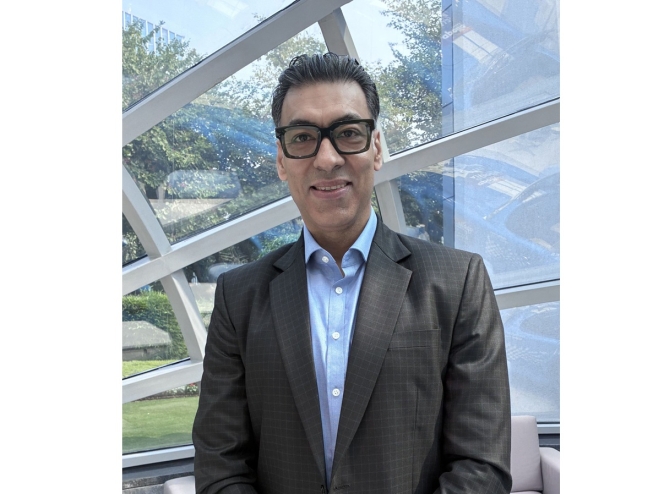
Apollo Tyres, one of the leading manufacturers of tyres in India, has reported its financial results for Q2 FY2027 and H1 FY2027, alongside announcing the appointment of Ravi Kumar Shingari as its new Chief Financial Officer, effective 4 November 2026.
In his new role, Shingari will be reporting directly to Vice-Chairman and Managing Director Neeraj Kanwar. He joined Apollo Tyres in 2018 as Group Head of Finance and subsequently managed functions across budgeting, accounts, investor relations, and legal affairs, following a 16-year tenure at KPMG as Partner in Tax and Regulatory.
The company announced that its consolidated revenue from operations for Q2 grew by 17 percent YoY to INR 79.68 billion, compared to INR 68.31 billion in the corresponding period of the previous fiscal year.
Operating profit for the quarter stood at INR 8.55 billion, while net profit grew 13 percent to INR 2.92 billion, as against INR 2.58 billion in Q2 FY26. The net profit figures include an estimated pre-tax restructuring cost of INR 260 million recorded as an exceptional item.
For H1 FY2027, revenue reached INR 153.66 billion, up 15 percent from INR 133.92 billion in H1 FY26, with operating profit closing at INR 17.23 billion and net profit at INR 6.41 billion.
Onkar Kanwar, Chairman, Apollo Tyres, said, "Growth across categories in India has been supported by our sustained rural expansion efforts and strategic association with cricket. In addition, the launch of new products in the commercial vehicle segment in India has strengthened performance during the past quarter. At the same time, geopolitical tensions in West Asia remain a headwind, resulting in elevated input costs and supply chain disruptions."
Also read: Apollo Tyres Appoints Abhineet Kothari As India Business Head For Vredestein
- Tire Technology Expo 2027
- Deutsche Messe Hannover
- VMI Group
- HF Group
- TROESTER
- KraussMaffei Extrusion
- Rockwell Automation and Siemens
- together with ARLANXEO
- Asahi Kasei
- Evonik
- Henkel
Tire Technology Expo 2027: Where Tyre Development Meets Manufacturing Reality
- By TT News
- November 05, 2026
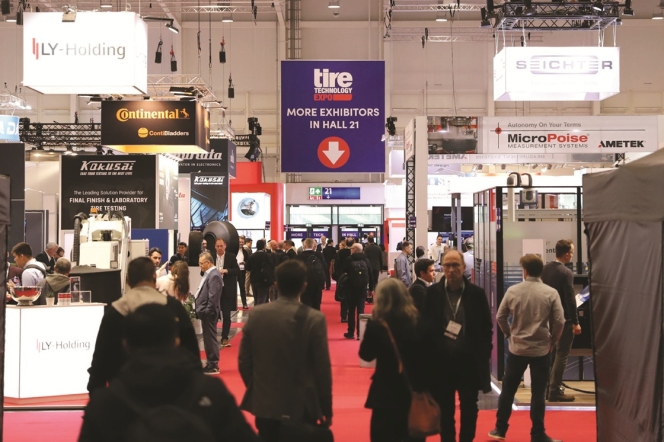
From advanced materials and compound development to intelligent production, testing, simulation and regulation, the global tyre technology community returns to Hannover on 2, 3 and 4 March 2027.
Tire Technology Expo will open its 27th edition next March across Halls 19, 20 and 21 at Deutsche Messe, Hannover. For tyre manufacturers, vehicle OEMs, material developers, production engineers, technical directors, researchers and regulatory specialists, it is one of the few dates in the calendar when the complete tyre development and manufacturing chain can be examined in one place.
That breadth is increasingly important. Tyre performance is being reshaped by changing vehicle architectures, tighter sustainability targets, evolving regulation and the growing role of data in development and production. Progress rarely depends on one isolated technology. It requires decisions across materials, design, process engineering, quality control, testing and the factory systems that connect them.
THE FULL PRODUCTION CHAIN, IN ONE VISIT
Across the three halls, the 2027 exhibition will present more than 240 technology and materials solutions. Visitors will be able to investigate raw and reinforcing materials, speciality chemicals, process oils and compound development alongside mixing, extrusion, calendering, tyre building, mould, curing and cutting technologies.
The show floor will also cover factory automation, handling and logistics, in-line measurement, X-ray inspection, uniformity and balancing, RFID, smart tyres, simulation software, lifecycle monitoring, recycling and homologation. It is a practical opportunity to assess how individual technologies perform within the wider production environment rather than viewing each stage in isolation.
A plant manager can move from dosing and mixing to material handling and process control. An R&D engineer can discuss compound properties, test methods, modelling and production feasibility during the same visit. Vehicle OEM teams can meet specialists in tyre behaviour, data acquisition, simulation and connected-tyre applications, as well as the companies responsible for turning those developments into repeatable industrial processes.
The 2027 exhibitor list is already bringing together major machinery, automation, materials and testing organisations. Confirmed names include VMI Group, HF Group, TROESTER, KraussMaffei Extrusion, Rockwell Automation and Siemens, together with ARLANXEO, Asahi Kasei, Evonik and Henkel. Testing and development expertise is represented by organisations including MTS and Applus IDIADA.
THE CONFERENCE: SUBSTANCE BEHIND THE INDUSTRY’S BIGGEST QUESTIONS
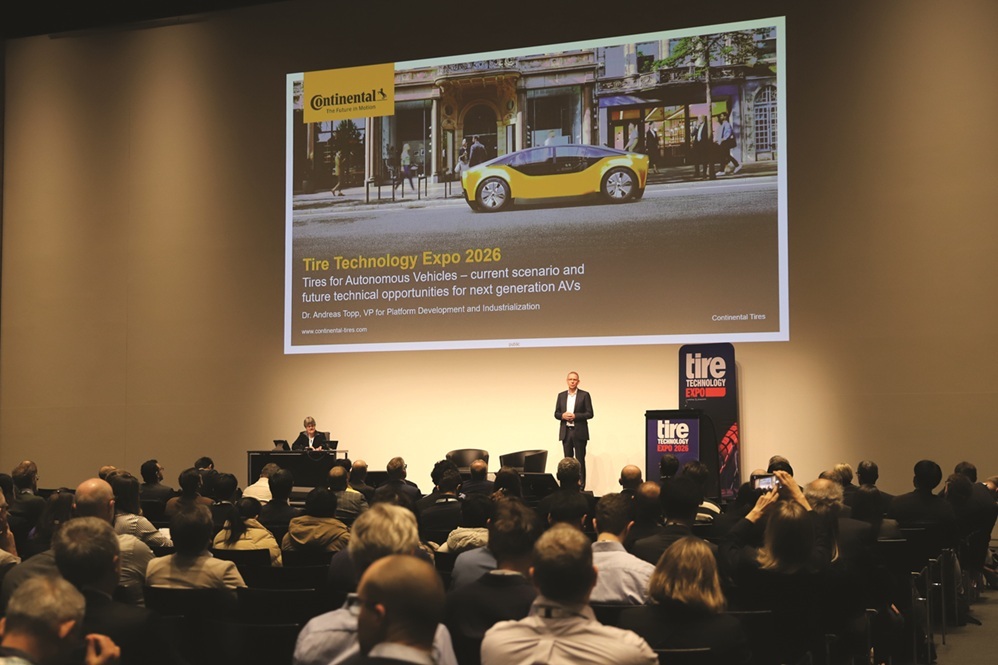
The 2027 speaker lineup is going to be released in the very near future, with the direction of the three-day Tire Technology Expo Conference already clear. The presentations will highlight the scientific, technical, business and regulatory contributions, with an emphasis on genuine insight, practical experience and application-led case studies rather than corporate presentations.
The highlighted subjects reflect the decisions now facing tyre manufacturers and their customers. They include sustainable manufacturing, circularity, retreading and material reuse; advanced and alternative materials; requirements linked to the Ecodesign for Sustainable Products Regulation, deforestation rules and homologation; tyre and road wear particles and the implications of Euro 7, including a specific focus on C3 tyres; virtual tyre development, testing, modelling and simulation; intelligent connected tyres, sensors and data applications; AI in R&D and manufacturing; supply-chain resilience; and tyre integration with electric, autonomous and software-defined vehicles.
The programme is being shaped with input from an advisory group that includes senior expertise from Continental, Michelin, Tyres Europe and the University of Twente. The conference is set to bring together more than 170 expert speakers and over 100 hours of presentations and panel discussions across three days, creating a concentrated forum for tyre makers, vehicle manufacturers, suppliers, regulators, research institutions and academia.
For delegates, its value goes beyond individual presentations. The format allows the technical and regulatory implications of a development to be tested against different viewpoints, often while the relevant materials, equipment and measurement technologies can be examined a few steps away on the exhibition floor. Delegate passes also include hospitality, private networking, access to the awards and post-event access to presentation materials. The programme and delegate registration will be released in due course.
DEVELOP SPECIALIST KNOWLEDGE THROUGH THE SHORT COURSES
Four specialist short courses will run during the event week, with the full 2027 programme and booking details to be announced. The established subject range spans tyre mechanics, mathematical modelling, regulations and reinforcement, with formats ranging from one to four days.
These courses are intended for professionals who need more depth than a conference session can provide. Previous programmes have taken participants through subjects such as tyre structure and compounding, grip and durability, finite-element and real-time modelling, tyre-road interaction, EU and UNECE regulatory frameworks, type approval, tyre labelling, reinforcement properties and fatigue testing.
For engineers, scientists, technical managers and regulatory teams, the courses provide a concentrated opportunity to strengthen knowledge that can be applied directly to current development and manufacturing work. They also offer a valuable common technical foundation for colleagues moving into new responsibilities or working across different parts of the tyre and vehicle industries.
RECOGNISING THE WORK MOVING THE INDUSTRY FORWARD
The Tire Technology International Awards for Innovation and Excellence will again place the industry’s strongest recent work under the spotlight. The 2027 awards cover 11 categories across environmental achievement, chemicals and compounding, materials, R&D, manufacturing, supplier performance, tyre concepts and finished products. Access to the ceremony is included with a visitor pass and takes place right after the networking drinks, giving the wider expo audience an opportunity to see which developments are setting the benchmark for the sector and to catch up with new and existing connections.
PLAN THE CONVERSATIONS THAT MATTER
Tire Technology Expo is built around practical progress. It is where a new material can be assessed against production requirements, a modelling approach can be discussed with vehicle and tyre specialists and an equipment investment can be examined with the engineers who will support its implementation.
The exhibition is open to tyre industry and related professionals, and visitor registration is now available. Conference delegate registration and short-course booking will open separately as the 2027 programmes are confirmed.
New Generation Driving Women’s Entry Into Recycling
- By Gaurav Nandi
- November 04, 2026
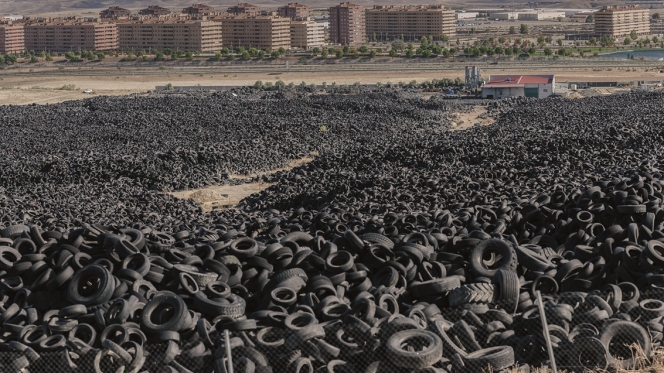
India’s recycling industry is becoming more technology-driven, formalised and commercially sophisticated, but women remain underrepresented across its operational and technical functions. GRP Ltd Executive Director Hemal Gandhi believes a new generation, increasingly exposed to sustainability and circular-economy thinking, could begin changing that equation. Recently appointed as Chairperson of Material Recycling Association of India’s Women in Recycling Committee, Gandhi is pushing for greater participation, capability building and visibility as the sector moves beyond conventional waste processing towards advanced resource recovery and sustainable-material manufacturing.
A new generation of professionals exposed to sustainability and circular-economy principles will drive greater participation of women in India’s recycling industry, according to GRP Ltd Executive Director Hemal Gandhi, who was recently appointed Chairperson of the Women in Recycling Committee at the Material Recycling Association of India (MRAI).
Gandhi acknowledged that women’s representation across the recycling industry remains limited, particularly outside conventional support functions. However, she sees an opportunity for this to change as second-generation members of recycling businesses enter the sector and younger professionals increasingly encounter sustainability and circularity through universities and education.
“A lot of the second generation has come into the business,” Gandhi told Tyre Trends, adding that the newer generation is more receptive to entering recycling because it increasingly understands the industry’s broader environmental purpose.
For Gandhi, the immediate priorities for increasing women’s involvement are participation, capability building and visibility.
She wants participation to extend beyond corporate and leadership positions into technology, operations, engineering, research and development, entrepreneurship and commercial functions.
“I’d like to encourage greater participation of women across the recycling value chain,” Gandhi said.
She added that stronger platforms for knowledge sharing and mentoring are needed, with mentor circles among the mechanisms being considered to engage a wider audience.
Visibility represents the third element as she wants greater recognition of women already contributing to recycling while strengthening connections between established industry leaders and the next generation.
The broader objective, she said, is to make recycling a more inclusive, professional and future-oriented industry and ensure women have a meaningful role in determining its next phase of growth.
“Women bring extraordinary attention to detail, discipline, resilience and an ability to see both the task and the people around it. But I don’t want women to be valued only for these qualities. I want them at the table, making the big decisions,” noted a confident Gandhi.
GRP’s own experience illustrates some of the barriers. Gandhi said women joining the company’s Sholapur operations were initially concentrated in support functions including administration and human resources.
Changing that required what she described as a ‘mindset shift’ within GRP itself. The company has since expanded their presence into manufacturing.
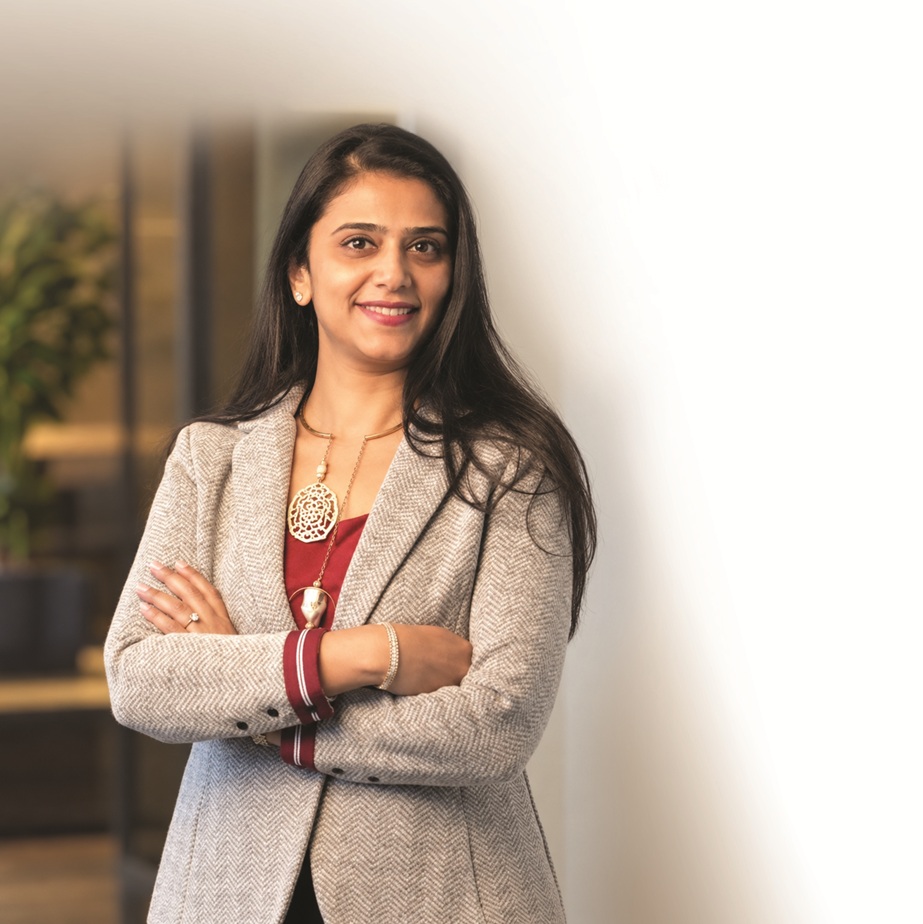
“We are pros at multi-tasking and know how to get the job done. We’ve successfully represented plenty of industries before and now it’s recycling’s turn to take centre stage,” she said.
Women’s representation at GRP varies across locations based on the job requirement and talent availability. The head office has the largest women participation of 28.57 percent. The reclaim rubber and Pyrova business combined contribute to about 13.30 percent with substantial women participation on shopfloor at all shifts.
The plants in Solapur and Ankleshwar show 19.32 percent and 17.81 percent, respectively, which are far higher than the industry average of 10–11 percent.
The focus is to create opportunities of women participation in the plastics business as well.
BROADENING BASE
The push for broader participation comes as India’s tyre-recycling ecosystem itself undergoes significant change.
Gandhi said tyre recycling now has strong representation within MRAI with participation increasing across the value chain. The ecosystem has expanded beyond conventional scrap processing to include collection, aggregation, mechanical recycling, crumb rubber, reclaim rubber, pyrolysis, devulcanisation, retreading technologies and downstream users.
MRAI’s tyre-focused sessions and programmes have also seen increased participation, according to Gandhi. She sees the association’s role extending beyond industry representation to providing a platform where stakeholders can engage on policy, standards, technology and development of end markets.
The next opportunity, she said, is to deepen representation across the tyre-recycling value chain.
Gandhi described India’s tyre-recycling industry as being at an inflection point with Extended Producer Responsibility emerging as a significant catalyst.
The waste-tyre framework has brought greater attention to end-of-life tyres, encouraged formal recycling channels and provided recyclers with a more structured position within the tyre ecosystem.
More companies entering the sector demonstrate growing interest, but Gandhi cautioned that regulation and creation of recycling capacity represent only the beginning.
“The next phase needs to concentrate on quality, traceability, responsible processing and end markets,” she said, adding, “Industry should not measure success only by how many tonnes of tyres are processed.”
Instead, the sector needs to examine how much material value is recovered from every tyre, the quality of those recovered materials and whether they ultimately enter higher-value applications.
She described EPR as a game changer that has established the framework, while the next challenge is developing a more transparent, technology-driven and circular system around it.
COLLABORATION OVER CONSOLIDATION
India’s tyre-recycling industry has historically been fragmented, though Gandhi believes it is gradually becoming more organised as regulations, technology and market requirements become clearer.
She drew a distinction between consolidation and collaboration.
“Companies operating in collection, dismantling, shredding, pyrolysis and retreading can have significantly different levels of technology and formalisation. The objective should therefore not simply be reducing the number of companies,” she argued.
Instead, India needs a more organised ecosystem with common expectations around compliance, traceability, quality, technology and responsible processing.
More clearly defined standards and EPR requirements will increasingly differentiate companies investing in quality systems and sustainable operations, she said.
Comparing India with more established recycling economies, 126 T Y R E T R E N D S | O C T O B E R / N O V E M B E R 2 0 2 6
Gandhi said the country has several advantages including a large domestic tyre market, substantial availability of end-of-life tyres, rubber-processing capabilities and an increasingly structured policy framework.
There is, however, no single international recycling model India can simply replicate because individual markets have developed around different collection systems, regulations and economics.
The common global direction is towards higher-value material recovery.
Products such as reclaim rubber and recovered carbon black are increasingly being developed as industrial raw materials rather than merely waste-derived outputs.
India is moving in the same direction, Gandhi said, with domestic recyclers already producing such materials and supplying to international markets.
“The opportunity is to combine India’s scale, manufacturing capabilities and entrepreneurial base with global best practices,” she noted.
EXPANDING CAPACITY
GRP, meanwhile, is positioning its recycling operations around recovering greater value from waste materials and developing applications capable of substituting virgin resources.
The company currently operates across five strategic locations and eight manufacturing units with installed capacity of approximately 122,000 tonnes per annum, according to Gandhi.
Its next step into end-of-life tyre recovery is being pursued through Pyrova Energy.
At Sholapur, GRP has commissioned a 15,000-tonne-per-annum continuous tyre pyrolysis reactor alongside an integrated crumb-rubber facility. The next phase includes expanding pyrolysis capacity to 45,000 tonnes per annum and developing recovered carbon black capacity.
The broader objective is to recover the different components of an end-of-life tyre while progressively improving the quality and value of each material stream.
Gandhi also highlighted GRP’s wider sustainability performance. She said the company reduced Scope 4 emissions by 55 percent, while the share of its energy requirements met through renewable sources increased to 48 percent from 37 percent in the previous year.
GRP has also received an EcoVadis Gold rating and published a comprehensive sustainability report covering initiatives across the organisation. It has also been recognised as a 2026 Avtar & Seramount ‘Best Company for ESG’, acknowledging its commitment to responsible business, transparency and accountability.
The direction, Gandhi said, is to recover more from every tyre, improve material quality and create additional applications for those recovered materials.
GAINING GROUND
Interest in recycled and renewable materials is increasing, although Gandhi said recycled content varies significantly depending on the material, application and performance requirements.
For reclaim rubber, she cited Rubber Board data showing domestic consumption of almost 167,500 tonnes in 2024-25, including about 67,000 tonnes consumed by automotive tyre manufacturers.
GRP supplies reclaim rubber to major tyre manufacturers globally, Gandhi said, adding that eight of the world’s top 10 tyre manufacturers are its customers.
She noted that recyclers and tyre companies need to work together from the product-development stage, developing materials and testing capabilities for specific applications and establishing appropriate quality and performance parameters.
Sustainability targets will translate into meaningful virgin-material substitution only when recycled alternatives meet requirements around quality, safety, consistency and economics, she added.
Despite India’s sizeable tyre-recycling ecosystem, Gandhi said a significant proportion of the industry continues to serve relatively lower-value applications.
“The next opportunity is to retain more of the material value contained within an end-of-life tyre by developing markets for high-quality reclaim rubber, recovered carbon black, pyrolysis products and engineered tyre-derived materials,” she noted.
Achieving that transition will require recyclers and downstream industries to collaborate on qualification, testing and application development.
Gandhi also argued that comparisons between virgin and recycled materials should move beyond price.
“Cost needs to be considered alongside performance, consistency, carbon footprint and supply security. Recyclers, meanwhile, will need to invest in process control, research and development and testing to improve performance, while scale, automation and energy efficiency will be critical to improving costs,” she contended.
NEXT PHASE
Greater standardisation and quality benchmarks will be among the most important enablers of the industry’s next stage, Gandhi said.
Tyre manufacturers and other industrial customers need confidence that recycled material purchased today will meet the same critical parameters when supplied months later.
This places increasing importance on testing protocols, traceability and credible certification.
Gandhi said standards should nevertheless avoid becoming barriers to innovation. Instead, they should be performance-based, allowing new technologies and materials to develop while providing customers with confidence around consistency and safety.
She sees MRAI as potentially playing a constructive role by bringing recyclers, tyre manufacturers, standards bodies, technical institutions and policymakers together.
GRP’s immediate priorities include scaling its next-generation reclaim-rubber business, ramping up the Pyrova Energy platform, commissioning recovered carbon black capacity and investing further in innovation and research and development to develop higher-value products and applications.
But Gandhi said her ambitions extend beyond the company.
Through her role with the Women in Recycling Committee, she wants to increase women’s participation particularly in leadership, technology and technical functions.
“The next generation of women in recycling should not just be entering the industry but shaping its technology, factories, businesses and future,” contended Gandhi.
Her message to young and aspiring women was not to make themselves smaller to fit the room but to prepare well, do the work, speak up and take their place.
That objective intersects with Gandhi’s broader view of where the Indian recycling industry is heading.
“India has an opportunity to progress from waste management towards resource recovery and sustainable-material manufacturing. Combining stronger regulation and standards with responsible manufacturing could help develop a globally competitive circular-materials industry,” she said.
For women entering the sector, that transformation could simultaneously broaden the types of careers available.
As recycling becomes more technical, formalised and closely integrated with manufacturing, Gandhi believes the new generation’s familiarity with sustainability and circularity could help accelerate that shift.


Comments (0)
ADD COMMENT