

Ironical Conundrum
- By Gaurav Nandi
- October 30, 2026
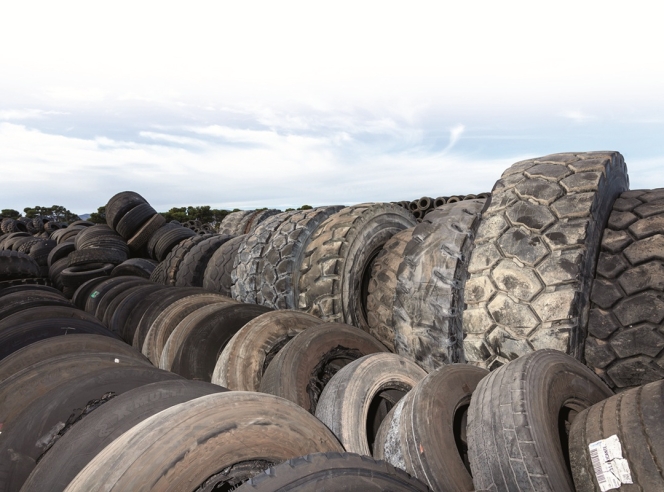
Spain has built a mature system for managing end-of-life tyres, but recycling them is only half the circularity equation. Tratamiento Neumáticos Usados (TNU) Chief Operating Officer Javier De Jesus Landesa says the bigger challenge is creating demand for recovered materials. With retreading production declining, recycled materials struggling for stable outlets and pyrolysis economics dependent on downstream markets, Royal Decree 712/2025 faces a crucial test of answering whether stronger regulation can translate Spain’s waste-management capacity into commercially viable circular markets for recovered tyre materials.
Europe is reportedly one of the most mature markets for circularity objectives within the tyre industry. It is a market characterised by regulations, awareness, cross-country collaboration to tackle end-of-life tyres (ELT) disposal and consumption of recovered materials.
However, on the Southwestern side of the continent, especially Spain, things seem to be ironical. The country’s integrated management system for used tyre treatment, popularly known as Tratamiento Neumáticos Usados (TNU), managed nearly 99,000 ELTs in 2025.
The main purpose of this organisation is responding responsibly to the sources of ELTs and managing their recycling effectively. This is generally done through reusing and recycling.
The numbers stated above is 7.4 percent more than the previous year. TNU handled 42,910 collection requests and provided services to 5,510 collection points. Of the total managed, 9.94 percent went to preparation for reuse, 42.91 percent to material recovery and 47.15 percent to energy recovery.
Despite these numbers, the recyclable materials market faces a conundrum, which is quite ironical considering the global market’s pent-up demand for such products. Speaking to Tyre Trends exclusively, TNU Chief Operating Officer Javier De Jesus Landesa said, “The main challenge is demand for the materials we recover.”
He added, “Spain has been working with Extended Producer Responsibility for almost two decades. We have a well-established collection system, a network of authorised waste managers and sufficient industrial capacity to process the tyres generated. The problem comes afterwards. We can recover recycled rubber, steel and textile fibres through new technologies, but those materials need a market.”
The organisation can even finance and organise collection, ensure proper management and guarantee traceability, but it cannot create commercial demand for recovered materials.
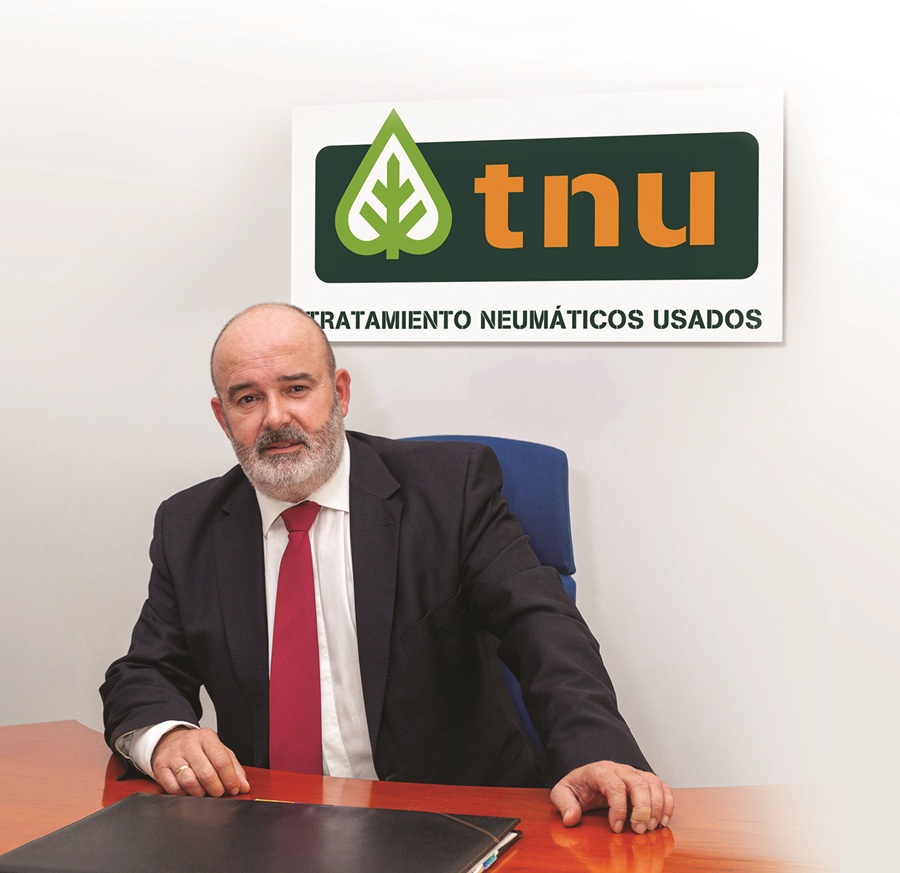 Javier De Jesus Landesa, Chief Operating Officer, TNU
ROYAL DECREE
Spain’s Royal Decree 712/2025, passed on 27 August 2025, introduced changes in the country’s policy governing ELTs. According to Landesa, the most significant change leaned towards traceability and the quality of information.
“The new Royal Decree introduced stricter requirements regarding tyres placed on the market, their collection, treatment and final destination. We need increasingly accurate information and must be able to demonstrate what actually happens to those tyres,” he said.
And this affects the entire chain including producers, importers, waste managers and Producer Responsibility Organisations.
Despite these efforts, tyre reuse numbers aren’t seeing a fast uptick. The foremost reason, according to Landesa, is that despite the prohibition laid down in Article 17.1(a) of Royal Decree 712/2025, the separation, sorting and sale of ELTs by collection points continues to take place. “In our view, greater environmental inspection and enforcement by the competent regional authorities is needed,” he stated.
This results in a limited real availability of tyres that could have a second life. For a tyre to be prepared for reuse or for a casing to be retreaded, it must enter the authorised management system and remain in suitable condition.
In 2025, within the 9.94 percent managed by TNU for preparation for reuse, 4.69 percent corresponded to second-use tyres and 5.25 percent to retreading.
In addition, the regulation establishes a minimum target of 15 percent by weight for preparation for reuse starting in 2025. This 15 percent target remains the baseline minimum through the subsequent milestone years of 2030 and 2035.
And on the focus on traceability, the industry is still adapting. “Our position is quite clear. We want more traceability but less bureaucracy. Following the approval of the Royal Decree, we carried out a nationwide information campaign aimed at producers and waste managers and are continuing to provide extensive guidance to such members, explaining the regulatory changes, new obligations and how they should be applied in practice,” Landesa said.
MATERIAL INGESTION
In 2023, Spain produced 84,160 tonnes of recycled rubber, 37,776 tonnes of steel and 17,614 tonnes of textiles from ELTs.
Approximately 54 percent of the rubber was used for artificial turf and bases; 35 percent went to playgrounds, sports surfaces and safety flooring; 9 percent to moulded components and rubber products and only 2 percent to bituminous mixtures.
Furthermore, granulate will no longer be placed on the European Union market as infill material for new artificial turf pitches from October 2031.
This means that the industry needs to find and develop new applications. “We cannot ask the sector to recycle more and then fail to ensure viable outlets for those materials,” said Landesa.
Public procurement can be an important tool for large scale material ingestion as public expenditure represents around 14 percent of the European Union’s GDP.
“We have a regulatory basis, but the need is to translate it into actual public procurement specifications and turn that intention into demand,” he said.
He also noted that price cannot be the only criterion for competing with virgin raw materials. If circular economy is genuinely promoted, then public procurement must also take into account the use of recycled materials and the environmental benefits of replacing virgin raw materials.
Hence, Green Public Procurement can be decisive not only in meeting environmental objectives but also in generating stable demand for recycled rubber and reducing the consumption of virgin raw materials.
Pyrolysis also has an important role to play for the recycling industry. However, chemical recycling requires significant investment and its outputs must meet requirements for industrial use.
TNU has worked on this route for years and partnered with Greenval Technologies in 2021 on plants using technology developed with the Spanish National Research Council (CSIC). The main technical and production challenges have largely been overcome.
“The bigger challenge is demand. Tyre pyrolysis oil has a clearer market, while recovered carbon black lacks stable demand from tyre manufacturers. Achieving end-of-waste status for qualifying pyrolysis products would also make them easier to market. Ultimately, even technologically successful plants need stable markets for their outputs to remain economically viable,” said Landesa.
SECOND LIFE
Landesa notes that electric vehicle tyres demand more caution from the industry owing to greater weight. The demands around wear, efficiency and noise are also driving changes in tyre designs, materials and compounds.
However, at end-of-life, EV tyres still contain recoverable materials such as rubber, steel and textile fibres. The same applies to retreading as an EV tyre can be retreaded if its casing remains suitable.
“Recycling and retreading industries have adapted to previous changes in tyre technology and can do the same with EVs. However, EV tyres will introduce new considerations, and it is premature to conclude that they will inherently be less suitable for retreading,” said a confident Landesa.
Eco-design should therefore consider not only first-life performance but also retreadability, extended tyre life and eventual recycling. Regulations already require corporate prevention plans to include measures supporting longer tyre life, reuse and recycling.
As EV tyres evolve, their design should not unnecessarily restrict retreading when the casing remains technically suitable.
Nonetheless, the current retreading landscape of the country paints a gloomy picture. The problem is primarily economic and not a shortage of suitable casings.
Spanish and European retreaders have the expertise to adapt production, but demand has fallen amid competition from low-cost imported new tyres and insufficient policy support.
In Spain, retread production has fallen 52 percent in 20 years, from 1,132,500 to 540,850 units annually, while plants have declined from 46 to 12 units.
This creates a contradiction wherein legislation prioritises extending tyre life before recycling, yet the industry doing precisely that continues to shrink.
“Supporting retreading would reduce raw-material consumption while preserving European industrial activity and employment. We need to change perceptions and look beyond purchase price. For fleets, cost per kilometre and the casing’s entire service life are more relevant. A good casing can be regrooved and retreaded, potentially more than once,” said Landesa.
Safety misconceptions also need addressing. Retreaded tyres must comply with UNECE Regulations Nos. 108 and 109 for passenger and commercial vehicles.
Policy can stimulate demand. Royal Decree 712/2025 calls for Spanish public administrations to promote retreads in public fleets and services wherever technically feasible. Tax incentives and subsidies could provide further support.
Landesa stated that technology is not the principal problem because retreading is already a mature and regulated industry. Challenges include ensuring suitable casings reach retreaders, tyre design, consumer perception, low-cost imports and public policy.
The principle is straightforward that if a casing can have another life, it should be reused before being destroyed for material recovery. He mentioned that looking at the total cost of ownership could revive the industry, particularly in professional transport.
“Fleets should consider total service-life cost rather than purchase price alone including mileage, maintenance, efficiency, casing life, regrooving and retreading. Extending casing life also delays the need to manufacture another tyre and reduces raw-material consumption. For fleets, therefore, cost per kilometre provides a more realistic measure of tyre economics,” he explained.
TOWARDS STABILITY
Landesa contended that policy measures could provide stability to the entire industry. “The problem is not unique to Spain. Europe needs to move from a policy focused on collection and recycling towards one that ensures recovered materials are actually used again and replace virgin raw materials,” he stated.
Royal Decree 712/2025 requires producers choosing a collective system to use it for all replacement tyres they place on the market, although they can switch systems under established conditions.
This should clarify responsibilities without eliminating competition. Producer Responsibility Organisations such as TNU will continue competing on service, efficiency, costs, technology and information quality. The key is ensuring everyone operates under the same obligations, rules and safeguards.
And for Landesa, there are three very clear priorities, namely market, enforcement and simplification.
“The first is creating a market for retreading and recycled materials. If we want to achieve targets set by the Royal Decree, then we need demand. Green Public Procurement must play a much greater role,” he noted.
The second is strengthening inspection and enforcement of flows taking place outside the authorised system. PROs must guarantee management, data and traceability, but inspection, enforcement and the fight against fraud are the responsibility of public authorities.
And the third is simplification and digitalisation. “We need greater traceability and better data, but we also need to eliminate duplication and review procedures that add administrative burdens without improving environmental outcomes,” said Landesa.
After almost 20 years, Spain has a mature system, an established network of waste managers and industrial capacity. And many of these challenges are shared across Europe.
Now it needs to take the next step by first making the most of tyres that can still have another life and then ensure that the materials recovered are actually used again.
Spain’s challenge is therefore shifting from managing tyre waste to creating an economy capable of absorbing what that system recovers. Collection, traceability and processing capacity alone cannot deliver circularity if retreading continues to contract and recycled materials struggle to find stable markets.
Royal Decree 712/2025 strengthens the regulatory framework, but its real test will be whether procurement, enforcement and industrial demand can turn recovered materials back into commercially viable products.
Giti Tire USA Promotes Michael Markoff To Chief Operating Officer
- By TT News
- November 18, 2026
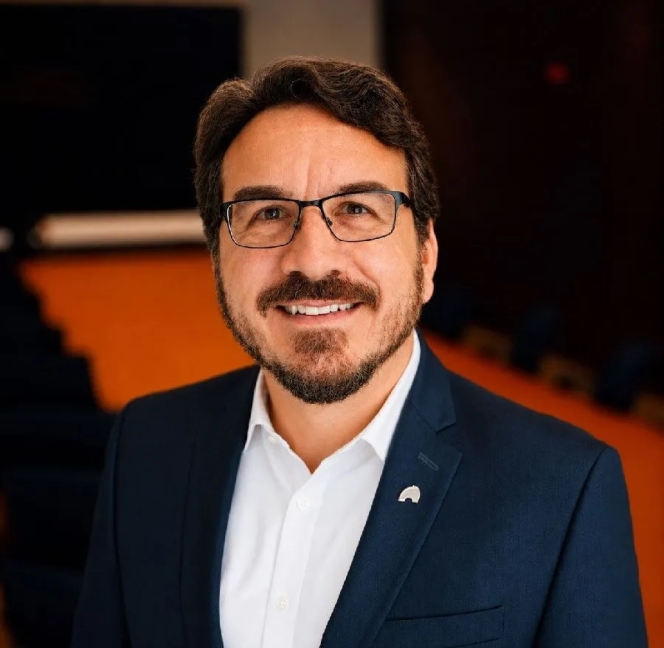
Giti Tire USA has named Michael Markoff Chief Operating Officer effective 1 November 2026, a promotion tied to a planned leadership transition as the company enters a major growth phase featuring the US debut of the Giti brand and sustained GT Radial momentum.
Phang Wai Yeen, previously Chief Executive Officer of North American operations, now leads global research and development. Markoff, formerly Executive Vice President of Sales and Marketing, answers to Executive Chairman Dr Enki Tan and adds Logistics, Supply Chain, Technical Service, Industry Relations and Product Development to his Sales and Marketing oversight.
A 29-year tyre industry veteran, Markoff spent over 26 years with The Goodyear Tire & Rubber Company in research and development, manufacturing, marketing and sales leadership roles across the United States and Europe. The US Army veteran steps into his duties at a moment of considerable opportunity for the brand portfolio.
Giti entered the US market this year, and GT Radial gained new products, wider awareness and its strongest Formula DRIFT season, taking the PRO Driver Championship with Conor Shanahan, a second straight Tire Cup Championship and Rookie of the Year honours with Cole Richards. The fastest road legal EV tyre Guinness World Record also fell recently. The Champiro SX2 RS was engineered and built at the Richburg, SC, plant, where both brands are produced.
Markoff said, “I am honoured to take on this role and build on the strong foundation our team has established. I look forward to working with our employees, customers and partners to strengthen our operations, enhance customer service and support Giti Tire USA’s continued growth.
“We have tremendous momentum across our business. The introduction of the Giti brand to the US market opens an exciting new chapter for our company while GT Radial continues to build on its success with innovative new products and an outstanding year in Formula DRIFT. Winning three major championships is a tremendous validation of our tire technology and performance capabilities.”
Synthomer Names Investment Banking Veteran Anthony Fitzpatrick As CFO
- By TT News
- November 17, 2026
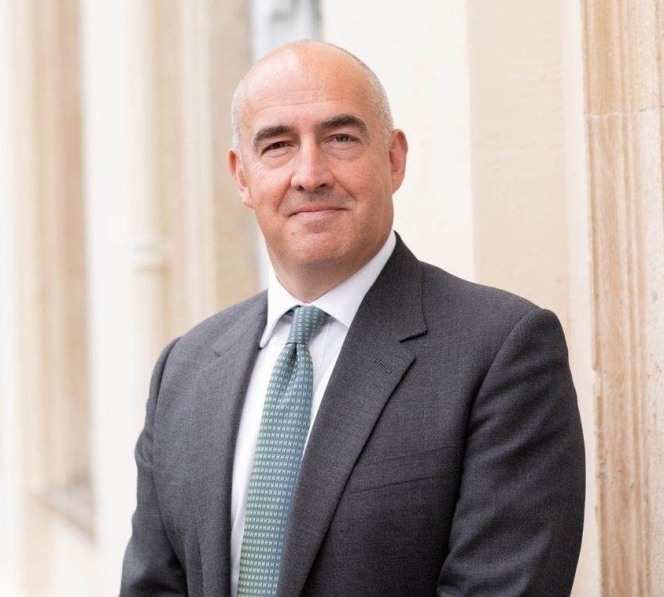
Synthomer, a leading supplier of high-performance, highly specialised polymers and ingredients, has named Anthony Fitzpatrick as its incoming Chief Financial Officer and Executive Director. He arrives as CFO Designate on 1 March 2027 and steps into both roles on 1 April 2027, succeeding Iain Torrens, interim CFO since May 2026. Torrens will stay on as CFO and Director to steer the 2026 year-end results, working with Fitzpatrick through March on a smooth handover before leaving the Board and the company.
Fitzpatrick's background combines board-level finance with hands-on operational leadership. At Croda International Plc, the FTSE 100 speciality ingredients firm, he has sat on the executive committee since 2014, filled the interim Group Chief Financial Officer chair during 2024 and 2025 and now heads Strategy, Corporate Development and Industrial Specialities. His Croda tenure also includes running the Latin America region and the Performance Technologies & Industrial Chemicals division. Earlier, he spent over 20 years in global investment banking with Goldman Sachs, Bank of America and UBS across London and New York, concentrating on chemicals and allied sectors.
A Durham University chemistry graduate holding a BSc (Hons), Fitzpatrick brings extensive financial, strategic and corporate finance experience to the group. His appointment caps a planned leadership transition, with the outgoing and incoming finance chiefs overlapping during March to safeguard continuity. Torrens will formally depart once Fitzpatrick assumes the CFO and Executive Director positions, closing out his interim tenure on the Board.
Michael Willome, CEO, Synthomer, said, “I am delighted that Anthony will join Synthomer as our next Chief Financial Officer. Anthony brings highly relevant financial, commercial and industry expertise to Synthomer, combining experience as interim Group CFO of Croda with more than 20 years in investment banking and deep knowledge of the speciality chemicals sector. I am looking forward to working with him as we continue to strengthen the business and deliver on our priorities.
“I very much enjoy working with Iain. Since he joined Synthomer as interim CFO, he has made a significant contribution, particularly in helping to steer Synthomer through a volatile period for the chemicals sector while continuing to strengthen the balance sheet and the finance function. On behalf of the Board, executive committee and all colleagues, I thank Iain for his continued contribution and wish him every success for the future following his handover to Anthony on 1 April 2027.”
Fitzpatrick said, “I am excited to join the Synthomer team. The Group has substantial opportunities for further value creation ahead and I look forward to working with Michael and the team to help realise them.”
Torrens said, “It has been an exciting time to serve as interim CFO of Synthomer, which has clear momentum and is in an increasingly strong position to embrace the opportunities ahead. I would like to thank the Board, Michael and the team for their support, and I look forward to completing the year end and working with Anthony on a smooth handover.”
PCBL Chemical Names Rituraj Singh Kalra As Executive Director And Chief Of International Markets
- By TT News
- November 13, 2026

PCBL Chemical has named Rituraj Singh Kalra as Executive Director and Chief – International Markets (Rubber Blacks), effective 9 November. The Kolkata-based company disclosed in a regulatory filing that Kalra will also serve on its Senior Management team and will be based in Belgium.
Kalra brings roughly three decades of expertise in international sales, marketing and business strategy, with senior leadership roles at Bekaert, GKN Driveline and MAHLE. He will oversee operations across Europe, the Americas and key Asia-Pacific markets, lead the Innovation Centre and drive Green Carbon initiatives, prioritising close customer relationships, resilient supply chains and commercial and technical partnerships built on shared sustainability goals. He previously served as Senior Vice-President of Global Sales, Marketing and Strategy at Bekaert in Belgium and holds a mechanical engineering degree from the University of Leeds and an MBA from Warwick Business School.
The appointment strengthens PCBL's global ambitions as a unit of the RP-Sanjiv Goenka Group, a conglomerate tracing its roots to 1820 that now generates about USD 5 billion in annual turnover and employs more than 55,000 people. With over six decades of operations behind it, PCBL stands as India's largest and the world's sixth-largest carbon black manufacturer, positioning itself as a global partner across carbon black, speciality chemicals and advanced materials.
Tyrecycle's Jim Fairweather Concludes 10-Year Run As ATRA President
- By TT News
- November 13, 2026
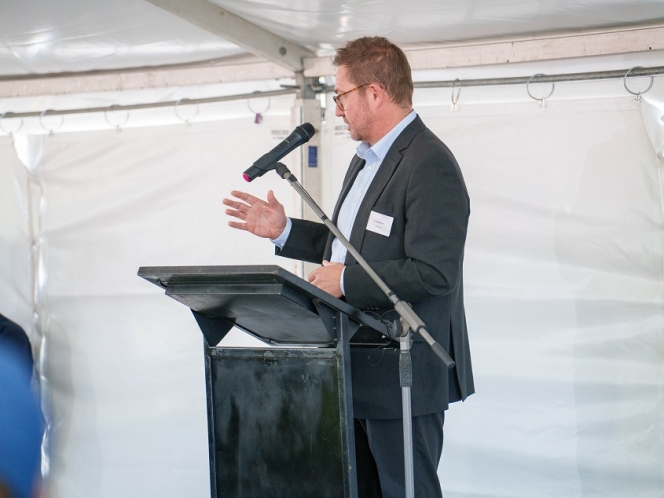
Tyrecycle CEO Jim Fairweather has stepped down after more than 10 years as President of the Australian Tyre Recyclers Association (ATRA), passing the role to Leigh Cometti, Managing Director of CTS Tyre Recycling. Fairweather will remain involved with ATRA and the wider industry.
His departure closes a period in which the association and Tyrecycle jointly pressed government to adopt the prohibition on exporting whole-baled waste tyres. That measure stopped such shipments reaching developing markets, where poor handling, storage or disposal could endanger human health and the environment, and it pushed the sector towards more accountable end-of-life tyre management and more processing and recovery on Australian soil.
Tyrecycle describes engagement with bodies like ATRA as central to its aim of building up the country's tyre recycling and resource recovery sectors. The company argues that recyclers, governments, regulators and other parties must work together if tyre recovery is to rise and end-of-life tyres are to be handled better nationally.
Looking ahead, ATRA has flagged several priorities: lifting off-the-road market recovery volumes, tightening compliance and enforcement, maintaining close ties with State and Federal regulators and pursuing regulatory changes that leverage existing Australian recycling capacity. Tyrecycle says it will keep contributing its experience, expertise and national outlook to ATRA and its members.


Comments (0)
ADD COMMENT