

- Luc De Bruyne
- Department of Manufacturing and Innovation
- Eurofit
- ETRTO
- ISO
- ASTM
- JASO
- Michelin
- Continental
Why Tyre-Wheel Assembly Matters More Than You Think
- By Sharad Matade
- February 25, 2026
In an era of heavier vehicles, rising torque loads and ever-larger wheel diameters, the tyre-wheel assembly (TWA) has quietly become one of the most critical systems influencing vehicle safety, durability and perceived quality. Yet for most consumers, it remains entirely invisible. According to Luc De Bruyne, OEM tyre-wheel assembly R&D specialist in the Department of Manufacturing and Innovation at Eurofit, that invisibility is precisely why the industry underestimates its importance.
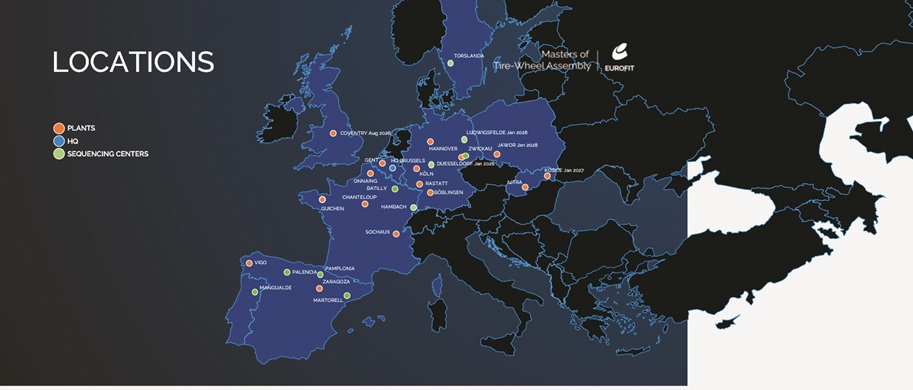
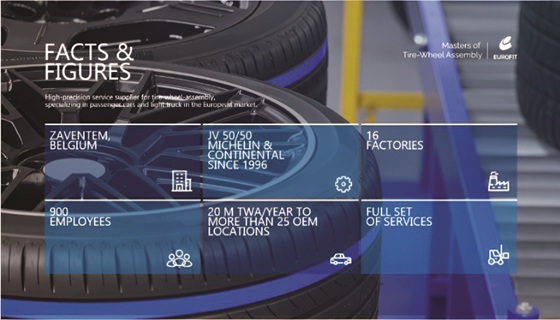
Based in Zaventem, Belgium, the company operates as a high-precision service supplier for tyre–wheel assembly, focused on passenger cars and light trucks in the European market. It runs a network of 16 factories, supported by around 900 employees, and delivers a full set of assembly and logistics services. With an annual capacity of roughly 20 million tyre–wheel assemblies, production is supplied to more than 25 OEM locations across Europe.
 From an OEM perspective, De Bruyne argues that tyre-wheel assembly can no longer be treated as a simple fitment task. “Due to the increase of load and power transmission of the cars, a correct seating of the tyre bead is more sensitive. The increased bead tension can result in a damaged tyre during mounting, which isn’t visible at the outside. A damaged bead can result in leakages and low-pressure during driving, which is a high risk of a safety issue during high-speed driving. In other words, what appears externally acceptable may already be compromised internally,” he explains.
This growing complexity is not adequately addressed by existing standards. While ETRTO, ISO, ASTM and JASO regulate individual components, there is no global standard governing the assembled wheel. In practice, this means quality depends heavily on internal OEM processes. As De Bruyne notes, “A TWA assembler must mount the components together with no damages to the product and the lowest level of risk of vibration on the car.” To achieve this, Eurofit and its partners develop internal process references with machine suppliers, such as mountability and integrity tests used to qualify new wheels. When a non-OK status is detected, suppliers are informed, and if no solution is found, components may be replaced entirely.
The business is structured as a longstanding 50:50 joint venture between Michelin and Continental, established in 1996. This partnership combines the technological depth, quality standards and global experience of two of the world’s leading tyre manufacturers. The JV structure underpins strong process discipline, continuous improvement and long-term stability for OEM customers.
The technical challenge intensifies as wheel sizes increase and tyre profiles become lower. Larger diameters bring not only harsher ride characteristics but also tighter tolerances across mounting, uniformity and balancing. De Bruyne outlines a suite of measures now required for high-performance wheels: checking rim run-out and match points to filter supplier deviations; guiding the tyre bead diagonally to reduce mounting forces; matching components to lower total uniformity (TU) levels; optimising bead seat geometry; measuring complete wheel run-out to achieve what he calls the ‘perfect circle’ and correcting balance through final audit controls linked to vehicle sensitivity. The payoff is clear – less vibration of a wheel results in a longer lifetime of the tyres and suspension system of the car.
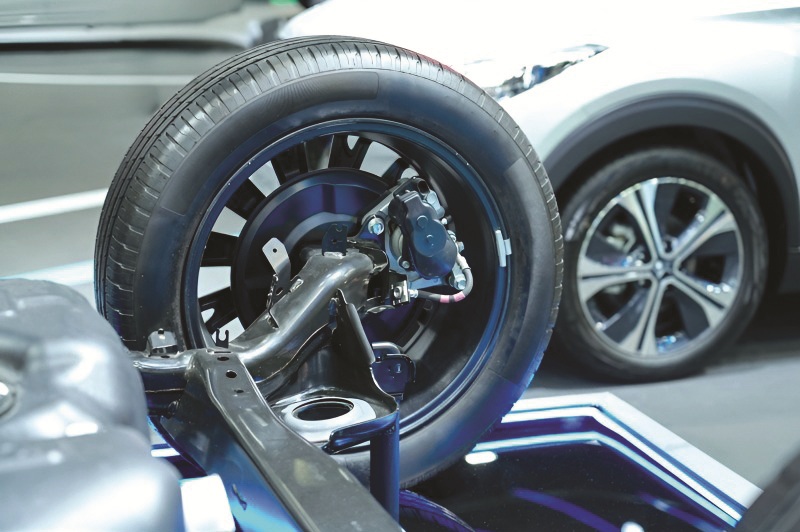
 The contrast between OEM-assembled wheels and typical aftermarket replacements remains stark. In Europe, De Bruyne identifies two aftermarket models. The first involves high-volume industrial assembly of wheel kits – often winter packages – using processes similar to OEM plants. “We recommend to order wheels from such entity to receive an upper grade quality level compared with the garage machine assemblers,” he says. The second model is the small local tyre shop, where limitations are far more pronounced. These workshops often use grade 2 or 3 tyres rather than the grade 1 tyres supplied to OEMs, apply grease-based lubricants forbidden in Tier 1 environments, rely on manual mounting without force control, inflate tyres without proper bead seat techniques and balance wheels on single machines without controlling clamping-device influence. “The manual mounting approach can result in a higher risk of vibration/sound level of the wheels to the car/driver/passenger,” De Bruyne warns. For OEMs, the objective is clear: the first test drive of a new car must feel fundamentally different from that of a used one.
Electrification has further raised the stakes. Higher torque loads and quieter powertrains mean that any wheel-induced vibration is far more noticeable. “Observation of increase of torque load on cars results in increase of tyre bead tension,” De Bruyne explains, along with higher surface roughness requirements on rim bead edges. Assembly processes now demand stricter control of mounting forces and higher-energy inflation using inflator bells. After inflation, micro bead correction is required to ensure full contact and maximise friction. Lubrication, meanwhile, must leave no residual grease, as this could allow bead slip under extreme acceleration or braking.
Eurofit’s position as an industrial service provider rather than a component manufacturer reflects broader shifts in vehicle production. A generation ago, car manufacturers assembled most parts themselves. “Due to the increase of complexity and need of assembling volume and faster cycle time of cars, a lot of key-assembling activities are outsourced,” De Bruyne says. This has freed space within vehicle plants, increased model variants and created demand for specialist know-how. Tier 1 component suppliers now deliver globally to wheel assembly plants located close to OEMs, enabling just-in-time supply with greater flexibility.
Logistics has evolved accordingly. Classic JIT lines are increasingly supplemented – or replaced – by batch production, sequencing centres and high-bay warehouses. De Bruyne describes specialised processes that keep wheels sequenced all the way to the OEM, including racks and trailers with walking-floor systems for direct unloading. Over the past 20 years, the explosion in variants has driven major upgrades in logistics software and product traceability. Such systems require constant monitoring and rapid deviation management to avoid production stoppages at the customer.
Despite all this, wheel assembly remains largely invisible to consumers – at least for now. De Bruyne believes this may change as EVs become dominant. With fewer vibration sources from engines and transmissions, wheel-induced disturbances move ‘on the horizon’, particularly as XL tyres and extreme sizes – up to 25 inches – enter production. Some manufacturers, he notes, are already upgrading assembly specifications in response to negative customer feedback on ride performance.
Replicating OEM-level quality outside factory environments remains difficult. OEM assemblers must meet manufacturer-specific specifications that are neither public nor economically viable for most aftermarket operations. While some garage-machine suppliers now offer optional TU, run-out and matching functions, De Bruyne is blunt: accuracy, repeatability and production speed remain poor, and costs are high. Where large aftermarket organisations adopt industrial processes for volume reasons, conditions may resemble OEMs, but ‘the difference is the respect of process limits’, which are typically broader and not tied to a single vehicle programme.
Balancing tolerances illustrate the point. OEM plants may work to residual imbalances as low as two grammes, while many workshops accept eight to 15 grammes. Whether a driver notices depends on vehicle sensitivity, but the physics are unforgiving. “Imbalance vibrations can increase very fast when the speed is going up due to the exponential behaviour,” De Bruyne notes. Lower residual imbalance always reduces TU vibration risk.
Automation is transforming the assembly line, yet human expertise remains central. Practical assembler knowledge is increasingly embedded into software, statistical process controls, cameras, sensors and AI systems. “The key-knowledge is the teacher of such equipment and less the production operator on the line,” De Bruyne observes, underscoring a shift from manual skill to process intelligence.
Convincing OEM decision-makers to invest in this hidden discipline relies on data. Carmakers increasingly use market feedback tools, such as J.D. Power studies, tracking performance from delivery through the first year of ownership. This feedback drives Tier 1 suppliers to adjust processes in pursuit of customer satisfaction. Internal rejections between OEMs and wheel assemblers can also trigger upgrades, particularly when Tier 2 suppliers across global plants struggle with consistency. “Over the last 30 years, numerous additional optional processes have been introduced in the wheel assembly industry. While tyre shops may be aware of these processes, the high cost of the required equipment has often made it difficult to turn them into a viable business model,” De Bruyne concludes.
For an industry obsessed with powertrains, software and styling, tyre-wheel assembly may remain out of sight – but, as De Bruyne makes clear, it is increasingly central to how a vehicle feels, performs, and ultimately, how a brand is judged.
Apollo Tyres CFO Gaurav Kumar Resigns After 22 Years
- By Sharad Matade
- August 07, 2026
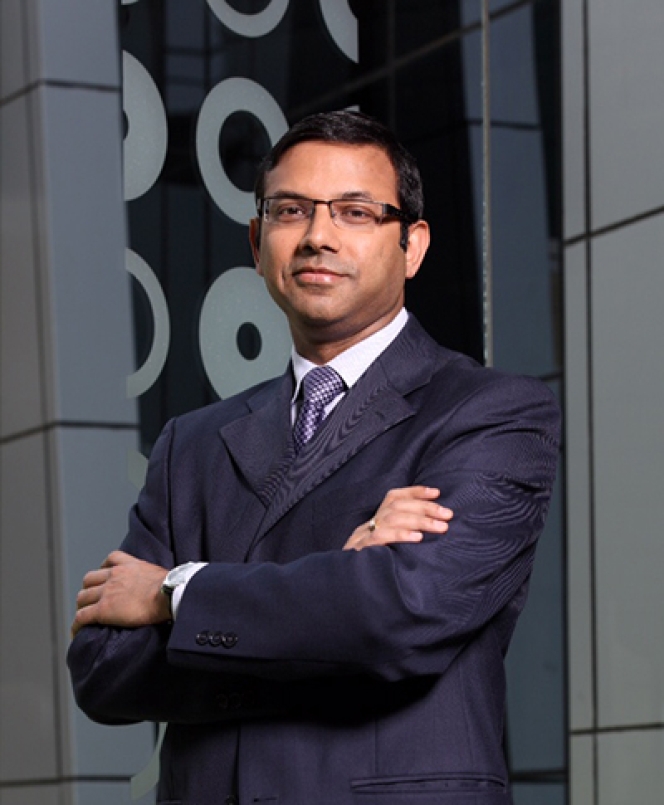
Gaurav Kumar has resigned as a whole-time director of Apollo Tyres, the Indian tyre manufacturer, after more than two decades with the company, though he will remain chief financial officer during a transition period.
The Gurugram-based company's board approved the resignation at a meeting on Thursday. Kumar steps down as a director, and consequently as a member of the risk management committee, with effect from the close of business the same day. The company said he had confirmed there was no material reason for his departure beyond that stated in his resignation letter.
Kumar will continue as chief financial officer for such period as is necessary to ensure a smooth transition, after which he will cease to be part of the company's senior management.
In his resignation letter, Kumar said: "It has been terrific to be part of the incredible journey at Apollo Tyres thus far. I have learned, and hopefully contributed in equal measure, and now seek to explore alternative and new challenges. I wish Apollo Tyres the very best for the journey ahead and will always be part of the Apollo Tyres Family." He added that he was grateful to Onkar Kanwar and Neeraj Kanwar for their support during his tenure of more than 22 years at the company.
Neeraj Kanwar, Vice-Chairman and Managing Director, said: "Gaurav deserves kudos for the critical role he has played in the growth of Apollo Tyres, both in India and overseas, in the last twenty years. While we do regret losing him, we are conscious of his personal aspirations and wish him the very best in his future endeavours."
The company said it was in the process of appointing a new chief financial officer.
Shrader Tire & Oil Expands Bob Feldbauer's Role To President And COO
- By TT News
- August 06, 2026
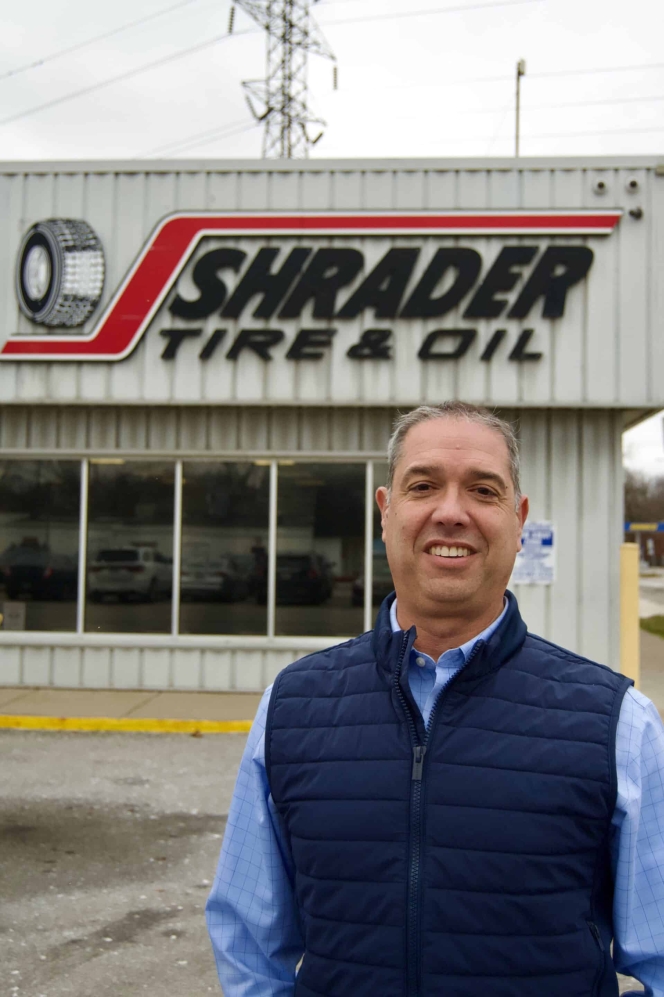
Shrader Tire & Oil (STO) has announced the appointment of Bob Feldbauer to the role of President, effective 1 August 2026. He will concurrently serve as Chief Operating Officer, while Joe Shrader maintains his position as Chief Executive Officer.
Feldbauer’s ascent follows his arrival at STO in early 2025 as Chief Operating Officer, a role built upon a robust industry resume. His prior engagements include a lengthy stint at the helm of Jack’s Tire & Oil in Utah and a substantial period with Michelin North America, where he handled sales and managerial assignments.
Under the new structure, Feldbauer’s purview widens to encompass both internal fleet management across 14 sites and outward-facing commercial development, including alliances and market expansion. With the founding family’s fourth generation now active within the firm, the succession plan reinforces the enduring principles established when the company opened in 1948.
Shrader said, “Bob has proven exactly what we hoped he would when we brought him on board – sharp operational instincts and a real drive to help this company grow. Putting him in the President seat lets us move faster on the growth plans we’ve been building towards.”
Feldbauer said, “It has been a fast year and a half at Shrader Tire & Oil. I have gained tremendous insight and valuable knowledge about our organisation’s structure, company culture and an understanding of our overall goals and commitments. One thing is clearly obvious – the commitment Shrader employees have to deliver the best customer experience each and every time. I appreciate this and look forward to supporting them as their President and COO.”
- Satish Sharma
- Balkrishna Industries Ltd.
- BKT
- Mumbai International Airport Limited
- Infectious Advertising
BKT Drives Beyond Off-Highway With Mumbai Airport Brand Showcase
- By TT News
- August 06, 2026
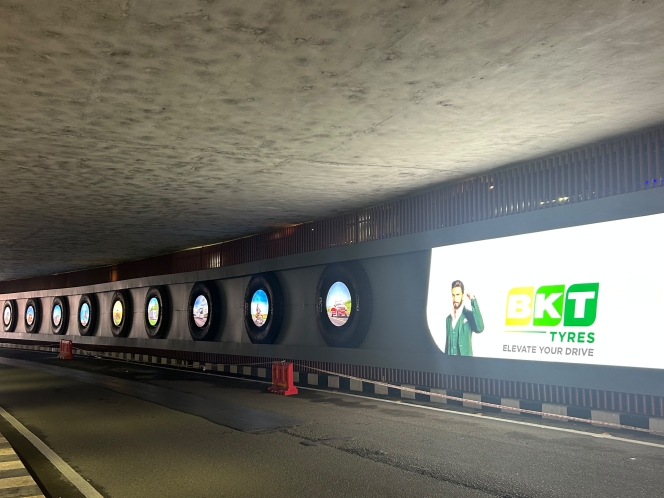
Balkrishna Industries Ltd. (BKT) has unveiled a brand installation at the Mumbai International Airport Limited (MIAL) T2 Elevated Road Underpass as the tyre manufacturer seeks to broaden its positioning beyond its traditional Off-Highway business and strengthen awareness of its expanding on-highway portfolio in India.
The 2,000 sq. ft. installation, inspired by the company's "Elevate Your Drive" philosophy, highlights BKT's portfolio across agriculture, construction, mining, earthmoving, commercial vehicles, two-wheelers and passenger vehicles. The activation comes as the company expands its presence in India's two-wheeler and commercial vehicle tyre segments.
Designed to move beyond conventional outdoor advertising, the installation features nine illuminated tyre-shaped displays, each 8 feet in diameter, using the tyre itself as the central storytelling element. It opens with a large-format visual featuring BKT brand ambassador Ranveer Singh, followed by a sequence of displays illustrating the company's expanding mobility portfolio. The installation will remain at the airport for 24 months.
Mumbai International Airport handled a record 55.5 million passengers in 2025, providing the company with sustained visibility among business travellers and consumers.
"For BKT, innovation goes beyond product engineering; it extends to how we tell our story. This installation reflects a simple yet powerful idea: our tyre itself becomes the medium through which travellers experience the breadth of BKT's world. As we expand our presence across India's mobility landscape, it is important that consumers see BKT not through a single product category, but as a brand that supports movement across diverse terrains, applications and journeys. Mumbai Airport provides an ideal stage for us to express that transformation in a memorable and distinctive way," said Satish Sharma, Senior President & Director – Business Development and Strategy, BKT.
The installation was conceptualised by Infectious Advertising and uses immersive design, sequential storytelling and its airport location to showcase the company's wider mobility portfolio. According to BKT, the activation is intended to connect its established Off-Highway business with its growing presence in India's on-highway mobility market.
Epsilon Carbon Reports 10% Reduction In Upstream Logistics Emissions In FY2026
- By TT News
- August 05, 2026
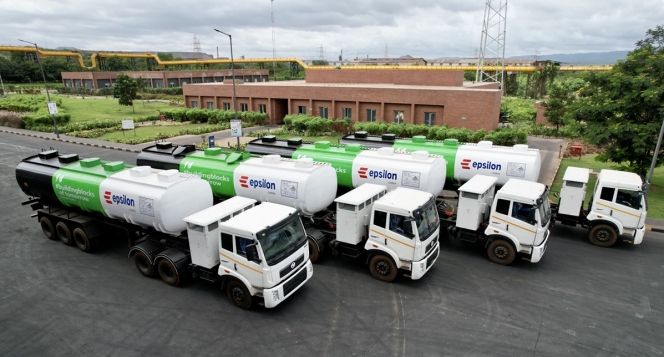
Mumbai-headquartered leading carbon black manufacturer Epsilon Carbon has reported a 10 percent reduction in carbon dioxide equivalent emissions across its upstream transportation operations during FY2025–26. The reduction was achieved through the deployment of an electric and liquefied natural gas freight fleet.
An independent third party certified the emissions data. The reductions achieved in transport logistics equate to carbon absorption figures associated with approximately 29,000 trees. The verified figures allow supply chain partners to include these reductions within Scope 3 emissions reporting frameworks and environmental disclosures.
Gaurav Mathur, Chief Executive Officer, Epsilon Carbon, said, “Decarbonising logistics is central to our climate strategy. What makes this milestone meaningful is that the results are independently verified with a 10 percent reduction in CO2e emissions within the upstream transportation category over a single financial year, driven by the adoption of electric and LNG fleets. These carbon reductions strengthen our own sustainability disclosures and those of our customers, and we intend to scale this model across our supply chain.”
Following Phase 1 operations, Epsilon Carbon intends to expand the number of electric and LNG vehicles in its transport fleet during FY 2026–27 to scale low-carbon freight transport across its supply chain network.
Comments (0)
ADD COMMENT