

Elkem Achieves Breakthrough In Mechanical Recycling Of Silicone Rubbers
- By TT News
- September 17, 2025
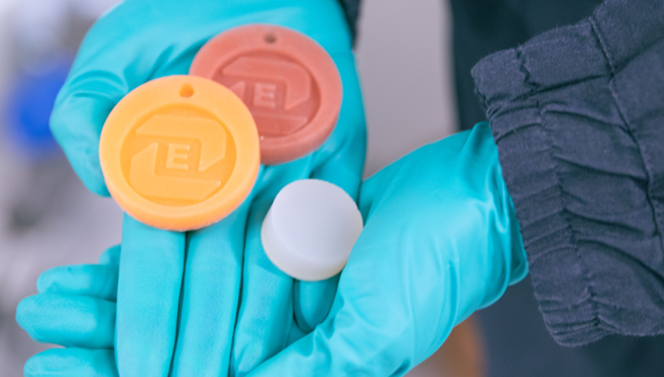
Elkem ASA, a global leader in advanced silicon-based materials, has announced a significant advancement in silicone sustainability with the successful validation of a new mechanical recycling process for High Consistency Rubbers (HCR). This innovation provides a scalable method for recycling crosslinked HCR waste and reintroducing it into new product formulations. The process achieves re-incorporation rates of over 50 percent while maintaining the excellent mechanical properties required for high-performance applications. This breakthrough demonstrates how material engineering can enable a more circular economy for silicones, helping to reduce waste and the carbon footprint while meeting rising market demand for sustainable solutions.
This mechanical recycling process expands Elkem's comprehensive silicone recycling strategy, which now encompasses both chemical and mechanical pathways. The ability to integrate multiple recycling technologies allows the company to tailor its approach based on the type of waste material, specific carbon reduction goals and the performance needs of the final product.
The development is a key outcome of the open innovation project ‘RENOV’ (Recycling & Reincorporation of Elastomer Materials), focused on creating technologies for recycling and reincorporating crosslinked elastomer waste. The project, supported by the French environment agency ADEME, unites Elkem with industrial partners Hutchinson and Nexans, as well as several CNRS-affiliated laboratories. A primary objective is to evaluate market acceptance and identify the most promising commercial and environmental applications for mechanically recycled HCR.
High Consistency Rubbers are valued for their exceptional strength, thermal stability and electrical insulation properties, making them critical components in industries ranging from electric vehicles and aerospace to medical devices and electronics. Elkem will present samples of the recycled material and detail this new technology at the K 2025 trade fair in Düsseldorf, Germany, from 7–14 October 2025.
Joséphine Munsch, R&T sustainability leader at Elkem, said, “This breakthrough demonstrates the power of purpose-driven innovation aligned with market expectations. After two years of development, we are proud to present a first proof of concept for mechanical recycling of HCR, opening the door to new industrial applications and reinforcing our ambition to leverage pragmatic, science-driven solutions to lead and accelerate the transition to a circular economy for silicones.”
Birla Carbon Announces Asia-Wide Speciality Materials Price Hike Of Up To 15%
- By TT News
- September 22, 2026

Birla Carbon has confirmed a price increase of up to 15 percent for its Speciality Materials products across Asia, scheduled to take effect on 1 October 2026. The company pointed to significant and sustained rises in feedstock costs, driven partly by ongoing geopolitical instability and disruptions in global feedstock markets, as the reason behind the adjustment.
Although Birla Carbon pursued operational efficiencies, supply chain optimisation and disciplined cost management to soften the impact, the scale and persistence of the cost escalation left a price adjustment unavoidable. The company's sales teams will engage customers directly to explain the details and help them navigate the transition.
ACE Laboratories, Abdallah Consulting Launch VericarbSM To Standardise Recovered Carbon Black
- By TT News
- September 20, 2026
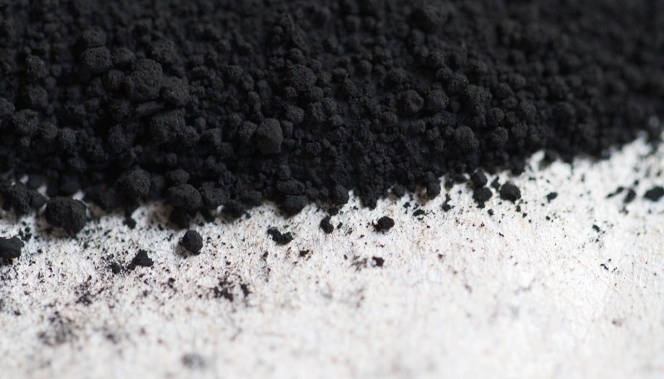
ACE Laboratories, an independent ISO/IEC 17025-accredited polymer testing laboratory, has partnered with Abdallah Consulting, LLC, a prominent tyre pyrolysis advisory firm, to introduce VericarbSM. This independent certification programme verifies that materials marketed as recovered carbon black (rCB) meet established criteria for rCB.
Recovered carbon black, derived from end-of-life tyres via pyrolysis, serves as a sustainable substitute for virgin carbon black in rubber and polymer applications. However, the emerging market has lacked the standardisation and independent verification that established supply chains provide. VericarbSM addresses this gap through independent material characterisation and rubber performance data, offering stakeholders a consistent basis for evaluating rCB products.
For producers, certification accelerates market entry and improves buyer approval rates. Consumers gain more capable suppliers and reduced evaluation time, while investors benefit from clearer volume sizing and fewer costly test failures. The programme is jointly administered by both organisations.
Erick Sharp, CEO, ACE Laboratories, said, “The rCB market has enormous potential, but growth has been held back by uncertainty about material quality and consistency. VericarbSM gives producers a way to prove their product and gives buyers the independent data they need to say yes.”
Dave Abdallah, Founder, Abdallah Consulting, said, “One key reason for the delayed growth of recovered carbon black is lack of product performance information in the customer’s language. ASTM standards are critical; in fact, most testing done in the process follows ASTM methods. But customers relate to a product better when its performance is shown in applications relevant to them. VericarbSM solves the language issue by showing verified rCB in terms of rubber performance while simultaneously adding credibility via third-party analysis and reporting.”
Zeon Establishes Kurashiki Subsidiary To Absorb Tohpe's Acrylic Rubber Business
- By TT News
- September 18, 2026
Zeon Corporation established Zeon Chemicals Kurashiki Co., Ltd. on 23 July 2026 to take over the acrylic rubber operations of fellow group firm Tohpe Corporation. The new entity, headquartered in Kurashiki City, Okayama Prefecture, is wholly owned by Zeon with paid-in capital of JPY 10 million and is led by representative Koji Minami.
On 21 August, Tohpe and the new subsidiary signed an absorption-type company split agreement, prompting Zeon to begin the procedures required under the Companies Act. Operations at the new company, focused on manufacturing and selling acrylic rubber and related activities, are scheduled to commence on 30 October 2026.
Acrylic rubber, known for its heat resistance, is used in automotive components including oil seals and hoses. The Zeon Group already maintains four production sites across Japan, United States and Thailand, forming a global supply network for the material.
The restructuring follows Zeon’s 11 May 2026 announcement that it would transfer Tohpe shares to NATOCO Co., Ltd. of Miyoshi City, Aichi Prefecture, as part of Tohpe’s paints business divestiture. Tohpe’s acrylic rubber operations, which complement Zeon’s Elastomers Business, will now be positioned as a key specialty rubber manufacturing site, with closer operational coordination intended to strengthen Group competitiveness and corporate value.
Revyre Targets SBS Market With Tyre-Derived Polymer After Auckland Road Trial
- By Gaurav Nandi
- September 14, 2026
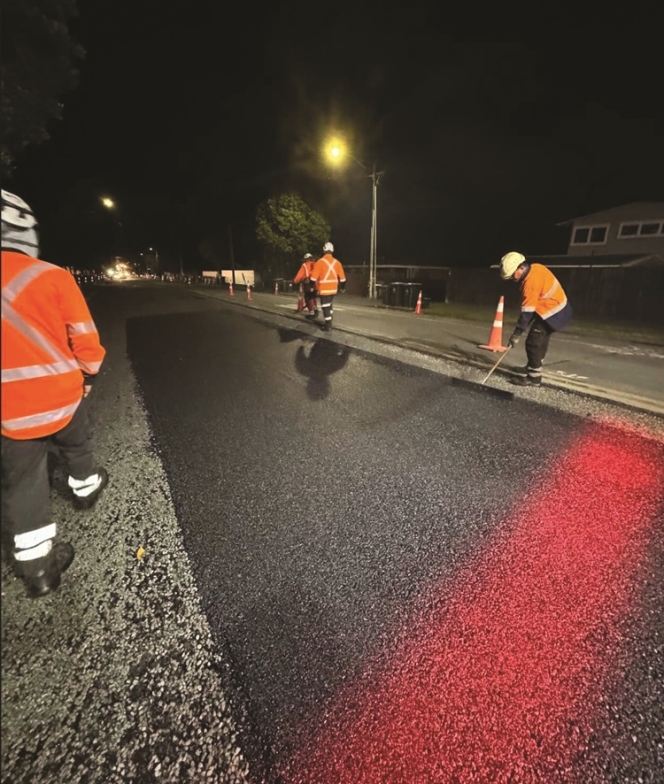
The company is betting that a polymer manufactured from end-of-life truck tyres can disrupt the market for petroleum-based styrene-butadiene-styrene (SBS), a widely used road-binding additive whose pricing and availability are tied to global oil markets. After completing a live road trial with Road Science and Auckland Transport in New Zealand, the company is preparing to use the results as a springboard for expansion into Australia and Sub-Saharan Africa, positioning the recycled material as a lower-cost, lower-carbon alternative to virgin polymers.
New Zealand-based Revyre Global Limited is positioning a polymer manufactured from end-of-life truck tyres as a lower-cost alternative to petroleum-based styrene-butadiene-styrene (SBS) after completing a live road trial with Road Science and Auckland Transport in New Zealand.
The company has spent several years developing the product as a direct replacement for SBS. Unlike conventional tyre-derived asphalt, which relies on crumb rubber, the company’s Chief Executive Officer Shaun Zukor told Tyre Trends that its proprietary thermomechanical process produces a remanufactured polymer with blending characteristics similar to SBS, allowing it to be used in existing asphalt infrastructure.
“Our primary objective was to develop a drop-in replacement for SBS, which is a petroleum-derived synthetic polymer,” Zukor said. “SBS is expensive, made from virgin materials and is widely used to improve road durability, fatigue resistance and overall pavement performance.”

The company began engaging Road Science, a division of Downer, and Auckland Transport after completing laboratory validation with engineering consultancy WSP in New Zealand.
Before approaching customers, it invested around 18 months in laboratory testing to validate the material’s performance.
Following successful laboratory trials, Road Science carried out its own evaluations before, together with Auckland Transport, deciding to trial the material on Blockhouse Bay Road, one of Auckland’s busiest roads.
The project then underwent another lengthy approval process involving Auckland Council and scientific advisers.
“It took another year to a year and a half to obtain all the necessary approvals from the council and its scientific advisors,” Zukor said. “They wanted to verify that all the claims in our technical literature were accurate.”
Construction of the trial road took place over three days in March and the company expects to receive the first performance data around September. Those results are expected to support commercialisation in overseas markets.
“Our business is focused only on New Zealand at the moment because we’re using it as a proof of concept,” Zukor said. “Once those results are available, we’ll publish them. That will place us in a much stronger position to take the product into Australia and Sub-Saharan Africa.”
The company estimates that entering Australia would take another 12 to 18 months after trial results are available and a planned New Zealand manufacturing facility becomes operational.
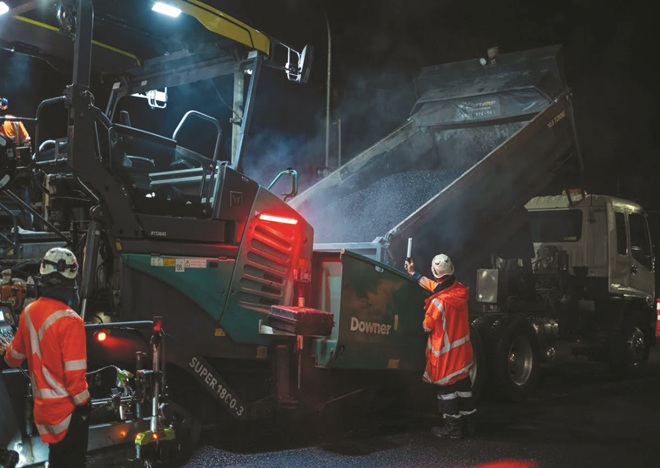
Although the current road project used only a small quantity of material because it is a demonstration, Zukor said the commercial opportunity could expand significantly.
“We used a relatively small amount of material for this particular project, but if the opportunity grows as expected, supplying the Auckland Transport network alone could eventually consume between 40–50 percent of our production capacity,” he noted.
MATERIAL ECONOMICS
The company currently manufactures the material primarily from truck and bus radial (TBR) tyres and earthmover tyres because of the higher natural rubber content.
While the SBS substitute represents the company’s immediate focus, it has divided its broader product portfolio into three categories. Revpol A, manufactured mainly from passenger and light truck tyres is intended for lower-performance rubber products such as rubber tiles, shoe soles and conveyor belts.
Revpol B targets asphalt applications and new tyre manufacturing, while Revpol C, produced largely from earthmover tyres, is designed for higher-performance applications.
The company is not currently manufacturing at its own facility but plans a new production unit in New Zealand. Until that facility is operational, product for trials is being supplied by its Canadian partner.
The technology relies primarily on a thermomechanical recycling process rather than chemical recycling. Whole tyres are broken down with steel separated from the rubber before the rubber is processed to a 30-mesh particle size and passed through Revyre’s proprietary thermomechanical process.
Zukor said only a very small amount of non-toxic, FDA-approved chemicals are used and that the process is driven primarily by operating parameters rather than chemical reactions.
He added that one of the key advantages of the technology is that it can be incorporated into existing SBS blending infrastructure with minimal changes as most development work focused on determining the optimum blending ratio rather than overcoming technical limitations.
“The primary technical challenges relate to the blending ratio,” he said, adding, “The higher the percentage of Revpol you add, the higher the temperatures and shear forces required in the bitumen blending terminals.”
Although the company has successfully blended as much as 20 percent Revpol into bitumen during development, Zukor said performance gains diminish beyond a certain point.
It has identified an optimum blend of between 5 percent and 10 percent depending on the application, ranging from conventional roads to heavy-duty pavements and airport runways.
“Any facility that currently blends SBS using its existing infrastructure can also blend our product using that same infrastructure,” he said.
CATALYST FOR SAVINGS
Zukor believes the material can reduce both costs and environmental impacts while improving pavement performance.
“We want to create a product that is environmentally sustainable, has an abundant raw material supply and is 20–40 percent cheaper than virgin materials while also having a significantly lower carbon footprint,” he stated.
Laboratory testing has produced encouraging results. According to Zukor, New Zealand’s wheel-tracking standard requires materials to withstand 800,000 load cycles, while Revyre’s product continued to perform until testing was halted at two million cycles.
“Our product achieved nearly two to three times the required wheel-tracking performance compared with standard bitumen,” he noted.
He also added that the objective is to produce road surfaces that are less expensive, more durable and environmentally sustainable while simultaneously addressing the challenge of managing end-of-life tyres.
“We believe this product ticks all of those boxes and have obtained a patent for it,” he said.
MANUFACTURING SCALABILITY
Although the company is currently relying on manufacturing capacity in Canada, Zukor said its modular production model could support significant expansion once commercial demand develops.
“We can currently produce up to 10,000 tonnes of this product, but because our production facilities are modular, capacity can easily be scaled anywhere from 1,000 tonnes to 50,000 tonnes, depending on market demand and the requirements of a particular region,” said Zukor.
Once the planned New Zealand facility becomes operational, Zukor expects its tyre feedstock to be supplied through Tirewise, the country’s extended producer responsibility (EPR) scheme for end-of-life tyres.
Under the programme, every imported tyre attracts a levy that funds incentives for registered collectors, processors and end users to move tyres through the approved recycling chain. Zukor said Revyre intends to register again as a processor after commissioning its new plant.
GOING PAST HURDLES
Zukor acknowledged that customer adoption remains the biggest hurdle. Road contractors also need to validate new formulations through laboratory testing before incorporating them into their pavement designs. Hence, Revyre is focusing on multinational contractors already operating in New Zealand to accelerate adoption, believing successful validation locally could support deployment elsewhere within those organisations.
He also believes global dependence on petroleum-derived SBS strengthens the case for tyre-derived alternatives.
“If you look at SBS, it’s already a product that’s in very high demand globally. Because it’s petroleum-based, its availability and pricing are heavily influenced by global macro-economic and geopolitical events,” Zukor said.
He said the company’s commercial proposition rests on three principles viz-a-viz consistent quality, supply and pricing.
According to Zukor, replacing virgin SBS with tyre-derived polymers could help localise supply chains, reduce exposure to petroleum price volatility and improve environmental outcomes while lowering costs for road owners.
Beyond New Zealand, Revyre is also evaluating opportunities in North America through its Canadian partner and is exploring future markets for tyre-derived materials.

Comments (0)
ADD COMMENT