European Tyre Industry Gathers In Austria For 6th AZuR Partner Meeting

European Tyre Industry Gathers In Austria For 6th AZuR Partner Meeting

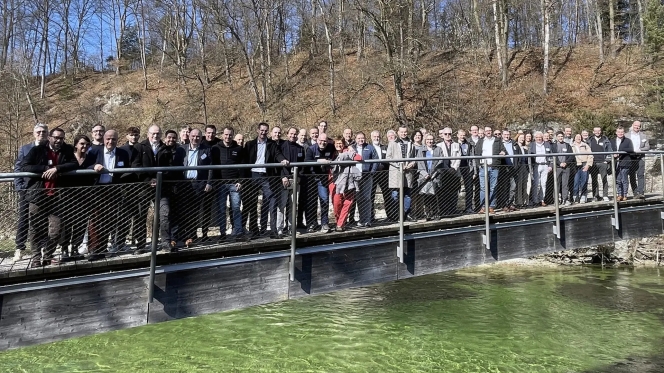
The 6th AZuR Partner Meeting convened over 70 participants from industry, small and medium-sized enterprises, trade, politics and academia on 26 and 27 February 2026 in Upper Austria. The event was hosted by KIAS Recycling GmbH, the operator of Austria’s sole used tyre recycling plant, at the Alte Fabrik event centre. The gathering brought together stakeholders from across the European tyre and recycling sector for a programme of presentations, workshops and discussions. The central aim was to devise forward-thinking solutions and projects to enhance retreading alongside mechanical and chemical recycling processes.

Christina Guth, the AZuR network coordinator, expressed her satisfaction with the high level of personal engagement demonstrated by partners from across Europe. She noted that expert presentations injected fresh energy and the ensuing dialogues generated promising concepts for expanding the tyre circular economy. She extended particular gratitude to the KIAS Recycling team for their thorough preparation and organisation, which made such a substantial event possible.
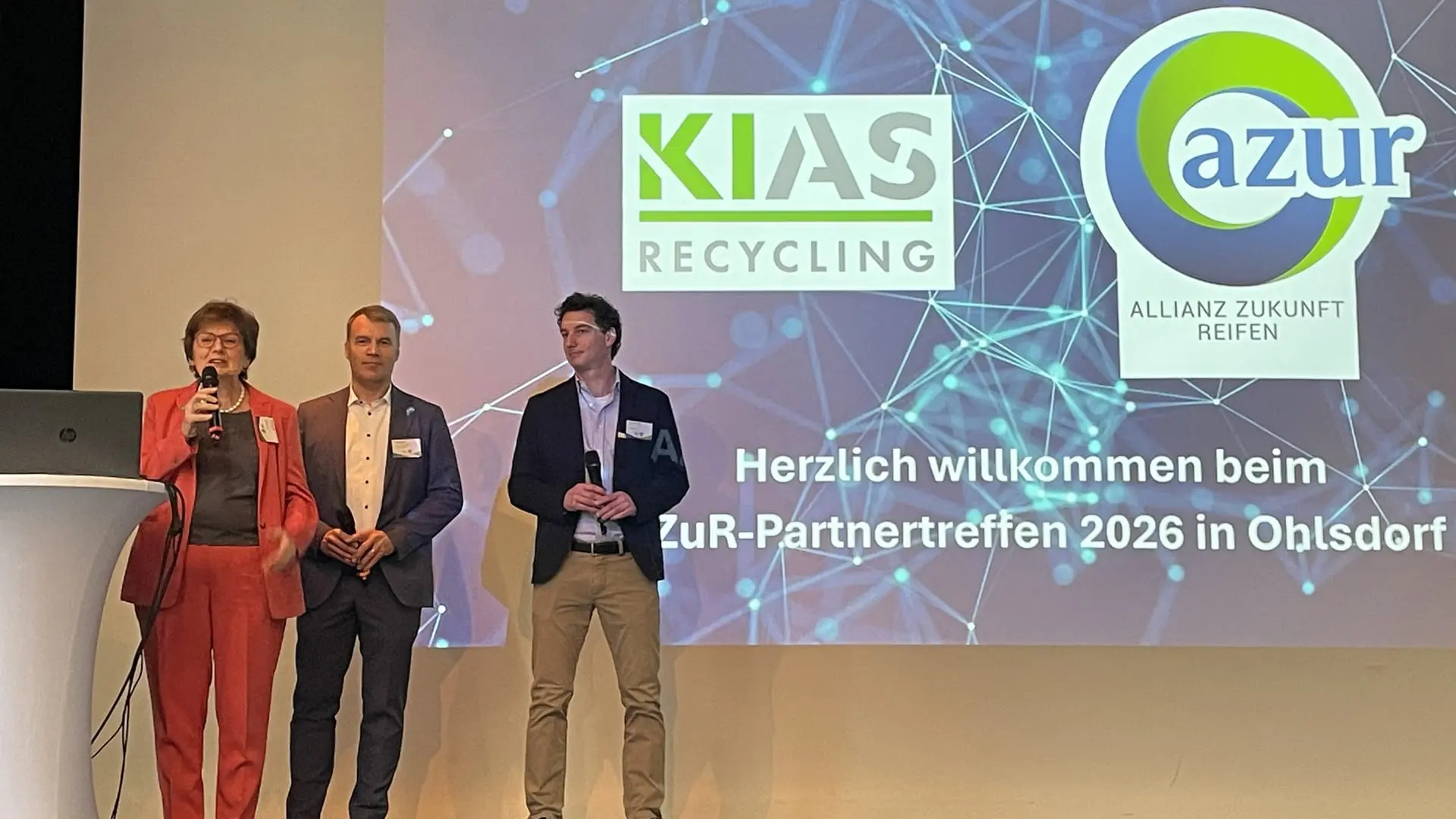
The technical proceedings commenced after a welcome from representatives of KIAS Recycling, the wdk and AZuR. Professor Holger Hoppe from TH Ingolstadt delivered an engaging presentation centred on the future of the circular economy, illustrating how the combination of novel business models, regulatory measures and cross-disciplinary teamwork can propel the necessary transformation. A subsequent networking session, guided by coordinator Anna-Maria Guth, reviewed the previous year's milestones, including political engagement at various governmental levels, scientific partnerships, trade fair participation and international exchanges.

A significant portion of the meeting was devoted to updates from AZuR’s three project groups. The retreading group is intensifying its political advocacy regionally and boosting its profile at major trade fairs. The mechanical recycling group is prioritising collaborations and involvement in municipal tenders and specialist conferences. Meanwhile, the chemical recycling group is concentrating on completing masterbatch initiatives, developing practical product applications and clarifying the distinction between pyrolysis and simple incineration.
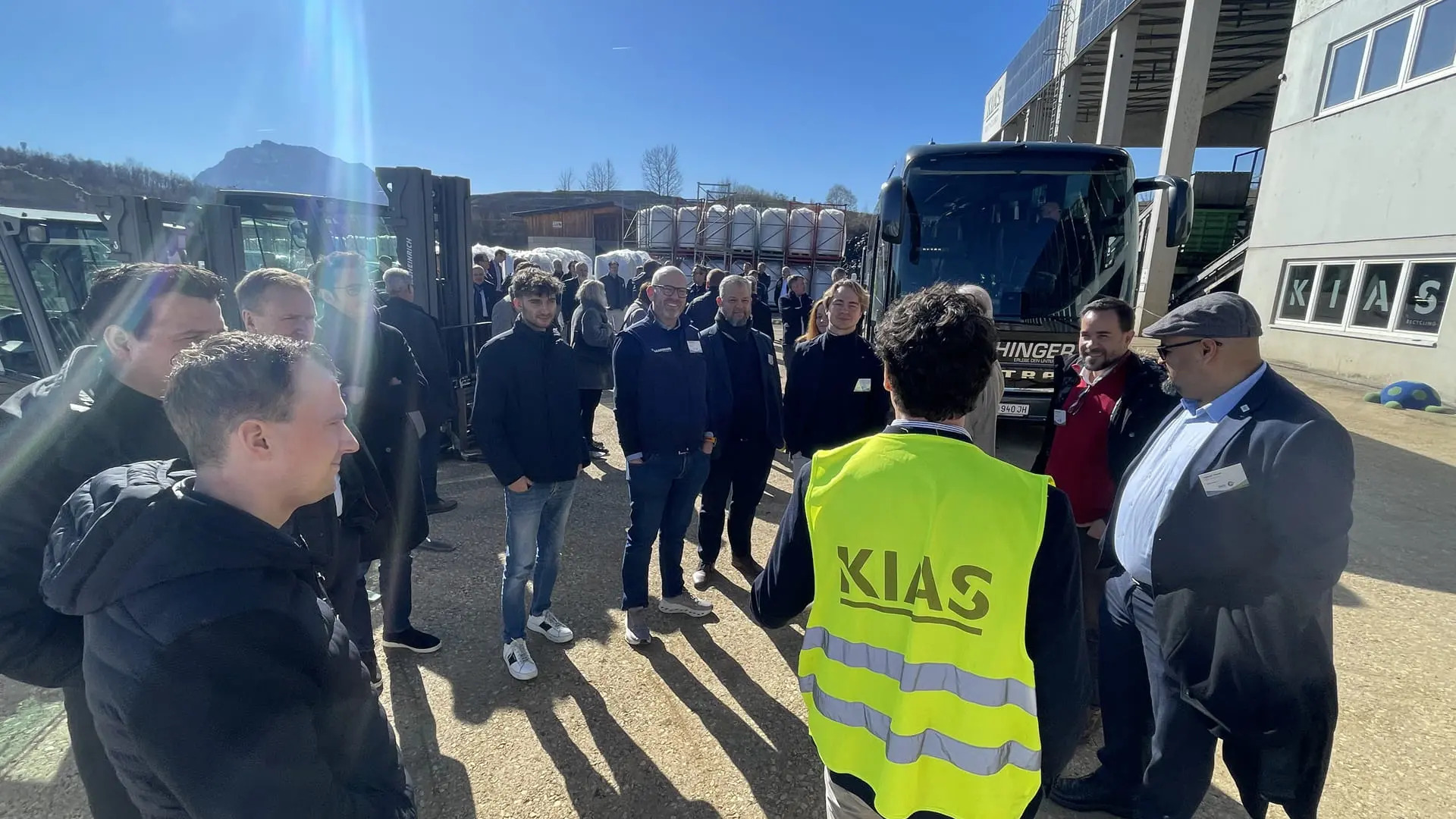
The visit to KIAS Recycling’s facility stood out as a key highlight. Partners were led through the plant in small groups, observing firsthand the modern processes of tyre recycling, from intake and treatment to the high-value application of recovered materials. This tour effectively demonstrated that certified waste management and recycling infrastructure are fundamental to a successful tyre circular economy.

HS HYOSUNG ADVANCED MATERIALS Showcases Carbon Fibre Innovations At CCE 2026

HS HYOSUNG ADVANCED MATERIALS Showcases Carbon Fibre Innovations At CCE 2026

HS HYOSUNG ADVANCED MATERIALS participated in the China Composite Expo 2026 (CCE 2026), held at the National Exhibition and Convention Center in Shanghai from 1 to 3 September. This annual event stands as Asia’s largest specialised exhibition for composite materials, drawing a significant global audience.

The company has been a consistent participant in CCE since 2013, leveraging the expo to progressively reinforce its foothold in the Asian market. At this year’s showcase, the strategic focus was on its portfolio of high-performance carbon fibre products, which are increasingly recognised as essential materials for advanced sectors including energy, mobility and aerospace due to their superior tensile strength and modulus.

Central to the presentation were actual samples of TANSOME, the company’s proprietary carbon fibre brand developed through in-house technologies. The exhibit featured a diverse range of applications, from mobility components like automotive wheels, hoods and brake discs to sporting goods such as hockey sticks and pickleball rackets, as well as high-pressure vessels for hydrogen and oxygen, drones and wire cores.

In parallel, HS HYOSUNG ADVANCED MATERIALS emphasised its robust manufacturing capabilities and stable supply chain, supported by production bases in Korea, China and Vietnam. This strategy reinforces its standing as a leading global carbon fibre manufacturer. Notably, the company achieved a milestone in 2011 as the first in Korea to independently develop TANSOME, a material 4 times lighter and 10 times stronger than steel. This was followed by the 2022 launch of H3065, a T-1000-grade fibre with strength exceeding steel by over 14 times, designed for demanding aerospace applications.

Jin Dal Lim, CEO, HS HYOSUNG ADVANCED MATERIALS, said, “This exhibition is an important opportunity to further strengthen strategic partnerships with global customers and demonstrate the outstanding technological capabilities of HS HYOSUNG’s carbon fibre. We will continue to build deeper trust in the global market based on world-class product quality and stable supply capabilities.”

Bekaert Secures Future Of Sardinian Facility Through Nuova Icom Partnership

Bekaert Secures Future Of Sardinian Facility Through Nuova Icom Partnership

Bekaert has taken a decisive step towards reshaping its operational footprint in Sardinia by securing a preliminary deal with Nuova Icom, a local engineering entity. The arrangement paves the way for the handover of the Macchiareddu premises and guarantees job continuity for the existing staff stationed there, subject to the final stipulations of the contract.

The decision stems from long-term turbulence in the tyre sector, which has steadily undermined the commercial viability of the plant's primary output. With tyre cord manufacturing struggling to remain profitable amidst evolving industry dynamics, the company concluded that a fundamental operational shift was unavoidable.

This initiative follows an extensive search for sustainable alternatives, emphasising regional employment preservation. Bekaert remains attuned to the social ramifications of the transition and pledges to engage transparently with all affected parties. The prospective ownership change is scheduled for completion by October 2026, pending regulatory clearances and the finalisation of employee consultations.

From Waste To Value: Unlocking The Full Potential Of End-Of-Life Tyres

Regom

Every day, tyre recyclers face the same challenge: processing more tyres while maintaining sorting quality, protecting equipment and meeting increasing traceability requirements. Every misidentified tyre represents lost value. Every hidden contaminant can lead to costly downtime. Every manual operation limits productivity.

As tyre volumes continue to grow worldwide, the question is no longer whether tyre sorting should be automated. It is how quickly operators can adopt technologies that make their facilities more efficient, more reliable and more profitable.

As a specialist in intelligent tyre identification, sorting and traceability solutions, REGOM is actively contributing to this transformation through technologies designed to help recyclers process more tyres, improve sorting quality and gain better visibility over their operations.

Through artificial intelligence, advanced inspection technologies and digital traceability, the company is helping transform end-of-life tyres from a waste stream into a valuable resource.

SMARTER TYRE SORTING THROUGH ARTIFICIAL INTELLIGENCE

For decades, tyre sorting relied heavily on manual inspections performed by experienced operators. While this approach remains valuable, it can be time-consuming and difficult to scale as tyre volumes continue to increase.

To address these challenges, REGOM has developed intelligent tyre identification technologies capable of automatically reading and analysing tyres in just a few seconds. Powered by artificial intelligence and advanced image recognition, these systems capture and process tyre information in real time, generating reliable data that can immediately be used by operators.

The benefits are significant. Automated identification increases processing capacity through a continuous production flow and automatic evacuation rates of up to 25 percent. It improves sorting consistency, with customers reporting grading quality improvements of up to 3 percent while reducing the risk of human error. By automating repetitive identification and sorting tasks, operators can focus on higher-value activities. Every tyre is identified in just 2.5 seconds and enriched with detailed product data, creating a fully traceable digital record from collection to grading and reporting. This structured database supports regulatory compliance, operational monitoring and data-driven decision-making while preparing facilities for future traceability requirements.

Importantly, artificial intelligence is not designed to replace operators. Instead, it helps redefine their role by automating repetitive tasks and enabling them to focus on activities that require experience, expertise and decision-making. This shift supports higher productivity while creating greater value from human involvement throughout the sorting process.

As the industry continues to evolve, AI-driven sorting is becoming an essential component of modern tyre recycling facilities.

While artificial intelligence enables faster and more reliable identification, another challenge remains: Detecting contaminants hidden in whole tyre or shreds flows.

Some metallic objects or other contaminants not visible during standard inspections may end up in the flow of shreds or whole end-of-life tyres. Once these contaminants enter shredders, pyrolysis units or downstream processing equipment, they can cause costly damage, unplanned maintenance and production downtime.

To address this issue, REGOM has been investing for several years in the development of innovative X-Ray inspection technologies. This new machine aims to detect hidden contaminants before tyres enter critical processing stages. By identifying potential risks at an early stage, operators can better protect their equipment and avoid costly interruptions.

If your shredder or downstream equipment has already suffered unexpected downtime due to hidden contaminants, you already know the consequences: production stops, maintenance costs increase and valuable processing time is lost.

The challenge is that many contaminants remain invisible during traditional inspections and are only discovered once they have reached critical equipment.

This is where X-Ray technology can make a significant difference. By detecting hidden metallic objects and other contaminants before tyres enter shredders, pyrolysis units or other processing equipment, operators can reduce risks, protect critical assets and maintain smoother operations.

The benefits extend throughout the entire recycling process: lower maintenance costs, improved equipment availability, increased operational reliability and ultimately higher productivity.

“The X-Ray solution we are developing directly addresses our customers’ need to automate their operations, making them more reliable and consistent in an increasingly challenging labour market.

The X-Ray solution we are developing directly addresses our customers’ need to automate their operations, making them more reliable and consistent in an increasingly challenging labour market. This inspection system also helps mitigate a growing risk: fires caused by the increasing number of batteries found in end-of-life tyres. By reducing operational costs while ensuring consistent production, this solution delivers significant operational benefits and enhances overall efficiency,” says Arthur Wagner – CEO, REGOM.

TURNING DATA INTO OPERATIONAL EXCELLENCE

One of the most significant transformations occurring within the tyre recycling industry is the growing importance of data.

Historically, large quantities of operational information remained unavailable or underutilised. Today, advanced sorting technologies generate valuable data that can be used to improve decision-making across the entire facility.

By combining artificial intelligence, automated identification and digital traceability, operators gain a clearer understanding of incoming tyre flows and sorting performance. This information supports regulatory compliance, facilitates reporting and provides greater transparency throughout the recycling process.

More importantly, data enables continuous improvement. Facilities can identify trends, optimise workflows and make more informed investment decisions based on objective operational insights.

The result is a more efficient, more transparent and more resilient recycling operation.

SUPPORTING THE DEVELOPMENT OF TYRE RECYCLING IN INDIA

India is one of the world’s most dynamic markets for tyre recycling and resource recovery. As the sector continues to grow, operators face the same challenges seen across the globe: increasing volumes, higher performance expectations and a growing need for traceability.

Recognising this opportunity, REGOM has partnered with PLANNEX to support the deployment of advanced tyre sorting technologies throughout the Indian market.

By combining REGOM’s expertise in intelligent tyre sorting and traceability with PLANNEX’s strong local presence and industry knowledge, the partnership aims to provide Indian recyclers with access to innovative solutions designed to improve productivity, sorting quality and operational performance.

Together, REGOM and PLANNEX share a common vision: helping recyclers unlock greater value from every tyre while supporting the transition towards a more efficient and sustainable circular economy.

THE FUTURE OF TYRE RECYCLING

The future of tyre recycling is not simply about processing larger quantities of tyres. It is about understanding each tyre better, managing resources more effectively and extracting maximum value from every material entering the recycling stream.

Through artificial intelligence, advanced inspection technologies and data-driven decision-making, REGOM is contributing to this transformation by helping operators build safer, smarter and more efficient recycling facilities.

The challenge is no longer simply to process more tyres. The challenge is to extract more value from every tyre entering the recycling stream.

Purify, Regenerate, Reuse: Returning Every Drop Of Waste Oil Back To Production

TMSI

Industrial waste oil has traditionally been treated as a maintenance expense and a hazardous waste stream in tyre manufacturing. But advances in oil purification and regeneration technologies are offering manufacturers a way to recover and reuse contaminated oils instead of replacing them. By extending oil life and reducing waste, these systems can help lower operating costs, improve equipment reliability and support sustainability goals. This article examines how TMSI’s oil purification solutions are enabling tyre manufacturers to adopt a more circular approach to industrial oil management.

INDUSTRIAL WASTE OIL: STEADILY ERODING OPERATING PROFITS

In mixing room, rotor seal oil is chronically contaminated by carbon black, oxidation products, metal wear debris and mechanical impurities. During the vulcanisation process, hydraulic oil frequently suffers from contamination and system malfunctions caused by the ingress of moisture and particulates, as well as the formation of sludge and varnish. When oil shifts from a protective medium for equipment to a source of operational risk, profits are continuously – and often invisibly – drained away.

For a typical tyre factory, oil-related expenditures can reach millions of dollars annually. However, industrial waste oil should not be viewed merely as hazardous waste awaiting disposal. Through TMSI’s advanced oil purification and regeneration technologies, contaminated oil can be purified, regenerated and reintroduced into the production cycle – transforming it from a one-time consumable into a recyclable production resource that delivers quantifiable, sustainable value.

MIXER SEAL OIL REGENERATION: 90% OFF-LINE RECYCLING

Seal oil in internal mixer rotors suffers from severe contamination and rapid consumption. Traditional filtration methods struggle to simultaneously address oxides, acidic substances, mechanical impurities and micro-contaminants. Centred on patented electro-sorption and micron-level precision filtration technologies, the TMSI regeneration system selectively captures polar contaminants. It transforms waste oil into reusable, regenerated oil while maximising the retention of the base oil’s active components.

The system enables 90 percent off-line recycling of waste oil, with a processing capacity of 1.5 tonnes per 8-hour batch. Calculations for a typical project – such as a tyre manufacturer generating 240 tonnes of waste seal oil annually – show potential comprehensive annual savings of approximately USD 280,000 and a payback period of less than one year. Furthermore, the use of clean oil minimises scratching on sealing surfaces, prevents sticking caused by gum deposits and reduces wear on critical components, thereby lowering the risks of leakage, downtime and quality fluctuations.

HYDRAULIC OIL PURIFICATION: NO SHUTDOWN, NO OIL CHANGE, 100% CLOSED-LOOP ONLINE PURIFICATION

The core value of hydraulic oil purification is not only to extend the life of the oil but also to prevent maintenance from interrupting production. The TMSI hydraulic oil online circulation purification system is connected to the hydraulic station in a bypass mode and continuously removes moisture, particulate matter, sludge, paint film and oxidised pollutants during equipment operation, allowing the hydraulic oil to recover its performance in a closed-loop cycle, instead of waiting until the oil is out of control before shutting down for oil changes.

The system flow rate covers 30 L/h to 150 L/h, adapting to different tank volumes; after purification, the moisture can be reduced to less than 0.03 percent, and the cleanliness is better than NAS level 8 and can be further improved to approximately NAS level 7 in actual applications. Under normal circumstances, the hydraulic oil change interval is about 1–2 years; when contamination increases, it may be shortened to 3–6 months. Online purification not only reduces the purchase of new oil and the disposal of hazardous waste but also helps reduce the risk of valve core sticking, lagging action, hydraulic cylinder corrosion and internal leakage, ensures the stability of the mould closing force of the vulcanising machine and the consistency of the vulcanisation quality and allows equipment management to shift from post-repair to pre-protection.

PATENTED COMPOSITE FILTER ELEMENT: ENHANCING THE PURIFICATION CAPABILITIES OF EXISTING SYSTEMS

For hydraulic systems already in operation, the TMSI patented composite filter element offers a streamlined, rapid upgrade path. Designed to fit existing system interfaces, it enables an immediate boost in fluid purification performance – enhancing the equipment’s ability to remove water and impurities while improving acid values – simply through a direct replacement of the filter element.

Leveraging material modification and structural optimisation, the composite filter element achieves multi-stage purification within a single unit. It offers filtration precision ranging from 0.5 to 30 μm and consistently maintains oil moisture levels below 300 ppm through recirculating purification. Its high dirt-holding and water-absorbing structure extends service life; under standard operating conditions, the replacement interval reaches six months or longer, allowing existing equipment to achieve superior, long-lasting fluid management capabilities with minimal investment.

FROM HAZARDOUS WASTE COST TO CIRCULAR ASSET: REDEFINING THE VALUE OF INDUSTRIAL OIL

From North America to Latin America and from Asia to Europe, TMSI’s oil purification solutions are consistently proving stability, adaptability and long-term operational value for more and more manufacturers.

TMSI is transforming industrial oil consumption from the traditional ‘consume-replace-dispose’ model to a circular ‘purify-regenerate-reuse’ model, an approach successfully implemented in the tyre industry.

When waste oil ceases to be merely a cost item on a hazardous waste list and instead becomes a circular asset – capable of being purified, re-evaluated and reintroduced into the production system – fluid management shifts from a routine maintenance task to a strategic factor directly impacting consumable costs, downtime losses, investment payback periods and ESG performance. Returning waste oil to the production line represents more than just an upgrade in oil purification; it paves a new path for tyre factories towards lean, low-carbon and highly resilient operations.