

Relentless Growth In Zinc Oxide’s Value Chain
- By Gaurav Nandi
- June 17, 2026
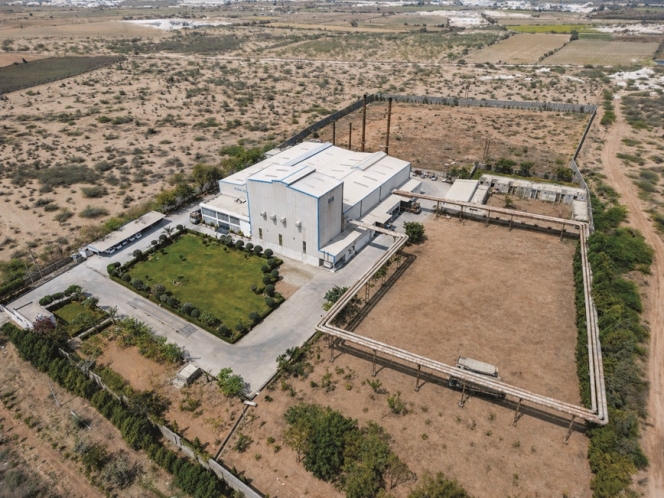
India’s zinc oxide industry is undergoing a structural shift from volume-driven manufacturing to value-led specialisation and Punia Group’s trajectory reflects both the opportunity and the pressure within this transition. As demand from tyres, EVs and global markets intensifies, the company is expanding its capabilities while navigating volatility in raw materials, regulatory tightening and supply chain disruptions. Its evolution underscores a broader industry reality that growth is no longer defined by scale alone but by consistency, sustainability and the ability to stay competitive in an increasingly complex global ecosystem.
For over four decades, Punia Group of Industries has steadily transformed itself from a modest, commodity-focused manufacturer into a forward-looking player in zinc oxide. The company’s journey reflects not just its own resilience but also the broader evolution of India’s manufacturing ecosystem.
In its early years, the business operated in a market driven largely by volumes and cost competitiveness. However, with a clear understanding that long-term sustainability required differentiation, the organisation began investing in process improvements, quality consistency and customer-centric innovation.
Over time, strategic inflection points such as technology upgrades and introducing efficient systems enabled the company to move up the value chain and strengthen its market position.
Underpinning this evolution has been a strong foundation of ethics, transparency and disciplined governance, which has guided every phase of growth.

“The zinc oxide and rubber chemicals industry itself is undergoing a significant transformation. What was once a commoditised, price-driven sector is now being reshaped by increasing demands for performance and sustainability,” noted Chief Executive Officer Siddharth Punia.
He added, customers, particularly in the tyre and automotive sectors, are seeking materials with consistent quality and lower environmental impact. While commodity segments continue to exist, the competitive advantage today lies in innovation, compliance and the ability to meet evolving global standards.
Against this backdrop, Punia Group is charting its next phase of growth with a clear and structured vision for the next three to five years.
THE NEXT PHASE
The company is focusing on expanding production capacity in a calibrated manner, ensuring that every addition is backed by robust demand visibility and operational readiness. A key area of alignment is with the growing demand from electric vehicles, advanced tyre technologies and industrial applications that require precision-engineered materials.
The organisation’s approach remains firmly rooted in systematic growth prioritising sustainability, efficiency and long-term value creation over short-term scale. This is evident by the company obtaining IATF 16949 and REACH certifications.
“The global business environment has become increasingly complex in recent years. Supply chain disruptions triggered by the Covid-19 pandemic followed by ongoing geo-political tensions such as those in the Middle East have had a direct impact on raw material sourcing and pricing,” contended Punia.
He added that zinc, being a globally traded commodity, has experienced considerable volatility, affecting cost structures across the industry. In response, companies are rethinking their supply chain strategies by diversifying sourcing, building strategic inventories and reducing overdependence on specific geographies.
Punia Group has taken pro-active steps in this direction by strengthening supplier relationships and exploring regional procurement options, ensuring continuity while adhering to its principles of fair and responsible sourcing.
TICKING THE CONS
Operating in this environment also brings a unique set of challenges. “Raw material price fluctuations, stringent environmental regulations and demand uncertainty linked to global economic cycles remain key concerns,” said Punia.
The company’s response has been grounded in discipline and foresight, investing in energy-efficient and environmentally compliant technologies, driving process innovation to reduce waste and maintaining agile production systems.
“Importantly, these efforts are guided by a strong ethical framework that emphasises compliance, environmental stewardship and accountability to all stakeholders including customers, employees and the communities we operate in,” he noted.
GRABBING THE OPPORTUNITIES
At a macro level, India’s emergence as a strategic manufacturing and consumption hub offers significant opportunities for the zinc oxide and rubber chemicals industry. The country benefits from competitive cost structures, a rapidly expanding domestic market driven by automotive and infrastructure growth and supportive government initiatives aimed at boosting manufacturing and exports.
Additionally, global supply chain re-alignments are creating opportunities for India to position itself as a reliable alternative to traditional manufacturing bases, further strengthening its role in the global value chain, informed Punia.
Reflecting on its 40-year journey, Punia underscores the importance of adaptability, cost discipline and principled decision-making. He stated, “Building a manufacturing-led business in a cyclical industry requires not just operational excellence but also consistency in values and vision.”
The company’s emphasis on systematic, step-by-step growth has enabled it to navigate multiple economic cycles while maintaining financial and operational stability. Past disruptions, whether economic downturns or supply shocks, have reinforced the importance of resilience, diversification and long-term planning.
CATERING TO DEMANDS
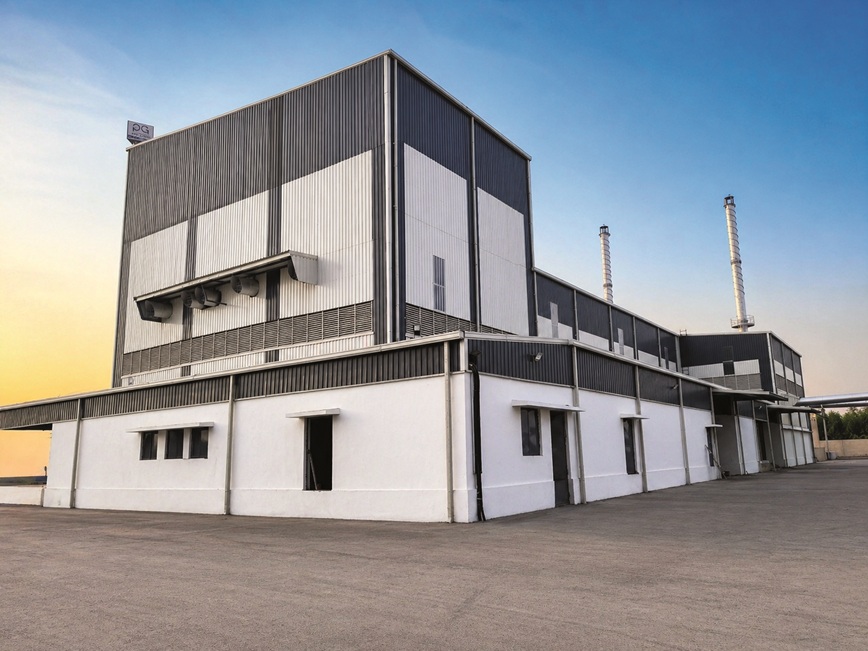
The company recently commissioned its new Tirupati plant that will be a modern, environmentally focused facility using the widely adopted French process to manufacture zinc oxide.
This involves vaporising zinc metal, reacting it with oxygen to form zinc oxide, then cooling, filtering, testing and packaging the final product. The plant will produce multiple grades tailored to customer requirements.
“Raw materials will largely come from zinc dross sourced locally and globally from the galvanising industry. The process is designed as a closed-loop, zero-waste system, where by-products are re-used,” he said.
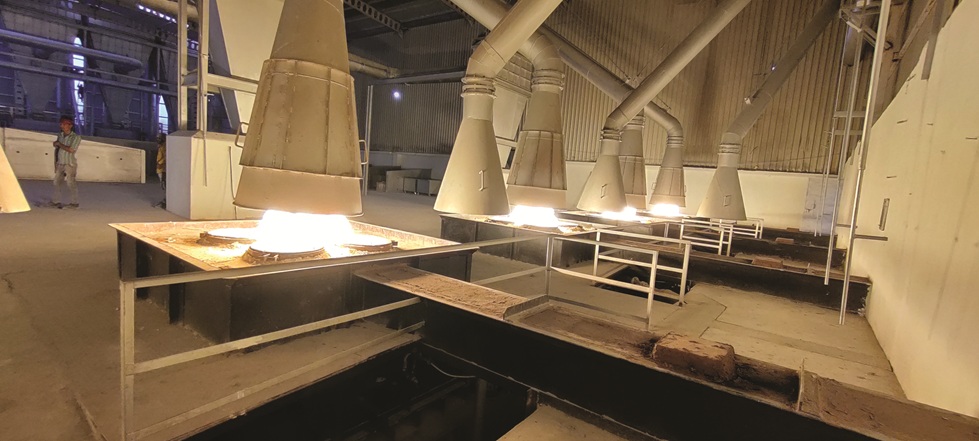
“Over the past decades, technology has continually evolved and we have consistently stayed ahead of the curve, adopting innovations well before they became industry standard. We introduced efficient collection systems that are not only environmentally responsible but also enhance product quality while prioritising worker safety,” informed Punia.
He contended that the plants’ re-designed furnaces enable cleaner, more efficient combustion, reducing emissions and delivering meaningful energy savings. Automation has been integrated wherever feasible to improve consistency and operational efficiency, while the health and safety of the workforce remain central to every decision that the company makes.
“Beyond operations, we are equally committed to giving back to the community. We actively support nearby villages through healthcare initiatives, encourage and sponsor sports activities and contribute to local infrastructure development, reinforcing our role as a responsible and engaged stakeholder,” he said.
Sustainability efforts like reducing fuel consumption through heat recovery and furnace optimisation has already achieved 15–20 percent savings. The company is also enroute to install heat recuperators and planning a transition to solar energy to meet most electricity needs.The facility also set internal benchmarks for efficiency and sustainability, particularly through improved energy utilisation and process optimisation.
During the Covid period in 2020, the company expanded this plant significantly, reinforcing its role as a high-output, strategically important unit. In addition to serving domestic demand, the Gujarat location offers strong logistical advantages for exports, especially through proximity to western ports like Mundra, enabling access to global markets.
“Even as the Tirupati plant strengthens southern reach, the Gujarat facility continues to anchor the company’s western and export-oriented operations, making the two plants complementary in terms of geography and market coverage,” said Punia.
FUTURE OUTLOOK
Looking ahead, the alignment between industry and government policy will play a crucial role in sustaining growth momentum. While India has made notable progress in supporting the speciality chemicals sector, further reforms in areas such as regulatory simplification, faster environmental clearances and infrastructure development can significantly enhance ease of doing business and global competitiveness.
As the industry continues its transition from commoditisation to specialisation, companies that combine innovation with integrity will define the future. With its strong ethical foundation, commitment to systematic growth and forward-looking strategy, Punia Group of Industries is well-positioned to capture emerging opportunities while contributing meaningfully to India’s evolving industrial landscape.
Punia Group’s growth narrative is compelling, but sustaining momentum will depend on execution amid volatility and rising expectations. As the industry shifts towards specialisation, the real test lies in balancing cost pressures with innovation and sustainability, ensuring that expansion translates not just into scale but into durable competitive advantage.
Vipal Rubber Launches VT290 Tread For European Truck Market
- By TT Bureau
- October 13, 2026
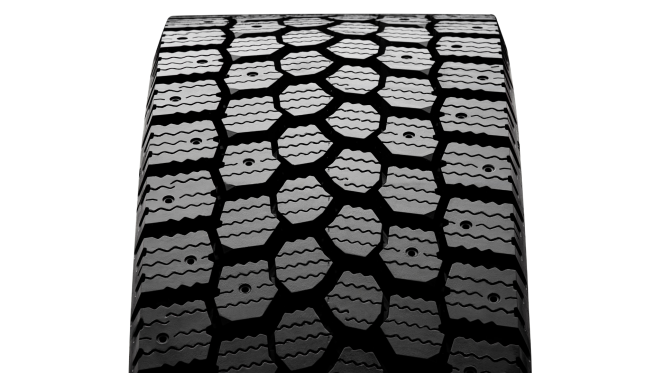
Vipal Rubber has launched the VT290, a tread designed for truck drive axles used on motorways and paved roads, targeting regional and long-distance transport operations in Europe.
The product is available in widths of 240mm, 250mm, 260mm, 270mm and 280mm. It is designed to provide traction and stability on dry and wet roads, as well as in demanding conditions involving snow.
Frederico Schmidt, General Manager of Vipal EMEA, said, “The launch of the VT290 reinforces Vipal’s ongoing commitment to offering technologically advanced solutions suited to the specific characteristics of European roads and climate.” “We want to further consolidate our presence in the region, delivering a high value-added product that combines innovation, operational efficiency and safety,” he added.
The VT290 carries the M+S marking and 3PMSF certification. Its design includes side sipes and grooves intended to help remove snow and mud from the tread, improving grip on slippery surfaces.
The tread pattern is also designed to distribute engine torque more evenly, helping to reduce uneven wear. Tie bars between the tread blocks add structural stability, supporting vehicle control during driving.
Fabrício Nedeff, Commercial Manager of Vipal EMEA, said, “With the VT290, weare responding directly to the real needs of fleet operators and truck drivers, combining performance, adherence and efficiency in different driving conditions. [RS2.1]In addition to expanding options for our customers, the product strengthens business opportunities for our partners in the region,”
Vipal said the launch would expand its offering for retreaders, distributors and fleet operators in the European market.
- Association of Natural Rubber Producing Countries
- ANRPC
- Monthly NR Statistical Report
- Natural Rubber
ANRPC Publishes Monthly NR Statistical Report For August 2026
- By TT News
- October 02, 2026
The Association of Natural Rubber Producing Countries (ANRPC) published its Monthly Natural Rubber Statistical Report for August 2026, noting firmer prices in several markets. Supply constraints, stable downstream demand and persistent geopolitical and macroeconomic uncertainty shaped the month. Renewed conflict and disruptions to major shipping routes added further pressure.
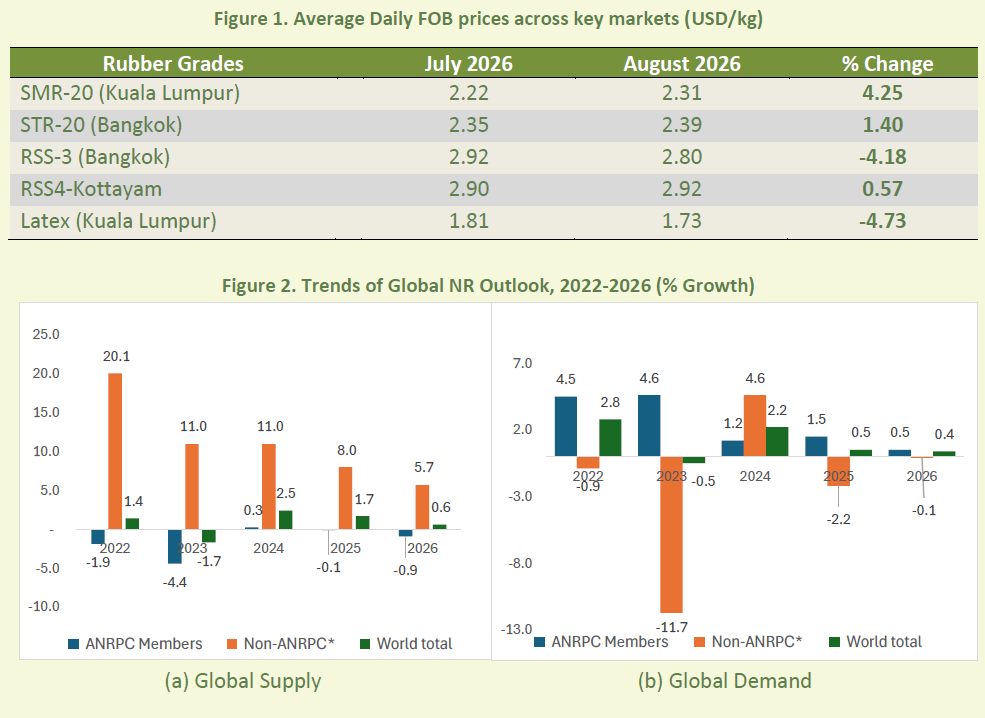
Physical prices for major grades moved in different directions. SMR-20 in Kuala Lumpur averaged USD 2.31 per kg, up 4.25 percent from July, while STR-20 in Bangkok rose 1.40 percent to USD 2.39 per kg. RSS-3 dropped 4.18 percent to USD 2.80 per kg, but RSS-4 in Kottayam gained 0.57 percent to USD 2.92 per kg. Latex-in-bulk fell 4.73 percent to USD 1.73 per kg. Brent crude averaged USD 91.08 per barrel, driven by concerns over possible restrictions on oil shipments through the Strait of Hormuz and wider Middle East instability, which raised energy supply risks and strengthened the oil market risk premium.
On trade, China's imports climbed 3.39 percent month-on-month, while India fell 10.18 percent and Malaysia dropped 8.24 percent; Viet Nam rose 5.08 percent. Exports advanced 5.63 percent in Viet Nam but declined in Thailand (-5.24 percent), Indonesia (-5.36 percent), Malaysia (-1.48 percent) and Cambodia (-1.88 percent).
Global production is projected to rise 0.6 percent to 15.039 million tons in 2026 from 14.952 million tonnes in 2025, after revisions to Thailand's 2025 output and updated 2026 estimates for Thailand, Malaysia and Indonesia. Weather, including erratic rainfall and drier Southeast Asian conditions, affected output. August 2026 production was estimated at 1.396 million tonnes, down 4.51 percent from 1.462 million tonnes a year earlier. Demand is forecast to grow 0.4 percent to 15.356 million tonnes in 2026 from 15.301 million tonnes, with the largest consumption gains expected in China, Malaysia and Cambodia. Prospects depend on vehicle sales, tyre production, shipping conditions and weather-related supply disruptions, while steady EV-linked demand supported modest growth led by China and India. The ringgit traded between RM4.02 per USD and RM4.09 per USD, and the baht between 32.68 and 33.34. The SHFE January 2027 contract averaged 18,109 CNY per tonne, up 7.78 percent month-on-month, while the SGX November 2026 contract averaged USD 2.24 per kg, up 4.32 percent.
Epsilon Carbon Advances Scope 3 Emissions Measurement Across Value Chain
- By TT News
- October 01, 2026
Epsilon Carbon Pvt. Ltd., a global speciality carbon and carbon black manufacturer, has broadened its emissions accounting to include value chain impacts beyond its direct operations. The move advances measurement and management of Scope 3 emissions across its supply and distribution network, according to the company.
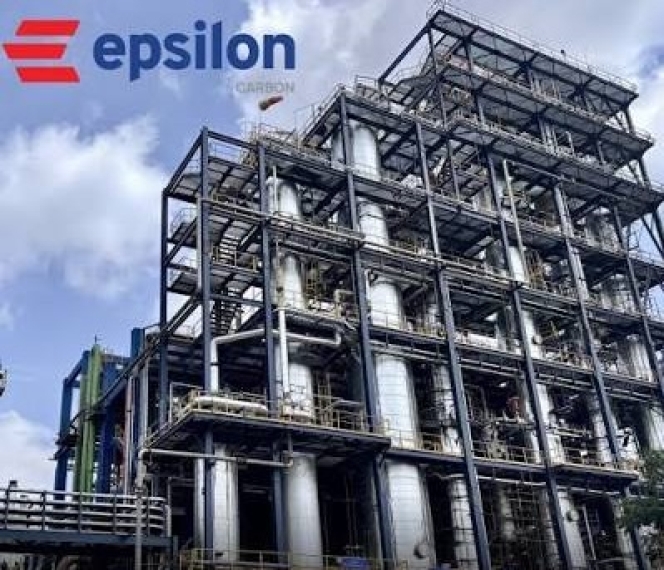
The initiative spans Epsilon Carbon’s integrated carbon complex in Vijayanagar, Karnataka. That site has a production capacity of 500,000 tonnes per annum of speciality carbon and 215,000 TPA of carbon black. It combines carbon manufacturing with energy circularity efforts in one integrated ecosystem. The company assessed material Scope 3 categories under GHG Protocol guidelines.
Scope 3 emissions are indirect and arise from purchased goods and services, transportation, business activities and downstream product use where relevant. The assessment gives Epsilon Carbon clearer visibility into emissions outside its direct control and a foundation for spotting reduction opportunities. It builds on existing operational emissions and energy efficiency work.
The company previously reported a 98 percent Scope 2 reduction against its baseline year. A 17 MW captive power plant uses waste heat from carbon black operations, energy consumption intensity fell 6 percent from baseline, and 77 percent of energy needs came from waste heat recovery, avoiding over 89,000 tonnes of CO₂. Epsilon Carbon now emphasises supplier engagement, data transparency and circularity, aligning disclosures with global sustainability frameworks to track value chain emissions consistently and develop measurable reduction initiatives.
Vikram Handa, Managing Director, Epsilon Carbon, said, “Meaningful climate action requires us to look beyond the boundaries of our operations and understand the impact of the entire value chain. Scope 3 measurement gives us greater visibility into the emissions and enables deeper engagement with our partners and suppliers. Building this visibility will help us make more informed decisions as we scale our operations and advance our decarbonization plans.”
HS HYOSUNG To Expand Mexico Investments From 2027 Under New State Agreement
- By TT News
- September 30, 2026
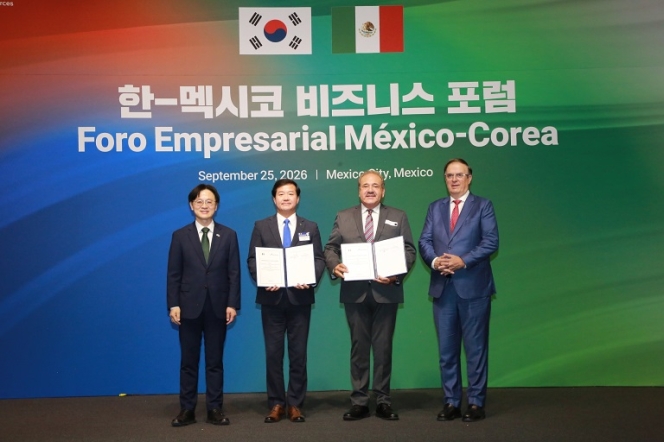
HS HYOSUNG has formalised a memorandum of understanding (MoU) with the State Government of San Luis Potosí, with the signing taking place at the World Trade Center Mexico City. The event formed part of the Korea-Mexico Business Forum, held alongside the Korean economic delegation's visit to Mexico.
Attending officials included Marcelo Ebrard, Mexico's Secretary of Economy, and Mario García Valdez, Secretary of Economic Development of San Luis Potosí. The two sides confirmed their shared resolve to back the company's local investment and regional growth. Separately, HS HYOSUNG's leadership met bilaterally with Secretary Ebrard to elaborate on its strategic vision and investment plans.
The agreement sets out a phased expansion of HS HYOSUNG's investments in San Luis Potosí beginning in 2027, with the goal of creating a major advanced materials production hub that bolsters supply for North American and wider global markets. The company's advanced materials span tyre cord, a flagship world-leading product, along with mobility, energy, aerospace and defence applications. Its North American operations, spanning Mexico and the United States, turn out tyre cord, airbag materials and mobility interior components for global leaders such as General Motors and Goodyear, underpinned by a highly dependable global supply chain.
Nak-yang Sung, CEO, HS HYOSUNG ADVANCED MATERIALS, said, “This investment goes beyond establishing a simple manufacturing base – it reflects our strategy to turn Mexico into a pivotal hub connecting North America with global supply networks. We are also committed to strengthening local supply chains and creating high-quality jobs to contribute directly to the region's industrial ecosystem.”

Comments (0)
ADD COMMENT