

- JK TYRE
- INDO-US TRADE DEAL
- TYRE EXPORTS TO US
- JK TORNEL MEXICO
- OEM AND REPLACEMENT GROWTH
- PREMIUM AND EV TYRES
- TBR AND PCR CAPACITY EXPANSION
- CAVENDISH INDUSTRIES MERGER
- RAW MATERIAL
- OUTLOOK
- FY26 Q3 FINANCIAL RESULTS
JK Tyre Eyes US Market Comeback As Trade Deal Nears
- By Sharad Matade and Gaurav Nandi
- February 09, 2026
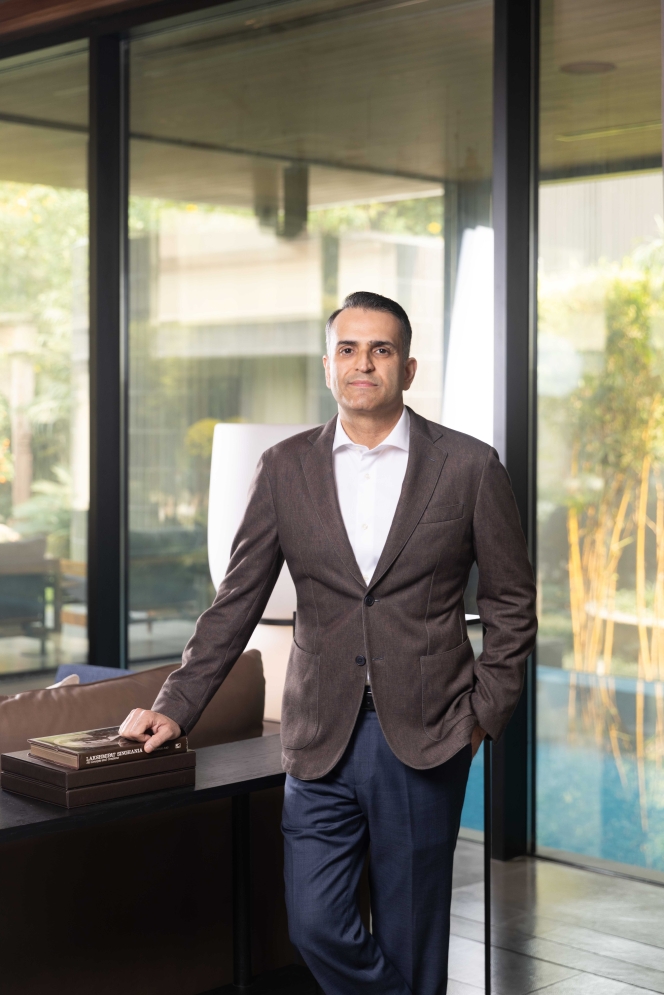
JK Tyre & Industries Managing Director Anshuman Singhania
JK Tyre is preparing to step up exports from India to the United States as a long-awaited Indo-US trade agreement moves closer to completion, even as the company continues to serve the American market through its Mexico subsidiary to navigate existing tariff structures.
Speaking at the company’s FY26 third-quarter media briefing, Managing Director Anshuman Singhania said that JK Tyre expected tyres made in India to secure a favourable position compared with imports into the US from Vietnam and other Southeast Asian countries once the agreement is signed.
“We expect to be either at par or in a better position. Once there is clarity on the duty structure, we will step up exports from India to the US,” he said, adding that clarity on the agreement was expected shortly and that the company would study the fine print before acting.
For now, JK Tyre maintains its presence in the US through JK Tornel, its Mexico-based subsidiary, where passenger car tyres attract almost zero duty into the American market. Earlier, around 3-4 percent of the company’s total revenue came from exports to the US, a share that could be reinstated depending on the final contours of the trade deal.
The company is also closely watching progress on a separate trade agreement between India and the European Union, which it believes could further improve export prospects for Indian tyre makers once signed by all member countries.
A strategic hedge
JK Tornel’s role in the company’s export strategy has become more prominent amid trade uncertainties. The Mexico arm allows JK Tyre to continue servicing the US market while India-US trade terms remain under negotiation.
Singhania made it clear that JK Tyre is ‘not giving up’ on the US market. Instead, it is using geography and duty structures to its advantage while awaiting clarity that could make India a viable export base again.
The management noted that, at times, strong domestic demand makes it more prudent to prioritise India over exports to the US. However, with additional capacities coming on stream, JK Tyre expects to have greater headroom to participate more aggressively in overseas markets.
While export strategy is evolving, the company’s current momentum is firmly anchored in the domestic market.
JK Tyre reported strong traction across both OEM and replacement segments, supported by festive demand, GST-led formalisation benefits and positive rural sentiment. Domestic volumes grew 16 percent year on year.
Replacement volumes rose 11–12 percent, while OEM volumes grew between 24 percent and 27 percent, reflecting robust demand from vehicle manufacturers.
A key driver has been the rebound in the commercial vehicle (CV) segment, which had remained subdued for nearly 18 months. JK Tyre, which commands one of the highest market shares in this category, is seeing renewed traction as freight movement and trucking activity improve.
The passenger vehicle OEM segment is also witnessing healthy momentum, contributing to overall growth across segments.
Market shifts
Singhania highlighted a visible shift in market demand towards premium tyres and larger rim sizes. The company is positioning itself to benefit from this trend by expanding its passenger car radial (PCR) portfolio and developing multiple sizes for export markets, particularly Europe.
The company has secured new OEM approvals to supply tyres for electric vehicle variants such as the Hyundai Creta EV and Tata Punch EV. The newly launched Renault Duster also features JK Tyre’s 18-inch Ranger HPE tyres.
The executive indicated that premiumisation and EV-linked demand are becoming structural drivers in the passenger vehicle tyre segment.
The company has announced an investment of INR 11.3 billion to expand capacity in truck and bus radials (TBR), PCR and other segments across multiple locations. This will increase overall capacity by nearly seven percent.
This follows a recently completed INR 15 billion expansion in PCR tyres that increased capacity by around 26 percent. On this expanded base, the company will now add another 4-5 percent capacity in passenger vehicle tyres.
Company Executives noted that this capacity addition would provide additional headroom to cater to both domestic growth and export opportunities once trade conditions become favourable.
The recent merger of subsidiary Cavendish Industries (CIL) into JK Tyre, completed in December, is expected to significantly improve operating efficiency and financial flexibility.
With the integration, JK Tyre now has full access to capacities at the Laksar and Tripura plants. While these capacities were earlier consolidated operationally, company officials said that the merger would now allow better realisation of large-scale synergies.
JK Tyre will also leverage its marketing and service network for CIL products. Importantly, the parent company’s higher credit rating will result in lower interest costs for working capital and term loans previously availed by CIL, which had an A+ rating.
The company expects overhead savings, interest cost reductions and operational efficiencies to support faster expansion.
Material outlook
Addressing concerns around commodity price volatility, Singhania said that the raw material basket saw a decline of nearly one percent during Q2 and Q3.
Going forward, raw material prices are expected to remain range-bound within 1–2 percent. Even if there is a marginal rise, JK Tyre believes strong demand conditions will allow it to pass on costs without disturbing margins.
“We do not see anything that may disturb the apple cart,” Singhania said.
He also announced that the company had earned a Silver rating in the latest EcoVadis ESG assessment, placing it among the top seven percent of companies globally.
The company said this recognition reflects its performance across sustainability pillars and aligns with its vision of becoming a green company by 2050.
A record quarter
JK Tyre reported its highest-ever consolidated quarterly revenue of INR 42.35 billion in Q3 FY26, up 15 percent year-on-year. EBITDA stood at INR 5.83 billion with margins expanding sharply to 13.8 percent, a rise of 470 basis points year on year.
Profit after tax surged 3.7 times to INR 2.9 billion compared with INR 570 million in the same quarter last year. Domestic volume growth stood at 16 percent while export volumes grew nine percent, even though overall export revenues were described as flattish due to geopolitical uncertainties.
JK Tornel reported a 21 percent rise in turnover to INR 6.16 billion from INR 5.07 billion a year earlier.
Company officials attributed the margin expansion to operating leverage, execution focus and benign raw material prices.
Singhania indicated that demand visibility for 2026–27 remains strong with particular optimism for the first half of FY27. All segments including OEM, replacement, domestic and exports are expected to see growth.
For JK Tyre, the convergence of strong domestic demand, expanded capacity, merger synergies and potential trade advantages could determine whether India re-emerges as a meaningful export base for the US and Europe.
Not as a return to the past, executives suggested, but as a fresh opportunity built on scale, efficiency and a more premium product mix.
Evonik Reshapes Business Portfolio To Improve Geostrategic Balance
- By TT News
- September 28, 2026
Evonik, a global speciality chemicals company, has outlined a three-year strategy to sharpen its focus and accelerate growth, assigning distinct roles across its business portfolio and setting specific tasks for its major German sites. Targeted growth projects are also intended to improve the group's geostrategic balance. To fund these investments, the company is relying on its Evonik Tailor Made restructuring programme to further reduce its cost base. The plan involves cutting 3,200 jobs worldwide, with roughly 2,150 of those losses falling in Germany.
At the annual strategy meeting, the executive and supervisory boards reviewed plans through 2030. Interim CEO Claus Rettig said the industry faces a structural and economic crisis, and Evonik will use this polycrisis to reshape old structures and improve its positioning. Many parts of the business are still growing, so efforts will concentrate on strengths, future topics and lucrative markets, with better cost positions creating room to manoeuvre.
Transformation will proceed at every level. Healthcare and biotechnology projects in Canada and Slovakia, worth several hundred million euros, will strengthen the portfolio, while business units are aligned by role as growth drivers or cash generators. A new business line, Designed Polymer Solutions, bundles growth areas in aerospace, automotive and gas separation, including biogas and hydrogen. Asia and America offer strong opportunities, and further investments there are under review. Each of the six major German sites will receive a clear profile, with implementation starting shortly.
Evonik is also exiting activities with no internal prospects. Rettig said long-term leadership requires leading in what the company does, and volatility demands flexible responses. Closures of smaller sites fit this approach, and divestments of C4 chemicals and infrastructure are progressing as planned. Tailor Made's second phase begins in 2027 and runs to 2029. Measures will be finalised by late 2026, including unfilled vacancies, early retirements and voluntary severance departures. Chief Human Resources Officer Thomas Wessel said Evonik has long lived social responsibility and maintained intensive dialogue with employee representatives, and this transformation will be completed together.
Continental Tests New TerrainContact A/T2 Across Iceland's Rugged Terrain
- By TT News
- September 28, 2026

Continental recently showcased its new TerrainContact A/T2 tyre during a five-day driving event in Iceland, held from 14 to 18 September 2026. Journalists and invited customers tested the tyre across winding roads, rugged highlands, glaciers and volcanic terrain.
Starting at Þingvellir, the group travelled through Iceland's Western Highlands and the Kaldidalur valley, where gravel routes highlighted the tyre's blend of on-road comfort and off-road traction. The TerrainContact A/T2 targets pickup and SUV owners who mainly drive on pavement but require extra grip when conditions change.
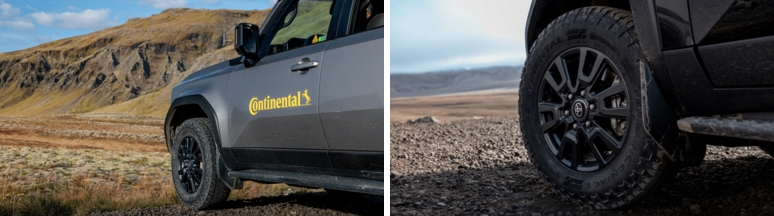
Compared with its predecessor, the tyre offers better wet braking and snow traction while preserving a quiet ride and off-road ability. A new tread compound boosts wet performance, greater tread depth aids snow grip, and optimised zig-zag grooves and traction teeth add control on loose or snowy surfaces. It carries the Three-Peak Mountain Snowflake symbol and is engineered with electric vehicles in mind.
Okan Sen, National Marketing Manager, Continental Tire Canada, said, “The TerrainContact A/T2, as one of the best-balanced performance all-terrain tyres in the market, was developed for drivers who want the freedom to explore without compromising their everyday driving experience. Iceland was the perfect setting to bring that versatility to life, giving attendees the opportunity to experience the tire across the kind of changing terrain it was designed to handle.”
Tyres Europe Study Urges EU Industrial Policy To Look Beyond Raw Materials
- By TT News
- September 28, 2026
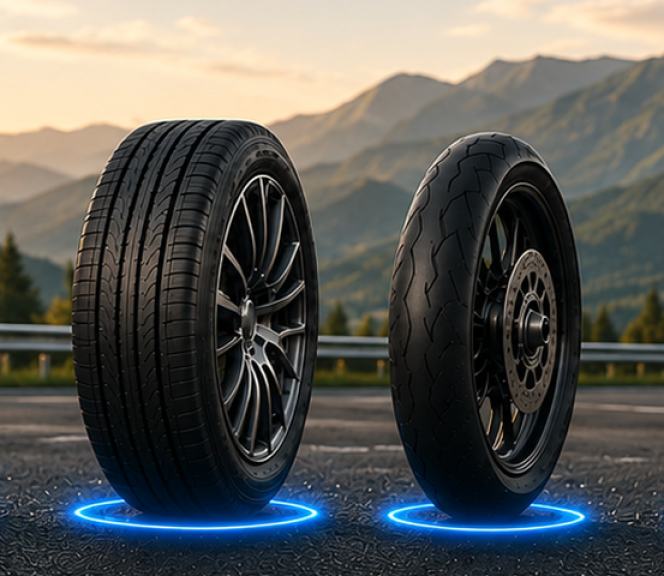
A new Oxford Economics study commissioned by Tyres Europe underscores the tyre sector's vital economic and social contribution, arriving as Brussels shapes its Industrial Accelerator Act to reinforce European industrial competitiveness. The report, titled ‘The Critical Importance of the EU Tyre Industry’, makes the case that EU industrial policy ought to encompass the finished products sustaining Europe's economy and essential services, rather than focusing solely on raw materials and technologies.
Through the lens of tyres, the research maps the relationships between European manufacturing capacity, reliance on external sources and the smooth operation of mobility, freight and public services. It concludes that EU-produced tyres potentially enabled freight, agriculture and passenger transport, directly yielding EUR 1.5 trillion in GDP – 9 percent of the EU's total – and providing work for 30.5 million people, 13 percent of EU employment.
The study further reveals exposure on both sides of the tyre value chain. Imported intermediate inputs constitute 11.9 percent of EU tyre production value, exceeding the EU economy average of 7 percent, while natural rubber supplies depend wholly on imports. In 2024, imported tyres made up 40 percent of newly fitted tyres across the EU, a proportion that continues to climb.
Adam McCarthy, Secretary General, Tyres Europe, said, “Economic resilience depends not only on access to materials but also on retaining the capacity to transform them into safe, advanced products in Europe. The Industrial Accelerator Act is an opportunity to recognise strategically-important finished products and support competitive manufacturing in Europe. A strong EU tyre manufacturing base reduces reliance on external suppliers and helps build a more resilient, competitive automotive value chain.”
Pete Collings, Managing Director, Oxford Economics, said, “Europe’s tyre industry is far more than a manufacturing sector: it is a critical enabler of mobility, trade and wider economic activity. Our analysis shows that EU-produced tyres support hundreds of billions of euros in GDP and millions of jobs across key customer sectors, while the industry itself depends on complex global supply chains. The findings underline the economic value of maintaining a strong European tyre manufacturing base.”
Rally Of Himalayas 2026 Flagged Off From Manali
- By TT News
- September 26, 2026
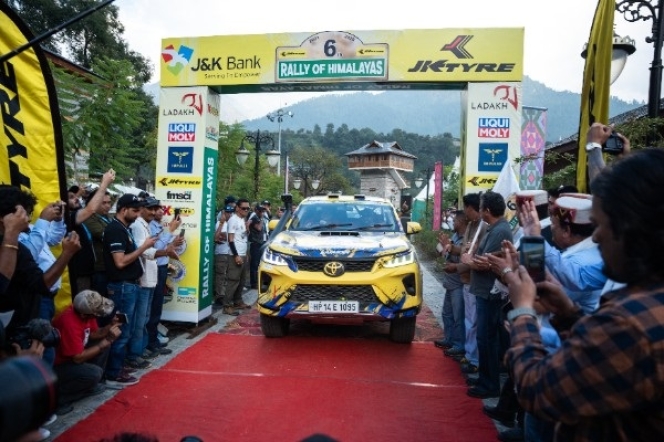
The J&K Bank presents JK Tyre Rally of Himalayas 2026, a premier Cross Country Rally, was flagged off from Manali on 26 September. Organised by Himalayan Xtreme Motorsports and Adventure X Fusion Tribe, the sixth edition achieved a significant milestone by entering the Zanskar region for the first time. The ceremonial start occurred at 5:00 PM at Dev Lok, 15th Mile, near Span Resort, Manali. Bhuvneshwar Gaur, MLA Manali, served as Chief Guest, joined by V P S. Jasrotia, Deputy General Manager of Jammu & Kashmir Bank, as Guest of Honour alongside JK Tyre officials. The rally is supported by J&K Bank as Presenting Sponsor, JK Tyre as Title Sponsor, Ladakh Tourism as Official Sponsor and Impulse and Liqui Moly as Partners.
The competition features 140 participants across Moto, Extreme and TSD categories over five days in the formidable Himalayas. The route traverses Kaza, Jispa, Padum and Pensi La before concluding in Padum, Zanskar, on 30 September. The Moto category includes 80 riders, among them one female rider. The Extreme category comprises 35 participants, including two female drivers and five Army teams. The TSD category has 24 competitors, four of whom are female, testing precision, timing and navigation. This diverse field includes professionals, private entrants, women and Army teams.
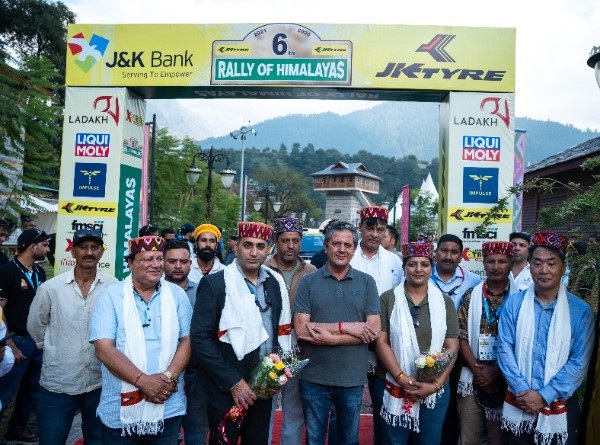
This edition serves as a tribute to Hari Singh, the legendary Gypsy King and five-time National Rally Champion, whose legacy inspires competitors. The event's defining feature is its inaugural entry into Zanskar, introducing high-altitude terrain, remote landscapes, long competitive sections and shifting Himalayan conditions. From Kaza, competitors progress to Jispa and into Zanskar, tackling Padum and Pensi La before returning to Padum. Preparation, navigation, endurance and reliability become critical. Since its 2021 inception, the rally has grown into a demanding platform testing riders and drivers against Himalayan challenges.
JK Tyre, synonymous with Indian motorsport, continues its legacy rooted in rallying, embodying endurance and adventure. For J&K Bank, supporting the event reflects nearly nine decades of commitment to regional development and showcases tourism potential. The Department of Tourism, UT Ladakh, partners as a sponsor to position Zanskar as a premier adventure tourism destination, highlighting landscapes, heritage and driving routes to national and international audiences.

Comments (0)
ADD COMMENT