

ON THE ROAD: ASHOK LEYLAND LAUNCHES INDIA’S FIRST 4-AXEL 14-WHEELER TRUCK
- By TT News
- May 05, 2021
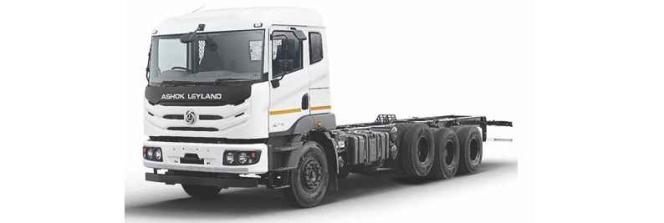
The AVTR 4120 can operate 40.5 Ton with the lift axle down, producing revenue and payload similar to a 10X2 truck or haul 28 Ton with the lift axel up, having higher fuel efficiency comparable to a 6X2 during light/partial load. This flexibility allows owners to operate the AVTR 4120 at a large GVW band, achieving the best total operation cost.
Other notable features of the AVTR 4120 are:
• Build on a modular platform and offers three cabin option: N Cab, U Cab and M Cab
• N Cabin variant comes equipped with Suspended cab with dampers, Suspended driver seat, Anti-roll bar in the front, excellent storage spaces, Full Metal Front Facia, Music system, AC & HVAC options.
• The company is also offering maintenance-free Unitised wheel bearings, slipper ended rear suspension and so on for owners to choose from. (TT)

RENAULT TO OFFER ELECTRIC TRUCKS FOR EACH MARKET FROM 2023
Volvo Group’s subsidiary- Renault Trucks announced an all-electric truck will be available for each segment, namely distribution, construction and long-distance from 2023.
To achieve these goals, Renault Trucks is backed by dedicated units, both in Research and Development and in the sales and after-sales departments.
On the R&D side, Renault Trucks intends to meet the main technological challenges of this revolution through strategic partnerships, as well as relying on technologies within the Volvo Group to increase volumes and reduce costs.
To facilitate this sustainable transition, The French company will also have the support of its new R&D centre in Lyon – the X-Tech Arena - which will be built by the beginning of 2023 through an investment of EUR 33 million.
In March 2020, Renault Trucks began series production of its second generation of electric vehicles at the Blainville-sur-Orne plant.
Renault Trucks now boasts a comprehensive all-electric range on the market, from 3.1 to 26 tonnes. Comprising of the D Z.E., D Wide Z.E. and the Master Z.E., it meets the requirements of urban transport, delivery, distribution and waste collection. (TT)
 YAMAHA R15 VERSION 3.0 LAUNCHED IN METALLIC RED
India Yamaha Motor announced another exciting update on the existing range of YZF-R15 Version 3.0. The sporty bike will now be available in the all-new ‘Metallic Red’ colour from April 1st in India.
The entry-level sports bike retains the 155cc, liquid-cooled, 4-stroke, SOHC, 4-valve, fuel-injected engine equipped with innovative technologies like Variable Valve Actuation (VVA) and Assist & Slipper (A&S) Clutch.
The Metallic Red colour edition of YZF-R15 Version 3.0. is priced at Rs. 1,52,100 (Ex-showroom Delhi).
The sports motorcycle is available in 3 existing colours – Racing Blue, Thunder Grey and Darknight.
All models in the Yamaha line-up are also equipped with a Side Stand Engine Cut-off Switch which prevents engine ignition till the side stand is withdrawn & ensures convenience to riders. (TT)
Tegeta Green Planet Explains Producer Responsibility To Future Automotive Professionals
- By TT News
- October 08, 2026
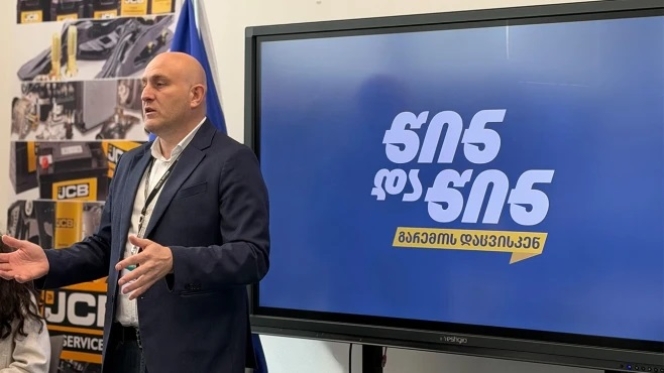
Tegeta Green Planet opened the Light Vehicle Diagnostics course at Tegeta Academy with a presentation for attendees aged 17 to 33. Beyond their chosen vocational field, participants learned about automotive waste management and environmental responsibility.
Shalva Akhvlediani, the organisation’s director, outlined its activities and goals while emphasising Extended Producer Responsibility. The session examined how the automotive sector connects to environmental duty and why used tyres, waste oils and automotive batteries must be collected and managed properly.
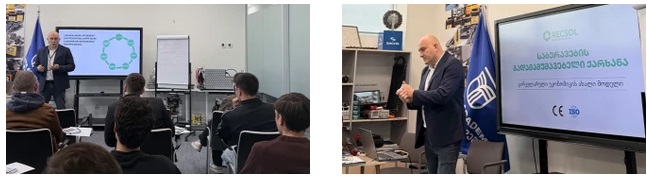
Tyre management and RECSOL featured prominently. Attendees traced a used tyre’s path from collection to recycling and learned how waste becomes a source of new resources. RECSOL, Tegeta’s tyre recycling plant, is a significant infrastructure project in used tyre recycling, processing tyres into materials for various uses and supporting circular economy principles.
A core aim is a system where waste is not an endpoint but the starting point for new resources, which requires infrastructure alongside greater public awareness and information on proper disposal. For participants, the meeting linked professional education with environmental awareness, stressing that future automotive professionals should understand this responsibility early.
Tyres Europe Joins Industry Call To Rethink CBAM Scope Extension
- By TT News
- October 08, 2026
Tyres Europe, alongside ACEA (the European Automobile Manufacturers’ Association) and CLEPA (the European Association of Automotive Suppliers), has dispatched a joint communication to EU decision-makers concerning the possible broadening of the Carbon Border Adjustment Mechanism (CBAM) to cover downstream goods. The move comes as trilogue discussions approach.
Tyre producers form part of an automotive value chain already bearing carbon-related expenses for steel and aluminium manufactured within Europe. The proposed expansion would draw additional products into the mechanism’s remit before the existing framework has demonstrated its effectiveness. Resulting costs and administrative requirements would land on downstream manufacturers, tyre makers included, with signatories cautioning that a conceptually sound regulatory effort could become an operational and financial strain.
Endorsing the mechanism’s aims, the signatories nonetheless urge a proportionate scope that shields the entire value chain from carbon leakage while preventing that risk from being pushed further downstream. They advocate extending the mechanism only where a material carbon-leakage danger is evidenced, and request that policymakers ease compliance demands, including via more fitting default values mirroring real production routes.
NEXEN TIRE Renews Zalgiris Deal, Expanding Brand Visibility Across Europe
- By TT News
- October 08, 2026
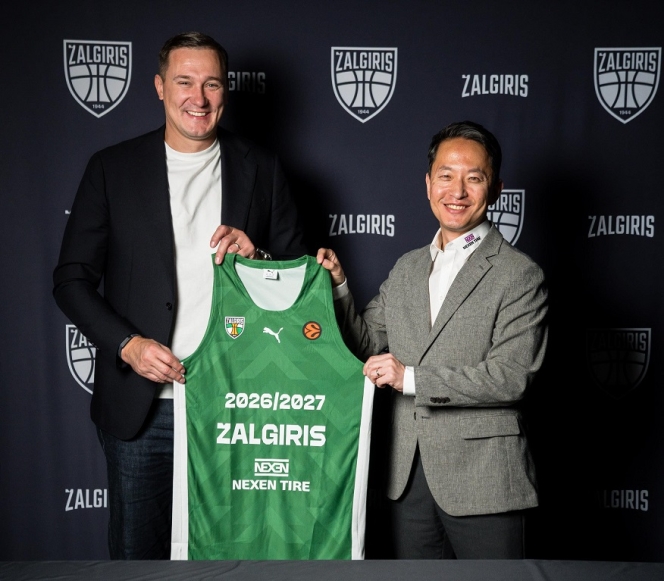
NEXEN TIRE has extended its partnership with Zalgiris, reinforcing its commitment to basketball in Europe, particularly across the Baltic region. The renewal builds on a relationship that began in 2024 and reflects the company’s broader strategy of linking its brand to performance, innovation and mobility.
The tyre maker has pursued sports partnerships as a way to connect with fans, sharing in the passion and excitement of supporting favourite teams during major matches and memorable moments. It also values the teamwork, dedication and collective achievement that define team sports, using such ties to build authentic connections and deepen engagement in key European markets. Its collaboration with clubs including Zalgiris and FC Bayern München forms part of this approach.
Under the extended agreement, NEXEN TIRE will gain greater visibility among sports fans in the region. The partnership offers branding opportunities at Zalgirio Arena, such as synchronised on-screen advertising and promotion on LED stands near the court, in a position visible on television during EuroLeague and LKL home games.
The arrangement also includes a hospitality programme allowing NEXEN TIRE to welcome guests and business partners at Zalgiris home fixtures. Through the strengthened alliance, the company aims to share its passion with more fans while raising brand awareness across the region.
Ricky Lee, Managing Director, NEXEN TIRE Poland, said, “Our cooperation with Zalgiris has developed positively since 2024, and we are pleased to extend and strengthen this partnership. Basketball has a particularly strong following in the Baltic region, making Zalgiris an important partner as we continue to grow our presence and engage with fans. We look forward to supporting the team throughout the season and doing our best to create positive experiences for both the players and their passionate fans.”
Paulius Jankunas, President, Zalgiris, said, “We are delighted to continue our cooperation with NEXEN TIRE and build on the partnership we started two years ago. NEXEN TIRE brings extensive experience in sports marketing, and we are proud to work together on creating meaningful projects and experiences for our fans. We look forward to another successful period of cooperation and to welcoming NEXEN TIRE’s guests and partners to our games and events.”
TBC Corporation Expands Multi-Mile Tyres Portfolio With Four New Lines
- By TT News
- October 08, 2026
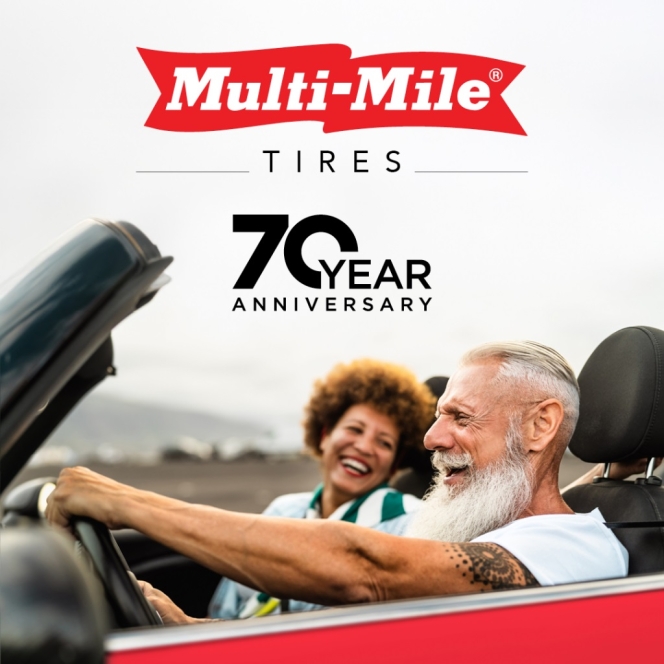
TBC Corporation, one of North America’s largest marketers of automotive replacement tyres through wholesale and franchise operations, has widened its tyre portfolio through the addition of four new lines under the Multi-Mile Tyres banner. Serving as a value step-up brand, Multi-Mile gives dealers a strong mix of broader product coverage and improved consumer advantages crafted to drive better retail margins, helping retailers offer greater value while lifting profitability. With this expansion, the portfolio now reaches over 85 percent of the vehicle market, offering dealers more ways to satisfy customer demand.
Among the additions are tyres built for rugged and mud terrain use, boasting self-cleaning treads that push out mud and stones alongside dependable traction both on and off the road. Also joining the range are commercial and C-metric speciality tyres tailored to heavy-duty regional and long-haul trucks, together with all-weather tyres that hold the 3-Peak Mountain Snowflake severe snow rating and are made for high mileage and consistent year-round use.
A prominent name in the replacement tyre segment, Multi-Mile carries cutting-edge touring, high-performance and broad-line tyres suited to passenger cars, light trucks and SUVs. Meanwhile, the upgraded Mile After Mile Protection Plan warranty now delivers broader coverage, adding three-year roadside assistance, a three-year road hazard protection plan and a 60-day ride guarantee on top of its extensive treadwear warranties.
Rachel Tibor, Chief Marketing Officer, TBC Wholesale, said, “For more than 70 years, Multi-Mile products have offered cost-efficient, reliable and durable tyre options that enhance safety and performance. With this expanded portfolio, Multi-Mile strengthens its position as a value step-up brand, giving dealers more opportunities to meet evolving consumer needs while offering a product mix designed to support stronger retail margins. We’re continuing our longstanding tradition of supplying the right products at the right time for every type of vehicle and application.”

Comments (0)
ADD COMMENT