

TVS SRICHAKRA RAMPING UP FOR EUROPEAN EXPANSION
- By Sharad Matade
- June 16, 2021
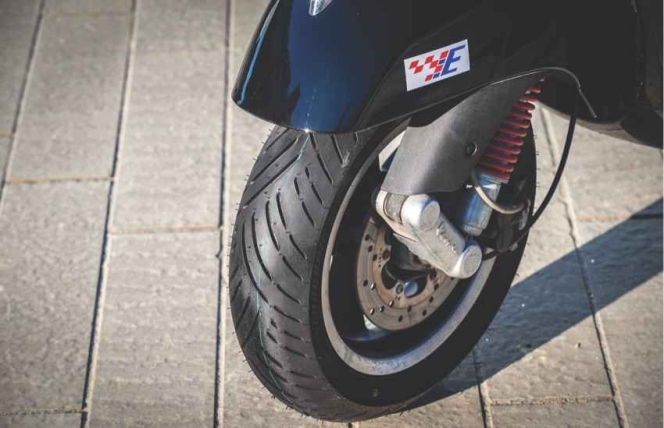
 TVS Srichakra has entered the European market with its new range of Eurogrip two-wheeler tyres which are customised to meet the European rider’s needs. The company has been meticulously moving on its brand building and product launches in the last two years. In 2019, the company had launched its brand TVS Eurogrip with a new logo and new product range, aiming at younger, millennial and aspirational buyers.
To foray into the European market, TVS Srichakra once again has gone through a lot of studies and product testing. The newly launched range of Eurogrip Bee Connect scooter tyres will be available in a basket of 40 different sizes in the coming months in Europe. Decoding the significance of the Eurogrip Bee Connect name, Andrea Bianchi Milella, Marketing Manager of TVS Srichakra’s Italian Centre, said, “It took quite a long process to came to this to this name-Eurogrip Bee Connect. The pandemic has changed everyone’s life, so has mobility. Due to social distancing and safety, public transportation is being avoided in Europe and, two-wheelers, especially scooters, are increasingly preferred by people to connect with each other. Secondly, at TVS Srichakra, we are the forefront runner for creating ecological consciousness in the tyre industry. We did tremendous work on reducing the environmental impact and increasing the usage of renewable energies with this product. With the Eurogrip Bee Connect, we wanted to highlight that we are very conscious about sustainable mobility and which animal could be better than the bees to symbolise this fact. Bees are industrious and hardworking and, most of the time, on the move, but at the same time, they play kind of a crucial role in the wellbeing of nature and humanity itself. So, we wanted also to highlight this side of our involvement in the automotive industry.”
 The company has entered the European market when the pandemic has put a halt on everyone’s life for more than a year. However, P Madhavan, Executive Vice President - Sales & Marketing, TVS Srichakra, backs the timing to enter the European market, saying the strategic move has been taken after much deliberation. Madhavan says, “I will strongly believe in stop, pause and take a breath, and then look at the very reason where you can go from that point onwards. So we use this period to go back and understand the consumer better. We got into the research more and tried to get fresh insights on the consumer so that if there is that nugget of gold as an opportunity available, go pick that up. That was the thought right through.”
The Chennai-headquartered company utilised the recent slowdown period for designing, studying the market trends and the riders’ needs in greater details. The new product development went through multiple rounds of prototyping and subsequent tests in its laboratories and racetracks and roads by some independent testers in Europe.
Today, the homegrown company is a leading tyre company in the two-wheelers and three-wheeler and OHT tyre space, operating for more than three decades. The company rolls out around three million tyres every month out of its two manufacturing facilities located in Madurai (Tamil Nadu) and Rudrapur (Uttarakhand).

Eurogrip Bee Connect for riding experience
In India, two-wheelers are essentially a mode of commuting, whereas as the consumers in Europe, though in smaller numbers, is more discerning and evolved.
According to Milella, European two-wheeler riders seek a wholesome experience and are choosy on bikes, accessories, and tyres. “European two-wheeler riders want to enjoy the riding experience, which could be any forms - long rides on highways, country roads, sporty rides, off roads or racetracks. The consumer segment in the region we are dealing with is updated and aware of the types of tyres they require for their needs. So, you need to have quite a lot of offers all across the spectrum to cater to each type of riders. I will say it’s quite interesting,” said Milella.
Currently, the company is working on new products, which will be released in the first quarter of 2022. A knobby product for off-road purposes and a street tyre for medium and big displacement motorcycles, both in Radial and Cross Ply construction, are lined up for launch in the next few months.
TVS Srichakra has installed an entirely new line at its Madurai plant to manufacture the newly launched range. Elaborating further, V Sivaramakrishnan, Chief Technology Officer (R&D Head), said, “Tyres made for the European market require completely different compounds and materials and need to meet the REACH compliance. So, we have a completely new manufacturing plant dedicated for the European product line in Madurai, India, which includes completely new extruders, tyre building machines, and process.”
At the start, TVS Srichakra is not looking for sales targets in the European market. The priority for the company is to establish the brand, which another mammoth task for any tyre company. TVS Srichakra has already been in Europe with its Eurogrip brand in the Agri tyre space for five years. “We are designing and developing our products as per the market needs and building our brand. We prefer to have more organic growth,” says Madhavan.
The company also plans to introduce some of Eurogrip Bee Connect products in India and other markets in upcoming quarters.
 Not only building a brand, but establishing the retail chain in Europe is another challenge. The retail tyre business in the region is much more organised in both online and offline segments, which give much more options to consumers. In Europe, the retail tyre business is being increasingly driven by digital space, and consumers expect solutions from doorstep delivery and fitment to other services instead of just a product. As of now, TVS Srichakra has no plans to acquire any retail chain or distributors in the replacement market in the region. Currently, the company is working with the leading distributors across all European countries- Italy, Spain, France and the Netherlands. “With our partners, we will be present at the vast majority of retailer across countries to support our customers,” said Milella.
TVS Srichakra’s Italian R&D centre will play a vital role in establishing the company’s base in Europe. It focuses on cutting edge technology development and bringing the knowledge and consumers specific inputs in the region. The Italian centre also brings in testing capabilities, which are available globally. The Indian R&D Centre is oriented towards designing detailing, product industrialisation, working from the arts to parts, compound and material testing. “We look into more synergy in terms of technologies getting developed at our India and Europe R&D centres,” said Sivaramakrishnan.
 The company already has a material science lab in India and mentors from Japan and Italy for the material and compound development process.
Last fifteen months of the pandemic, TVS Srichakra designed and developed new products for the local market. It launched 11 new products for the replacement market, including eight new high-performance tyre sizes for motorcycles, two for scooters and one new tyre size for electric rickshaws. The tyre sizes were introduced under the Sportorq, Jumbo GT, Conta, Durapro and e-Durapro product series.
In December 2020, the company also announced its planned capital expenditure of INR 10 billion to ramp up manufacturing in its Madurai and Pantnagar plants. This investment is planned to be made over three years. The investment, when fully made, will result in an increase in two and three-wheeler tyre capacity by 25-30 percent and a doubling of off-highway tyre capacity from current levels.
The company also worked on digitalisation heavily as it had anticipated that contactless working would be the order of the day. The digitalisation programme helped TVS Srichakra reach the retailers without having the salesman in the field. “Consumers who realised that the shared mobility was out and they pulled out the two-wheelers for service and changed the tyres and battery. So we saw a huge uptick in numbers thanks to the effort that we put in,” said Madhavan.
Madhavan anticipates that if the COVID situation gets better and the economy comes back on track, the boost the usage of two-wheelers. “That will augur well for us, and we run into the festival season. So, this is to say, we are not fortune tellers there, but the only thing is if the entire thing gets over the next two, three weeks, and the consumers are allowed to move around that that I believe will be a stepping stone to getting a good festive season.” (TT)
Tegeta Green Planet Explains Producer Responsibility To Future Automotive Professionals
- By TT News
- October 08, 2026
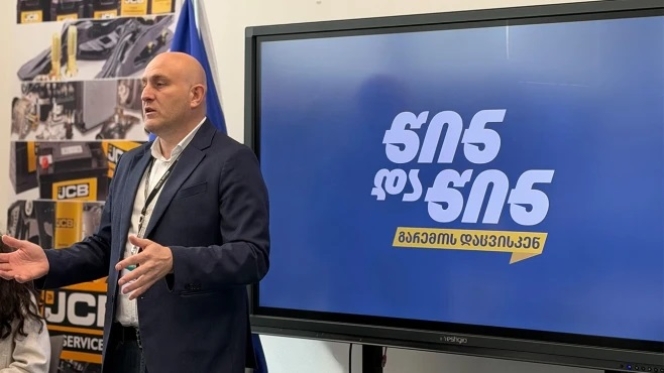
Tegeta Green Planet opened the Light Vehicle Diagnostics course at Tegeta Academy with a presentation for attendees aged 17 to 33. Beyond their chosen vocational field, participants learned about automotive waste management and environmental responsibility.
Shalva Akhvlediani, the organisation’s director, outlined its activities and goals while emphasising Extended Producer Responsibility. The session examined how the automotive sector connects to environmental duty and why used tyres, waste oils and automotive batteries must be collected and managed properly.
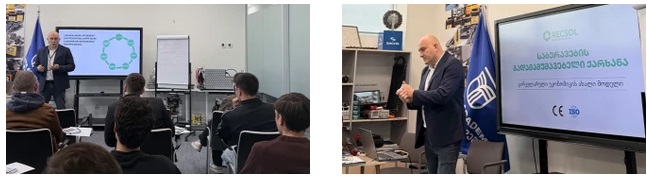
Tyre management and RECSOL featured prominently. Attendees traced a used tyre’s path from collection to recycling and learned how waste becomes a source of new resources. RECSOL, Tegeta’s tyre recycling plant, is a significant infrastructure project in used tyre recycling, processing tyres into materials for various uses and supporting circular economy principles.
A core aim is a system where waste is not an endpoint but the starting point for new resources, which requires infrastructure alongside greater public awareness and information on proper disposal. For participants, the meeting linked professional education with environmental awareness, stressing that future automotive professionals should understand this responsibility early.
Tyres Europe Joins Industry Call To Rethink CBAM Scope Extension
- By TT News
- October 08, 2026
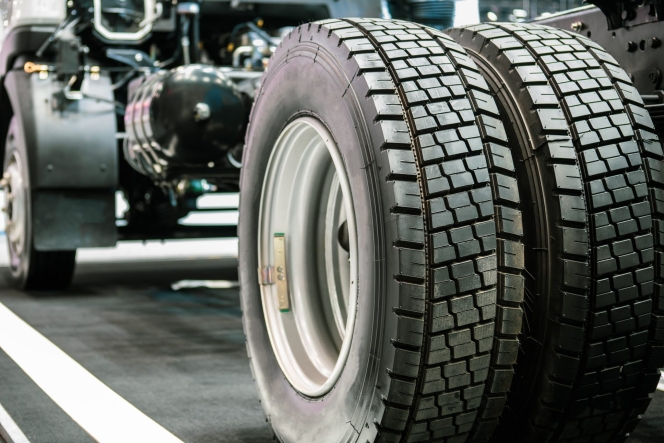
Tyres Europe, alongside ACEA (the European Automobile Manufacturers’ Association) and CLEPA (the European Association of Automotive Suppliers), has dispatched a joint communication to EU decision-makers concerning the possible broadening of the Carbon Border Adjustment Mechanism (CBAM) to cover downstream goods. The move comes as trilogue discussions approach.
Tyre producers form part of an automotive value chain already bearing carbon-related expenses for steel and aluminium manufactured within Europe. The proposed expansion would draw additional products into the mechanism’s remit before the existing framework has demonstrated its effectiveness. Resulting costs and administrative requirements would land on downstream manufacturers, tyre makers included, with signatories cautioning that a conceptually sound regulatory effort could become an operational and financial strain.
Endorsing the mechanism’s aims, the signatories nonetheless urge a proportionate scope that shields the entire value chain from carbon leakage while preventing that risk from being pushed further downstream. They advocate extending the mechanism only where a material carbon-leakage danger is evidenced, and request that policymakers ease compliance demands, including via more fitting default values mirroring real production routes.
NEXEN TIRE Renews Zalgiris Deal, Expanding Brand Visibility Across Europe
- By TT News
- October 08, 2026
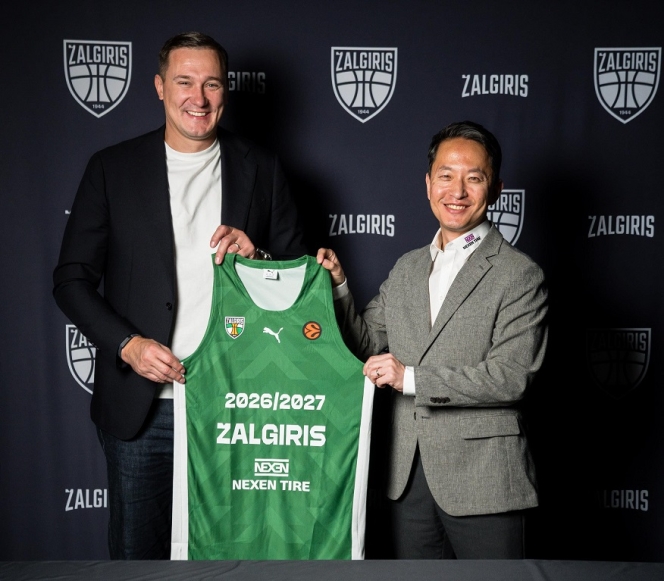
NEXEN TIRE has extended its partnership with Zalgiris, reinforcing its commitment to basketball in Europe, particularly across the Baltic region. The renewal builds on a relationship that began in 2024 and reflects the company’s broader strategy of linking its brand to performance, innovation and mobility.
The tyre maker has pursued sports partnerships as a way to connect with fans, sharing in the passion and excitement of supporting favourite teams during major matches and memorable moments. It also values the teamwork, dedication and collective achievement that define team sports, using such ties to build authentic connections and deepen engagement in key European markets. Its collaboration with clubs including Zalgiris and FC Bayern München forms part of this approach.
Under the extended agreement, NEXEN TIRE will gain greater visibility among sports fans in the region. The partnership offers branding opportunities at Zalgirio Arena, such as synchronised on-screen advertising and promotion on LED stands near the court, in a position visible on television during EuroLeague and LKL home games.
The arrangement also includes a hospitality programme allowing NEXEN TIRE to welcome guests and business partners at Zalgiris home fixtures. Through the strengthened alliance, the company aims to share its passion with more fans while raising brand awareness across the region.
Ricky Lee, Managing Director, NEXEN TIRE Poland, said, “Our cooperation with Zalgiris has developed positively since 2024, and we are pleased to extend and strengthen this partnership. Basketball has a particularly strong following in the Baltic region, making Zalgiris an important partner as we continue to grow our presence and engage with fans. We look forward to supporting the team throughout the season and doing our best to create positive experiences for both the players and their passionate fans.”
Paulius Jankunas, President, Zalgiris, said, “We are delighted to continue our cooperation with NEXEN TIRE and build on the partnership we started two years ago. NEXEN TIRE brings extensive experience in sports marketing, and we are proud to work together on creating meaningful projects and experiences for our fans. We look forward to another successful period of cooperation and to welcoming NEXEN TIRE’s guests and partners to our games and events.”
TBC Corporation Expands Multi-Mile Tyres Portfolio With Four New Lines
- By TT News
- October 08, 2026

TBC Corporation, one of North America’s largest marketers of automotive replacement tyres through wholesale and franchise operations, has widened its tyre portfolio through the addition of four new lines under the Multi-Mile Tyres banner. Serving as a value step-up brand, Multi-Mile gives dealers a strong mix of broader product coverage and improved consumer advantages crafted to drive better retail margins, helping retailers offer greater value while lifting profitability. With this expansion, the portfolio now reaches over 85 percent of the vehicle market, offering dealers more ways to satisfy customer demand.
Among the additions are tyres built for rugged and mud terrain use, boasting self-cleaning treads that push out mud and stones alongside dependable traction both on and off the road. Also joining the range are commercial and C-metric speciality tyres tailored to heavy-duty regional and long-haul trucks, together with all-weather tyres that hold the 3-Peak Mountain Snowflake severe snow rating and are made for high mileage and consistent year-round use.
A prominent name in the replacement tyre segment, Multi-Mile carries cutting-edge touring, high-performance and broad-line tyres suited to passenger cars, light trucks and SUVs. Meanwhile, the upgraded Mile After Mile Protection Plan warranty now delivers broader coverage, adding three-year roadside assistance, a three-year road hazard protection plan and a 60-day ride guarantee on top of its extensive treadwear warranties.
Rachel Tibor, Chief Marketing Officer, TBC Wholesale, said, “For more than 70 years, Multi-Mile products have offered cost-efficient, reliable and durable tyre options that enhance safety and performance. With this expanded portfolio, Multi-Mile strengthens its position as a value step-up brand, giving dealers more opportunities to meet evolving consumer needs while offering a product mix designed to support stronger retail margins. We’re continuing our longstanding tradition of supplying the right products at the right time for every type of vehicle and application.”

Comments (0)
ADD COMMENT