

Tyre Industry Welcomes GST cut; Retreading Cries Foul
- By Sharad Matade and Gaurav Nandi
- September 05, 2025
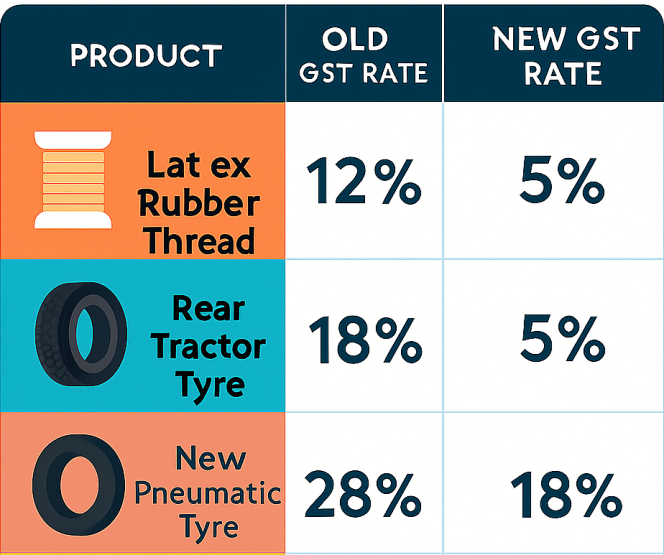
The GST Council’s 56th meeting delivered major relief for India’s tyre industry, slashing rates on new pneumatic tyres to tractor tyres. The move, aimed at reducing input costs and supporting rural demand, has been welcomed by manufacturers, though retreaders caution the reforms risk sidelining sustainability.
Sharad Matade and Gaurav Nandi
The Goods and Services Tax (GST) Council, in its 56th meeting, lowered the GST rates on a range of tyre and rubber products on Thursday, in a move aimed at easing input costs for the farming community and providing a much-needed relief to the domestic tyre manufacturing sector.
The decision, taken by the GST Council, reflects the government’s strategy of supporting rural demand while simultaneously addressing industry grievances over high taxation and duty anomalies.
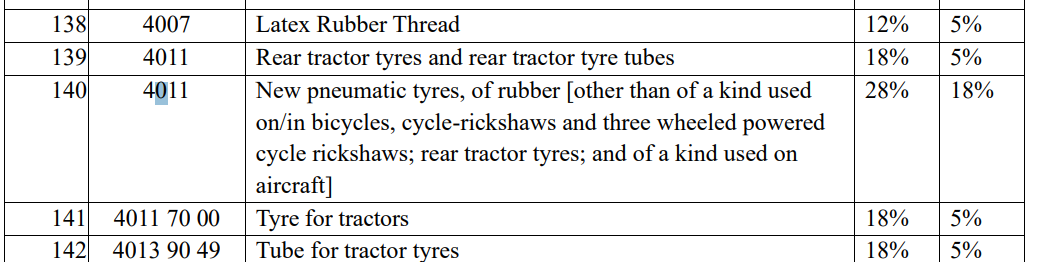
One of the headline changes is the reduction of GST on latex rubber thread, which has been cut from 12 percent to 5 percent. Similarly, tyres and tubes used in tractors, a critical expense for farmers, have seen their GST rates slashed from 18 percent to just 5 per cent.
Rear tractor tyres and their corresponding tubes, along with tyres specifically meant for agricultural tractors, will also benefit from this lower rate.
The most significant change for the industry is the decision to reduce GST on new pneumatic tyres of rubber, excluding those used in bicycles, cycle-rickshaws, aircraft, and tractors, from the highest slab of 28 per cent to 18 percent.
Automotive Tyre Manufacturers’ Association (ATMA) welcomed the decision, stating, “Lower GST on tyres will translate into more affordable mobility for millions of users, starting from farmers and small traders to transporters, motorists and logistics operators. It will also help bring down vehicle operating costs, which in turn reduces overall logistics expenses in the economy,” said ATMA Chairman Arun Mammen.
ATMA further noted that the reduction in GST rates on tyres will support road safety. High prices often discourage vehicle owners from timely tyre replacement, leading to extended use of worn-out tyres, which is a known risk factor for accidents. With the tax burden eased, tyre affordability will improve, encouraging motorists and fleet operators to replace tyres at the right time, thereby enhancing vehicle and passenger safety on roads.
Industry reactions
According to ICRA, the GST rate cut on most tyre categories is expected to boost domestic replacement demand, which makes up nearly two-thirds of India’s tyre market. Lower operating costs will benefit transport operators, improving fleet profitability and cash flows, while reduced logistics costs across industries are set to fuel aftermarket demand.
In addition, lower GST on new vehicles in entry-level, mid-range, and tractor segments should support OEM tyre demand through higher production and sales. The cut on tyre cord fabric, though a small cost component, is also margin-accretive.
In addition to the broad restructuring of tyre-related tax slabs, the GST Council has also moved to reduce the levy on key raw materials used in tyre production. Tyre cord fabric of high tenacity yarn, whether made of nylon, other polyamides, polyesters or viscose rayon, will now attract a Goods and Services Tax of 5 percent, down from the earlier 12 percent.
Exuding optimism on the move, CEAT Chief Executive Officer Arnab Banerjee noted, “We welcome the GST Council’s decision to rationalise tax rates in the tyre sector. The reduction of GST on new pneumatic tyres from 28 percent to 18 percent and the further relief for tractor tyres and tubes to 5 percent, is a progressive step that will significantly benefit the industry. This reform will make tyres more affordable for customers across commercial, agricultural and passenger vehicle segments, while also supporting rural mobility through lower input costs for farmers.”
Commenting on the market impact of the revised rates, Partner and Automotive Tax Leader at EY India for the Auto sector, Saurabh Agarwal, said, “The rationalisation of GST rates on automotive vehicles and parts is a truly welcome and significant development. By making vehicles more affordable across all segments, this move will not only boost consumer spending but also simplify complex classification disputes that have long burdened the industry. The discontinuance of the cess is a particularly pragmatic step, which will provide much-needed support to a sector that is a vital contributor to our nation’s GDP.”
Commenting on the development, Shantanu Deshpande, Chairman, CII Task Force on Tyre and Managing Director, Michelin India, noted, “Thanks to the government for reducing GST rates on important products, including tyres. These changes will help lower costs for manufacturers and make tyres more affordable for consumers, while also enabling simplification and ease of doing business for the tyre industry. These changes complement the robust growth and improvement made in our road infrastructure and will further boost the growth of the industry. The new rates will support local manufacturing, encourage investment, increase business volumes and help India become more self-reliant in tyre manufacturing. We deeply appreciate this enabling decision.”
Commenting on the issue, Senior Vice President, India & SAARC, Yokohama-ATG, Anuj Thakar, said, “The cut in GST from 18 percent to 5 percent on tractor tyres and tubes and 28 percent to 18 percent on new pneumatic tyres is a historic reform that will directly benefit the farmers and off-highway tyre customers in India. As makers of Alliance and Primex Tires, we see this GST reduction as an opportunity to assist our consumers in choosing the right application-specific mobility solutions at lower operating costs.”
Retreaders’ woe
While the council’s move is slated to benefit the OE and aftermarket, retreaders aren’t happy.
Tyre Retreading and Education Association Chairman Karun Sanghi said, “The GST on retreading remains stuck in the same slab despite representations to the GST Council even two weeks ago. The government promotes recycling and reducing carbon footprint, but has overlooked retreading in its policies. Tractor tyres have GST reduced to 5 per cent, while retreading is still at 18 per cent. This narrows the price gap between new and retreaded tyres, hurting demand for retreading and undermining recycling and carbon goals. Ideally, GST on retreading should have been reduced to 5, in line with new tyres.”
Currently, 80–90 percent of the retreading market is truck tyres, while 10–15 percent is farm, OTR and tractor tyres. The industry expects a significant impact on the tractor and commercial segments.
However, Sanghi noted that as an association, they will continue to approach the government, highlighting the retreading and environmental benefits, though lobbying power is far weaker compared to other organisations in the industry, which may explain why retreading’s concerns are often sidelined.
While the GST cuts mark a win for tyre makers and farmers, retreaders remain burdened by an unchanged rate. This threatens recycling demand and carbon reduction efforts even as affordability improves for new tyres. The industry now looks to the government for parity that balances growth with environmental goals.
Linglong Tire Spotlights Growth Strategy And New Products At Milan Partner Conference
- By TT News
- October 20, 2026
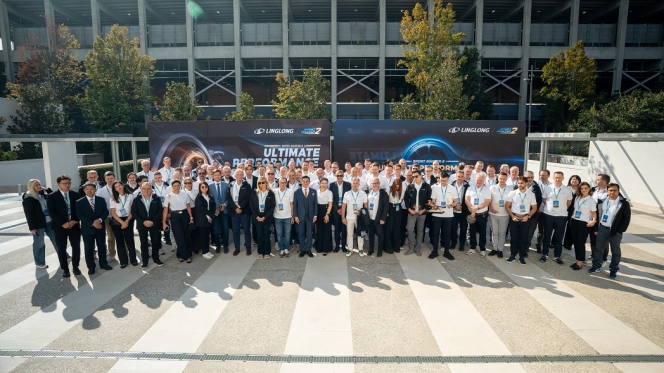
Linglong Tire convened 120 European dealers in Milan from 10 to 13 October for its European Partner Conference, where CEO Lingkun ‘Andy’ Zhou and Vice President Yongchao ‘Aaron’ Xu outlined the company's latest developments, fiscal performance and future strategy. Zhou noted that despite a difficult and volatile market, Linglong achieved sales growth in the first half of 2026, crediting close cooperation with its European distribution partners.
Global Marketing head Kai You introduced the upcoming ‘Linglong Hub’ dealer programme, which offers quantity-based unit bonuses and tailored marketing packages such as POS materials to support in-shop sales. Andreas Krause, Head of Research and Development in Europe, presented forthcoming products from the Linglong, Crosswind and Leao brands, available from spring 2027, including the all-season Dura Master Van 4S and Leao Nova Force Van 4S for vans and campers, alongside the flagship UHP Linglong Sport Master 2.
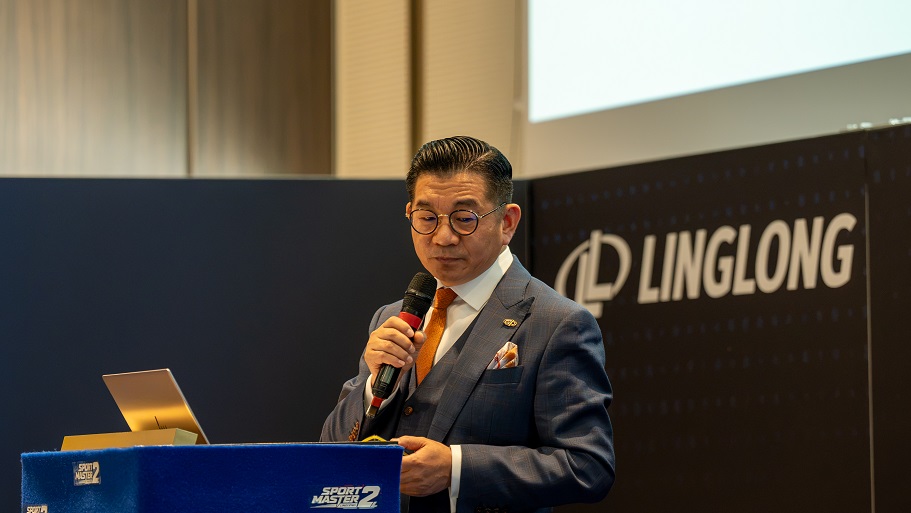

Guests then travelled to Villongo, northeast of Milan, for the official opening of Western Europe's first Linglong Tire Center, inaugurated by Zhou together with Sebino Pneus owner Gigi Pezzotta and Fintyre Sales Director Renato Paghera. The fully branded facility is seen as a benchmark for further centres planned across Italy and Europe. The day continued at the Alfa Romeo Museum, a Stellantis brand and key original equipment customer, ending with a gala dinner featuring live Italian music.
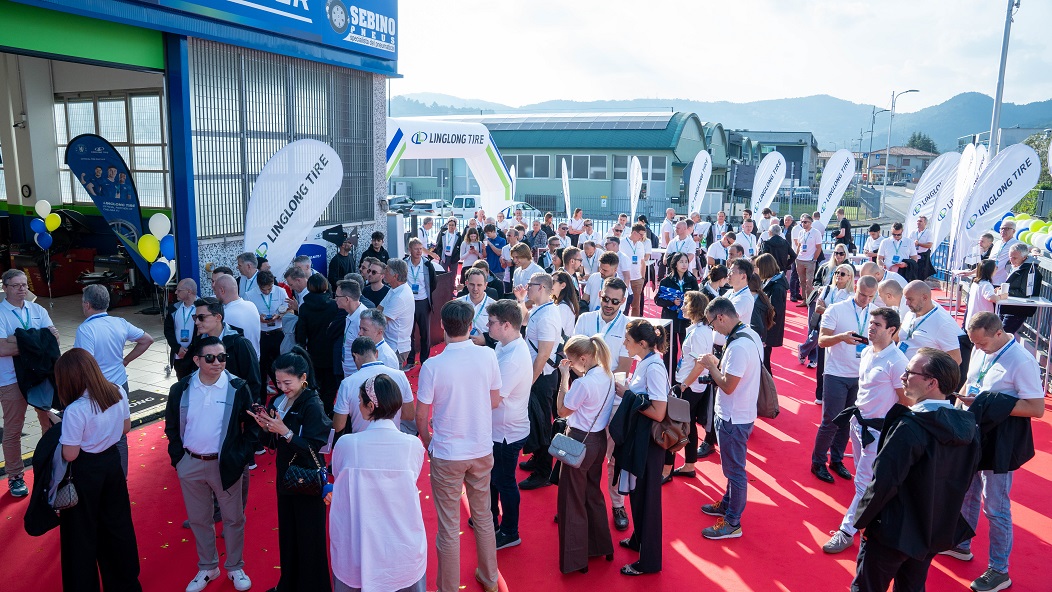
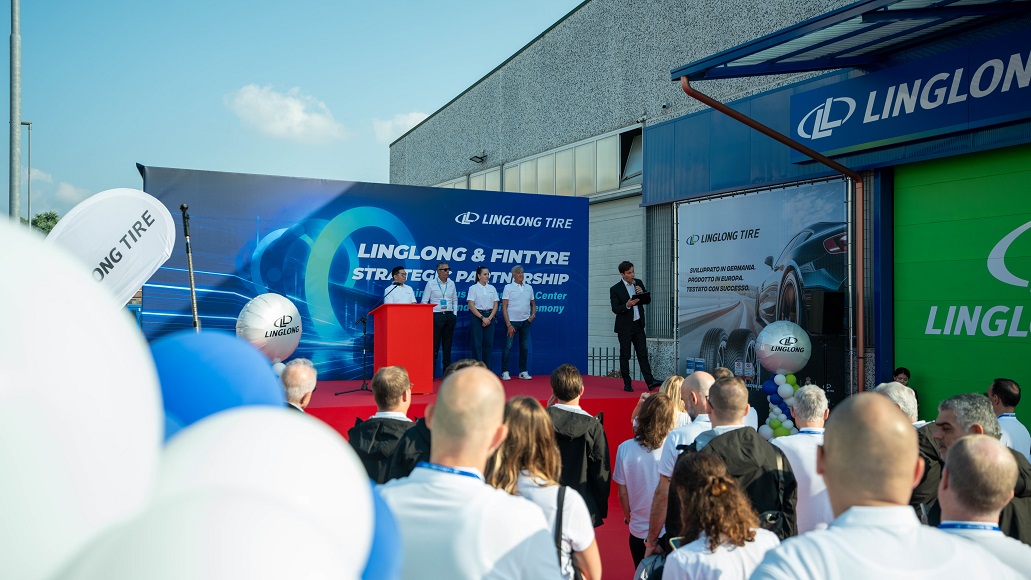
The following day, dealers tested the Sport Master 2 at the Balocco test site near Milan, a 550-hectare facility with over 80 km of track, using various Mercedes-Benz and AMG models before a race taxi ride with a professional driver. The event closed with dinner and a dance and music show at El Porteno, setting the stage for the 2027 conference in London.


Infiniteria Europe, Aliapur Sign MoU On End-Of-Life Tyre Supply For French Recycling Plants
- By TT News
- October 20, 2026

Infiniteria Europe and Aliapur, a French State-approved eco-organisation, have signed a Memorandum of Understanding to pursue an agreement for supplying end-of-life tyres to two planned Infiniteria recycling plants in France. The MoU outlines intentions for a long-term supply arrangement in which Aliapur would furnish the end-of-life tyres needed to operate both facilities.
The agreement creates a framework for a secure, reliable and sustainable long-term supply chain and provides a foundation for continued development of both projects. Shortlisted sites are being assessed, with environmental impact studies under way. The partnership marks a significant milestone for the projects and reflects both companies’ shared commitment to recovering valuable secondary raw materials from end-of-life tyres, developing more circular industrial value chains and increasing tyre recycling capacity in France.
The collaboration combines Aliapur’s material recovery experience with Infiniteria Europe’s recycling solution development expertise. Both companies aim to build a strong long-term partnership supporting tyre recovery and recycling in France, and they look forward to further strengthening their collaboration as the projects advance through subsequent development stages.
Kajsa Ryttberg-Wallgren, CEO, Infiniteria Europe, said, “This MoU brings our two planned plants in France one step closer to realisation. They will form an important part of our broader ambition to build Europe’s leading business in circular tyre recycling, transforming end-of-life tyres into valuable resources for new uses.”
Mathieu Chardin, Managing Director, Aliapur, said, “Aliapur is proud to have been selected by Infiniteria Europe, an industrial company with proven expertise in tyre pyrolysis technology, as a strategic partner for the supply of raw materials to its future plants in France. This partnership also supports our commitment to France’s reindustrialisation and ecological transition, two priorities at the heart of the Government’s strategy for a more resilient, competitive and sustainable industry.”
- ETRTO
- European Tyre and Rim Technical Organisation
- European Tyre Rim and Valve Technical Organisation # Rebranding
ETRTO Adopts New Name, Elects Leadership At 62nd General Assembly
- By TT News
- October 20, 2026
ETRTO held its 62nd General Assembly on 2 October in Nantes, France, drawing strong attendance from Full members and Experts, alongside the TNPF (Travaux de Normalisation des Pneumatiques pour la France) team, UNECE GRBP Chairman, a JATMA delegation and several Honorary members.
The Assembly approved a name change from European Tyre and Rim Technical Organisation to European Tyre, Rim & Valve Technical Organisation while retaining the ETRTO acronym. It also endorsed all 80 Technical Subcommittee resolutions, set for inclusion in the 2027 Standards Manual and Engineering Design Information publications, and amendments to ETRTO Recommendations, due for free publication on the ETRTO website in five languages.
Christian Lerner (Continental) and Peter Roest (Apollo) were elected President and Vice President, respectively, for 2027. Presentations covered UNECE GRBP tyre regulatory trends and TNPF’s role in the French regulatory landscape, while Technical Subcommittee chairmen outlined activity highlights and future trends. ETRTO also demonstrated its new Data Portal, available for the Passenger Car tyre section from early 2027.
Appreciation was extended to Jérôme Barrand (Michelin, current ETRTO President) for organising the Assembly and to TNPF for hosting the Gala Dinner. The 63rd ETRTO General Assembly is scheduled for 1 October 2027.
- Sri Trang Group
- Sri Trang Agro-Industry
- Sri Trang Gloves
- Securities and Exchange Commission
- Employee Financial Literacy
Sri Trang Group Earns SEC Recognition For Employee Financial Literacy Push
- By TT News
- October 19, 2026
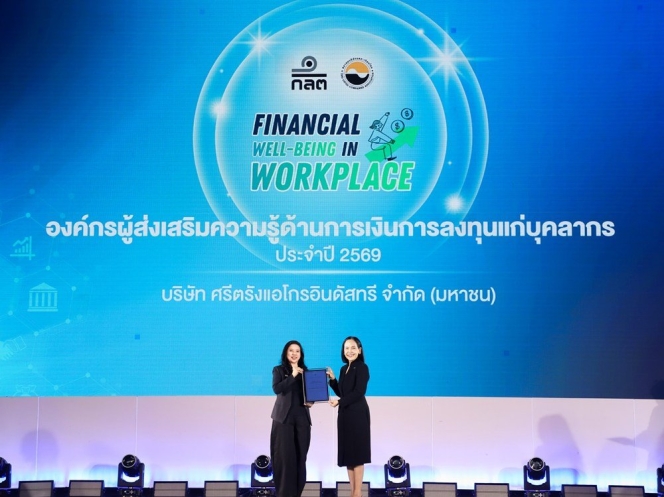
Sri Trang Group has been recognised by the Securities and Exchange Commission (SEC) for its efforts to promote financial and investment literacy among employees. Pacharin Anuwongwattanachai, Company Secretary of Sri Trang Agro-Industry Public Company Limited (STA), and Thanawan Sa-ngiamsak, Chief Financial Officer of Sri Trang Gloves (Thailand) Public Company Limited (STGT), accepted the ‘Organization Promoting Financial and Investment Literacy for Employees’ certificates on behalf of their respective companies. The ceremony, held under the SEC's Financial Well-being in Workplace project, took place at the Royal Thai Army Club on Vibhavadi Rangsit Road in Bangkok on 9 October 2026.
The SEC accolade underscores Sri Trang Group's dedication to sustainable business practices, especially the social pillar of sustainability that prioritises comprehensive care for employees' quality of life and well-being. STA advances financial, investment and savings literacy through structured and ongoing financial education programmes. All eight categories of the SEC's online financial and investment lessons have been integrated into the companies' self-learning platforms, allowing staff to build skills independently. Training sessions with SEC experts cover financial and investment planning for salaried employees as well as retirement planning for those aged 50 and above and investment planning tailored to individual needs.
Disciplined saving is further encouraged through income and expense tracking, financial health check-ups and discussion groups in which employees exchange insights on managing provident fund investments with expert guidance. These measures help staff strengthen financial security, ease financial worries and sustainably improve the quality of life for themselves and their families. The approach reflects the Group's care for its people alongside its commitment to good corporate governance, aligning with annual reporting disclosures and the corporate governance assessment criteria for Thai listed companies.

Comments (0)
ADD COMMENT