

From Tyre Waste To Sustainable Infrastructure: IIT Bombay’s Vision For A Greener Future
- By Nilesh Wadhwa
- December 17, 2025
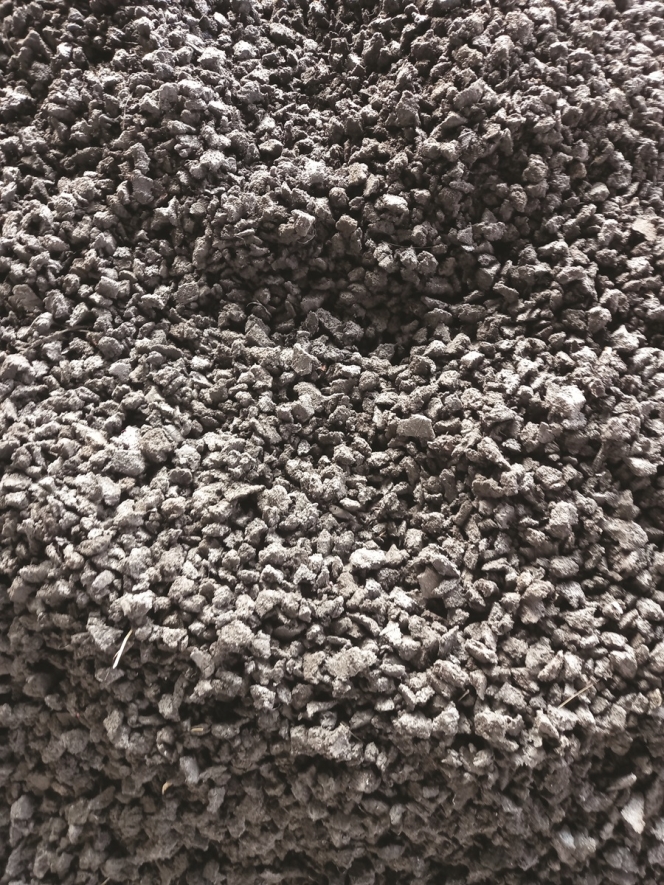
As the world grapples with the environmental challenges of discarded tyres, IIT Bombay researchers are developing sustainable solutions by repurposing waste rubber into innovative construction materials. Nilesh Wadhwa reports on how their work not only aims to mitigate landfill waste but also offers unique thermal, electrical and structural benefits for future infrastructure.
With over a billion tyres discarded globally each year, the world faces an escalating crisis in managing tyre waste. Beyond the mounds of rubber in landfills, the environmental and health hazards from tyre degradation, microplastics and toxic emissions are profound. However, a team of researchers at the Indian Institute of Technology (IIT) Bombay is charting a sustainable path forward. By transforming waste tyres into innovative construction materials – Rubcrete, which is a form of concrete mixed with shredded waste tyres. This is said to not only provide strength to the material but also make it more environmentally friendly. The idea is to turn an environmental problem into a valuable resource for civil engineering.
In an interaction with Tyre Trends, Prithvendra Singh, a principal researcher at IIT Bombay, explained the motivations behind this ground-breaking research. “The main aim of this research was to address the dual challenge of excessive end-of-life tyre (ELT) accumulation and the unsustainable depletion of natural aggregates due to ever-rising demand in infrastructural development,” he stated.
By converting waste rubber into engineered rubber aggregates (RA) and rubber-plastic blends (RPB), the team seeks to not only reduce landfill dependency but also enhance the sustainability of construction materials.
This pioneering approach is timely. The sheer scale of tyre waste, with millions of tonnes generated annually, has far-reaching consequences. Tyres are durable, non-biodegradable and pose serious fire hazards.
“One of the most overlooked issues is the generation of microplastics and toxic volatile compounds through tyre wear and tear, degradation, weathering or fires. Landfilled rubber fires can take months to extinguish and result in the emission of carcinogenic gases. These pose risks to human health and ecosystems, and their long-term contamination potential – especially via water, soil and air – is often overlooked in conventional waste management frameworks,” emphasised Singh.
FROM LAB TO FIELD
The IIT Bombay team’s research has revealed promising properties in both RA and RPB, which could revolutionise the use of secondary materials in civil engineering.
Singh elaborated on the mechanical characteristics, “RA and RPB exhibit significantly lower stiffness and higher deformability than natural aggregates, which makes them suitable for specific geoenvironmental applications but limits their use under high structural loads.”
 While these properties may exclude them from load-bearing infrastructure, they open up opportunities in other areas. “Despite their lower mechanical strength, both materials demonstrate promising insulation characteristics and environmental safety under controlled conditions,” Singh added.
Thermal and electrical insulation capabilities are where these materials truly shine. “Both RA and RPB have superior thermal resistivity compared to standard sand, confirming their suitability for thermal insulation. Electrically, dry RPB shows the lowest conductivity, making it highly suitable for electrical insulation applications. Both materials also act as excellent dielectric materials over a broad frequency range,” Singh explained.
These characteristics make them ideal for construction projects where insulation and resistance to extreme temperatures or electrical fields are critical, such as in utility corridors or specialised building applications.
However, the journey from laboratory research to real-world applications is not without its challenges. “The lower stiffness of RA leads to higher vertical deformation under applied loads, making them less suitable for high-load applications such as base layers of highways,” Singh pointed out.
“However, they are ideal for lightweight fill applications like embankments or drainage layers, where flexibility and energy absorption are more beneficial than stiffness,” he added.
This insight highlights the potential for using RA and RPB in applications where traditional materials fall short, such as in earthquake-prone regions or on unstable soils where flexibility can mitigate damage. The process of creating RA and RPB depends heavily on the methods used to shred and process waste tyres.
SHREDDING METHODS: BALANCING COSTS AND PERFORMANCE
Singh outlined the pros and cons of various shredding technologies. “Ambient shredding is cost-effective but produces rough-surfaced particles, which exhibit better interaction in cement and polymer composites,” he noted. “Cryogenic shredding yields smoother particles with a broader size distribution but poorer bonding characteristics, and the created particles are generally suitable for turf or sports surfaces. Water-jet grinding offers finer control over particle size but comes at high energy and equipment costs.”
Each method results in materials with distinct properties, influencing their performance in construction applications.
Real-world validation is a crucial step in advancing this technology. To this end, IIT Bombay has partnered with GRP India, a leader in rubber recycling.
“We are currently collaborating with GRP to venture into production and field applications of these sustainable aggregates,” Singh revealed. “This partnership provides a foundation for scaling up through industrial-grade shredding, blending and real-world performance validation.”
These collaborations not only bring academic research closer to commercial implementation but also offer a model for future partnerships between academia and industry.
Of course, environmental safety remains a central concern in adopting new construction materials, especially those derived from waste. Leaching of metals and organic contaminants can pose long-term risks if not properly managed.
Singh’s team addressed these concerns through rigorous testing. “ICP-AES analysis showed that heavy metals like Pb and Zn are present in low concentrations, well within permissible limits,” he reported. “Previous studies corroborate that such materials typically stay within permissible toxicity limits under standard conditions. However, long-term leaching behaviour under varied field conditions remains necessary to confirm safety under varying environmental exposures.” This underscores the need for comprehensive testing and monitoring to ensure environmental safety.
THE ROAD AHEAD
Looking forward, IIT Bombay’s research agenda is ambitious. Singh described plans for further experimentation to expand the applications of RA and RPB. “We are currently planning long-term loading-unloading experiments and elevated temperature testing to establish the thermo-mechanical response of RA and RPB under realistic field stresses,” he said. “These experiments aim to address limitations in durability data and expand application potential. Also, future experiments will simulate realistic landfill environments, including interactions with leachate, microbes, humidity and temperature, to understand long-term behaviour.” Such studies will be essential for certifying these materials for broader use in civil engineering.
Could tyre-derived materials eventually replace traditional aggregates in certain applications? Singh is optimistic. “Yes, particularly in non-structural or semi-structural applications such as leachate drainage layers, landfill covers, thermal insulation barriers and lightweight embankments. The lightweight, high porosity and insulation capabilities of the RA and RPB present unique advantages that traditional aggregates cannot provide,” he said.
This vision aligns with global efforts to promote circular economies and reduce reliance on finite natural resources.
Responding to his expectations from the industry, Singh stated that stakeholders need to support the integration of sustainable materials into mainstream construction.
“The message I would like to convey to the academicians, tyre industry stakeholders and policymakers is to embrace innovation through cross-sectoral collaboration. Sustainable solutions like RA and RPB not only offer environmental remediation but also open new markets for green construction materials. With the right policy incentives, certification frameworks and industry support, we can mainstream these materials and accelerate the transition towards a circular, resilient economy,” he said.
IIT Bombay’s work exemplifies how innovative research, when coupled with industry collaboration and policy support, can turn a pressing environmental problem into a sustainable solution. By reimagining waste as a resource, Singh and his team aim to not only address the tyre waste crisis but also lay the groundwork for more resilient and eco-friendly infrastructure in the future.
Grismer Tire & Auto Service Appoints New CEO And CFO
- By TT News
- September 28, 2026

Grismer Tire & Auto Service, a tyre and automotive service centre operator backed by CenterOak Partners LLC, has named Chris Blanchette as Chief Executive Officer and Mark Hedstrom as Chief Financial Officer. The announcement marks a significant leadership transition for the portfolio company.
Blanchette arrives with over two decades of senior leadership experience in multi-site consumer services, specialising in operations, strategy and business development. He most recently served as Chief Executive Officer of Service Minds, a residential electrical, plumbing and HVAC services provider. His background also includes serving as Chief Operating Officer of QAS, which operates Valvoline Instant Oil Change locations, along with senior operational positions at Advance Auto Parts, Bridgestone Retail Operations and Best Buy.
Hedstrom brings more than three decades of finance expertise to his new role. He previously held the Chief Financial Officer position at W.S. Connelly & Co., a multi-regional specialty distributor, and has also served as Chief Financial Officer for several private equity-backed consumer and distribution companies.
Eric Holter, Managing Director, CenterOak, said, “Chris Blanchette brings highly relevant leadership experience in the automotive aftermarket. He has led complex, multi-location organisations and understands how to translate operational discipline into sustainable growth. Together, Chris and Mark add important depth to Grismer’s leadership team as the Company pursues expansion in existing and new markets.”
Blanchette said, “Grismer’s 90-year history and the trust it has earned with customers set the Company apart. I am excited to join a business with such a strong legacy and see significant
- International Rubber Conference
- Society Of Rubber Science And Technology Japan
- James Busfield
- Nobuyuki Tamura
- Bridgestone Corporation
- Japan Rubber Manufacturers Association
- Aichi International Exhibition Center
- Aichi Sky Expo
Japan To Host International Rubber Conference After Decade-Long Gap
- By TT News
- September 25, 2026
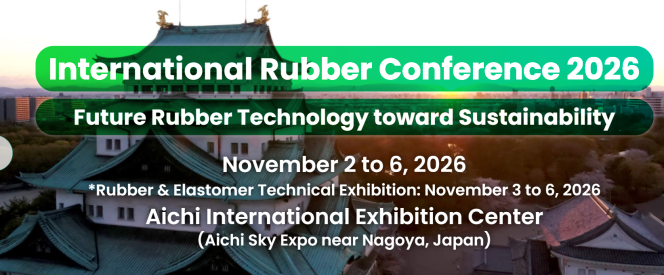
The International Rubber Conference (IRC) will return to Japan in November for the first time in a decade, with more than 271 technical presentations and over 117 exhibitors expected to take part.
The event, known as IRC 2026 Aichi, will be hosted by the Society of Rubber Science and Technology, Japan, alongside the Rubber & Elastomer Technical Exhibition in Aichi. It is scheduled to run from 2nd to 6th November, with the exhibition opening a day later and continuing until 6th November .
Held at the Aichi International Exhibition Center, also known as Aichi Sky Expo, the venue is located near Chubu Centrair International Airport and can be reached from Nagoya Station in about 28 minutes by train.
The conference programme will feature more than 271 presentations spanning rubber science, technology and industrial applications. Participants include James Busfield of Queen Mary University of London and Nobuyuki Tamura of Bridgestone Corporation, who also chairs the Japan Rubber Manufacturers Association. More than 400 delegates have already registered.
Running alongside the conference, the Rubber & Elastomer Technical Exhibition will host more than 117 exhibitors, ranging from raw material suppliers and machinery manufacturers to tyre makers and testing-equipment providers. The exhibition will be open to visitors free of charge.
The International Rubber Conference, first held in 1966, rotates annually across global host cities. The last event in Japan took place in Kitakyushu in 2016, with subsequent editions held in Haikou, Istanbul and Bangkok.
Pirelli Board Approves EUR 1 Billion US Investment Plan And Organisational Restructuring
- By TT News
- September 23, 2026
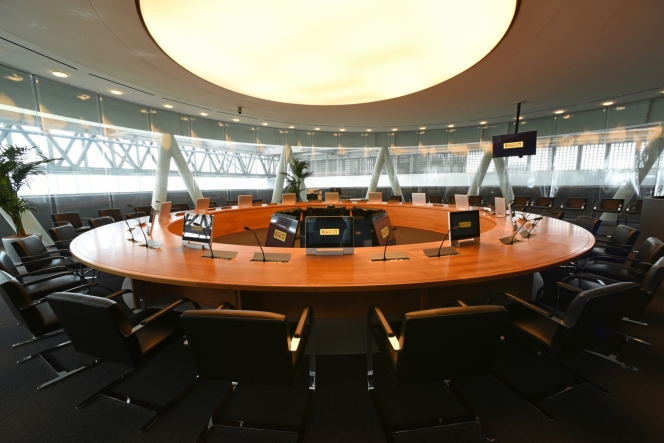
Italian tyre major Pirelli has announced a multi-year investment plan worth approximately EUR 1 billion (USD 1.2 billion) to expand its manufacturing facility in Rome, Georgia in the United States. The motion passed by majority vote, with board members Zhang Haitao, Xi Xiaohong and Wang Kun voting against the proposal.
The capital expenditure program, scheduled to begin in 2027 and will go through 2033, aims to expand annual production capacity at the Georgia site to six million tyres and create approximately 1,000 jobs.
The United States represents the largest market for high-value tyres globally, accounting for roughly 40 percent of global volumes. The project will be carried out in two phases without altering Pirelli's financial targets for 2026.
Phase one of the expansion will introduce modular robotised production systems based on Pirelli's Modular Integrated Robotised System technology, scaling annual output to three million tyres starting in 2028.
In phase two, the company will begin construction of an automated production facility to add three million units of annual capacity. The expanded plant will produce connected tyre systems, including Cyber Tyre technology, following market authorisation granted by the US Bureau of Industry and Security under Italy’s 2026 Golden Power Decree.
Alongside the investment decision, the board approved an organisational restructuring resulting in the immediate elimination of the Corporate General Management function. As part of the changes, Corporate General Manager Francesco Tanzi will step down from his executive role, maintaining an employment relationship through 31 December 2026 to facilitate the leadership transition.
Under the terms approved by the board and the Remuneration Committee, Tanzi will receive a severance payment equivalent to 13 months’ remuneration, payable by February 2027, alongside accrued rights under existing short-term and long-term incentive plans. He has agreed to a two-year non-compete covenant covering Pirelli's primary operating regions in exchange for 130 percent of his gross annual salary, paid in eight quarterly instalments. Following the end of his employment, Tanzi will provide advisory services under a two-year consultancy contract with an annual fee of EUR 350,000, plus non-monetary benefits valued at EUR 45,000.
Bridgestone Appoints Stefano Sanchini As President Of Europe Sales
- By TT News
- September 19, 2026
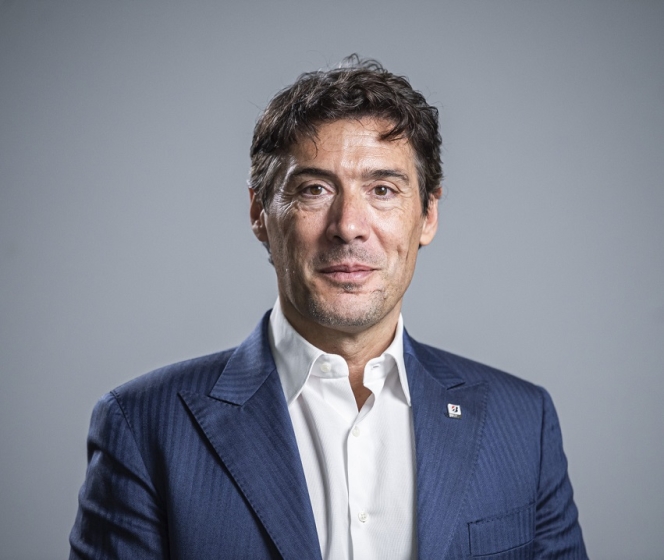
Bridgestone has announced a European leadership appointment aimed at sharpening customer focus, streamlining engagement across product groups and supporting its ongoing growth plans. Stefano Sanchini will become President, Europe Sales, effective 1 October 2026, leading the company’s European sales organisation across both Consumer and Commercial segments.
The expanded role unites sales activities spanning passenger car, truck and bus, agriculture, off-the-road, motorcycle and original equipment. Sanchini brings over 20 years of international leadership experience in the automotive and tyre sectors, with a career covering Europe, Middle East, Africa and India. Since joining Bridgestone in 2017, he has held several senior positions, including Managing Director of Bridgestone India.
Most recently, as Vice President for Consumer Replacement in Europe, he helped strengthen customer engagement, commercial performance, profitability and regional market growth. Bridgestone said the appointment underscores its commitment to customer relationships, commercial execution and simpler cross-market operations. Sanchini will pursue sustainable growth while developing capabilities and partnerships supporting the company’s long-term European strategy.
Mete Ekin, Group President EMEA, said, "Our customers increasingly operate across multiple product categories and expect a consistent experience wherever they engage with Bridgestone. By bringing our sales activities together under one European structure, we are creating a simpler, more connected organisation that will help us respond faster, collaborate more effectively and continue building strong partnerships with our customers."

Comments (0)
ADD COMMENT