

Skyhem Pioneers Bio-Based Process Oils With Zero-Waste Innovation
- By Sharad Matade
- February 19, 2026
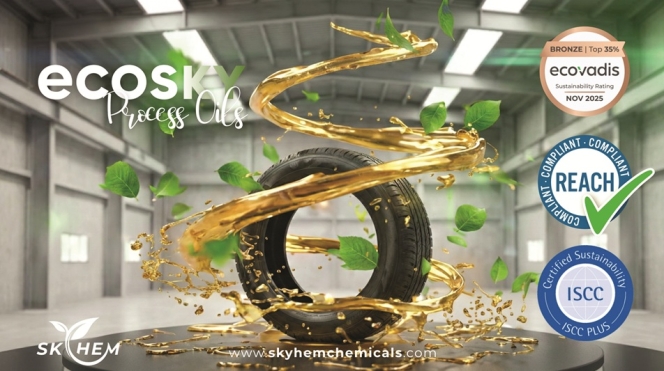
Turkey’s first producer of fully bio-based process oils is challenging industry conventions with a zero-waste approach and performance-driven sustainability. Müge Metinöz, R&D Director, Skyhem, explains how a young Turkish chemicals company is transforming an industry long dominated by petroleum derivatives.
When Müge Metinöz joined Skyhem Kimya at a very early stage of its journey, she brought eight years of experience developing more sustainable tyres, focusing on alternative and non-conventional materials and innovative approaches. Throughout that period, one recurring challenge had become very clear to her: the gap between sustainability ambitions and industrial reality.
“What made Skyhem particularly distinctive and exciting for me was its clear recognition of this gap and its decision to address it not by slightly improving existing systems but by rethinking bio-based process oils from the ground up. The objective was never to offer a ‘greener version’ of petroleum-based products but to develop an alternative that is non-food-chain-based, fully bio-based and capable of performing under real production conditions,” Metinöz says.
That approach was both technically bold and foundational for long-term transformation, she reflects. In the global tyre and rubber raw materials market, Skyhem identified strong demand for solutions that transcend sustainability claims – solutions that are scalable, performance-driven and fully compliant with regulatory requirements.
 “Being part of the development journey of Ecosky process oils represents, for me, an opportunity to contribute to a transformation that delivers real and measurable impact. The strong interest and positive feedback we are receiving today from markets around the world clearly confirm the tangible nature of this need. With Ecosky-3103, my belief continues to grow that we are not simply introducing a new product but actively contributing to a lasting and meaningful shift in the tyre industry’s sustainability transition,” Metinöz explains.
GREEN CHEMISTRY AS FOUNDING PRINCIPLE
From the very beginning, Skyhem was a company with a clearly defined vision. The company was founded in 2023 with a strong emphasis on green chemistry, but for Skyhem, this has never been merely a marketing label.
“For us, green chemistry has never been a marketing label but rather the starting point of all decision-making processes. Already at the foundation stage, key questions – such as which raw materials to work with, which markets to address and which regulations to be prepared for – were shaped in line with this vision,” Metinöz says.
At the same time, having a clear vision does not mean remaining static, she notes. As Skyhem has grown, the company’s vision has evolved into something more tangible, more measurable and more industrially grounded. In the initial phase, the primary focus was to demonstrate that a fully bio-based, non-food-chain process oil was technically feasible.
“Today, that vision has progressed to delivering solutions that are tested on a global scale, compliant with regulatory frameworks and applicable at an industrial scale,” Metinöz says. One of the most important lessons Skyhem has learned throughout this journey is that sustainability only creates real value when it is addressed alongside performance, process compatibility and scalability.
“As a result, Skyhem’s vision has become even more focused with growth: not simply to develop sustainable products but to contribute to the transformation of the tyre and rubber industry through practical, reliable and performance-driven solutions,” Metinöz says.
TURNING GEOGRAPHY INTO ADVANTAGE
Turkey is not traditionally viewed as a centre for bio-based process oil innovation, yet Skyhem has successfully turned this into a strategic advantage rather than a limitation. Although Turkey has a strong chemical engineering infrastructure and technological capability, process oils used in the tyre industry have historically been fully imported.
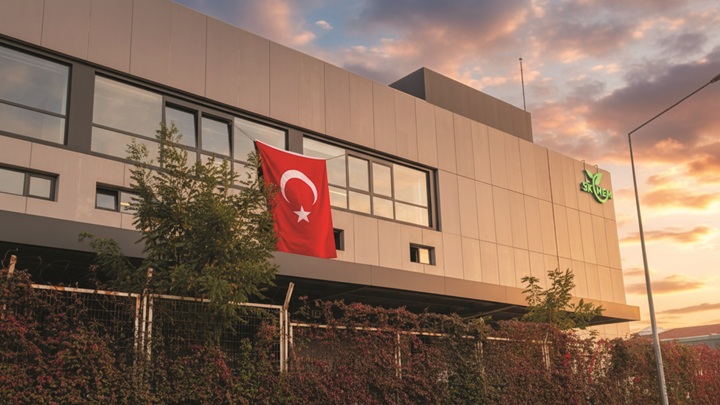
Through its green journey, Skyhem has successfully changed this landscape, establishing itself as Turkey’s first domestic producer in this field. The company’s process oils are 100 percent bio-based, outside the scope of the EU Deforestation Regulation and strictly non-food-chain.
“Our process oils, which are 100 percent bio-based, outside the scope of EUDR and strictly non-food-chain, represent a milestone not only for Turkey but also at a global level. This achievement clearly demonstrates that Turkish engineering can compete internationally in the fields of sustainability and advanced materials technology,” Metinöz says.
Turkey’s strategic geographic position, connecting Europe, Asia and Middle East, provides Skyhem with a significant advantage in accessing global markets efficiently and reliably. Today, with its current production capacity, Skyhem has the potential to meet approximately 41 percent of Turkey’s total process oil demand.
“Taken together, these elements show how Skyhem has reshaped perceptions in this field by transforming Turkey’s geography and engineering strength into a strategic competitive advantage,” Metinöz says.
THE CONSCIOUS CHOICE OF BIO-BASED MATERIALS
Skyhem claims to be Turkey’s first producer of fully bio-based process oils. The decision to move away entirely from petroleum-derived oils was not a necessity for the company but rather a conscious identity choice.
“The decision to move away from petroleum-derived process oils was not a necessity for Skyhem but a conscious identity choice. From the very beginning, Skyhem positioned itself not simply as an alternative to existing systems but as a pioneer of more nature-friendly, greener and long-term sustainable solutions,” Metinöz explains.
This mindset allowed the company to place environmental impact and responsibility at the core of its product development process. From a technical perspective, the main challenge was to achieve critical performance parameters – such as process compatibility, viscosity control, ageing behaviour and compound stability – using bio-based raw materials in tyre and rubber manufacturing.
Ensuring that Ecosky-3103 could be used alongside petroleum-based reference oils without creating compatibility issues on existing production lines was one of Skyhem’s key priorities. In this context, the hybrid use flexibility of Ecosky-3103 has proven to be a significant advantage.
“When required, Ecosky-3103 can be integrated into formulations together with petroleum-based process oils, offering manufacturers a gradual and controlled transition path. This approach makes the sustainability transition more manageable and lower-risk while fully preserving production continuity,” Metinöz says.
From a business perspective, the main challenge was earning market trust in a sector that has historically viewed process oils as an immutable component. Thus, highlighting environmental advantages alone was insufficient.
“It was essential to demonstrate – under real production conditions – that Ecosky-3103 is a scalable, consistent and reliable long-term solution. Today, the fact that leading global tyre and rubber manufacturers have begun to adopt Ecosky-3103 in their production clearly validates this approach. The ability of our products to remain fully compatible with petroleum-based systems while delivering sustainability without compromising performance has positioned Skyhem as a trusted solution partner in the market,” Metinöz says.
RECOGNITION AND DIFFERENTIATION
Ecosky-3103 has been shortlisted for the 2026 TTI Awards for Materials Innovation. In Metinöz’s view, what makes this product stand out in an increasingly crowded sustainability-driven market is not only its bio-based nature.
 “What differentiates Ecosky-3103 is not only that it is bio-based but also that it is a non-food-chain, EUDR-exempt process oil produced at an industrial scale under a zero-waste principle. It can be directly integrated into existing production lines or applied through partial substitution, and its consistency has been proven under real production conditions. Skyhem’s approach has been to position sustainability not as a statement but as an industrially applicable reality,” Metinöz explains.
PERFORMANCE AGAINST ESTABLISHED OILS
From a tyre manufacturer’s perspective, the critical question is how Ecosky performs compared with established low-PAH and TDAE oils across filler dispersion, rolling resistance, durability and ageing behaviour. In studies conducted by Skyhem, Ecosky-3103, compared with TDAE reference oils, demonstrates predictable, consistent behaviour in terms of filler dispersion and compound homogeneity.
“In both tread and non-tread applications, mechanical properties are fully maintained; parameters such as elongation at break and tensile strength show equivalent and, in some cases, improved values. From a dynamic performance perspective, tan δ and E* measurements indicate that Ecosky-3103 offers controllable effects on rolling resistance and low-temperature performance, depending on formulation design,” Metinöz says.
With regard to ageing behaviour and process stability, Skyhem’s evaluations show that the glass transition temperature (approximately -65°C) remains stable, viscosity levels are consistent across production batches and the flash point lies within a highly acceptable range for industrial use.
“Overall, Ecosky-3103 can be considered an alternative that preserves the performance framework manufacturers are accustomed to when compared with TDAE and low-PAH oils while offering additional functional potential in certain applications. This positions Ecosky-3103 as a technically reliable process oil capable of supporting sustainability objectives without compromising performance,” Metinöz explains.
ZERO-WASTE PRODUCTION IN PRACTICE
Zero-waste production is central to Skyhem’s positioning. At Skyhem, the zero-waste approach is embedded as a core design criterion of the production system. From the product development stage onwards, all input raw materials are selected and used to minimise by-product formation and to allow materials to be recovered and reutilised within the process.
“As our facility is designed according to a closed-loop principle, potential side streams are systematically reintegrated into the production process,” Metinöz says. On the supply side, Skyhem exclusively sources non-food-chain raw materials from ISCC-certified sustainable sources, ensuring environmental impact and traceability remain fully under control.
From an energy perspective, the on-site solar power plant at Skyhem’s chemical facility plays a key role in operations. This system enables the company to cover a significant portion of its energy demand for production from renewable sources. In parallel, all production processes are continuously optimised with a strong focus on energy and resource efficiency.
“Through this integrated approach, the zero-waste principle at Skyhem goes beyond an environmental commitment and becomes a measurable and operational system, directly linked to product consistency, process efficiency and industrial sustainability. Looking ahead, we aim to convert 100 percent of our production energy demand to green energy via solar systems by 2030,” Metinöz says.
THE IMPORTANCE OF THIRD-PARTY VALIDATION
Skyhem has achieved REACH registration and received an EcoVadis Bronze Medal. For global OEMs and Tier-1 suppliers, such third-party validations have become fundamental trust-building elements rather than mere requirements.
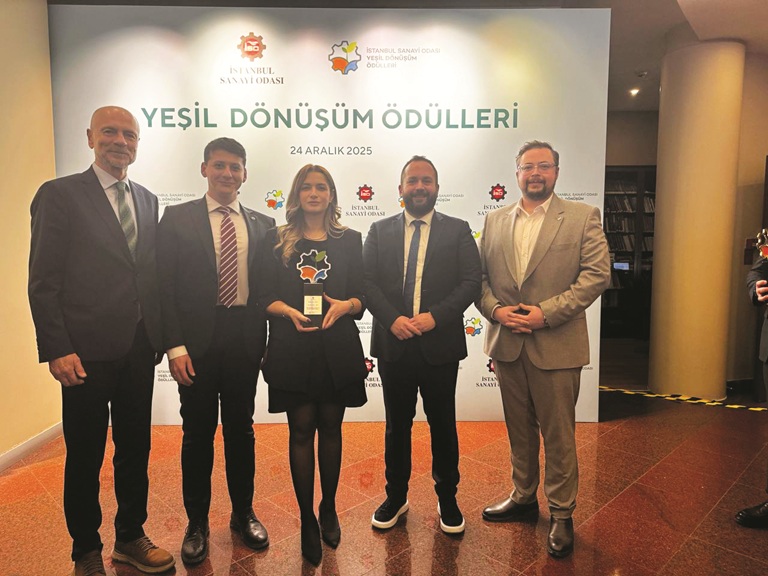
“For global OEMs and Tier-1 suppliers, sustainability is no longer based on declarations but on verifiable and auditable systems. For this reason, third-party validations such as REACH registration and EcoVadis assessments have become fundamental trust-building elements rather than mere requirements,” Metinöz says.
EUDR COMPLIANCE AND NON-FOOD-CHAIN MATERIALS
Compliance outside the EU Deforestation Regulation and the use of non-food-chain raw materials are factors that Skyhem often highlights. These factors are becoming decisive for customers today for specific reasons.
With the introduction of EUDR, it is no longer sufficient for raw materials to be sustainable; their origin must also be traceable, verifiable and free from regulatory risk. For this reason, solutions that fall outside the scope of EUDR offer a significant advantage, particularly for manufacturers operating on a global scale, by reducing both operational and commercial risks.
“Raw materials that do not interact with the food chain have likewise become an increasingly important ethical and structural criterion in sustainability discussions. Solutions that do not compete with food resources are preferred due to their higher social acceptance and long-term supply security,” Metinöz says.
When these two aspects are combined, customer sustainability is no longer only about environmental benefits but also about regulatory compliance, supply continuity and forward-looking risk management.
“Skyhem’s approach is built precisely on this understanding – treating sustainability not as a short-term advantage but as a long-term, secure and industrially viable solution,” Metinöz explains.
THE ELECTRIC VEHICLE TRANSFORMATION
Demand for sustainable materials is accelerating, particularly with the rise of electric vehicles. The shift towards EV tyres is reshaping requirements for process oils in fundamental ways.
Metinöz believes that the transition to electric vehicles has already begun to gradually and fundamentally reshape tyre performance expectations. EV tyres operate under much tighter tolerances due to higher torque, increased vehicle weight and stricter noise requirements. As a result, parameters such as rolling resistance, wear resistance and compound stability have become even more critical.
“This shift means that process oils can no longer function merely as softeners; they must act as components that precisely tune the dynamic behaviour of the compound. Consequently, these new requirements place greater emphasis on controlled rheological behaviour, the retention of properties after ageing and predictability across formulations,” Metinöz says.
At the same time, EV manufacturers’ sustainability targets require greater transparency and measurability of the environmental impact of all raw materials used. Within this context, process oils for EV tyres are now expected to meet not only technical performance criteria but also low environmental impact, regulatory compliance and long-term supply security.
“At Skyhem, our approach is built on addressing these multi-dimensional requirements simultaneously, developing solutions that are well aligned with the needs of next-generation tyre applications,” Metinöz says.
GLOBAL VISIBILITY AND COLLABORATION
Skyhem has been highly visible at global tyre industry events. Beyond branding, these platforms contribute significantly to collaboration and product development. At Skyhem, the primary focus is to represent the country in the best possible way within the industry.
“For us, global industry events are not merely platforms to increase brand visibility but environments where technical feedback, mutual learning and collaborative development actively take place. Through these events, we have the opportunity to directly understand the real expectations, technical challenges and regulatory priorities of manufacturers across different regions,” Metinöz explains.
At the same time, such platforms enable potential collaborations to take shape early. From Skyhem’s perspective, the real value lies not in promotion but in fostering a constructive dialogue where the right technical questions are asked and common solution areas are clearly identified.
“This approach supports our products in reaching the market more efficiently and in a more robust manner,” Metinöz says.
CO-DEVELOPMENT WITH MANUFACTURERS
Skyhem’s approach to innovation is highly collaborative. At Skyhem, innovation is not an R&D activity carried out independently of customers but a development process that progresses alongside manufacturers.
“Our work with tyre and rubber producers is based on evaluating products under real formulations and actual processing conditions. All technical feedback we receive is directly incorporated into product improvement. Through this approach, Skyhem’s R&D is positioned not merely as a raw material supplier but as a technical partner delivering practical, reliable solutions aligned with real production requirements,” Metinöz says.
BALANCING GROWTH WITH CULTURE
As a young company scaling internationally, Skyhem faces the challenge of balancing rapid growth with maintaining a strong sustainability-led culture internally. At Skyhem, growth has never been treated as a goal in itself; how the company grows has always been more important than how fast it grows.
“Our sustainability approach is not a policy added later on but a culture that has been embedded into our decision-making processes since the company’s foundation. To be candid, this mindset and philosophy have played a key role in keeping our direction clear throughout our growth journey,” Metinöz says.
As Skyhem grows, the primary focus is to avoid compromising technical discipline and sustainability standards. The company applies the same principles consistently across product development, sourcing and production and approaches new markets and partnerships within this framework.
Metinöz explains, “As a result, growth does not put pressure on our system; instead, it becomes a controlled process that strengthens our existing structure. For us at Skyhem, maintaining a strong sustainability culture depends on having teams that fully understand the processes and on clearly questioning the technical and environmental implications of every decision. This approach ensures that, as the company grows, the culture does not weaken but rather becomes more structured and institutionalised.”
FUTURE GROWTH OPPORTUNITIES
Looking ahead, where does Metinöz see the strongest growth opportunities for Skyhem – in terms of markets, applications or next-generation materials?
“I see the strongest growth opportunities for Skyhem in application areas where sustainability is no longer a choice but a mandatory technical requirement,” Metinöz says. “In the tyre and rubber industry in particular, markets where regulatory pressure and performance expectations are increasing simultaneously show a natural alignment with Skyhem’s solution approach.”
From an application perspective, high-performance tyres, electric vehicle applications and speciality rubber compounds are among the company’s key focus areas. In these segments, process oils are no longer merely auxiliary components; they have become elements that precisely control compound behaviour, further increasing demand for technically robust and sustainable solutions.
“With regard to next-generation materials, Skyhem’s growth strategy is based not on a single product but on a modular and evolvable technology platform. This approach allows us to develop solutions that can be adapted to different markets and applications,” Metinöz explains.
Geographically, Skyhem sees controlled, high-quality growth opportunities particularly in Europe, where regulations are clearly defined and sustainability targets are firmly established.
“In short, for Skyhem, growth is not about volume expansion but about progressing with the right technical value in the right applications,” Metinöz says.
DEFINING SUCCESS
Finally, how would Metinöz define success for Skyhem Kimya over the next five to 10 years, both as a business and as a contributor to the tyre industry’s transition towards more sustainable materials?
“For Skyhem, I define success not solely by growth figures but by the lasting impact we create within the industry. Today, Skyhem has reached a position as a company delivering technically reliable solutions with measurable sustainability and proven industrial applicability,” Metinöz says.
Within the next five years, Skyhem aims to establish strong R&D centres in four different regions. Through these centres, the company plans to provide more effective technical support to Ecosky-3103 users while also developing its own compounds at laboratory scale to evaluate product performance directly at the application level.
At present, Skyhem serves four industries and is actively advancing sustainable, bio-based product development across multiple sectors. Looking further ahead, over the next 10 years, the company aims to evolve into an integrated chemical manufacturing structure and reach a broader customer base through new product classes.
“As a business, we measure success through consistent growth, stable product quality and the ability to build long-term partnerships,” Metinöz says. “In this context, positioning Skyhem not merely as a raw material supplier but as a strategic technical partner for our customers is a critical benchmark for us.”
From an industry perspective, Skyhem sees true success in enabling sustainable materials to move beyond niche applications and become a natural part of mainstream production processes.
“At Skyhem, our objective is to demonstrate – on a lasting basis – that sustainability does not conflict with performance but rather, when addressed through the right engineering approach, becomes a driver that moves the industry forward,” Metinöz concludes.
Bridgestone Appoints Stefano Sanchini As President Of Europe Sales
- By TT News
- September 19, 2026
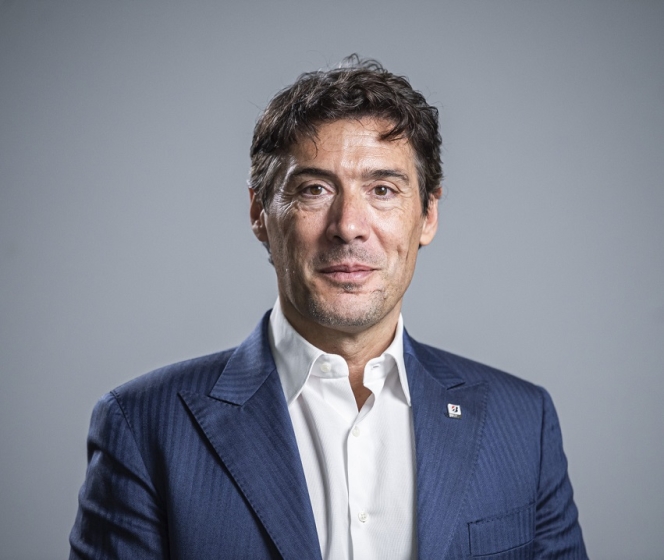
Bridgestone has announced a European leadership appointment aimed at sharpening customer focus, streamlining engagement across product groups and supporting its ongoing growth plans. Stefano Sanchini will become President, Europe Sales, effective 1 October 2026, leading the company’s European sales organisation across both Consumer and Commercial segments.
The expanded role unites sales activities spanning passenger car, truck and bus, agriculture, off-the-road, motorcycle and original equipment. Sanchini brings over 20 years of international leadership experience in the automotive and tyre sectors, with a career covering Europe, Middle East, Africa and India. Since joining Bridgestone in 2017, he has held several senior positions, including Managing Director of Bridgestone India.
Most recently, as Vice President for Consumer Replacement in Europe, he helped strengthen customer engagement, commercial performance, profitability and regional market growth. Bridgestone said the appointment underscores its commitment to customer relationships, commercial execution and simpler cross-market operations. Sanchini will pursue sustainable growth while developing capabilities and partnerships supporting the company’s long-term European strategy.
Mete Ekin, Group President EMEA, said, "Our customers increasingly operate across multiple product categories and expect a consistent experience wherever they engage with Bridgestone. By bringing our sales activities together under one European structure, we are creating a simpler, more connected organisation that will help us respond faster, collaborate more effectively and continue building strong partnerships with our customers."
Yokohama Europe Appoints Giuseppe La Iacona To Lead Southern Operations
- By TT News
- September 18, 2026
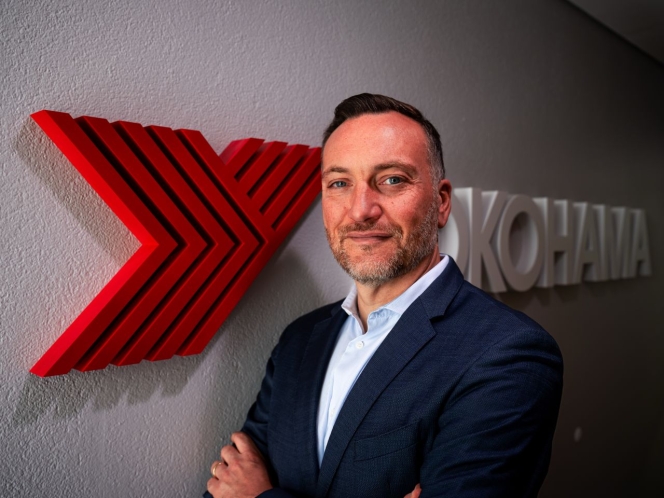
Yokohama Europe has appointed Giuseppe La Iacona to a series of senior leadership roles as the company seeks to strengthen its position across the region.
La Iacona joined the business on September 15 and will assume responsibility for supporting growth and organisational consolidation in the European market.
He brings more than 20 years’ experience in the tyre industry, spanning sales, marketing, business development, country management and international customer relations. He has held senior roles across several European markets, developing experience in managing local dynamics while driving cross-border business expansion.
Reporting to Takashi Maki, La Iacona has been appointed General Manager for southern Europe, where he will lead a newly created regional cluster covering Italy and France. The role is intended to improve coordination and operational synergies between the two markets.
He will also serve as Chief Executive of Yokohama Italia, with overall responsibility for the Italian subsidiary, alongside taking on the role of head of international customers. In that capacity, he will oversee the management and development of clients operating across multiple European markets, with the aim of creating a more consistent commercial approach and strengthening collaboration between subsidiaries.
His remit includes improving organisational alignment and fostering closer cooperation between markets and customers as the company expands its European operations.
“I am very pleased to welcome Giuseppe to YOKOHAMA Europe at an important stage in our development,” said Maki. “His extensive international experience, deep knowledge of the tyre industry and ability to work across different markets will be valuable assets as we continue to strengthen our European organisation and pursue sustainable growth.”
La Iacona said: “I am excited to join YOKOHAMA Europe and to contribute to the company’s next phase of growth in Europe. YOKOHAMA has a strong heritage, a distinctive brand and significant opportunities across the European market. I look forward to working closely with our teams, customers and partners across countries to further develop the business and strengthen our presence in the region.”
Özka Tyre Appoints Mehmet Yüksel As New Chief Operating Officer
- By TT News
- September 18, 2026
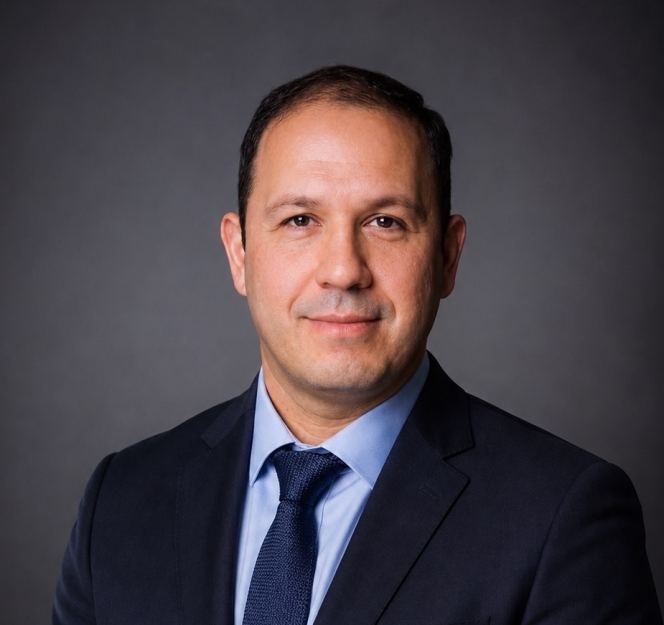
Özka Tyre, a prominent Turkish manufacturer of tyres for agricultural and construction equipment, has reinforced its leadership team as part of a broader push towards global expansion and technological modernisation in production. The company has appointed Mehmet Yüksel as its new Chief Operating Officer, bringing aboard an executive with extensive senior experience from Goodyear’s Luxembourg-based international organisation.
In his new role, Yüksel will oversee functions central to Özka’s production and operational strength. His responsibilities encompass production, quality, research and development, planning, investment and projects, electricity and maintenance, occupational safety and quality management systems, positioning him to steer critical areas of the company’s industrial performance.
Driven by investments and a focus on advancing its manufacturing strength, Özka continuously monitors shifts in the worldwide tire sector, particularly technological progress in Europe, and uses those insights to shape its future production infrastructure. As new investments prepare to elevate its output capacity and technical systems, the firm is simultaneously bolstering its organisational framework to sustain that transformation.
Cabot Names Steve Delahunt As Interim CFO
- By TT News
- September 16, 2026
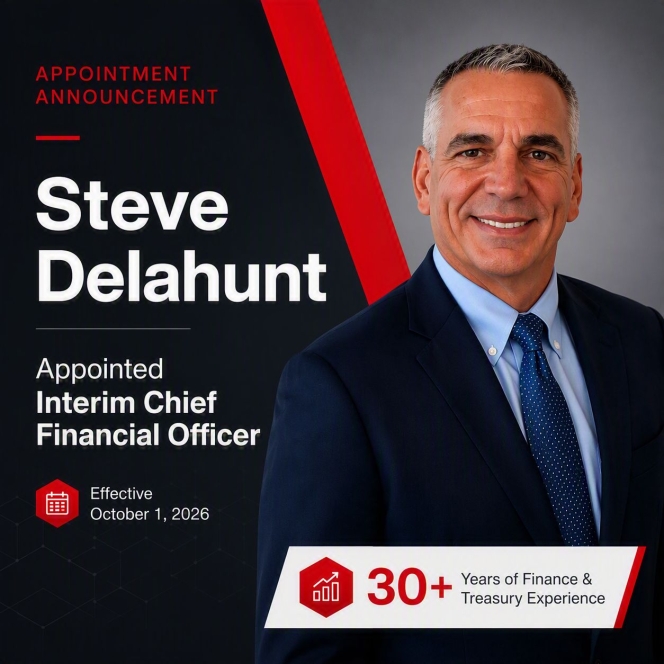
Cabot Corporation has named Steve Delahunt, currently Vice President and Corporate Treasurer, to assume the Chief Financial Officer role on an interim basis starting 1 October 2026. He will hold the position while Cabot continues searching for a permanent finance chief.
The interim appointment follows the previously disclosed leadership transition in which Erica McLaughlin, Executive Vice President, Chief Financial Officer and Head of Corporate Strategy, will become President and Chief Executive Officer on the same date. McLaughlin succeeds Sean Keohane and will relinquish her CFO duties at that time.
Delahunt brings over three decades of finance and treasury experience, including nine years leading Cabot's investor relations function through January 2026. As Corporate Treasurer, he oversees global treasury operations, capital markets strategy, liquidity management, banking relationships, risk management and pension investments. He has been central to Cabot's capital allocation, financing, investor engagement and strategic growth initiatives, as well as strengthened shareholder relations during his investor relations tenure.
McLaughlin said, “Steve is a highly respected finance leader with deep knowledge of our business, strong relationships across our global organisation and a proven track record of disciplined financial leadership. As we continue executing our strategy and building on our strong financial position, Steve’s experience, judgment and understanding of our business make him exceptionally well suited to lead our finance organisation while the Company conducts its search for our next Chief Financial Officer.”


Comments (0)
ADD COMMENT