

A New Hand On The Tread
- By Gaurav Nandi
- March 11, 2026

The transition to a single-CEO model is supported by a well-defined governance structure that clearly separates strategic oversight from executive decision-making.
Antonio Tulio Jou Inchausti has stepped into the role of Chief Executive Officer at Unique Rubber Technologies, taking charge at a pivotal moment as the company sharpens its focus on innovation, operational discipline and long-term growth in the global retreading industry. Speaking exclusively to Tyre Trends, he unfolds the forward path.
What are the first three strategic priorities you plan to redefine Unique Rubber Technologies in your first 12–18 months as CEO?
Focus will be strengthening what truly sustains the company viz-a-viz our people, culture and responsibility for the future. The safety of our teams comes first, and throughout 2026, we are implementing a robust SafeStart programme to further embed a culture of care, prevention and accountability across the organisation.
At the same time, we will continue to invest strongly in the development of our people, empowering them to deliver their best every day and reinforcing talent as a key pillar of our success. These priorities support our sustainable growth journey, honouring the legacy of the 50 years we have recently completed while preparing the company for its next phase of evolution, guided by consistency, purpose and long-term vision.
Where do you see the company under-positioned today and how do you intend to close that gap?
Unique Rubber Technologies is well positioned as one of the most relevant players in the retreading market in Latin America, holding leadership positions through its Tipler and Borex brands. Our continuously expanding dealer network delivers strong value to the market by offering products and services recognised for its high quality, reliability and outstanding mileage performance, exactly what end customers expect from our solutions.
Looking ahead, our focus is on expanding into new and complementary markets, growing alongside our existing customers while also addressing opportunities in product segments where we see room to evolve through innovation and embedded technologies in our processes.
How do modern manufacturing and retreading heritage come together in your value proposition?
We are proud to operate one of the most modern manufacturing facilities in the industry, which reinforces safety, consistency and product quality. At the same time, we remain committed to preserving and advancing the company’s legacy by promoting the efficient use of natural resources, inherent to our retreading processes, and by contributing to lower transportation costs through products that combine high mileage performance, safety and reliability.
How will you balance research and development ambition with cost discipline and time-to-market pressures?
Innovation at our company is guided by a disciplined and long-term approach. Our research and development teams continuously monitor developments not only in the domestic market but also in key international markets, ensuring we remain aligned with the most advanced product concepts, equipment and manufacturing technologies available globally.
At the same time, we consistently optimise our processes to maintain a cost structure that is well aligned with market demand, allowing us to remain competitive while accelerating time to market. Our perspective is not short-term; we regularly review our strategic planning with a five-year horizon, focusing on improvements that will translate into superior products and services over time.
How do you balance innovation with market needs to deliver consistent performance?
We firmly believe that high-quality products delivering superior mileage and performance will always earn customer preference and balancing innovation with market needs, execution discipline and sustainable results is at the core of how we continue to move forward every day.
What specific inefficiencies in operations or supply chain have you already identified and what measurable improvements should stakeholders expect?
As with any industrial operation operating at scale, there are always opportunities to improve efficiency and our focus has been on identifying areas where greater integration, predictability and agility can be achieved across operations and the supply chain.
We have already identified opportunities to optimise process flows, reduce variability and strengthen coordination with key suppliers, leveraging data, standardisation and better planning tools. These initiatives are designed to improve lead times, increase reliability and enhance overall operational efficiency without compromising quality or safety.
What measurable improvements can stakeholders expect from this strategy?
Stakeholders can expect measurable improvements in service levels, operational consistency and cost efficiency over the coming cycles as well as a more resilient supply chain capable of supporting our growth strategy. Our approach will be focused on delivering tangible results and keep building a continuous and stronger operational foundation for the future.
How will your approach to client engagement differ from the previous co-CEO model, particularly with global OEMs and strategic partners?
Approach to client engagement is built on continuity while further strengthening clarity, consistency and proximity in how we engage with our customers and partners. The company has established strong relationships over the years and my role as CEO is to enhance those connections through more direct and structured strategic dialogue, particularly with global OEMs and key strategic partners.
We will ensure closer alignment between our commercial, technical and operational teams, enabling faster decision-making and a more cohesive value proposition across markets. Beyond transactional interactions, our focus is on deepening long-term partnerships through collaboration, joint development initiatives and shared growth agendas.
With the former co-CEOs remaining active in governance bodies, how will decision-making authority be clearly defined to avoid strategic overlap or delays?
The transition to a single-CEO model is supported by a well-defined governance structure that clearly separates strategic oversight from executive decision-making. While the former co-CEOs continue to contribute through governance bodies, their role is focused on guidance, continuity and long-term perspective, rather than day-to-day management.
Executive authority and accountability are clearly defined within the leadership team, enabling agile, timely and consistent decision-making. This structure ensures strategic alignment without overlap, preserves institutional knowledge and allows us to move forward with clarity, speed and discipline, fully aligned with our long-term objectives and growth strategy.
Will future growth come from expansion, new products or deeper market penetration?
Our future growth will be driven by a balanced combination of geographic expansion, innovation in product platforms and deeper penetration in existing markets. We see significant opportunities to strengthen our presence where we already operate by expanding our portfolio, increasing customer proximity and extracting more value from established relationships.
At the same time, we will selectively pursue geographic expansion into markets that align with our capabilities and long-term strategy. Innovation remains a key enabler across all fronts, allowing us to develop new product platforms and solutions that respond to evolving customer needs and regulatory requirements. This diversified growth approach provides resilience, scalability and consistency, ensuring that the company continues to grow in a disciplined and sustainable manner.
How prepared is the company to meet stricter regulatory and ESG demands?
Sustainability is deeply embedded in our business model and operational practices, well beyond branding or positioning. Our retreading solutions inherently contribute to the efficient use of natural resources and lower environmental impact, which places us in a strong position to meet increasingly stringent regulatory and ESG requirements.
We continuously invest in safer, more efficient processes, advanced technologies and responsible sourcing to ensure compliance with evolving regulations across the markets we serve. At the same time, we work closely with customers to align our products and services with their sustainability and compliance mandates, offering solutions that combine environmental responsibility, safety, performance and economic value.
Which competitors or substitute technologies pose the biggest threat to your business model over the next five years?
Rather than focusing on individual competitors, we closely monitor broader industry dynamics and substitute technologies that could influence customer choices over the next five years.
The main competitive pressure comes from solutions that promise lower upfront costs or alternative lifecycle approaches, even if they do not always deliver the same levels of performance, safety or sustainability over time.
How does the company turn industry and regulatory shifts into competitive advantage?
Our business model is built on proven technology, high-quality products and superior mileage performance, which continue to be highly valued by customers focused on total cost of ownership and operational efficiency.
We remain attentive to technological shifts, regulatory changes and evolving mobility trends and we continuously invest in innovation, process optimisation and product development to ensure our solutions remain relevant and competitive. This proactive and disciplined approach allows us not only to mitigate potential threats but also to turn industry evolution into opportunities for differentiation and long-term growth.
How will you define success in this role?
I will define success in this role by the strength and sustainability of the organisation we continue to build. Success means a company where people feel safe, engaged and empowered, where customers recognise us as a trusted and long-term partner and where our products consistently deliver quality, reliability and performance.
It also means advancing the company’s strategic objectives with discipline, clarity and consistency while preserving the values and legacy built over the past 50 years. Ultimately, success will be reflected in the company’s ability to grow responsibly, adapt to change and create lasting value for customers, employees and all stakeholders.
ATD Names Michael Broderick Interim President As Ira Silver Departs
- By TT News
- October 23, 2026
American Tire Distributors (ATD), a leading independent supplier in the replacement tyre industry, has appointed Michael Broderick as Interim President, effective immediately. He takes over from Ira B Silver. ATD also announced that the company and Silver have parted ways.
Broderick, who currently sits on ATD's Board of Directors and brings extensive automotive aftermarket experience, will guide the leadership transition. Meanwhile, the Board is conducting a comprehensive search for a permanent Chief Executive Officer, evaluating both internal and external candidates.
ATD continues to hold a significant position in the North American tyre market, supported by a broad distribution network, longstanding customer relationships and a diverse portfolio of manufacturer and proprietary brands. During 2026, the company eliminated more than USD 170 million in structural costs, reinvesting a portion of the savings, while shareholders have backed further investment in the national distribution network to strengthen market position and operating performance.
Philippe Gilbert, Chairman of the Board of Directors of ATD, said, “ATD has made important progress sharpening our focus on our core tyre distribution business, improving operational efficiency and delivering outstanding service and value to our customers and partners. As we look to accelerate these efforts, we determined that now is the right time to initiate a leadership transition. Mike brings substantial experience leading complex automotive businesses, and we are pleased that he is stepping in as Interim President to help us during this transition period. He will be supported by the ATD management team, which has played a central role in the Company's operational transformation, providing continuity of leadership across its distribution operations and strategic initiatives. On behalf of the Board, I would like to thank Ira for his leadership and contributions to help move the Company forward during a critical time.”
Broderick said, “I’m excited to step in and work alongside ATD’s team of talented associates as we focus on enhancing our network to provide customers with high-quality products and unparalleled service. As a member of ATD’s Board and over a decade of working with ATD as a customer, I’ve witnessed firsthand the strength of the Company’s robust national distribution network, deep customer and manufacturer relationships and long-held commitment to exceptional service. I look forward to advancing our efforts to strengthen our core tyre distribution business and build a stronger, more efficient company.”
Charting A New Course
- By Nilesh Wadhwa
- October 22, 2026
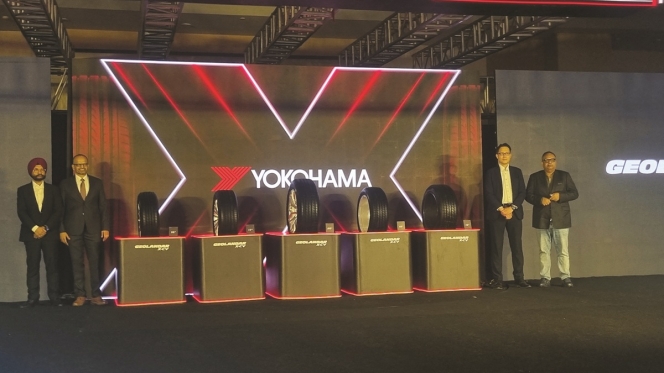
Yokohama India plans to enter the two-wheeler tyre market for the first time, with the first set of products due by the end of next year — making India the first country globally to get two-wheeler tyres from the Japanese tyremaker. The move, confirmed by Managing Director and CEO Harinder Singh, coincides with the launch of the GEOLANDAR X-CV range, extending Yokohama’s flagship SUV tyre technology to smaller wheel sizes for India’s booming crossover segment.
India’s premium tyre market continues to reward companies that combine global technology with local agility. Yokohama India, already one of the country’s fastest-growing premium players, looks to tap into India’s SUV and premiumisation push, bringing global products but in a customised avatar for the domestic market.
On the other hand, India is set to become the first country in the world for Yokohama, where it will introduce two-wheeler tyres.
In an interaction with Tyre Trends, Harinder Singh, Managing Director and CEO, Yokohama India, confirmed that the company is actively working towards entering the two-wheeler tyre segment, with the first products targeted for launch by the end of next year.
“The move will require fresh capital investment and will initially focus on the premium category before expanding into mass-market offerings, along with supporting the growing Yokohama Club Network,” revealed Singh.
This development sits alongside the recent unveiling of the GEOLANDAR X-CV range, a significant extension of Yokohama’s global flagship SUV technology into India’s rapidly expanding crossover and premium SUV segment.
TWO-WHEELER ENTRY SIGNALS BROADER AMBITION
Responding to a query on the company’s plans to address the whitespace in its portfolio, Singh said, “We are actively looking to support the two-wheeler business. By the end of next year, hopefully we should be having the two-wheeler tyres also.”
It is important to note that at present Yokohama India has zero presence in the two-wheeler space. The initial thought is to begin with tyres in the premium segment and then ‘take a trickle in’ towards mass-market products.
“This is primarily to service and support our all Yokohama club networks. And we plan to sell through them. That’s the objective,” said Singh.
The decision reflects both opportunity and necessity. India’s two-wheeler market remains vast and premium tyres are gaining share as riders seek better handling, durability and safety. By channelling the new products through its branded retail network, Yokohama intends to maintain the premium experience that has defined its passenger-car strategy.
GEOLANDAR X-CV BRINGS FLAGSHIP TECHNOLOGY TO A WIDER AUDIENCE
The immediate focus, however, remains the passenger-car radial business and the newly launched GEOLANDAR X-CV. Originally engineered for luxury SUVs with wheel sizes above 18 inches, the technology has been extended downwards to 16 inches, creating what the company describes as India’s most extensive dedicated tyre range for crossover and premium SUVs. Yokohama India has planned around multiple variations spanning 16 to 20 inches.
The tyre incorporates Micro Silica technology for enhanced wet-road grip and reduced rolling resistance, an optimised asymmetric tread design with specialised inner and outer shoulder blocks, four wide circumferential grooves for water evacuation, proprietary 2D–3D Combination Sipes for improved wet traction and even wear and 5-Pitch Variation Technology to minimise pattern noise.
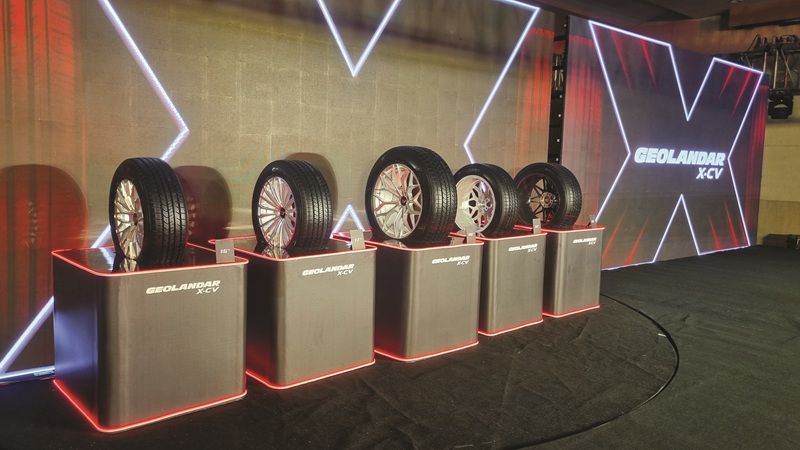
It uses reinforced two-ply sidewall construction and a full nylon cover to deliver durability and high-speed stability required for Indian conditions. Critically, the range is EV-compatible, engineered to handle higher vehicle weights and the instant torque characteristics of electric vehicles while remaining equally effective on internal-combustion and hybrid platforms.
Nitin Mantri, Member of the Board and Senior Managing Officer & Co-COO of Yokohama Rubber Co and Chairman of Yokohama India, framed the launch in strategic terms: “India continues to be one of Yokohama’s most strategic markets globally. Our continued investments in manufacturing, technology and premium product development reflects our confidence in the country’s long-term growth. The launch of GEOLANDAR X-CV reinforces our commitment to bringing globally proven innovations closer to Indian customers while strengthening Yokohama India’s position as one of the country’s leading premium tyre manufacturers.”
Singh added: “The crossover SUV segment is growing rapidly and the road infrastructure improving, now motorists are seeking a balance of safety, comfort, quietness and long-lasting performance. With the GEOLANDAR X-CV, we’re bringing flagship premium tyre technology to delight a wider base of crossover SUV owners.”
CAPACITY RUNNING NEAR FULL, EXPANSION ALREADY MAPPED
Yokohama India’s current installed capacity stands at approximately 4.5 million units a year. The capacity utilisation is already high. “We are almost full,” Singh noted.
Of the 4.5 million, roughly four million tyres serve the domestic aftermarket, with the modest surplus supporting European export requirements of the parent company. The Vizag plant has been designed with further phases in mind. “The plant is ready to be going for the next phase also. So as and when the requirement is, we will expand it,” averred Singh without giving out exact details.
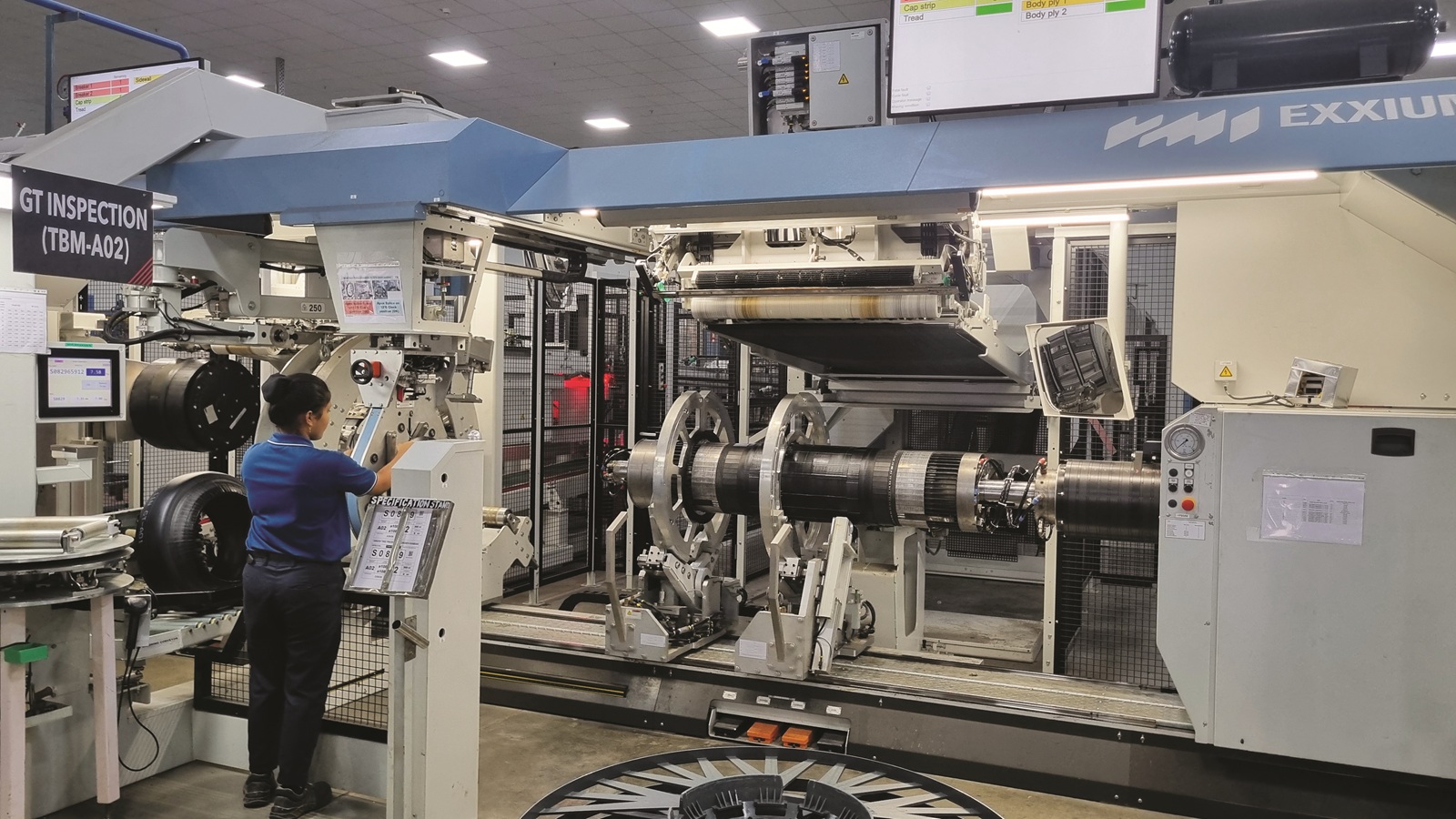 Mantri elaborated on the flexible manufacturing philosophy. Buildings and long-lead equipment are already in place; additional machines will be added incrementally as demand thresholds are crossed.
The existing footprint can take capacity from 4.5 million to 6.3 million units. Beyond that, the parent company has demonstrated consistent willingness to invest. Cumulative investment in India across the Yokohama Group is already substantial, with the Vizag facility alone accounting for more than INR 30 billion in recent years and overall group investment estimated in the range of USD 700–800 million. An Odisha plant focused on off-the-road tyres is also under construction.
AFTERMARKET REMAINS THE CORE, BUT OEM SHARE IS SET TO RISE
For Yokohama India, aftermarket sales in the passenger vehicle segment still account for around 95 percent of its revenue. The company has roughly 3,000 channel partners and aims to reach 4,500 within three to four years, with particular emphasis on Tier-3 and Tier-4 towns.
A key pillar is the Yokohama Club Network of branded retail stores that deliver a premium customer experience, including a five-year worry-free warranty. “In tyre industry, you know, 80–85 percent of the customers sale happens with the influence of the channel partner. When a customer walks into those stores, he gets that premium experience,” noted Singh.
At present, for Yokohama India, the passenger vehicle OEM business contributes only about two percent, limited largely to Maruti Suzuki India. The roadmap is to raise this to 10 percent within five years, and potentially towards 10–20 percent over a longer horizon. “Indian OEMs are going to be an important part in our OE strategy,” Singh confirmed.
Adding to that, Mantri said that OEM development cycles are lengthy, typically three to four years, but multiple proposals are already under discussion. “Working hand in hand with OEMs allows us to be kind of even more successful than we are as we go forward,” he said.
LOCAL OWNERSHIP MEETS GLOBAL STANDARDS
One of Yokohama India’s distinctive features is the degree of local management autonomy. “India was the first place where Yokohama gave complete ownership to the local management. There was no Japanese chairman,” Mantri explained.
The experiment, begun in 2020, has married Japanese technology and quality culture with ‘Indian Jugaad, Indian innovation, Indian kind of hunger for growth’. The result, he said, has been ‘a wonderful recipe’.
Product strategy follows a similar hybrid logic. The Earth-1 range was designed specifically for India. Newer products such as the GEOLANDAR X-CV start from global platforms but are tuned in compound and construction for Indian roads and driving conditions.
Replying on the company’s localisation levels, Mantri said that “sourcing remains pragmatic. Yokohama seeks the highest quality at the best price, whether from India or Southeast Asia, rather than pursuing localisation for its own sake.”
Growth over the past five years has averaged 18 percent CAGR, a momentum the leadership is determined to sustain. Market share in the premium passenger-car radial segment is estimated at around 10 percent. The company continues to prioritise 16-inch and larger sizes while systematically filling remaining white spaces in the portfolio.
LOOKING BEYOND THE IMMEDIATE HORIZON
It is no secret that when it comes to digitalisation, consumers in India are exposed and are amongst the fastest adopters of the latest trends, be it product-as-a-service, online purchase or service on hire.
Many quick commerce platforms and tyre makers have taken the online route to directly engage and sell their products to the end-consumer, but for Yokohama India, online tyre sale holds little appeal.
“We are not into online business. That’s a no from our side,” Singh clarified. The preference remains for customers to experience the product and fitting process in a branded store. Marketing support is deliberately hyperlocal and digital rather than big-ticket sporting sponsorships.
As road infrastructure improves and motorists undertake longer journeys, demand is shifting towards on-road focused tyres, a trend the GEOLANDAR X-CV is positioned to capture. All-terrain products will continue for genuine off-road use, but the volume opportunity lies in the growing crossover segment. Continuous upgrades across the rest of the portfolio, including further evolution of the Earth-1 range, are already planned.
For Yokohama India, the strategy is clear – offer the best experience to Indian consumers, by introducing its globally proven products to the market without compromises, but yet in an Indian avatar. On the other hand, the company is also gearing up to enter new segment to further cater to customers in the premium two-wheeler space.
QUALITY OVER FORCED LOCALISATION
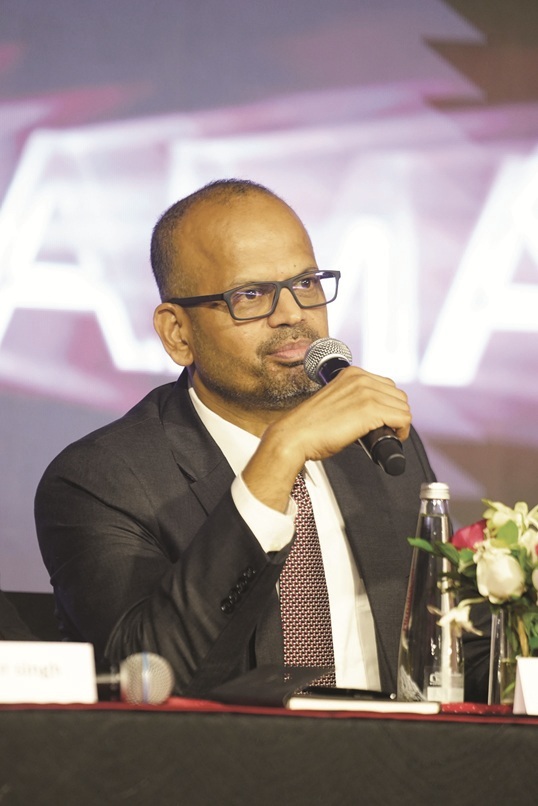
Nitin Mantri, Member of the Board And Senior Managing Officer & Co-COO, Yokohama Rubber Co and Chairman, Yokohama India, shares his thoughts on the company’s future plans, production capacity, localisation and network expansion.
How significant is India within Yokohama’s global strategy?
India is one of our most strategic markets. It was the first place where we gave complete ownership to local management with no Japanese chairman. Combining Japanese technology and quality culture with Indian innovation and growth hunger has created a powerful combination.
India is already your fourth-largest market. Can it climb higher?
Passenger-car penetration remains much lower than in US, Japan or China. That gives us runway, but catching the very largest markets will still be challenging given the vehicles-per-person difference.
Why has OEM share stayed so low?
We were simply short of capacity. Aftermarket demand absorbed almost everything we could make. With new capacity coming on stream, we are deliberately changing that mix. We aim for 10–20 percent OEM over time. Development cycles with OEMs take three to four years, so results will appear gradually.
How do you approach product development for India?
Some products, such as Earth-1, were designed purely for India. For others, we take global platforms and carefully retune the compound and construction for Indian roads and conditions. The goal is global technology that feels native here.
What is the philosophy behind capacity expansion?
We design factories for flexibility and minimal waste. Long-lead buildings and equipment are installed first. Additional machines are added only when demand thresholds are crossed. Our current footprint can take us from 4.5 million to 6.3 million units. Beyond that, the parent company has consistently shown willingness to invest.
How do you view localisation of raw materials?
We source for the best quality and value, whether from India or elsewhere. Our specifications remain identical regardless of origin. We do not force localisation if it compromises quality or cost.
Are your tyres ready for the rise of electric vehicles?
Yes. Features such as specialised silica compounds that deliver low rolling resistance, higher load capacity and reduced noise work equally well on battery-electric, hybrid and conventional vehicles. That flexibility is deliberate.
What keeps you focused on the aftermarket network?
Channel partners still influence 80–85 percent of tyre purchases. Expanding from 3,000 to 4,500 partners, with particular attention to Tier-3 & Tier-4 towns, and strengthening the Yokohama Club branded stores remain central to our growth. n
- TVS Industrial and Logistics Parks
- TVS ILP
- ATC Tires AP
- Yokohama Group
- Ramnath Subramaniam
- Jose Motha
TVS ILP Leases Space To ATC Tires In Visakhapatnam For Warehousing
- By TT News
- October 21, 2026
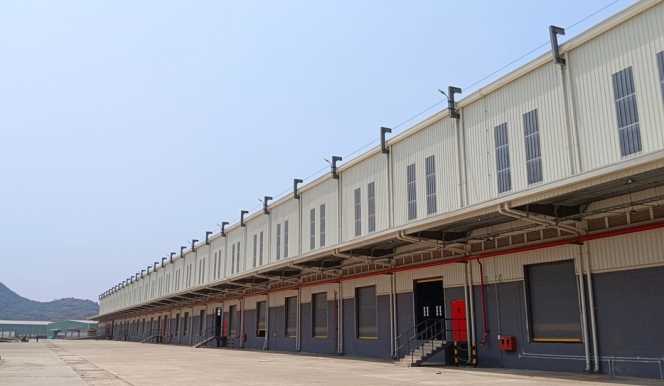
TVS Industrial and Logistics Parks (TVS ILP) has leased 80,000 square feet of space at its facility in Visakhapatnam, Andhra Pradesh, to ATC Tires AP, a subsidiary of the Yokohama Group.
The site will serve as a mother hub warehouse to support domestic distribution and export operations for Yokohama passenger vehicle tyres, alongside off-highway tyre ranges under the Alliance, Galaxy and Primex brands. The deployment links regional manufacturing operations with maritime connectivity and trade routes in South and East India.
Ramnath Subramaniam, Joint Managing Director, TVS Industrial and Logistics Parks, said, "We are delighted to support ATC Tires and the Yokohama Group as they strengthen their presence in South India with an 80,000 sq. ft. mother hub warehouse at our Visakhapatnam park. This partnership reflects how our tech-enabled, well-connected infrastructure supports customers’ evolving operational and supply-chain requirements. With its strategic location, established industrial ecosystem and favourable government incentives, Visakhapatnam is emerging as an important destination for businesses across sectors. We see significant potential for companies across e-commerce, FMCG and other industries to leverage the city’s advantages, and look forward to supporting their growth."
Jose Motha, General Manager of Supply Chain Management, Yokohama, said, "An efficient, well-connected warehousing network is integral to building a resilient supply chain. With our highly automated facility in Visakhapatnam manufacturing passenger car and off-highway tyres, our collaboration with TVS ILP in the city is a strategic step towards strengthening our logistics infrastructure and enhancing operational efficiencies. Its connectivity to key trade routes and access to markets across South and East India will enable us to better address evolving business needs and build a more agile supply chain."
Kumho Sees European CV Industry As New Growth Engine
- By Nilesh Wadhwa
- October 21, 2026
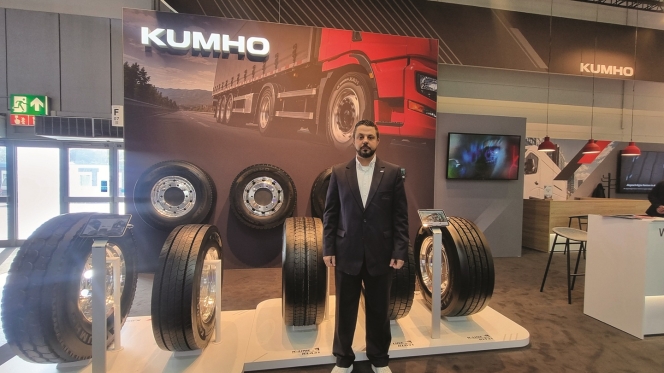
With Europe now a core growth market and production stretched to the limit worldwide, Kumho Tire is investing heavily in local manufacturing and a focused truck-and-bus strategy built on measurable performance rather than brand glamour.
South Korean tyre major Kumho Tire, positioned as a value-driven brand, is now reigniting its plans to expand in Europe. In an exclusive interview with Tyre Trends, Ilhan Kurban, Marketing Manager at Kumho Tire Europe, outlines a company that has already delivered consistent expansion and is now repositioning for the next phase.
“We had an average about 13.3 percent YoY growth every year globally for the last several years. So, you can see, from having a turnover of USD 1.8 billion in 2020, we are now around USD 3.3 billion in 2025,” he said.
Last year the manufacturer sold 58.1 million tyres, with Europe becoming a central part of that momentum. The European replacement business alone generated around EUR 772 million and almost 15 million tyres, making the region increasingly important.
“That’s why our importance for Europe is really high at the moment and we are thinking to invest more and more in Europe because it’s getting like a core business for us,” shared Kurban.
LOCAL PRODUCTION TO UNLOCK FURTHER GROWTH
Until now, Kumho has relied on factories in Korea, China and Vietnam for expanding its sales in the global market. Vietnam in particular has completed its ramp-up and is shipping substantial volumes to Europe and the United States. Capacity across the network is at full stretch.
“We are already at maximum capacity utilisation at Kumho production facilities, be it in China, Korea or Vietnam. We need to have more production capacity for both TBR (truck and bus radial) and PCR (passenger car radial),” revealed Kurban.
Kumho Tire’s response, in early 2026, was a new plant in Opole, Poland, where groundbreaking has already begun. The project represents an investment of about USD 600 million. “The plant will have a production capacity to produce six million tyres initially and the production is expected to start by Q3 of 2028. We are planning to manufacture both PCR and TBR tyres,” said Kurban.
Interestingly, as per industry reports, Kumho Tire is committing an additional USD 45 million (KRW 59.6 billion) to accelerate the construction of its manufacturing facility in Opole. The capital allocation follows an investment of USD 54 million (KRW 73.3 billion) directed towards the new European plant last year.
In the long-run, the facility is expected to exceed manufacturing capacity of 10 million units by around 2030. Poland’s location within the European Union and its proximity to the German and central European markets make it a natural hub free of customs barriers. The plant is designed as a smart factory incorporating AI technology, automatic logistics and rigorous quality control – essential for meeting the demanding approvals of European customers, including premium vehicle manufacturers.
A second new factory is simultaneously under construction in Korea to replace the Gwangju site where a major fire incident in May 2025 led to extensive damage, bringing the latest automated processes on stream. Together the investments signal Kumho’s determination to support further volume growth while improving supply-chain resilience for European fleets.
REBUILDING TBR STRENGTH
Passenger-car radial remains Kumho’s primary business, yet the company has deliberately intensified its truck-and-bus radial efforts over the past two years. New long-haul and regional series covering all-position, trailer and drive-axle applications have been introduced with the latest Kumho technologies.
The tyre maker is already performing strongly in Italy, Poland and Scandinavia and is now targeting a deeper presence in Germany, where it previously struggled because of limited focus.
“Since the past two years, we had really focused on that to develop a new business opportunity for us and also get back into German market; that’s why we are also really working hard to introduce new products for German or for Central European market demands,” shared Kurban.
He acknowledges that reaching fleet customers requires a different approach from passenger-car marketing. Motorsport sponsorships and lifestyle campaigns have limited influence for the CV customer.
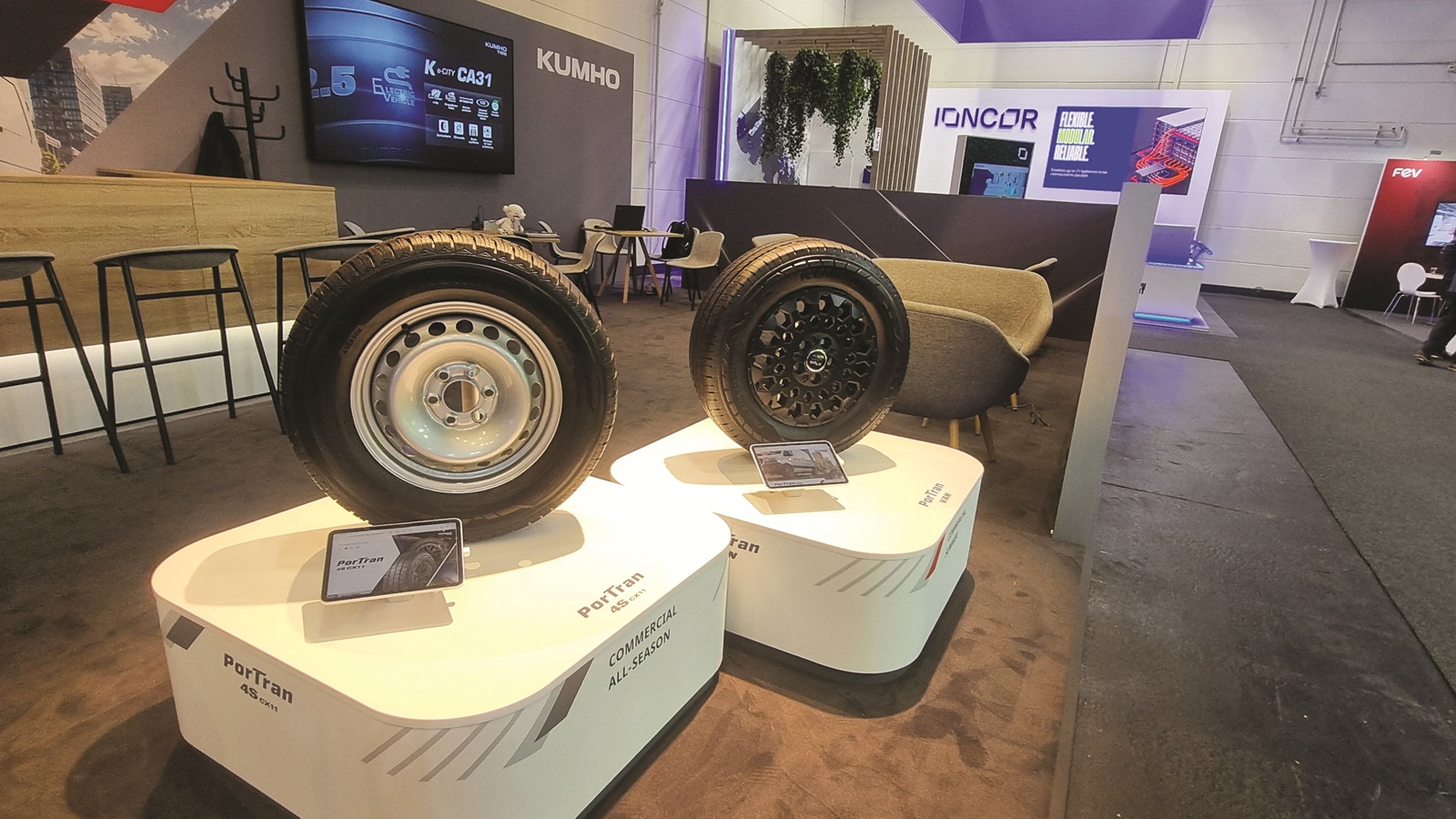 “It is most important to have qualified technical sales personnel in Germany, so we have onboarded special TBR sales managers. They visit customers and are providing test tyres to measure the mileage, check the performance and closely track the results,” explained Kurban.
An equally critical part of the growth strategy is the partner network. “The most important part for us is to have reliable retail partners, because we are a tyre manufacturer. At the end, it is not possible to bring the support fleet everywhere (for aftersales support),” averred Kurban.
For this reason, the company is strengthening its partnership in Germany and across Europe as the core part of its business. Logistics for large commercial tyres are complex, so distributors and service partners remain essential for delivery, technical support and ongoing customer relationships. Establishing a stronger aftersales and assistance network is a long-term objective, though for now, Kumho continues to rely on those partners.
The company also maintains a second brand, Marshal, positioned as a budget alternative for pure replacement demand.
In the organisation’s strategy, Kumho remains the halo brand focusing on quality-conscious customers as well as Original Equipment Manufacturers (OEMs). On the other hand, Marshal is not targeted at OE business and serves mainly conventional sizes where price is the dominant consideration.
THE CASE FOR PRODUCT SIMPLICITY
Kurban expects electrification to form part of a mixed technology landscape rather than a complete replacement of conventional powertrains in either passenger or commercial vehicles.
“Our expectation is that, at the moment, be it passenger vehicle or commercial vehicle segment, electrification will be an alternative to Internal Combustion Engine (ICE). But it cannot completely replace ICE vehicles; it will be a mixture of different technologies,” he said.
The challenge for a tyre maker is to avoid an explosion of specialised products that confuses dealers and complicates logistics. Kumho’s strategy is therefore deliberate simplicity.
“Our target and product strategy is to ‘keep it simple’, which means produce tyres that are suitable for both conventional and electric vehicles. We are introducing all new products as EV ready products optimised for rolling resistance, mileage and wet grip, among others, so all customer requirements are met by the same tyre,” he said.
That approach contrasts with brands that offer numerous near-identical sizes, creating stock-holding and selection difficulties. By designing tyres that serve both conventional and electric vehicles without performance compromise, Kumho aims to keep ranges manageable while still meeting the higher torque, weight and efficiency demands of modern commercial vehicles.
On the related question of smart or connected tyres, Kurban observes limited immediate demand from fleets. Most operators already track vehicles via GPS systems and calculate tyre efficiency from fuel consumption, mileage and operating hours. In-tyre sensors that deliver additional data remain uncommon in his experience.
SUSTAINABILITY THAT PAYS FOR ITSELF
It is no secret that for fleet operators, the topic of sustainability is becoming quite crucial, yet they are rarely prepared to pay a premium for it.
“The fleets are not ready to pay any surcharge on sustainable tyres, but they’re requesting everything about sustainability. It has to be economical and meet their sustainable targets, but they’re not willing to pay any additional money for it. To be honest, this part (sustainability) has to be taken care of by the tyre maker always,” he shared.
What they do measure rigorously is cost per kilometre. High mileage and low rolling resistance translate directly into lower fuel consumption and longer intervals between replacements – benefits that appear on the balance sheet.
Kumho therefore treats sustainability as inseparable from performance. He explained that manufacturers must deliver more durable, lower-resistance products without raising prices or sacrificing capability.
Replacement cycles themselves vary too widely for simple averages. Road conditions, driver behaviour and maintenance practices can produce differences of several hundred thousand kilometres.
“You can see a really big difference if you are driving on the German motorway or the autobahn, where you can achieve better mileage if the truck and the tyre pressure is well maintained. In contrast, to anyone in Turkey who’s only driving on roads with potholes and never checking the tyre will have a different replacement cycle,” he said, illustrating an example of how road conditions and maintenance habits affect tyre life.
Kurban is confident in Kumho’s overarching ambition of a 5 percent global market share and recognition as a premium quality brand, with Europe now central to that goal.
The upcoming Polish plant will supply both passenger and commercial tyres closer to customers. New TBR patterns are already reaching key markets, and the product philosophy continues to prioritise simplicity and measurable economy.
As Kurban puts it, Kumho’s strategy for fleet operators is to keep its value proposition straightforward – tyres that work across powertrain types, last longer, roll more efficiently and arrive through a reliable partner network – without demanding a sustainability surcharge.

Comments (0)
ADD COMMENT