

Bridging Critical Gaps In The Tyre Industry
- By Sharad Matade & Gaurav Nandi
- February 20, 2026
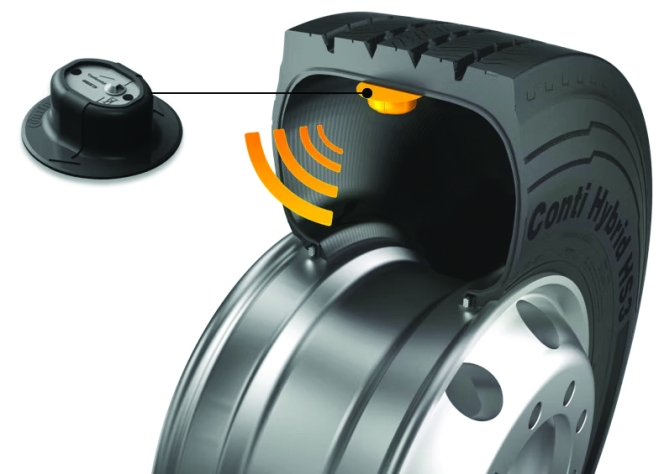
Image courtesy - Continental Tire
The global tyre industry faces unprecedented complexity as electrification, sustainability and intelligent vehicle systems reshape demands on materials, design and performance. CenTiRe, under Professor Saied Taheri, bridges gaps between academia and industry, integrating fundamental research with real-world constraints, fostering collaborative innovation and training engineers capable of navigating the evolving landscape of tyre and mobility technology.
The Center for Tire Research (CenTiRe) is a collaborative, industry-led research consortium partnered with Virginia Tech and the University of Akron, established in 2011–12 with seed funds from the National Science Foundation (NSF). At the time, the global tyre research ecosystem was strong in individual areas like materials, testing, vehicle dynamics and manufacturing but fragmented with few environments where these pieces were brought together in a sustained, pre-competitive way.
A critical gap was the disconnect between fundamental research and the practical questions industry engineers faced. Academic work often focused on isolated phenomena, while industry research and concept development (RCD) was under pressure to deliver solutions on compressed timelines.
Foundational problems like tyre-road interaction, variability and system-level behaviour rarely received attention in ways that were both rigorous and industrially relevant. Talent development was another challenge as companies needed engineers who could navigate experiments, modelling and real-world constraints, but training pathways were siloed.
CenTiRe was created to bridge these gaps by exposing students to industry-relevant problems early and consistently.
“Since its formation, CenTiRe’s role has evolved alongside the industry,” said CenTiRe Director and Professor Saied Taheri during an exclusive interaction with Tyre Trends.
“What began as a focus on core tyre mechanics and testing has expanded to include electrification-driven challenges, intelligent tyres, data-driven methods and stronger integration with vehicle control and mobility systems. Perhaps most importantly, the centre has evolved from a research hub to a long-term collaborative platform. Its value today lies not just in technical outputs but in continuity, providing a space where companies can step back from short-term pressures, share understanding and collectively address problems no single organisation can efficiently solve alone,” he added.
Taheri’s own focus on tyre and vehicle dynamics took shape during graduate work at Clemson University and was reinforced by observing how tyres were often treated as secondary in vehicle development, despite being the primary interface with the road.
Early experience across industry and academia showed that many vehicle-level challenges cannot be fully understood without deeper understanding of the tyre itself. Industry work underscored the importance of realism, while academic work highlighted the potential of revisiting often-overlooked fundamentals.
These experiences shaped his approach to applied research, emphasising physical understanding alongside practical implementation. More than three decades in the field have reinforced his belief that the most impactful research occurs at the boundaries between disciplines, organisations and theory and practice, a perspective that continues to guide both his work and CenTiRe.
CONVERGING PRESSURES
Tyre research today is being reshaped by several major shifts occurring simultaneously rather than sequentially, creating a level of complexity that is unprecedented. Electrification, higher instantaneous torque and evolving mobility expectations are placing new and often conflicting demands on tyres.
 “Electric vehicles fundamentally alter the operating envelope as high torque at low speeds accelerates wear and introduces new fatigue and durability mechanisms, while increased vehicle mass raises concerns around rolling resistance, heat generation and structural integrity,” said Taheri.
At the same time, customers expect quieter and more comfortable tyres, which can run counter to traditional approaches to stiffness, robustness and durability.
These challenges are compounded by the fact that tyres are increasingly expected to function as part of an integrated vehicle system, interacting closely with advanced control systems, sensors and software.
Yet, physical understanding and modelling capabilities are still catching up, particularly under transient, highly nonlinear conditions that dominate real-world operation.
Taheri adds that sustainability is another critical layer as the industry is under pressure to reduce environmental impact without compromising safety or performance, forcing a rethinking of materials, testing methods and even optimisation criteria.
From a manufacturing and testing perspective, many existing processes were developed for a very different operating regime, assuming steady-state loading, gradual wear and clearly separated performance attributes.
He also noted that next-generation tyres, especially for electrified and automated vehicles, face higher torque transients, tighter noise, vibration and harness requirements and broader duty cycles, exposing sensitivities to material variability, curing and construction that are not always measured or controlled with sufficient resolution.
“On the testing side, a widening gap exists between laboratory validation and real-world use as standardised tests remain essential, but they often fail to capture coupled thermal, mechanical, acoustic and control-related phenomena, leading to continued reliance on correlation rather than true prediction,” contended Taheri.
Shrinking development cycles further strain this system as physical testing is costly and slow, while models and surrogate tests are asked to deliver more insight without always having robust validation frameworks.
“Data analytics and machine learning are beginning to play a meaningful role in addressing some of these pressures, particularly in areas with large, well-curated datasets such as manufacturing quality monitoring and test data analysis, where they can reveal sensitivities and patterns that are otherwise difficult to detect,” noted Taheri.
However, in performance-critical domains governed by strongly nonlinear, physics-driven behaviour, these tools function best as complements rather than replacements for physical understanding.
The most promising advances are emerging from hybrid approaches that integrate physics-based models, experiments and data-driven methods.
Overall, the central challenge and opportunity is not solving any single issue in isolation but developing integrated frameworks that intelligently manage trade-offs, supported by better physics, better data and stronger cross-disciplinary collaboration.
PUSHING THROUGH OBSTACLES
Taheri has been working on tyre-road friction, terramechanics and intelligent tyres for decades and his work is cited globally. However, these areas still remain technically challenging despite decades of prior research.
Commenting on the same, he noted, “These areas remain challenging because they sit at the intersection of multiple uncertainties that are difficult to control, measure or model simultaneously. At a fundamental level, the tyre-road interface is a highly nonlinear, transient and multiscale phenomenon involving viscoelastic materials, evolving surface conditions, temperature effects and micro- to macro-scale interactions that change continuously during operation. Even small variations in road texture, contamination or load can cause disproportionately large changes in friction behaviour.”
In terramechanics, he noted, the challenge is compounded by the deformable and history-dependent nature of the road. Soil properties vary spatially and temporally and rolling fundamentally alters the medium itself, making repeatability and generalisation difficult.
Intelligent tyres add further complexity through sensing, while ensuring robustness, durability and cost-effectiveness is inherently challenging and converting those measurements into reliable, control-relevant information remains an open problem.
“Progress in materials, sensing or modelling often reveals new limitations elsewhere and as vehicle systems evolve, particularly with electrification and automation, the boundary conditions continue to shift. Consequently, these are not unsolved problems but continuously evolving ones, with each vehicle generation raising the bar for accuracy, robustness and integration,” added Taheri.
At CenTiRe, Taheri said, addressing such complexity requires integration that goes beyond organisational structure and is embedded in how research questions are framed and executed.
Problems are defined around physical phenomena or performance gaps rather than along disciplinary lines. This ensures that materials behaviour, manufacturing variability, modelling assumptions and testing constraints are considered from the outset, rather than addressed sequentially.
People, he added, are central to this approach. Students and researchers are deliberately exposed to multiple domains, while industry partners are engaged throughout the project lifecycle rather than brought in only as reviewers. This helps create a shared technical language and reduces the risk of research fragmenting into isolated silos.
“The objective is not to make everyone an expert in everything but to ensure that insights generated in one domain are meaningful, transferable and usable across the others,” Taheri noted.
NEW VISTAS
Taheri views fundamental science and industrial relevance as mutually dependent rather than competing.
“In academia, advancing understanding, especially where assumptions or models fall short, must ultimately inform design, manufacturing or validation to have real impact. At CenTiRe, this balance is achieved by deliberately selecting fundamental problems tied to real-world constraints such as manufacturing variability, testing limits and control-system needs,” he said.
Education is central to this approach as training students to think rigorously while recognising practical constraints creates a vital bridge between science and application. The balance is achieved through alignment, not compromise, by choosing problems where scientific progress and practical implementation advance together.
One area where this is particularly evident is smart and intelligent tyres. “These tyres have the potential to fundamentally change how vehicles perceive and interact with the road, though the transformation will be evolutionary rather than sudden,” noted Taheri.
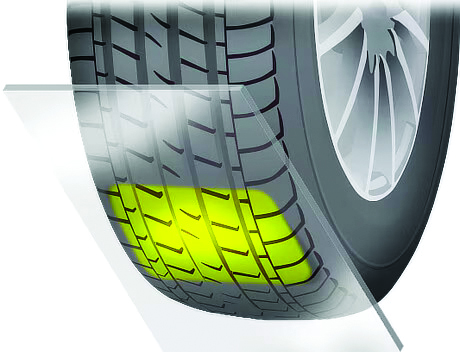 Traditionally, the tyre has been treated as a passive element in vehicle control with behaviour inferred indirectly from wheel speed, acceleration or yaw signals. Intelligent tyres allow more direct observation of the contact patch, providing real-time data on grip, load, temperature and surface conditions. This can significantly improve control robustness, especially in low-friction or rapidly changing environments.
However, integrating tyre-level information into vehicle control introduces challenges around signal reliability, latency, validation and redundancy, particularly for safety-critical and autonomous applications.
Another key issue is abstraction as raw tyre data must be converted into physically meaningful, trustworthy indicators that can be fused with other vehicle and environmental sensors.
In autonomous driving, intelligent tyres may not act as primary perception sensors, but they can play a critical supporting role by informing systems what is actually achievable at the tyre-road interface, rather than what is assumed.
“Ultimately, this represents a shift from tyres as passive components to active contributors to vehicle intelligence, requiring advances not only in sensing but also in modelling, validation and system-level integration,” said Taheri.
TRUSTED COLLABORATION
Tyre development today faces the formidable challenge of reconciling performance, safety and environmental responsibility across the entire lifecycle. Materials that deliver wet grip, durability and fatigue resistance often carry significant environmental footprints, and replacing them without introducing new risks is technically difficult.
At the same time, improving rolling resistance to enhance energy efficiency, particularly for electric vehicles, can conflict with wear, noise and grip, while higher vehicle mass and torque further complicate trade-offs.
Wear and abrasion present another concern as tyre particles are increasingly recognised as an environmental issue, yet understanding of their generation and transport mechanisms remains incomplete.
End-of-life considerations amplify these challenges, since tyres were not historically designed for disassembly or reuse, making recycling and circularity systemic design problems. Addressing these issues requires lifecycle-based thinking, advanced predictive tools and close integration of materials, manufacturing and vehicle disciplines.
Alluding to these, Taheri noted, “CenTiRe addresses these complexities through a pre-competitive collaborative model that brings together global tyre and automotive companies in a neutral, trust-based framework. By focusing on fundamentals, the centre creates shared understanding while allowing individual companies to retain proprietary advantages in design and implementation. Its role is to reduce upstream uncertainty and risk, providing rigorous, unbiased validation that benefits all members.”
Industry continues to invest in this model because the technical challenges of electrification, system integration and sustainability are too complex and costly to tackle in isolation. Beyond technical outputs, the consortium fosters a shared language, trust and a culture of collaboration that enables competitors to learn from each other without compromising competitiveness.
Looking ahead, the hope is that Taheri and CenTiRe are recognised less as a single person or centre and more as a trusted ecosystem that helped the tyre and mobility industry think more rigorously and collaboratively about tyre performance, safety and sustainability.
“Success will be measured by the engineers trained to bridge physics and manufacturing realities, the risk de-risked through sound modelling and experimentation and the elevated global technical conversation around tyres,” said Taheri.
Equally important is the role of CenTiRe in building bridges between disciplines, companies and generations of engineers, helping the industry better understand and respect one of the most complex yet underappreciated components of mobility.
Over the next decade, this vision positions CenTiRe as both a technical and cultural catalyst for the global tyre and mobility sector. n
Grismer Tire & Auto Service Appoints New CEO And CFO
- By TT News
- September 28, 2026

Grismer Tire & Auto Service, a tyre and automotive service centre operator backed by CenterOak Partners LLC, has named Chris Blanchette as Chief Executive Officer and Mark Hedstrom as Chief Financial Officer. The announcement marks a significant leadership transition for the portfolio company.
Blanchette arrives with over two decades of senior leadership experience in multi-site consumer services, specialising in operations, strategy and business development. He most recently served as Chief Executive Officer of Service Minds, a residential electrical, plumbing and HVAC services provider. His background also includes serving as Chief Operating Officer of QAS, which operates Valvoline Instant Oil Change locations, along with senior operational positions at Advance Auto Parts, Bridgestone Retail Operations and Best Buy.
Hedstrom brings more than three decades of finance expertise to his new role. He previously held the Chief Financial Officer position at W.S. Connelly & Co., a multi-regional specialty distributor, and has also served as Chief Financial Officer for several private equity-backed consumer and distribution companies.
Eric Holter, Managing Director, CenterOak, said, “Chris Blanchette brings highly relevant leadership experience in the automotive aftermarket. He has led complex, multi-location organisations and understands how to translate operational discipline into sustainable growth. Together, Chris and Mark add important depth to Grismer’s leadership team as the Company pursues expansion in existing and new markets.”
Blanchette said, “Grismer’s 90-year history and the trust it has earned with customers set the Company apart. I am excited to join a business with such a strong legacy and see significant
- International Rubber Conference
- Society Of Rubber Science And Technology Japan
- James Busfield
- Nobuyuki Tamura
- Bridgestone Corporation
- Japan Rubber Manufacturers Association
- Aichi International Exhibition Center
- Aichi Sky Expo
Japan To Host International Rubber Conference After Decade-Long Gap
- By TT News
- September 25, 2026
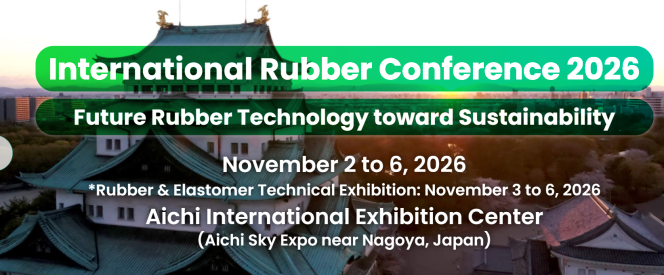
The International Rubber Conference (IRC) will return to Japan in November for the first time in a decade, with more than 271 technical presentations and over 117 exhibitors expected to take part.
The event, known as IRC 2026 Aichi, will be hosted by the Society of Rubber Science and Technology, Japan, alongside the Rubber & Elastomer Technical Exhibition in Aichi. It is scheduled to run from 2nd to 6th November, with the exhibition opening a day later and continuing until 6th November .
Held at the Aichi International Exhibition Center, also known as Aichi Sky Expo, the venue is located near Chubu Centrair International Airport and can be reached from Nagoya Station in about 28 minutes by train.
The conference programme will feature more than 271 presentations spanning rubber science, technology and industrial applications. Participants include James Busfield of Queen Mary University of London and Nobuyuki Tamura of Bridgestone Corporation, who also chairs the Japan Rubber Manufacturers Association. More than 400 delegates have already registered.
Running alongside the conference, the Rubber & Elastomer Technical Exhibition will host more than 117 exhibitors, ranging from raw material suppliers and machinery manufacturers to tyre makers and testing-equipment providers. The exhibition will be open to visitors free of charge.
The International Rubber Conference, first held in 1966, rotates annually across global host cities. The last event in Japan took place in Kitakyushu in 2016, with subsequent editions held in Haikou, Istanbul and Bangkok.
Pirelli Board Approves EUR 1 Billion US Investment Plan And Organisational Restructuring
- By TT News
- September 23, 2026
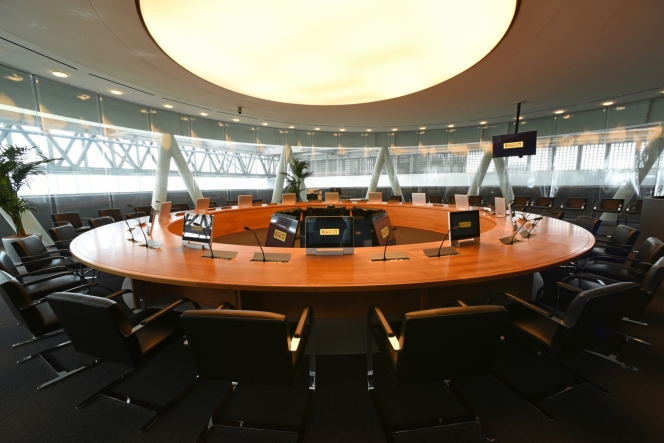
Italian tyre major Pirelli has announced a multi-year investment plan worth approximately EUR 1 billion (USD 1.2 billion) to expand its manufacturing facility in Rome, Georgia in the United States. The motion passed by majority vote, with board members Zhang Haitao, Xi Xiaohong and Wang Kun voting against the proposal.
The capital expenditure program, scheduled to begin in 2027 and will go through 2033, aims to expand annual production capacity at the Georgia site to six million tyres and create approximately 1,000 jobs.
The United States represents the largest market for high-value tyres globally, accounting for roughly 40 percent of global volumes. The project will be carried out in two phases without altering Pirelli's financial targets for 2026.
Phase one of the expansion will introduce modular robotised production systems based on Pirelli's Modular Integrated Robotised System technology, scaling annual output to three million tyres starting in 2028.
In phase two, the company will begin construction of an automated production facility to add three million units of annual capacity. The expanded plant will produce connected tyre systems, including Cyber Tyre technology, following market authorisation granted by the US Bureau of Industry and Security under Italy’s 2026 Golden Power Decree.
Alongside the investment decision, the board approved an organisational restructuring resulting in the immediate elimination of the Corporate General Management function. As part of the changes, Corporate General Manager Francesco Tanzi will step down from his executive role, maintaining an employment relationship through 31 December 2026 to facilitate the leadership transition.
Under the terms approved by the board and the Remuneration Committee, Tanzi will receive a severance payment equivalent to 13 months’ remuneration, payable by February 2027, alongside accrued rights under existing short-term and long-term incentive plans. He has agreed to a two-year non-compete covenant covering Pirelli's primary operating regions in exchange for 130 percent of his gross annual salary, paid in eight quarterly instalments. Following the end of his employment, Tanzi will provide advisory services under a two-year consultancy contract with an annual fee of EUR 350,000, plus non-monetary benefits valued at EUR 45,000.
Bridgestone Appoints Stefano Sanchini As President Of Europe Sales
- By TT News
- September 19, 2026
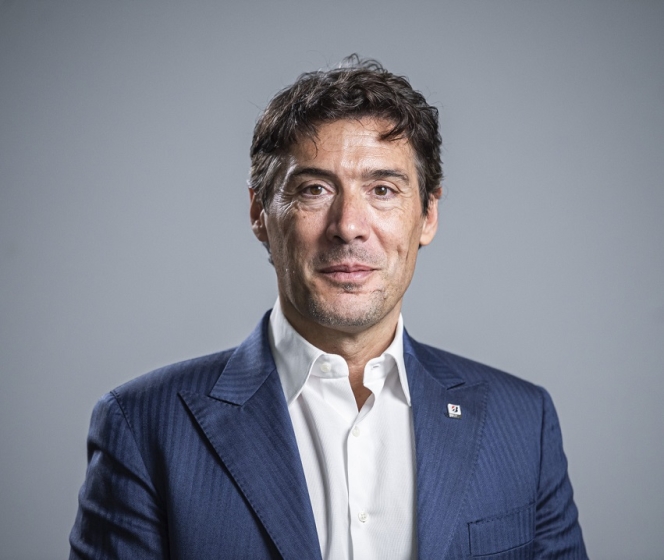
Bridgestone has announced a European leadership appointment aimed at sharpening customer focus, streamlining engagement across product groups and supporting its ongoing growth plans. Stefano Sanchini will become President, Europe Sales, effective 1 October 2026, leading the company’s European sales organisation across both Consumer and Commercial segments.
The expanded role unites sales activities spanning passenger car, truck and bus, agriculture, off-the-road, motorcycle and original equipment. Sanchini brings over 20 years of international leadership experience in the automotive and tyre sectors, with a career covering Europe, Middle East, Africa and India. Since joining Bridgestone in 2017, he has held several senior positions, including Managing Director of Bridgestone India.
Most recently, as Vice President for Consumer Replacement in Europe, he helped strengthen customer engagement, commercial performance, profitability and regional market growth. Bridgestone said the appointment underscores its commitment to customer relationships, commercial execution and simpler cross-market operations. Sanchini will pursue sustainable growth while developing capabilities and partnerships supporting the company’s long-term European strategy.
Mete Ekin, Group President EMEA, said, "Our customers increasingly operate across multiple product categories and expect a consistent experience wherever they engage with Bridgestone. By bringing our sales activities together under one European structure, we are creating a simpler, more connected organisation that will help us respond faster, collaborate more effectively and continue building strong partnerships with our customers."

Comments (0)
ADD COMMENT