

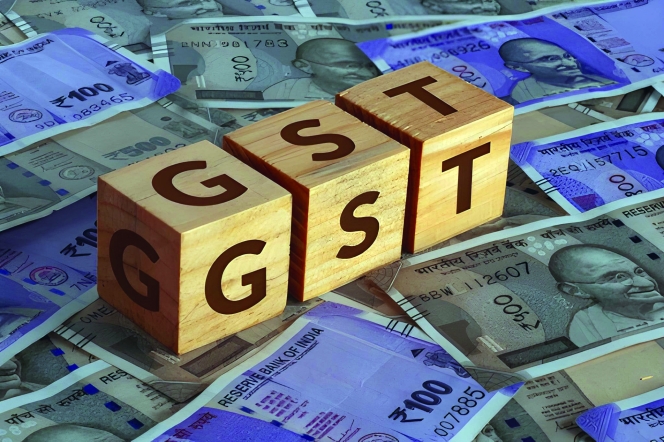
The rollout of GST 2.0 marks a defining moment in India’s economic journey – a reform that may well prove even more consequential than the original introduction of the Goods and Services Tax. Especially for a sector like tyres, the recent reduction in (GST) on tyres is far more than just a change in numbers. It is a transformative step that touches every wheel turning on India’s roads – from a farmer’s tractor to a trucker’s long-haul trailer and from a commuter’s scooter to a construction vehicle powering the nation’s infrastructure.
For years, tyres were taxed at 28 percent – the highest GST slab, clubbed with luxury and demerit goods. This categorisation never truly reflected the essential role tyres play in our everyday lives. Tyres are not a luxury. They are a fundamental enabler of mobility, supporting the movement of people and goods across cities, towns and villages. By bringing GST rates on tyres down to a more rational level, the government has addressed a long-standing anomaly and set the stage for widespread benefits across the economy.
The most visible impact of this move will be felt on the ground – literally. Lower GST means more affordable tyres for all users. Especially for transporters and fleet operators, tyres account for a significant chunk of vehicle running costs. A reduction in tax translates into lower replacement costs, freeing up working capital and improving operational margins. Farmers, small traders, delivery personnel, service providers, transporters – every segment that relies on mobility will feel this relief.
India has been working hard to bring down logistics costs, which are believed to be about 13–14 percent of GDP – much higher than global benchmarks. Tyres have a direct bearing on vehicle operating efficiency, fuel consumption and maintenance schedules. When tyres become more affordable, operators can replace tyres on time, and run vehicles more efficiently.
This naturally leads to lower logistics costs. Reduced logistics costs ripple across the value chain, helping industries move goods faster and at lower cost. This aligns perfectly with India’s ambition to become a more globally competitive manufacturing and trading hub.
Tyre industry’s story is not just urban – it’s deeply rural as well. Tractor tyres, power tiller tyres and tyres for animal-drawn vehicles are integral to the agricultural economy. A reduction in GST brings meaningful relief to farmers and small cultivators who rely on these tyres for their daily operations. By easing this cost, the government has extended direct support to rural mobility and agricultural productivity – an often underappreciated but critical outcome of this reform.
One of the most powerful yet often overlooked impacts of this decision lies in road safety. Worn-out tyres are a major cause of road accidents, particularly on highways. High replacement costs often lead to tyres being used well past their safe life.
With lower GST making new tyres more accessible, both individual motorists and commercial fleet owners are more likely to replace tyres on time, keeping vehicles safer and reducing accident risks. This complements the government’s broader road safety agenda, making highways not just faster but safer for everyone.
For the Indian tyre industry, which is one of the largest in the world, this reform is a game changer. It creates a more balanced tax structure, supports better cash flow, improves compliance and strengthens the competitiveness of domestic manufacturers. It will also encourage investment and capacity expansion, enabling the industry to serve growing domestic demand and tap export opportunities more effectively.
The GST reduction on tyres is a strategic, forward-looking policy decision that will benefit the entire mobility ecosystem. It acknowledges the essential role tyres play – not just as a product, but as a critical enabler of transportation, logistics, rural livelihoods and road safety.
As this reform takes root, its positive impact will be felt by consumers, businesses, farmers and industries alike. The tyre industry, represented by ATMA, welcomes this move wholeheartedly and remains committed to working alongside the government to strengthen India’s journey towards affordable, efficient and safe mobility for all.
The author is Director General of the New Delhi-based tyre industry association, Automotive Tyre Manufacturers’ Association (ATMA).The views expressed here are personal.
CEAT Specialty’s Off-Highway Tyre Playbook
- By Sharad Matade
- October 09, 2026
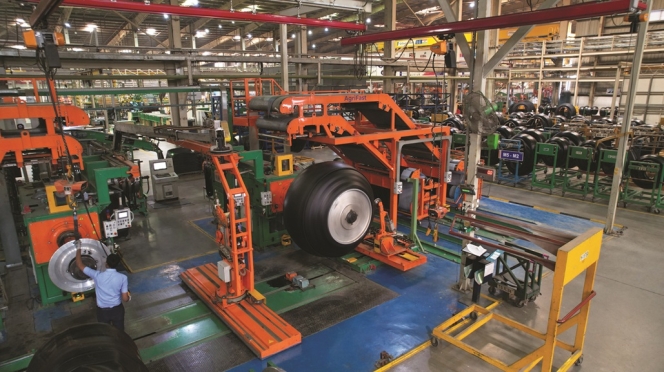
CEAT’s Chennai and Halol plants are the only tyre facilities globally with two WEF Global Lighthouse Network inductions, and the company has also won the Deming Grand Prize for manufacturing excellence.
Yet 30 km from Mumbai, CEAT Specialty’s 49-acre Ambernath plant tells a different story: tyres too heavy for automation, built instead around nitrogen curing, induction presses and orders as small as one unit – a bet that sustainability will win markets in Europe and America.
The stakes: an INR 5 billion investment in all-steel radial technology, capacity expansion to 160 tonnes/day and a Camso manufacturing deal Tolani pegs at up to USD 1 billion – turning a manufacturing constraint into a competitive edge.
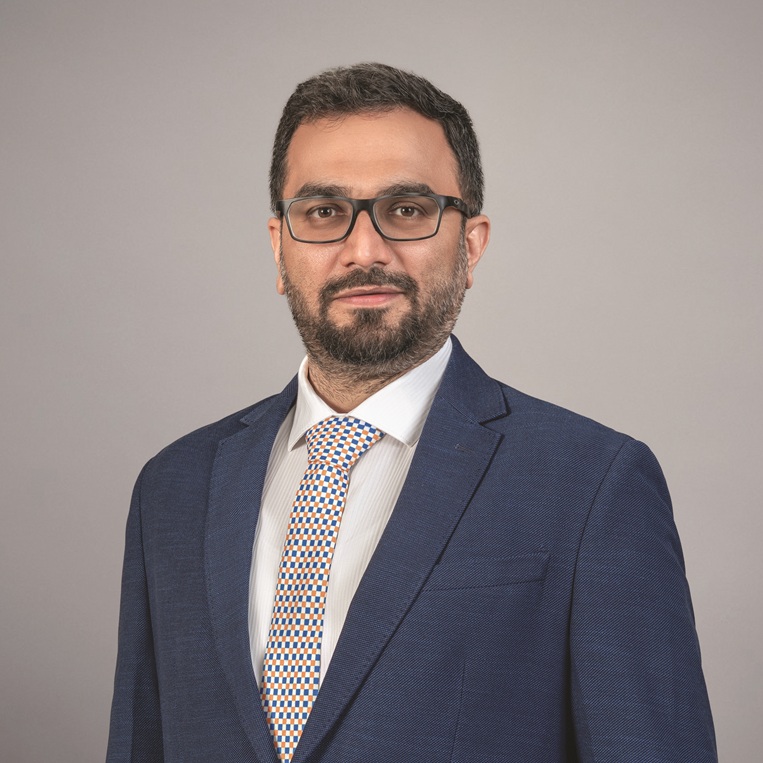
Amit Tolani, Chief Executive of CEAT Specialty, does not talk about tyres the way most executives talk about their products. He talks about them the way an engineer talks about a puzzle that keeps changing shape. “The way to look at it is that the manufacturing processes that we follow – how modern they are, how capable they are, how technically efficient – that’s what matters,” he says, sitting inside the plant that has become the nerve centre of CEAT’s off-highway tyre (OHT) business.
That plant – the Ambernath facility, a division of Mumbai-headquartered RPG Group’s CEAT Limited – is not a conventional tyre factory. It builds tyres that can weigh up to over 600 kilogrammes, tyres too large and too heavy for the automation that has transformed the passenger-car tyre business. And it is this constraint, as much as any strategic masterplan, that has shaped how CEAT Specialty has chosen to compete.
A PLANT THAT CANNOT SIMPLY COPY THE ROBOTS
Ask Tolani why Ambernath has not adopted the wall-to-wall robotic automation seen at CEAT’s Chennai or Halol facility, and the answer is refreshingly unglamorous: physics. “PCR tyres can be lifted by an ordinary human being, or a forklift, or robots,” he explains. “For these tyres, which are 600–700 kg, it’s very difficult to have a conveyor that can just lift them.” In the processes that do lend themselves to automation – mixing, calendering, curing – Ambernath’s equipment, he insists, is ‘as modern as the Chennai plant. More modern’. The plant intends to formalise that claim in the coming months by pursuing Industry 4.0 certification.
Where the physical limits of scale end, digital ones have taken over. A SCADA system tracks steam lines running beneath the plant floor. Where a leak once required a worker to walk the line, take manual temperature readings and diagnose the fault, artificial intelligence now flags the location almost instantly. “The point time taken to identify the problem is close to zero,” Tolani says. Every tyre carries a digital identity from raw material to finished good; a single scan reveals the batch, the machine, the operator and the timestamp behind it. AI is also being trained on the plant’s visual tyre inspection – traditionally a human, eyeball-driven task – using high-resolution cameras to catch defects, and on optimising mixing recipes and cycle times, the invisible chemistry that determines how a tyre performs in a paddy field or a quarry.
CURING WITHOUT STEAM
The most technically striking claim to emerge from Ambernath concerns curing – the energy-intensive process of vulcanising rubber under heat and pressure that has, for a century, meant steam. “This plant has already started using nitrogen curing on one of the lines,” Tolani says. Alongside it sit two proof-of-concept induction curing presses – a steam-free process, while the nitrogen conversion has come via LMT. “There are two presses that are already commissioned here,” he says. “We’ve already started working in that direction, where we want to take a lead in this space.”
The bulk of the plant’s newest investment, however, is going into something more conventional in principle but strategically significant in intent: all-steel radial off-the-road tyres. CEAT Specialty has committed INR 5 billion to this latest phase of expansion, representing a decisive shift in product architecture. Where a car’s tyres are universally radial, only 60–70 percent of truck tyres have made that transition, and agricultural and OTR applications lag further still – agriculture because usage is seasonal, OTR because a fabric-belted bias tyre still does much of the heavy lifting. All-steel radial construction changes that calculus by delivering higher load-carrying capacity and greater comfort, attributes increasingly demanded not only by Indian buyers but, crucially, by European and American customers. “It’s for demand from the European market, the US market – and the Indian market is also growing in such a handsome fashion that we want to cater to it,” Tolani says.
LEAN BY DESIGN, NOT BY SLOGAN
CEAT’s manufacturing philosophy is inseparable from its most prized accolade: in 2017, CEAT became the first tyre company outside Japan to win the Deming Prize, the world’s most prestigious award for total quality management; in 2023, it became the first tyre company anywhere to win the Deming Grand Prize, a distinction held by only 33 organisations globally as of 2025. Inside CEAT, this discipline is branded QBM – Quality Based Management – a homegrown fusion of Total Quality Management, the Toyota Production System and Total Productive Maintenance.
“We are a Deming Grand organisation. That means we follow the philosophy of lean manufacturing – not to use resources or have any wastage in the process,” Tolani says. That philosophy is embedded, quite literally, in the plant’s straight-flow layout, which runs from raw material storage through mixing, stock preparation, tyre building, curing and final finish in a single unbroken line. Even small batch sizes, he says, are produced without the wastage, excess labour or lost efficiency – what the plant’s internal vocabulary calls ‘Muri’ – that might otherwise creep in.
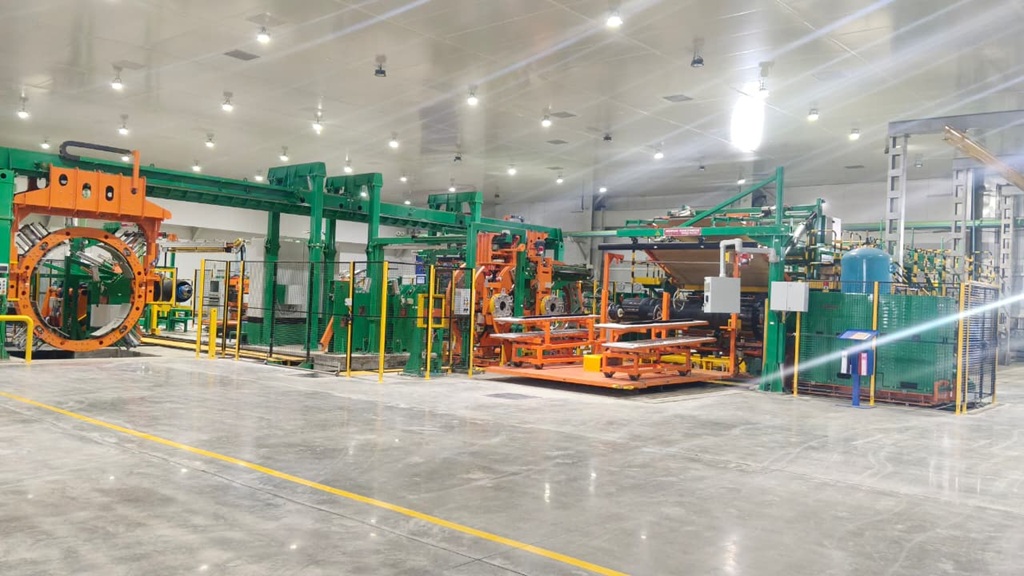
That same lean instinct underpins one of Ambernath’s more unusual competitive claims: a minimum order quantity of one. In an industry historically built around economies of scale, the plant will build a single speciality tyre to a customer’s specification without demanding batch aggregation – a capability the company says few OHT plants worldwide can match. Self-managed teams on the shop floor plan and execute changeovers themselves, allowing a highly automated, digitally traceable line to pivot rapidly to low-volume, customised orders. A related innovation, branded Unistage, builds and shapes an agricultural or OTR radial carcass into its final toroidal form on a single drum rather than the conventional two-stage process, reducing the handovers.
AN R&D CENTRE BUILT FOR SPEED, NOT SCALE
CEAT Specialty operates a dedicated in-house research and development facility at Ambernath, distinct from the group’s broader R&D infrastructure, and Tolani is candid about why. Tolani says, “This business is very, very different. There is no Pareto here – no 80/20 rule where a handful of product sizes serve the bulk of demand. Because farm and off-highway equipment come in such a long tail of sizes and configurations, and because the plant supplies numerous international OEMs directly, the time taken to develop, validate and commercialise a new tyre has to be compressed.”
“We needed a dedicated facility, closer to the manufacturing, so that we can quickly pilot, quickly turn around,” he adds. A new Compound Laboratory, opened in September 2025, now anchors materials science work spanning OTR, agricultural and industrial segments, while AI-assisted testing has trimmed, by Tolani’s estimate, roughly a third off the time from concept to market. The centre’s pipeline currently spans all-steel OTR tyres, a newly launched forestry range, very high flexion (VF) agricultural tyres and expanding work in earthmoving and material handling.
CAMSO ACQUIRED FOR BRAND, CHANNEL AND CATEGORY
CEAT Specialty’s move into Camso – a name Tolani values at up to USD 1 billion in brand potential across agricultural tracks, power sport tracks and material handling – may be its most consequential strategic bet. “It was a natural fit for us in terms of completing our portfolio,” he says. Ambernath, built in 2018 solely for agricultural radial tyres, gains through Camso’s new OEM ties (Massey Ferguson, John Deere) and construction-channel access across South America and Europe.
Under a three-year Michelin agreement, CEAT can currently manufacture and sell only compact construction tyres and tracks under Camso, taking over end-consumer sales in that segment – with other categories opening up once the term ends. The impact is already visible: standalone, CEAT Specialty’s off-highway mix is 85:15 agriculture to non-agriculture; with Camso’s, it shifts toward 50:50.
THE NUMBERS BEHIND THE AMBITION
Ambernath is running at 105 tonnes a day, at 92–95 percent utilisation – ahead of schedule. A further phase, due within 45 to 60 days, will lift capacity to 160 tonnes. Camso, still integrating, runs at roughly 50 percent.
Off-highway tyres make up close to 20 percent of CEAT’s speciality revenue, with the agriculture-to-non-agriculture split narrowing from 85:15 to near 50:50 once Camso is included. Domestically, Tolani credits GST reforms for a strong OEM market, led by Mahindra and TAFE, while mining stays flat – a segment Camso’s construction heritage should help lift as the new all-steel OTR line comes online.
Inside CEAT’S Factories Of The Future: A Conversation With Jayasankar Kuruppal
- By Sharad Matade
- October 09, 2026
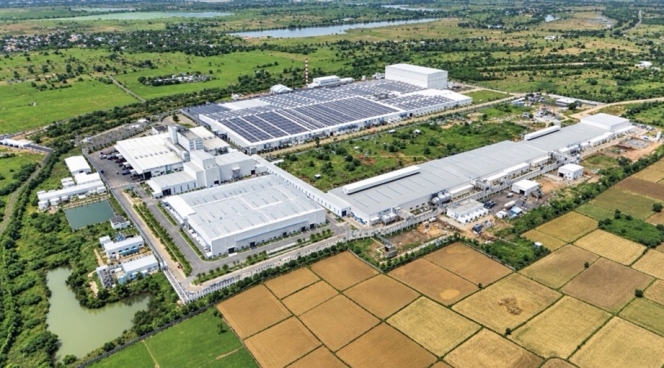
When the World Economic Forum inducted CEAT’s Chennai facility into its Global Lighthouse Network in January 2025, it made the Indian tyre-maker the first tyre brand in the world to hold two such honours – Chennai following in the footsteps of the company’s Halol plant. Add to that CEAT’s Deming Grand Prize, awarded by the Union of Japanese Scientists and Engineers for sustained excellence in Total Quality Management, and the company finds itself in rarefied company: one of only a handful of manufacturers worldwide, and the only tyre brand to hold both distinctions.
Behind these accolades sits a quieter, harder story – one of culture change, shop-floor scepticism and years of disciplined, incremental investment in artificial intelligence, the Industrial Internet of Things and automation. In an interview with Tyre Trends, Jayasankar Kuruppal, Senior Vice President, Manufacturing at CEAT, spoke on what these recognitions actually mean on the factory floor, and where the company believes manufacturing is headed next.
AWARDS AS A BY-PRODUCT, NOT THE GOAL
CEAT’s Chennai plant has posted striking numbers since its digital transformation began: a 54 percent improvement in dispatch turnaround, a 25 percent uplift in labour productivity, an 18 percent reduction in cycle times, a 31 percent improvement in operating cost and a 47 percent cut in Scope 1 and 2 emissions. Yet Kuruppal is quick to reframe the narrative around these achievements.
“The awards are lagging indicators, not the goal. What actually matters is what they force us to build: a common language for problem-solving across every plant, real-time visibility into quality and efficiencies and a workforce that trusts data over gut-feel,” Kuruppal said.
“That discipline shows up directly in the numbers – tighter process capability, better efficiencies and faster changeovers leading to shorter lead times. There is a commercial dividend too: global OEMs increasingly audit manufacturing maturity, and being part of the WEF Global Lighthouse Network gives us instant credibility in those conversations,” he added.
WHAT’S REALLY DRIVING THE INVESTMENT
CEAT has been pouring capital into AI, IIoT and automation across its plants. Is this cost pressure, premiumisation or a simple need to stay globally competitive? Kuruppal’s answer suggests it is all three, each playing a distinct role.
Kuruppal explained, “Quality, cost and efficiency is what gets the funding approved. Premiumisation is what’s shaping which lines we automate or upgrade first – you cannot hold the tolerances a premium radial demands with manual, operator-dependent processes.” According to him, global competitiveness, meanwhile, sets the ambition. “We’re not benchmarking ourselves against the best tyre plant in India anymore – we’re benchmarking against the best factories in any industry,” he added.
Asked to rank the three forces, he summarised neatly: competitiveness sets the ambition, premiumisation sets the sequencing and cost discipline keeps the whole effort honest.
REPLICATING HALOL AT CHENNAI: CULTURE OVER CODE
Chennai’s transformation built directly on lessons learned at Halol, the world’s first tyre facility inducted into the Lighthouse Network. And when asked what proved hardest to replicate, the technology, the culture or getting the underlying processes right, Kuruppal said, “Technology was actually the easiest part to copy. A use case that works at Halol can be re-deployed at Chennai in weeks.”
But the real difficulty, as per Kuruppal, was culture, people and change management. At Halol, habits such as daily data reviews, operator ownership of quality metrics and a managerial focus on coaching rather than firefighting were built steadily over several years. Chennai, by contrast, has had to replicate that trajectory on a compressed timeline, with a workforce encountering these practices for the first time.
“We had to resist the temptation to just parachute in dashboards and call it digital. We spent real time getting the underlying process standardisation right first, because AI on top of an unstable process just gives you a faster route to the wrong answer,” Kuruppal said.
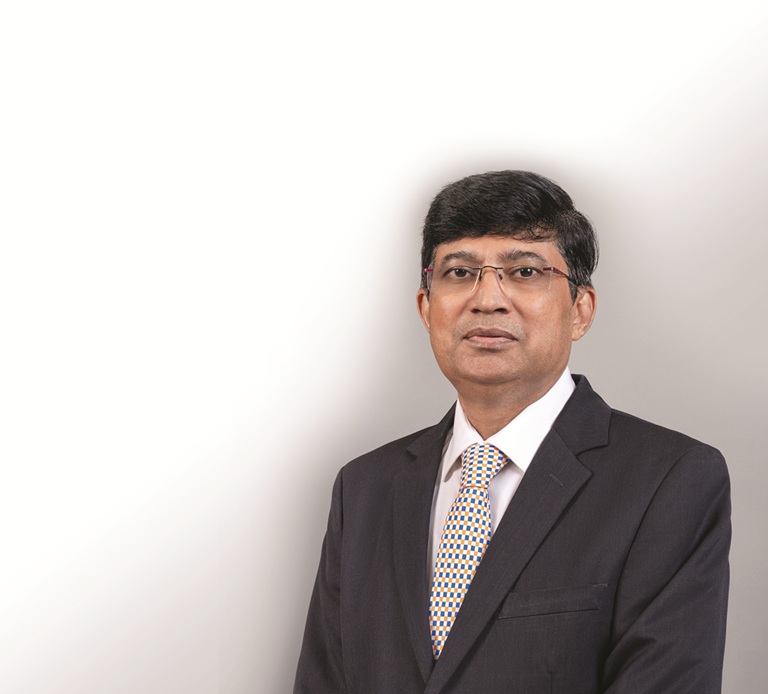
Jayasankar Kuruppal, Senior Vice President, Manufacturing, CEAT
WHERE THE RETURNS SHOW UP – AND WHERE THEY HAVEN’T YET
The productivity and dispatch gains at Chennai, he explained, hit the balance sheet in different ways. The productivity improvement lowers conversion cost per tyre and improves absorption of fixed costs as volumes grow. The dispatch improvement is more of a customer-experience story: less finished-goods inventory sitting idle, and OEMs and dealers receiving faster, more predictable delivery windows – ‘which matters a lot when you’re chasing premium and export business’.
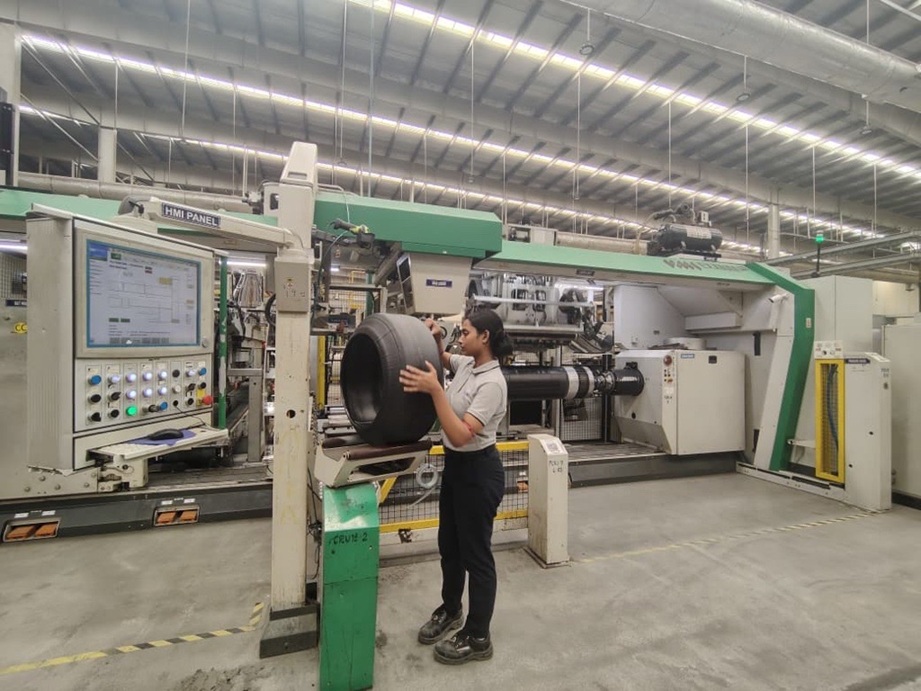 Not every initiative has paid off yet, however. Kuruppal was candid about the areas still short of return, singling out ‘some of the more exploratory AI use cases – like computer-vision pilots – which need more data cycles before the accuracy justifies scaling them further’.
QUALITY, MAINTENANCE, OUTPUT: AI TOUCHES ALL THREE
Rather than picking a single area where artificial intelligence delivers most value, Kuruppal argued that its power lies in the way it now touches quality, maintenance and output simultaneously – and that these reinforce one another. “Better quality data feeds better predictive-maintenance models, which reduces unplanned downtime, which directly lifts output,” he said. The most immediate impact shows up in more consistent product quality, higher yields and earlier detection of equipment issues. He pushed back, though, on the idea that AI at CEAT is a single flagship project: “On our floor, it’s dozens of narrow, specific use cases, each solving one operator’s or one supervisor’s actual problem.”
JUSTIFYING THE SPEND IN A MARGIN-TIGHT BUSINESS
Tyre manufacturing is not a business with room for indulgent technology spending, and Kuruppal was clear that CEAT does not fund innovation for its own sake. “Every use case has to show a clear line to quality, efficiency, cost or capacity enhancement before it gets budget,” he said. The company deliberately starts small – piloting on a single line, proving value with real production data, and scaling only what works – a discipline that means ‘the savings from scaled use cases fund the next round of pilots’. He offered a broader rationale too: in a commodity-adjacent business where raw material costs sit largely outside a manufacturer’s control, manufacturing capability itself becomes the differentiator. “If we can’t always control input costs, we can control how efficiently and consistently we convert them into tyres,” he added.
CHENNAI PLANT WIDENS ITS PREMIUM PUSH
CEAT on Oct. 1 announced an expansion of manufacturing capabilities at its Chennai plant across passenger car and SUV, commercial vehicle and two-wheeler tyres. The company said the move targets premium customers in India, Europe and North America.
What’s new
Cars and SUVs: The plant now makes the SportDrive SUV ZR22. CEAT said this makes it the first Indian tyre company to manufacture 22-inch tyres in India. It also makes the 4SeasonDrive+ all-season tyre and the CrossDrive RT rugged-terrain tyre, built for the U.S. market.
Trucks and buses: The plant can now produce seven advanced truck and bus radial sizes, including wide-base tyres that can replace dual-tyre setups, and low-profile sizes. CEAT is also scaling light truck steel radials in 15-, 16- and 17.5-inch sizes.
Two-wheelers: The SportRad Racing Slick range targets track use, and SportRad ST is a sport-touring range for motorcycles above 650cc.
“This investment strengthens our ability to compete in premium segments with products developed and manufactured in India,” CEAT managing director and CEO Arnab Banerjee said.
The 163-acre plant in Sriperumbudur, Kanchipuram, runs on connected machinery and real-time analytics. It also has a 9 MW rooftop solar installation and operates as a zero-liquid-discharge facility.
FROM PILOT TO SCALE: AN OPERATING-MODEL PROBLEM
With a large share of CEAT’s lines now running as ‘smart lines’, when asked what changes when a company moves from isolated pilots to scaling technology across multiple plants, the CEAT executive explained, “The problem changes completely. A pilot is a technology and data-science problem – get the model working, prove the use case. Scaling is an operating-model problem – standard work, training, change management, IT infrastructure that can handle load across sites and governance so every plant isn’t reinventing its own version of the same solution.”
CEAT has built what he calls a central playbook – reusable architecture, common data standards and the ability to roll a proven use case out to a new plant in weeks rather than months. “Just as importantly, ownership shifts: at pilot stage, a project team owns the initiative; at scale, it must become the plant’s own way of working, run by operations rather than a digital team sitting alongside it,” he added.
BRINGING 80 PERCENT OF THE WORKFORCE ALONG
CEAT reports that more than 80 percent of its workforce is now digitally enabled – a transformation Kuruppal admits did not come without resistance. “Yes, and I’d be understating it if I said otherwise,” he said. Crucially, he insists the resistance was never really about technology itself but about ease of operation. What worked, he explained, was making tools visibly useful to the person using them first – an operator seeing a dashboard that helps them hit their own target before it ever becomes a management reporting tool. CEAT invested heavily in shop-floor-specific training rather than generic digital-literacy courses and made a point of promoting from within, demonstrating that digital skills opened up better roles rather than closing off old ones. The company has also created new shop-floor roles beyond data scientists and engineers – ‘Business Translators’ and ‘Champions’ who act as torchbearers driving scaled implementation and wider blue-collar involvement.
CONSISTENCY, NOT JUST DEFECT COUNTS
Asked whether tighter process control has genuinely reduced defects, Kuruppal reframed the question around consistency. “Tighter process control means less batch-to-batch variation, which matters enormously in tyre manufacturing because so much of performance and durability comes down to material consistency through mixing, extrusion and curing,” he said. Real-time monitoring now catches drift early, rather than at final inspection – both a quality win and a material-efficiency win, in the form of less scrap and rework. The habit that has changed most, he said, is that quality data now drives daily decisions on the shop floor, rather than featuring only in a monthly review.
MANUFACTURING FOR A PREMIUM, ELECTRIC FUTURE
CEAT’s push into premium tyres calls for a step-change in manufacturing discipline. “Premium tyres are far less forgiving of variation, so the shift starts with tightening process capability across every stage – not just final inspection. That means more precise equipment, better process capability and closed-loop control,” said Kuruppal. In this context, flexibility takes on a different meaning: a wider SKU mix, smaller batch sizes and faster changeovers are pushing the company towards more modular manufacturing, alongside a workforce increasingly weighted towards process engineering expertise.
Electric vehicles introduce an additional layer of complexity. EV tyres must carry greater weight, handle instant torque and operate more quietly, tightening specifications around structural strength, noise and rolling resistance beyond those of conventional tyres. On the shop floor, that translates into new compound formulations requiring precise mixing, reinforced construction demanding tighter control of building machines and significantly lower tolerance for micro-variation.
CEAT’s existing leadership in the e-two-wheeler tyre segment, Kuruppal noted, is already feeding lessons – particularly on noise and efficiency – into how the company prepares lines for growing e-four-wheeler volumes in India.
 SUSTAINABILITY AND RESILIENCE, BUILT IN
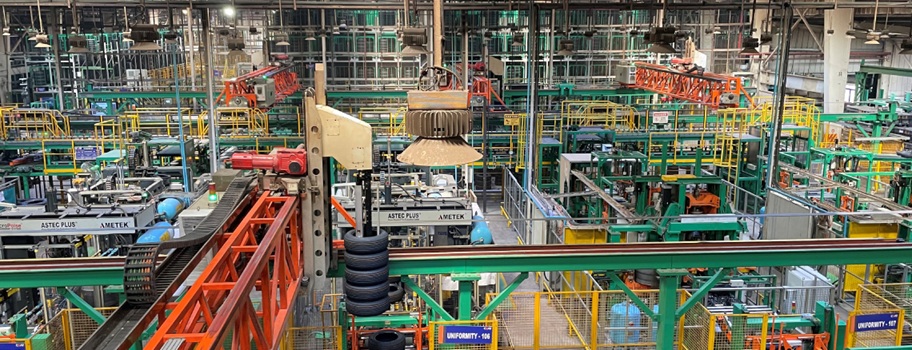
Sustainability, once a separate reporting exercise, is now ‘a line item in almost every manufacturing decision’, with energy and emissions sitting alongside cost and quality when evaluating new processes or equipment – Chennai’s 47 percent emissions reduction being the clearest proof point. Resilience, too, has become as much a data problem as a sourcing one. “Real-time visibility into inventory, machine health and production schedules means we can see a disruption coming and reschedule around it rather than reacting after a line has already stopped,” Kuruppal said, pointing also to greater flexibility in shifting product mix between lines and earlier warning signals from digitised supplier and logistics data.
SPEED AS A COMPETITIVE WEAPON
Manufacturing speed and flexibility, Kuruppal argues, have become one of CEAT’s most important competitive dimensions, as OEMs compress their own development cycles and expect tyre partners to match their pace – faster prototyping, faster line trials, faster ramp-up to volume. Chennai’s faster dispatch turnaround is part of the same story. “It’s not just about making tyres faster; it’s about the whole chain from order to delivery being more predictable and quicker,” he said.
GROUND STILL TO COVER
For all its Lighthouse credentials, Kuruppal was refreshingly honest about the distance still to travel. “Being part of that network is genuinely humbling. You see factories in electronics and consumer goods running end-to-end AI-driven planning and quality systems at a level of maturity we’re still building towards – particularly in advanced analytics for demand-and-production planning and in scaling generative-AI use cases beyond pilots,” he said. CEAT’s strength, he believes, lies in shop-floor execution and quality; the next frontier is connecting that data seamlessly across the full value chain, from raw-material sourcing to the end customer.
MANUFACTURING AS A GROWTH DRIVER
Perhaps the most striking shift Kuruppal describes is a change in how manufacturing itself is perceived within the business. “Traditionally, manufacturing was viewed in this industry as a cost centre that executes what sales and product teams decide,” he said.
“Today, our manufacturing capability is directly opening up premium and export opportunities, because global customers evaluate factory maturity as part of their sourcing decision. It works in the other direction too, shaping which premium and EV products the company can confidently commit to launching. Manufacturing has moved from being an execution function to being a genuine input into growth strategy,” he added.
WHAT COMES NEXT
Looking ahead, Kuruppal frames the next horizon as connecting what CEAT has built plant-by-plant into a single, integrated digital thread – spanning raw-material and demand planning, production and distribution – so decisions are optimised end-to-end rather than site-by-site. Generative AI, he said, is increasingly being explored for process and equipment troubleshooting and knowledge capture, making the expertise of CEAT’s best engineers accessible across every plant. Sustainability, meanwhile, will be designed into new lines from the outset rather than retrofitted. “The common thread is moving from isolated smart use cases to a genuinely integrated smart manufacturing system,” he explained.
THE ONE NUMBER THAT MATTERS
Answering the question on if he could track just one metric across every CEAT plant, what would it be, he admitted, “If I’m honest, no single number tells the whole story, but if forced to pick one, it would be Overall Equipment Effectiveness – OEE.”
“As a composite of availability, performance and quality, a healthy and rising OEE generally signals that machines are running, running at the right speed and producing good tyres – which is really the definition of a plant working as it should,” he said. It has its limits – OEE alone won’t reveal a lapse in safety culture or the pace of digital adoption – which is why, in the end, Kuruppal names two figures he watches above all: OEE and safety indicators.
Panu Ärölä Returns To Tana Oy In Territory Business Manager Role
- By TT News
- October 07, 2026
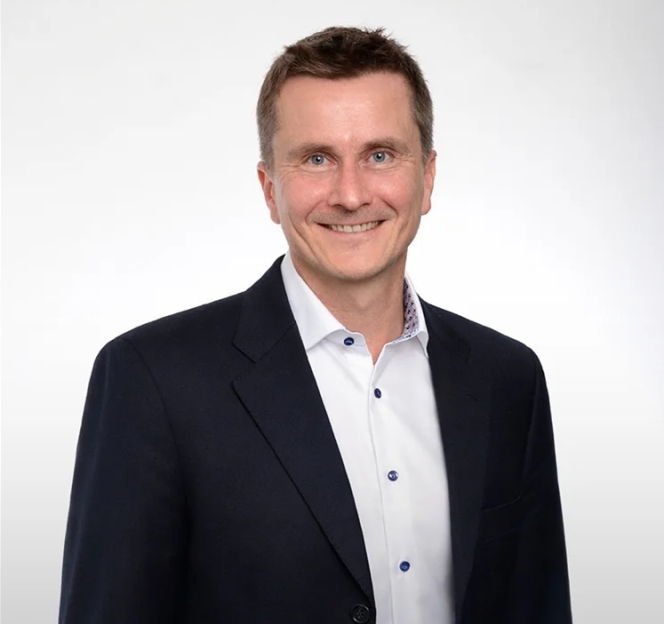
Tana Oy has appointed Panu Ärölä as its new Territory Business Manager, a role he will assume on 2 November. In this capacity, he will focus on strengthening customer and distributor relationships across designated markets while contributing to the company’s ongoing expansion within the waste management and recycling sector.
Ärölä returns to Tana after previously serving as Sales Manager, where he developed expertise in distributor network growth. His background includes extensive international experience in sales, marketing, business development and strategic leadership. Most recently, he held the position of Head of Sales and Marketing at Jet-Tekno Oy, overseeing customer relationship development and business growth initiatives.
Gerd Schreier, VP – Sales, Marketing & Channel Development, said, “We are delighted to welcome Panu back to Tana. His industry knowledge, customer focus and experience in international sales make him a valuable addition to our team. We look forward to working with him as we continue to develop our business and create value for our customers and partners.”
Schill+Seilacher Appoints Stephan Sielaff As Chief Executive
- By Sharad Matade
- October 07, 2026

Stephan Sielaff took over as chief executive of the Schill+Seilacher Group on 1st October , as the chemicals group seeks to strengthen links between its businesses and focus more closely on customer needs.
Sielaff brings about 30 years of experience in developing international businesses and organisations. His previous roles include positions at Unilever, Symrise, Archroma, Lenzing AG and SSI SCHÄFER Plastics.
His priorities at Schill+Seilacher include getting closer to customers, encouraging greater knowledge-sharing across the group and making better use of capabilities across its businesses and locations.
“A good product alone is no longer enough. What matters is the value we create for our customers,” says Stephan Sielaff.
The group said it would seek to share knowledge, pursue opportunities jointly and strengthen connections between its locations and business areas.
Sielaff's appointment is intended to support a more integrated approach across the group as it develops its businesses in the years ahead.

Comments (0)
ADD COMMENT