

The Road To Premium: How Continental Tires Is Steering India’s SUV Revolution
- By Sharad Matade
- June 10, 2026
Nevin Aslan-Özkan, the newly appointed Managing Director of Continental Tires India, outlines a strategy focused on ultra-high-performance tyres, a EUR 10.5 million investment and the introduction of global technology to Indian roads. She explains why India is now central to Continental’s global strategy.
India’s passenger vehicle market is moving at speed. According to data published by Autopunditz, dispatches in April stood at 441,721 units, marking a 25 percent year-on-year rise. Beneath that headline figure lies an equally consequential structural shift: SUVs now account for more than 60 percent of recent volume growth in the passenger vehicle segment – a transformation that is reshaping not just what Indians drive but what they expect from every component beneath the car.
Nevin Aslan-Özkan, who became Managing Director of Continental Tires India this year after more than eight years with the company, most recently as Chief Financial Officer, views this as a pivotal moment. “As the market moves towards premium vehicles, adventure-led driving, larger rim sizes and a stronger focus on safety, comfort and performance, we are well-positioned to bring our global technology and premium tyre portfolio to meet the evolving needs of Indian consumers while continuing to strengthen our presence in the passenger vehicle segment,” she says.
She describes her transition from CFO to Managing Director as a progression rather than a change. “Being the Chief Financial Officer in India, I have gained strong insights into the market and business operations. As I take on the new responsibility, I will focus more on knowing the consumer needs and lead Continental’s growth agenda in India, with a strategic focus on accelerating the company’s presence in the passenger vehicle segment,” says Aslan-Özkan.
 Her immediate priorities are clear. “My immediate priorities will focus on leveraging evolving consumer preferences to drive profitable growth for Continental Tires in India,” she explains. “A key area of emphasis will be strengthening our presence in the UUHP segment, particularly in the above 18-inch category, going up to 22 inches, in line with the evolving car parc. In parallel, I will prioritise expanding our footprint and deepening market penetration across key regions while enhancing production capabilities to support sustained growth and operational efficiency with made-in-India 21- and 22-inch tyres,” adds Aslan-Özkan.
THE SUV IMPERATIVE
The structural shift in consumer preferences is not a peripheral consideration for Continental – it is, Aslan-Özkan insists, central to everything. “The structural shift in consumer preferences is very central to our growth blueprint. SUVs now account for over 60 percent of recent volume growth in the passenger vehicle segment. In line with this, a key area of focus for us is strengthening our presence in the UUHP segment, particularly in the above 18-inch category, going up to 22 inches,” she says.
To strengthen its position in these high-value categories, Continental is adopting a multi-pronged approach. This includes an investment of approximately INR 1 billion (EUR 10.5 million) in India to support growth in the passenger vehicle tyre segment and a focused expansion of the product portfolio, particularly in the 21- and 22-inch tyre categories.
“We are well-positioned to bring our global technology and premium tyre portfolio to meet the evolving needs of Indian consumers. As the market moves towards premium vehicles, adventure-led driving and a stronger focus on safety, comfort and performance, we will proactively adapt and enhance our portfolio to meet changing needs. We are also working towards expanding our footprint across key markets to enhance accessibility and customer reach,” elaborates Aslan-Özkan.
PREMIUMISATION’S MOMENT
For years, premium tyres in India faced a challenge: price sensitivity limited the ability to build volumes that justified sustained investment. Aslan-Özkan notes that this challenge has now eased.
Aslan-Özkan says, “The long-term outlook for the Indian tyre market remains very strong. We are seeing a structural shift in consumer preferences towards premium vehicles, adventure-led driving, larger rim sizes and a stronger focus on safety, comfort and performance. As the market matures and consumers increasingly gravitate towards premium vehicles, the conditions for premiumisation have become both viable and scalable.”
Continental is committed to maintaining product relevance. “We will continue to focus on introducing products and technologies that are aligned with evolving consumer preferences in India, ensuring that our offerings remain relevant, innovative and competitive,” adds Aslan-Özkan.
DEPLOYING THE EUR 10.5 MILLION
The EUR 10.5 million commitment – already made, not merely pledged – is being directed with precision. According to the new Continental India MD, the investment supported Continental’s overall growth strategy in India, with a particular focus on capacity expansion in the above 18-inch category, extending up to 22 inches, in line with evolving consumer preferences. “We are also working towards expanding our footprint across key markets to enhance accessibility and customer reach,” adds Aslan-Özkan.

Trade policy has also provided a structural advantage. “Moreover, the recently announced duty cut on German cars will enable more consumers to experience Continental’s innovations through vehicles equipped with our factory-fitted tyres,” she notes. For premium tyre brands, this distribution channel is often more effective than retail campaigns.
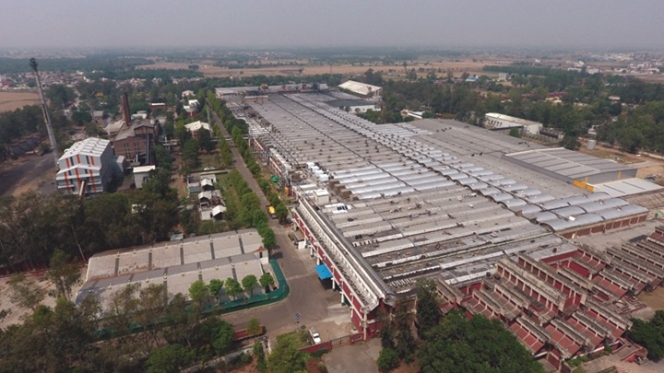
Modipuram, already a significant manufacturing base for the company, will continue to be evaluated as market demand evolves. “As demand continues to grow, the company remains open to making further investments to support this growth trajectory,” adds Aslan-Özkan.
INDIA AS A GLOBAL LABORATORY
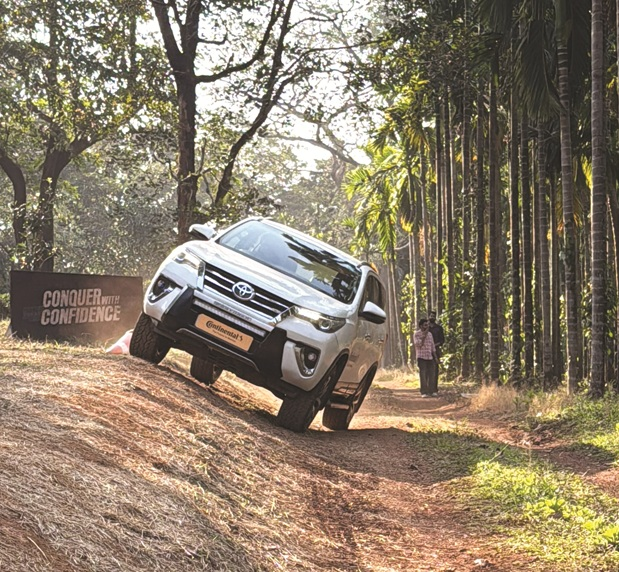
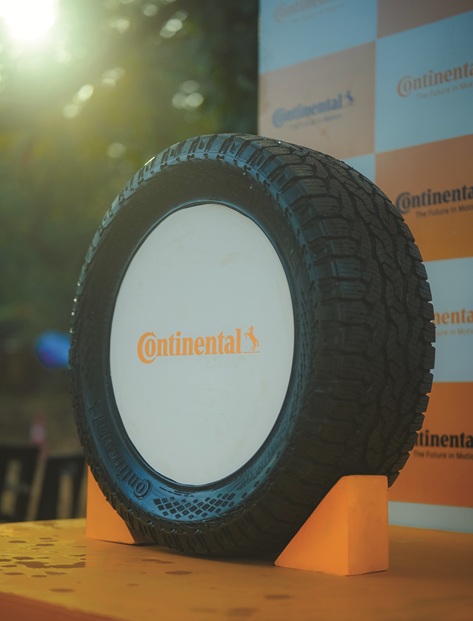
Earlier this year, Continental demonstrated its commitment to the Indian market by selecting India as the first global launch site for the CrossContact A/T2, a tyre designed for adventure and all-terrain driving. The launch was held at Continental’s Track Day 2026 in Goa.
“India’s first-to-market status for the Continental CrossContact A/T2 is a reflection of how significant India is within our global roadmap. This is led by a sharp change in the car parc and consumer preferences towards adventure driving. India offers significant growth potential, and as a strategic priority within our global roadmap, we are committed to aligning global strengths with local market needs,” says Aslan-Özkan.
This first-to-market decision exemplifies Continental’s ‘In the Market, For the Market’ philosophy. “Continental’s ‘In the Market, For the Market’ approach is at the core of how we operate in India. My experience in India enables me to effectively align global strengths with local market needs. I will work closely with our teams, partners and stakeholders to drive sustainable growth,” explains Aslan-Özkan.
Implementing this philosophy requires aligning product development closely with local demand. “We will continue to focus on introducing products and technologies that are aligned with evolving consumer preferences in India. The launch of CrossContact A/T2 in India is a clear example of this philosophy in action,” she says.
READY FOR THE ELECTRIC SHIFT
As electric vehicle adoption accelerates – particularly in the SUV segment – tyre manufacturers face a new set of engineering demands: greater load-bearing capacity, lower rolling resistance and the ability to handle the instant torque of electric powertrains. Continental says it is already positioned for this transition. “The long-term outlook for the Indian tyre market remains very strong. As the market moves towards premium vehicles, larger rim sizes and a stronger focus on safety, comfort and performance, we are well-positioned to bring the German technology and premium tyre portfolio to meet the evolving needs of Indian consumers. In the meantime, all our product offerings in India are already compatible with EVs,” says Aslan-Özkan.
 The commitment to adaptation is standing, not situational. “We will continue to focus on introducing products and technologies that are aligned with evolving consumer preferences in India. As the market matures, we will proactively adapt and enhance our portfolio to meet changing needs, ensuring that our offerings remain relevant, innovative and competitive,” she says.
SCALING WITHOUT DILUTING
Scaling premium tyres in a market as price-conscious and geographically diverse as India demands both consumer education and retail depth – and doing so without eroding brand equity is a challenge Aslan-Özkan takes seriously.
“With our ‘In the Market, For the Market’ approach, we have been continually listening and understanding consumer needs. To further strengthen Continental’s presence in the Indian tyre market, we are taking a multi-pronged approach. This includes a focused expansion of our product portfolio, particularly in the 21- and 22-inch tyre categories, in line with evolving consumer preferences. We are also working towards expanding our footprint across key markets to enhance accessibility and customer reach,” says the Continental India Executive.
The destination, she says, is clear. “India is already on a strong growth trajectory for us, and we aim to build on this momentum through sustained, strategic interventions while ensuring our brand remains synonymous with premium quality and performance,” she says.
DEFINING VICTORY
Ask Aslan-Özkan what ‘winning in India’ means for Continental over the next five years, and she reaches not for a single metric but for a compound definition. “With our ‘In the Market, For the Market’ approach, we have always focused on bringing in quality innovations in the Indian market that are suitable for Indian roads,” she says.
“Continuing on that trajectory, winning in India for Continental will be defined by strengthening our presence in the passenger vehicle tyres segment while ensuring that our brand remains associated with premium quality, technology and performance. India is already on a strong growth trajectory for us, and we aim to build on this momentum through sustained, strategic interventions,” adds Aslan-Özkan.
The roadmap is specific. “This includes strengthening our presence in the UUHP segment, expanding our footprint across key markets, enhancing production capabilities and continuing to bring innovations made for Indian roads and consumer demands. As the market matures, we will proactively adapt and enhance our portfolio to meet changing needs, ensuring that our offerings remain relevant, innovative and competitive,” she says.
Jacques Fourie Named President Of Bridgestone Canada
- By TT News
- October 16, 2026
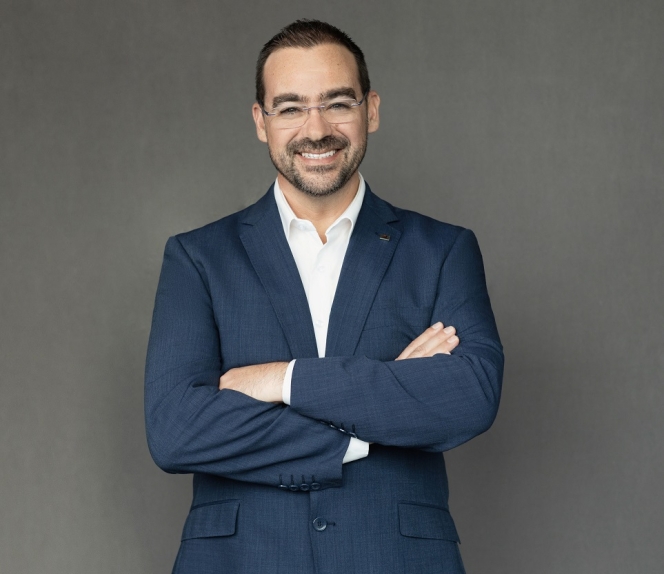
Bridgestone has named Jacques Fourie as President, Canada, a newly created position underscoring the market’s strategic value to the company. Operating from Mississauga, he will oversee Canadian strategy, commercial activities and long-term growth, with full end-to-end accountability.
The dedicated in-country leadership structure is intended to accelerate decision-making, improve coordination and bring the business closer to customers and teammates. Bridgestone said the role reinforces its commitment to stronger leadership and accountability across Canada.
Fourie joined Bridgestone in 2019 and most recently led its Africa Middle East region from Dubai. He previously spent 15 years at Cummins in finance, sales, operations and executive roles, including leading Cummins Rocky Mountain. He holds an Honours Bachelor’s Degree in Finance and Accounting from the University of Pretoria.
Robert Johnson, Group President, North America, Bridgestone West, said, “Canada is an important market for Bridgestone, with strong potential for continued growth. Jacques brings extensive international leadership experience, a strong customer focus and a proven ability to build successful businesses and teams. His understanding of the North American market makes him well positioned to lead our Canadian business and strengthen the value we deliver to our customers across the country.”
Fourie said, “Canada is a dynamic and strategically important market with significant opportunities ahead. I am honoured to take on this role and look forward to working closely with our customers, partners and teammates across the country. Together, we will build on the strengths of the Canadian business, deepen our customer relationships and position Bridgestone for sustainable, long-term growth.”
Competitive Aggression
- By Gaurav Nandi
- October 15, 2026
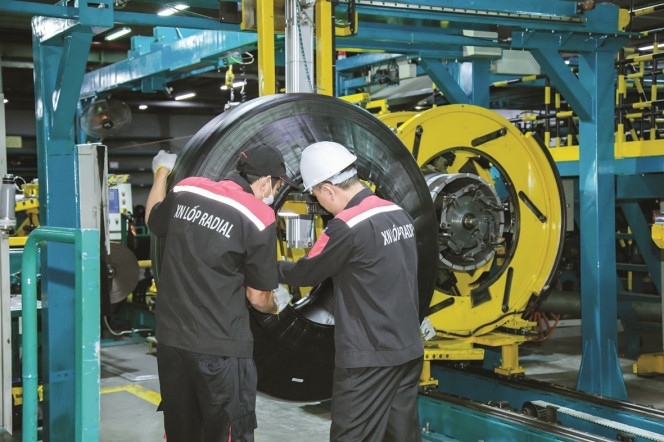
Vietnam’s growing role as a global tyre manufacturing base is creating new opportunities for domestic producers, but breaking into established international markets remains difficult. Da Nang Rubber Joint Stock Company is expanding exports and production capacity while confronting larger Chinese rivals on price and established global manufacturers on technology, distribution and brand strength. General Director Le Hoang Khanh Nhut tells Tyre Trends that competing globally will require Vietnamese manufacturers to move beyond cost advantages and demonstrate quality, operating efficiency and long-term customer value.
Southeast Asian tyre manufacturers have evolved as an aggressive competitor in the global tyre race. Tyre makers from China, Vietnam, India, Thailand etc. are constantly competing for a share of the bigger pie. While one nations tyre manufacturer competes on price advantage, another competes on quality.
The tyre manufacturing scene in Vietnam resonates quality and pricing in the global stage. But that is not the end of the story. On one hand, many manufacturers from other countries are leveraging the strategical importance of Vietnam for pushing products into international markets.
And on the other hand, trade tariffs and anti-dumping duties are creating hurdles for such companies. “Trade defence measures, anti-dumping actions, rules of origin and tariff changes have become ongoing factors in export management,” said Da Nang Rubber Joint Stock Company (DRC) General Director Le Hoang Khanh Nhut during an exclusive interaction with Tyre Trends magazine.
He confidently stated that DRC closely monitors each market to select appropriate products, pricing structures, distribution partners and production plans while ensuring that origin documentation, technical compliance and trade compliance are properly standardised.
“Trade barriers can increase costs and risks, but they can also create opportunities when customers seek to diversify their supply sources beyond a single country. The pre-requisite is that Vietnamese companies maintain transparency regarding origin, control their supply chains and retain genuine competitiveness,” he quipped.
Explaining the current situation within the country’s broader market economics, a confident Nhut averred that Vietnam’s expanding infrastructure, logistics network and export connectivity are creating favourable conditions for tyre manufacturers operating in the country.
He added that the country was investing heavily in highways, transportation and logistics infrastructure. That development is supporting both domestic demand and the country’s ambitions to become a manufacturing and distribution hub for global markets.
For DRC, the expansion of Vietnamese tyre manufacturers into global markets will depend less on competing solely on price and more on leveraging manufacturing experience and product quality.
Asked how Vietnamese manufacturers could compete with Chinese tyre makers, which often operate with larger research and development budgets, Nhut said, “The strategy is to focus on experience and quality rather than entering a price-led competition. We don’t follow the price competitively like Chinese companies.”
STRATEGIC PLACEMENT
International markets, especially Europe and America, are crucial to Vietnamese tyre manufacturers including DRC. The company states that the US is an established and important export market.
In April 2024, DRC signed an export agreement with Oceanside One Trading covering Brazil and the US with the stated aim of increasing exports to those markets.
Europe is strategically important but not one of its mature core markets yet. The company’s 2024 annual report explicitly states that it aims to increase its market share in Europe.
Nonetheless, the local market assumes a similar importance for the company. “The domestic market remains a strategic foundation for us. It is where the brand has been built over several decades. We have an extensive distribution network here and the market helps us maintain a balanced production volume,” said Nhut.
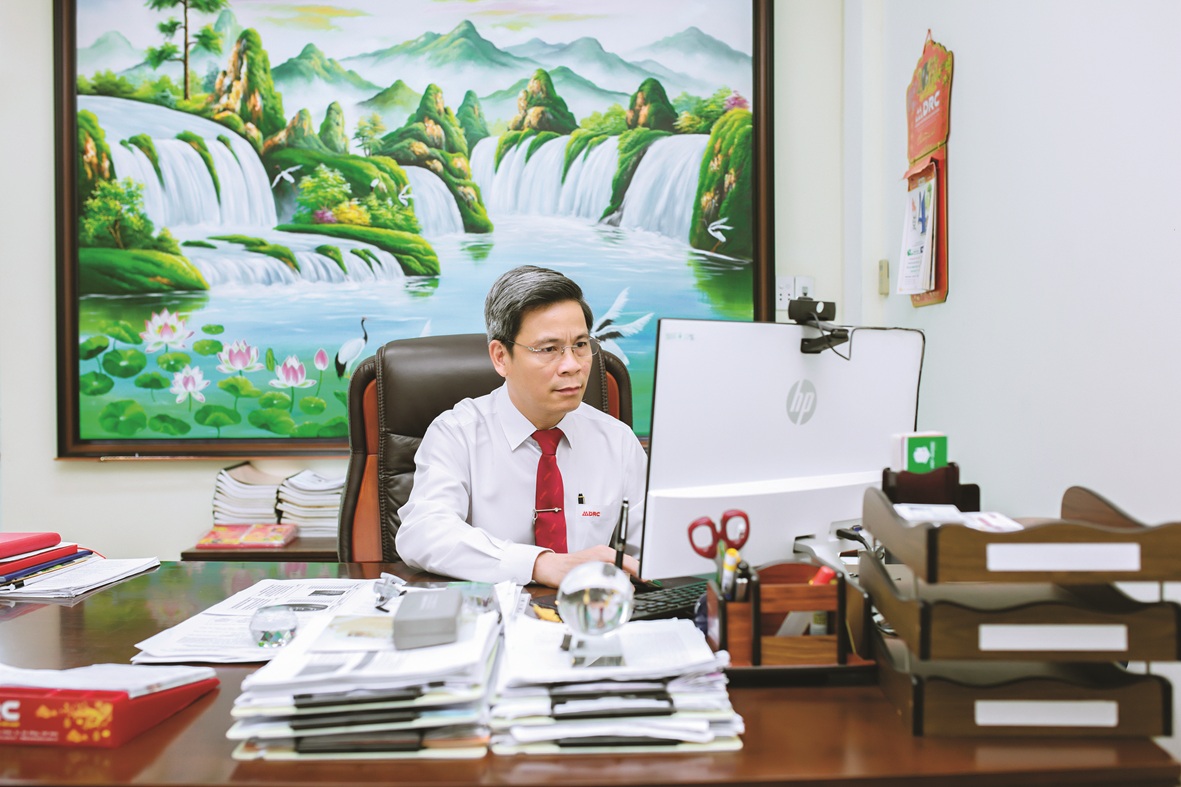 Le Hoang Khanh Nhut, General Director, Da Nang Rubber Joint Stock Company (DRC)
However, the challenges include periods of weaker purchasing power, strong competition from imported products and FDI-based companies and pricing pressure. “Unlike many export markets, Vietnam has a fragmented distribution structure; customers are price-sensitive but also place strong importance on durability, product availability and warranty response time,” explained Nhut.
On the broader spectrum of market-linked business advantages, the country has become a manufacturing base for many international tyre manufacturers. “Vietnam has several practical advantages including a favourable location for exports, access to many markets through FTAs, an increasingly skilled technical workforce and a developing supporting-industry ecosystem,” stated Nhut.
DRC perceives these advantages are complemented by accumulated manufacturing experience, a domestic brand, an established workforce and a production management system that is being modernised.
“However, we still face disadvantages in terms of economies of scale, the degree of self-sufficiency in strategic raw materials, logistics costs, supply-chain depth and resources available for foundational technologies compared with China, Thailand, Indonesia or India. These areas need to be addressed through focused investment and supply-chain integration,” he noted.
INTERNATIONAL TUSSLE
DRC’s manufacturing operations are based in Da Nang, where it operates separate facilities for different tyre categories. Nhut cited production covering passenger car tyres, motorcycle and bicycle tyres, agricultural tyres, OTR products and other categories.
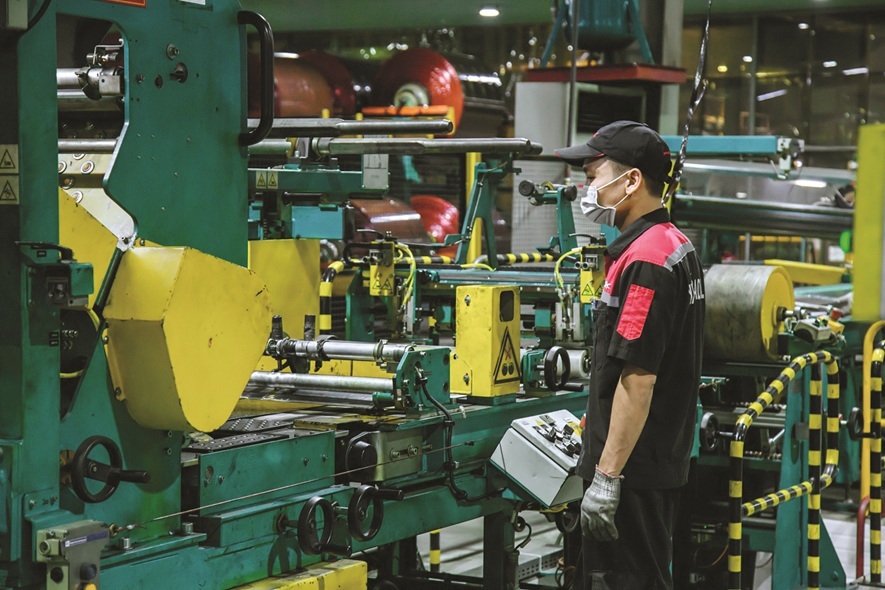
The chief executive estimated its overall production at around five million tyres. And in recent years, its international business has seen clear growth in both scale and geographical reach.
By the end of 2024, export turnover had exceeded USD 100 million, and its products are currently present in more than 50 countries and territories including markets with high standards such as the US, Europe, Japan, South Korea and Brazil.
“Our focus remains on strengthening markets where we already have a solid foundation, particularly in the Americas and developed markets, while selectively expanding into regions with significant room for growth,” contended Nhut.
He added that demand is shifting towards greater emphasis on consistent quality, durability, operational efficiency, reliable supply and technical compliance. Therefore, exporting is no longer simply about selling products but about building the capability to serve markets over the long term.
Nonetheless, Chinese tyre companies are a much stronger competitor in international markets for Vietnamese counterparts. Explaining how DRC navigates the challenge of competing head-to-head with Chinese tyre markets, Nhut said, “The expansion of Chinese tyres has intensified price competition in the replacement market, particularly in mainstream segments. This has created direct pressure on selling prices and margins across the industry.”
“We do not compete solely on price and focus on consistent quality, durability, technical service and real-world operating efficiency to retain customers. The market has indeed become more challenging, but it also creates opportunities for manufacturers that demonstrate product lifecycle value, consistently meet delivery commitments and reliable after-sales support,” he added.
GLOBAL STRONGHOLD
According to Nhut, DRC’s strongest international growth opportunities are in segments where it already has capabilities and credibility that include radial truck and bus tyres, industrial and agricultural tyres and speciality tyres.
“The expansion of radial truck tyre capacity to one million tyres per year is an important step in increasing our ability to serve the market. At the same time, we need to continue shifting our product mix towards higher-value products with higher technical requirements, durability and specialisation,” he added.
Product lines for next-generation vehicles and technical rubber products are also focus areas for the company. It also does not consider expanding the product portfolio to be an objective in itself. It must be aligned with research and developmental capabilities, investment efficiency and market demand.
The investment sentiment within the country’s tyre industry is also seeing heightened demand. It has attracted significant investment and substantially increased production capacity.
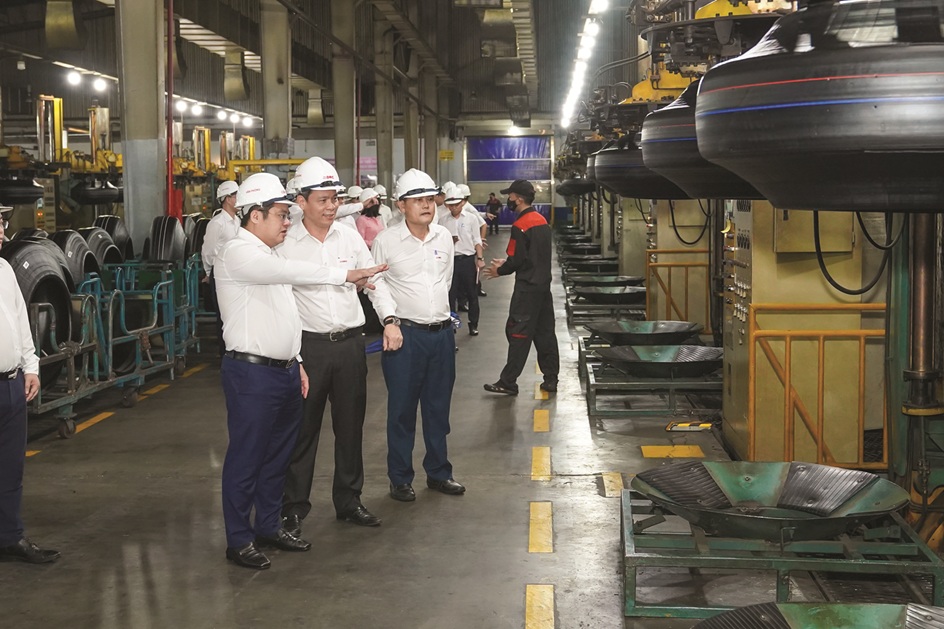 But the additional investment in Vietnam’s tyre industry is both an opportunity and a source of pressure, said Nhut.
“The opportunity lies in improvements to the supply chain, technical workforce, logistics services and Vietnam’s attractiveness as a manufacturing base. The pressure comes from greater competition for skilled labour, raw materials, customers and quality standards,” he added.
The company, however, views the current situation as a driving force to improve productivity, enhance quality and penetrate its own brand deeper into markets.
And to become a major name in the global tyre market, the company needs to shift from a mindset of exporting products to building a brand and the capability to serve international markets, contended an excited Nhut.
“The focus should be on maintaining consistent quality; investing in research and development; green manufacturing technologies; developing higher value-added segments; building sufficiently strong distribution and after-sales networks in key markets; applying international standards in
quality, ESG, trade compliance and data management and strengthening global human resources capabilities,” added the executive.
Expanding radial production capacity is necessary, but ultimately, success lies in DRC’s ability to build long-term trust in quality, operating efficiency and responsibility towards customers worldwide, noted the executive.
PERSISTENT HURDLES
The biggest challenge for DRC is competing with groups that have significantly greater scale, larger research and development budgets, distribution networks and purchasing power for raw materials.
According to Nhut, Chinese companies have advantages in terms of price and speed. Japanese, Korean and European companies are strong in technology, branding and OEM relationships, while Indian companies have scale advantages in certain segments.
He further noted that DRC’s strengths lie in its longstanding experience in radial truck, bias, agricultural and speciality tyres; its flexibility in responding to market needs; proven quality in many demanding markets and manufacturing base in Vietnam.
However, scale remains a limitation when it comes to long-term research and development investment, rapidly expanding after-sales networks, maintaining regional inventories and increasing global brand recognition.
“We cannot compete with multi-national groups in terms of the scale of research and development spending. Therefore, our approach is to focus resources on issues that have a direct impact on customers and production efficiency,” explained Nhut.
He added, “Our priorities include tyre structure and rubber compound design to improve durability, reduce heat generation, enhance load-carrying capability and improve fuel efficiency. Optimisation of radial products, development of products for emerging needs such as electric vehicles, high-speed tyres and specialty products as well as automation, digitalisation, traceability and green manufacturing are also priorities.”
The company also places strong emphasis on strengthening its engineering team, technical cooperation and shortening the cycle from testing to commercialisation.
Customers are increasingly evaluating tyres based on total cost of ownership rather than simply the initial purchase price. And to convince international fleets and distributors, DRC needs to speak through operating data rather than relying solely on catalogues.
“We are increasing real-world testing and monitoring mileage, wear, fuel consumption, incident rates and reusability or recyclability depending on the product line. Based on this data, we work with distributors to provide technical advice, clear warranty policies and rapid feedback,” stated Nhut.
The objective of the company is to help its customers see a product with a reasonable purchase price that lasts longer, operates more consistently and reduces vehicle downtime to create greater value over its entire lifecycle.
The company has a retreading facility and stated that some casings can be retreaded two or three times.
FORWARD PATH
Nhut expects Southeast Asian tyre manufacturers to continue expanding their presence in global markets.
“Over the next 3–5 years, significant room for growth lies in replacement markets with demand for radial truck tyres, agricultural, industrial and speciality tyres as well as among customers seeking a stable and diversified source of supply outside traditional manufacturing centres,” said Nhut.
The Americas, selected European markets, the Middle East, Africa and Latin America all need to be approached selectively based on trade conditions and service capabilities, he added.
The factors limiting faster expansion include the need to build distribution networks, inventory, after-sales support and local technical certifications together with working capital requirements, foreign-exchange risks, logistics and trade barriers.
“These are long-term investments and cannot be pursued at the expense of sustainable growth,” noted Nhut.
Asked how manufacturers from Vietnam and other Asian markets could position themselves against established European tyre makers, DRC said its focus would be on expanding its market presence rather than retreating from competition with larger international manufacturers.
The current situation in Vietnam reflects a broader shift in the tyre manufacturing landscape, with Asian producers increasingly seeking opportunities in overseas markets while established manufacturers face changing cost structures and production strategies.
Vietnam’s emergence as a competitive tyre manufacturing base gives DRC a platform for international expansion, but geography, trade access and manufacturing costs alone will not secure a global stronghold.
The bigger test is whether the company can translate rising capacity and decades of production experience into stronger technology, distribution, after-sales support and brand recognition.
As competition intensifies and trade barriers multiply, DRC’s global ambitions will increasingly depend on proving lifecycle value rather than simply offering another competitively priced alternative from Asia.
HF Group Receives Continental Supplier Award For Service And Maintenance
- By TT News
- October 14, 2026
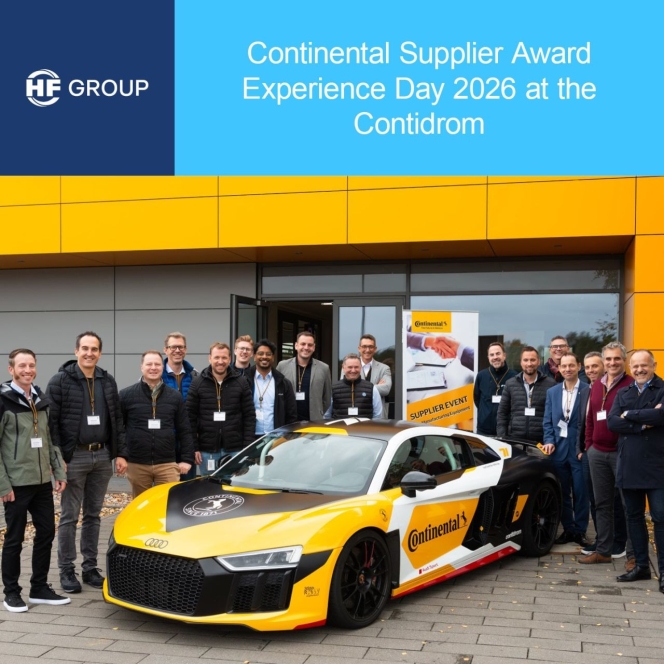
HF Group has received Continental’s Supplier Award for Tyre Manufacturing Equipment 2025 in the Service, Maintenance & Repair category, recognising its work delivered during the year.
The award acknowledges the contribution of HF Group’s mixing and curing teams across multiple deliveries, service assignments and engineering projects undertaken with Continental in 2025.
To mark the recognition, Continental invited the award winners to an Experience Day at its Contidrom test facility near Hanover on recently. The event gave attendees an opportunity to experience Continental’s tyre technology and drive on the test track.
HF Group was represented by André Arends, Garlef Dombrowski, Florian Droege and Peter Hummel.
The company thanked Continental for the award and recognised the expertise and collaboration of its teams in delivering the work.
Hidden Cost In Tyre Plants: How The Rubber Moves
- By Gaurav Nandi
- October 14, 2026
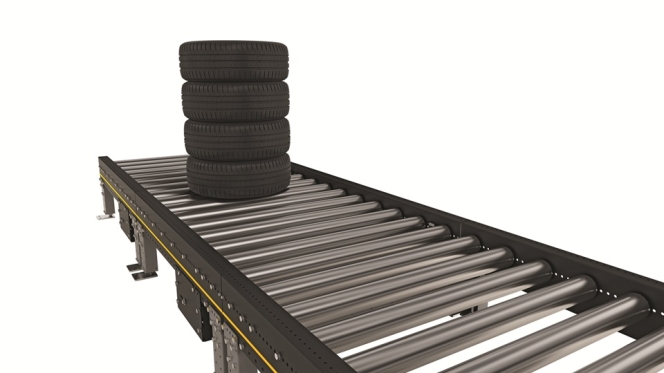
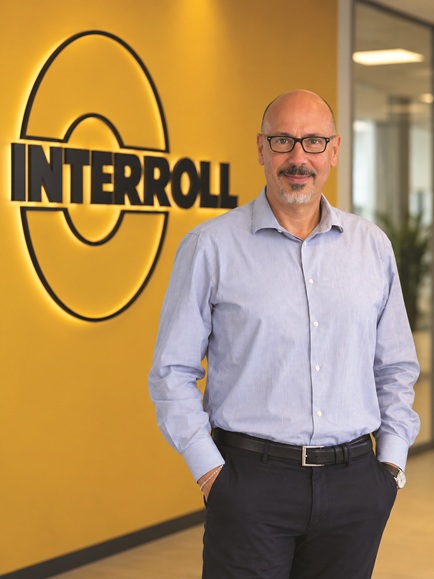
Interroll’s Gianmichele Piciocco argues that some of the largest efficiency gains in tyre manufacturing lie in the interfaces between machines, not only in the machines themselves.
Tyre manufacturers invest heavily in the best building machines and the fastest curing presses. The systems that connect them, however, are often specified late, inherited from earlier projects and seldom revisited, according to Gianmichele Piciocco, Global Strategic Business Development Manager at Interroll.
“Material flow is the backbone of the entire tyre industry,” Piciocco tells Tyre Trends. In his experience, engineers select and position process equipment first, and transport follows. The consequences emerge later, in energy consumption, maintenance stoppages and the cost of expansion. He argues that ‘we have always done it this way’ becomes a design constraint in its own right once technology, product mix, energy costs and safety expectations have changed. The examples that follow point to two closely connected areas: system optimisation during design and expansion, and lifecycle optimisation during operation.
THE LAYOUT TRAP
Piciocco says the pattern is consistent across the tyre manufacturers he advises. “In many cases, the layout initially proposed does not fully match what is ultimately implemented, often to contain the initial investment,” he says. Soon after start-up, plants may find that they need more buffer capacity, or that future expansion was not fully considered. With no floor space left, the remedy for material flow is often inclines, declines and additional levels, which can significantly increase costs.
 The alternative is far cheaper if raised early. “At the design stage, and with possible expansion in mind, it is worth asking whether small changes in machine positioning could support more effective and flexible material flow,” he says.
The issue is especially relevant in India, where sustained market growth does not always mean new greenfield plants. Expansion often happens inside operating sites, where new capacity must coexist with several generations of equipment from multiple vendors. Without a common architectural logic, each extension can add another component family, control standard and maintenance practice, increasing complexity and the potential for integration and compatibility problems.
REOPENING THE BELT QUESTION
Green-tyre transfer illustrates how convention hardens into constraint. Uncured rubber is soft and contamination-sensitive, and belt conveyors have long been the default because a continuous surface supports the tyre and certified belt materials address contamination. Piciocco does not dismiss that logic. He argues it should no longer be treated as absolute.
Left on widely spaced rollers, a green tyre can begin to deform during relatively short stops, and contact with the wrong material can degrade quality after curing. One approach being evaluated by Interroll combines closely spaced rollers, software that keeps them ‘skating’ when the line stops and transfer materials selected to meet contamination requirements. Where a roller solution suits the application, he says, component cost can be materially lower than a belt’s. Because a belt is a continuous element, maintenance work can also take longer and be more complex.
The larger benefit, he argues, is commonality. The same families of rollers, drives and transfer modules can serve both pre-cure and post-cure sections, reducing the spare parts a plant holds and the skills its teams must learn. “Who is interested in saving money in the life cycle of the plant? The user,” he says.
SAVING ENERGY BY DESIGN
Piciocco says moving from conventional 400-volt drive systems to zoned 24/48-volt roller conveyors can reduce energy use, with savings of up to 50 percent in some applications. The low-voltage architecture can also simplify installation and maintenance and reduce exposure to hazardous voltages at machine level, subject to applicable safety standards. The advantage, he stresses, comes chiefly from the on-demand, zoned operating principle, in which only the zones a product needs are active, rather than from voltage alone.
Another example concerns a leading tyre producer that wanted a more compact layout within an existing plant while retaining sufficient buffer capacity and scope for future expansion. The initial conveyor concept required several accumulation loops, curves, inclines and declines, making both engineering and installation relatively complex.
“Working together, we proposed a solution comprising a motorised ascending spiral, an overhead bridge and a gravity spiral for the descent,” Piciocco says. “Each spiral has a footprint of roughly three metres in diameter. At a height of about 7.5 metres, the motorised spiral can provide buffer capacity for approximately 25 to 40 tyres, depending on their dimensions.”
The configuration provided the required buffer in a very compact footprint, with fewer powered components and a cleaner, more modular installation. Its cost was in line with, or slightly above, the conventional solution. Piciocco says the question he put to the customer’s technology director was simple: “Are you thinking about today, or the next 10 years?”
GROWING WITHOUT REBUILDING
A brownfield expansion is not simply a matter of adding more metres of conveyor. New sections must fit existing space, controls and maintenance organisation while the plant keeps running.
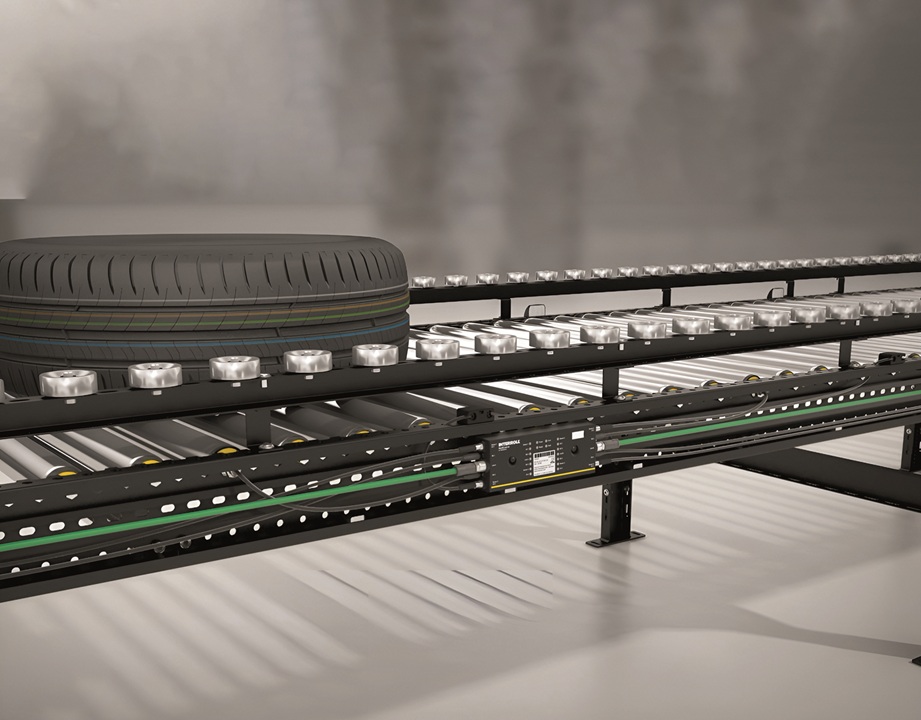
Interroll’s modular platforms, including the MCP range, are built from standard modules. RollerDrive EC5000 units, managed by MultiControl electronics, form a highly scalable and energy-efficient material handling system.
In a conventional centralised architecture, adding zones can require additional I/O, cabling and software changes. In a decentralised system, expansion means adding a module and an Ethernet connection. Independently controlled zones can also absorb small cycle-time differences and micro-stoppages without passing every interruption down the line. Upgrades follow the same logic. The 24-volt EC5000 versions rated at 20 and 35 watts with Analogue Interface (AI) can be used as replacements for the earlier EC310, supporting a more straightforward maintenance approach and the extension of existing installations.
ROUTING WITHOUT OVER-ENGINEERING
Not every route variation calls for a sorter. When tyres must be directed to testing, quality inspection, rework or the next process, Interroll’s position is that a modular conveyor backbone with targeted transfers and diverters often gives a better balance of performance, footprint and cost than a sorter built for distribution logistics. Further downstream, particularly after warehousing, higher volumes and more destinations can justify a dedicated sorter such as the company’s MC-S range.
Piciocco’s warehouse example shows the risk of getting this wrong. A large operator that stacks and stores tyres with considerable automation then needs a separate, costly sorting system to retrieve and route them. In this part of the process, he says, a solution such as Interroll’s MC-S can provide the required throughput with a more efficient layout and a significantly smaller footprint.
CONTINUITY INTO DOWNSTREAM HANDLING
Where load and duty allow, the same architecture can extend past the individual tyre. A 24/48-volt modular pallet conveyor, the MPP platform, can handle a load of up to 500 kilogrammes per metre while retaining decentralised control and zero-pressure accumulation. Rollers of 60 millimetres in diameter allow a closer pitch and more support points, which, after application validation, can reduce vertical undulation when handling tyre stacks.
Piciocco is careful not to make continuity a dogma. Above the platform’s operating envelope, robust 400-volt heavy-duty conveyors remain the correct choice.
FROM REACTION TO PLANNING
Maintenance is where Piciocco sees the most overlooked cost. When total cost of ownership and plant availability are considered, he says, maintenance and stoppage-related costs can account for around 10 to 15 percent of the overall cost associated with material flow in some applications, including labour, spare-parts inventory and lost production during downtime. “Maintenance is often treated as something that simply happens. It should not be. Much of it can be avoided,” he says.
Connected drives, such as the RollerDrive EC5000 BI with MultiControl, make more than 100 parameters available, including operating hours, cycle counts, temperature, system status and error type. If the torque required by a motor rises progressively, the system can flag an abnormal trend before it develops into a stoppage and give the maintenance team a stronger basis for planning an inspection.
Without that information, a failed motor can cause a prolonged stoppage while crews identify the source and check whether the spare part is available. With an early warning, maintenance can schedule the intervention; for an accessible RollerDrive with the spare available, replacement can take less than an hour. Piciocco calls this preventive rather than predictive maintenance. The data does not replace maintenance expertise, but it gives teams a stronger factual basis for decisions, and standard components make diagnostics and training common across the plant.
GLOBAL STANDARDS, LOCAL EXECUTION
A shared catalogue alone does not make a standard, Piciocco says. It also needs consistent selection criteria, spare-parts strategies and support after start-up. Interroll has production, engineering and service capabilities across the world’s main industrial regions, allowing global standards to be supported by local execution. Its life-cycle offering includes structured maintenance programmes, dedicated stock of critical components, periodic audits and staff training, scaled to how critical the application is.
He applies the same logic across markets. Using a smartphone as an analogy, Piciocco says the same platform can be used in a basic configuration or with more advanced functionality, depending on a plant’s needs and technological maturity. A manufacturer can therefore retain common components, diagnostics and training across sites while adapting the level of automation to local conditions.
That flexibility extends to how far automation should go. Speaking for himself, not Interroll, Piciocco says not every producer needs a dark factory. The appropriate level of automation depends on volumes, product mix, process maturity and available skills. “If people do not understand how the technology works, you can have the best technology in the world, but it will not be used properly and may even become a limitation,” he says.
REAL ISSUE
Asked what single mindset shift the industry needs, Piciocco did not hesitate. “Interface,” he says. “The machines are already quite optimised. The problem is how we serve the machine.” As individual machines become increasingly optimised, the interfaces between them play a growing role in improving productivity, simplifying maintenance, reducing energy consumption and enabling future expansion.
“Material flow should not be the last part of the engineering process,” he adds. “If it is considered earlier, we can contribute to a solution that supports optimisation of the entire plant.”

Comments (0)
ADD COMMENT