

From Waste To Value: Unlocking The Full Potential Of End-Of-Life Tyres
- By TT News
- September 08, 2026
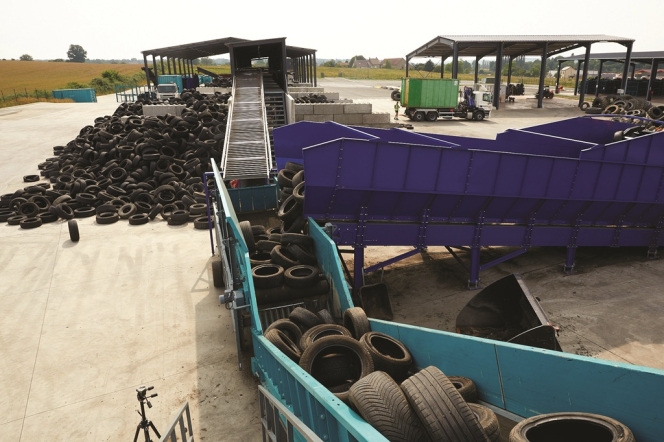
Every day, tyre recyclers face the same challenge: processing more tyres while maintaining sorting quality, protecting equipment and meeting increasing traceability requirements. Every misidentified tyre represents lost value. Every hidden contaminant can lead to costly downtime. Every manual operation limits productivity.
As tyre volumes continue to grow worldwide, the question is no longer whether tyre sorting should be automated. It is how quickly operators can adopt technologies that make their facilities more efficient, more reliable and more profitable.
As a specialist in intelligent tyre identification, sorting and traceability solutions, REGOM is actively contributing to this transformation through technologies designed to help recyclers process more tyres, improve sorting quality and gain better visibility over their operations.
Through artificial intelligence, advanced inspection technologies and digital traceability, the company is helping transform end-of-life tyres from a waste stream into a valuable resource.
SMARTER TYRE SORTING THROUGH ARTIFICIAL INTELLIGENCE
For decades, tyre sorting relied heavily on manual inspections performed by experienced operators. While this approach remains valuable, it can be time-consuming and difficult to scale as tyre volumes continue to increase.
To address these challenges, REGOM has developed intelligent tyre identification technologies capable of automatically reading and analysing tyres in just a few seconds. Powered by artificial intelligence and advanced image recognition, these systems capture and process tyre information in real time, generating reliable data that can immediately be used by operators.
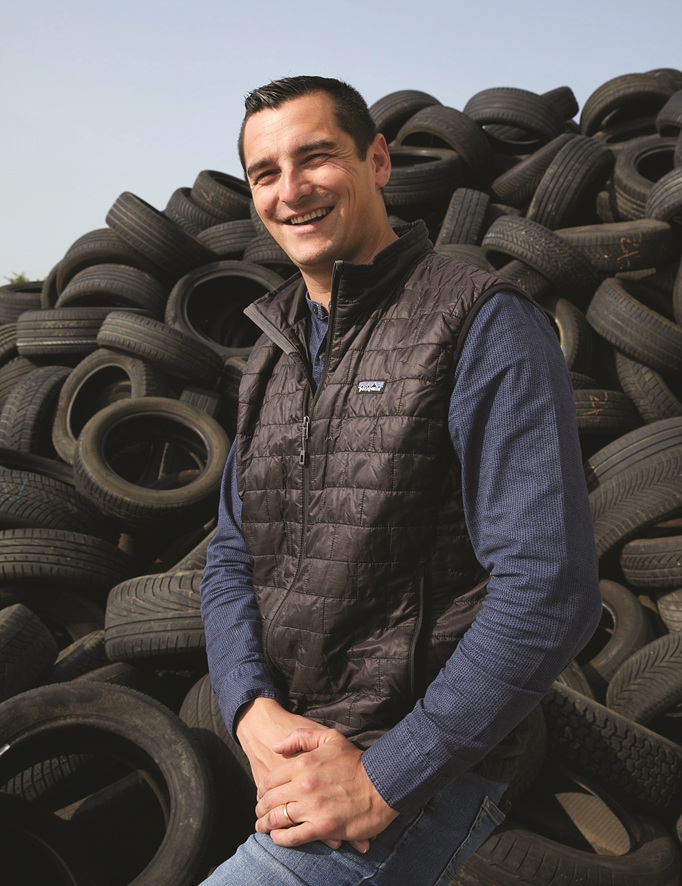
The benefits are significant. Automated identification increases processing capacity through a continuous production flow and automatic evacuation rates of up to 25 percent. It improves sorting consistency, with customers reporting grading quality improvements of up to 3 percent while reducing the risk of human error. By automating repetitive identification and sorting tasks, operators can focus on higher-value activities. Every tyre is identified in just 2.5 seconds and enriched with detailed product data, creating a fully traceable digital record from collection to grading and reporting. This structured database supports regulatory compliance, operational monitoring and data-driven decision-making while preparing facilities for future traceability requirements.
Importantly, artificial intelligence is not designed to replace operators. Instead, it helps redefine their role by automating repetitive tasks and enabling them to focus on activities that require experience, expertise and decision-making. This shift supports higher productivity while creating greater value from human involvement throughout the sorting process.
As the industry continues to evolve, AI-driven sorting is becoming an essential component of modern tyre recycling facilities.
While artificial intelligence enables faster and more reliable identification, another challenge remains: Detecting contaminants hidden in whole tyre or shreds flows.
Some metallic objects or other contaminants not visible during standard inspections may end up in the flow of shreds or whole end-of-life tyres. Once these contaminants enter shredders, pyrolysis units or downstream processing equipment, they can cause costly damage, unplanned maintenance and production downtime.
To address this issue, REGOM has been investing for several years in the development of innovative X-Ray inspection technologies. This new machine aims to detect hidden contaminants before tyres enter critical processing stages. By identifying potential risks at an early stage, operators can better protect their equipment and avoid costly interruptions.
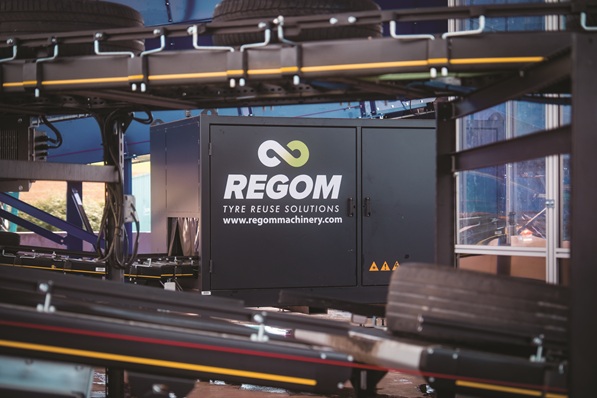
If your shredder or downstream equipment has already suffered unexpected downtime due to hidden contaminants, you already know the consequences: production stops, maintenance costs increase and valuable processing time is lost.
The challenge is that many contaminants remain invisible during traditional inspections and are only discovered once they have reached critical equipment.
This is where X-Ray technology can make a significant difference. By detecting hidden metallic objects and other contaminants before tyres enter shredders, pyrolysis units or other processing equipment, operators can reduce risks, protect critical assets and maintain smoother operations.
The benefits extend throughout the entire recycling process: lower maintenance costs, improved equipment availability, increased operational reliability and ultimately higher productivity.
“The X-Ray solution we are developing directly addresses our customers’ need to automate their operations, making them more reliable and consistent in an increasingly challenging labour market.
The X-Ray solution we are developing directly addresses our customers’ need to automate their operations, making them more reliable and consistent in an increasingly challenging labour market. This inspection system also helps mitigate a growing risk: fires caused by the increasing number of batteries found in end-of-life tyres. By reducing operational costs while ensuring consistent production, this solution delivers significant operational benefits and enhances overall efficiency,” says Arthur Wagner – CEO, REGOM.
TURNING DATA INTO OPERATIONAL EXCELLENCE
One of the most significant transformations occurring within the tyre recycling industry is the growing importance of data.
Historically, large quantities of operational information remained unavailable or underutilised. Today, advanced sorting technologies generate valuable data that can be used to improve decision-making across the entire facility.
By combining artificial intelligence, automated identification and digital traceability, operators gain a clearer understanding of incoming tyre flows and sorting performance. This information supports regulatory compliance, facilitates reporting and provides greater transparency throughout the recycling process.
More importantly, data enables continuous improvement. Facilities can identify trends, optimise workflows and make more informed investment decisions based on objective operational insights.
The result is a more efficient, more transparent and more resilient recycling operation.
SUPPORTING THE DEVELOPMENT OF TYRE RECYCLING IN INDIA
India is one of the world’s most dynamic markets for tyre recycling and resource recovery. As the sector continues to grow, operators face the same challenges seen across the globe: increasing volumes, higher performance expectations and a growing need for traceability.
Recognising this opportunity, REGOM has partnered with PLANNEX to support the deployment of advanced tyre sorting technologies throughout the Indian market.
By combining REGOM’s expertise in intelligent tyre sorting and traceability with PLANNEX’s strong local presence and industry knowledge, the partnership aims to provide Indian recyclers with access to innovative solutions designed to improve productivity, sorting quality and operational performance.
Together, REGOM and PLANNEX share a common vision: helping recyclers unlock greater value from every tyre while supporting the transition towards a more efficient and sustainable circular economy.
THE FUTURE OF TYRE RECYCLING
The future of tyre recycling is not simply about processing larger quantities of tyres. It is about understanding each tyre better, managing resources more effectively and extracting maximum value from every material entering the recycling stream.
Through artificial intelligence, advanced inspection technologies and data-driven decision-making, REGOM is contributing to this transformation by helping operators build safer, smarter and more efficient recycling facilities.
The challenge is no longer simply to process more tyres. The challenge is to extract more value from every tyre entering the recycling stream.
Kumho Petrochemical Group Shifts Focus To R&D and Speciality Materials
- By TT News
- September 25, 2026
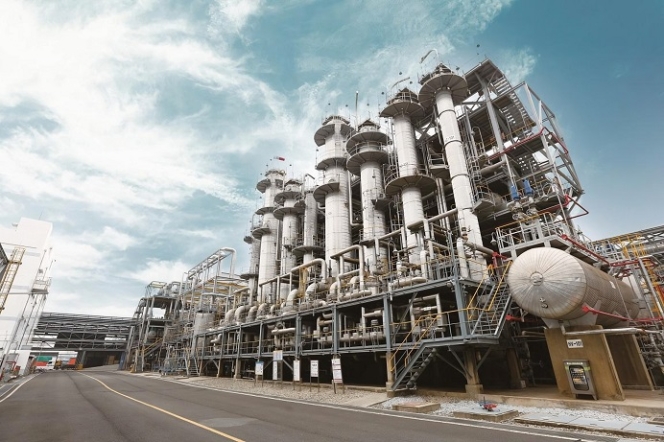
Kumho Petrochemical Group is steering its business towards research-driven, higher-value outputs as oversupply and soft demand continue to weigh on the worldwide petrochemical sector. The Seoul-based group outlined plans to boost spending on speciality chemicals, sustainable materials and novel production methods, a push intended to lift profits while building a foundation for future expansion.
Underlying the move is a deliberate evolution in the group's identity, from a bulk materials vendor to a provider of technology-backed solutions that address shifting customer requirements and stricter environmental rules. A central element of that effort involves widening the speciality lineup, exemplified by added capacity for solution styrene butadiene rubber, a synthetic rubber that enhances durability, rolling resistance and tread wear in high-performance electric vehicle tyres.
Environmental initiatives form another pillar. Facilities built by the company can trap approximately 76,000 metric tonnes of carbon dioxide each year, while separately developed technology turns recycled acrylonitrile butadiene styrene sourced from scrapped household appliances into automotive-grade interior components that satisfy performance standards and generate fewer emissions than conventional methods. The group has also joined forces with POSCO Future M and BEI on anode-free lithium-metal battery development.
Parallel technology-focused programmes are underway at affiliated units. Kumho P&B Chemicals is formulating water-based epoxy resins that curb volatile organic compound releases while incorporating more bio-based inputs to reduce carbon intensity. Kumho Mitsui Chemicals is advancing bio-based polyurethane systems and electric vehicle materials, alongside debottlenecking work to add 100,000 tonnes of annual methylene diphenyl diisocyanate capacity. Kumho Polychem, meanwhile, is targeting ethylene propylene diene monomer through low-temperature polymerisation paired with energy-efficiency improvements.
Birla Carbon Announces Asia-Wide Speciality Materials Price Hike Of Up To 15%
- By TT News
- September 22, 2026

Birla Carbon has confirmed a price increase of up to 15 percent for its Speciality Materials products across Asia, scheduled to take effect on 1 October 2026. The company pointed to significant and sustained rises in feedstock costs, driven partly by ongoing geopolitical instability and disruptions in global feedstock markets, as the reason behind the adjustment.
Although Birla Carbon pursued operational efficiencies, supply chain optimisation and disciplined cost management to soften the impact, the scale and persistence of the cost escalation left a price adjustment unavoidable. The company's sales teams will engage customers directly to explain the details and help them navigate the transition.
ACE Laboratories, Abdallah Consulting Launch VericarbSM To Standardise Recovered Carbon Black
- By TT News
- September 20, 2026
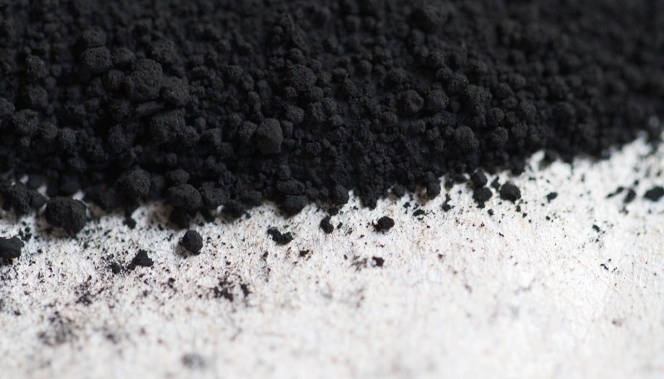
ACE Laboratories, an independent ISO/IEC 17025-accredited polymer testing laboratory, has partnered with Abdallah Consulting, LLC, a prominent tyre pyrolysis advisory firm, to introduce VericarbSM. This independent certification programme verifies that materials marketed as recovered carbon black (rCB) meet established criteria for rCB.
Recovered carbon black, derived from end-of-life tyres via pyrolysis, serves as a sustainable substitute for virgin carbon black in rubber and polymer applications. However, the emerging market has lacked the standardisation and independent verification that established supply chains provide. VericarbSM addresses this gap through independent material characterisation and rubber performance data, offering stakeholders a consistent basis for evaluating rCB products.
For producers, certification accelerates market entry and improves buyer approval rates. Consumers gain more capable suppliers and reduced evaluation time, while investors benefit from clearer volume sizing and fewer costly test failures. The programme is jointly administered by both organisations.
Erick Sharp, CEO, ACE Laboratories, said, “The rCB market has enormous potential, but growth has been held back by uncertainty about material quality and consistency. VericarbSM gives producers a way to prove their product and gives buyers the independent data they need to say yes.”
Dave Abdallah, Founder, Abdallah Consulting, said, “One key reason for the delayed growth of recovered carbon black is lack of product performance information in the customer’s language. ASTM standards are critical; in fact, most testing done in the process follows ASTM methods. But customers relate to a product better when its performance is shown in applications relevant to them. VericarbSM solves the language issue by showing verified rCB in terms of rubber performance while simultaneously adding credibility via third-party analysis and reporting.”
Zeon Establishes Kurashiki Subsidiary To Absorb Tohpe's Acrylic Rubber Business
- By TT News
- September 18, 2026
Zeon Corporation established Zeon Chemicals Kurashiki Co., Ltd. on 23 July 2026 to take over the acrylic rubber operations of fellow group firm Tohpe Corporation. The new entity, headquartered in Kurashiki City, Okayama Prefecture, is wholly owned by Zeon with paid-in capital of JPY 10 million and is led by representative Koji Minami.
On 21 August, Tohpe and the new subsidiary signed an absorption-type company split agreement, prompting Zeon to begin the procedures required under the Companies Act. Operations at the new company, focused on manufacturing and selling acrylic rubber and related activities, are scheduled to commence on 30 October 2026.
Acrylic rubber, known for its heat resistance, is used in automotive components including oil seals and hoses. The Zeon Group already maintains four production sites across Japan, United States and Thailand, forming a global supply network for the material.
The restructuring follows Zeon’s 11 May 2026 announcement that it would transfer Tohpe shares to NATOCO Co., Ltd. of Miyoshi City, Aichi Prefecture, as part of Tohpe’s paints business divestiture. Tohpe’s acrylic rubber operations, which complement Zeon’s Elastomers Business, will now be positioned as a key specialty rubber manufacturing site, with closer operational coordination intended to strengthen Group competitiveness and corporate value.


Comments (0)
ADD COMMENT