

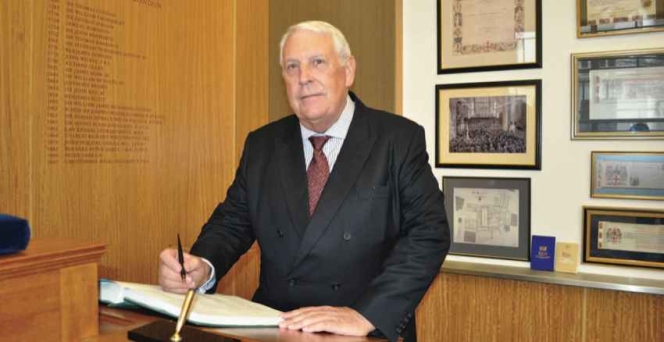
Peter Taylor OBE, tyre industry veteran with vast experience in new tyre and recycling markets around the world, is a former Director of the International Tyre Manufacturers’ Association (ITMA Europe), Secretary General of the UK Tyre Recovery Association (TRA) and Vice President of the European Tyre Recycling Association (ETRA). Taylor, a prolific writer on industry matters, spoke to Tyre Trends on TRA’s role in sustainability drive.
Please elaborate on TRA’s (Tyre Recovery Association, UK) operations in the recovery process and further handling of recovered tyres
The TRA is a UK industry-wide association of ELT collectors and recyclers founded almost two decades ago when it has to be said interest in tyre recycling and its potential was a great deal less than it is today.
The ‘driver’ behind the push to beneficially recycle much more of our waste was undoubtedly the EU Landfill Directive which required that by 2006 almost all of our end-of-life tyres both here, in the UK and across Europe be appropriately reused or recycled. Here in the UK, we have largely met this requirement though like other countries, sometimes imperfectly.
 The underlying concept behind the Landfill Directive was the notion of Producer Responsibility. This, however, was never clearly defined. In many countries the ‘producer’ was rather imperfectly defined as the ‘manufacturer’ of the product whereas elsewhere such as here in the UK, our government opted for the concept of shared PR, thus placing an onus on everyone in the recovery chain from manufacturer and importer through distributor and retailer to consumers, collectors and recyclers. This broader UK approach helped us build on our existing infrastructure and evolve a wider market-based approach to tyre recycling. That said, no ELT recovery programme is wholly effective in eliminating bad practices but we believe that a more effective monitoring pinch point in the recovery chain is not where our new tyres are first introduced into a market, but where they are ultimately removed from a wheel, i.e., the ‘pull’ rather than the ‘push’ approach. Almost from the outset we, as an association, set out to build a credible best practice approach to ELT recycling which would have broad industry support, we named this the TRA Responsible Recycler Scheme (RRS). All full TRA members subscribe to this and are required to be regularly audited for compliance and today, I am pleased to say that some three-quarters of all UK ELT’s are responsibly handled by our members supported by most retailers and manufacturers. As a purely voluntary approach to recycling, we are proud of this, in purely tonnage terms alone, we are the largest single recovery initiative almost anywhere in the world.
So, what now? ELT recovery markets everywhere are in flux as new markets for ELT-derived materials evolve as we exit the very undesirable trade in baled-tyre exports which undermined market stability here in Europe and well beyond.
In moving forward our challenge and great opportunity will be to better valorise ELT-derived materials by better exploiting their great intrinsic worth. As important a concept producer responsibility is, we should avoid being totally captivated by it at the cost of ignoring the simple principles of the waste hierarchy.
Our old tyres are more than a convenient fuel but potentially full of market opportunity for the very many other products derived from processes such as granulation and for very significant emerging technologies like pyrolysis and its by-products. This must be our direction of travel.
How much of a competitive edge you have in the market, compared with other recyclers?
We are of course an industry association and not an individual business but our propositions, and those of our members are simple, they are:

Best Practice – Legal Compliance – Customer Confidence
Here in the UK the concept of ‘Duty of Care’ is underpinned in law and potentially applies to every player in the recovery chain which is one more reason we enjoy such a large measure of cross-industry support.
Your view on how huge is the potential of tyre recycling sector in future?
We believe that the potential for tyre recycling everywhere is exponential, we are simply at the foothills of the possible as just a glance back at the waste hierarchy pyramid demonstrates all too clearly. Countries only have to compare their own current performances against the valorisation objectives of the pyramid. However, getting there is not simple. To do so will require entrepreneurship, investment and market confidence, elements which some of the more rigid approaches to ELT recycling will struggle to engage with. Recycling is not an acronym for convenient ‘disposal’ but a journey into ever greater resource efficiency.
On the challenges you face, including whether you get any support from government environmental agencies
The way in which we handle our ELT arisings here in the UK is often dubbed the ‘free market’ approach but this is very misleading. A better description of our approach would be ‘market-based with strong regulatory underpinning’. Our environmental laws are strict though not always as business friendly as we would like them to be. Good regulation should not just be about managing compliance but of providing a basis for market stability and the best possible conditions for market growth. I hope we will slowly get there and one of our prime duties is to engage proactively with the government and other regulators to help them adapt to this mindset.
In all of this however, it is all too easy to point the finger of responsibility at those who rule us, some of the responsibility is ours too and it was with this in mind when we first launched our Responsible Recycler Scheme all those years ago now. We chose to lead, rather than wait to be led and to help mould our futures rather than be made the reluctant captives of often inappropriate official policies and initiatives. The choice was ours as much as it will be yours in India and in very many other parts of the world.
Tegeta Green Planet Explains Producer Responsibility To Future Automotive Professionals
- By TT News
- October 08, 2026
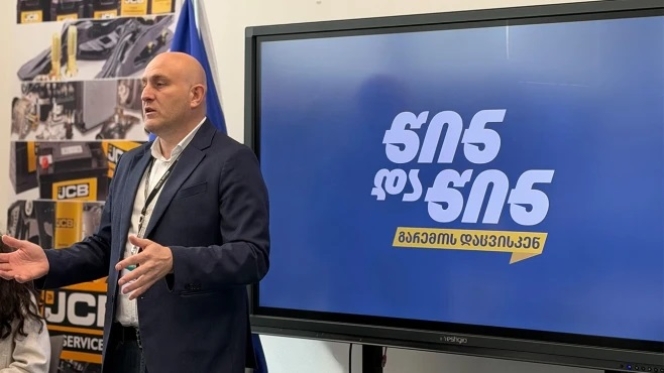
Tegeta Green Planet opened the Light Vehicle Diagnostics course at Tegeta Academy with a presentation for attendees aged 17 to 33. Beyond their chosen vocational field, participants learned about automotive waste management and environmental responsibility.
Shalva Akhvlediani, the organisation’s director, outlined its activities and goals while emphasising Extended Producer Responsibility. The session examined how the automotive sector connects to environmental duty and why used tyres, waste oils and automotive batteries must be collected and managed properly.
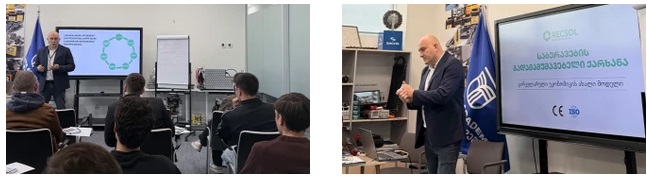
Tyre management and RECSOL featured prominently. Attendees traced a used tyre’s path from collection to recycling and learned how waste becomes a source of new resources. RECSOL, Tegeta’s tyre recycling plant, is a significant infrastructure project in used tyre recycling, processing tyres into materials for various uses and supporting circular economy principles.
A core aim is a system where waste is not an endpoint but the starting point for new resources, which requires infrastructure alongside greater public awareness and information on proper disposal. For participants, the meeting linked professional education with environmental awareness, stressing that future automotive professionals should understand this responsibility early.
Tyres Europe Joins Industry Call To Rethink CBAM Scope Extension
- By TT News
- October 08, 2026
Tyres Europe, alongside ACEA (the European Automobile Manufacturers’ Association) and CLEPA (the European Association of Automotive Suppliers), has dispatched a joint communication to EU decision-makers concerning the possible broadening of the Carbon Border Adjustment Mechanism (CBAM) to cover downstream goods. The move comes as trilogue discussions approach.
Tyre producers form part of an automotive value chain already bearing carbon-related expenses for steel and aluminium manufactured within Europe. The proposed expansion would draw additional products into the mechanism’s remit before the existing framework has demonstrated its effectiveness. Resulting costs and administrative requirements would land on downstream manufacturers, tyre makers included, with signatories cautioning that a conceptually sound regulatory effort could become an operational and financial strain.
Endorsing the mechanism’s aims, the signatories nonetheless urge a proportionate scope that shields the entire value chain from carbon leakage while preventing that risk from being pushed further downstream. They advocate extending the mechanism only where a material carbon-leakage danger is evidenced, and request that policymakers ease compliance demands, including via more fitting default values mirroring real production routes.
NEXEN TIRE Renews Zalgiris Deal, Expanding Brand Visibility Across Europe
- By TT News
- October 08, 2026
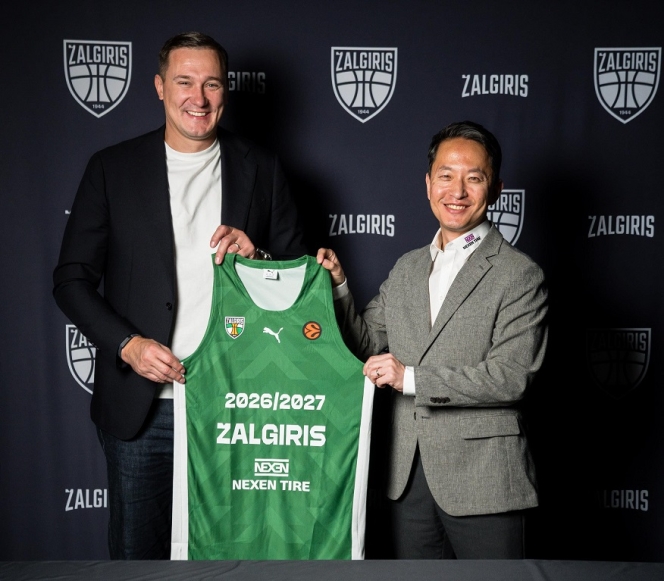
NEXEN TIRE has extended its partnership with Zalgiris, reinforcing its commitment to basketball in Europe, particularly across the Baltic region. The renewal builds on a relationship that began in 2024 and reflects the company’s broader strategy of linking its brand to performance, innovation and mobility.
The tyre maker has pursued sports partnerships as a way to connect with fans, sharing in the passion and excitement of supporting favourite teams during major matches and memorable moments. It also values the teamwork, dedication and collective achievement that define team sports, using such ties to build authentic connections and deepen engagement in key European markets. Its collaboration with clubs including Zalgiris and FC Bayern München forms part of this approach.
Under the extended agreement, NEXEN TIRE will gain greater visibility among sports fans in the region. The partnership offers branding opportunities at Zalgirio Arena, such as synchronised on-screen advertising and promotion on LED stands near the court, in a position visible on television during EuroLeague and LKL home games.
The arrangement also includes a hospitality programme allowing NEXEN TIRE to welcome guests and business partners at Zalgiris home fixtures. Through the strengthened alliance, the company aims to share its passion with more fans while raising brand awareness across the region.
Ricky Lee, Managing Director, NEXEN TIRE Poland, said, “Our cooperation with Zalgiris has developed positively since 2024, and we are pleased to extend and strengthen this partnership. Basketball has a particularly strong following in the Baltic region, making Zalgiris an important partner as we continue to grow our presence and engage with fans. We look forward to supporting the team throughout the season and doing our best to create positive experiences for both the players and their passionate fans.”
Paulius Jankunas, President, Zalgiris, said, “We are delighted to continue our cooperation with NEXEN TIRE and build on the partnership we started two years ago. NEXEN TIRE brings extensive experience in sports marketing, and we are proud to work together on creating meaningful projects and experiences for our fans. We look forward to another successful period of cooperation and to welcoming NEXEN TIRE’s guests and partners to our games and events.”
TBC Corporation Expands Multi-Mile Tyres Portfolio With Four New Lines
- By TT News
- October 08, 2026

TBC Corporation, one of North America’s largest marketers of automotive replacement tyres through wholesale and franchise operations, has widened its tyre portfolio through the addition of four new lines under the Multi-Mile Tyres banner. Serving as a value step-up brand, Multi-Mile gives dealers a strong mix of broader product coverage and improved consumer advantages crafted to drive better retail margins, helping retailers offer greater value while lifting profitability. With this expansion, the portfolio now reaches over 85 percent of the vehicle market, offering dealers more ways to satisfy customer demand.
Among the additions are tyres built for rugged and mud terrain use, boasting self-cleaning treads that push out mud and stones alongside dependable traction both on and off the road. Also joining the range are commercial and C-metric speciality tyres tailored to heavy-duty regional and long-haul trucks, together with all-weather tyres that hold the 3-Peak Mountain Snowflake severe snow rating and are made for high mileage and consistent year-round use.
A prominent name in the replacement tyre segment, Multi-Mile carries cutting-edge touring, high-performance and broad-line tyres suited to passenger cars, light trucks and SUVs. Meanwhile, the upgraded Mile After Mile Protection Plan warranty now delivers broader coverage, adding three-year roadside assistance, a three-year road hazard protection plan and a 60-day ride guarantee on top of its extensive treadwear warranties.
Rachel Tibor, Chief Marketing Officer, TBC Wholesale, said, “For more than 70 years, Multi-Mile products have offered cost-efficient, reliable and durable tyre options that enhance safety and performance. With this expanded portfolio, Multi-Mile strengthens its position as a value step-up brand, giving dealers more opportunities to meet evolving consumer needs while offering a product mix designed to support stronger retail margins. We’re continuing our longstanding tradition of supplying the right products at the right time for every type of vehicle and application.”

Comments (0)
ADD COMMENT