

Riding The Atmanirbhar Wave
- By Sharad Matade & Gaurav Nandi
- June 18, 2026
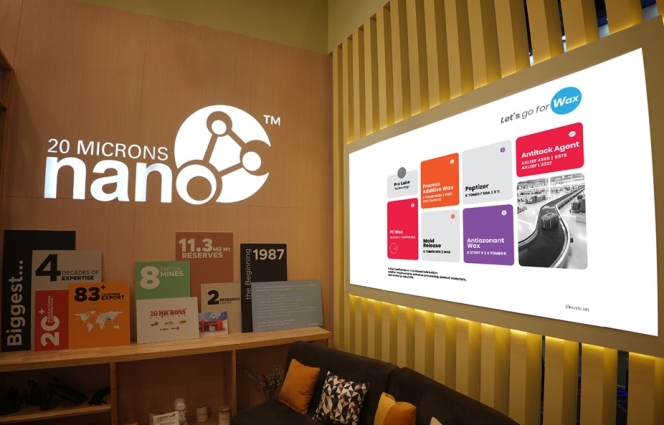
India’s Atmanirbharta push is reshaping the tyre industry as companies leverage domestic mineral resources and advanced processing technologies to reduce import dependence and strengthen global competitiveness. Players such as 20 Microns Limited are capitalising on this shift by developing value-added fillers that enhance tyre performance while lowering costs and emissions.
As radialisation, sustainability targets and export ambitions converge, indigenous innovation is increasingly being positioned not merely as import substitution but as a strategic lever for global market integration and long-term industry transformation.
India has witnessed a sharp rise in cross-manufacturing capabilities across industries over the past decade. Once heavily dependent on imports, the country is gradually positioning itself as a manufacturing and export hub. This transition has been accelerated by Prime Minister Narendra Modi’s call for Atmanirbharta (self-reliance).
The domestic tyre ecosystem is also benefiting from this momentum, with companies that have established strengths in adjacent sectors now entering the tyre value chain. Gujarat-based 20 Microns, a speciality chemicals company operating primarily in industrial minerals and performance additives for sectors such as tyres, rubber, plastics, Paints, paper etc., has emerged as a supplier to leading Indian tyre manufacturers including CEAT.
Speaking exclusively to Tyre Trends, K K Mishra, President – Product and Business Development at 20 Microns, said, “The shift from bias-ply to radial tyres opened up opportunities for players like us to enter the tyre industry.”
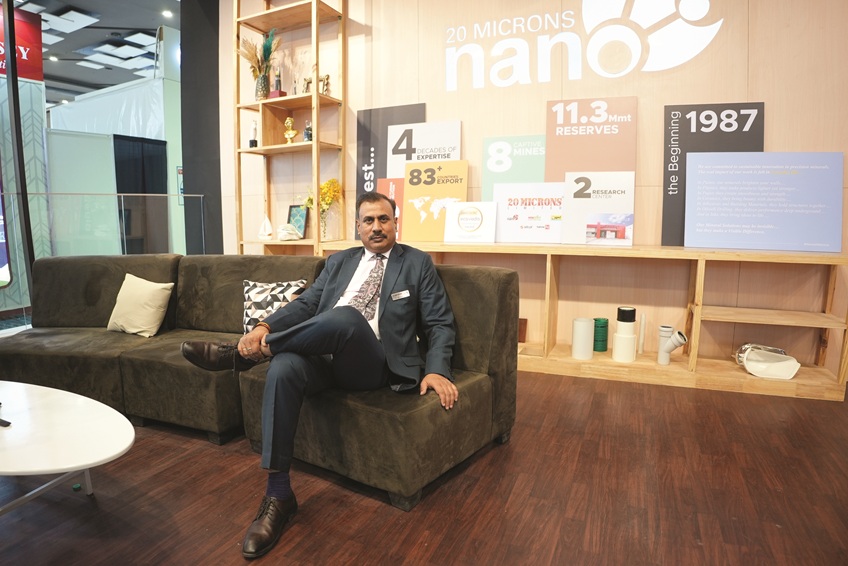
Before entering the tyre segment, the company catered to multiple industries. “We supply products for 78 different applications, so tyres were not initially a focus area for us. Our entry into the segment was largely driven by customer demand,” Mishra explained.
The company’s first offering to the tyre industry was magnesium oxide. However, tyre manufacturers were already using the material in limited quantities relative to their overall raw material consumption. While some experimented with alternative fillers, these solutions often failed to deliver significant value.
Mishra pointed out that India had traditionally exported large volumes of raw minerals such as China clay, talc, mica and other industrial minerals but lacked advanced grinding and processing capabilities. As a result, European companies imported these raw materials, converted them into high-value speciality products and exported them back to India at significantly higher prices.
Recognising this gap, 20 Microns began developing nano and value-added mineral-based products domestically.
“We registered 20 Microns Nano Minerals Limited in 2004, but commercial operations started in 2012. We introduced products gradually. Our first major offering was an anti-blocking agent, which was largely imported by petrochemical Complex. These agents are used in packaging films to prevent layers from sticking together,” Mishra said.
To manufacture the product, the company installed a delamination process capable of producing platy particles. Advanced machinery was imported from Germany, and the delaminated talc products were initially supplied to Reliance Industries.
Following this success, the company realised the same technology could be applied to other minerals.
“We introduced kaolin, which also has a platy structure. Using the same delamination process, we produced nano-sized, high-aspect-ratio particles without fracturing them,” he noted.
This development became particularly relevant as the tyre industry transitioned from bias-ply to radial tyres.
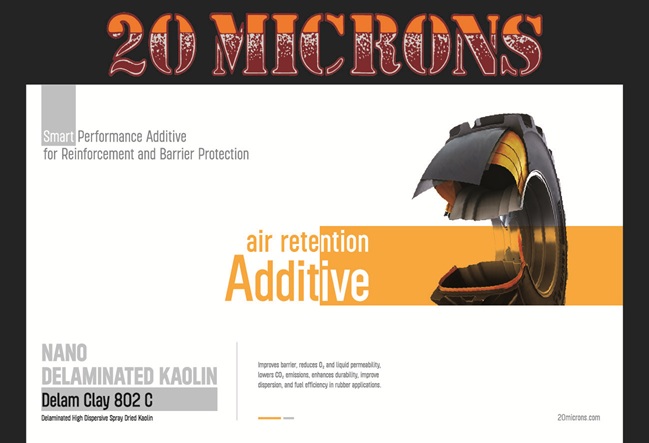
“Radial tyres require improved air retention and reduced permeability. Our delaminated nano kaolin enhances these properties. We developed a product in which each particle is separated layer by layer rather than mechanically crushed,” Mishra explained.
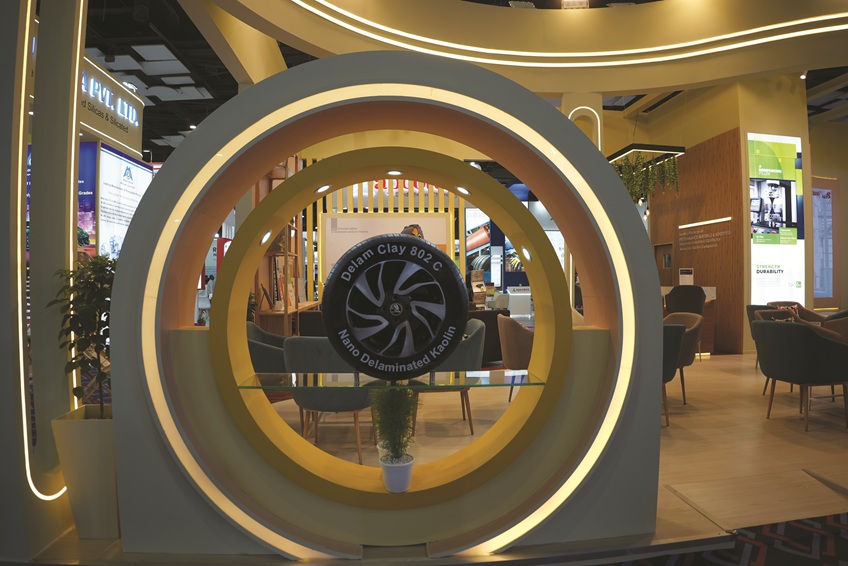
The company recognised that global tyre manufacturers such as Bridgestone were importing similar materials from suppliers like Imerys, encouraging it to approach Indian tyre makers.
“Our first engagement was with CEAT, where the product delivered encouraging results. This was largely due to the superior quality of Indian China clay. Following CEAT’s success, we approached JK Tyre and Apollo Tyres. After two to three years of trials and validation, our product was approved and commercial supplies began,” Mishra said.
The company is now in discussions with Bridgestone, which currently imports these materials, and securing a position in its supply chain would mark a significant milestone.
MARKET OPPORTUNITY
India’s tyre industry is expanding rapidly. While the domestic market includes several major tyre manufacturers, the global supply side for speciality minerals remains concentrated among a few multinational players such as Imerys and Thiele. 20 Microns sees this as an opportunity to position itself as a global supplier.
“After establishing ourselves in India, we have started approaching international tyre manufacturers such as Pirelli and Iris Tyres, where approvals are currently underway. Globally, the transition towards radial and tubeless tyres is driving demand for such materials,” Mishra stated.
The company claims its products help reduce costs, provide reinforcement and partially replace carbon black while also supporting sustainability objectives.
Compared to carbon black or silica, the company’s product reportedly generates only around five percent of the associated carbon emissions, resulting in nearly 95 percent lower carbon output.
Additionally, the company operates its own mining facilities, where land restoration and environmental compliance form part of the extraction process.
“Around 15 percent of carbon black in tyres can be replaced with our product. Simultaneously, air impermeability improves by approximately 13–15 percent. Typical loading levels are around 15–20 percent. This means tyre manufacturers achieve carbon black replacement along with some reduction in rubber usage because improved air impermeability allows lower rubber consumption,” Mishra explained.
Beyond large tyre makers, the company is now targeting smaller manufacturers as well. Producers of two-wheeler and three-wheeler tyres have already begun adopting these solutions.
According to Mishra, several manufacturers have also expressed strong interest, with collaborative research and development activities underway to accelerate adoption.
However, he acknowledged that large-scale application in commercial vehicle tyres, where carbon black usage is significantly higher, will take time.
“Tyres are directly linked to safety, so manufacturers are understandably cautious. There is initial scepticism regarding whether replacing carbon black or introducing China clay-based fillers could affect mechanical performance. However, as successful implementation in passenger car radial tyres becomes more visible, adoption is expected to expand into commercial tyres as well,” he said.
STRENGTHENING THE SUPPLY CHAIN
Exports currently contribute around 18 percent of the company’s total revenue, with supplies reaching 86 countries across Europe and the Americas. Mishra expects demand for delaminated products to grow three to four times over the next three to four years.
The company operates mine-site plants for kaolin, while its primary facility is located in Bhuj, Gujarat, where mining operations span 168 hectares. One mine is operational, while another is awaiting environmental clearance.
Its facilities employ advanced technologies, including cryogenic magnetic separation systems, to remove paramagnetic and ferromagnetic impurities. The kaolin slurry is processed through specialised systems to produce ultra-pure material, ensuring high-quality output.
“Indian kaolin deposits naturally offer high aspect ratios and superior platy structures. This enables two major applications. First, delaminated kaolin improves permeability and reinforcement in tyres. Second, when calcined at 1200–1,400 degrees Celsius, it can partially replace titanium dioxide, especially in paints and plastics. While this market is smaller than tyres, it still offers considerable potential,” Mishra noted.
According to the company, competition in this niche segment remains limited globally, with only a handful of manufacturers producing such specialised materials. While China competes aggressively in standard grades, the delaminated segment continues to remain relatively niche.
Sustainability has become a key focus area, as the products are derived from naturally occurring minerals that require mining and processing, yet still offer a significantly lower carbon footprint.
The company’s long-term objective is to increase the share of mineral-based fillers in tyre formulations.
“Three additional products are currently under development, including amorphous silica from diatomaceous earth and nano silicates as green tyre fillers. Delaminated talc, already supplied as an anti-blocking agent for petrochemical applications, is also being positioned by some European players as a partial carbon black substitute,” Mishra revealed.
The company recently invested INR 1 billion, fully funded through internal accruals, towards expansion. It currently operates nine plants in India along with facilities in Malaysia and Vietnam
Delaminated production capacity, currently at 400 tonnes and fully utilised by three tyre customers, is being expanded to 1,000 tonnes in response to strong global demand.
Capacity expansion is also underway in the petrochemical segment to cater to rising demand for anti-blocking agents. The company has acquired mineral assets and land in Anantapur for a talc and dolomite plant serving both tyre and non-tyre sectors, while calcium carbonate operations are being expanded in Makrana.
Expansion of the Malaysian subsidiary is expected to be funded through debt and private equity following mining asset acquisitions.
GLOBAL AMBITIONS AND FUTURE CHALLENGES
Export opportunities remain a key focus, particularly in Europe and other global markets.
“Our strategy is to first establish a strong domestic base and then expand globally through direct engagement with international manufacturers as well as distributor networks. The overseas expansion of Indian tyre companies is also creating opportunities, as approved supplier bases are being extended internationally,” Mishra said.
At the international level, concerns persist regarding the impact of replacing carbon black with China clay-based fillers on mechanical performance. However, awareness of similar global products already exists, and the company believes its 50–60 percent cost advantage could support gradual adoption despite lengthy validation cycles.
In the electric vehicle tyre segment, progress has so far been limited. Nevertheless, mineral-based fillers are recognised for offering improved flame-retardant properties, which could create future opportunities.
“Traditionally, adoption cycles in the tyre industry have been lengthy, typically taking around three years from laboratory testing to commercialisation. However, this approach is evolving following the Paris Agreement, with sustainability and circular economy goals driving greater openness towards green tyres. Artificial intelligence is also being leveraged to accelerate innovation, enhance testing and improve supply chain efficiency,” Mishra observed.
At the same time, challenges remain. The company also highlighted how readily mineral-based innovations can be replicated, leading to intensifying competition in the value-added minerals segment, where fillers are increasingly positioned as performance enhancers. While India continues to hold strength in China clay, talc, mica resources, and continues to export aggressively, imports of calcium carbonate from countries such as Malaysia, Vietnam and Egypt are also increasing.
Even as the Atmanirbharta wave drives innovation and global ambition, challenges related to validation cycles, performance concerns and rising competition persist. The ability to scale sustainably, protect innovation and build global trust will determine whether India’s mineral-based solutions evolve from cost-efficient alternatives into indispensable components of next-generation tyre manufacturing.
FALKEN Kicks Off ‘Falken Says Fill Up!’ Campaign For Winter Season
- By TT News
- September 17, 2026
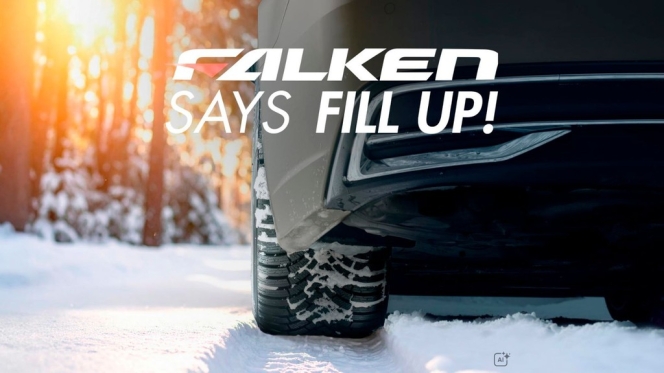
FALKEN has launched its ‘Falken says fill up!’ promotion for 2026, marking the start of its established seasonal campaign. Running from 15 September to 30 November, buyers of four winter or all-season tyres sized 16 inches or above, excluding HGV tyres, can receive a reward worth EUR 20. The initiative operates across 14 European markets, including Germany, Italy, Poland, Switzerland and the Czech Republic, among others.
In Germany, participants may select either an Aral SuperCard or EnBW mobility+ charging credit. Beyond this immediate reward, FALKEN has partnered with ZEG to offer additional prizes. One BULLS Copperhead EVO AM 2 e-trail bike, valued at EUR 4,999 and three BULLS Machete RX 1 carbon gravel bikes, each worth EUR 1,999, will be given away.
The campaign highlights three tyres from FALKEN’s current range. The EUROALL SEASON AS220 suits drivers seeking year-round flexibility, offering reliable handling, efficiency and wet-road grip for regions with changeable weather. For winter, FALKEN recommends the EUROWINTER HS02 and HS02 PRO, both engineered for grip and stability on wet, cold and snowy roads. The HS02 delivers balanced winter performance, while the HS02 PRO targets drivers preferring precise, dynamic handling in cold conditions.
Retail partners also benefit from the promotion, which combines an instant reward, a high-value prize draw and a strong product assortment. These elements provide useful talking points for customer relations and stimulate purchasing at the outset of the winter tyre season.
Maxam Tire Unveils MS934 And MS936 TimberXtra Tyres For Forestry Equipment
- By TT News
- September 17, 2026
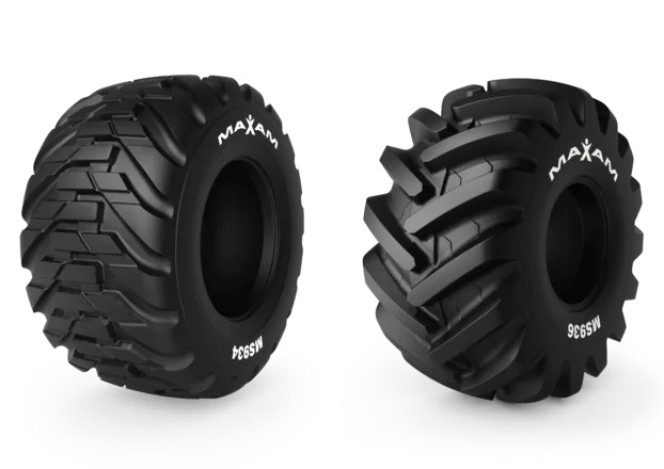
Maxam Tire has broadened its forestry tyre offerings with two new product lines. The MS934 targets forwarders and skidders, while the MS936 TimberXtra serves skidders and feller bunchers. Both are built for strong traction, flotation and durability across varied terrain and conditions.
The MS936 TimberXtra carries an aggressive LS2 tread for muddy ground, with reinforced construction and an optimised profile for stability and long service. Its lug and crown design extend wear life. Upcoming sizes include 35.5L32 30PR, 67/34.00X25 20PR and 67/34.00X26 20PR.
The MS934, an LS2 cut-to-length logging tyre, features an open centre tread made for over-the-tyre track systems. Nylon-wrapped beads prevent unwinding, while a wider lug shoulder and increased shoulder spacing deliver a more stable footprint.
Matt Fagan, Director of R&D, Maxam Tire, said, “Forestry operations can vary significantly by terrain and working conditions, which makes having the right tyre for the application critical. Each of the new MAXAM forestry tyres provide logging operations a unique solution for different terrains and applications. With additional skidder and CTL solutions, we are committed to deliver consistent performance and productivity for logging equipment, no matter the demand.”
Hankook Tire Blends Off-Road Adventure With Everyday Chaos In New Dynapro Film
- By TT News
- September 17, 2026
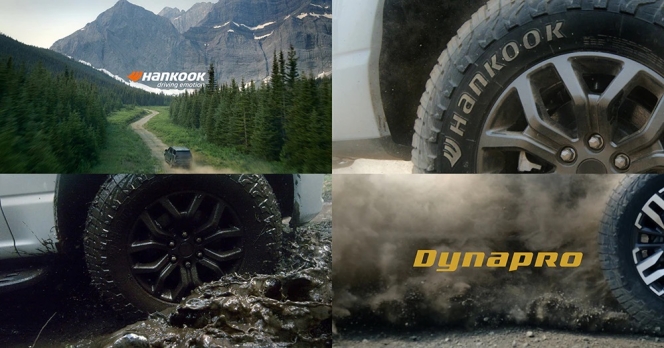
Hankook Tire has launched a new brand film titled ‘Rough Terrain’ for its Dynapro SUV tyre line, aimed at the US market. It marks the first Dynapro brand film released in US since 2024. The campaign moves beyond traditional off-road narratives to showcase a broad range of driving environments and everyday moments, both on and off the road.
The film humorously reimagines daily life’s unpredictable situations as ‘rough terrain’, highlighting Dynapro’s versatile performance. It opens with an SUV tackling muddy, rocky trails on Hankook’s Dynapro AT2 Xtreme tyres before shifting to a crowded big-box store parking lot, where a contested space, stray shopping carts and an anxious driver set the scene.
The spot then follows the SUV through family life’s chaotic moments, including an awkward father-daughter gossip session, a coffee spill and the baseball carpool. These scenarios offer a relatable take on rough terrain, emphasising the versatility required for life’s unpredictability while giving the traditional automotive adventure story a fresh twist.
Dynapro tyres are engineered for both off-road and everyday driving. Options include the mud-terrain Dynapro MT2, rugged-terrain Dynapro XT and all-terrain Dynapro AT2 Xtreme, plus the CUV performance Dynapro evo AS, CUV touring Dynapro HPX and highway terrain Dynapro HT2. The film is available on Hankook’s website, social media, YouTube, connected TV and OTT platforms.
Webfleet Launches Commercial Trip Monitor To Benchmark European City Fleet Conditions
- By TT News
- September 16, 2026
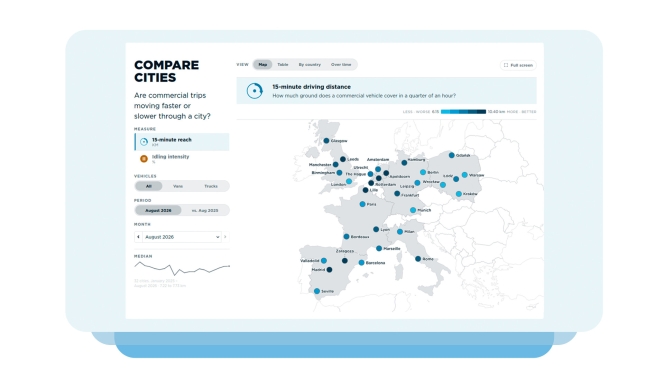
Webfleet, the fleet management arm of Bridgestone, used the IAA Transportation event to introduce its Commercial Trip Monitor, a free online benchmarking tool that assesses how easily vans and trucks move through 32 major European cities. Initial results suggest operating conditions are growing tougher in numerous urban centres.
The monitor refreshes monthly, drawing on anonymised, aggregated commercial vehicle data to track shifts in fleet operating conditions over time. Because it examines repeat business journeys rather than general traffic, it offers operators and city stakeholders a clearer picture of where urban operations are improving or deteriorating. Even minor changes in reach or idling can reduce productivity, raise fuel use and increase emissions.
Two core metrics underpin the platform. The 15-Minute Reach metric shows how far a typical van or truck travels in a fixed quarter-hour, with higher scores indicating greater distance covered. Idling Intensity measures the share of a journey spent stationary with the engine running, where a higher percentage signals more wasted time. Users can rank cities, compare performance and follow trends.
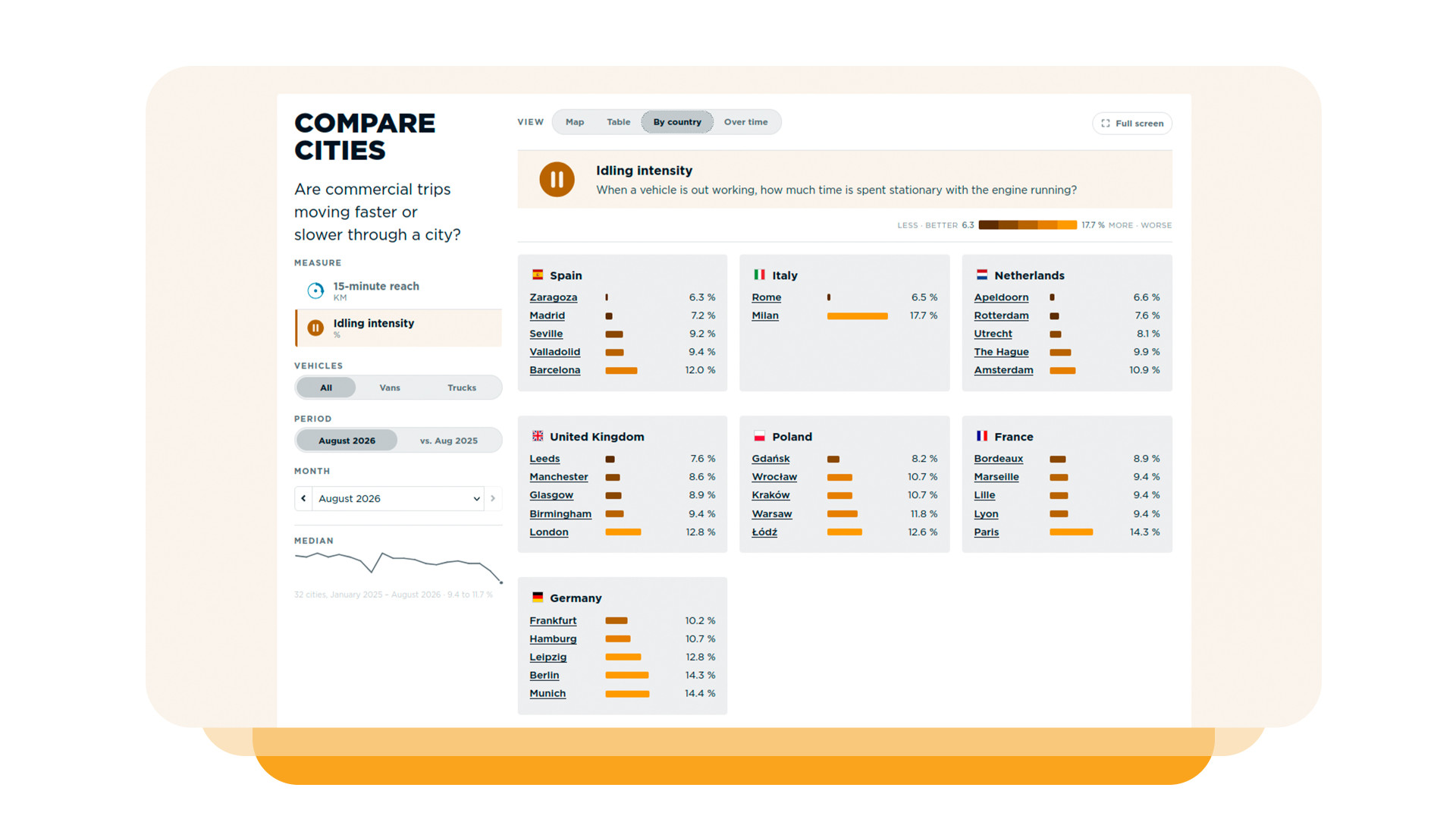
Early 2026 data revealed sharp contrasts. Zaragoza, Apeldoorn and Utrecht posted the strongest average 15-Minute Reach rankings, while Berlin, Paris and Kraków were the most difficult. Poland was the only country where every analysed city improved year-on-year while idling stayed stable or fell. Rome and Milan improved on reach, yet Milan recorded Europe’s highest Idling Intensity at 21 percent, against Paris’s 16 percent. Berlin finished last overall, with Munich, Leipzig and Hamburg covering 4.4 percent, 4.3 percent and 3.3 percent less ground respectively than in 2025. Users can also examine trip volumes, distance, CO₂ emissions, fuel consumption and local conditions.
Webfleet developed the methodology with mobility intelligence specialist Mobito, leveraging over 25 years of fleet experience and one of Europe’s largest connected vehicle ecosystems.
Jan-Maarten de Vries, President – Fleet Management Solutions, Bridgestone, said, “The Webfleet Commercial Trip Monitor provides a clearer picture of urban mobility through the lens of fleet operations. Commercial vehicles do not experience cities the way commuters and consumers do. They follow different routes, operate under different regulations, make multiple stops and load and unload. When conditions change due to congestion, roadworks, low-emission zones, regulation or major events, fleet businesses often feel the impact first. Even relatively small changes can affect productivity, operating costs, fuel use and emissions.”


Comments (0)
ADD COMMENT