

India is also getting a rousing applause for its efforts to contain the coronavirus pandemic. Given the population load and weak public health infrastructure, it was feared that the pandemic might result in high levels of casualties or morbidities. A sustained sensitization programme coupled with the selfless services of thousands of corona warriors, has managed to keep the casualties low in India when measured in the context of its population.
However, this piece is not about waxing eloquent on the revival of the Indian economy or how we have taken the challenge of Coronavirus pandemic head-on or the way we have set a global benchmark in coming out with vaccines with single minded focus.
In fact, it is about our continued apathy to deal with another, and no less detrimental, challenge that has been rearing its head for years on end. Yes it’s about India’s poor track record of road safety where India continues to have the dubious distinction of largest number of road fatalities in the world. So much so that even during the April- June’20 period when a lockdown was imposed across the country, India lost as many as 20732 precious lives in road crashes.
Two recent pieces of news have been especially troubling. The number of fatalities due to collisions with parked vehicles on roads has more than doubled in the past three years. From 2317 such fatalities in 2017, the number has gone up to 5086 in 2020.
The use of retro reflective tapes on all commercial and transport vehicles is mandatory to obtain fitness certificate as per Motor Vehicle rules. However, leave alone cautionary signs to alert other drivers about parked or punctured vehicles, several parked trucks do not even have retro reflective tapes making stranded vehicles in the middle of the road a huge safety hazard especially at night.
Similarly, the usage of high beam continues to be very common in India. The purpose of the high beam is to provide a clear view to the driver at places where there is no immediate source of light. Under normal driving conditions low beams perfectly serve the purpose. However, as shown by a survey, as many as 74% drivers do not care if they are using dippers correctly. The other person can be blinded (for a few seconds) from direct exposure to a high beam or the glare in the rear-view mirror.
I would strongly urge the readers to visit #DimTheLights campaign being run by Apollo Tyres, an ATMA member. The campaign hopes to reduce the danger of accidents by encouraging drivers to use the high beams on their cars responsibly.
Generally, there is an attempt on the part of the Governments to soft pedal the uncomfortable data. However, that doesn’t seem to be the case here and the Government plans to take road safety in a mission mode.
Speaking at the National Road Safety Council meeting in January this year, Hon’ble Minister for Road Transport and Highways Nitin Gadkari minced no words when he stated “ Please publish all data on road deaths every month. Let everyone get exposed how they have failed. Let people pull us up, question us about failures and then only everyone will work… This is one area where we need immediate action. We can’t wait”.
The action is evident. For the first time, the National Highways Authority of India has promulgated a policy of heavy fines on contractors for accidents and deaths caused by structural defects in design, construction or maintenance of the stretches maintained by them. Such agencies will also not be allowed to bid for any NH project for three years.
Deaths due to Coronavirus are estimated at 1.5 lakh in the last one year in India. That’s roughly equal to road fatalities in road crashes year after year.
India has launched vaccination against Coronavirus in double quick time. Similar zeal is required to tackle the issue of road safety on a war footing. Would 2021 be different?
Tegeta Green Planet Explains Producer Responsibility To Future Automotive Professionals
- By TT News
- October 08, 2026
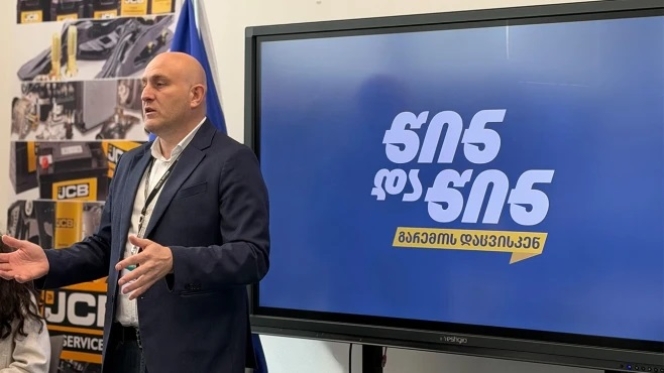
Tegeta Green Planet opened the Light Vehicle Diagnostics course at Tegeta Academy with a presentation for attendees aged 17 to 33. Beyond their chosen vocational field, participants learned about automotive waste management and environmental responsibility.
Shalva Akhvlediani, the organisation’s director, outlined its activities and goals while emphasising Extended Producer Responsibility. The session examined how the automotive sector connects to environmental duty and why used tyres, waste oils and automotive batteries must be collected and managed properly.
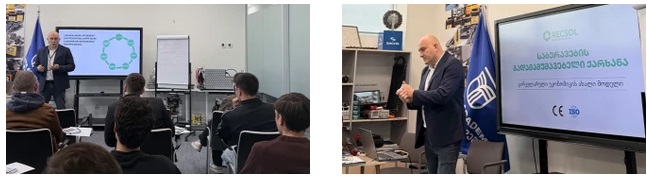
Tyre management and RECSOL featured prominently. Attendees traced a used tyre’s path from collection to recycling and learned how waste becomes a source of new resources. RECSOL, Tegeta’s tyre recycling plant, is a significant infrastructure project in used tyre recycling, processing tyres into materials for various uses and supporting circular economy principles.
A core aim is a system where waste is not an endpoint but the starting point for new resources, which requires infrastructure alongside greater public awareness and information on proper disposal. For participants, the meeting linked professional education with environmental awareness, stressing that future automotive professionals should understand this responsibility early.
Tyres Europe Joins Industry Call To Rethink CBAM Scope Extension
- By TT News
- October 08, 2026
Tyres Europe, alongside ACEA (the European Automobile Manufacturers’ Association) and CLEPA (the European Association of Automotive Suppliers), has dispatched a joint communication to EU decision-makers concerning the possible broadening of the Carbon Border Adjustment Mechanism (CBAM) to cover downstream goods. The move comes as trilogue discussions approach.
Tyre producers form part of an automotive value chain already bearing carbon-related expenses for steel and aluminium manufactured within Europe. The proposed expansion would draw additional products into the mechanism’s remit before the existing framework has demonstrated its effectiveness. Resulting costs and administrative requirements would land on downstream manufacturers, tyre makers included, with signatories cautioning that a conceptually sound regulatory effort could become an operational and financial strain.
Endorsing the mechanism’s aims, the signatories nonetheless urge a proportionate scope that shields the entire value chain from carbon leakage while preventing that risk from being pushed further downstream. They advocate extending the mechanism only where a material carbon-leakage danger is evidenced, and request that policymakers ease compliance demands, including via more fitting default values mirroring real production routes.
NEXEN TIRE Renews Zalgiris Deal, Expanding Brand Visibility Across Europe
- By TT News
- October 08, 2026

NEXEN TIRE has extended its partnership with Zalgiris, reinforcing its commitment to basketball in Europe, particularly across the Baltic region. The renewal builds on a relationship that began in 2024 and reflects the company’s broader strategy of linking its brand to performance, innovation and mobility.
The tyre maker has pursued sports partnerships as a way to connect with fans, sharing in the passion and excitement of supporting favourite teams during major matches and memorable moments. It also values the teamwork, dedication and collective achievement that define team sports, using such ties to build authentic connections and deepen engagement in key European markets. Its collaboration with clubs including Zalgiris and FC Bayern München forms part of this approach.
Under the extended agreement, NEXEN TIRE will gain greater visibility among sports fans in the region. The partnership offers branding opportunities at Zalgirio Arena, such as synchronised on-screen advertising and promotion on LED stands near the court, in a position visible on television during EuroLeague and LKL home games.
The arrangement also includes a hospitality programme allowing NEXEN TIRE to welcome guests and business partners at Zalgiris home fixtures. Through the strengthened alliance, the company aims to share its passion with more fans while raising brand awareness across the region.
Ricky Lee, Managing Director, NEXEN TIRE Poland, said, “Our cooperation with Zalgiris has developed positively since 2024, and we are pleased to extend and strengthen this partnership. Basketball has a particularly strong following in the Baltic region, making Zalgiris an important partner as we continue to grow our presence and engage with fans. We look forward to supporting the team throughout the season and doing our best to create positive experiences for both the players and their passionate fans.”
Paulius Jankunas, President, Zalgiris, said, “We are delighted to continue our cooperation with NEXEN TIRE and build on the partnership we started two years ago. NEXEN TIRE brings extensive experience in sports marketing, and we are proud to work together on creating meaningful projects and experiences for our fans. We look forward to another successful period of cooperation and to welcoming NEXEN TIRE’s guests and partners to our games and events.”
TBC Corporation Expands Multi-Mile Tyres Portfolio With Four New Lines
- By TT News
- October 08, 2026

TBC Corporation, one of North America’s largest marketers of automotive replacement tyres through wholesale and franchise operations, has widened its tyre portfolio through the addition of four new lines under the Multi-Mile Tyres banner. Serving as a value step-up brand, Multi-Mile gives dealers a strong mix of broader product coverage and improved consumer advantages crafted to drive better retail margins, helping retailers offer greater value while lifting profitability. With this expansion, the portfolio now reaches over 85 percent of the vehicle market, offering dealers more ways to satisfy customer demand.
Among the additions are tyres built for rugged and mud terrain use, boasting self-cleaning treads that push out mud and stones alongside dependable traction both on and off the road. Also joining the range are commercial and C-metric speciality tyres tailored to heavy-duty regional and long-haul trucks, together with all-weather tyres that hold the 3-Peak Mountain Snowflake severe snow rating and are made for high mileage and consistent year-round use.
A prominent name in the replacement tyre segment, Multi-Mile carries cutting-edge touring, high-performance and broad-line tyres suited to passenger cars, light trucks and SUVs. Meanwhile, the upgraded Mile After Mile Protection Plan warranty now delivers broader coverage, adding three-year roadside assistance, a three-year road hazard protection plan and a 60-day ride guarantee on top of its extensive treadwear warranties.
Rachel Tibor, Chief Marketing Officer, TBC Wholesale, said, “For more than 70 years, Multi-Mile products have offered cost-efficient, reliable and durable tyre options that enhance safety and performance. With this expanded portfolio, Multi-Mile strengthens its position as a value step-up brand, giving dealers more opportunities to meet evolving consumer needs while offering a product mix designed to support stronger retail margins. We’re continuing our longstanding tradition of supplying the right products at the right time for every type of vehicle and application.”

Comments (0)
ADD COMMENT