

Tyre Makers Expect Another Year of Modest Growth Amid High Costs: CRISIL
- By TT News
- November 18, 2024
Natural Rubber Prices to Pressure Profit Margins; Credit Profiles Remain Stable
Tyre manufacturers in India are bracing for a second consecutive year of single-digit revenue growth as rising natural rubber prices and global economic challenges weigh on the sector. Revenue is forecast to grow seven percent to eight percent in the current fiscal year, driven by a three percent to four percent increase in both realisations and volume, according to an analysis by CRISIL Ratings.
While this marks a significant improvement from the previous fiscal year, when revenue grew at approximately four percent, it falls short of the compound annual growth rate of 21 percent between fiscal years 2021 and 2023.
Gradual price increases to offset cost pressures
Tyre makers are implementing gradual price hikes to mitigate the impact of surging natural rubber costs, which account for nearly 50 percent of raw material expenses. Realisation growth is expected to be staggered throughout the year as manufacturers carefully balance price increases with market demand.
Volume growth, projected at three percent to four percent, will be driven primarily by replacement demand rather than new vehicle sales. However, the limited ability to fully pass on higher input costs will strain operating margins, which are expected to shrink by approximately 300 basis points to 13 percent this fiscal year, down from 16 percent in the previous year.
“Domestic demand accounts for around 75 percent of the industry’s sales (in tonnage terms), while the rest is exported. About two-thirds of the domestic demand is from the replacement segment and the rest is from original equipment manufacturers (OEMs). This fiscal, replacement demand, mainly from commercial and passenger vehicles, will drive volume growth, while OEM demand is expected to rise only between one and two percent due to slow growth in commercial vehicle sales,” says Anuj Sethi, Senior Director, CRISIL Ratings.
Stable cash flows and balance sheets
Despite these challenges, tyre makers are expected to maintain stable credit profiles due to robust balance sheets and prudent capital expenditure. Cash flow generation, though modestly affected, will remain substantial. Gearing and interest coverage ratios are projected to stay steady at approximately 0.3 times and seven to eight times, respectively, consistent with last fiscal year’s levels.
A CRISIL Ratings analysis of the six largest tyre manufacturers, which together account for about 87 percent of the industry’s revenue, supports this outlook.
Export growth weakens
Export growth is forecast to remain muted at two percent to three percent for the year, reflecting sluggish demand in key overseas markets such as North America and Europe, which collectively account for 60 percent of India’s tyre exports. Geopolitical tensions and supply-chain disruptions have exacerbated the situation, leading to higher freight costs and extended transit times, further curbing export demand.
Global shortages drive up raw material costs
The sharp rise in natural rubber prices is primarily attributed to a global supply shortage caused by adverse weather conditions in leading producer countries like Thailand and Vietnam, which together account for approximately 50 percent of global rubber production.
In addition to natural rubber, the cost of other critical raw materials, including nylon tyre cords, carbon black, styrene-butadiene rubber and polybutadiene rubber, remains volatile due to their dependence on crude oil prices.
Outlook and challenges
Looking ahead, tyre makers will likely continue to face pressures from raw material price volatility, original equipment manufacturer (OEM) demand fluctuations, potential changes in import duties, and the implementation of Extended Producer Responsibility regulations.
Naren Kartic. K, Associate Director, CRISIL Ratings, says, “To support domestic tyre manufacturers, the Indian government has extended the countervailing duty on Chinese radial tyres for five years to ease competition. Plus, given the sluggish demand and pressure on operating margins, tyre makers are implementing appropriate price increases and prudent capital expenditure to ensure that capital efficiencies remain satisfactory. With capacity utilisation at around 80 percent, tyre manufacturers rated by us are investing around INR 55 billion this fiscal, slightly lower than last fiscal, with a focus on necessary capacity enhancements and debottlenecking.”
Bridgestone Plants Nearly 59,000 Trees Through Fourth Annual App Campaign
- By TT News
- June 23, 2026
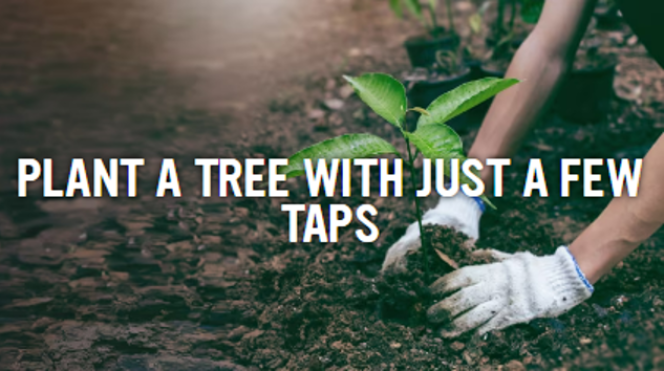
Bridgestone Retail Operations (BSRO), a subsidiary of Bridgestone Americas, has concluded its fourth annual ‘Download the App, Plant a Tree’ campaign, resulting in nearly 59,000 new trees being planted across United States. The initiative, which ran from Earth Day on 22 April through the end of Bridgestone’s Sustainable Business Week on 12 May, encouraged customers of Firestone Complete Auto Care and Tires Plus to transition away from paper-based processes. In partnership with The Nature Conservancy, the company committed to planting one tree seedling for every new download of its mobile applications.
Since the programme’s inception in 2023, the cumulative effort has contributed over 244,000 tree seedlings to a conservation project spanning 3,600 acres. For the second consecutive year, Bridgestone has collaborated with The Nature Conservancy to focus reforestation on flood-prone areas within the Mississippi Delta region, protecting vulnerable farmland. This work builds upon a significant prior contribution, as the company donated over 5,700 acres of Tennessee land to the organisation in 2018, the largest land donation in that chapter’s history.
The mobile applications function as digital glove boxes, enabling customers to schedule appointments, access vehicle histories and review promotional offers. By incentivising digital adoption, BSRO seeks to curtail paper waste across its 2,200 retail locations. Beyond reducing paper consumption, the company’s sustainability strategy incorporates electric vehicle maintenance and charging services, alongside recycling nearly all products and byproducts used in stores.
This reforestation effort supports the Bridgestone E8 Commitment, a framework of eight corporate values guiding sustainability objectives. The campaign exemplifies the company’s dedication to Energy, Ecology and Efficiency, demonstrating how customer engagement drives environmental outcomes. Through these actions, BSRO integrates ecological responsibility into its retail operations and long-term business model.
Marko Ibrahim, President, BSRO, said, “We are proud to see this campaign continue to grow and support Bridgestone’s long-term sustainability goals. By helping expand green space in communities across the country, our stores are demonstrating what it means to live out our Promise to Care.”
NEXEN TIRE Boosts European Storage Capacity By 57 Percent With New Automated Facility
- By TT News
- June 23, 2026
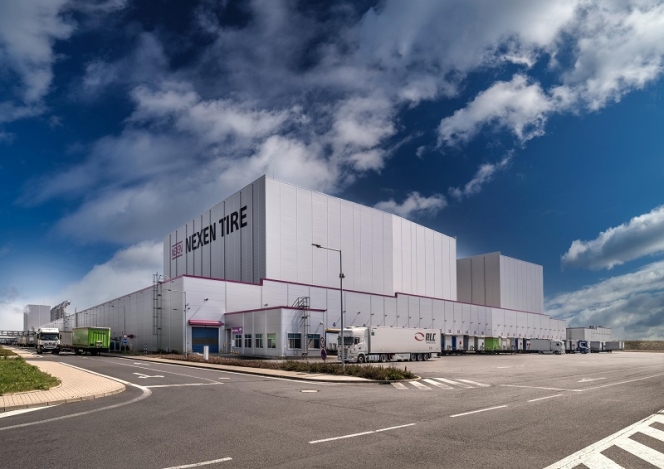
NEXEN TIRE has inaugurated a fully automated logistics centre at its European manufacturing facility in Žatec, Czech Republic. The strategic project significantly boosts the plant’s storage capacity by roughly 57 percent, elevating it from 530,000 to 830,000 tyres.
Spanning 7,104 square metres and rising 51 metres high, the new warehouse employs cutting-edge automation, including RFID-based product tracking and fully automated inbound and outbound systems. These technologies streamline the entire production-to-shipment process, enhancing both operational efficiency and inventory accuracy. Consequently, the European subsidiary gains greater agility to address seasonal demand shifts, ensuring faster and more reliable deliveries that bolster regional customer satisfaction.
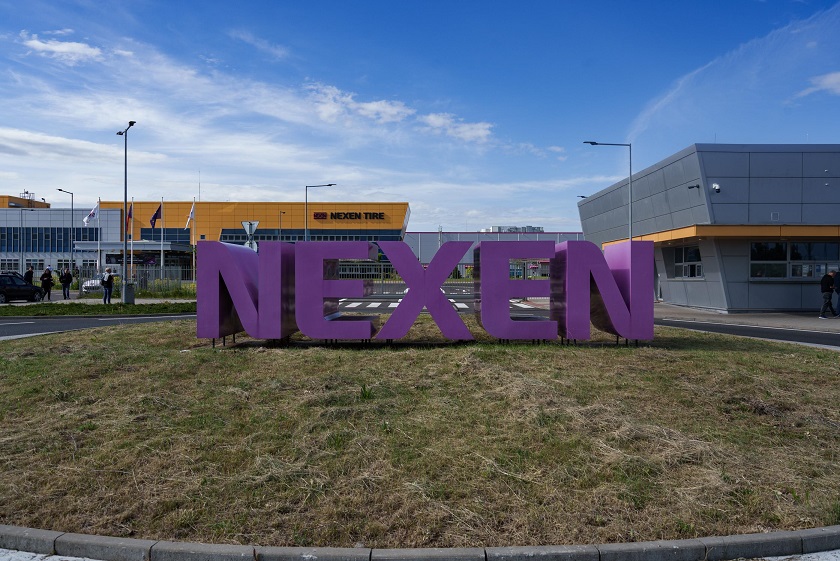
Since commencing European production in 2019, NEXEN TIRE has persistently expanded its local presence. The warehouse project, launched in October 2024 following the plant’s second-phase completion, directly supports rising output and underscores the company’s commitment to strengthening supply chain resilience and manufacturing capabilities across Europe.
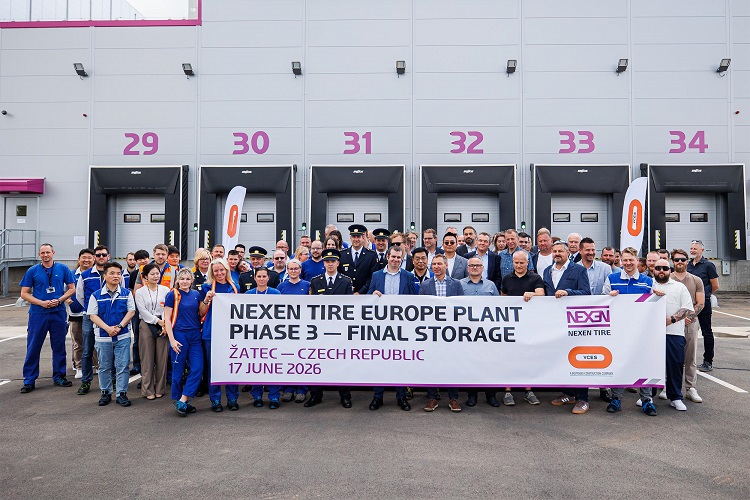
John Bosco (Hyeon Suk) Kim, CEO, NEXEN TIRE, said, “This warehouse expansion does more than just increase storage capacity. It is a strategic investment that will strengthen our integrated production and logistics capabilities. By continuously enhancing the operational capabilities of our European plant, we will improve the trust of customers and further accelerate our growth in the European market.”
Tegeta Green Planet And Shine Energy Host Environmental Workshop For GLC School Students
- By TT News
- June 23, 2026
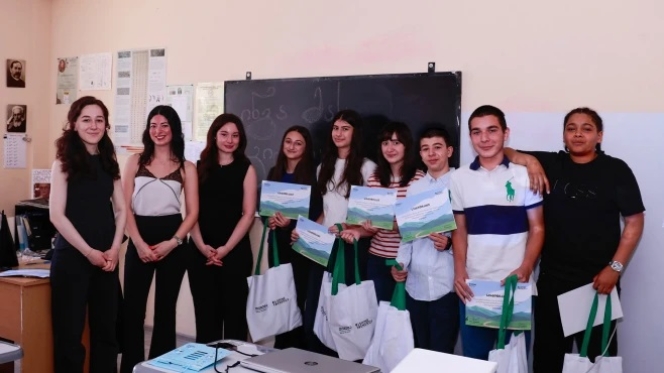
Tegeta Green Planet, a pioneering Georgian organisation authorised by the Ministry of Environmental Protection and Agriculture under the Extended Producer Responsibility (EPR) system, partnered with Shine Energy for an educational visit to GLC School (Georgian Learning Center School). The organisation specialises in the circular economy collection, transportation and recycling of used tyres, waste oils and batteries.
Students from grades VI to IX engaged in dynamic discussions, practical exercises and interactive tasks designed to impart crucial knowledge on waste management and resource conservation. The session illuminated the mechanics of the EPR system and underscored the vital role of individual citizens in environmental stewardship. To commemorate their enthusiastic participation, the students received certificates and symbolic gifts.
This initiative is part of a broader strategy by both companies to cultivate environmental consciousness among youth. By utilising practical examples and interactive learning methods, including presentations and games, the project aims to instil sustainable behaviours and a deep understanding of circular economy principles in the next generation.
AZuR Network Welcomes Digital Solutions Expert REGOM As Newest Partner
- By TT News
- June 23, 2026
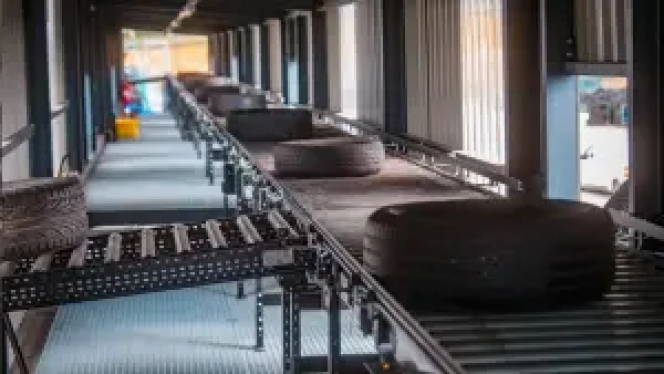
The Alliance for the Future of Tires (AZuR) has expanded its European network by integrating REGOM, a French innovator specialising in automated sorting and identification systems for end-of-life tyres. This partnership strengthens the collaborative push towards a sustainable tyre circular economy, leveraging REGOM’s technological expertise to enhance digitalisation and transparency across the industry.
Proper assessment and classification of used tyres is the foundational step in establishing a functional circular system. Determining whether a tyre is fit for reuse, retreading, recycling or alternative recovery processes is essential to maximising the lifespan of valuable materials. REGOM’s solutions directly address this critical juncture by providing precise, data-driven evaluations.
The company employs advanced artificial intelligence, image processing and real-time data analysis to capture key attributes like tyre dimensions, manufacturer details and tread depth. This technology enables accurate sorting, directing each tyre towards its most suitable end-of-life pathway, thereby improving the efficiency of material flows and boosting recycling rates. Such automated objectivity is a significant asset for waste managers, recyclers and retreaders.
Looking forward, REGOM is actively engaged in pioneering initiatives like the Digital Product Passport and RFID-based identification. These tools are vital for ensuring full lifecycle traceability, from production through multiple use cycles. By enabling comprehensive data collection and process optimization, these technologies promise to drive greater resource efficiency and solidify the digital backbone of the future circular economy.
Christina Guth, AZuR network coordinator, said, “Digital technologies will play a key role in the tyre circular economy in the future. They help to keep tyres in circulation longer, strengthen high-quality recycling pathways and use valuable raw materials more efficiently.”

Comments (0)
ADD COMMENT