

CEAT Motors Ahead with Strong Quarter Despite US Tariff Headwinds
- By Sharad Matade
- October 29, 2025
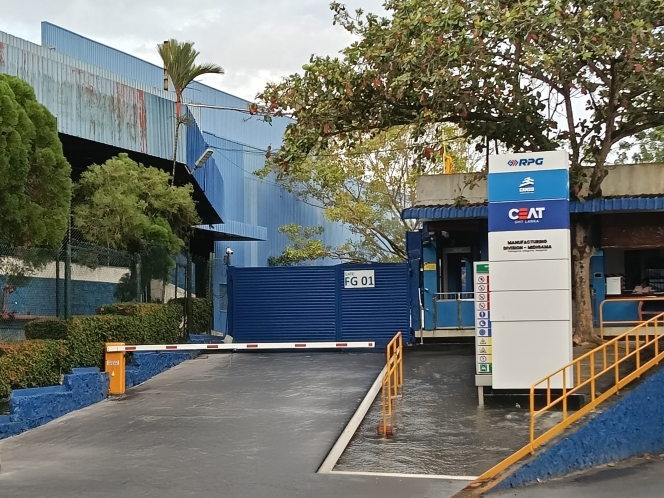
Indian tyre maker posts robust margins and doubles down on electric vehicle segment as it digests the Sri Lankan acquisition
Sharad Matade
CEAT delivered a strong second-quarter performance, with revenues rising 12.2 percent year-on-year, even as the company navigates turbulent US tariff waters and integrates its recently acquired Sri Lankan off-highway tyre business.
The Mumbai-based tyre manufacturer reported standalone earnings before interest, tax, depreciation and amortisation (EBITDA) of INR 5.07 billion for the quarter ended September, with margins expanding to 13.7 percent. Net profit was INR 2.02 billion, a significant improvement from last year’s INR 1.22 billion.
“We’ve had a good quarter,” Managing Director Arnab Banerjee told analysts on an earnings call, noting that gross margins had climbed back into the company’s long-term target range of 40-42 percent after benefiting from softer raw material prices.
CAMSO Bet Takes Shape
The quarter’s headline event was CEAT’s completion of the CAMSO acquisition from Michelin on 1 September, a deal that positions the Indian manufacturer as a leading player in premium off-highway tyres. The company spent INR 12.32 billion in total for the transaction: INR 2.72 billion in equity, INR 7.02 billion in debt, and INR 2.38 billion for intangibles like trademarks and patents.
Chief Financial Officer Kumar Subbiah said the acquisition pushed consolidated debt to INR 29.44 billion by quarter-end, though debt-to-EBITDA remains comfortable at 1.8 times and debt-equity at 0.64 times. “We have enough leverage to provide necessary growth capital going forward,” he assured investors.
The company has historically maintained conservative financial thresholds, preferring not to exceed debt-to-EBITDA of 3 times or debt-equity of 1 time at peak levels. Although it has never exceeded INR 21 billion in absolute debt before, management is confident in the current INR 30 billion debt level, given the growth opportunities ahead.
The Sri Lankan plant currently operates at 50 percent capacity utilisation, offering significant upside potential. However, CEAT will not gain full control of the value chain for another five to six quarters, as it continues purchasing semi-finished goods from Michelin while setting up upstream mixing and calendaring equipment.
“There have been no surprises based on one month of operation,” Banerjee said, adding that the business is progressing well and remains on track to be margin-accretive in the medium term.
Aggressive Investment Programme
CEAT is in the midst of a substantial capacity expansion across multiple facilities. The company spent INR 1.85 billion on capital expenditure during the quarter, bringing the first-half total to INR 4.15 billion. Management expects full-year capex of around INR 10 billion, excluding CAMSO acquisition costs.
The investment breakdown reveals strategic priorities: INR 1 billion was allocated to research and development, information technology, plant maintenance and moulds. Another INR 0.50 billion is being used to expand truck-bus radial tyre capacity towards 2,000 units, an ongoing multi-year project.
The Ambernath plant expansion absorbed INR 0.70 billion, while the Chennai factory received the largest share at INR 1.60 billion for passenger car downstream operations and motorcycle scooter production. Debottlenecking initiatives across facilities accounted for INR 0.40 billion.
“Expansion projects are progressing as per plan,” Banerjee said, adding that overall capacity utilisation stands at 80-85 per cent currently.
Additional investments are planned for Sri Lanka to install upstream equipment at the CAMSO facility, enabling the company to stop purchasing semi-finished goods from Michelin and control the entire manufacturing process.
Tariff Turbulence
The company faces mounting pressure in the US market, where 50 percent tariffs on off-highway tyres have nearly halted exports. CEAT’s sales of off-highway tyres to America slowed to “practically zero” by quarter-end, though passenger car and truck-bus radial exports continued.
For passenger and truck-bus radials, the 25 per cent tariff applies uniformly across countries, leaving India at no disadvantage. CEAT is partially absorbing the impact while gradually passing costs to customers over the next two to four quarters.
The CAMSO operation in Sri Lanka faces a 20 per cent duty on US exports, with roughly half of that tariff currently being absorbed. “We expect CAMSO also to pass on the full impact of tariffs in maybe two to three quarters,” Banerjee said.
Despite the low base, CEAT’s management remains sanguine. “Our stake in the US market is still very low, so the overall impact on our growth and profitability was not very material,” Banerjee noted.
Domestic Boost from GST Cut
A positive development came late in the quarter when the Indian government cut goods and services tax (GST) on tyres from 28 to 18 percent, and on farm tyres from 18 to 5 percent, effective 22 September. The move is expected to boost demand in semi-urban and rural markets.
“There is significant benefit to customers,” Banerjee said. “The 10 percent duty cut works out to around 7-8 per cent on the selling price. For a truck tyre, it could be INR 1,500 per tyre, which is significant.”
CEAT passed the entire benefit to its channel partners and advised them to do likewise for end customers. The company isn’t contemplating any price increases, given softening raw material costs.
The GST announcement created a temporary dip in September, as buyers deferred purchases and trade down-stocked in anticipation. The replacement market, which had been growing at nearly double-digit rates, contracted during the month. However, momentum is expected to return strongly.
Segment Performance
Original equipment manufacturer (OEM) sales were the star performer, surging in the mid-20s as CEAT secured fitments on cars with larger rim sizes. International business grew in the high teens, while replacement business managed mid-single-digit growth despite September’s dip.
Two-wheeler tyres saw robust demand driven by rural markets, while the passenger car segment grew in mid-single digits. Farm tyre growth in the OEM segment reached the mid-teens.
International markets delivered particularly strong results, with mid-teens growth across key clusters in Europe, Africa and the Middle East. Europe, CEAT’s most profitable export market, saw strong traction in passenger car tyres. Brazil recorded good growth in two-wheeler tyres. Passenger and truck-bus radials now account for 65 per cent of exports, with CEAT claiming to be India’s leading passenger car tyre exporter.
Electric Vehicle Push
CEAT has established strong positions in India’s growing electric vehicle segment, holding a 30 percent share in the OEM passenger car and utility vehicle EV market and a 20 per cent share in the two-wheeler EV market.
“We continue to focus on product development for emerging vehicle sizes, and we have good respect and credibility amongst OEMs to get fitted on upcoming new models,” Banerjee said.
The company launched two innovations during the quarter: SecuraDrive CIRCL, a concept tyre made from 90 per cent sustainable bio-based materials, and RockRad, a premium mining tyre showing early promise.
On the digital front, CEAT became one of the first companies to deploy an agentic chatbot on its website, currently in beta, to personalise customer journeys. The company’s website traffic exceeded 1 million, with organic traffic up 19 per cent year-on-year. Leads for premium SUV users exceeded 30 per cent, while positive brand sentiment jumped 28 per cent in average interaction per post year-on-year.
Raw Material Relief
Raw material costs provided relief, declining 5 per cent quarter-on-quarter. International natural rubber prices held steady at USD 1,700-1,750 per tonne, while domestic prices softened towards import parity by quarter-end, dropping just over INR 10 per kilogram.
Crude oil hovered around USD 65 per barrel, at the lower end of its recent range, amid weak Chinese demand and ample supply.
“Taking into consideration current base prices and the impact of rupee depreciation in the last eight weeks, we expect raw material prices to remain at current levels in Q3,” Subbiah said.
Outlook
Looking ahead, management expects to maintain double-digit growth momentum while keeping margins steady. The third quarter typically sees revenue flatten or dip slightly due to the festival season and the onset of winter, which affects northern and eastern markets.
Replacement demand for medium- and heavy-duty commercial vehicle tyres should track GDP growth at mid-single digits, while two-wheelers should be around 7-8 per cent. At the same time, passenger cars remain soft, in the zero-to-low single digits.
“The GST change will be a positive factor for industry, especially in small towns and rural markets,” Banerjee said. “We also think we’ll arrive at some clarity on the US tariff situation sometime during Q3 or Q4.”
Grismer Tire & Auto Service Appoints New CEO And CFO
- By TT News
- September 28, 2026

Grismer Tire & Auto Service, a tyre and automotive service centre operator backed by CenterOak Partners LLC, has named Chris Blanchette as Chief Executive Officer and Mark Hedstrom as Chief Financial Officer. The announcement marks a significant leadership transition for the portfolio company.
Blanchette arrives with over two decades of senior leadership experience in multi-site consumer services, specialising in operations, strategy and business development. He most recently served as Chief Executive Officer of Service Minds, a residential electrical, plumbing and HVAC services provider. His background also includes serving as Chief Operating Officer of QAS, which operates Valvoline Instant Oil Change locations, along with senior operational positions at Advance Auto Parts, Bridgestone Retail Operations and Best Buy.
Hedstrom brings more than three decades of finance expertise to his new role. He previously held the Chief Financial Officer position at W.S. Connelly & Co., a multi-regional specialty distributor, and has also served as Chief Financial Officer for several private equity-backed consumer and distribution companies.
Eric Holter, Managing Director, CenterOak, said, “Chris Blanchette brings highly relevant leadership experience in the automotive aftermarket. He has led complex, multi-location organisations and understands how to translate operational discipline into sustainable growth. Together, Chris and Mark add important depth to Grismer’s leadership team as the Company pursues expansion in existing and new markets.”
Blanchette said, “Grismer’s 90-year history and the trust it has earned with customers set the Company apart. I am excited to join a business with such a strong legacy and see significant
- International Rubber Conference
- Society Of Rubber Science And Technology Japan
- James Busfield
- Nobuyuki Tamura
- Bridgestone Corporation
- Japan Rubber Manufacturers Association
- Aichi International Exhibition Center
- Aichi Sky Expo
Japan To Host International Rubber Conference After Decade-Long Gap
- By TT News
- September 25, 2026
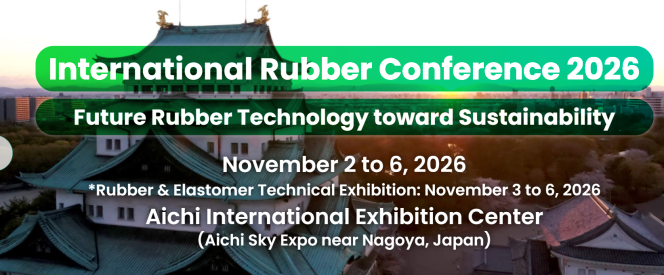
The International Rubber Conference (IRC) will return to Japan in November for the first time in a decade, with more than 271 technical presentations and over 117 exhibitors expected to take part.
The event, known as IRC 2026 Aichi, will be hosted by the Society of Rubber Science and Technology, Japan, alongside the Rubber & Elastomer Technical Exhibition in Aichi. It is scheduled to run from 2nd to 6th November, with the exhibition opening a day later and continuing until 6th November .
Held at the Aichi International Exhibition Center, also known as Aichi Sky Expo, the venue is located near Chubu Centrair International Airport and can be reached from Nagoya Station in about 28 minutes by train.
The conference programme will feature more than 271 presentations spanning rubber science, technology and industrial applications. Participants include James Busfield of Queen Mary University of London and Nobuyuki Tamura of Bridgestone Corporation, who also chairs the Japan Rubber Manufacturers Association. More than 400 delegates have already registered.
Running alongside the conference, the Rubber & Elastomer Technical Exhibition will host more than 117 exhibitors, ranging from raw material suppliers and machinery manufacturers to tyre makers and testing-equipment providers. The exhibition will be open to visitors free of charge.
The International Rubber Conference, first held in 1966, rotates annually across global host cities. The last event in Japan took place in Kitakyushu in 2016, with subsequent editions held in Haikou, Istanbul and Bangkok.
Pirelli Board Approves EUR 1 Billion US Investment Plan And Organisational Restructuring
- By TT News
- September 23, 2026
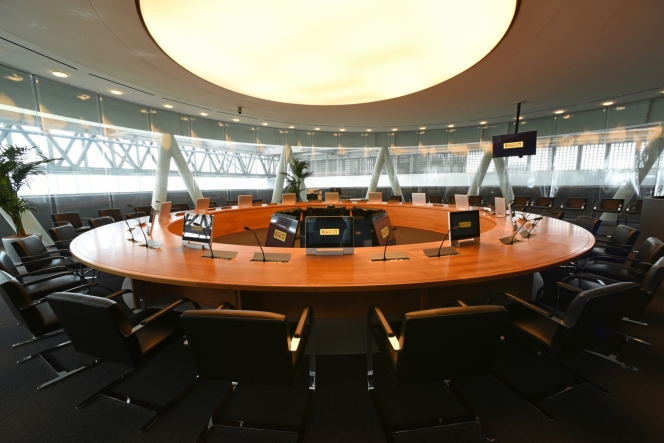
Italian tyre major Pirelli has announced a multi-year investment plan worth approximately EUR 1 billion (USD 1.2 billion) to expand its manufacturing facility in Rome, Georgia in the United States. The motion passed by majority vote, with board members Zhang Haitao, Xi Xiaohong and Wang Kun voting against the proposal.
The capital expenditure program, scheduled to begin in 2027 and will go through 2033, aims to expand annual production capacity at the Georgia site to six million tyres and create approximately 1,000 jobs.
The United States represents the largest market for high-value tyres globally, accounting for roughly 40 percent of global volumes. The project will be carried out in two phases without altering Pirelli's financial targets for 2026.
Phase one of the expansion will introduce modular robotised production systems based on Pirelli's Modular Integrated Robotised System technology, scaling annual output to three million tyres starting in 2028.
In phase two, the company will begin construction of an automated production facility to add three million units of annual capacity. The expanded plant will produce connected tyre systems, including Cyber Tyre technology, following market authorisation granted by the US Bureau of Industry and Security under Italy’s 2026 Golden Power Decree.
Alongside the investment decision, the board approved an organisational restructuring resulting in the immediate elimination of the Corporate General Management function. As part of the changes, Corporate General Manager Francesco Tanzi will step down from his executive role, maintaining an employment relationship through 31 December 2026 to facilitate the leadership transition.
Under the terms approved by the board and the Remuneration Committee, Tanzi will receive a severance payment equivalent to 13 months’ remuneration, payable by February 2027, alongside accrued rights under existing short-term and long-term incentive plans. He has agreed to a two-year non-compete covenant covering Pirelli's primary operating regions in exchange for 130 percent of his gross annual salary, paid in eight quarterly instalments. Following the end of his employment, Tanzi will provide advisory services under a two-year consultancy contract with an annual fee of EUR 350,000, plus non-monetary benefits valued at EUR 45,000.
Bridgestone Appoints Stefano Sanchini As President Of Europe Sales
- By TT News
- September 19, 2026

Bridgestone has announced a European leadership appointment aimed at sharpening customer focus, streamlining engagement across product groups and supporting its ongoing growth plans. Stefano Sanchini will become President, Europe Sales, effective 1 October 2026, leading the company’s European sales organisation across both Consumer and Commercial segments.
The expanded role unites sales activities spanning passenger car, truck and bus, agriculture, off-the-road, motorcycle and original equipment. Sanchini brings over 20 years of international leadership experience in the automotive and tyre sectors, with a career covering Europe, Middle East, Africa and India. Since joining Bridgestone in 2017, he has held several senior positions, including Managing Director of Bridgestone India.
Most recently, as Vice President for Consumer Replacement in Europe, he helped strengthen customer engagement, commercial performance, profitability and regional market growth. Bridgestone said the appointment underscores its commitment to customer relationships, commercial execution and simpler cross-market operations. Sanchini will pursue sustainable growth while developing capabilities and partnerships supporting the company’s long-term European strategy.
Mete Ekin, Group President EMEA, said, "Our customers increasingly operate across multiple product categories and expect a consistent experience wherever they engage with Bridgestone. By bringing our sales activities together under one European structure, we are creating a simpler, more connected organisation that will help us respond faster, collaborate more effectively and continue building strong partnerships with our customers."

Comments (0)
ADD COMMENT