

CEAT Reports 23% Rise In Q4 Revenue As Margins Hold Steady
- By TT News
- May 04, 2026

CEAT Limited reported a 23 percent year-on-year increase in consolidated revenue to INR 42.19 billion in the fourth quarter of the financial year ended 31 March 2026, with net profit of INR 2.44 billion and an EBITDA margin of 14.18 percent.
For the full year, the tyre maker posted consolidated revenue of INR 156.78 billion, up 18.6 percent, with net profit of INR 6.97 billion and an EBITDA margin of 13.16 percent.
CEAT Limited said the quarterly performance was supported by growth across segments, including its international business, despite geopolitical pressures.
Arnab Banerjee, Managing Director & Chief Executive, said: “FY26 has been a strong year where we delivered robust growth in top line as well as in bottom line. We crossed an important milestone of INR 150 billion of revenue, accompanied by market share gains in replacement and OEMS. We successfully closed the CAMSO deal during the year.
“In Q4, we delivered high growth in all segments including international business, despite geopolitical tensions. Looking ahead, while there is a momentum on top line, we have short-term challenges on supply chain and costs due to steep increase raw material cost that we intent to mitigate through pricing and strong cost management. We intend to continue expanding our capacities in line with our growth plans.”
On a standalone basis, fourth-quarter revenue stood at INR 40.36 billion, up 18 percent year on year, with an EBITDA margin of 14.55 percent and net profit of INR 2.84 billion.
Kumar Subbiah, Chief Financial Officer, said: “In Q4, we improved operating margins by over 51 bps, driven by a sharper focus on operating efficiencies, scale and disciplined cost management. For the year, we delivered our highest-ever profit of INR 6.97 billion. “Our balance sheet continues to be strong and leverage ratios remain healthy to provide growth capital to the business. While gross debt has increased, we remain committed to maintaining a cautious leverage profile with adequate liquidity.
Synthomer Names Investment Banking Veteran Anthony Fitzpatrick As CFO
- By TT News
- November 17, 2026
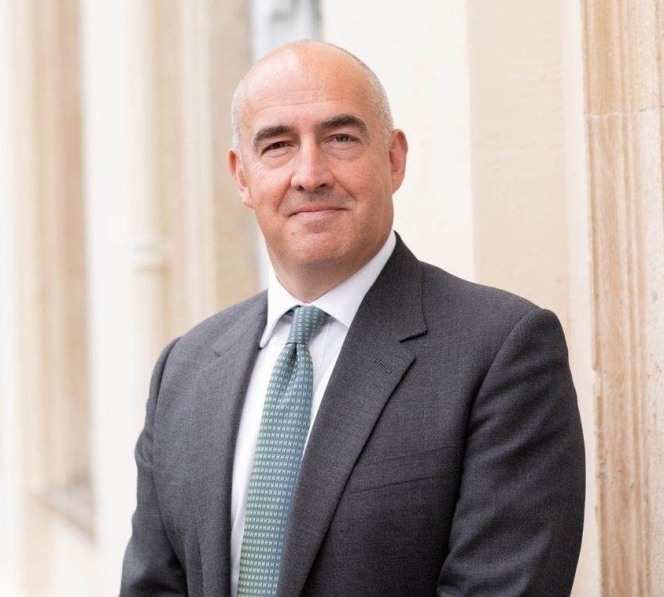
Synthomer, a leading supplier of high-performance, highly specialised polymers and ingredients, has named Anthony Fitzpatrick as its incoming Chief Financial Officer and Executive Director. He arrives as CFO Designate on 1 March 2027 and steps into both roles on 1 April 2027, succeeding Iain Torrens, interim CFO since May 2026. Torrens will stay on as CFO and Director to steer the 2026 year-end results, working with Fitzpatrick through March on a smooth handover before leaving the Board and the company.
Fitzpatrick's background combines board-level finance with hands-on operational leadership. At Croda International Plc, the FTSE 100 speciality ingredients firm, he has sat on the executive committee since 2014, filled the interim Group Chief Financial Officer chair during 2024 and 2025 and now heads Strategy, Corporate Development and Industrial Specialities. His Croda tenure also includes running the Latin America region and the Performance Technologies & Industrial Chemicals division. Earlier, he spent over 20 years in global investment banking with Goldman Sachs, Bank of America and UBS across London and New York, concentrating on chemicals and allied sectors.
A Durham University chemistry graduate holding a BSc (Hons), Fitzpatrick brings extensive financial, strategic and corporate finance experience to the group. His appointment caps a planned leadership transition, with the outgoing and incoming finance chiefs overlapping during March to safeguard continuity. Torrens will formally depart once Fitzpatrick assumes the CFO and Executive Director positions, closing out his interim tenure on the Board.
Michael Willome, CEO, Synthomer, said, “I am delighted that Anthony will join Synthomer as our next Chief Financial Officer. Anthony brings highly relevant financial, commercial and industry expertise to Synthomer, combining experience as interim Group CFO of Croda with more than 20 years in investment banking and deep knowledge of the speciality chemicals sector. I am looking forward to working with him as we continue to strengthen the business and deliver on our priorities.
“I very much enjoy working with Iain. Since he joined Synthomer as interim CFO, he has made a significant contribution, particularly in helping to steer Synthomer through a volatile period for the chemicals sector while continuing to strengthen the balance sheet and the finance function. On behalf of the Board, executive committee and all colleagues, I thank Iain for his continued contribution and wish him every success for the future following his handover to Anthony on 1 April 2027.”
Fitzpatrick said, “I am excited to join the Synthomer team. The Group has substantial opportunities for further value creation ahead and I look forward to working with Michael and the team to help realise them.”
Torrens said, “It has been an exciting time to serve as interim CFO of Synthomer, which has clear momentum and is in an increasingly strong position to embrace the opportunities ahead. I would like to thank the Board, Michael and the team for their support, and I look forward to completing the year end and working with Anthony on a smooth handover.”
PCBL Chemical Names Rituraj Singh Kalra As Executive Director And Chief Of International Markets
- By TT News
- November 13, 2026
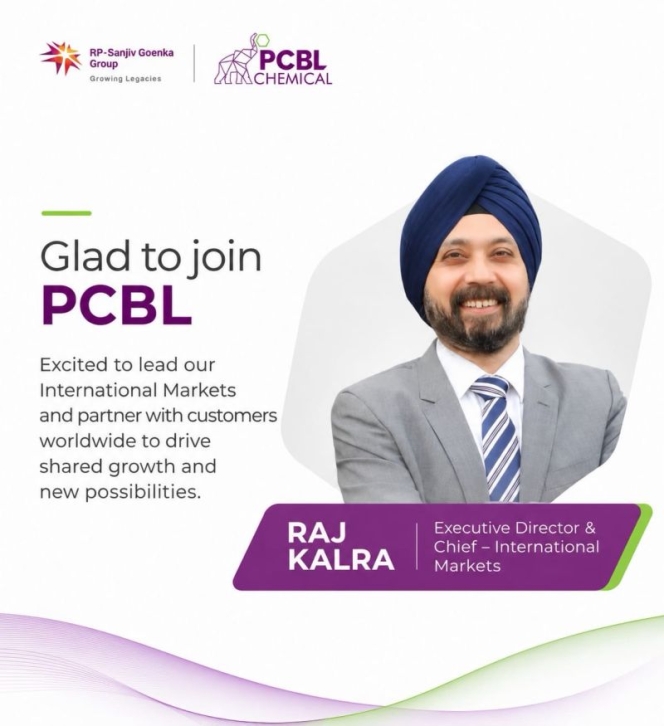
PCBL Chemical has named Rituraj Singh Kalra as Executive Director and Chief – International Markets (Rubber Blacks), effective 9 November. The Kolkata-based company disclosed in a regulatory filing that Kalra will also serve on its Senior Management team and will be based in Belgium.
Kalra brings roughly three decades of expertise in international sales, marketing and business strategy, with senior leadership roles at Bekaert, GKN Driveline and MAHLE. He will oversee operations across Europe, the Americas and key Asia-Pacific markets, lead the Innovation Centre and drive Green Carbon initiatives, prioritising close customer relationships, resilient supply chains and commercial and technical partnerships built on shared sustainability goals. He previously served as Senior Vice-President of Global Sales, Marketing and Strategy at Bekaert in Belgium and holds a mechanical engineering degree from the University of Leeds and an MBA from Warwick Business School.
The appointment strengthens PCBL's global ambitions as a unit of the RP-Sanjiv Goenka Group, a conglomerate tracing its roots to 1820 that now generates about USD 5 billion in annual turnover and employs more than 55,000 people. With over six decades of operations behind it, PCBL stands as India's largest and the world's sixth-largest carbon black manufacturer, positioning itself as a global partner across carbon black, speciality chemicals and advanced materials.
Tyrecycle's Jim Fairweather Concludes 10-Year Run As ATRA President
- By TT News
- November 13, 2026
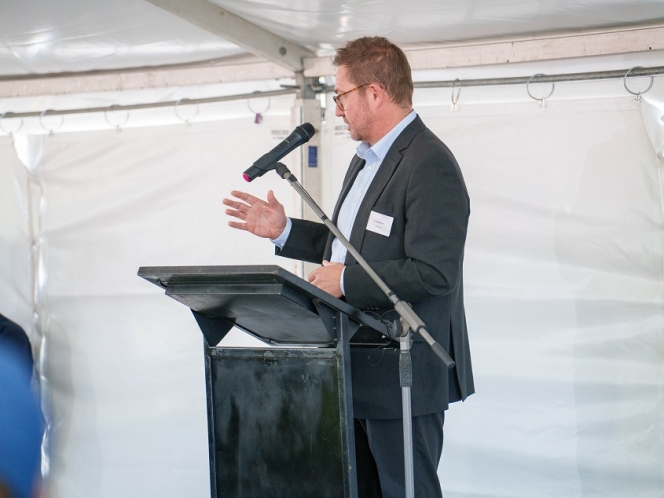
Tyrecycle CEO Jim Fairweather has stepped down after more than 10 years as President of the Australian Tyre Recyclers Association (ATRA), passing the role to Leigh Cometti, Managing Director of CTS Tyre Recycling. Fairweather will remain involved with ATRA and the wider industry.
His departure closes a period in which the association and Tyrecycle jointly pressed government to adopt the prohibition on exporting whole-baled waste tyres. That measure stopped such shipments reaching developing markets, where poor handling, storage or disposal could endanger human health and the environment, and it pushed the sector towards more accountable end-of-life tyre management and more processing and recovery on Australian soil.
Tyrecycle describes engagement with bodies like ATRA as central to its aim of building up the country's tyre recycling and resource recovery sectors. The company argues that recyclers, governments, regulators and other parties must work together if tyre recovery is to rise and end-of-life tyres are to be handled better nationally.
Looking ahead, ATRA has flagged several priorities: lifting off-the-road market recovery volumes, tightening compliance and enforcement, maintaining close ties with State and Federal regulators and pursuing regulatory changes that leverage existing Australian recycling capacity. Tyrecycle says it will keep contributing its experience, expertise and national outlook to ATRA and its members.
ATMA Seeks Duty-Free Natural Rubber Import Quota As Prices Reach INR 300 Per Kilogram
- By MT Bureau
- November 12, 2026
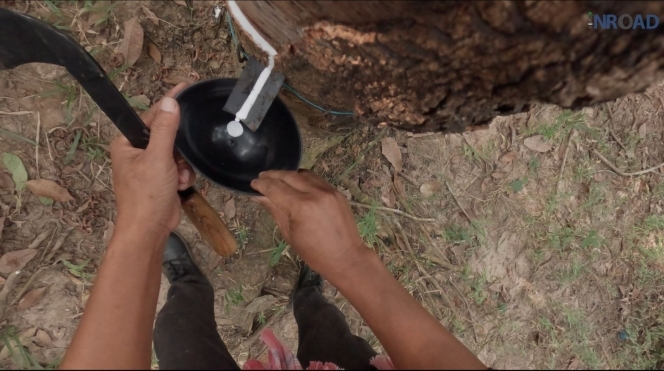
The Automotive Tyre Manufacturers’ Association (ATMA), the apex body representing tyre companies in India, has requested the Government of India to allow temporary duty-free imports of natural rubber under a Tariff Rate Quota (TRQ) mechanism.
The request follows an increase in domestic natural rubber prices to INR 300 per kg, representing a rise of nearly 62 percent from the November 2025 average of INR 186 per kg, alongside supply shortages during the peak production season.
In a letter submitted to Union Commerce and Industry Minister Piyush Goyal, the association proposed limiting the duty-free import quota to the assessed deficit between domestic demand and supply until market conditions stabilise.
During FY2025-26, India produced 905,000 tonnes of natural rubber against a consumption volume of 1.42 million tonnes, creating a supply gap of nearly 37 percent. Tyre manufacturers are simultaneously managing cost increases in synthetic rubber, carbon black, petroleum-based inputs and freight expenses driven by crude oil price movements linked to events in West Asia.
India's tyre industry generates an annual turnover of approximately INR 1,000 billion and exports exceeding INR 270 billion, having recorded 16 percent YoY export growth in Q1 of FY2026-27.
Arun Mammen, Chairman of ATMA, said, “Tyre manufacturers rely on the peak tapping season to secure domestic rubber for their production schedules. This year, supplies are falling short even during these months, while procurement costs have risen sharply. A temporary duty-free quota, limited to the assessed shortfall, would help manufacturers maintain production while protecting the interests of domestic rubber growers.”


Comments (0)
ADD COMMENT