

Dunlop Tyres: Reviving A Legacy
- By Nilesh Wadhwa
- August 26, 2026
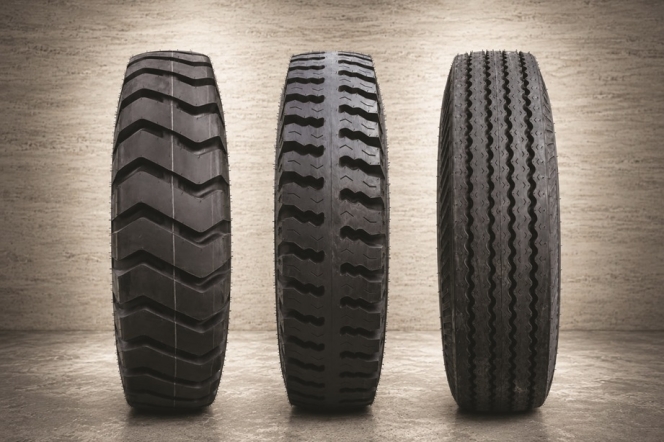
In a significant move to revive its iconic legacy in India, Dunlop Tyres is accelerating expansion plans with a sharp focus on in-house manufacturing capacity for commercial vehicle tyres and strategic collaborations in the consumer segment.
Executive Director Sakchi Ruia outlines an ambitious roadmap that leverages the brand’s pioneering heritage, embraces electrification and targets value-driven growth across key segments amid a rapidly evolving Indian tyre market.
In the competitive landscape of the Indian tyre industry, few names carry the historical weight of Dunlop. As the pioneer of the pneumatic tyre globally and a foundational player in India since 1896, the brand is poised for a significant revival.
In an exclusive interaction with Tyre Trends, Sakchi Ruia, Executive Director of Dunlop Tyres, shared her vision for breathing new life into the iconic marque, focusing on capacity expansion, segment-specific growth and adaptation to emerging technologies such as electrification.
Ruia, an MBA from Columbia Business School who brings experience from McKinsey & Company, has been instrumental in steering Dunlop’s operations since joining in 2023. Her leadership emphasises leveraging the brand’s storied heritage while addressing modern market dynamics.
“Dunlop as we all know is the first tyre brand in the world, first pneumatic tyre brand and it has been very monumental in India as well. We have very big plans for the brand and are looking to really revive the brand here. We are exploring both greenfield and brownfield opportunities,” she reveals.
The company has already made inroads in the truck and bus radial (TBR) segment, with broader ambitions spanning multiple vehicle categories. This strategic revival comes at a time when India’s automotive sector is experiencing robust growth across consumer and commercial segments, driven by rising vehicle ownership and evolving consumer preferences.
NAVIGATING A COMPETITIVE LANDSCAPE
India’s tyre market is one of the most fiercely contested globally, with legacy domestic players, international entrants and new challengers vying for share.
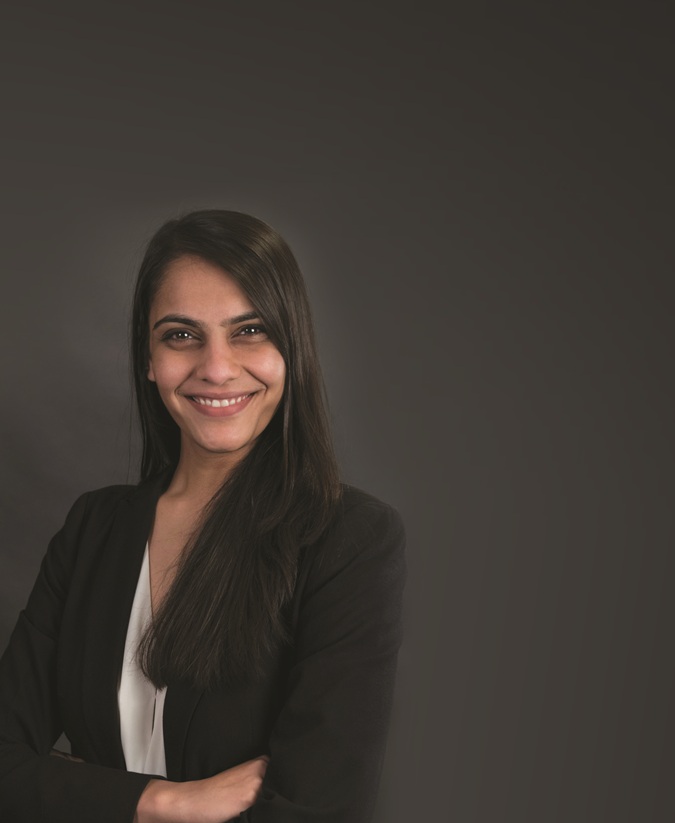 When asked about competition, Ruia embraces it as a catalyst for progress. “I think competition is good, right? I think it takes the industry forward with the competition,” she notes.
“I think we see a lot of stakeholder development, ecosystem development. Like we see a lot of machine makers are now coming to India to manufacture. And that’s because of the whole pool of all the players combined,” she explains.
Dunlop, she emphasises, on the other hand, is no newcomer. “Dunlop is not a new player in the industry. It’s a legacy player, it’s seen the wave, it’s been there.” She highlights the ample room for growth in a market where demand has not yet outstripped supply.
“I think there’s a lot of space for a lot of players right now. It’s not a space where demand is far exceeding supply still. So I think there’s a lot of space for people to really make their mark,” she avers.
Ruia pointed to supportive policies favouring locally manufactured tyres as an opportunity for Indian players, including Dunlop, to flourish. The ecosystem, she believes, benefits the entire industry and enables established brands with heritage to differentiate themselves through quality and reliability.
ADDRESSING COST-CONSCIOUSNESS AND VALUE IN COMMERCIAL TYRES
On the other hand, coming to the commercial vehicle segment, which continues to remain highly cost-sensitive, Ruia argues that true value lies beyond upfront pricing.
Discussing the competitive nature of business and the acquisition cost for commercial vehicle customers, she observes, “I think what feeds drivers value in the commercial segment is cost per kilometre. So that really gives advantage to the value players. It’s about providing value-for-money; whoever’s manufacturing quality tyres really gets value.”
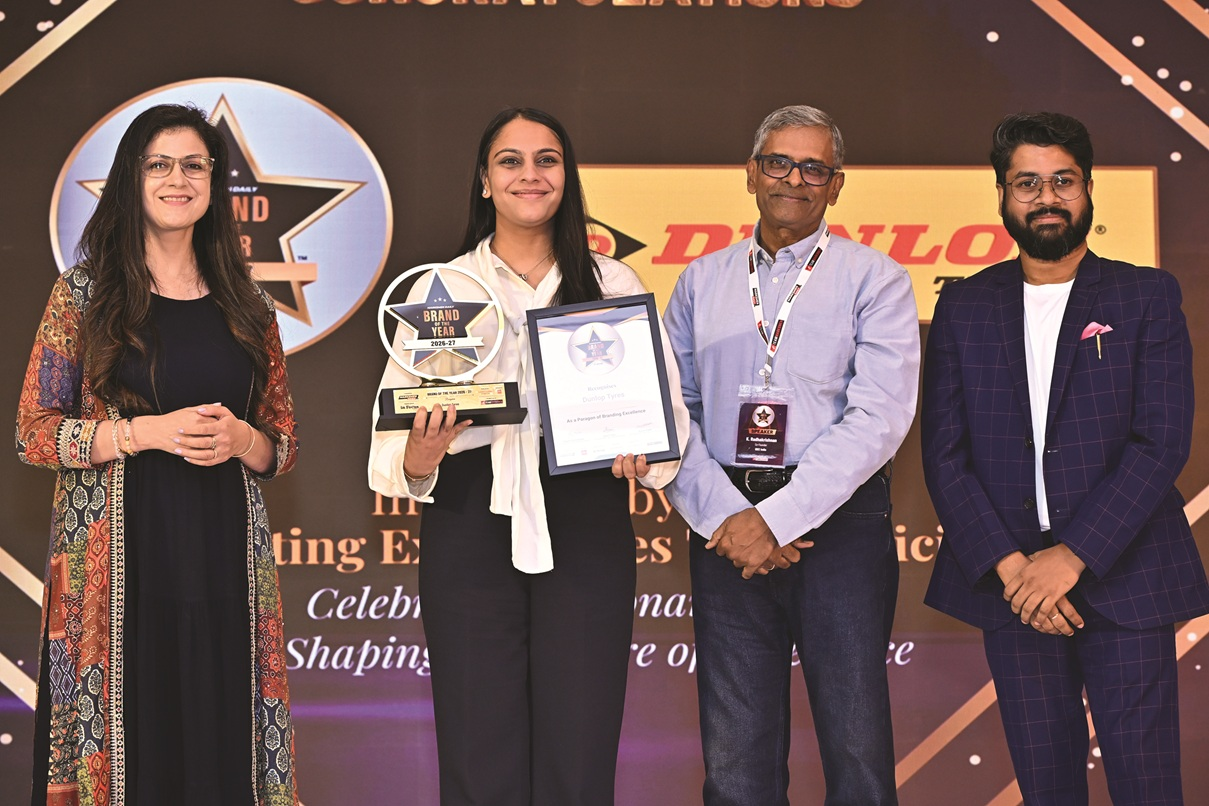
She notes that Indian customers in this segment are discerning. “India is a very quality-conscious market in that regard. Because they look at cost per kilometre, not just cost per tyre. They want tyres which run longer kilometres, give better mileage. I think there’s a lot of scope and space and the market itself filters out the players,” says Ruia.
On the concept of tyre-as-a-service or cost-per-kilometre models gaining traction among competitors, Ruia expresses keen interest.
“Cost per kilometre for sure, we work heavily in the commercial segment with the TBR. We really do see that the end-consumers are very supportive for this metric. And they really value the lifelong value of the tyre that they get, not just upfront cost. Tyre-as-a-service is very interesting; we haven’t explored it yet. But that’s something which I was also very interested to hear about today,” she says.
CAPACITY EXPANSION AND SEGMENT PRIORITIES
A cornerstone of Dunlop’s future strategy is establishing in-house manufacturing capacity, particularly for the commercial segment. Ruia confirms that plans are advancing, though details remain under wraps for now.
“I think once the announcement is there, everyone will know about it. It’s initial stages right now. We’re in discussions about really formalising and crystallising the plans,” she explains.
Furthermore, the company is already evaluating both greenfield and brownfield options, with timelines tied to ongoing discussions. In the interim, Dunlop maintains presence in two- and three-wheeler tyres through partners (Ludhiana-based Ralson India), a segment close to the brand’s heritage where it once held significant market share. “Two- and three-wheeler remains very close to Dunlop’s heart. We’ve always done well in this segment,” Ruia affirms.
Passenger car radial tyres (PCR) are on the longer-term horizon. “PCR tyres again is something which is in the pipeline, not in the foreseeable future. But eventually, yes, we’d want to get into that segment as well. It is growing. So, you know, let’s see how the plans evolve. Right now, our focus is the commercial segment,” the Dunlop executive says.
Ruia explains that collaboration opportunities in the consumer segment will complement in-house commercial production.
Outlining her top three priorities for the next 3–5 years, Ruia says, “I think the top thing that we’re looking for is to definitely have in-house capacity for commercial vehicle tyres. That’s one thing which is top of mind for us. We are also looking to explore good collaboration opportunities in the consumer segment. Because we’re going to be doing in-house manufacturing for the commercial segment. That’s going to be number two. And number three, I think we really, really want to focus on the new-age solutions.”
EMBRACING ELECTRIFICATION AND NEW-AGE TECHNOLOGIES
Electrification represents both a challenge and a major opportunity for the global automotive and allied industry. With trucks and buses increasingly shifting to electric powertrains, tyre requirements are evolving rapidly.
“I think, electrification is a very interesting and exciting opportunity for everyone across the board, consumer and commercial,” Ruia says.
“There are some unique requirements for tyres, such as lower rolling resistance, ability to handle higher instantaneous torque, reinformed sidewalls and lower noise due to the silent nature of EVs. Electric vehicles are going to be much heavier, less noisy and have high torque requirements. So tyres will also need to take shape accordingly,” Ruia says.
Key adaptations will include better sidewalls, enhanced load resistance and reduced noise levels. “I think the industry as a whole will develop tyres to meet those requirements. I don’t think it’s going to be an option for anyone (to not develop EV tyres). But we’ll all evolve to meet those requirements,” she says.
Ruia stressed that the tyre industry will align with government focus on EVs. “I think the government is also focusing a lot on EVs. And I think the tyre industry will flow with that demand,” she adds.
She mentions that new-age product development, particularly for EVs, forms a critical part of Dunlop’s forward-looking strategy.
As Dunlop moves to formalise its expansion plans, the focus remains on quality, heritage and innovation. Ruia’s pragmatic yet optimistic outlook underscores a brand ready to reclaim its position by combining legacy strengths with forward-thinking investments in capacity, partnerships and technology.
For the tyre industry, Dunlop’s revival signals not just renewed competition but also fresh momentum in expanding choices for consumers in India. With in-house manufacturing on the horizon and a clear emphasis on value-driven performance and electrification, the company is positioning itself for sustainable, long-term growth in one of the world’s most dynamic markets.
Bridgestone Appoints Stefano Sanchini As President Of Europe Sales
- By TT News
- September 19, 2026
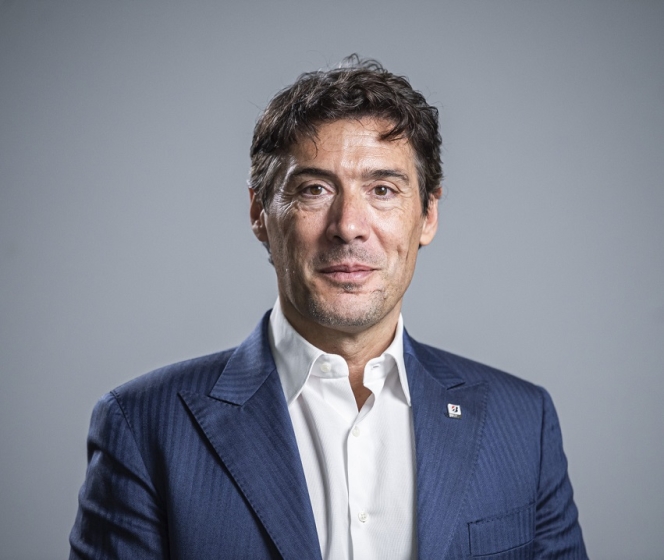
Bridgestone has announced a European leadership appointment aimed at sharpening customer focus, streamlining engagement across product groups and supporting its ongoing growth plans. Stefano Sanchini will become President, Europe Sales, effective 1 October 2026, leading the company’s European sales organisation across both Consumer and Commercial segments.
The expanded role unites sales activities spanning passenger car, truck and bus, agriculture, off-the-road, motorcycle and original equipment. Sanchini brings over 20 years of international leadership experience in the automotive and tyre sectors, with a career covering Europe, Middle East, Africa and India. Since joining Bridgestone in 2017, he has held several senior positions, including Managing Director of Bridgestone India.
Most recently, as Vice President for Consumer Replacement in Europe, he helped strengthen customer engagement, commercial performance, profitability and regional market growth. Bridgestone said the appointment underscores its commitment to customer relationships, commercial execution and simpler cross-market operations. Sanchini will pursue sustainable growth while developing capabilities and partnerships supporting the company’s long-term European strategy.
Mete Ekin, Group President EMEA, said, "Our customers increasingly operate across multiple product categories and expect a consistent experience wherever they engage with Bridgestone. By bringing our sales activities together under one European structure, we are creating a simpler, more connected organisation that will help us respond faster, collaborate more effectively and continue building strong partnerships with our customers."
Yokohama Europe Appoints Giuseppe La Iacona To Lead Southern Operations
- By TT News
- September 18, 2026
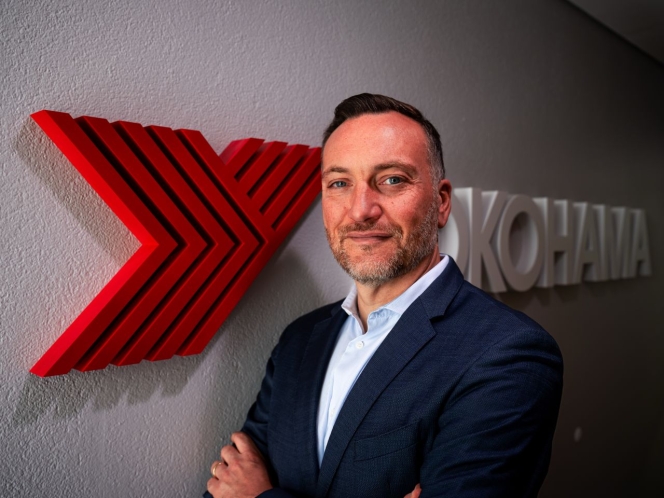
Yokohama Europe has appointed Giuseppe La Iacona to a series of senior leadership roles as the company seeks to strengthen its position across the region.
La Iacona joined the business on September 15 and will assume responsibility for supporting growth and organisational consolidation in the European market.
He brings more than 20 years’ experience in the tyre industry, spanning sales, marketing, business development, country management and international customer relations. He has held senior roles across several European markets, developing experience in managing local dynamics while driving cross-border business expansion.
Reporting to Takashi Maki, La Iacona has been appointed General Manager for southern Europe, where he will lead a newly created regional cluster covering Italy and France. The role is intended to improve coordination and operational synergies between the two markets.
He will also serve as Chief Executive of Yokohama Italia, with overall responsibility for the Italian subsidiary, alongside taking on the role of head of international customers. In that capacity, he will oversee the management and development of clients operating across multiple European markets, with the aim of creating a more consistent commercial approach and strengthening collaboration between subsidiaries.
His remit includes improving organisational alignment and fostering closer cooperation between markets and customers as the company expands its European operations.
“I am very pleased to welcome Giuseppe to YOKOHAMA Europe at an important stage in our development,” said Maki. “His extensive international experience, deep knowledge of the tyre industry and ability to work across different markets will be valuable assets as we continue to strengthen our European organisation and pursue sustainable growth.”
La Iacona said: “I am excited to join YOKOHAMA Europe and to contribute to the company’s next phase of growth in Europe. YOKOHAMA has a strong heritage, a distinctive brand and significant opportunities across the European market. I look forward to working closely with our teams, customers and partners across countries to further develop the business and strengthen our presence in the region.”
Özka Tyre Appoints Mehmet Yüksel As New Chief Operating Officer
- By TT News
- September 18, 2026
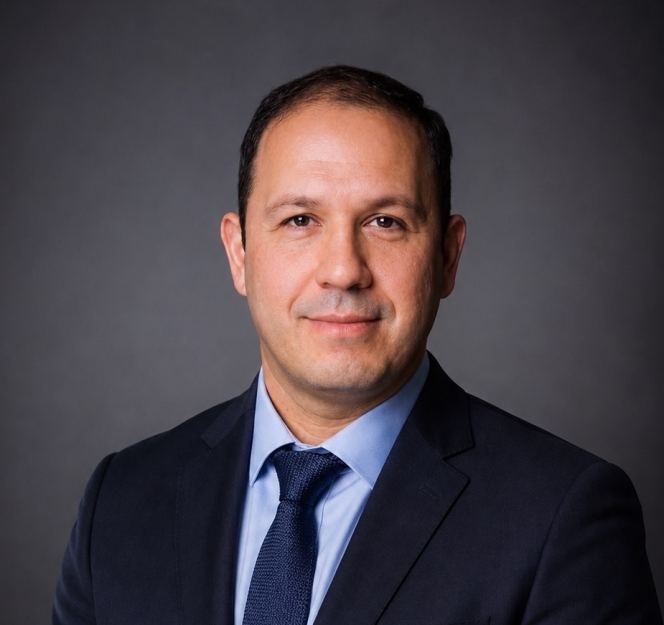
Özka Tyre, a prominent Turkish manufacturer of tyres for agricultural and construction equipment, has reinforced its leadership team as part of a broader push towards global expansion and technological modernisation in production. The company has appointed Mehmet Yüksel as its new Chief Operating Officer, bringing aboard an executive with extensive senior experience from Goodyear’s Luxembourg-based international organisation.
In his new role, Yüksel will oversee functions central to Özka’s production and operational strength. His responsibilities encompass production, quality, research and development, planning, investment and projects, electricity and maintenance, occupational safety and quality management systems, positioning him to steer critical areas of the company’s industrial performance.
Driven by investments and a focus on advancing its manufacturing strength, Özka continuously monitors shifts in the worldwide tire sector, particularly technological progress in Europe, and uses those insights to shape its future production infrastructure. As new investments prepare to elevate its output capacity and technical systems, the firm is simultaneously bolstering its organisational framework to sustain that transformation.
Cabot Names Steve Delahunt As Interim CFO
- By TT News
- September 16, 2026
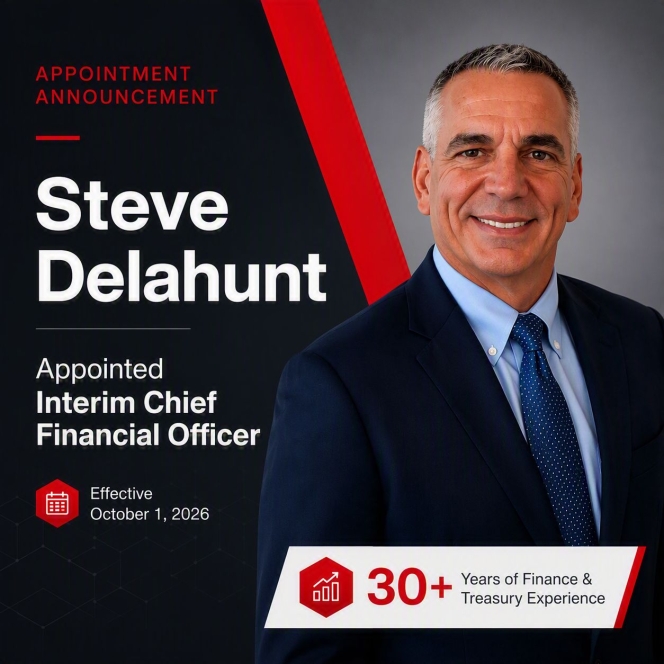
Cabot Corporation has named Steve Delahunt, currently Vice President and Corporate Treasurer, to assume the Chief Financial Officer role on an interim basis starting 1 October 2026. He will hold the position while Cabot continues searching for a permanent finance chief.
The interim appointment follows the previously disclosed leadership transition in which Erica McLaughlin, Executive Vice President, Chief Financial Officer and Head of Corporate Strategy, will become President and Chief Executive Officer on the same date. McLaughlin succeeds Sean Keohane and will relinquish her CFO duties at that time.
Delahunt brings over three decades of finance and treasury experience, including nine years leading Cabot's investor relations function through January 2026. As Corporate Treasurer, he oversees global treasury operations, capital markets strategy, liquidity management, banking relationships, risk management and pension investments. He has been central to Cabot's capital allocation, financing, investor engagement and strategic growth initiatives, as well as strengthened shareholder relations during his investor relations tenure.
McLaughlin said, “Steve is a highly respected finance leader with deep knowledge of our business, strong relationships across our global organisation and a proven track record of disciplined financial leadership. As we continue executing our strategy and building on our strong financial position, Steve’s experience, judgment and understanding of our business make him exceptionally well suited to lead our finance organisation while the Company conducts its search for our next Chief Financial Officer.”

Comments (0)
ADD COMMENT