

Goodyear Posts USD2.2 Billion Quarterly Loss As It Completes Divestitures Under Goodyear Forward Plan
- By Sharad Matade
- November 04, 2025

Goodyear Tire & Rubber reported a net loss of USD 2.2 billion for the third quarter of 2025, weighed down by significant non-cash charges, even as its “Goodyear Forward” transformation programme continued to deliver strong operational benefits and major divestitures were completed.
The tyre maker said segment operating income rose to USD 287 million in the quarter, reflecting USD 185 million in cost-saving benefits from Goodyear Forward, which helped offset inflationary pressures, lower volumes and the absence of prior-year insurance recoveries.
“We delivered a meaningful increase in segment operating income relative to the second quarter in an industry environment that continued to be marked by global trade disruption,” said Mark Stewart, Chief Executive Officer and President. “This growth underscores our strong product portfolio and the consistency of our execution under the Goodyear Forward plan, both of which we expect to support further acceleration in our earnings during the fourth quarter.”
Goodyear’s quarterly net sales were USD 4.6 billion, with tyre unit volumes at 40 million. The company recorded a USD 1.4 billion non-cash deferred tax asset valuation allowance and a USD 674 million goodwill impairment charge during the quarter. Adjusted net income was USD 82 million, compared with USD 102 million a year earlier.
The company stated that all planned asset sales under its Goodyear Forward plan had now been completed, generating total gross proceeds of approximately USD 2.2 billion, which will be used to reduce debt and reinvest in growth.
On 31 October, Goodyear finalised the sale of the majority of its Goodyear Chemical business to an affiliate of Gemspring Capital Management, LLC, for USD 650 million, subject to adjustments. At closing, Goodyear received approximately USD 580 million in cash, which reflected working capital adjustments, including those for intercompany receivables.
“With the sale of our Chemical business, we have completed all of the planned asset sales included in our Goodyear Forward transformation program,” said Stewart. “Additionally, we surpassed initial expectations, with total gross proceeds from the divestitures of approximately USD 2.2 billion. As a result, we have a more focused, streamlined portfolio that will allow us to grow our core products and services and achieve our vision of being #1 in Tires and Service.”
The sale included Goodyear Chemical facilities in Houston and Beaumont, Texas, as well as a research office in Akron, Ohio. The company retains its chemical plants in Niagara Falls, New York, and Bayport, Texas, as well as the rights to the products produced there.
By region, the Americas segment reported third-quarter sales of USD 2.7 billion, a 4.2 percent year-over-year decline, as replacement tyre volumes decreased due to high inventories of imported products in the US market. Segment operating income fell to USD 206 million from USD 251 million.
In Europe, the Middle East and Africa (EMEA), sales rose 4.4 percent to USD 1.4 billion, supported by favourable currency movements and stronger price/mix. Operating income increased to USD 30 million from USD 23 million a year earlier.
Asia Pacific sales fell 18.9 percent to USD 501 million, reflecting the sale of the Off-the-Road (OTR) tyre business and softer demand in Japan, Australia and China. Segment operating income dropped to USD 51 million from USD 72 million.
Goodyear said it expects to achieve about USD 1.5 billion in annualised run-rate benefits from the Goodyear Forward programme by the end of 2025.
Grismer Tire & Auto Service Appoints New CEO And CFO
- By TT News
- September 28, 2026
Grismer Tire & Auto Service, a tyre and automotive service centre operator backed by CenterOak Partners LLC, has named Chris Blanchette as Chief Executive Officer and Mark Hedstrom as Chief Financial Officer. The announcement marks a significant leadership transition for the portfolio company.
Blanchette arrives with over two decades of senior leadership experience in multi-site consumer services, specialising in operations, strategy and business development. He most recently served as Chief Executive Officer of Service Minds, a residential electrical, plumbing and HVAC services provider. His background also includes serving as Chief Operating Officer of QAS, which operates Valvoline Instant Oil Change locations, along with senior operational positions at Advance Auto Parts, Bridgestone Retail Operations and Best Buy.
Hedstrom brings more than three decades of finance expertise to his new role. He previously held the Chief Financial Officer position at W.S. Connelly & Co., a multi-regional specialty distributor, and has also served as Chief Financial Officer for several private equity-backed consumer and distribution companies.
Eric Holter, Managing Director, CenterOak, said, “Chris Blanchette brings highly relevant leadership experience in the automotive aftermarket. He has led complex, multi-location organisations and understands how to translate operational discipline into sustainable growth. Together, Chris and Mark add important depth to Grismer’s leadership team as the Company pursues expansion in existing and new markets.”
Blanchette said, “Grismer’s 90-year history and the trust it has earned with customers set the Company apart. I am excited to join a business with such a strong legacy and see significant
- International Rubber Conference
- Society Of Rubber Science And Technology Japan
- James Busfield
- Nobuyuki Tamura
- Bridgestone Corporation
- Japan Rubber Manufacturers Association
- Aichi International Exhibition Center
- Aichi Sky Expo
Japan To Host International Rubber Conference After Decade-Long Gap
- By TT News
- September 25, 2026
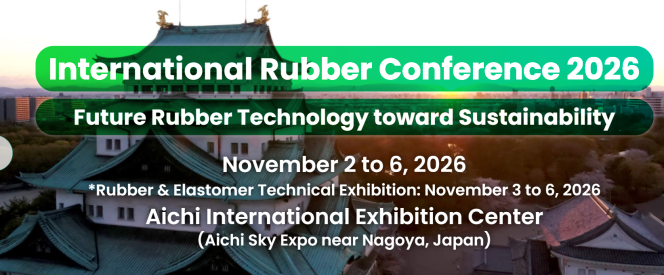
The International Rubber Conference (IRC) will return to Japan in November for the first time in a decade, with more than 271 technical presentations and over 117 exhibitors expected to take part.
The event, known as IRC 2026 Aichi, will be hosted by the Society of Rubber Science and Technology, Japan, alongside the Rubber & Elastomer Technical Exhibition in Aichi. It is scheduled to run from 2nd to 6th November, with the exhibition opening a day later and continuing until 6th November .
Held at the Aichi International Exhibition Center, also known as Aichi Sky Expo, the venue is located near Chubu Centrair International Airport and can be reached from Nagoya Station in about 28 minutes by train.
The conference programme will feature more than 271 presentations spanning rubber science, technology and industrial applications. Participants include James Busfield of Queen Mary University of London and Nobuyuki Tamura of Bridgestone Corporation, who also chairs the Japan Rubber Manufacturers Association. More than 400 delegates have already registered.
Running alongside the conference, the Rubber & Elastomer Technical Exhibition will host more than 117 exhibitors, ranging from raw material suppliers and machinery manufacturers to tyre makers and testing-equipment providers. The exhibition will be open to visitors free of charge.
The International Rubber Conference, first held in 1966, rotates annually across global host cities. The last event in Japan took place in Kitakyushu in 2016, with subsequent editions held in Haikou, Istanbul and Bangkok.
Pirelli Board Approves EUR 1 Billion US Investment Plan And Organisational Restructuring
- By TT News
- September 23, 2026
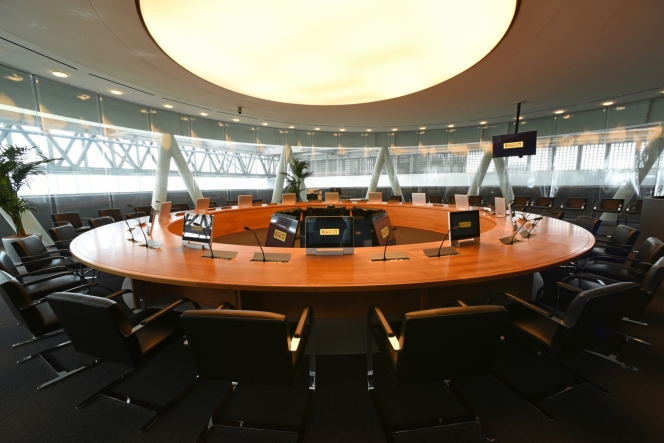
Italian tyre major Pirelli has announced a multi-year investment plan worth approximately EUR 1 billion (USD 1.2 billion) to expand its manufacturing facility in Rome, Georgia in the United States. The motion passed by majority vote, with board members Zhang Haitao, Xi Xiaohong and Wang Kun voting against the proposal.
The capital expenditure program, scheduled to begin in 2027 and will go through 2033, aims to expand annual production capacity at the Georgia site to six million tyres and create approximately 1,000 jobs.
The United States represents the largest market for high-value tyres globally, accounting for roughly 40 percent of global volumes. The project will be carried out in two phases without altering Pirelli's financial targets for 2026.
Phase one of the expansion will introduce modular robotised production systems based on Pirelli's Modular Integrated Robotised System technology, scaling annual output to three million tyres starting in 2028.
In phase two, the company will begin construction of an automated production facility to add three million units of annual capacity. The expanded plant will produce connected tyre systems, including Cyber Tyre technology, following market authorisation granted by the US Bureau of Industry and Security under Italy’s 2026 Golden Power Decree.
Alongside the investment decision, the board approved an organisational restructuring resulting in the immediate elimination of the Corporate General Management function. As part of the changes, Corporate General Manager Francesco Tanzi will step down from his executive role, maintaining an employment relationship through 31 December 2026 to facilitate the leadership transition.
Under the terms approved by the board and the Remuneration Committee, Tanzi will receive a severance payment equivalent to 13 months’ remuneration, payable by February 2027, alongside accrued rights under existing short-term and long-term incentive plans. He has agreed to a two-year non-compete covenant covering Pirelli's primary operating regions in exchange for 130 percent of his gross annual salary, paid in eight quarterly instalments. Following the end of his employment, Tanzi will provide advisory services under a two-year consultancy contract with an annual fee of EUR 350,000, plus non-monetary benefits valued at EUR 45,000.
Bridgestone Appoints Stefano Sanchini As President Of Europe Sales
- By TT News
- September 19, 2026
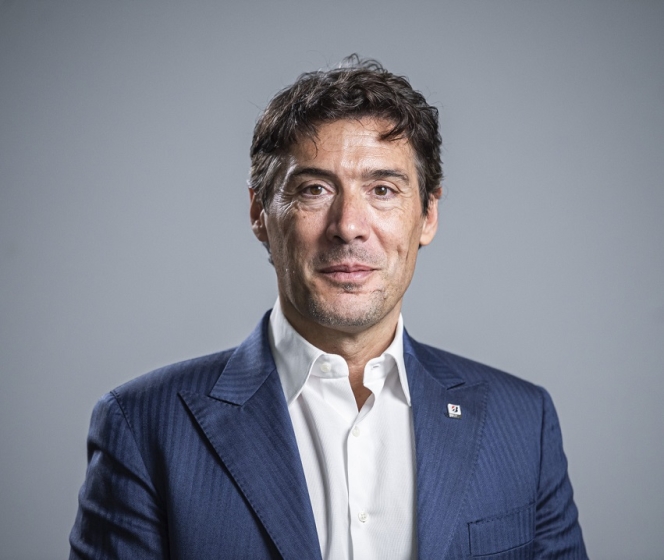
Bridgestone has announced a European leadership appointment aimed at sharpening customer focus, streamlining engagement across product groups and supporting its ongoing growth plans. Stefano Sanchini will become President, Europe Sales, effective 1 October 2026, leading the company’s European sales organisation across both Consumer and Commercial segments.
The expanded role unites sales activities spanning passenger car, truck and bus, agriculture, off-the-road, motorcycle and original equipment. Sanchini brings over 20 years of international leadership experience in the automotive and tyre sectors, with a career covering Europe, Middle East, Africa and India. Since joining Bridgestone in 2017, he has held several senior positions, including Managing Director of Bridgestone India.
Most recently, as Vice President for Consumer Replacement in Europe, he helped strengthen customer engagement, commercial performance, profitability and regional market growth. Bridgestone said the appointment underscores its commitment to customer relationships, commercial execution and simpler cross-market operations. Sanchini will pursue sustainable growth while developing capabilities and partnerships supporting the company’s long-term European strategy.
Mete Ekin, Group President EMEA, said, "Our customers increasingly operate across multiple product categories and expect a consistent experience wherever they engage with Bridgestone. By bringing our sales activities together under one European structure, we are creating a simpler, more connected organisation that will help us respond faster, collaborate more effectively and continue building strong partnerships with our customers."

Comments (0)
ADD COMMENT