

- Tyre and Rubber Recyclers Association of India
- Chetan Joshi
- tyre recycling
- recovered carbon black
- Suhas Dixit
- Apchemi
India’s Tyre Recycling Industry Faces Margin Squeeze Amid Export Slump
- By Gaurav Nandi
- June 30, 2026
India’s tyre recycling industry is entering a painful consolidation phase as weakening export demand, oversupply of waste tyres and worsening shipping disruptions erode profitability across the value chain. While domestic consumption continues to provide partial support, falling realisations and rising logistics costs are squeezing processors of crumb rubber, reclaimed rubber, pyrolysis oil and recovered carbon black.
India’s tyre recycling industry is entering a period of consolidation as weakening export demand, oversupply of waste tyres and mounting shipping disruptions compress margins, even as long-term demand for sustainable materials continues to strengthen.
While volumes remained broadly stable during the March quarter, profitability deteriorated sharply across much of the sector as realisations fell in both domestic and overseas markets and logistics-related costs climbed, said Tyre and Rubber Recyclers Association of India President Chetan Joshi.
“Volumes were largely stable for most of us, but margins definitely came under pressure,” Joshi said. “Realisations dropped, especially in domestic and export markets, while logistics costs and delays increased. Domestic sales supported to some extent, but overall, it was more of a margin squeeze quarter than a volume issue.”
The industry is also facing a supply-demand imbalance in waste tyres driven by slowing exports of recycled products and softer downstream demand caused partly by elevated prices of finished recycled materials.
 “There is oversupply due to low demand because finished product prices are high and exports of finished recycled products have slowed down,” Joshi said. “That is putting pressure on waste tyre pricing and also on end-product prices.”
The pricing pressure is now cascading across the recycling chain, affecting processors of crumb rubber, reclaimed rubber, pyrolysis oil and recovered carbon black (rCB), which are widely used by tyre makers, rubber goods manufacturers and industrial consumers.
However, Joshi said not all segments are under equal stress. Better-quality feedstock and certified recycled materials continue to command stronger pricing and more resilient demand despite broader weakness in commodity-grade products.
“Good quality and properly segregated material are still holding value better,” he said.
India has emerged as one of the world’s largest recycling hubs for end-of-life tyres because of its large vehicle parc, abundant feedstock availability and relatively low-cost processing ecosystem.
Domestic demand for recycled rubber materials has also expanded steadily in recent years as sustainability targets gain traction among tyre makers and industrial manufacturers.
According to Joshi, domestic consumption has helped cushion the sector from the ongoing export slowdown, though it remains insufficient to fully compensate for weakening overseas demand.
“India has strong domestic consumption in crumb rubber, reclaim, pyrolysis oil and rCB, so it does give some cushion,” he said. “But honestly, domestic demand alone cannot fully replace export markets, at least in the short term. We still need healthy exports to balance the ecosystem.”
Exporters are simultaneously grappling with worsening shipping disruptions that have increased operational uncertainty across several key overseas markets.
“Shipping has become unpredictable,” Joshi said. “Transit times are longer, freight and insurance costs have increased and planning exports has become difficult.”
He added that Europe, UK, the Gulf Cooperation Council region and parts of Africa are among the most affected markets because of freight-related disruptions and sluggish demand conditions.
“Even when orders are there, execution becomes a challenge,” he said.
The impact has been particularly severe for lower-value recycled products where freight costs form a larger share of overall realisations. Higher-quality and certified materials, however, have remained comparatively stable.
“Lower-value products are affected more, while higher-quality and certified materials are relatively stable,” Joshi said.
Despite near-term pressures, the long-term demand trajectory for recycled tyre-derived materials remains positive as global tyre manufacturers accelerate sustainability initiatives and seek alternatives to increasingly expensive virgin raw materials.
“The long-term trend is very clear and recycled materials are gaining,” Joshi said. “With higher natural rubber prices and sustainability targets of tyre companies, demand for reclaimed rubber, micronised powder and rCB will increase.”
At the same time, he noted that buyers are becoming significantly more selective, shifting purchasing decisions beyond price considerations towards quality consistency, certification and compliance standards.
UNIT ECONOMICS
The tyre pyrolysis industry is witnessing a sharp improvement in margins and investment sentiment as geo-political tensions in the Middle East push up crude-linked fuel prices, creating stronger demand for tyre-derived pyrolysis oil, according to Apchemi Chief Executive Officer Suhas Dixit.
The recent conflict involving Iran has emerged as the single biggest factor influencing the sector’s performance, triggering steep price increases for tyre pyrolysis oil (TPO) and reviving expansion plans across the industry after years of compressed profitability.
Tyre pyrolysis oil prices in India have climbed dramatically in recent months, rising from about INR 35–40 per kilogramme to nearly INR 60 per kilogramme, according to Dixit, reflecting stronger demand and tighter energy market conditions linked to higher crude oil prices.
Dixit said the price increase has fuelled fresh enthusiasm among investors and operators looking to expand existing facilities or establish new projects.
The company, which positions itself as a global technology and engineering player rather than a purely domestic recycler, said overseas demand remains robust despite continuing disruptions in international shipping and trade routes.
While the conflict in the Middle East and shipping disruptions around key trade routes such as the Strait of Hormuz have raised concerns about freight costs and export uncertainty for many Indian recyclers, Dixit said Apchemi remains relatively insulated because of its global operating model.
The company is currently executing multiple large-scale international projects including three 150-tonne-per-day tyre pyrolysis facilities for clients in developed markets, according to Dixit.
Even so, Dixit acknowledged that the industry remains exposed to broader geo-political uncertainty, particularly because energy prices and shipping costs directly influence the economics of pyrolysis-derived fuels.
At the same time, he believes the current environment is creating a rare opportunity for operators to strengthen profitability after years of weak returns.
On the other hand, reclaim rubber manufacturers seem to be facing renewed uncertainty as rising raw material costs linked to geo-political tensions continue to pressure pricing and destabilise downstream demand.
“Market is a little scary right now,” said a Gujarat-based crumb rubber manufacturer. The spokesperson attributed the instability largely to the ongoing tensions in the Middle East, which have triggered higher costs across the raw material chain and pushed up prices for finished reclaim rubber products.
“Reclaim rubber manufacturers are particularly vulnerable to swings in raw material pricing because margins in the segment are often thin and highly sensitive to changes in energy, logistics and waste tyre procurement costs,” he noted.
Despite the ongoing volatility, he indicated that the broader market trajectory for the current fiscal year is unlikely to differ significantly from the previous year, suggesting that industry participants may continue to operate in a challenging but manageable environment.
PULLING THROUGH
Joshi said India continues to enjoy structural advantages because of its scale and feedstock availability but warned that the industry could lose competitiveness if it fails to improve quality consistency and formalisation.
He added that the next growth cycle in tyre recycling is likely to favour companies investing in compliance, process control, certification and value-added products rather than those competing purely on trading volumes and low-cost exports.
“The opportunity is huge, but discipline in the industry will decide who benefits,” Joshi said.
Looking ahead to FY27, Joshi expects margin recovery to remain uneven across the industry with larger and technologically stronger companies likely to outperform smaller operators focused on low-margin export trading.
For India’s recycling industry, the current downturn may ultimately accelerate a broader structural transition already underway from volume-led commodity processing towards a more formalised, quality-focused and sustainability-driven circular materials ecosystem.
Charting A New Course
- By Nilesh Wadhwa
- October 22, 2026
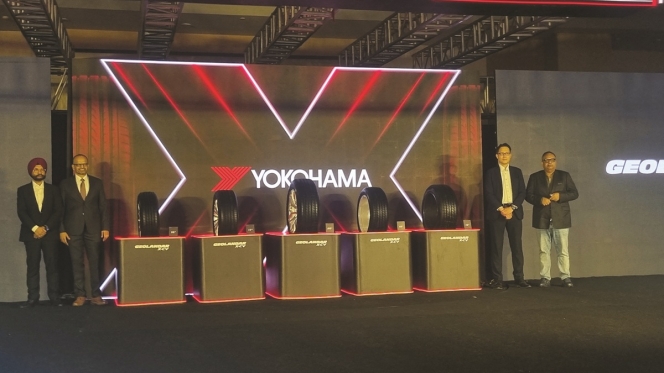
Yokohama India plans to enter the two-wheeler tyre market for the first time, with radial products due by the end of next year — making India the first country globally to get two-wheeler radials from the Japanese tyremaker. The move, confirmed by Managing Director and CEO Harinder Singh, coincides with the launch of the GEOLANDAR X-CV range, extending Yokohama’s flagship SUV tyre technology to smaller wheel sizes for India’s booming crossover segment.
India’s premium tyre market continues to reward companies that combine global technology with local agility. Yokohama India, already one of the country’s fastest-growing premium players, looks to tap into India’s SUV and premiumisation push, bringing global products but in a customised avatar for the domestic market.
On the other hand, India is set to become the first country in the world for Yokohama, where it will introduce two-wheeler radial tyres.
In an interaction with Tyre Trends, Harinder Singh, Managing Director and CEO, Yokohama India, confirmed that the company is actively working towards entering the two-wheeler tyre segment, with the first radial products targeted for launch by the end of next year.
“The move will require fresh capital investment and will initially focus on the premium radial category before expanding into mass-market offerings, along with supporting the growing Yokohama Club Network,” revealed Singh.
This development sits alongside the recent unveiling of the GEOLANDAR X-CV range, a significant extension of Yokohama’s global flagship SUV technology into India’s rapidly expanding crossover and premium SUV segment.
TWO-WHEELER ENTRY SIGNALS BROADER AMBITION
Responding to a query on the company’s plans to address the whitespace in its portfolio, Singh said, “We are actively looking to support the two-wheeler business. By the end of next year, hopefully we should be having the two-wheeler tyres also.”
It is important to note that at present Yokohama India has zero presence in the two-wheeler space. The initial thought is to begin with radial tyres in the premium segment and then ‘take a trickle in’ towards mass-market products.
“This is primarily to service and support our all Yokohama club networks. And we plan to sell through them. That’s the objective,” said Singh.
The decision reflects both opportunity and necessity. India’s two-wheeler market remains vast and premium radial tyres are gaining share as riders seek better handling, durability and safety. By channelling the new products through its branded retail network, Yokohama intends to maintain the premium experience that has defined its passenger-car strategy.
GEOLANDAR X-CV BRINGS FLAGSHIP TECHNOLOGY TO A WIDER AUDIENCE
The immediate focus, however, remains the passenger-car radial business and the newly launched GEOLANDAR X-CV. Originally engineered for luxury SUVs with wheel sizes above 18 inches, the technology has been extended downwards to 16 inches, creating what the company describes as India’s most extensive dedicated tyre range for crossover and premium SUVs. Yokohama India has planned around multiple variations spanning 16 to 20 inches.
The tyre incorporates Micro Silica technology for enhanced wet-road grip and reduced rolling resistance, an optimised asymmetric tread design with specialised inner and outer shoulder blocks, four wide circumferential grooves for water evacuation, proprietary 2D–3D Combination Sipes for improved wet traction and even wear and 5-Pitch Variation Technology to minimise pattern noise.
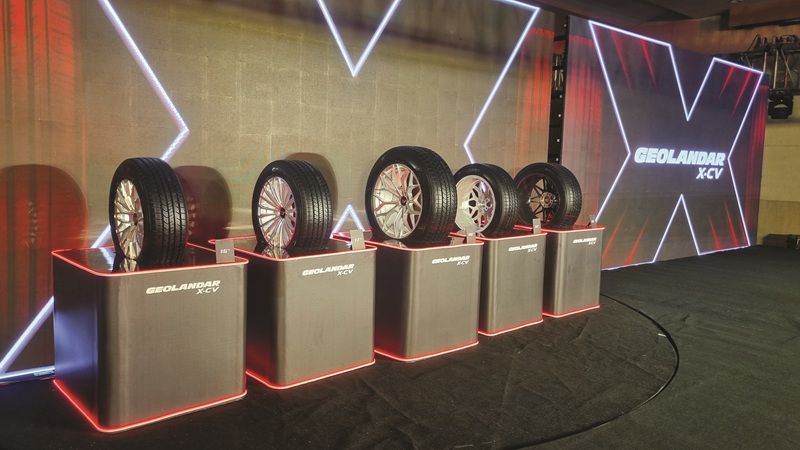
It uses reinforced two-ply sidewall construction and a full nylon cover to deliver durability and high-speed stability required for Indian conditions. Critically, the range is EV-compatible, engineered to handle higher vehicle weights and the instant torque characteristics of electric vehicles while remaining equally effective on internal-combustion and hybrid platforms.
Nitin Mantri, Member of the Board and Senior Managing Officer & Co-COO of Yokohama Rubber Co and Chairman of Yokohama India, framed the launch in strategic terms: “India continues to be one of Yokohama’s most strategic markets globally. Our continued investments in manufacturing, technology and premium product development reflects our confidence in the country’s long-term growth. The launch of GEOLANDAR X-CV reinforces our commitment to bringing globally proven innovations closer to Indian customers while strengthening Yokohama India’s position as one of the country’s leading premium tyre manufacturers.”
Singh added: “The crossover SUV segment is growing rapidly and the road infrastructure improving, now motorists are seeking a balance of safety, comfort, quietness and long-lasting performance. With the GEOLANDAR X-CV, we’re bringing flagship premium tyre technology to delight a wider base of crossover SUV owners.”
CAPACITY RUNNING NEAR FULL, EXPANSION ALREADY MAPPED
Yokohama India’s current installed capacity stands at approximately 4.5 million units a year. The capacity utilisation is already high. “We are almost full,” Singh noted.
Of the 4.5 million, roughly four million tyres serve the domestic aftermarket, with the modest surplus supporting European export requirements of the parent company. The Vizag plant has been designed with further phases in mind. “The plant is ready to be going for the next phase also. So as and when the requirement is, we will expand it,” averred Singh without giving out exact details.
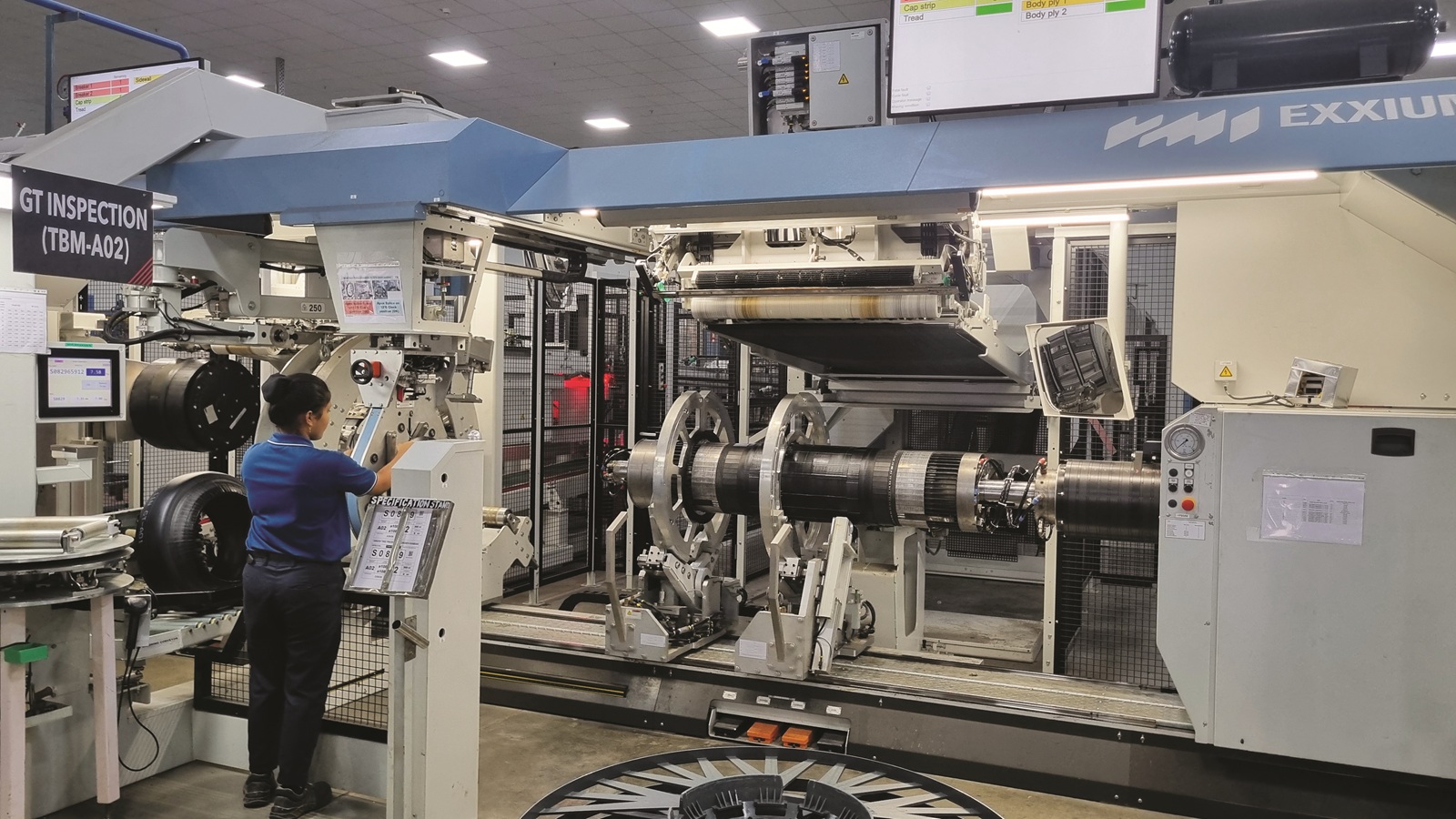 Mantri elaborated on the flexible manufacturing philosophy. Buildings and long-lead equipment are already in place; additional machines will be added incrementally as demand thresholds are crossed.
The existing footprint can take capacity from 4.5 million to 6.3 million units. Beyond that, the parent company has demonstrated consistent willingness to invest. Cumulative investment in India across the Yokohama Group is already substantial, with the Vizag facility alone accounting for more than INR 30 billion in recent years and overall group investment estimated in the range of USD 700–800 million. An Odisha plant focused on off-the-road tyres is also under construction.
AFTERMARKET REMAINS THE CORE, BUT OEM SHARE IS SET TO RISE
For Yokohama India, aftermarket sales in the passenger vehicle segment still account for around 95 percent of its revenue. The company has roughly 3,000 channel partners and aims to reach 4,500 within three to four years, with particular emphasis on Tier-3 and Tier-4 towns.
A key pillar is the Yokohama Club Network of branded retail stores that deliver a premium customer experience, including a five-year worry-free warranty. “In tyre industry, you know, 80–85 percent of the customers sale happens with the influence of the channel partner. When a customer walks into those stores, he gets that premium experience,” noted Singh.
At present, for Yokohama India, the passenger vehicle OEM business contributes only about two percent, limited largely to Maruti Suzuki India. The roadmap is to raise this to 10 percent within five years, and potentially towards 10–20 percent over a longer horizon. “Indian OEMs are going to be an important part in our OE strategy,” Singh confirmed.
Adding to that, Mantri said that OEM development cycles are lengthy, typically three to four years, but multiple proposals are already under discussion. “Working hand in hand with OEMs allows us to be kind of even more successful than we are as we go forward,” he said.
LOCAL OWNERSHIP MEETS GLOBAL STANDARDS
One of Yokohama India’s distinctive features is the degree of local management autonomy. “India was the first place where Yokohama gave complete ownership to the local management. There was no Japanese chairman,” Mantri explained.
The experiment, begun in 2020, has married Japanese technology and quality culture with ‘Indian Jugaad, Indian innovation, Indian kind of hunger for growth’. The result, he said, has been ‘a wonderful recipe’.
Product strategy follows a similar hybrid logic. The Earth-1 range was designed specifically for India. Newer products such as the GEOLANDAR X-CV start from global platforms but are tuned in compound and construction for Indian roads and driving conditions.
Replying on the company’s localisation levels, Mantri said that “sourcing remains pragmatic. Yokohama seeks the highest quality at the best price, whether from India or Southeast Asia, rather than pursuing localisation for its own sake.”
Growth over the past five years has averaged 18 percent CAGR, a momentum the leadership is determined to sustain. Market share in the premium passenger-car
radial segment is estimated at around 10 percent. The company continues to prioritise 16-inch and larger sizes while systematically filling remaining white spaces in the portfolio.
LOOKING BEYOND THE IMMEDIATE HORIZON
It is no secret that when it comes to digitalisation, consumers in India are exposed and are amongst the fastest adopters of the latest trends, be it product-as-a-service, online purchase or service on hire.
Many quick commerce platforms and tyre makers have taken the online route to directly engage and sell their products to the end-consumer, but for Yokohama India, online tyre sale holds little appeal.
“We are not into online business. That’s a no from our side,” Singh clarified. The preference remains for customers to experience the product and fitting process in a branded store. Marketing support is deliberately hyperlocal and digital rather than big-ticket sporting sponsorships.
As road infrastructure improves and motorists undertake longer journeys, demand is shifting towards on-road focused tyres, a trend the GEOLANDAR X-CV is positioned to capture. All-terrain products will continue for genuine off-road use, but the volume opportunity lies in the growing crossover segment. Continuous upgrades across the rest of the portfolio, including further evolution of the Earth-1 range, are already planned.
For Yokohama India, the strategy is clear – offer the best experience to Indian consumers, by introducing its globally proven products to the market without compromises, but yet in an Indian avatar. On the other hand, the company is also gearing up to enter new segment to further cater to customers in the premium two-wheeler space.
QUALITY OVER FORCED LOCALISATION
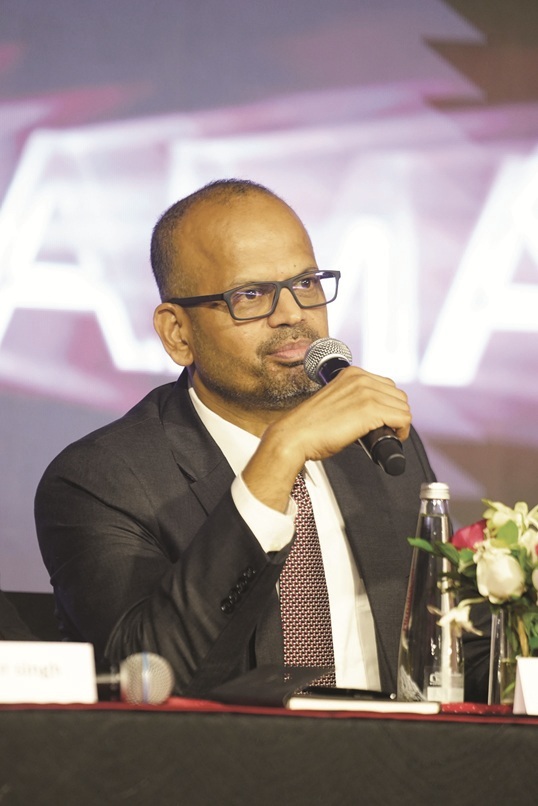
Nitin Mantri, Member of the Board And Senior Managing Officer & Co-COO, Yokohama Rubber Co and Chairman, Yokohama India, shares his thoughts on the company’s future plans, production capacity, localisation and network expansion.
How significant is India within Yokohama’s global strategy?
India is one of our most strategic markets. It was the first place where we gave complete ownership to local management with no Japanese chairman. Combining Japanese technology and quality culture with Indian innovation and growth hunger has created a powerful combination.
India is already your fourth-largest market. Can it climb higher?
Passenger-car penetration remains much lower than in US, Japan or China. That gives us runway, but catching the very largest markets will still be challenging given the vehicles-per-person difference.
Why has OEM share stayed so low?
We were simply short of capacity. Aftermarket demand absorbed almost everything we could make. With new capacity coming on stream, we are deliberately changing that mix. We aim for 10–20 percent OEM over time. Development cycles with OEMs take three to four years, so results will appear gradually.
How do you approach product development for India?
Some products, such as Earth-1, were designed purely for India. For others, we take global platforms and carefully retune the compound and construction for Indian roads and conditions. The goal is global technology that feels native here.
What is the philosophy behind capacity expansion?
We design factories for flexibility and minimal waste. Long-lead buildings and equipment are installed first. Additional machines are added only when demand thresholds are crossed. Our current footprint can take us from 4.5 million to 6.3 million units. Beyond that, the parent company has consistently shown willingness to invest.
How do you view localisation of raw materials?
We source for the best quality and value, whether from India or elsewhere. Our specifications remain identical regardless of origin. We do not force localisation if it compromises quality or cost.
Are your tyres ready for the rise of electric vehicles?
Yes. Features such as specialised silica compounds that deliver low rolling resistance, higher load capacity and reduced noise work equally well on battery-electric, hybrid and conventional vehicles. That flexibility is deliberate.
What keeps you focused on the aftermarket network?
Channel partners still influence 80–85 percent of tyre purchases. Expanding from 3,000 to 4,500 partners, with particular attention to Tier-3 & Tier-4 towns, and strengthening the Yokohama Club branded stores remain central to our growth. n
- TVS Industrial and Logistics Parks
- TVS ILP
- ATC Tires AP
- Yokohama Group
- Ramnath Subramaniam
- Jose Motha
TVS ILP Leases Space To ATC Tires In Visakhapatnam For Warehousing
- By TT News
- October 21, 2026
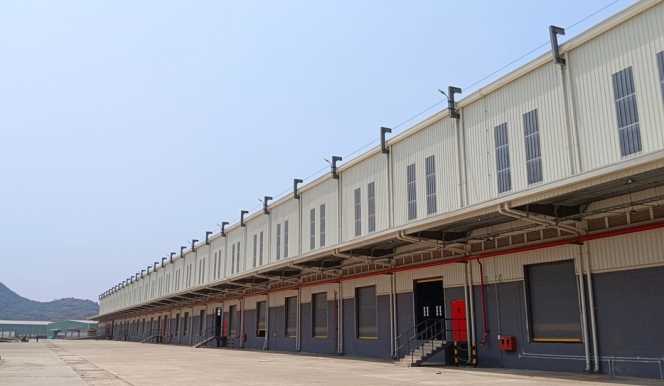
TVS Industrial and Logistics Parks (TVS ILP) has leased 80,000 square feet of space at its facility in Visakhapatnam, Andhra Pradesh, to ATC Tires AP, a subsidiary of the Yokohama Group.
The site will serve as a mother hub warehouse to support domestic distribution and export operations for Yokohama passenger vehicle tyres, alongside off-highway tyre ranges under the Alliance, Galaxy and Primex brands. The deployment links regional manufacturing operations with maritime connectivity and trade routes in South and East India.
Ramnath Subramaniam, Joint Managing Director, TVS Industrial and Logistics Parks, said, "We are delighted to support ATC Tires and the Yokohama Group as they strengthen their presence in South India with an 80,000 sq. ft. mother hub warehouse at our Visakhapatnam park. This partnership reflects how our tech-enabled, well-connected infrastructure supports customers’ evolving operational and supply-chain requirements. With its strategic location, established industrial ecosystem and favourable government incentives, Visakhapatnam is emerging as an important destination for businesses across sectors. We see significant potential for companies across e-commerce, FMCG and other industries to leverage the city’s advantages, and look forward to supporting their growth."
Jose Motha, General Manager of Supply Chain Management, Yokohama, said, "An efficient, well-connected warehousing network is integral to building a resilient supply chain. With our highly automated facility in Visakhapatnam manufacturing passenger car and off-highway tyres, our collaboration with TVS ILP in the city is a strategic step towards strengthening our logistics infrastructure and enhancing operational efficiencies. Its connectivity to key trade routes and access to markets across South and East India will enable us to better address evolving business needs and build a more agile supply chain."
Kumho Sees European CV Industry As New Growth Engine
- By Nilesh Wadhwa
- October 21, 2026
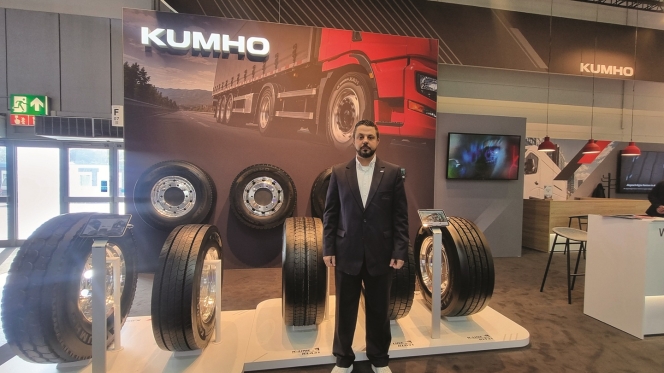
With Europe now a core growth market and production stretched to the limit worldwide, Kumho Tire is investing heavily in local manufacturing and a focused truck-and-bus strategy built on measurable performance rather than brand glamour.
South Korean tyre major Kumho Tire, positioned as a value-driven brand, is now reigniting its plans to expand in Europe. In an exclusive interview with Tyre Trends, Ilhan Kurban, Marketing Manager at Kumho Tire Europe, outlines a company that has already delivered consistent expansion and is now repositioning for the next phase.
“We had an average about 13.3 percent YoY growth every year globally for the last several years. So, you can see, from having a turnover of USD 1.8 billion in 2020, we are now around USD 3.3 billion in 2025,” he said.
Last year the manufacturer sold 58.1 million tyres, with Europe becoming a central part of that momentum. The European replacement business alone generated around EUR 772 million and almost 15 million tyres, making the region increasingly important.
“That’s why our importance for Europe is really high at the moment and we are thinking to invest more and more in Europe because it’s getting like a core business for us,” shared Kurban.
LOCAL PRODUCTION TO UNLOCK FURTHER GROWTH
Until now, Kumho has relied on factories in Korea, China and Vietnam for expanding its sales in the global market. Vietnam in particular has completed its ramp-up and is shipping substantial volumes to Europe and the United States. Capacity across the network is at full stretch.
“We are already at maximum capacity utilisation at Kumho production facilities, be it in China, Korea or Vietnam. We need to have more production capacity for both TBR (truck and bus radial) and PCR (passenger car radial),” revealed Kurban.
Kumho Tire’s response, in early 2026, was a new plant in Opole, Poland, where groundbreaking has already begun. The project represents an investment of about USD 600 million. “The plant will have a production capacity to produce six million tyres initially and the production is expected to start by Q3 of 2028. We are planning to manufacture both PCR and TBR tyres,” said Kurban.
Interestingly, as per industry reports, Kumho Tire is committing an additional USD 45 million (KRW 59.6 billion) to accelerate the construction of its manufacturing facility in Opole. The capital allocation follows an investment of USD 54 million (KRW 73.3 billion) directed towards the new European plant last year.
In the long-run, the facility is expected to exceed manufacturing capacity of 10 million units by around 2030. Poland’s location within the European Union and its proximity to the German and central European markets make it a natural hub free of customs barriers. The plant is designed as a smart factory incorporating AI technology, automatic logistics and rigorous quality control – essential for meeting the demanding approvals of European customers, including premium vehicle manufacturers.
A second new factory is simultaneously under construction in Korea to replace the Gwangju site where a major fire incident in May 2025 led to extensive damage, bringing the latest automated processes on stream. Together the investments signal Kumho’s determination to support further volume growth while improving supply-chain resilience for European fleets.
REBUILDING TBR STRENGTH
Passenger-car radial remains Kumho’s primary business, yet the company has deliberately intensified its truck-and-bus radial efforts over the past two years. New long-haul and regional series covering all-position, trailer and drive-axle applications have been introduced with the latest Kumho technologies.
The tyre maker is already performing strongly in Italy, Poland and Scandinavia and is now targeting a deeper presence in Germany, where it previously struggled because of limited focus.
“Since the past two years, we had really focused on that to develop a new business opportunity for us and also get back into German market; that’s why we are also really working hard to introduce new products for German or for Central European market demands,” shared Kurban.
He acknowledges that reaching fleet customers requires a different approach from passenger-car marketing. Motorsport sponsorships and lifestyle campaigns have limited influence for the CV customer.
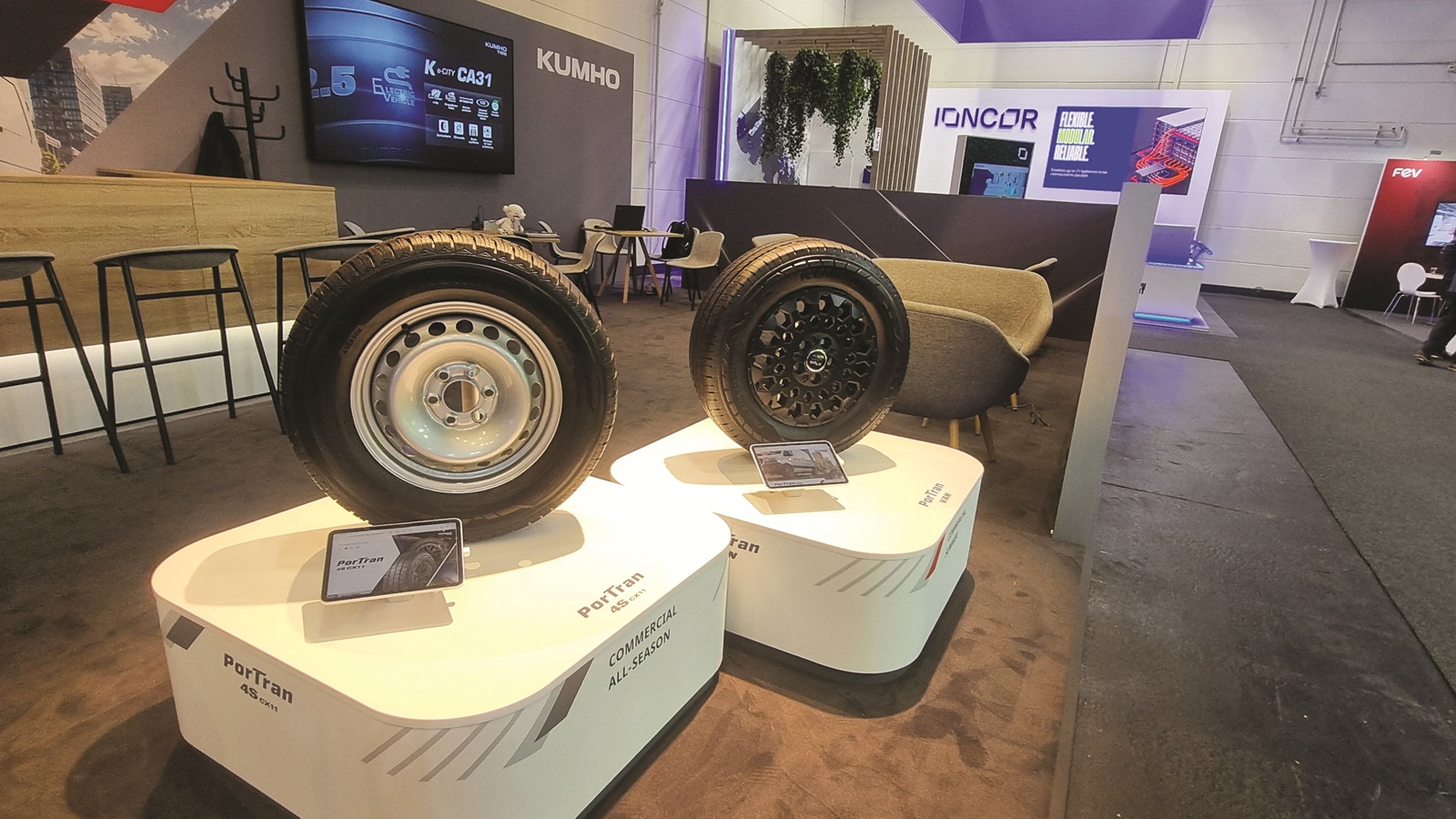 “It is most important to have qualified technical sales personnel in Germany, so we have onboarded special TBR sales managers. They visit customers and are providing test tyres to measure the mileage, check the performance and closely track the results,” explained Kurban.
An equally critical part of the growth strategy is the partner network. “The most important part for us is to have reliable retail partners, because we are a tyre manufacturer. At the end, it is not possible to bring the support fleet everywhere (for aftersales support),” averred Kurban.
For this reason, the company is strengthening its partnership in Germany and across Europe as the core part of its business. Logistics for large commercial tyres are complex, so distributors and service partners remain essential for delivery, technical support and ongoing customer relationships. Establishing a stronger aftersales and assistance network is a long-term objective, though for now, Kumho continues to rely on those partners.
The company also maintains a second brand, Marshal, positioned as a budget alternative for pure replacement demand.
In the organisation’s strategy, Kumho remains the halo brand focusing on quality-conscious customers as well as Original Equipment Manufacturers (OEMs). On the other hand, Marshal is not targeted at OE business and serves mainly conventional sizes where price is the dominant consideration.
THE CASE FOR PRODUCT SIMPLICITY
Kurban expects electrification to form part of a mixed technology landscape rather than a complete replacement of conventional powertrains in either passenger or commercial vehicles.
“Our expectation is that, at the moment, be it passenger vehicle or commercial vehicle segment, electrification will be an alternative to Internal Combustion Engine (ICE). But it cannot completely replace ICE vehicles; it will be a mixture of different technologies,” he said.
The challenge for a tyre maker is to avoid an explosion of specialised products that confuses dealers and complicates logistics. Kumho’s strategy is therefore deliberate simplicity.
“Our target and product strategy is to ‘keep it simple’, which means produce tyres that are suitable for both conventional and electric vehicles. We are introducing all new products as EV ready products optimised for rolling resistance, mileage and wet grip, among others, so all customer requirements are met by the same tyre,” he said.
That approach contrasts with brands that offer numerous near-identical sizes, creating stock-holding and selection difficulties. By designing tyres that serve both conventional and electric vehicles without performance compromise, Kumho aims to keep ranges manageable while still meeting the higher torque, weight and efficiency demands of modern commercial vehicles.
On the related question of smart or connected tyres, Kurban observes limited immediate demand from fleets. Most operators already track vehicles via GPS systems and calculate tyre efficiency from fuel consumption, mileage and operating hours. In-tyre sensors that deliver additional data remain uncommon in his experience.
SUSTAINABILITY THAT PAYS FOR ITSELF
It is no secret that for fleet operators, the topic of sustainability is becoming quite crucial, yet they are rarely prepared to pay a premium for it.
“The fleets are not ready to pay any surcharge on sustainable tyres, but they’re requesting everything about sustainability. It has to be economical and meet their sustainable targets, but they’re not willing to pay any additional money for it. To be honest, this part (sustainability) has to be taken care of by the tyre maker always,” he shared.
What they do measure rigorously is cost per kilometre. High mileage and low rolling resistance translate directly into lower fuel consumption and longer intervals between replacements – benefits that appear on the balance sheet.
Kumho therefore treats sustainability as inseparable from performance. He explained that manufacturers must deliver more durable, lower-resistance products without raising prices or sacrificing capability.
Replacement cycles themselves vary too widely for simple averages. Road conditions, driver behaviour and maintenance practices can produce differences of several hundred thousand kilometres.
“You can see a really big difference if you are driving on the German motorway or the autobahn, where you can achieve better mileage if the truck and the tyre pressure is well maintained. In contrast, to anyone in Turkey who’s only driving on roads with potholes and never checking the tyre will have a different replacement cycle,” he said, illustrating an example of how road conditions and maintenance habits affect tyre life.
Kurban is confident in Kumho’s overarching ambition of a 5 percent global market share and recognition as a premium quality brand, with Europe now central to that goal.
The upcoming Polish plant will supply both passenger and commercial tyres closer to customers. New TBR patterns are already reaching key markets, and the product philosophy continues to prioritise simplicity and measurable economy.
As Kurban puts it, Kumho’s strategy for fleet operators is to keep its value proposition straightforward – tyres that work across powertrain types, last longer, roll more efficiently and arrive through a reliable partner network – without demanding a sustainability surcharge.
Continental Taps Ashok Vedanayagam To Lead Commercial Specialty Tires Americas
- By TT News
- October 20, 2026

Continental has named Ashok Vedanayagam as Head of Commercial Specialty Tires Americas, a move underscoring the company's dedication to growth and customer service across its speciality tyre operations. In this capacity, Vedanayagam will manage the Earthmoving, Material Handling and Port Operations segments throughout North and South America.
He will direct every facet of the CST business in the region, advancing Continental's push to provide inventive tyre solutions and superior value to customers working in the challenging material handling, earthmoving and port settings.
With over 20 years of experience, Vedanayagam has served in numerous leadership roles spanning both the Commercial Truck Tire and Passenger and Light Truck Tire divisions, where he has consistently propelled growth, reinforced customer relationships and promoted market-driven approaches across various regions. The appointment reflects Continental's resolve to serve Americas customers through innovative products, sector knowledge and a sharp emphasis on operational excellence.
Renato Sarzano, Senior Vice President, Commercial Tires Americas, Continental, said, “Ashok’s extensive experience in sales, marketing and international business leadership makes him exceptionally well qualified for this role. His proven ability to build strong customer relationships, develop high-performing teams and deliver results across both consumer and commercial markets will be invaluable as we continue to strengthen our Commercial Specialty Tires business throughout the Americas.”

Comments (0)
ADD COMMENT