

- Indian Rubber Institute
- IRI
- IRI-CON'26'
- Apollo Tyres
- CEAT
- BKT
- MRF
- JK Tyre & Industries
- V K Misra
- Dr R Mukhopadhyay
- Vasantagesan
- Rejni Issac
- ITTAC
- Prof Dr Kinshuk Naskar
- IIT Kharagpur
- Prof Dr Sabu Thomas
- MG University
- CIRCL90
- Bekaert Industries
- Rathi Group India
- Epsilon Carbon
- Tata Chemicals
- Brisil Green Silica
- Arlanxeo India
IRI-CON’26: Setting the Agenda For A Sustainable Rubber Revolution
- By TT News
- January 12, 2026

The Indian Rubber Institute (IRI), a non-profit professional body focussing on the tyre and rubber industry, has officially announced its flagship biennial conference, ‘IRI-CON’26’. IRI Gujarat and Rajasthan Branch have jointly organised the event.
Scheduled to take place on 30th and 31st January 2026 at the Hotel Sayaji in Vadodara, Gujarat, the event serves as a critical junction for technocrats, researchers, and industry leaders to navigate the sector's rapidly evolving technological and sustainability priorities.
The choice of Vadodara as the host city underscores Gujarat’s status as a formidable powerhouse for elastomers and rubber manufacturing. The region serves as a strategic base for global and domestic tyre giants, including Apollo Tyres, CEAT, BKT, MRF and JK Tyre & Industries, while hosting a robust network of suppliers specialising in carbon black, silica, textiles and rubber chemicals.
IRI-CON' 26' is supported by Ravi Enterprises, Kobelco Industrial Machinery India, Panama Petrochem, Pukhraj Additives and Beakert Industries as Platinum sponsors. Rajsha Chemicals, Madhu Silica, Balkrishna Industries and Madura Industrial Textiles are the Gold sponsors. On the other hand, Singh Plasticisers and Resins, Raj Petro Specialties, Nynas Napthenics, OCCL, 20 Micros, Sampann Utpadan India, ISRPL, Polyplas Global, Aksharchem India, Rubber King Tyre and Northwest Group are Silver Sponsors.
Lanxess India, Witnmans Industries, Epsilon Holdings, Kuraray India, Rubamin, Tinna Rubber and Infrastructure, Chem-Trend Chemicals, Dawsun Exim Corp, JK Tyre & Industries, Galaxy Chem & Machiner, Gujarat Bondchem and Silox India are the Bronze sponsors.
Lastly, MLA Industries, FINORCHEM, Tata Chemicals, Reliance Industries and DCM Shriram Chemicals are the Supporter for the event.
Against this backdrop, the conference theme – ‘Unlocking the Potential of Sustainable Developments in Rubber and Allied Industries’ – reflects an urgent industry-wide commitment to resource efficiency, circular economy principles and responsible manufacturing.
High-Profile Inauguration and Strategic Vision
The conference will commence with a high-powered inaugural session dedicated to global trends and strategic updates. This session features a line-up of some of the most influential figures in the Indian rubber ecosystem. Dr Sujith Nair, Chairman, IRI Gujarat and VP R&D, CEAT, will deliver the welcome speech.
V K Misra, Chairman of IRI and representative of JK Tyres & Industries, will open the proceedings with a vision for the institute’s role in future-proofing the industry. He will be joined by Vasantagesan, IRS, Executive Director of the Rubber Board and Dr R Mukhopadhyay, who will provide a comprehensive overview of global sustainability trends.
Further technical leadership will be provided by Renji Issac, Chairman of ITTAC and representative of CEAT and P K Mohamed, Emeritus Chairman of IRI. The academic foundation of the event is bolstered by the presence of Prof. Dr Kinshuk Naskar from IIT Kharagpur – the institute's long-term partner for technical certification – and Prof. Dr Sabu Thomas of MG University, ensuring a seamless bridge between cutting-edge research and industrial application.
Innovations in Green Chemistry and Circularity
The event will also dive deep into technical breakthroughs that are reshaping the tyre value chain. A significant focus will be placed on ‘Green Tyres’ and the reduction of environmental footprints. Key presentations will feature Bekaert Industries discussing advanced cord solutions for weight reduction, and CEAT showcasing the CIRCL90, a sustainable passenger car tyre.
The shift toward a circular economy is a recurring theme throughout the technical sessions. Epsilon Carbon and Rathi Group India (Capital Carbon) will present on the integration of recovered carbon black (rCB) and the importance of ASTM standards in ensuring market momentum for recycled materials. Meanwhile, Brisil Green Silica and Tata Chemicals are set to discuss the revolutionary transition of producing sustainable silica from agricultural waste, a move that highlights the industry's move away from traditional, energy-intensive sourcing.
A Collaborative Ecosystem
The conference serves as a global stage for a diverse array of companies, including Arlanxeo India, which will present eco-friendly elastomer solutions and Finorchem, focusing on enhancing compound performance through phenolic resin-silica coupling. Other notable participants include LANXESS, TUV Rheinland and TTRC, covering everything from bio-based additives to water-based vulcanising cements and rigorous certification standards.
As regulatory pressures and environmental expectations continue to intensify, IRI-CON’26 stands as a timely and vital forum. By aligning manufacturers, R&D specialists, and academia, the event is positioned to chart a sustainable growth pathway for India’s tyre and rubber ecosystem, ensuring it remains competitive on the global stage while meeting the highest standards of environmental stewardship.
The event will also celebrate the next generation of industry talent with a Best Student Presentation Award Ceremony on the final day.
All-in-all the event is a must-attend for industry professionals, R&D specialists and academics in the tyre and rubber industry. To register click here
Grismer Tire & Auto Service Appoints New CEO And CFO
- By TT News
- September 28, 2026
Grismer Tire & Auto Service, a tyre and automotive service centre operator backed by CenterOak Partners LLC, has named Chris Blanchette as Chief Executive Officer and Mark Hedstrom as Chief Financial Officer. The announcement marks a significant leadership transition for the portfolio company.
Blanchette arrives with over two decades of senior leadership experience in multi-site consumer services, specialising in operations, strategy and business development. He most recently served as Chief Executive Officer of Service Minds, a residential electrical, plumbing and HVAC services provider. His background also includes serving as Chief Operating Officer of QAS, which operates Valvoline Instant Oil Change locations, along with senior operational positions at Advance Auto Parts, Bridgestone Retail Operations and Best Buy.
Hedstrom brings more than three decades of finance expertise to his new role. He previously held the Chief Financial Officer position at W.S. Connelly & Co., a multi-regional specialty distributor, and has also served as Chief Financial Officer for several private equity-backed consumer and distribution companies.
Eric Holter, Managing Director, CenterOak, said, “Chris Blanchette brings highly relevant leadership experience in the automotive aftermarket. He has led complex, multi-location organisations and understands how to translate operational discipline into sustainable growth. Together, Chris and Mark add important depth to Grismer’s leadership team as the Company pursues expansion in existing and new markets.”
Blanchette said, “Grismer’s 90-year history and the trust it has earned with customers set the Company apart. I am excited to join a business with such a strong legacy and see significant
- International Rubber Conference
- Society Of Rubber Science And Technology Japan
- James Busfield
- Nobuyuki Tamura
- Bridgestone Corporation
- Japan Rubber Manufacturers Association
- Aichi International Exhibition Center
- Aichi Sky Expo
Japan To Host International Rubber Conference After Decade-Long Gap
- By TT News
- September 25, 2026
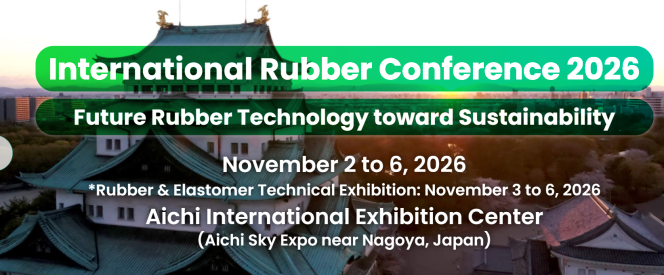
The International Rubber Conference (IRC) will return to Japan in November for the first time in a decade, with more than 271 technical presentations and over 117 exhibitors expected to take part.
The event, known as IRC 2026 Aichi, will be hosted by the Society of Rubber Science and Technology, Japan, alongside the Rubber & Elastomer Technical Exhibition in Aichi. It is scheduled to run from 2nd to 6th November, with the exhibition opening a day later and continuing until 6th November .
Held at the Aichi International Exhibition Center, also known as Aichi Sky Expo, the venue is located near Chubu Centrair International Airport and can be reached from Nagoya Station in about 28 minutes by train.
The conference programme will feature more than 271 presentations spanning rubber science, technology and industrial applications. Participants include James Busfield of Queen Mary University of London and Nobuyuki Tamura of Bridgestone Corporation, who also chairs the Japan Rubber Manufacturers Association. More than 400 delegates have already registered.
Running alongside the conference, the Rubber & Elastomer Technical Exhibition will host more than 117 exhibitors, ranging from raw material suppliers and machinery manufacturers to tyre makers and testing-equipment providers. The exhibition will be open to visitors free of charge.
The International Rubber Conference, first held in 1966, rotates annually across global host cities. The last event in Japan took place in Kitakyushu in 2016, with subsequent editions held in Haikou, Istanbul and Bangkok.
Pirelli Board Approves EUR 1 Billion US Investment Plan And Organisational Restructuring
- By TT News
- September 23, 2026
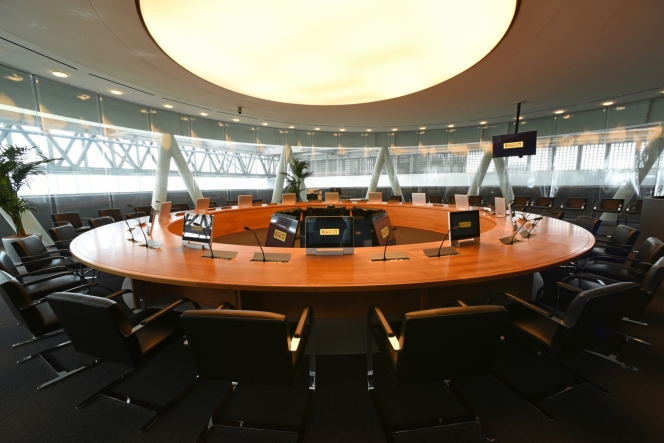
Italian tyre major Pirelli has announced a multi-year investment plan worth approximately EUR 1 billion (USD 1.2 billion) to expand its manufacturing facility in Rome, Georgia in the United States. The motion passed by majority vote, with board members Zhang Haitao, Xi Xiaohong and Wang Kun voting against the proposal.
The capital expenditure program, scheduled to begin in 2027 and will go through 2033, aims to expand annual production capacity at the Georgia site to six million tyres and create approximately 1,000 jobs.
The United States represents the largest market for high-value tyres globally, accounting for roughly 40 percent of global volumes. The project will be carried out in two phases without altering Pirelli's financial targets for 2026.
Phase one of the expansion will introduce modular robotised production systems based on Pirelli's Modular Integrated Robotised System technology, scaling annual output to three million tyres starting in 2028.
In phase two, the company will begin construction of an automated production facility to add three million units of annual capacity. The expanded plant will produce connected tyre systems, including Cyber Tyre technology, following market authorisation granted by the US Bureau of Industry and Security under Italy’s 2026 Golden Power Decree.
Alongside the investment decision, the board approved an organisational restructuring resulting in the immediate elimination of the Corporate General Management function. As part of the changes, Corporate General Manager Francesco Tanzi will step down from his executive role, maintaining an employment relationship through 31 December 2026 to facilitate the leadership transition.
Under the terms approved by the board and the Remuneration Committee, Tanzi will receive a severance payment equivalent to 13 months’ remuneration, payable by February 2027, alongside accrued rights under existing short-term and long-term incentive plans. He has agreed to a two-year non-compete covenant covering Pirelli's primary operating regions in exchange for 130 percent of his gross annual salary, paid in eight quarterly instalments. Following the end of his employment, Tanzi will provide advisory services under a two-year consultancy contract with an annual fee of EUR 350,000, plus non-monetary benefits valued at EUR 45,000.
Bridgestone Appoints Stefano Sanchini As President Of Europe Sales
- By TT News
- September 19, 2026
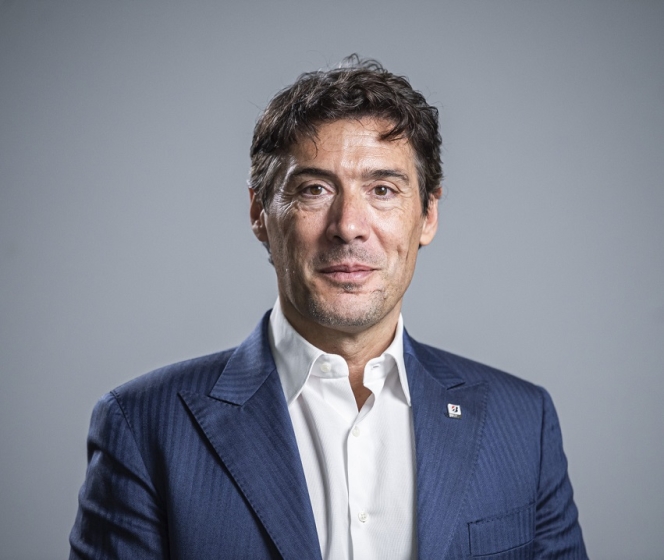
Bridgestone has announced a European leadership appointment aimed at sharpening customer focus, streamlining engagement across product groups and supporting its ongoing growth plans. Stefano Sanchini will become President, Europe Sales, effective 1 October 2026, leading the company’s European sales organisation across both Consumer and Commercial segments.
The expanded role unites sales activities spanning passenger car, truck and bus, agriculture, off-the-road, motorcycle and original equipment. Sanchini brings over 20 years of international leadership experience in the automotive and tyre sectors, with a career covering Europe, Middle East, Africa and India. Since joining Bridgestone in 2017, he has held several senior positions, including Managing Director of Bridgestone India.
Most recently, as Vice President for Consumer Replacement in Europe, he helped strengthen customer engagement, commercial performance, profitability and regional market growth. Bridgestone said the appointment underscores its commitment to customer relationships, commercial execution and simpler cross-market operations. Sanchini will pursue sustainable growth while developing capabilities and partnerships supporting the company’s long-term European strategy.
Mete Ekin, Group President EMEA, said, "Our customers increasingly operate across multiple product categories and expect a consistent experience wherever they engage with Bridgestone. By bringing our sales activities together under one European structure, we are creating a simpler, more connected organisation that will help us respond faster, collaborate more effectively and continue building strong partnerships with our customers."

Comments (0)
ADD COMMENT