

Shaping Tommorow's Tyres
- By Sharad Matade
- June 08, 2026
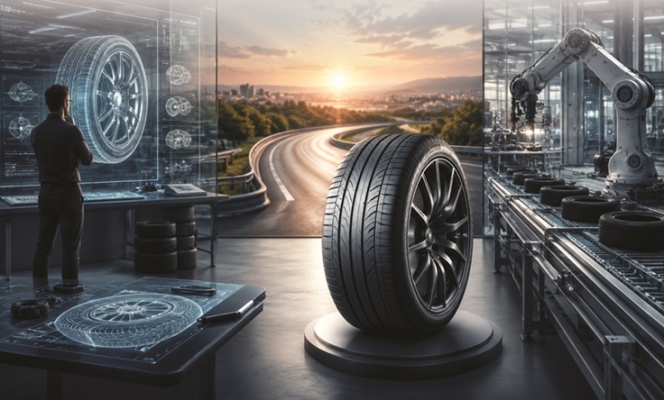
The global tyre industry is undergoing significant change. Geopolitical disruptions, increased sustainability requirements, supply chain shifts and the move to digital manufacturing are transforming an industry once focused on scale and efficiency. Additionally, electric mobility, smart factories and material innovation are redefining competition.
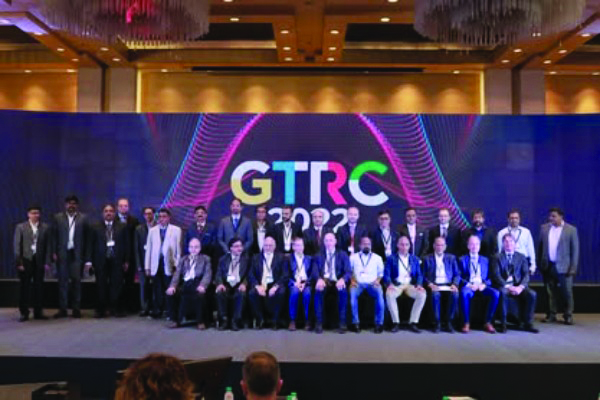
In this context, the Global Tyre & Rubber Conference (GTRC) 2026, organised by Tyre Trends and scheduled for 17–18 June in Chennai, is especially timely. More than a typical industry gathering, the conference serves as a strategic forum for business leaders, machinery suppliers, material scientists and technology specialists to shape the future of tyre manufacturing.
The timing is significant.
India’s tyre sector is rapidly evolving, driven by domestic demand, export growth and investment in advanced manufacturing. Chennai, a key hub for automotive and tyre production, is a fitting location for a conference focused on industrial transformation.
The conference will begin with an inaugural session that sets the context for these industry changes.
The opening address will be delivered by Mike Norman, Chief Commercial Officer of VMI, a leading supplier of technology for the manufacture of superior radial passenger vehicle, light truck, all-steel truck and bus tyres. As a leader in tyre manufacturing technology, Norman offers valuable insight into global manufacturing trends, highlighting the increasing importance of advanced machinery and digital systems for competitiveness.
A strategic dimension will be added by Arun Mammen, Chairman of the Automotive Tyre Manufacturers’ Association (ATMA) and Vice Chairman and Managing Director of MRF, who will deliver the key address. Few voices are better placed to contextualise the present state of the Indian tyre industry. As manufacturers navigate shifting regulatory environments, sustainability expectations and global competitive pressures, Mammen’s perspective is expected to extend beyond immediate market conditions towards the structural evolution of the sector itself.
The ceremonial lighting of the lamp will formally inaugurate proceedings, but the conference’s real momentum begins with its first major business session.
The opening business session features a CXO panel of senior executives whose organisations have significant influence in manufacturing, technology and sustainability.
Moderated by Latha Chembrakalam, CEO of AutoAscend, the panel includes Anil Gupta (COO, Yokohama Off-Highway Tires), Arun Mammen, Mike Normann and Ian Wilson (Managing Director and Co-CEO, HF Group). This session is structured to address the key commercial challenges facing the industry, rather than serving as a routine executive discussion.
The panel will discuss how manufacturers are adjusting investments, localisation strategies and technology adoption in response to global changes. The focus is shifting from efficiency alone to building industrial resilience for future disruptions.
Sanjay Chatterjee, Director General of ATMA India, will complement this discussion with a presentation on industry growth, policy and institutional perspectives. His insights will be valuable for delegates interested in the regulatory and economic factors influencing future investments in India’s tyre sector.
If the opening sessions focus on commercial realities, the conference’s technical programme turns decisively towards manufacturing transformation.
Session II, chaired by V K Misra, Technical Director of JK Tyre, examines manufacturing excellence through the lens of process engineering and industrial innovation. The session begins with the presentation of Dr Gerard Nijman, Expert Sales Manager Tyre & Rubber, Krauss Maffei, who will present a paper titled ‘50 Years of Tyre Component Extrusion: Did the Piggyback Multiplex Head Reach its End of Life?’ The presentation will revisit the introduction of the piggyback co-extrusion concept nearly 50 years ago, which improved process capability, addressed OEM requirements and reduced scrap generation.
The technology enabled the co-extrusion of tyre components using up to seven rubber compounds and is now used in more than 95 percent of tread and sidewall production. Dr Nijman will also discuss the limitations of current multiplex heads and provide a preview of a new co-extrusion concept for tyre compounds.
Nicola Fedele Rodolfo, Managing Director and Board Member, Rodolfo Comerio, will speak on ‘Calendering – The Heart Beat of Tyre Production’. The presentation will trace Rodolfo Comerio’s role in calendaring technology for the global tyre and rubber industry, combining market perspectives, technical innovation, company heritage and future developments. The presentation concludes by underscoring the company’s 148-year legacy in the industry, from operating the first calender for Pirelli to supporting the next generation of tyre production technologies.
Karsten Jung, Director – Sales, Rubber Machinery Division, TROESTER GmbH & Co. KG, and Saravana Kumar S, Managing Director and Member, TROESTER India Pvt Ltd, will speak on ‘Robotics and Automation’. Jung will present the latest developments in automation and robotics solutions for the tyre industry while also addressing the impact of electric vehicle requirements on compound development. Drawing on testing conducted at TROESTER’s in-house laboratory, the presentation will highlight a newly adapted screw design developed to improve the processing of new EV compounds. Saravana Kumar will outline how regional service integration supports sustainable extrusion operations. Saravana Kumar’s presentation will focus on TROESTER India’s presence in Chennai and its customer support capabilities across engineering, technical service, spare parts and after-sales support, aimed at enabling faster response times and improved operational efficiency.
This progression towards advanced manufacturing continues in the third session which is on Advancements in Tyre Manufacturing.
Dr Róbert Hula, Sales & Marketing Manager, Vipo a.s., will present his paper titled ‘Bead and Apex Solutions for Advanced Tire Manufacturing’. The presentation will explore how changing tyre production requirements, including smaller batch sizes, frequent product changes and larger rim sizes, are increasing demand for more flexible manufacturing systems.
The presentation will highlight VIPO technologies such as the LIHEXAL 8 bead winding machine and advanced apexing systems, featuring real-time monitoring, AI-supported controls, MES integration and automated material handling. It will also introduce concepts such as sensor-ready bead production and digital optimisation of manufacturing lines, focusing on the role of bead and apex technologies in advanced tyre production.
Bob Irwin, Vice President Sales & Marketing, Steelastic, will give a paper presentation titled ‘Integrating Extrusion Technology with Conventional Calendering to Elevate Tire Manufacturing Efficiency’. The paper will explore the integration of Steelastic’s advanced extrusion-based systems with conventional calendering and cutting methods in tyre reinforcement manufacturing, with a particular focus on the APAC market.
The presentation will examine how combining these technologies can enhance production efficiency, flexibility, sustainability and quality across tyre manufacturing operations.
Session IV, chaired by C Harimohan of Yokohama Off Highway Tire, is Going Green and Sustainable. Colin Clarke, Director Technical Sales, Schill+Seilacher “Struktol” GmbH, will present a paper titled ‘From Evolution to Revolution – Functional Additive Chemistry Adapted to Extreme Processing Challenges’. The presentation will examine how process additives have evolved from general processing aids into targeted solutions addressing challenges such as silica dispersion, tack, green strength, mill release and compound-to-metal adhesion. Focusing on extreme silica-filled and resin-rich tyre compounds, the presentation will introduce a new functional additive technology designed to optimise mixer and mill release while maintaining silica dispersion, improved flow behaviour, enhanced green strength and tyre performance properties.
In his presentation titled ‘Innovative Silane Grafted Liquid Rubber for Tire Compounds’, Ralph Böhm, Senior Manager, Kuraray, will share his thoughts on the role of liquid rubbers, composed of isoprene, butadiene and styrene, in improving tyre processing and performance. The paper will highlight the latest study on functionalised liquid rubbers and their advantages in natural rubber and silica formulations, focusing on processability, balancing rolling resistance, abrasion and grip and supporting formulations for next-generation TBR and EV tyres with sustainability considerations.
In his presentation titled ‘Excellent Cord Adhesion Without Cobalt and Resorcinol – A Truly Sustainable Solution’, Dr Roberto Blanco Trillo, Global Business Development Manager, Allnex, will talk about emerging alternatives to conventional adhesion promoter systems used in tyre compounds. Dr Trillo will also talk on the challenges of eliminating resorcinol and cobalt salts from tyre formulations while maintaining vulcanisation speed, mechanical properties, cord adhesion and ageing performance. The presentation will highlight the development of resorcinol-free Novolak resins and a newly functionalised Novolak technology designed to deliver strong cord adhesion and ageing performance without the use of cobalt or resorcinol while also addressing environmental, toxicological and sustainability concerns.
As GTRC is known for providing networking opportunities, a Gala and entertainment night has been organised on the first day on the conference.
Day Two opens with one of the conference’s most contemporary themes.
Session V, explores emerging technologies and artificial intelligence within tyre manufacturing. The timing could hardly be more relevant.
Artificial intelligence (AI) has progressed rapidly from experimental concept to industrial application. Predictive maintenance, intelligent inspection systems and data-driven production management are already altering factory operations across multiple industries.
Marcel Berkers, Vice President Global Sales Tire & Rubber at VMI, is expected to share his thoughts on how these technological shifts are redefining manufacturing systems. Yet the most anticipated discussion may come from Peter Haan, Head of Global VM Tire at Siemens AG, whose presentation addresses the simple utilisation of AI in tyre manufacturing.
Hann will explore the practical adoption of artificial intelligence in tyre manufacturing through his presentation titled ‘Simple Utilisation of AI in Tyre Manufacturing’. The presentation will focus on how AI can be implemented and utilised more easily in industrial environments, particularly at a time when many AI projects struggle to achieve their intended outcomes. Highlighting the shortage of AI-skilled expertise within the industry, Haan will also discuss the importance of enabling
NEW VENUE FOR A BIGGER GTRC
The decision to host GTRC 2026 at the Chennai Trade Centre (CTC) reflects the conference’s growing scale and industry relevance. Following strong participation in the last two editions, organisers faced space constraints as GTRC evolved beyond a conventional conference into a major knowledge-sharing and networking platform for the global tyre and rubber industry.
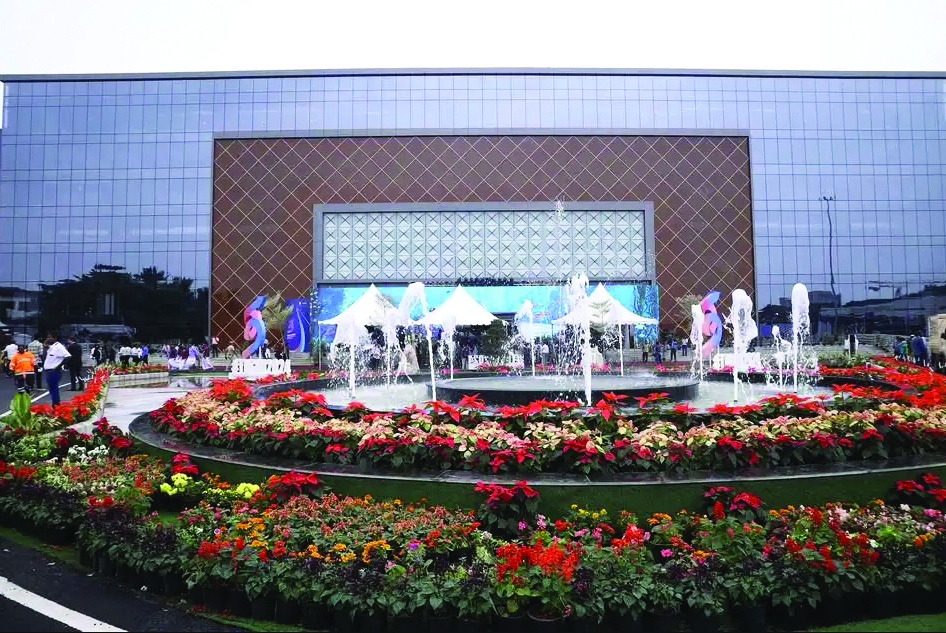
Located in Nandambakkam and managed by the Tamil Nadu Trade Promotion Organisation (TNTPO), the Chennai Trade Centre offers modern convention and exhibition infrastructure with excellent connectivity to the airport and city transport networks. Its large, flexible facilities are designed to host international trade fairs and business events.
“The move to CTC also responds to industry demand. Many participating companies increasingly view GTRC not only as a forum for technical discussions but also as a platform to showcase innovations and technologies through exhibition booths. The venue’s integrated conference and exhibition facilities make it an ideal setting for GTRC’s next stage of growth,” said Antony Powath, President, Pin 365.
AI adoption by non-specialists. The presentation will also touch upon how AI can accelerate process optimisation in emerging areas such as electrical curing and tyre recycling.
The conference subsequently turns towards quality assurance through Session VI, chaired by UnniKrishnan P K, Global Head – R&D, Tyre Testing at Apollo Tyres.
Testing technologies increasingly determine both production quality and operational efficiency. As artificial intelligence gains traction across tyre manufacturing, autonomous inspection systems are emerging as a key area of innovation. At GTRC 2026, Dr Shaun M Immel of Micropoise will present the latest developments in autonomous tyre defect detection through X-ray image analysis. The paper will focus on advances in Autonomous Defect Recognition (ADR), highlighting a new software solution designed to streamline tyre X-ray inspection. Unlike conventional systems that rely on expensive master tyres and lengthy calibration procedures to achieve millimetre-level screening accuracy, the new approach eliminates these requirements. According to Micropoise, the technology significantly reduces the time and effort involved in creating and managing inspection recipes, cutting preparation times from hours to minutes. By integrating AI and Deep Learning (DL) techniques, the system enables more accurate autonomous tyre inspection and defect classification.
Lubos Hodal, Head of Sales Department at Micro-Epsilon, will present the company’s latest developments in tyre inspection systems. Hodal’s presentation will highlight offline profiling with compound measurement, online profiling with auto-correlation functionality, tyre letter inspection and tyre mould inspection technologies aimed at improving manufacturing accuracy and defect detection. Hodal will also underline Micro-Epsilon’s ‘Made in India’ approach, reflecting the growing role of localised manufacturing in supporting the tyre industry.
Michael Müller, Senior Sales and Key Account Manager at ZF, will present a technical paper titled ‘Tyre High Speed Uniformity Measurement – Interpretation Regarding Quality & Vehicle Comfort in R&D and Virtual Tyre Development’.
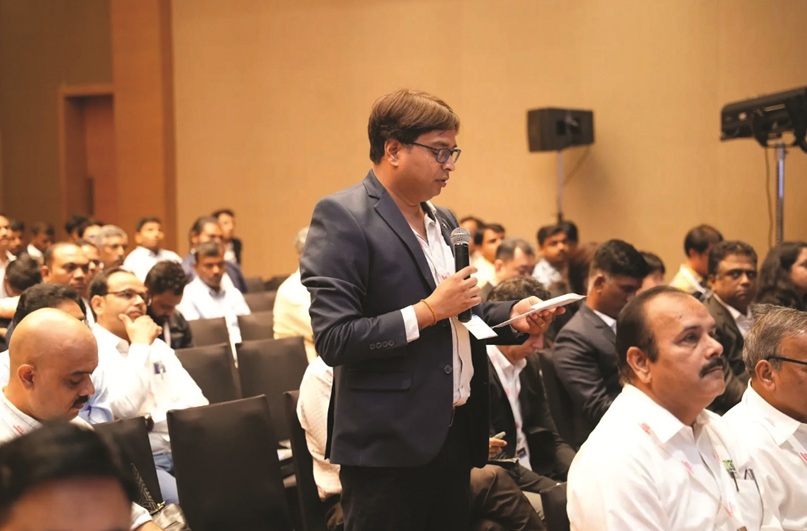
As tyre manufacturers increasingly rely on virtual development and advanced modelling techniques, accurate high-speed uniformity (HSU) measurement has become central to evaluating tyre performance, ride comfort and quality.
Müller’s presentation will examine the state of the art in HSU measurement and analysis, addressing how key tyre characteristics are incorporated into tyre modelling and comparing measurement approaches using speed ramps and constant speeds. The session will also explore the different machine types used for HSU measurement, including the influence of machine natural frequencies on measurement outcomes.
Further discussion will focus on typical HSU evaluations, the impact of varying road wheel surfaces and the available concepts for testing across different surfaces. The presentation will additionally highlight the tyre model parameters derived from HSU measurements and review both recent technological advances and ongoing developments shaping the future of high-speed tyre testing.
The session is expected to offer valuable insight into the evolving role of HSU measurement in tyre R&D, quality assurance and virtual tyre development.
With sustainability moving to the forefront of tyre manufacturing, curing technologies are under increasing scrutiny. Anil Nair, Director of Curing Press Sales for HF Group in India, will present ‘HF eCuring – The Next Level of Electrical Tyre Curing, in the final technical session. In his presentation, Nair will highlight how HF Group’s electrical curing technology could significantly reduce the curing room’s carbon footprint while delivering operational gains such as higher throughput, improved tyre quality, enhanced safety and lower maintenance costs. The presentation will also highlight the role of online condition monitoring and predictive maintenance in supporting long-term efficiency.
As the tyre industry accelerates its shift towards circularity, end-of-life tyre traceability is becoming increasingly important. Arthur Wagner, CEO, REGOM, will discuss how data-driven traceability solutions can improve transparency and efficiency across the recycling value chain. The presentation will tell how structured data and material flow tracking can support compliance, improve decision-making and enhance the quality of recovered materials, helping build a more circular tyre ecosystem.
Sustainable material innovation will also feature prominently at GTRC 2026, with Black Donuts presenting a novel approach to replacing fossil-based tyre components. Aki Nurminen from Black Donut will throw light on a new premix material combining natural rubber and microfibrillated cellulose (MFC), a plant-derived reinforcement material. Designed to overcome compatibility challenges in tyre manufacturing, the technology promises improved usability while reducing reliance on carbon black and other fossil-based inputs.
The conference closes with a panel discussion that may ultimately prove its most candid conversation.
Moderated by Srikanth Chakravarthy, Managing Director of Eonix, the discussion on crisis, sustainability and the green transition brings together Nikhil Puri of Yokohama and procurement leaders from other tyre companies. Their conversation is expected to confront the difficult questions underpinning contemporary industry strategy: how manufacturers balance sustainability with cost realities, navigate geopolitical disruptions and maintain competitiveness amid rapidly changing technological and environmental expectations.
For the tyre industry, GTRC 2026 arrives not simply as another conference but as a reflection of an industry in transition. Chennai may provide the venue, but the themes under discussion – automation, circularity, artificial intelligence and manufacturing resilience – are unmistakably global.
WHAT INDUSTRY LEADERS SAY ABOUT GTRC PAST EDITIONS
“Over and above it, GTRC is a great networking opportunity.”
Satish Sharma, Senior President & Director – Business Development & Strategy, Balkrishna Industries Ltd (BKT)
“I loved the conference a lot, and I thank you, Antony, and the team. Looking forward to attending more conferences.”
Pravin Joshi, Vice President at Yokohama Off-Highway Tyre
“First, we are very happy to be here; it’s always good to be with our friends and customers for a couple of days. It gives us the opportunity to discuss in a very nice atmosphere. I also think the presentations are very good and high level. It helps us connect with our customers and understand their needs better so we can help them and support them even better. This year (2024) , a record number of people have come here, so all in all, it is very good.”
Harm Voortman, VMI Group
“I think it is a very interesting event to get to meet major role players from the Indian tyre industry in one room where they can see all the new developments and trends within the industry – having this conference once every two years is great, as developments take time.”
Warren Rudman, HF
“I like the interaction. The setup, speakers and high-quality audience are all good combinations.”
Erik Lapre, VMI
“On behalf of our company (Vipo), I would like to thank you for organising GTRC and for bringing some great people and topics related to the tyre industry. It is a unique place for networking. I recommend GTRC to everyone in the industry.”
Andrej Bencel, PhD, Vipo A.S.
“I would like to thank the team for hosting GTRC and bringing all the industry leaders together on a common platform. It is a great knowledge-sharing platform as well as a productive one. The topics covered on sustainability and AI are great and very useful. To be frank, it is the need of the hour.”
Vashni R, SRF Limited
“I thought it would be like any other conference, but it was beyond that, and I learned many things from GTRC. Not only the content but also the hospitality was very good. It was just perfect.”
Sahana, Assistant Manager R&D, Yokohama
JK Tyre Eyes Double-Digit Growth Despite Cost Pressures Testing Margins
- By Nilesh Wadhwa
- October 23, 2026
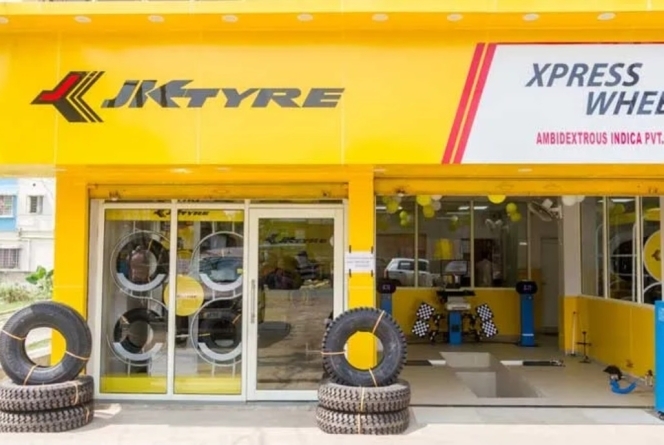
JK Tyre & Industries is targeting double-digit growth in FY2027, supported by healthy commercial vehicle demand, sustained OEM traction and a growing market for premium passenger car tyres. However, rising raw material costs and elevated freight rates continue to pressure margins, prompting the company to pursue further price increases and operational efficiencies.
Anshuman Singhania, Managing Director, JK Tyre & Industries, expects demand to remain stable through the second half of FY2027, with commercial vehicle tyre sales projected to record double-digit growth for the full year. While passenger vehicle demand could moderate slightly, healthy OEM order books and replacement market traction are expected to support the industry's growth momentum.
“We are very optimistic going ahead that demand would be quite stable,” Singhania said during the post-results media interaction, adding that the positive momentum was expected to continue through the third and fourth quarters.
Record Revenue in Q2 FY2027
JK Tyre reported its highest-ever consolidated quarterly revenue of INR 48.5 billion in Q2 FY2027, up 20 percent year-on-year (YoY). Consolidated EBITDA rose 28 percent sequentially to INR 3.43 billion, with an EBITDA margin of 7.1 percent. Profit after tax stood at INR 600 million.
Domestic sales grew 32 percent YoY, led by a 65 percent increase in OEM sales following the implementation of GST 2.0. Exports also gained momentum, rising 14 percent sequentially despite geopolitical uncertainties and challenging international market conditions.
Growth was broad-based across product segments. OEM volumes increased 76 percent in truck and bus radial (TBR) tyres and 35 percent in passenger car radial (PCR) tyres. The tubeless tyre portfolio grew 25 percent YoY, against estimated industry growth of 10 percent, while tipper tyre sales increased 20 percent compared with industry growth of 11–12 percent.
Sales in the two- and three-wheeler category rose approximately 85 percent YoY, driven primarily by scooters. Replacement sales increased 20 percent, reflecting continued traction across channels.
Despite the revenue growth, profitability remains under pressure as input and logistics costs rise faster than they can be recovered through pricing.
Raw Material Costs and Freight Weigh on Margins
JK Tyre's raw material basket increased approximately 9 percent sequentially in Q2, with the cumulative increase over the preceding six months estimated at around 30 percent. Singhania expects a further 4–5 percent increase in the basket during Q3.
Elevated container freight rates have added to the pressure, with increases across geographies affecting exports and shipments from India. Higher petrol and diesel prices have also contributed to rising logistics costs.
The company is seeking to offset these pressures through price increases, manufacturing efficiencies and a richer product mix. However, the timing of margin recovery will depend on the extent to which higher costs can be passed on in a price-sensitive market.
Further Price Hikes Planned
JK Tyre increased prices by approximately 4–5 percent in Q1 and a further 7 percent sequentially in Q2, taking the cumulative increase during the first half of FY2027 to around 11–12 percent. The company intends to implement another 4–5 percent increase in Q3, subject to market conditions.
“The raw material increase is putting a lot of pressure on margins. But we are steadily increasing our prices to pass through,” Singhania said.
OEM pricing is partly linked to input cost indices, allowing some increases to be recovered through contractual adjustments. In the replacement market, price increases have been implemented more gradually over the past two quarters, with further adjustments expected.
Singhania acknowledged that the industry typically experiences a lag between cost escalation and full price recovery. While the company expects margins to improve through better OEM mix, price indexation and operational efficiencies, it has not quantified the anticipated improvement.
Premium Tyres Gain Share
JK Tyre is increasing its focus on premium passenger car tyres, particularly those with rim sizes of 16 inches and above. The company said the share of these tyres in its passenger car OEM mix increased to approximately 40 percent in H1 FY2027, compared with 35 percent in FY2026. These sizes account for around 27 percent of its overall mix, including the aftermarket.
The shift towards larger rim sizes is being supported by new vehicle launches and wider adoption across passenger vehicle categories. JK Tyre has secured 10 OEM approvals during the year, eight of which involve models in the 16-inch-and-above category. These include the Maruti Suzuki Brezza, Mahindra Thar, Renault Duster and Tecton, and MG Tomahawk, as cited during the media interaction.
“The market is growing, but our market is growing at a faster rate,” Singhania said, highlighting the opportunity presented by new OEM programmes and rising demand for larger rim sizes.
The company expects this segment to support product realisation and improve its sales mix, with additional capacity helping it meet evolving OEM requirements.
Expansion Continues as Exports Offer Headroom
JK Tyre is proceeding with its INR 11.3 billion capacity expansion programme, which Singhania confirmed would not be deferred. The previously announced INR 50 billion capital expenditure programme is also progressing through its initial phase.
The investments are intended to support domestic demand and create capacity for export opportunities. JK Tyre reported encouraging demand from Latin America and Africa, while some markets in Asia and Europe softened amid geopolitical uncertainty.
The company plans to continue serving established markets across Latin America, the Middle East, Southeast Asia and Africa, alongside a limited presence in Europe, while prioritising domestic OEM and replacement requirements.
For the second half of FY2027, JK Tyre expects commercial vehicle demand to remain supportive and is targeting double-digit growth in the segment for the full year. Strong OEM order books, replacement demand and the increasing contribution of premium tyres are expected to underpin growth. The key challenge will be translating higher volumes into sustainable profitability as the company navigates raw material inflation, freight costs and the lag in price recovery.
ATD Names Michael Broderick Interim President As Ira Silver Departs
- By TT News
- October 23, 2026
American Tire Distributors (ATD), a leading independent supplier in the replacement tyre industry, has appointed Michael Broderick as Interim President, effective immediately. He takes over from Ira B Silver. ATD also announced that the company and Silver have parted ways.
Broderick, who currently sits on ATD's Board of Directors and brings extensive automotive aftermarket experience, will guide the leadership transition. Meanwhile, the Board is conducting a comprehensive search for a permanent Chief Executive Officer, evaluating both internal and external candidates.
ATD continues to hold a significant position in the North American tyre market, supported by a broad distribution network, longstanding customer relationships and a diverse portfolio of manufacturer and proprietary brands. During 2026, the company eliminated more than USD 170 million in structural costs, reinvesting a portion of the savings, while shareholders have backed further investment in the national distribution network to strengthen market position and operating performance.
Philippe Gilbert, Chairman of the Board of Directors of ATD, said, “ATD has made important progress sharpening our focus on our core tyre distribution business, improving operational efficiency and delivering outstanding service and value to our customers and partners. As we look to accelerate these efforts, we determined that now is the right time to initiate a leadership transition. Mike brings substantial experience leading complex automotive businesses, and we are pleased that he is stepping in as Interim President to help us during this transition period. He will be supported by the ATD management team, which has played a central role in the Company's operational transformation, providing continuity of leadership across its distribution operations and strategic initiatives. On behalf of the Board, I would like to thank Ira for his leadership and contributions to help move the Company forward during a critical time.”
Broderick said, “I’m excited to step in and work alongside ATD’s team of talented associates as we focus on enhancing our network to provide customers with high-quality products and unparalleled service. As a member of ATD’s Board and over a decade of working with ATD as a customer, I’ve witnessed firsthand the strength of the Company’s robust national distribution network, deep customer and manufacturer relationships and long-held commitment to exceptional service. I look forward to advancing our efforts to strengthen our core tyre distribution business and build a stronger, more efficient company.”
Charting A New Course
- By Nilesh Wadhwa
- October 22, 2026
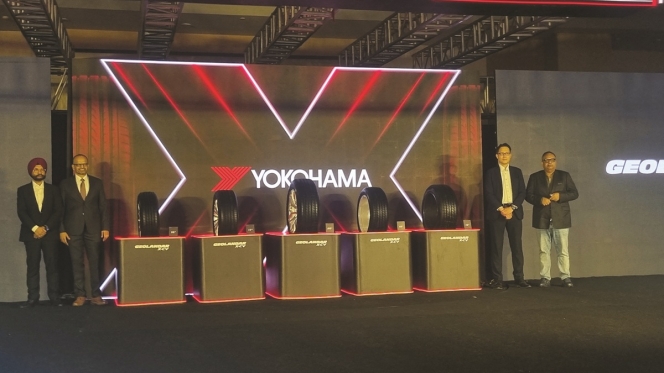
Yokohama India plans to enter the two-wheeler tyre market for the first time, with the first set of products due by the end of next year — making India the first country globally to get two-wheeler tyres from the Japanese tyremaker. The move, confirmed by Managing Director and CEO Harinder Singh, coincides with the launch of the GEOLANDAR X-CV range, extending Yokohama’s flagship SUV tyre technology to smaller wheel sizes for India’s booming crossover segment.
India’s premium tyre market continues to reward companies that combine global technology with local agility. Yokohama India, already one of the country’s fastest-growing premium players, looks to tap into India’s SUV and premiumisation push, bringing global products but in a customised avatar for the domestic market.
On the other hand, India is set to become the first country in the world for Yokohama, where it will introduce two-wheeler tyres.
In an interaction with Tyre Trends, Harinder Singh, Managing Director and CEO, Yokohama India, confirmed that the company is actively working towards entering the two-wheeler tyre segment, with the first products targeted for launch by the end of next year.
“The move will require fresh capital investment and will initially focus on the premium category before expanding into mass-market offerings, along with supporting the growing Yokohama Club Network,” revealed Singh.
This development sits alongside the recent unveiling of the GEOLANDAR X-CV range, a significant extension of Yokohama’s global flagship SUV technology into India’s rapidly expanding crossover and premium SUV segment.
TWO-WHEELER ENTRY SIGNALS BROADER AMBITION
Responding to a query on the company’s plans to address the whitespace in its portfolio, Singh said, “We are actively looking to support the two-wheeler business. By the end of next year, hopefully we should be having the two-wheeler tyres also.”
It is important to note that at present Yokohama India has zero presence in the two-wheeler space. The initial thought is to begin with tyres in the premium segment and then ‘take a trickle in’ towards mass-market products.
“This is primarily to service and support our all Yokohama club networks. And we plan to sell through them. That’s the objective,” said Singh.
The decision reflects both opportunity and necessity. India’s two-wheeler market remains vast and premium tyres are gaining share as riders seek better handling, durability and safety. By channelling the new products through its branded retail network, Yokohama intends to maintain the premium experience that has defined its passenger-car strategy.
GEOLANDAR X-CV BRINGS FLAGSHIP TECHNOLOGY TO A WIDER AUDIENCE
The immediate focus, however, remains the passenger-car radial business and the newly launched GEOLANDAR X-CV. Originally engineered for luxury SUVs with wheel sizes above 18 inches, the technology has been extended downwards to 16 inches, creating what the company describes as India’s most extensive dedicated tyre range for crossover and premium SUVs. Yokohama India has planned around multiple variations spanning 16 to 20 inches.
The tyre incorporates Micro Silica technology for enhanced wet-road grip and reduced rolling resistance, an optimised asymmetric tread design with specialised inner and outer shoulder blocks, four wide circumferential grooves for water evacuation, proprietary 2D–3D Combination Sipes for improved wet traction and even wear and 5-Pitch Variation Technology to minimise pattern noise.
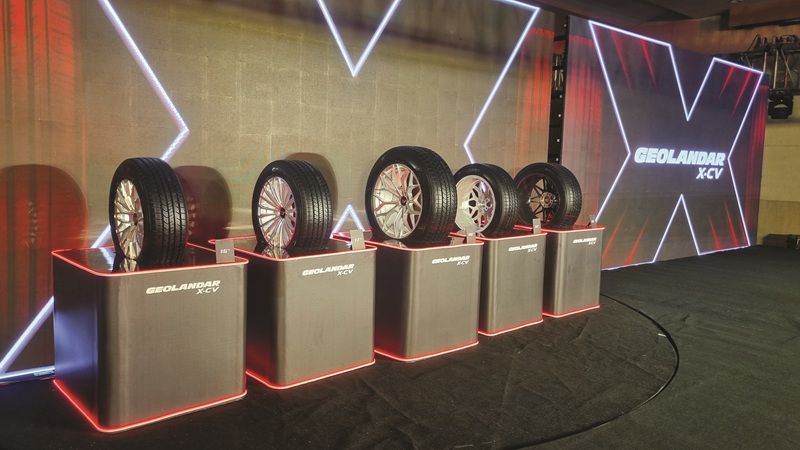
It uses reinforced two-ply sidewall construction and a full nylon cover to deliver durability and high-speed stability required for Indian conditions. Critically, the range is EV-compatible, engineered to handle higher vehicle weights and the instant torque characteristics of electric vehicles while remaining equally effective on internal-combustion and hybrid platforms.
Nitin Mantri, Member of the Board and Senior Managing Officer & Co-COO of Yokohama Rubber Co and Chairman of Yokohama India, framed the launch in strategic terms: “India continues to be one of Yokohama’s most strategic markets globally. Our continued investments in manufacturing, technology and premium product development reflects our confidence in the country’s long-term growth. The launch of GEOLANDAR X-CV reinforces our commitment to bringing globally proven innovations closer to Indian customers while strengthening Yokohama India’s position as one of the country’s leading premium tyre manufacturers.”
Singh added: “The crossover SUV segment is growing rapidly and the road infrastructure improving, now motorists are seeking a balance of safety, comfort, quietness and long-lasting performance. With the GEOLANDAR X-CV, we’re bringing flagship premium tyre technology to delight a wider base of crossover SUV owners.”
CAPACITY RUNNING NEAR FULL, EXPANSION ALREADY MAPPED
Yokohama India’s current installed capacity stands at approximately 4.5 million units a year. The capacity utilisation is already high. “We are almost full,” Singh noted.
Of the 4.5 million, roughly four million tyres serve the domestic aftermarket, with the modest surplus supporting European export requirements of the parent company. The Vizag plant has been designed with further phases in mind. “The plant is ready to be going for the next phase also. So as and when the requirement is, we will expand it,” averred Singh without giving out exact details.
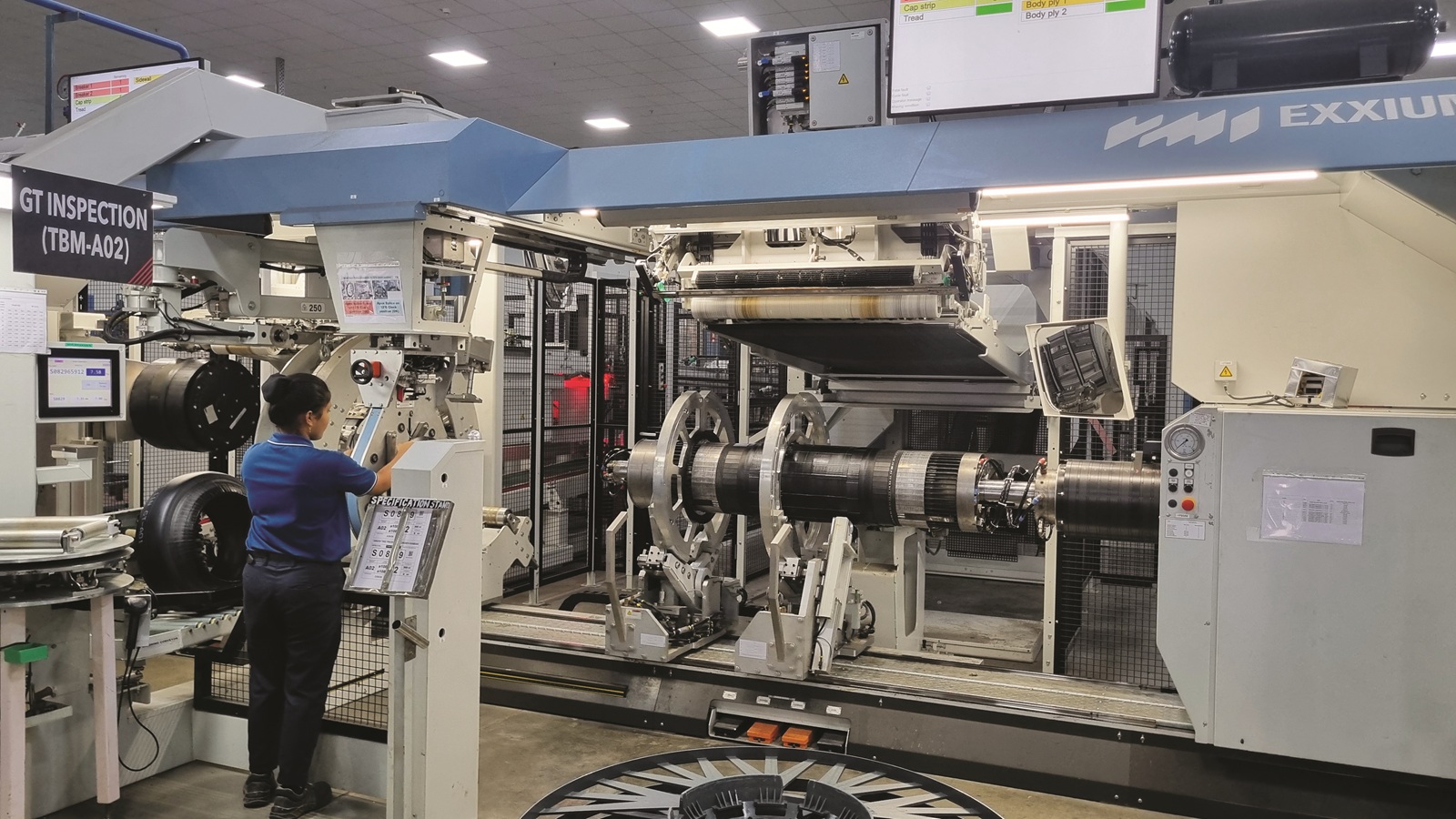 Mantri elaborated on the flexible manufacturing philosophy. Buildings and long-lead equipment are already in place; additional machines will be added incrementally as demand thresholds are crossed.
The existing footprint can take capacity from 4.5 million to 6.3 million units. Beyond that, the parent company has demonstrated consistent willingness to invest. Cumulative investment in India across the Yokohama Group is already substantial, with the Vizag facility alone accounting for more than INR 30 billion in recent years and overall group investment estimated in the range of USD 700–800 million. An Odisha plant focused on off-the-road tyres is also under construction.
AFTERMARKET REMAINS THE CORE, BUT OEM SHARE IS SET TO RISE
For Yokohama India, aftermarket sales in the passenger vehicle segment still account for around 95 percent of its revenue. The company has roughly 3,000 channel partners and aims to reach 4,500 within three to four years, with particular emphasis on Tier-3 and Tier-4 towns.
A key pillar is the Yokohama Club Network of branded retail stores that deliver a premium customer experience, including a five-year worry-free warranty. “In tyre industry, you know, 80–85 percent of the customers sale happens with the influence of the channel partner. When a customer walks into those stores, he gets that premium experience,” noted Singh.
At present, for Yokohama India, the passenger vehicle OEM business contributes only about two percent, limited largely to Maruti Suzuki India. The roadmap is to raise this to 10 percent within five years, and potentially towards 10–20 percent over a longer horizon. “Indian OEMs are going to be an important part in our OE strategy,” Singh confirmed.
Adding to that, Mantri said that OEM development cycles are lengthy, typically three to four years, but multiple proposals are already under discussion. “Working hand in hand with OEMs allows us to be kind of even more successful than we are as we go forward,” he said.
LOCAL OWNERSHIP MEETS GLOBAL STANDARDS
One of Yokohama India’s distinctive features is the degree of local management autonomy. “India was the first place where Yokohama gave complete ownership to the local management. There was no Japanese chairman,” Mantri explained.
The experiment, begun in 2020, has married Japanese technology and quality culture with ‘Indian Jugaad, Indian innovation, Indian kind of hunger for growth’. The result, he said, has been ‘a wonderful recipe’.
Product strategy follows a similar hybrid logic. The Earth-1 range was designed specifically for India. Newer products such as the GEOLANDAR X-CV start from global platforms but are tuned in compound and construction for Indian roads and driving conditions.
Replying on the company’s localisation levels, Mantri said that “sourcing remains pragmatic. Yokohama seeks the highest quality at the best price, whether from India or Southeast Asia, rather than pursuing localisation for its own sake.”
Growth over the past five years has averaged 18 percent CAGR, a momentum the leadership is determined to sustain. Market share in the premium passenger-car radial segment is estimated at around 10 percent. The company continues to prioritise 16-inch and larger sizes while systematically filling remaining white spaces in the portfolio.
LOOKING BEYOND THE IMMEDIATE HORIZON
It is no secret that when it comes to digitalisation, consumers in India are exposed and are amongst the fastest adopters of the latest trends, be it product-as-a-service, online purchase or service on hire.
Many quick commerce platforms and tyre makers have taken the online route to directly engage and sell their products to the end-consumer, but for Yokohama India, online tyre sale holds little appeal.
“We are not into online business. That’s a no from our side,” Singh clarified. The preference remains for customers to experience the product and fitting process in a branded store. Marketing support is deliberately hyperlocal and digital rather than big-ticket sporting sponsorships.
As road infrastructure improves and motorists undertake longer journeys, demand is shifting towards on-road focused tyres, a trend the GEOLANDAR X-CV is positioned to capture. All-terrain products will continue for genuine off-road use, but the volume opportunity lies in the growing crossover segment. Continuous upgrades across the rest of the portfolio, including further evolution of the Earth-1 range, are already planned.
For Yokohama India, the strategy is clear – offer the best experience to Indian consumers, by introducing its globally proven products to the market without compromises, but yet in an Indian avatar. On the other hand, the company is also gearing up to enter new segment to further cater to customers in the premium two-wheeler space.
QUALITY OVER FORCED LOCALISATION
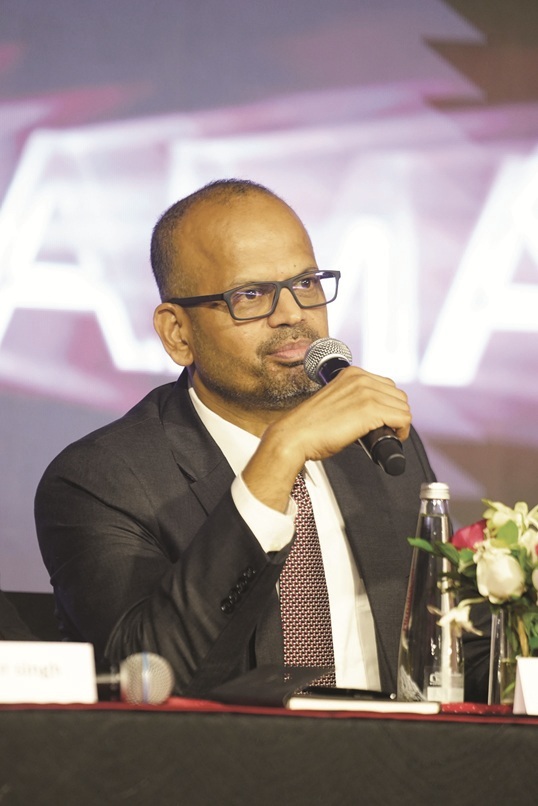
Nitin Mantri, Member of the Board And Senior Managing Officer & Co-COO, Yokohama Rubber Co and Chairman, Yokohama India, shares his thoughts on the company’s future plans, production capacity, localisation and network expansion.
How significant is India within Yokohama’s global strategy?
India is one of our most strategic markets. It was the first place where we gave complete ownership to local management with no Japanese chairman. Combining Japanese technology and quality culture with Indian innovation and growth hunger has created a powerful combination.
India is already your fourth-largest market. Can it climb higher?
Passenger-car penetration remains much lower than in US, Japan or China. That gives us runway, but catching the very largest markets will still be challenging given the vehicles-per-person difference.
Why has OEM share stayed so low?
We were simply short of capacity. Aftermarket demand absorbed almost everything we could make. With new capacity coming on stream, we are deliberately changing that mix. We aim for 10–20 percent OEM over time. Development cycles with OEMs take three to four years, so results will appear gradually.
How do you approach product development for India?
Some products, such as Earth-1, were designed purely for India. For others, we take global platforms and carefully retune the compound and construction for Indian roads and conditions. The goal is global technology that feels native here.
What is the philosophy behind capacity expansion?
We design factories for flexibility and minimal waste. Long-lead buildings and equipment are installed first. Additional machines are added only when demand thresholds are crossed. Our current footprint can take us from 4.5 million to 6.3 million units. Beyond that, the parent company has consistently shown willingness to invest.
How do you view localisation of raw materials?
We source for the best quality and value, whether from India or elsewhere. Our specifications remain identical regardless of origin. We do not force localisation if it compromises quality or cost.
Are your tyres ready for the rise of electric vehicles?
Yes. Features such as specialised silica compounds that deliver low rolling resistance, higher load capacity and reduced noise work equally well on battery-electric, hybrid and conventional vehicles. That flexibility is deliberate.
What keeps you focused on the aftermarket network?
Channel partners still influence 80–85 percent of tyre purchases. Expanding from 3,000 to 4,500 partners, with particular attention to Tier-3 & Tier-4 towns, and strengthening the Yokohama Club branded stores remain central to our growth. n
- TVS Industrial and Logistics Parks
- TVS ILP
- ATC Tires AP
- Yokohama Group
- Ramnath Subramaniam
- Jose Motha
TVS ILP Leases Space To ATC Tires In Visakhapatnam For Warehousing
- By TT News
- October 21, 2026
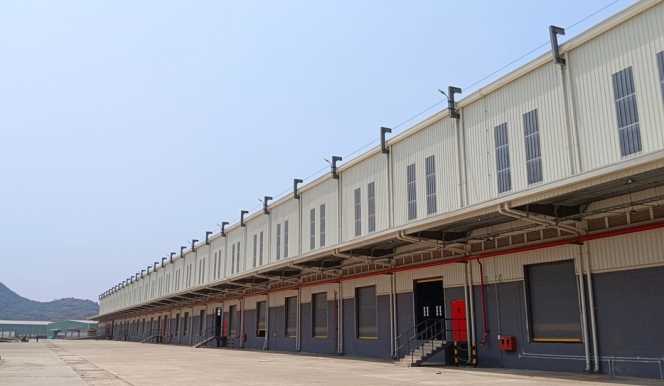
TVS Industrial and Logistics Parks (TVS ILP) has leased 80,000 square feet of space at its facility in Visakhapatnam, Andhra Pradesh, to ATC Tires AP, a subsidiary of the Yokohama Group.
The site will serve as a mother hub warehouse to support domestic distribution and export operations for Yokohama passenger vehicle tyres, alongside off-highway tyre ranges under the Alliance, Galaxy and Primex brands. The deployment links regional manufacturing operations with maritime connectivity and trade routes in South and East India.
Ramnath Subramaniam, Joint Managing Director, TVS Industrial and Logistics Parks, said, "We are delighted to support ATC Tires and the Yokohama Group as they strengthen their presence in South India with an 80,000 sq. ft. mother hub warehouse at our Visakhapatnam park. This partnership reflects how our tech-enabled, well-connected infrastructure supports customers’ evolving operational and supply-chain requirements. With its strategic location, established industrial ecosystem and favourable government incentives, Visakhapatnam is emerging as an important destination for businesses across sectors. We see significant potential for companies across e-commerce, FMCG and other industries to leverage the city’s advantages, and look forward to supporting their growth."
Jose Motha, General Manager of Supply Chain Management, Yokohama, said, "An efficient, well-connected warehousing network is integral to building a resilient supply chain. With our highly automated facility in Visakhapatnam manufacturing passenger car and off-highway tyres, our collaboration with TVS ILP in the city is a strategic step towards strengthening our logistics infrastructure and enhancing operational efficiencies. Its connectivity to key trade routes and access to markets across South and East India will enable us to better address evolving business needs and build a more agile supply chain."

Comments (0)
ADD COMMENT