

Anyline Bets On AI To Drive Innovation For Automotive & Tyre Inspections
- By Nilesh Wadhwa
- August 25, 2025
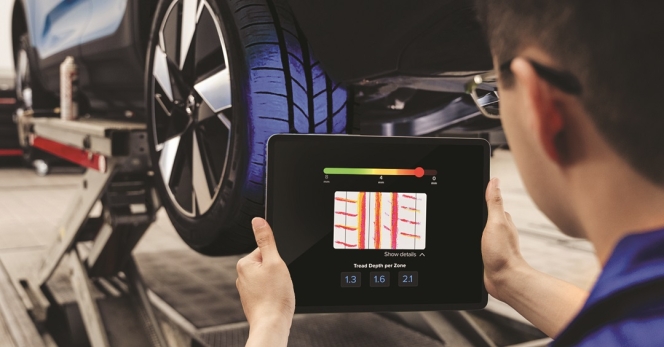
Anyline, a global leader in AI-powered mobile data capture, is disrupting industries by enabling instant scanning of everyday data with smartphones.
In an era where data is king, Vienna-based Anyline aims to carve out a significant niche, transforming everyday data capture into a seamless, mobile-first experience. What began as a computer vision research project, exploring the intricate ways machines could ‘see and interpret the world’, has blossomed into a global commercial platform.
This evolution was driven by a clear recognition of how urgently businesses across various sectors needed reliable, efficient and mobile-first data capture solutions. Anyline’s innovative approach now empowers frontline workers across diverse industries, from the complexities of logistics and the precision of manufacturing to the dynamic environments of retail and public safety and, notably, the high-stakes world of the automotive sector.
“Anyline was founded with the vision of making everyday data – like barcodes, serial numbers, IDs and tyre codes – instantly scannable using nothing more than a smartphone,” explained Peio Elustondo, VP of Inside Sales and Growth Marketing at Anyline. “We quickly saw how urgently businesses needed reliable, mobile-first data capture. The demand was undeniable, and our technology provided a straightforward, scalable answer.”
The company’s advanced AI-powered technology is now extensively deployed in over 100 countries, serving a distinguished roster of leading brands such as Discount Tyre, a giant in the automotive aftermarket; PepsiCo, a global food and beverage leader and IBM, a technology and consulting powerhouse. Elustondo highlighted their core mission, which remains steadfast despite their expansive growth, “Whether it’s helping technicians inspect tyres, retailers manage inventory or police verify vehicle data, our mission remains the same: to empower frontline workers with smart, scalable technology that makes everyday tasks faster, more accurate and more efficient. We believe in putting powerful tools directly into the hands of those on the ground, enabling them to work smarter, not harder.”
Anyline’s global footprint and tangible impact speak volumes, with millions of scans performed each month and a continuously expanding ecosystem of enterprise partners who place their trust in its software to digitise critical operations in the field, at the point of action.
REVOLUTIONISING TYRE INSPECTIONS WITH TIREBUDDY
One of Anyline’s most impactful and strategically significant innovations in the automotive space is TireBuddy, a dedicated mobile application meticulously designed to streamline the often-cumbersome process of tyre inspections. Traditional manual methods, which have long been the industry standard, are frequently plagued by inconsistencies, subjective interpretations and outright errors. These issues present a significant and persistent challenge for businesses striving for efficiency and accuracy.
 “Tyre inspections are often manual, time-consuming and prone to errors – from misreading DOT codes to inconsistent tread depth checks,” Elustondo noted, painting a clear picture of the industry’s struggle and underscoring the dual nature of the problem. “The challenge is not only speed but also standardisation. Without reliable digital tools, even experienced technicians can struggle to deliver consistent results, especially under pressure or in high-volume environments.”
TireBuddy directly and comprehensively addresses these pain points, bringing powerful, AI-driven capabilities directly to the workshop floor, all without the need for expensive, dedicated hardware.
“It was built specifically for the needs of independent tyre dealers and service teams who want to modernise their workflows without investing in costly hardware or infrastructure,” Elustondo stated, highlighting the app’s accessibility and cost-effectiveness. The app empowers technicians to effortlessly scan and capture crucial data points such as DOT codes, tyre size, brand and Vehicle Identification Numbers (VINs) instantly.
Furthermore, TireBuddy provides precise tread depth measurements through a guided mobile workflow, ensuring that tyre health is assessed consistently and accurately, eliminating the need for traditional, often inaccurate, physical gauges. Remarkably, all of this critical data capture and verification happens in under a minute per tyre, with the results being rigorously AI-verified for unparalleled accuracy and reliability.
“All of this happens in under a minute per tyre and the results are AI-verified for accuracy and reliability,” Elustondo confirmed, emphasising the speed and precision that define TireBuddy.
He then explained the broader and more profound benefits that extend far beyond mere operational efficiency, “Beyond just speed and convenience, the true value of TireBuddy lies in what it unlocks. It gives technicians a digital record of each tyre’s condition, streamlines compliance documentation and enables more transparent conversations with customers about when a tyre truly needs to be replaced. This boosts customer trust and opens the door to more confident service recommendations.”
This digital record not only enhances internal record-keeping but also serves as a powerful tool for customer education, allowing technicians to visually demonstrate wear and tear and clearly justify service recommendations, thereby fostering greater confidence and loyalty. Because TireBuddy is mobile-based and cloud-connected, it also integrates seamlessly into existing backend systems – whether those are inventory management platforms, Customer Relationship Management (CRM) tools or point-of-sale systems. For businesses, this translates into a cascade of benefits, superior data quality, a significant reduction in manual errors and enhanced overall efficiency across their entire operational spectrum. Ultimately, TireBuddy empowers tyre shops of all sizes, from small independent garages to large chains, to offer a more modern, professional and data-driven customer experience – a capability that is fast becoming essential in today’s increasingly competitive and digitised service landscape.
ACCURACY AND IMPACT ACROSS INDUSTRIES
Anyline claims its AI-powered visual inspection offers a significant and demonstrable leap in consistency and reliability when compared to traditional manual methods. The inherent variability in human performance, particularly in repetitive and detailed tasks, often leads to discrepancies.
“Manual inspections often vary from technician to technician, especially when it comes to tasks like reading DOT codes or estimating tread depth. Our technology standardises these processes, capturing data instantly and removing the risk of human error, typos or misinterpretation. This means every inspection, regardless of who performs it, adheres to the same high standard of accuracy,” said Elustondo.
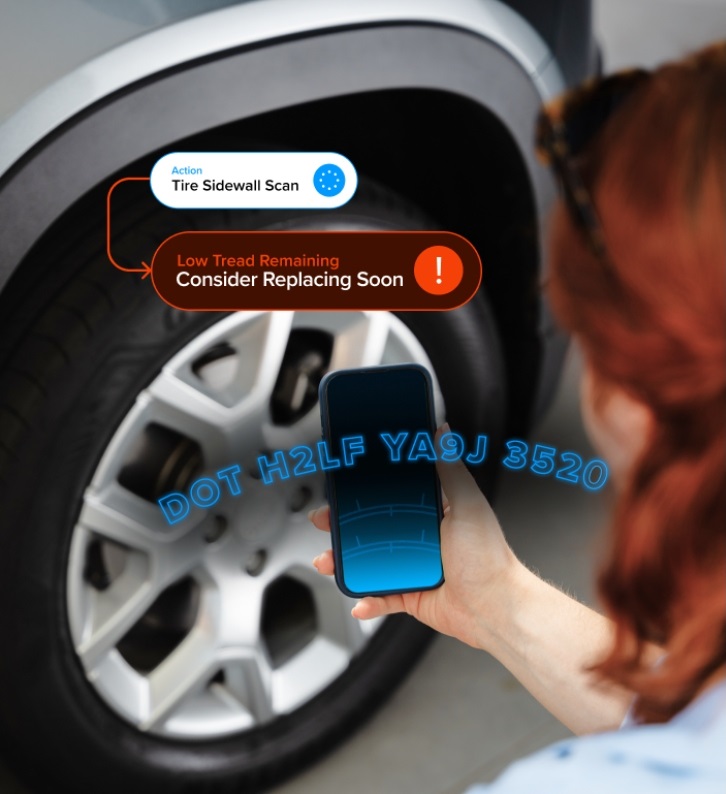
While acknowledging that real-world factors such as challenging lighting conditions or extreme tyre wear can influence accuracy, he assured that “our tools are continuously trained and tested on a wide range of conditions to ensure performance is reliable in the environments where they’re used most. The result is not only faster inspections, but repeatable, verifiable outcomes that technicians and service managers can trust implicitly.”
The profound impact of solutions like TireBuddy is clearly evident in Anyline’s impressive client base, which spans a wide array of automotive industry players, including leading automotive original equipment manufacturers (OEMs), extensive aftersales networks and crucial logistics providers. One of their most significant and long-standing partners is Discount Tyre, which stands as the largest independent tyre and wheel retailer in the US.
Discount Tyre leverages Anyline’s cutting-edge technology to streamline their tyre inspection processes and digitise key vehicle data across their vast service network, significantly enhancing their operational efficiency and customer service.
“Our ability to serve both independent dealers and enterprise-scale players is a key strength. Whether it’s through our TireBuddy app or via custom integrations using the Anyline SDK, we help clients bring mobile inspection capabilities directly into the hands of technicians – no matter the size or complexity of their operation. This flexibility ensures that businesses of all scales can benefit from our advanced AI,” averred Elustondo, highlighting Anyline’s versatile approach.
Beyond the automotive sector, Anyline’s solutions are also used by government agencies for vehicle data verification, rental fleets for efficient vehicle check-ins and commercial vehicle operators seeking to improve safety, compliance and overall operational efficiency through AI-driven inspections. This broad applicability underscores the universal need for accurate, mobile data capture.
A GLOBAL FOOTPRINT AND FUTURE VISION
Anyline’s global reach extends significantly to India, a market Elustondo described as “important for us – both in terms of talent and innovation partnerships.”
He highlighted a particularly significant collaboration that exemplifies Anyline’s impact in the region: a partnership with Tata Power Delhi Distribution (Tata Power-DDL). Through this collaboration, Anyline launched an industry-first mobile meter reading solution utilising OCR (Optical Character Recognition) and AI-powered anti-spoofing technology. This innovative solution was deployed across North Delhi, dramatically improving billing accuracy, reducing non-technical losses and streamlining field operations for an astounding 1.9 million metres.
“That collaboration showcased how AI and mobile data capture can solve real-world infrastructure challenges at scale,” Elustondo added, pointing to the measurable impact on operational efficiency and data quality. This project marked a pivotal moment, being the first time Tata Power-DDL had adopted mobile OCR for utility meter reading, demonstrating a clear shift towards digital transformation in critical infrastructure.
Looking ahead, Anyline remains steadfastly committed to its software-first approach, a strategic decision that deliberately avoids the need for specialised, proprietary hardware.
“Our focus is on delivering AI-powered software solutions that run seamlessly on everyday mobile devices like smartphones and tablets. This software-first approach eliminates the need for specialised hardware, making our technology far more accessible, scalable and cost-effective for users around the world. It means businesses don’t have to invest in new, expensive equipment; they can leverage the devices their teams already use, significantly lowering the barrier to adoption,” Elustondo affirmed.
This philosophy ensures that Anyline’s solutions are not just technologically advanced but also practically viable for a wide range of businesses globally.
The company’s future plans involve a continuous and ambitious expansion of its AI-powered capabilities specifically tailored for the automotive industry. “Expect more integrations, real-time diagnostics and predictive maintenance features – all accessible via mobile,” Elustondo revealed, hinting at a future where vehicle maintenance is more proactive and data-driven. These advancements promise to further empower technicians with instant insights, enabling them to identify potential issues before they escalate and provide even more precise recommendations to customers.
The company shared that TireBuddy, in particular, stands as a powerful testament to its responsiveness to genuine industry needs and its ability to rapidly develop and deploy effective solutions.
“One development we are especially proud of is TireBuddy. It was built in direct response to feedback from the field, where independent dealers and service teams told us they needed a faster, more accurate way to assess tyre health without investing in expensive equipment or retraining their teams. We listened and we delivered,” Elustondo stated.
The app’s success has been resounding, with positive feedback echoing across the industry. “The response so far has been incredibly positive. Dealers are telling us it is improving the professionalism of their service while also reducing the friction that often comes with inspection-based upselling. It transforms a traditionally manual process – DOT code reading, tread depth measurement, VIN capture – into a digital workflow that’s intuitive, consistent and verifiable. It helps technicians provide clearer documentation, make more confident recommendations and ultimately earn greater trust from customers,” Elustondo said.
He envisions TireBuddy as far more than just a single product: “We see TireBuddy not just as a product, but as the foundation of a broader ecosystem of AI-powered tools designed to support the future of vehicle service – where data, transparency and customer trust take centre stage. This is about building a more efficient, reliable and customer-centric automotive service industry for tomorrow.”
From Data Overload To Decisive Action
- By Nilesh Wadhwa
- October 23, 2026
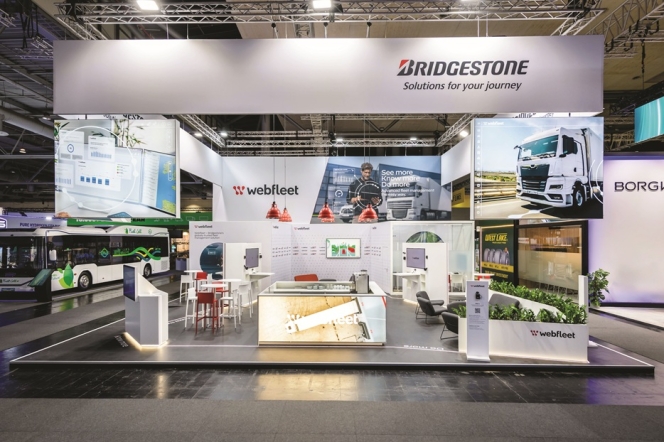
As commercial vehicle operators face mounting pressure from regulations, rising costs and the shift to electric power, Webfleet, a subsidiary of Bridgestone, is focusing on turning ever-growing volumes of vehicle data into practical recommendations that improve performance and ease the daily burden on fleet managers.
Founded in Leipzig in 1999 as one of the world’s first web-based fleet management platforms, Webfleet has grown from a pioneering software-as-a-service (SaaS) start-up to Europe’s leading solution and a core part of Bridgestone’s global offering. Today it serves drivers across more than 180 countries with AI-powered insights, electric-vehicle tools and sustainability data that turn complex operations into clearer, more efficient decisions.
In an exclusive interaction with Tyre Trends, Marc Notenboom, Director of Product Management at Webfleet, shares how the company has watched the fleet-management sector evolve over more than a quarter of a century. Interestingly, it was just last year the company marked its 25th anniversary.
From its inception, Webfleet has seen the volume of available data explode, yet the real challenge remains converting that information into meaningful guidance.
“Fleets give you more data but not more insights, which continues to be a challenge. Because of new regulations, new sensors, increasing competition and customer demands, we end up generating more data. We also have access to more data, which is growing exponentially. And then comes the real question, how do you make sense of that data?” Notenboom observed.
 Marc Notenboom, Director of Product Management, Webfleet
Webfleet obtains its information through black-box devices installed in vehicles, sensors or direct connections to original-equipment manufacturers. This includes telematics, GPS, video, driver behaviour and vehicle diagnostics, among others. The company then processes that stream to deliver fleet-management services.
The next step, he explained, is moving beyond retrospective analysis. “Insights tell you what happened and why it happened, perhaps, but not what you need to do to improve your performance. That is what we are doing now with the help of artificial intelligence (AI). For example, we analyse data, see if patterns are different or you have anomalies in your data to predict what is happening or what is going wrong. And then we also use AI to analyse our data to see how you are performing, for instance, against competition. And then give customers suggestions on how to improve on certain topics like fuel consumption or driver safety,” he said.
The industry, in Webfleet’s view, is therefore evolving from raw data collection towards insights, recommendations and concrete actions.
SHARED PRESSURES ACROSS DIVERSE FLEETS
Webfleet serves a wide spectrum of customers, from large transport and logistics operators to small fleets of one or two vehicles, service-and-maintenance businesses and last-mile delivery companies.
Each customer faces distinct operational issues, yet common themes emerge. “What they all have in common is that the amount of data and the pressure to enhance their performance is increasing a lot. And then there is the regulatory compliance pressures as well,” said Notenboom.
Performance, in this context, covers delivery times, cost per kilometre, driver wages, safety and fuel consumption – metrics that matter differently according to the sector, but all that demand continuous improvement.
One of Europe’s most persistent difficulties is the shortage of skilled drivers, which has led to greater reliance on migrant workers whose experience of road conditions may vary widely between countries.
Webfleet addresses part of this challenge through tools such as OptiDrive, which shows fleet managers how individual drivers perform on fuel use and safety. Language barriers are tackled with automatic translation features built into the driver’s work app or tablet.
“They can interact with their fleet manager in their own language, and the fleet manager can also interact back in their own language,” explained Notenboom. The same interface delivers active coaching: if a driver exceeds the speed limit, for example, an immediate warning appears. These software-based interventions help maintain standards without requiring constant direct supervision.
MEASURABLE GAINS AND EV TRANSITION
Notenboom agrees that customers understandably scrutinise the return on any additional technology cost. He reported that Webfleet users typically achieve efficiency improvements of up to 15 percent, though results depend heavily on the starting point. This ranges from fuel savings, faster turnaround, downtime reduction or improved driver behaviour, among others.
“If a company is already really good at saving fuel, then adding tools and driver coaching and technology might not change a lot. At the same time, even if it’s a small improvement, especially with the high fuel prices today, it could already translate to a lot of savings,” averred Notenboom.
The arrival of electric trucks introduces a fresh set of complexities. Research indicates that driver behaviour exerts an even greater influence on energy consumption in electric vehicles than in conventional combustion models. Smooth operation becomes critical to range, while decisions about when and where to charge add further layers of planning. Webfleet supports the transition by helping managers determine the right vehicle for each duty cycle.
“If you do long-distance transport, electric trucks are perhaps not the best option. But if you do inner-city deliveries, then electric trucks become an interesting option. And trying to find out where the optimum is, when to use Internal Combustion Engine-vehicles, where to use electric vehicles, that is also a part where we can help the fleet manager to make that decision,” he said.
On the technology package itself, every Webfleet customer receives the software platform. Hardware can be selected according to need, or in some cases, dispensed with entirely through the OEM.connect service (access vehicle data directly from OEMs via APIs), without installing extra hardware that draws data directly from the vehicle manufacturer.
“A number of customers are preferring to use OEM.connect. So that is a solution where we don’t install hardware but take the data directly from the OEM offerings,” he explained. On the other hand, where original-equipment data fall short, Webfleet’s own devices remain available.
PRIVACY, BENCHMARKING AND THE ROAD AHEAD
Growing data volumes inevitably raise questions of privacy and regulatory compliance. Webfleet adheres strictly to General Data Protection Regulation (GDPR) – a strict European Union (EU) law that protects information privacy and data rights for individuals in the EU and the European Economic Area (EEA) – requirements.
Certain categories of information can be processed only with explicit customer permission, and for benchmarking purposes, the company anonymises data so that individual vehicles or fleets cannot be identified.
A recent example is Webfleet’s Commercial Trip Monitor, which aggregates anonymised information across the entire customer base to generate comparative insights.
Looking three to five years ahead, Notenboom identified three principal challenges for the commercial-vehicle industry: the practical difficulties of electrification, the continuing shortage of drivers (with autonomous vehicles potentially addressing certain use cases over a longer horizon) and relentless competitive pressure to deliver higher quality service at lower cost.
He regards these same pressures as sources of opportunity for those able to convert them into advantage.
Interestingly, he shared that Webfleet itself continues to evaluate new markets beyond its established presence in Europe, South Africa, South America and Australia. Bridgestone’s ownership of the US-focused Azuga platform complements the portfolio, while Asia-Pacific, including India, remains under active review even if no immediate plans have been confirmed.
As Notenboom puts it, the goal is not to simply collect more information but to translate that information into clearer decisions that keep vehicles productive, drivers safer and costs under control – regardless of whether the powertrain is diesel or electric.
Vaculug Rolls Out VMS Pro Max Next-Gen Fleet Management App
- By TT News
- October 20, 2026
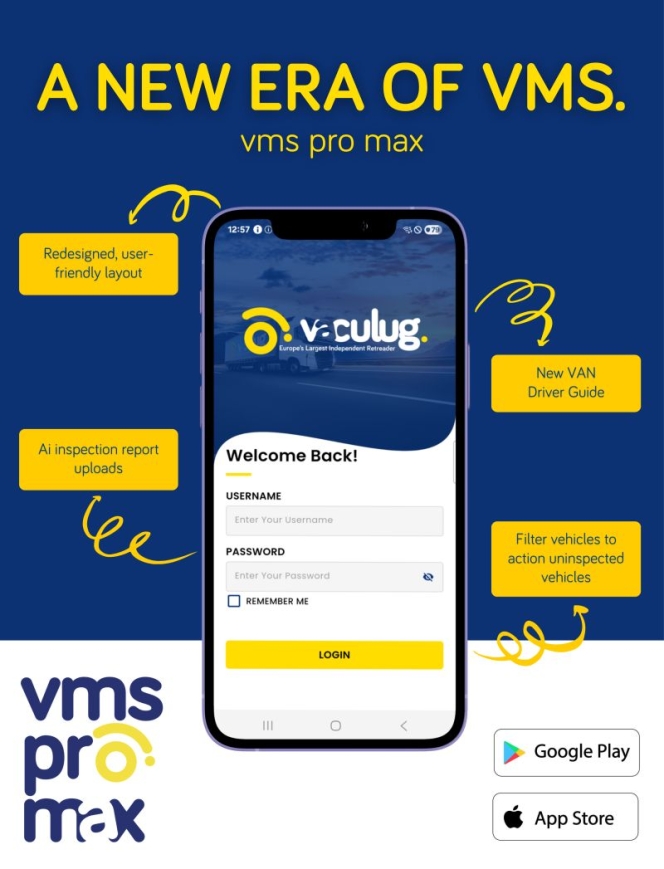
Vaculug has released VMS Pro Max, the next generation of its fleet management application. The product, developed over a three-year period, pairs a redesigned interface with AI-enhanced software intended to make commercial fleet management faster and more intelligent. The app is now available for download through the Apple App Store and Google Play Store.
The upgraded platform offers clear, real-time access to tyre and vehicle data, accelerates background report uploads to reduce driver time and allows measuring tools to be connected for automatic tread depth capture. It also incorporates an embedded VAN Driver Guide and can instantly flag vehicles left uninspected across 30, 60 or 90 days. Existing users must sync all pending inspections and confirm cloud upload before updating to prevent data loss.
Yokohama Rubber, dotData Partner On Human-In-The-Loop AI Agent For Manufacturing R&D
- By TT News
- October 15, 2026

The Yokohama Rubber Co., Ltd. and dotData, Inc. have announced joint development an AI agent to help engineers form hypotheses, interpret findings and make decisions in manufacturing R&D. Before full deployment, the initiative will validate the agent's required capabilities and technical feasibility.
The solution combines technical documents such as design specifications and experimental reports with engineers' accumulated expertise and features extracted from measurement data via dotData's Signal Intelligence technology. It will provide insights tailored to each project's objectives, circumstances and constraints.
The agent is not meant to produce a single correct answer. Operating in a human-in-the-loop framework where engineers retain decision-making authority, it will present multiple possibilities, perspectives and risks to broaden thinking and support professional development.
Manufacturing R&D generates diverse data through experiments, simulations, production and evaluation. Developing hypotheses requires specialised knowledge and context. Since new technology R&D rarely has one predetermined answer, abductive reasoning plays a key role. AI can add value by using data and organisational knowledge to widen engineers' perspectives rather than replace judgment.
The agent will explore measurement and experimental data patterns beyond factors engineers previously identified, combining quantitative insights with design documents and expert knowledge to reveal difficult-to-spot relationships. It will offer input from materials, design, analysis, production and evaluation perspectives, challenge existing hypotheses and raise questions about alternative interpretations and conditions. Engineers will then test hypotheses and feed results back into further dialogue, guiding Signal Intelligence processes so non-specialists can explore data features as needed.
Yokohama Rubber has advanced HAICoLab since 2020, using dotData as a foundational technology in tyre design and rubber mixing. This joint development expands those efforts, with engineers interpreting and evaluating the agent's suggestions using their own expertise rather than accepting them unquestioningly. The companies aim to transform R&D processes while strengthening engineers' creativity and judgment, establishing a new model for human-AI collaboration in manufacturing R&D.
Motoji Fujita, Head of Research & Advanced Development Division, The Yokohama Rubber Co., Ltd., said, “Since 2020, we have conducted research and development under the HAICoLab framework, drawing on the complementary strengths of people and AI to create a collaborative environment. We believe AI agents will give engineers access to perspectives beyond their own experience and enable them to evaluate hypotheses from multiple angles. Through this development initiative, we aim to advance our R&D capabilities while supporting the continued growth of our engineers.”
Ryohei Fujimaki, CEO, dotData, Inc., said, “Success in manufacturing R&D depends heavily on an organisation’s ability to connect its proprietary data and knowledge with AI. The quantitative context generated from data through automated Signal Intelligence provides a foundation for AI agents to engage engineers in practical, data-driven discussions. Together with Yokohama Rubber, which has many years of experience in advanced data utilisation, we intend to establish standards for using AI in highly specialised business domains.”
Bridgestone Deploys Easytrack At SR Technics Spain MRO Hub
- By TT News
- October 10, 2026
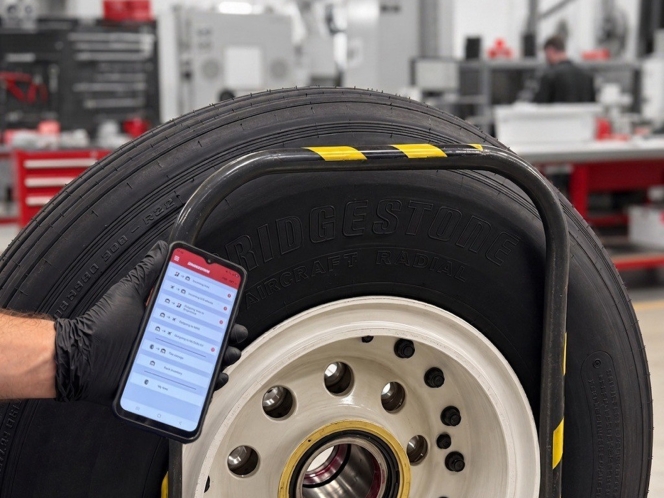
Bridgestone Aircraft Tire (Europe), a Bridgestone Corporation subsidiary, has announced the deployment of its ‘easytrack’ tyre management system at SR Technics Spain SAU, the tyre and wheel maintenance hub of global maintenance, repair & overhaul (MRO) provider SR Technics. The scalable digital platform is accessible on desktop and mobile devices.
Designed for airlines and MROs, ‘easytrack’ manages inbound and outbound tyre and wheel flows across single- or multi-site operations. It delivers real-time identification, tracking and documentation throughout each asset’s lifecycle. The project follows the solution’s first airline implementation in 2025, becoming its second customer rollout and first MRO application.
MRO providers handle large tyre and wheel volumes for multiple airlines, complicating operations. ‘easytrack’ simplifies asset management and improves traceability, accuracy, safety and productivity. At SR Technics Spain SAU, it digitalised paper-based processes, cutting processing time by 45 percent, reducing data-entry and identification errors and improving flow management across Palma de Mallorca and Madrid.

From left: David Sautois, ‘easytrack’ Product Manager, Bridgestone Aircraft Tire (Europe) S.A.; Antonio Colella, General Manager, SR Technics Spain SAU; Jean-Philippe Minet, Managing Director, Bridgestone Aircraft Tire (Europe) S.A.; Eugenie Baradzina, Commercial Director, SR Technics Spain SAU.
The results stem from a Bridgestone and SR Technics Spain SAU co-creation initiative built on long-standing partnership. ‘easytrack’ was adapted to support tyre and wheel combinations for the hub’s wheel and brake operations. Bridgestone’s expansion of airline and MRO solutions aligns with its E8 Commitment, emphasising efficiency and ecology.
Antonio Colella, General Manager, SR Technics Spain SAU, said, "The successful implementation of easytrack is a significant achievement for SR Technics Spain SAU and our teams in Mallorca and Madrid. From the very beginning, the collaboration with Bridgestone was built on trust, openness and a shared vision for innovation. Together, we have developed a solution that not only improves efficiency and traceability but also creates lasting value for our operations. We are proud to be the first MRO in the world to adopt this technology and look forward to continuing this journey with Bridgestone Corporation.”
Jean-Philippe Minet, Managing Director, Bridgestone Aircraft Tire Europe, said, “I’d like to thank SR Technics for their trust and another fruitful collaboration with Bridgestone. What the teams have jointly achieved is remarkable: co-creating through efficient teamwork and customising the Bridgestone easytrack application to digitise SR Technics tyre and wheel tracking operations. This is a brilliant example of how Bridgestone amplifies the value created at our partners.”



Comments (0)
ADD COMMENT