Rathi Group Marks Major Milestone With First Export Of ISCC-Certified Pyrolysis Oil
- By TT News
- August 01, 2025
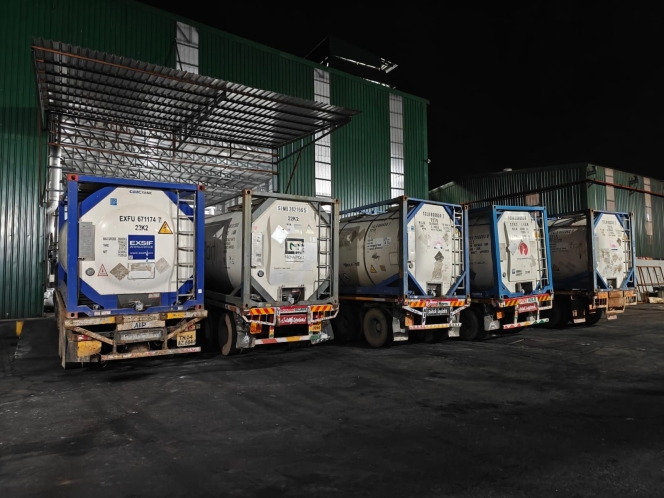
Rathi Group, a leader in pyrolysis and end-of-life tyre (ELT) recycling, has achieved a significant milestone with its first export shipment of ISCC PLUS-certified pyrolysis oil. With over 12 years of industry expertise, the company continues to set benchmarks in sustainable recycling, innovation and circular economy practices.
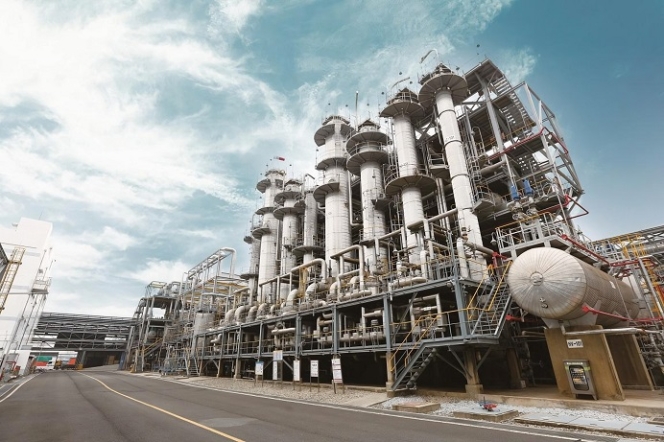
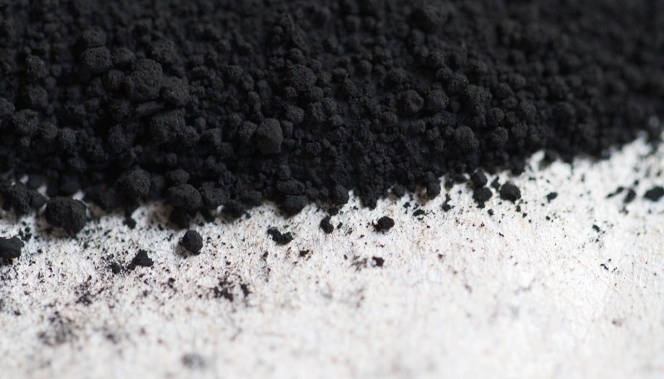
This landmark export highlights Rathi Group’s ability to supply globally recognised, eco-friendly alternatives to conventional fossil fuels. The company’s integrated operations – spanning ELT shredding, continuous pyrolysis, carbon black recovery and oil distillation – adhere to stringent international sustainability standards.
The ISCC PLUS certification underscores Rathi Group’s commitment to environmental responsibility, supply chain transparency and climate-conscious solutions. The accomplishment reflects the efforts of its dedicated team and partners, reinforcing the company’s mission to drive impactful change in sustainable tyre recycling.
Bansal Wire Industries makes steel wire – bead wire for tyres, springs for suspension systems, cables for automotive assemblies – the sort of components that disappear into finished products and are only noticed when they fail. It is a business built on specification sheets and delivery schedules, not product launches.
Yet the company is in the middle of something that warrants attention. Installed capacity now exceeds 600,000 tonnes. Volumes in the most recent fiscal year grew by over 30 percent. The company is entering the steel tyre cord segment – a product India has never meaningfully manufactured domestically – and is simultaneously pushing into higher-specification wire grades that command better margins and serve more demanding applications.
Pranav Bansal, the Managing Director and Chief Executive Officer, attributes none of this to fortune. The automotive sector is changing, he says – electrification, premiumisation, tighter quality requirements across the supply chain – and the company has been positioning itself for those changes for some time. The conversation that follows is about where that positioning leads.
AUTOMOTIVE TAILWINDS
The automotive sector, he says, is at the centre of everything. Not because car sales are booming – though they are – but because the nature of what a car now demands from its components has changed in ways that reward exactly what his company does.

“Across vehicle segments, there is a clear increase in requirements for reliability and consistency in core components. This directly impacts demand for steel wire products used in applications such as tyre bead wire, steel tyre cord, springs, auto cables and other critical automotive components where performance and durability are essential, “he says.
The shift towards electric vehicles has sharpened that dynamic considerably. EVs are heavier than their internal combustion equivalents. That additional weight increases mechanical stress on every load-bearing component, including tyres. Premium tyre grades – already in growing demand as Indian consumers trade up – require reinforcement materials built to tighter tolerances. The thread running through all of it is quality: the ability to hold a specification, batch after batch, without drift. That is, in Bansal’s telling, precisely what the company has spent years building the capacity to deliver. “While infrastructure and engineering continue to support overall demand, the automotive sector remains a key driver, both in terms of scale and the evolution of product requirements,” Bansal says.
THE CORD BET
The more immediately consequential wager, however, is steel tyre cord – the high-tensile reinforcing material woven into a tyre’s carcass and belt structure. It is a product that India has, for the most part, not made. The domestic tyre industry has historically imported it, primarily from a small number of established global producers. Bansal Wire intends to change that.
"India currently relies on imports of steel tyre cord, creating a strong opportunity for domestic manufacturing. Our entry into this segment is a focused step towards building this capability in India," Bansal says.
He is careful about how he frames the competitive case. Steel tyre cord is not a market one enters by undercutting on price. Global tyre OEMs run structured, multi-stage validation processes before approving a new supplier, and those processes are neither quick nor forgiving. Bansal does not try to compress that timeline rhetorically. “Approvals from global OEMs follow a structured and time-intensive process, involving multiple validation stages. Our approach is to build capability, demonstrate consistency over time and then scale relationships once approvals are in place,” he explains.
What he is offering, in the near term, is not a displacement of established players but a domestic alternative for a supply chain that has good reason to want one. The argument intersects neatly with national industrial policy – Make in India, Atmanirbhar Bharat – without depending on it. The structural case stands independently: a reliable domestic source of a critical input, available without the freight, lead time and currency exposure that imports carry. The company is simultaneously working towards pairing steel tyre cord with bead wire, which it already produces. For a tyre manufacturer, sourcing from a single domestic supplier simplifies procurement considerably and improves supply assurance. That integration is central to the pitch.
MOVING UP
Alongside the tyre cord push, Bansal Wire has launched in-house-treated, oil-hardened and tempered wires – products used in high-performance automotive applications such as valve springs and suspension components. These are not commodity lines. They require tighter dimensional tolerances, more demanding heat-treatment processes and more rigorous quality documentation than standard wire grades. They also command better margins.
“Unlike standard wires, these applications require tighter specifications and greater reliability, which allows for better realisation and more stable margins over time,” Bansal says.

The logic of the portfolio shift is deliberate. Moving into higher-specification products does not require abandoning the volume business – the two coexist within the same manufacturing footprint – but it gradually shifts the revenue mix. As speciality products take a larger share of output, the company becomes less exposed to commodity price cycles and more valuable to customers with fewer alternative suppliers. “This allows us to move higher up the value chain while maintaining a balanced portfolio and positions us well to support future requirements of the automotive industry,” Bansal says. It is a repositioning years in the making, and he shows no impatience with its pace.
PLI AND CAPITAL
Bankrolling part of that transition is a commitment of INR 700 million under the Production-Linked Incentive Scheme for speciality steel, which will fund approximately 90,000 tonnes of new capacity at the company’s Sanand facility. The PLI incentive improves the investment’s return profile; the speciality focus means the new capacity generates better margins per tonne than an equivalent expansion of a commodity would. “This investment is therefore aimed at strengthening our product mix and supporting long-term growth,” Bansal says.
Expansions are also underway at the Dadri facility. Bansal’s framework for thinking about capital allocation across sites is deliberately non-ideological. He does not treat brownfield and greenfield as competing philosophies, or as choices that require one to be favoured over the other. “We look at brownfield and greenfield not as separate choices but as complementary approaches depending on the requirement,” he says. Brownfield works where existing infrastructure can be leveraged and operational continuity matters; greenfield is necessary when new technical capabilities need to be built without the constraints of a legacy layout. Steel tyre cord, given its technical specificity, falls clearly into the latter category.
In both cases, investment decisions are anchored in demand visibility, not just growth goals. “We focus on measured capital deployment, emphasising efficiency, consistency and long-term value over scale for its own sake,” he says. Industry overcapacity can erode returns, so maintaining this restraint is vital.
MARGIN ARCHITECTURE
That instinct for discipline extends to how the company manages its cost structure day to day. Bansal Wire operates on a cost-plus basis, which provides a degree of insulation from raw material price volatility that purely market-priced competitors lack. The model means that swings in wire rod costs – the primary input – do not automatically compress margins as they might for a company selling at fixed market prices.

Combined with rising asset utilisation – which distributes fixed costs across higher volumes as the capacity base fills – the model has allowed the company to grow margins alongside revenue. “As utilisation increases, fixed costs are distributed across higher volumes, which supports margins,” Bansal explains. The simplicity of the statement belies the operational consistency required actually to deliver it.
Customer retention has also played a role that Bansal is reluctant to understate. The company’s key customer relationships have proved durable over time, and Bansal notes that retention among its most important accounts has remained strong. That durability provides demand visibility – a meaningful advantage when planning capacity additions – and reduces the kind of revenue volatility that can destabilise an investment cycle.
EXPORT AMBITIONS
Bansal Wire currently serves customers in more than 50 countries. The geopolitical turbulence of recent years has not prompted a strategic retreat from export markets, though it has reinforced the value of running a diversified book. Global supply chain disruptions have increased international buyers’ appetite for suppliers who can demonstrate reliability and financial stability. “Demand across markets has remained stable, and global customers continue to look for reliable suppliers,” Bansal says.
The company intends to maintain a balanced split between domestic and international revenue, expanding both in parallel rather than trading one off against the other. India’s domestic demand base – across automotive, infrastructure and industrial sectors – provides the stability and visibility that allows the export business to be pursued opportunistically rather than defensively. Bansal says, “Going forward, we will continue to strengthen both domestic and export markets. The focus will be on maintaining a balanced mix while expanding our presence in key international markets.”
TECHNOLOGY’S ROLE
Underlying all of it is a sustained wager on technology – specifically, on the role of automation and in-house research and development in sustaining quality at scale. In the speciality segments Bansal Wire is moving into, process control is not incidental to the value proposition. It is the value proposition. Steel tyre cord that varies from one coil to the next is not the steel tyre cord that a global OEM will put through qualification. The margins that speciality products command exist precisely because producing them consistently is difficult.
“We are investing in advanced machinery, automation and in-house R&D to strengthen these capabilities. Automation and process improvements help us maintain consistent quality while operating at higher volume,” Bansal says. The investment extends beyond equipment to the quality systems, testing infrastructure and technical personnel needed to operate at the standards global customers require.
Industry trends, he argues, only reinforce the case for continued investment. Demand for high-performance wire products across automotive and industrial applications is rising, driven by the same forces – electrification, premiumisation and tighter safety standards – that are reshaping the broader materials landscape. In that context, technology is not a discretionary spend. It is the price of remaining relevant.
Hidden Reinforcements
- By Sharad Matade & Gaurav Nandi
- June 22, 2026
As the tyre industry confronts electrification, sustainability mandates and shifting supply chains, Milliken Textiles is focusing on specialised textile reinforcements rather than volume tyre cord. The strategy reflects a deliberate choice to concentrate on high-value niches where engineering expertise, rather than scale, defines competitiveness. Products such as Beadwrap and Millicap highlight how materials hidden inside tyres can influence safety, rolling resistance and rubber consumption.
The global tyre industry is approaching a structural turning point, driven by electrification, sustainability targets and changes in manufacturing footprints. For Milliken, this transition is creating opportunities for specialised textile reinforcements that improve tyre performance while reducing material usage.
Speaking about the company’s strategy, Lieven Keymeulen, Marketing Director at Milliken Textiles, explained that the US-based materials science company has deliberately avoided competing in the high-volume tyre cord market dominated by large suppliers.
“We are more of a speciality textile reinforcement supplier,” Keymeulen said. “We are not looking at mainstream tyre cord applications. We are focused on specialised solutions.”
Instead of commodity tyre cord production, the company positions itself as a development partner to tyre manufacturers seeking customised solutions for specific applications.
“As a textile company, we are active in many different markets, so we can take knowledge from other applications and bring that into tyres,” Keymeulen explained. “That allows us to develop products that are much more specific than standard tyre cord.”
Over time, the company has also developed strong application knowledge, investing significant effort in understanding how its materials behave inside tyres. This helps refine its textile solutions further.
OCTAGONAL STEELCORD SOLUTIONS
One example of this approach is Beadwrap, a reinforcement designed as a safety component within tyres. It is particularly relevant for larger tyres, where it helps maintain structural integrity, and for passenger car radial tyres with orthogonal design solutions, where it secures the structure and stabilises the tyre. Another established offering is Millicap, which supports tyre performance improvements linked to sustainability. With the rise of electric vehicles, rolling resistance has become a critical parameter because it directly affects battery range. Tyres that reduce rolling resistance can also reduce rubber consumption, resulting in cost savings and lower carbon emissions.
Although around 90 percent of the tyre market consists of mass-market tyres, the company has deliberately chosen not to focus on that segment.
“The mass market is highly crowded, with many companies offering similar products and limited opportunities for differentiation,” Keymeulen said. “Our strategy is to remain innovation- and technology-driven, concentrating on specialised applications where we can offer unique, customised solutions.”
HIDDEN VALUE IN NICHE COMPONENTS
The tyre industry is vast, meaning even niche components can generate significant volumes. Products like Beadwrap may represent only a small portion of a tyre, but when each tyre uses several centimetres of material across millions of tyres, volumes quickly become substantial.
Although such components remain hidden inside the tyre, the company’s primary focus is not end consumers but tyre manufacturers and their engineering teams.
“A key part of our role is educating engineers within tyre companies about the capabilities of textile reinforcements and how they can improve tyre performance,” Keymeulen explained. “Manufacturers typically approach us with specific technical challenges, and we work together on customised solutions.”
Global supply-chain diversification and geopolitical concerns are also influencing partnerships, as tyre makers increasingly prefer suppliers with a balanced global presence. With operations in United States, Europe and India, Milliken offers a more resilient supply base.
“Collaboration often begins in the early stages of tyre development, focusing first on understanding the application and the problem,” he noted. “Over time, this builds strong trust with tyre manufacturers.”
The company also collaborates with machine suppliers, enabling it to present tyre makers with semi-finished integrated solutions that combine materials with compatible processing equipment. This ensures alignment between materials, machinery and manufacturing processes.
FOCUS ON INDIA AND EMERGING REGIONS
India is a key market for the company, partly because many Indian tyre manufacturers operate relatively modern equipment, making them competitive and more open to adopting new technologies.
While the company cannot be equally active in every region, such as the Chinese domestic market, it maintains strong engagement with Indian manufacturers as well as Japanese and Korean tyre brands.
“Innovation does not always start with large tyre manufacturers,” Keymeulen said. “Tier-II companies can often be more agile and willing to test new ideas more quickly.”
Regionally, Europe is gradually regaining momentum, Korean tyre manufacturers remain highly innovative, and Southeast Asia continues to drive industry growth.
SUSTAINABILITY AND MATERIAL EFFICIENCY
Looking ahead, tyre companies have ambitious sustainability goals, with many targeting tyres made entirely from renewable or sustainable resources by around 2050. A major contribution to this transition will come from recycled yarns, particularly recycled nylon, which remains one of the best-performing reinforcement materials but is difficult to recycle at scale.
While tyres cannot be produced without rubber, textile solutions can help reduce rubber usage.
One important contribution comes from specialised tackified textile reinforcements, produced using a proprietary dipping process that makes the material naturally adhesive. This eliminates the need for calendaring the textile with an additional rubber layer and enables direct placement within the tyre structure.
“This approach is particularly valuable in space-constrained areas such as the bead,” Keymeulen explained. “By eliminating extra rubber layers, we can reduce thickness and rubber consumption.”
Similar benefits apply to Millicap. According to customer data, rubber savings can reach around around 200 grammes for smaller 15-inches tyres to 500 grammes and more for large size tyres, leading to lower tyre weight and reduced carbon emissions.
Millicap is currently produced mainly using nylon, with a polyester version also available. Over time, the expected transition is towards recycled polyester.
ADAPTING TO INDUSTRY SHIFTS
The industry has faced several structural challenges following the Covid-19 pandemic, while the global tyre manufacturing footprint continues to shift geographically. New capacity is increasingly located in India and Southeast Asia, while European production is moving towards Eastern Europe and parts of Africa.
To remain close to customers, Milliken is reconsidering the traditional model of a few large factories.
“We are exploring smaller, strategically distributed operations,” Keymeulen said. “The idea is to create regional hubs that can source yarns and raw materials locally.”
Currently, the company operates major tyre-related production plants in United States and Europe, along with a processing facility in Bengaluru, India. The Bengaluru plant focuses on slitting and converting master rolls into customised formats closer to customers, with plans to expand its capabilities over time.
NEW AVENUES FOR GROWTH
In terms of tyre segments, the truck and bus radial market remains the largest for the company, while solutions also enable entry into passenger car tyres.
Another growing focus area is bicycle tyres, driven by rising demand for off-road and electric bicycles, which require higher strength and cut resistance.
“In tyre construction, steel cord has historically been dominant,” Keymeulen explained. “Textile reinforcements offer far greater flexibility for innovation. That opens up many more possibilities for optimising performance.”
The company is also exploring new variations of Millicap, including hybrid material concepts and alternative structures aimed at further improving tyre efficiency.
From Lignin To Tyre Fillers
- By Sharad Matade
- June 19, 2026
The tyre industry faces growing pressure to reduce fossil-based inputs, prompting a shift towards bio-based materials as industrial alternatives. Once a niche research area, bio-based solutions are now entering mainstream engineering as manufacturers balance performance and sustainability. This shift is clear in next-generation fillers, with companies like UPM advancing lignin-based solutions from concept to commercial validation.
Florian Diehl, Director of Sales RFF at UPM Biochemicals GmbH, explained that the company positions its BioMotion renewable functional fillers (RFF) as a new material class that addresses sustainability while delivering measurable performance gains.
NEXT-GEN FILLERS
Functional fillers are not peripheral to tyre design; they are central. Typically accounting for nearly 30 percent of a tyre’s composition, materials such as carbon black and precipitated silica have defined performance characteristics for decades. Against this entrenched backdrop, UPM’s innovation is not incremental – it is structural. “This is not a one-to-one drop-in replacement for carbon black, but rather a new material class that sits somewhere between carbon black and silica, with some properties closer to carbon black and others closer to silica,” said Diehl.
This approach is intentional. Instead of matching legacy materials, UPM expands the formulation options for tyre engineers, though this adds complexity. “You cannot just take out carbon black and put in RFF without making adjustments, because while it can replace both carbon black and silica to some extent, it requires changes in the formulation and curing system,” Diehl added.
Adoption will require iterative, collaborative development between material suppliers and tyre manufacturers.
PROOF THROUGH PARTNERSHIP
The collaboration between UPM and Nokian Tyres marks a key milestone in applying material innovation. In June 2024, they introduced the Green Step Ligna concept tyre, the first to use UPM BioMotion RFF, a fully renewable, wood-based lignin material. In this tyre, all fossil-derived carbon black in the sidewalls has been replaced by the lignin-based filler.
The concept tyre demonstrates the practical viability of lignin-based material in tyres and sets a higher benchmark for environmental responsibility in the industry.
For UPM, this collaboration is a strategic turning point. It marks the company’s entry into global tyre markets with renewable functional fillers and supports scaling its biorefinery business through proven application value.
Diehl noted that such collaborations are essential for industrial validation.
“The Nokian Tyres case is the only one we can discuss publicly, but we are working with most major tyre companies behind the scenes, even though we are not allowed to disclose their names,” he said.
PERFORMANCE STILL DOMINATES
Despite the strong sustainability narrative, Diehl was unequivocal that performance remains the primary driver of adoption. “For example, Nokian Tyres reported that when they replaced virgin carbon black in the sidewall, they observed improved rolling resistance, which is a clear performance advantage,” he said. This is consistent with early test findings, which suggest that substituting traditional fillers with RFF can enhance efficiency while reducing environmental impact.
Rolling resistance is particularly critical in electric vehicles, where it directly influences battery range. “In inner liner applications, we have seen that it improves air impermeability, meaning the tyre retains air pressure better, which is another functional benefit,” Diehl noted.
UPM’s data confirms improved air retention and efficiency as key outcomes.
The material’s lower density also reduces weight. “Compared to carbon black and silica, our material has a lower density, so you need less material, which makes the final product lighter and further supports improvements in rolling resistance,” Diehl said.
LIGNIN: UNLOCKING AN UNDERUTILISED RESOURCE
The foundation of UPM’s innovation lies in lignin, a natural polymer that has historically been undervalued. “Lignin is the second most abundant natural polymer and is present in all plants, but in the paper industry, it is typically separated and burned as an energy source rather than being used as a material,” Diehl explained.
For UPM, this represented a strategic opportunity. “As a company with deep expertise in wood handling and wood chemistry, we decided to move from fibre-based applications to the molecular level and develop biochemicals,” he said.
Through proprietary processing, lignin is transformed into a rigid particulate filler with controlled surface properties. “We developed a process that converts lignin into a particulate material that behaves like a filler, with tunable surface area and without the typical polymer characteristics,” Diehl added.
This transition – from waste stream to high-performance material – illustrates the broader industrial shift towards biomass valorisation.
SCALING FROM CONCEPT TO INDUSTRY
While the concept tyre proves technical feasibility, scaling is the next critical step. “The material is just becoming commercially available, and manufacturers prefer to test it from the final production site rather than pilot batches, so the current limitation is availability while our Leuna Biorefinery is in its start-up phase,” Diehl explained.
UPM’s Leuna biorefinery is central to addressing this. “At our biorefinery in Leuna, we will produce a total of 220,000 tonnes of biochemicals, with renewable functional fillers representing a significant share,” he said.
The facility itself represents a substantial industrial commitment, with investment exceeding EUR 1 billion and designed to convert sustainably sourced hardwood into next-generation biochemicals.
Crucially, scalability is underpinned by feedstock availability. “Lignin is already available at industrial scale in pulp and paper mills, so if the market adopts our solution, we can scale production significantly,” Diehl added.
COMPLEMENTARY MATERIAL STRATEGY
The rise of recovered carbon black (rCB) adds complexity to sustainability efforts. UPM positions its material as complementary rather than competitive. “We see our solution as complementary, meaning tyre manufacturers can use recovered carbon black alongside our renewable functional fillers to replace fossil-based carbon black,” Diehl said.
He also challenged assumptions around cost. “There is a perception that recovered carbon black is cheaper, but in some European markets, we hear that it can even be more expensive than virgin carbon black,” he noted. This suggests future tyre compounds will likely blend recycled and renewable inputs, rather than rely on a single alternative.
MARKET STRATEGY: PREMIUM FIRST
UPM’s commercial approach follows a well-established pathway for advanced materials. “As with most new materials, we expect initial adoption in premium segments before it gradually expands into the mass market, although this transition will take time,” Diehl said.
Premium manufacturers are expected to lead this transition, with emerging global players likely to follow as they move up the value chain.
ELECTRIFICATION DRIVES CHANGE
The rise of electric vehicles introduces new performance constraints. “Electrification will have a clear impact on tyre design because vehicles are becoming heavier and have higher torque, which makes wear resistance more critical,” Diehl said.
UPM is already adapting. “With our current solutions, we would not yet fully meet all requirements in such applications, which is why we are already working on a second generation that can compete more effectively,” he added.
SUSTAINABILITY
UPM’s RFF is positioned as a 100 percent renewable, CO₂-negative solution (from cradle to gate, considering the biogenic carbon and purchasing 100 percent green electricity), contributing to reduced reliance on fossil-based materials. However, Diehl is candid about market realities. “A few years ago, sustainability was the dominant driver, but today the focus has shifted towards combining sustainability with performance,” he said. “The willingness to pay higher prices is currently limited, which is a challenge, even though we believe our material delivers additional value,” he added.
REGULATION NOT ENOUGH
“There are discussions around end-of-life tyre regulations that could include bio-based quotas, which would support solutions like ours,” Diehl said. Yet he remains cautious. “Ultimately, the product must deliver performance, because regulations can change and cannot be relied upon as the only factor,” he added.
“We designed our processes so that the material can be handled and dispersed in a similar way to traditional carbon black and silica,” Diehl said. “When tyres containing our material are recycled, the filler will end up in pyrolysis oil, similar to natural rubber,” he added.
MEASURED TRANSFORMATION
UPM’s strategy focuses on systematic integration: introducing a new material class, validating it through partnerships and scaling it through industrial infrastructure. The Nokian Tyres concept tyre offers a tangible glimpse of what that future may look like: a tyre in which fossil-derived fillers are partially or fully replaced by renewable alternatives, without compromising performance. As Diehl concluded, “we are convinced the product delivers the performance and provides additional value, and will succeed in the market.”
Solvay Secures European Patent Office Ruling Upholding Key Soda Ash Patent
- By TT News
- June 17, 2026
Solvay has secured a favourable ruling from the European Patent Office, which upheld the validity of its European patent EP 3 971 138 B1 following a challenge by WE Soda Ltd. The opposition, initiated on 13 February 2025, concluded with a decision on 19 May 2026 that maintains the patent’s protection with only minor amendments. While the ruling is subject to potential appeal, it reinforces Solvay’s position regarding its proprietary industrial processes.
Granted in May 2024, the EP ’138 patent safeguards Solvay’s method for treating and recycling purge streams in the production of sodium carbonate and sodium bicarbonate. The intellectual property extends to the overall manufacturing process that incorporates this recycling technique, as well as the final products derived from it. This patent is part of a broader family that includes EP 2 878 579 B1, which is already the subject of a separate legal dispute between the two companies.
In a related Dutch legal battle, Solvay had initiated infringement proceedings in August 2021 against WE Soda and its affiliates, including Turkish subsidiaries, concerning the EP ’579 patent. The District Court ruled in Solvay’s favour on 3 December 2025, affirming the patent’s validity and issuing an injunction that prohibits the defendants from importing and supplying their products to the Netherlands. WE Soda and the associated entities have since appealed that judgment, with the appeal currently pending.
The recently upheld EP ’138 functions as a unitary patent, which enables Solvay to pursue infringement actions through the Unitary Patent Court in a single, expedited proceeding covering at least eighteen member states. Such actions offer the potential for injunctions to block imports of infringing goods across a wide jurisdiction. Solvay has reiterated its commitment to protecting its innovations and vows to take decisive legal measures globally to enforce its intellectual property rights, viewing such enforcement as fundamental to maintaining fair market competition.


Comments (0)
ADD COMMENT