

Continental Reaches Key Sustainability Milestone With Complete Phase-Out Of Coal And Heavy Fuel Oil
- By TT News
- March 02, 2026
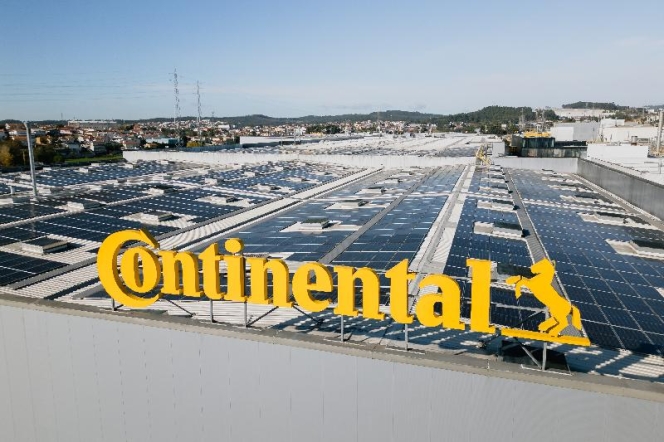
Continental has achieved a key objective within its global sustainability framework by permanently eliminating the use of coal and heavy fuel oil at all of its tyre manufacturing sites. Effective January 2026, all facilities have transitioned to alternative energy solutions for producing the steam essential to tyre production and facility heating. This new energy landscape incorporates biomass, biogas, renewably sourced electricity and supplemental fuels like liquefied petroleum gas and natural gas to maintain a consistent and reliable energy supply.
In the early part of the last decade, more than a third of Continental’s global tyre plants depended on coal and heavy oil to meet their thermal needs. This reliance was largely due to the necessity for stable heat output and dependable operations, particularly in regions lacking robust gas or electrical grids. Today, through sustained, strategic investment, every Continental tyre plant operates on a customised blend of these cleaner energy carriers.
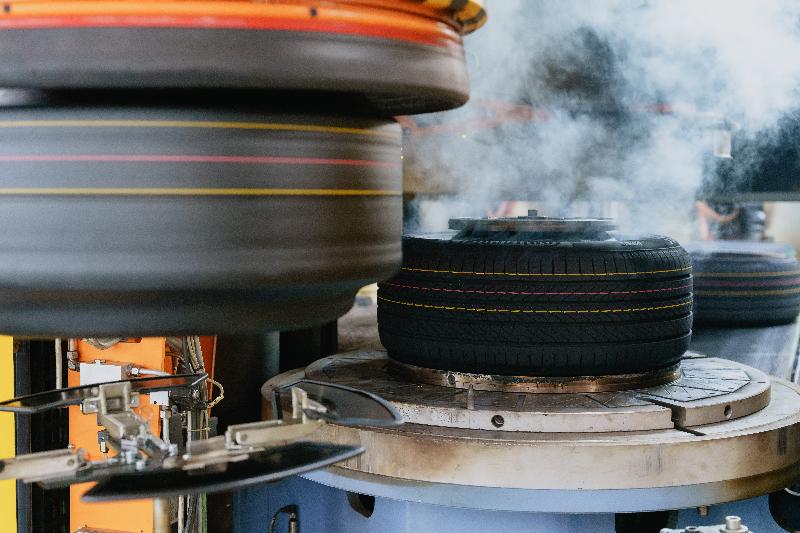
A substantial portion of energy in tyre manufacturing is dedicated to thermal processes, most notably vulcanisation, which imparts the essential elastic characteristics to rubber. While steam for this purpose has traditionally been generated from fossil fuels, emerging electric technologies are now enabling a more adaptable and energy-efficient approach.
Beyond thermal energy, Continental has secured its electricity from renewable sources since 2020 and is actively increasing its onsite generation capabilities. This comprehensive strategy yielded significant results in 2025, with the greenhouse gas intensity of its manufacturing dropping by over 10 percent from the prior year and approximately 70 percent from the 2019 baseline. The decisive move away from high-emission energy carriers has alone resulted in a reduction of roughly 180,000 metric tonnes of CO₂ from tyre production over the last four years.
The specific composition of energy sources at Continental’s various locations is inherently diverse, reflecting local infrastructure, resource availability and market conditions. However, a universal principle applies: a definitive pledge to abandon coal and embrace sources with a diminished carbon footprint. The plant in Gqeberha, South Africa, which once relied on coal for steam, now primarily utilises biomass, with LPG addressing its remaining needs. A parallel evolution occurred at the Kalutara facility in Sri Lanka, where the introduction of a second biomass boiler last year completed the phase-out of heavy oil, allowing all steam to be generated from renewable biomass. In Otrokovice, Czech Republic, Continental collaborated with its local energy provider to realign steam production with its climate ambitions. This partnership led to a gradual conversion of the power plant’s fuel base from coal to biomass and natural gas, now supplying the tyre plant with steam that is predominantly biomass-generated, a shift that also benefits the wider community through cleaner district heating.
The comprehensive switch to alternative energy sources for steam generation is a tangible manifestation of Continental’s broader dedication to sustainability. The company persists in enhancing energy efficiency and amplifying its reliance on renewables throughout production. These concrete actions and transparent reporting have garnered external acknowledgment, evidenced by an A- rating from the CDP in 2025 for climate leadership and emissions reduction.
Dr Bernhard Trilken, head of Manufacturing and Logistics at Continental Tires, said, “For us, coal and heavy fuel oil are a thing of the past. The future increasingly lies in renewable energies. By relying on a smart mix of energy sources – increasingly renewable and ideally generated directly on site – we are making our manufacturing more independent and therefore more resilient.”
Henning Mühlenstedt, Head of Future Technologies and Sustainable Infrastructure, Continental Tires, said, “We have significantly reduced our production-related CO₂ emissions, thanks to continuous investments in electrification and changing the energy sources used for heat generation at our plants worldwide.”
Pirelli Signs Partnership With Univrses To Integrate AI Vision Into Cyber Tyre System
- By TT News
- May 01, 2026
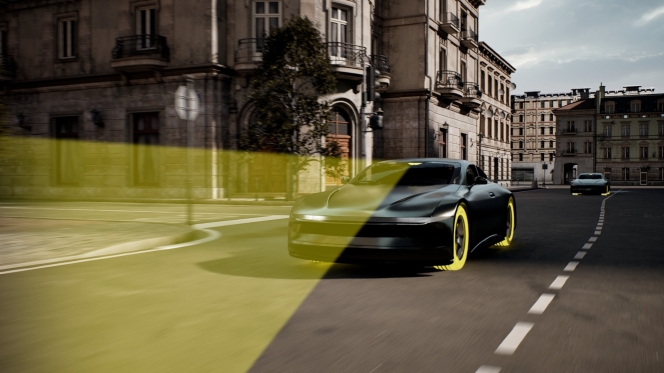
Pirelli has entered into a strategic agreement with Swedish technology firm Univrses to integrate artificial intelligence-based computer vision systems into its Cyber Tyre platform. As part of the deal, Pirelli has acquired a 30 percent stake in Univrses, with an option to increase that share to a majority holding. The collaboration will embed Univrses’ 3DAI technologies into Pirelli’s existing Cyber Tyre solutions, creating a unified system aimed at producing safer and higher performing vehicles.
The combined technology has potential applications in advanced driver-assistance systems and autonomous driving. It also generates timely, actionable data for road management, helping authorities make better decisions and deploy resources more efficiently. This could lead to fewer road accidents and saved lives. The system uses onboard cameras and tyres to collect feedback on road conditions. Pirelli’s Cyber Tyre, the first integrated hardware and software system of its kind, gathers data from tyre sensors, processes it with proprietary algorithms and communicates in real time with vehicle electronics and the cloud.
Univrses originally developed its technology to help cars understand their surroundings, but it has since been adapted to turn vehicles into AI-powered road monitoring agents. The Swedish company’s 3DAI Engine provides autonomous vehicles with perception capabilities including 3D positioning, mapping and spatial deep learning. Its 3DAI system digitises roadside infrastructure using data from vehicle-mounted sensors like cameras.
A pilot project is already active in Italy. In 2025, Pirelli and the Puglia Region launched a road network monitoring system to create an updated map of infrastructure conditions. The system analyses data from tyres via the Cyber Tyre platform alongside visual data from cameras interpreted by Univrses’ technology.
Andrea Casaluci, CEO, Pirelli, said, “The agreement with Univrses further enhances our Cyber Tyre™ platform, thanks to advanced AI‑based artificial vision technologies. The collaboration between Pirelli and Univrses will make a significant contribution to the ongoing transformation of cars into true software‑defined vehicles.”
Jonathan Selbie, CEO, Univrses, said, “Continuous monitoring and data are becoming the new foundation for infrastructure asset management, and Univrses technology is able to provide powerful analytical capabilities based on reliable and frequently updated data. In this context, we are pleased to welcome Pirelli as an investor and to take our partnership to the next level: we will join forces to deliver increasingly advanced services and products.”
ZC Rubber To Spotlight WESTLAKE And GOODRIDE Tyres At THE TIRE COLOGNE 2026
- By TT News
- April 30, 2026
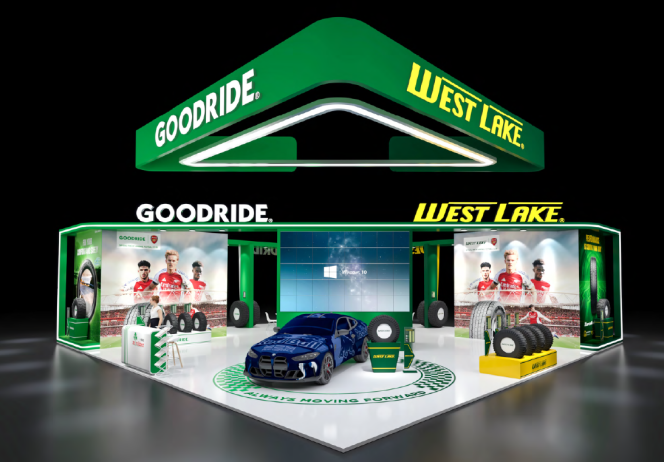
ZC Rubber is preparing a major European-focused showcase at THE TIRE COLOGNE, scheduled to run from 9 to 11 June 2026. The tyre manufacturer will occupy Booth C050g in Hall 8.1, highlighting its WESTLAKE and GOODRIDE brands with a clear emphasis on products tailored specifically for regional market demands.
The display will blend imminent and future innovations. Products destined for a European launch in the latter half of 2026 will appear alongside the company’s current truck and bus radial lineup. Selected previews of developments planned for 2027 will also be on view. A featured attraction is the Westlake Sport RS2, a drift-proven ultra-high-performance tyre praised for its grip, precision and 180 treadwear rating. A renewed rubber compound, developed through work with the Red Bull Driftbrothers, now delivers steadier traction under severe driving conditions. Appearing at the stand, Red Bull Driftbrothers driver and engineer Elias Hountondji will illustrate how motorsport data directly refines ZC Rubber’s product engineering.
Additional new passenger car radial models for Europe in the second half of 2026 include the Westlake ZuperFlex Z-137, Goodride RideMax G-147, the all-season Westlake Zuper4S Z-411 and the off-road focused Westlake Terra Legend SL399 and Goodride Mud Legend SL388. On the truck and bus side, already available tyres such as the Westlake WSL2, Westlake WDL2+ and Goodride S2, D3 and D4 will be exhibited, covering steer and drive axle needs for long-haul and heavy-duty transport.
A sneak peek at 2027 offerings will feature the Westlake Z-301 commercial van tyre, Goodride All Season G-721, Goodride SnowComfort G-518 and new TBR models including the Westlake WTL2, Westlake WTR OEM and Goodride M2. ZC Rubber’s team will remain on-site throughout the event, welcoming visitors and partners to the booth for meetings and professional discussions.
Leo Liao, General Manager, ZC Rubber Europe, said, “This year’s showcase reflects a much broader and more complete portfolio for Europe. From UHP and all-season tyres to all-terrain, mud-terrain and TBR solutions, we are bringing new developments across almost every major segment. This reflects how seriously we take the European market: we are listening to local needs, investing in the right products and building a portfolio that better matches the needs of our European partners.”
Magna Tyres Unveils MA801 TR Solid Tyre For Recycling And Heavy Industrial Applications
- By TT News
- April 30, 2026
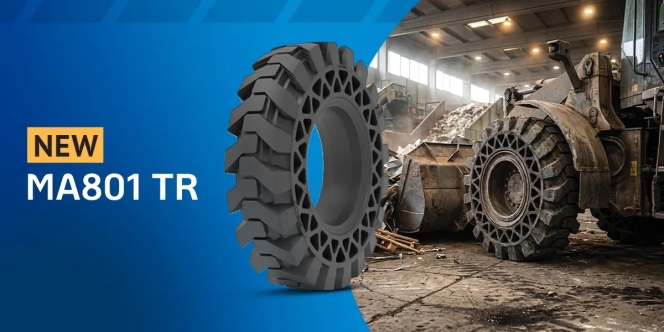
Magna Tyres has launched the MA801 TR, a new solid tyre engineered for extreme operating conditions in recycling facilities and heavy industrial settings. Designed to maximise equipment uptime while supporting high load capacities, the tyre is built to deliver dependable performance in harsh environments. The official debut of the MA801 TR will take place at IFAT 2026 in Munich, scheduled from 4 to 7 May 2026.
The new model is intended for compact wheel loaders and telescopic handlers, featuring a flat-free solid construction. Its extra-deep non‑directional tread is reinforced by a triangular structural design, which enhances traction and stability on surfaces littered with sharp debris. Available in sizes 13.00‑24 and 14.00‑24, the tyre prioritises puncture resistance and reduced maintenance needs.
Thanks to its robust architecture and deep tread profile, the MA801 TR offers an extended service life and consistent performance across demanding work cycles. By eliminating the risk of flats, Magna Tyres positions the tyre as a reliable solution for recycling and industrial operations where continuous heavy loads are standard.
Yokohama Rubber Secures SBTi Validation For 2035 GHG Reduction Targets
- By TT News
- April 30, 2026

The Yokohama Rubber Co., Ltd. has secured validation from the Science Based Targets initiative (SBTi), a prominent corporate climate-action organisation, for its greenhouse gas (GHG) emission reduction targets set for 2035. This endorsement confirms that the company’s goals are scientifically aligned with the standards established under the Paris Agreement. The validated targets are measured relative to the company’s 2024 emission levels.
Under the approved framework, Yokohama Rubber aims for a 63.0 percent reduction in combined Scope 1 and Scope 2 emissions, which cover direct emissions from its business activities as well as indirect emissions from purchased energy. Additionally, the company commits to a 37.5 percent cut in Scope 3 emissions, specifically targeting indirect supply chain emissions from purchased products and services, along with fuel and energy-related activities not included in Scope 1 or Scope 2. To achieve these reductions, Yokohama Rubber has been expanding solar power generation and renewable energy electricity at its global plants, while also disclosing indirect emissions from product distribution, use and disposal since 2013.
The company obtained SBTi validation to accelerate supply-chain-wide emission cuts in response to intensifying climate challenges. Operating under its sustainability management slogan, ‘Caring for the Future’, Yokohama Rubber continues to create shared value by tackling social issues directly through its business operations.


Comments (0)
ADD COMMENT