

Michelin Earns 103rd J.D. Power Award
- By TT News
- March 24, 2025
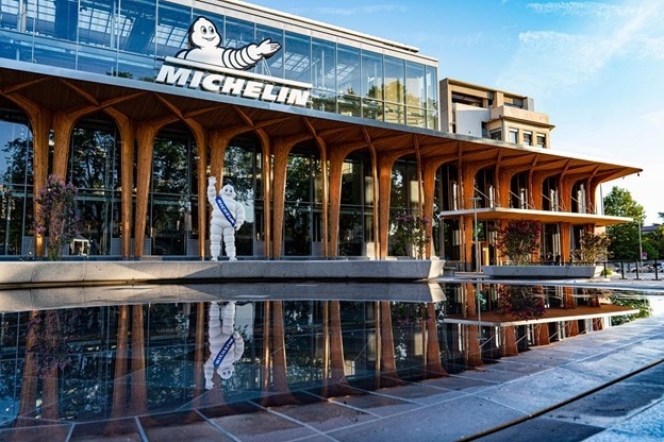
Michelin has secured its 103rd J.D. Power Award in the J.D. Power 2025 U.S. Original Equipment Tire Customer Satisfaction Study. The company received the highest ratings in Performance Sport Vehicles by drivers for the year 2025.
The comments of over 26,976 car owners served as the basis for the J.D. Power 2025 U.S. Original Equipment Tire Customer Satisfaction Study. Four aspects of tyre satisfaction were investigated: tyre wear, tyre ride, tyre look and tyre traction/handling. With these accolades, Michelin has more J.D. Power Awards than all other tyre manufacturers combined, with 103 overall.
As a world leader in automotive data and analytics, J.D. Power offers consulting services, consumer insights and industry information to the automotive sector as well as a few non-automotive businesses. J.D. Power helps its clients maximise corporate performance by utilising its vast proprietary databases, software capabilities and sophisticated analytics and artificial intelligence technologies.
Matthew Cabe, President and CEO, Michelin North America, Inc, said, “Being recognised with our 103rd J.D. Power award is a tribute to the dedication and innovative spirit of more than 23,500 Michelin employees across 36 sites. We are deeply grateful for the trust and loyalty of our customers, who inspire us to pioneer innovations that shape the world of tomorrow for a better life in motion. Together, we thrive, and this recognition is a testament to our collective achievements as the most awarded tyre brand in the United States.”
Zeon And QunaSys Join Forces On Mathematical Modelling R&D Approach
- By TT News
- October 28, 2026
Zeon Corporation has formed a business alliance with QunaSys Inc. to extend mathematical model-based development, a novel R&D methodology, across manufacturing industries. The partnership merges Zeon's long-established expertise in polymer and materials development with QunaSys's mathematical modelling capabilities, creating an approach that deepens researchers' understanding of phenomena and strengthens decision-making.
Zeon has cultivated practical methodologies in this field through internal materials projects and employee training. The alliance will now pursue joint research, proof-of-concept (PoC) initiatives and tailored solutions to bring the scheme to external companies on a full-scale basis. The collaboration builds on a capital and business tie-up established in March 2022 aimed at creating a data management platform for machine learning, automated experimentation and quantum computing in materials development. The platform and the new scheme complement each other by enabling efficient validation of models against data and generation of high-quality hypotheses.
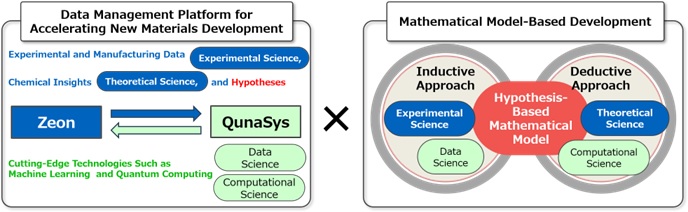
Unlike conventional approaches, the methodology treats mathematical models as foundations for researcher thinking rather than mere predictive tools. Models are built through objective definition, factor decomposition, hypothesis organisation, model creation and iterative verification. This lets researchers identify the essence of phenomena, narrow hypotheses requiring testing and rationally choose next steps – linking understanding to concrete actions that enhance business value and extending support beyond R&D into value creation.
Applying the approach requires both modelling technology and materials development expertise. Under its STAGE 30 medium-term plan, Zeon is reshaping its portfolio and positioning its data business as a next growth driver, intending to develop the scheme into a service within that business. The companies will accumulate methodologies and practical examples, broaden application across materials fields and promote manufacturer adoption through joint research, PoC projects and enterprise solutions, contributing to more advanced and efficient R&D.
- U.S. Tire Manufacturers Association
- USTMA
- National Highway Traffic Safety Administration
- NHTSA
- Tyre Testing Standards
USTMA Backs NHTSA Move To Modernise Outdated Tyre Testing Standards
- By TT News
- October 27, 2026
The U.S. Tire Manufacturers Association (USTMA) has welcomed the National Highway Traffic Safety Administration's (NHTSA) announcement of a negotiated rulemaking aimed at modernising federal tyre testing standards. The association has long pushed for this update, arguing that current rules are outdated.
According to USTMA President and CEO Anne Forristall Luke, modern standards lead to safer roads, and the group praised Administrator Morrison for advancing the effort. Luke noted that testing designed for 1960s-era tyres reveals little about today's products and blocks Americans from accessing advanced technology available elsewhere. Aligning standards with modern tyre technology would give drivers access to the highest-performing tyres, and USTMA members are ready to contribute their engineering expertise to the process.
“Modern standards make for safer roads. USTMA applauds Administrator Morrison for taking on work the tyre industry has urged for years: bringing federal tyre standards in line with the tyres Americans drive on today. Outdated tyre testing standards designed for the tyres of the 1960s tell us nothing about whether today’s tyres are safe. In fact, those outdated standards prevent American drivers from accessing the latest technology currently available in much of the rest of the world. Bringing our standards into line with modern tyre technology will ensure Americans have access to the highest performing tyres made today. USTMA’s members look forward to contributing their engineering expertise to the process,” said the USTMA President and CEO.
Pirelli Closes 2026 FIA ERC Season With Manufacturers' Title And Two Top-Three Drivers
- By TT News
- October 27, 2026
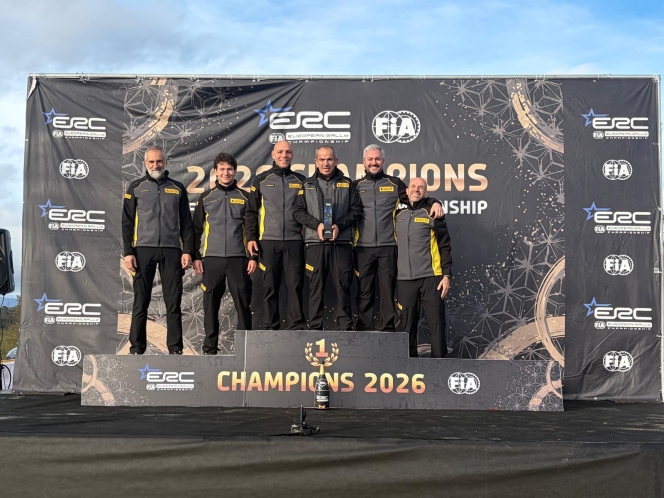
Pirelli wrapped up the 2026 FIA European Rally Championship (ERC) season at Rally Fafe by securing its second consecutive Tyre Manufacturers' title, with two of its drivers finishing in the overall top three. Teemu Suninen had already clinched the drivers' crown in Wales with a round to spare, while Andrea Mabellini completed the standings in third aboard a Lancia Ypsilon Rally2 HF Integrale. Both frontrunners relied exclusively on Pirelli tyres throughout the campaign.
The Italian manufacturer's full range proved competitive across widely varying conditions, from the P Zero asphalt specifications to the new Scorpion AT gravel tyres, which made their European championship debut this season. These products were engineered to handle the high temperatures and abrasive roads of Rome, the slippery asphalt of Poland and the Czech Republic and the traction and braking demands of Scandinavia's fast gravel stages.
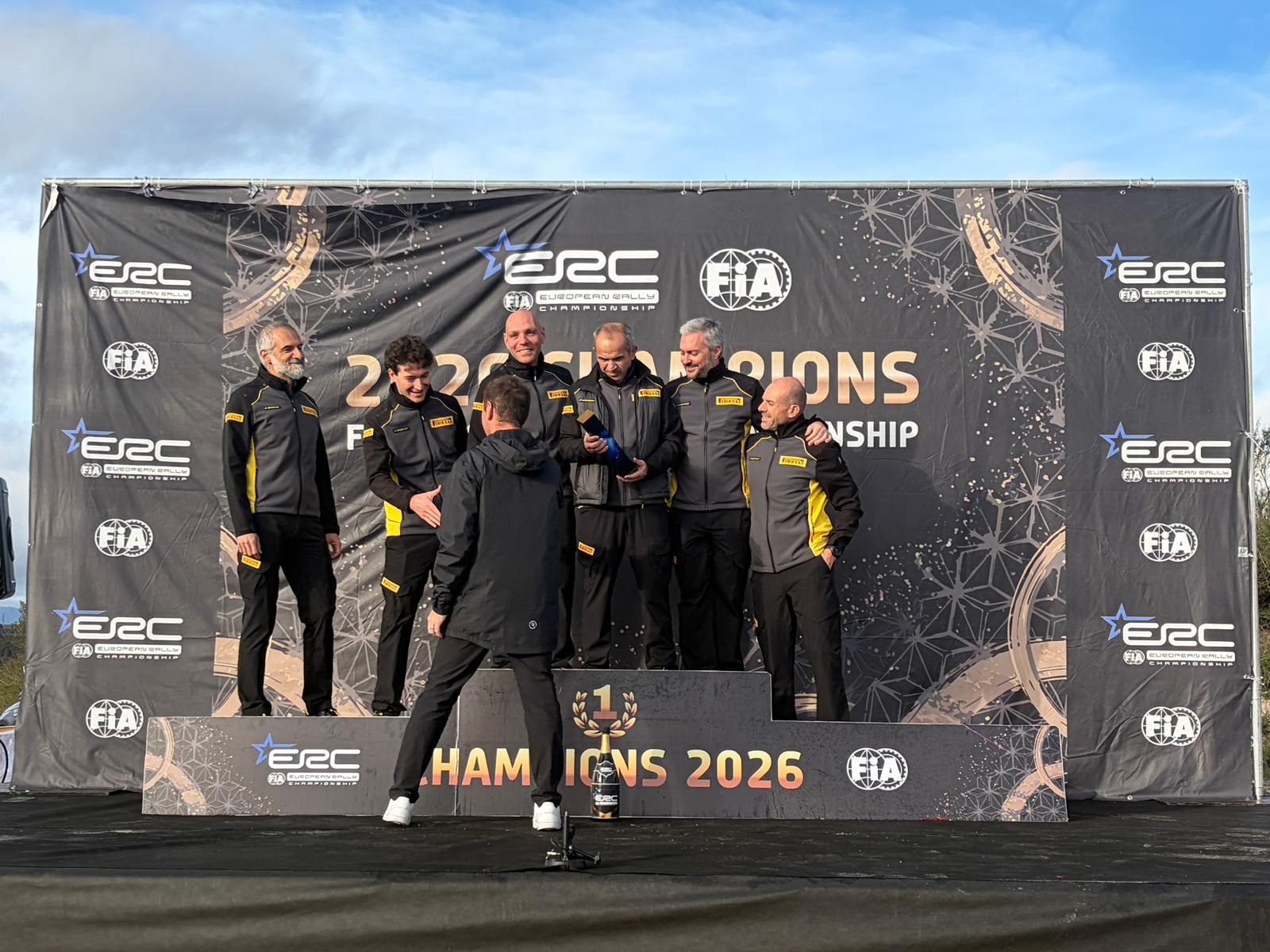
Suninen anchored his title-winning season with victory in Poland and second-place finishes in Rome, at the Barum Rally and at Rali Ceredigion. Additional points came from crews contesting selected rounds, including Mikko Heikkilä's win in Scandinavia, Roberto Daprà's triumph in Rome and Giandomenico Basso's podium at the Spanish season opener. Across the year, Pirelli-equipped crews won 45 of 101 special stages, a 45 percent share, comprising 32 of 68 asphalt stages (47 percent) and 13 of 33 gravel stages (39 percent).
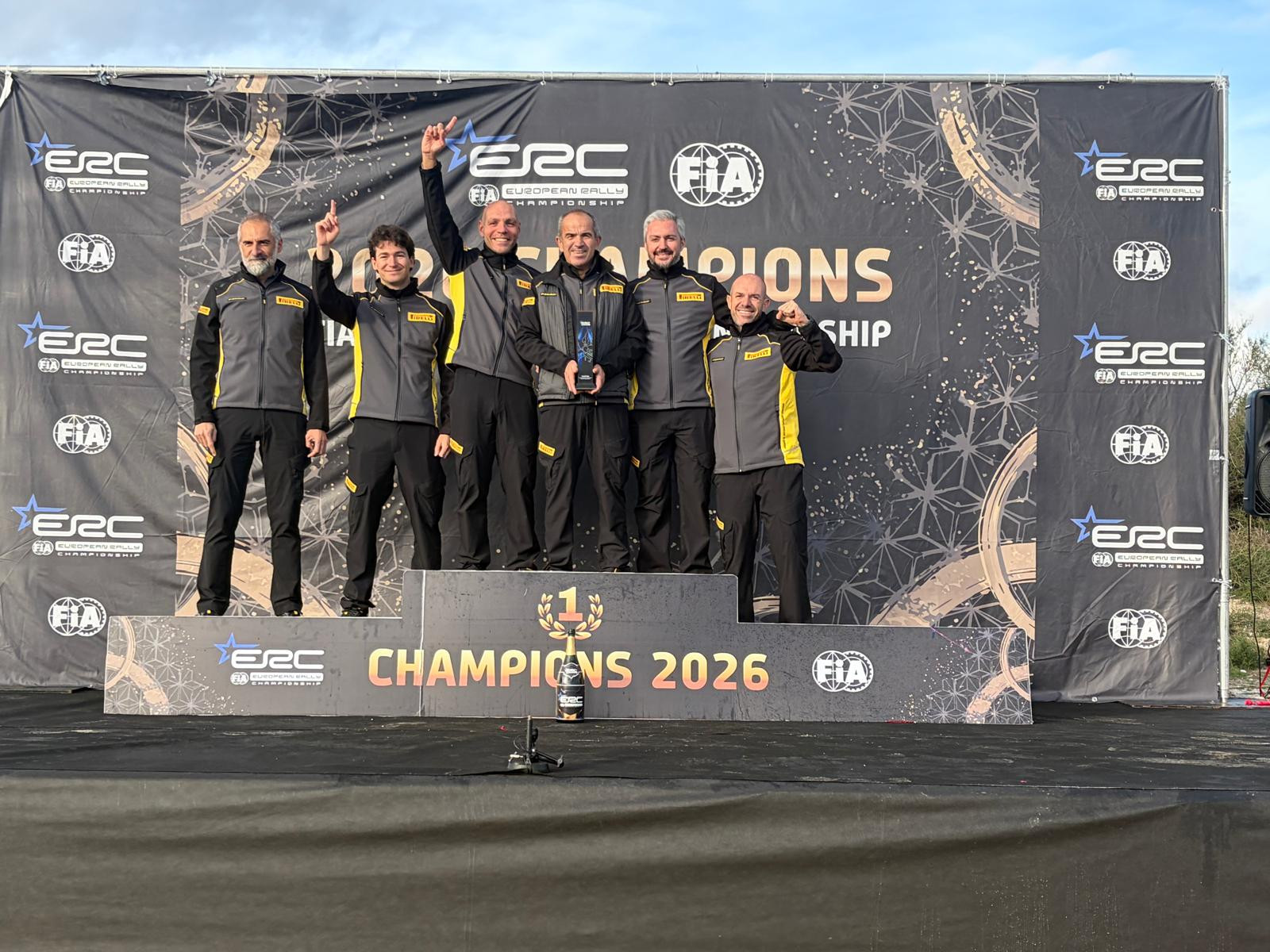
The Scorpion AT represented 2026's principal technical innovation, introducing the championship's only asymmetric, non-directional tread pattern alongside upgraded compounds to boost traction and braking. Heikkilä's Rally Scandinavia victory on the tyre's debut, using both soft and supersoft compounds, immediately validated its competitiveness. On asphalt, P Zero development centred on optimising compounds for the season's varied temperatures, abrasiveness and grip levels.
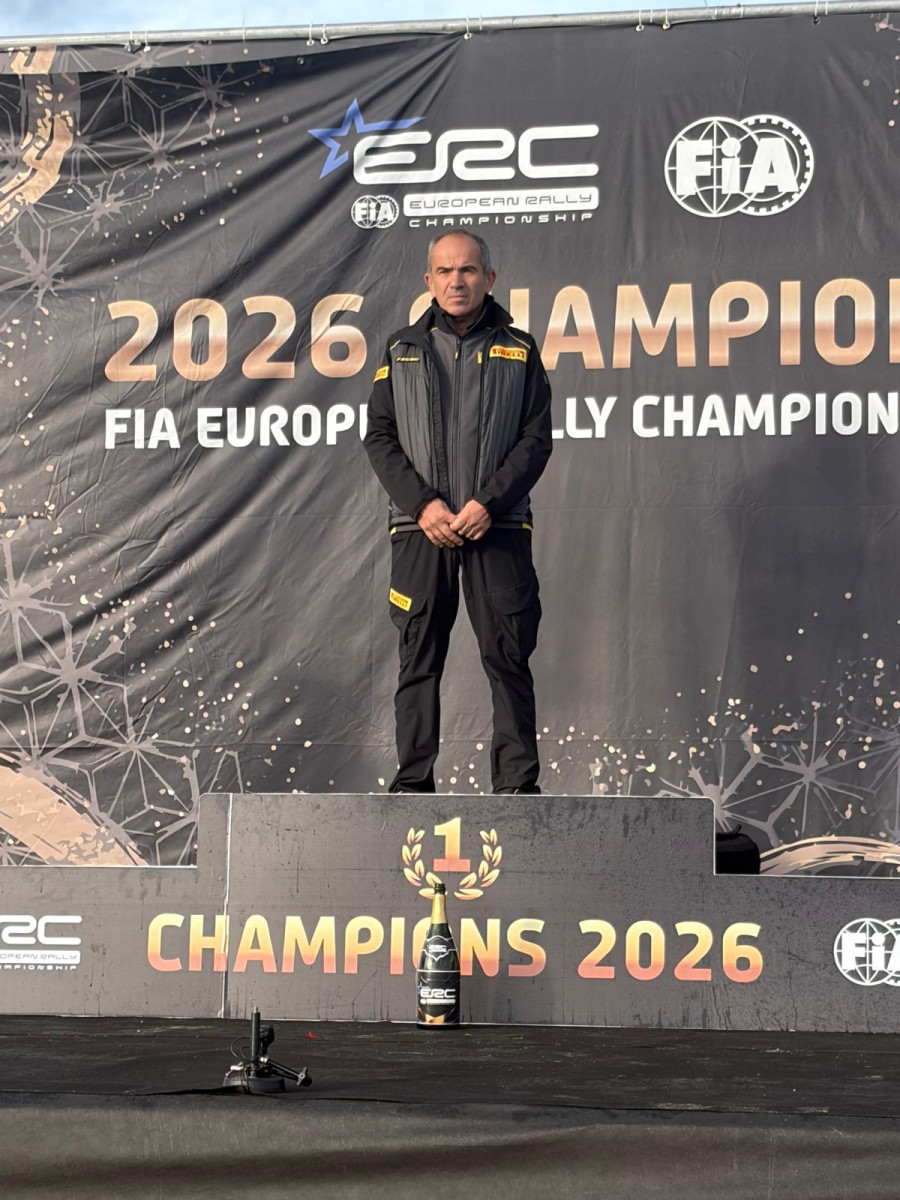
Terenzio Testoni, Rally Activity Manager, said, “This season rewards the work of our drivers and the entire team, as well as a clear technical commitment: to keep developing the range even when our products are already competitive. With the Scorpion AT, we introduced a new tread pattern and improved compounds; with the P Zero, we focused on compound development. The results came on both surfaces and in very different conditions. Suninen converted his speed into a title through a remarkably solid and consistent season, while Mabellini and the crews contesting individual rounds made a vital contribution to our success in the manufacturers’ standings.”
Radar Tires Inks Multi-Year MPBL Partnership As Official Partner
- By TT News
- October 27, 2026
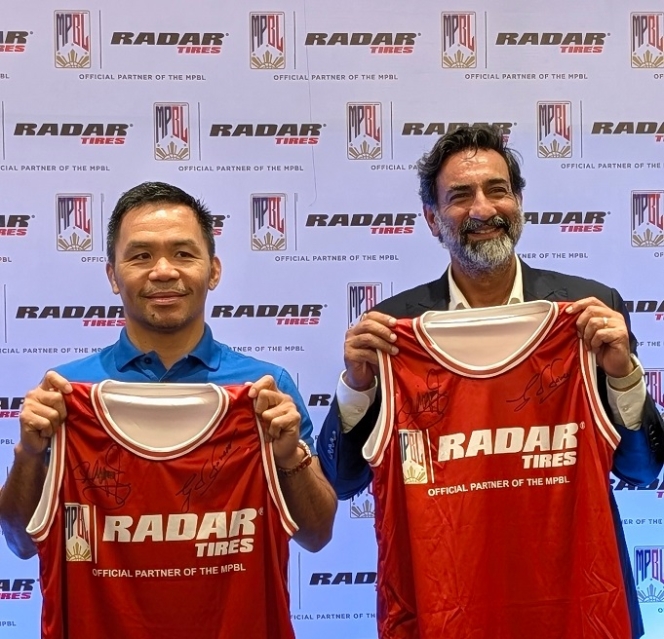
Radar Tires has secured a multi-year tie-up with the Maharlika Pilipinas Basketball League (MPBL), taking on the role of Official Partner. The signing took place in General Santos City, at the residence of MPBL founder and boxing great Emmanuel ‘Manny’ Pacquiao. Both organisations frame the deal around a shared belief that sport can redirect young lives and deliver lasting benefits to society.
Pacquiao launched the MPBL in 2018 to steer Filipino youth towards a positive path through basketball, one that cultivates character and opens doors. His own rise from modest roots informed a league built on the nation's basketball fervour, giving players from every province a stage to be seen and rewarded. Homegrown athletes now use the MPBL as a national showcase and a route to a livelihood, while the home-and-away schedule carries live games into provincial communities. Games air on free-to-air television, and Pacquiao describes the league as his way of repaying the society that raised him.
Radar Tires carries a similar outlook, with community give-back woven into its identity since inception. Across roughly 20 years, the brand has funded efforts including 15 years of backing for the Breast Cancer Research Foundation, support for emerging golfers via the Singapore Golf Association, and backing for athletes in tennis, off-road racing and other disciplines globally. Radar holds that financial limits should never block exceptional talent, and the MPBL deal puts that principle into practice in a basketball-loving nation.
The Philippines ranks among Radar's most important Asia-Pacific markets, and the company says Filipino drivers and dealers have responded warmly over the past decade. The tie-up opens with the rest of the Season 8 Playoffs and Finals before rolling into Season 9. As exclusive tyre sponsor, Radar receives full category exclusivity plus exposure across broadcast, livestream, digital and on-court channels. With 28 teams slated for roughly 400 games in 2027, the brand expects to reach neighbourhoods nationwide. The agreement joins Radar's wider global sports commitments, including Cricket South Africa, the Singapore Golf Association, the Texas Rangers, Michael Clarke and independent tennis and golf athletes.
Pacquiao said, "In basketball, just like in life, we go further when we move forward together. Through our partnership with Radar Tires, we share a common mission – to support Filipino talent, strengthen our communities and give our athletes the opportunity to chase their dreams. Because when we invest in sports, we invest in the future of our Filipino youth.”
G S Sareen, President and CEO, Omni United, said, "Giving back to the community has always been in our DNA. It is who we are at Radar Tires, and it is a commitment we have carried across every country we operate in. The Philippines holds a special place in our hearts. For over 17 years, Filipino drivers and dealers have welcomed our brand, and this partnership is our way of coming closer to them and the communities they call home. In the MPBL, we saw far more than a basketball league. Across eight seasons, Manny Pacquiao and his team have built something truly remarkable: a grassroots league that uplifts young Filipinos and their communities through sport, guides young people towards a positive path and gives rising talent the chance to be seen. Their mission reflects the very beliefs that guide us, and that shared purpose is what makes this partnership so meaningful. We have full faith in Manny Pacquiao's vision and in the MPBL's commitment to the next generation, and we are proud to stand alongside this exceptional league as it continues to grow."
Joe Ramos, Chief Executive Officer, MPBL, said, "The MPBL was built to bring basketball closer to Filipinos across the country. Partnerships like this help us continue that mission while creating more opportunities for our teams, players and communities. We welcome Radar Tires to the MPBL family and look forward to growing together.”
Emmer Oreta, MPBL Commissioner, said, "Radar Tires coming on board reflects the growing commercial appeal of the MPBL. Partnerships of this scale strengthen the league and create greater value for our fans and partners as we move toward Season 9.”

Comments (0)
ADD COMMENT