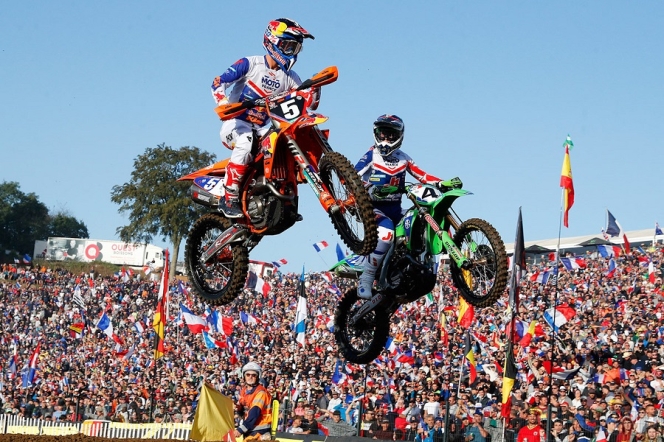
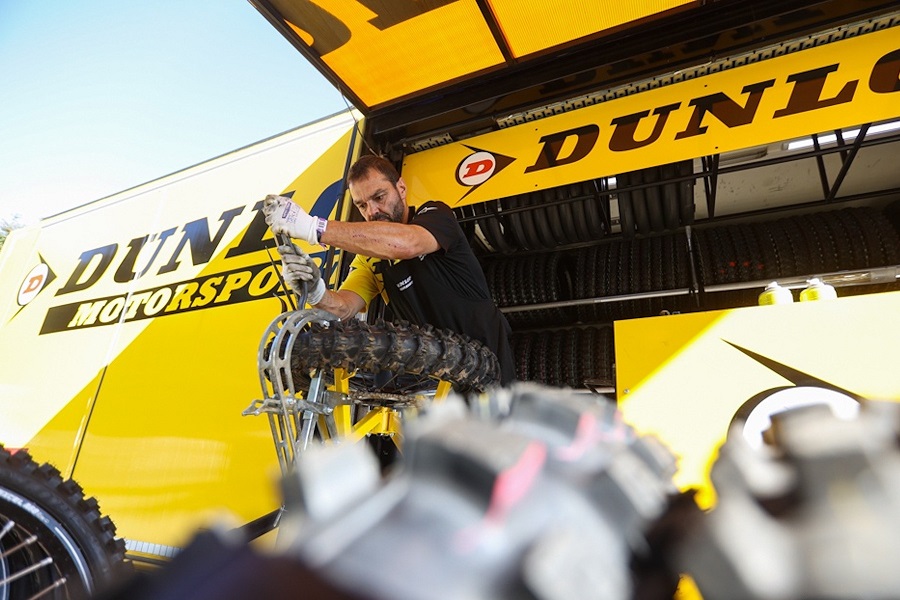
Dunlop Motorcycle Europe is set to support a star-studded rider roster at this weekend’s FIM Motocross of Nations (MXoN) in Ernée, France, aiming to cap another standout motocross season. The tyre range available to competitors includes the sand-focused Geomax MX14 for loose surfaces, the intermediate Geomax MX34 and the Geomax MX54, which has become the preferred choice across a wide range of intermediate and hardpack tracks.
The company will supply tyres to 32 riders representing 16 nations, drawing talent from the FIM Motocross World Championship, North America’s Supercross and Pro Motocross series and other competitions. The event follows last weekend’s season-ending MXGP of Australia, with many of the sport’s top names returning to action in pursuit of the Chamberlain Trophy.
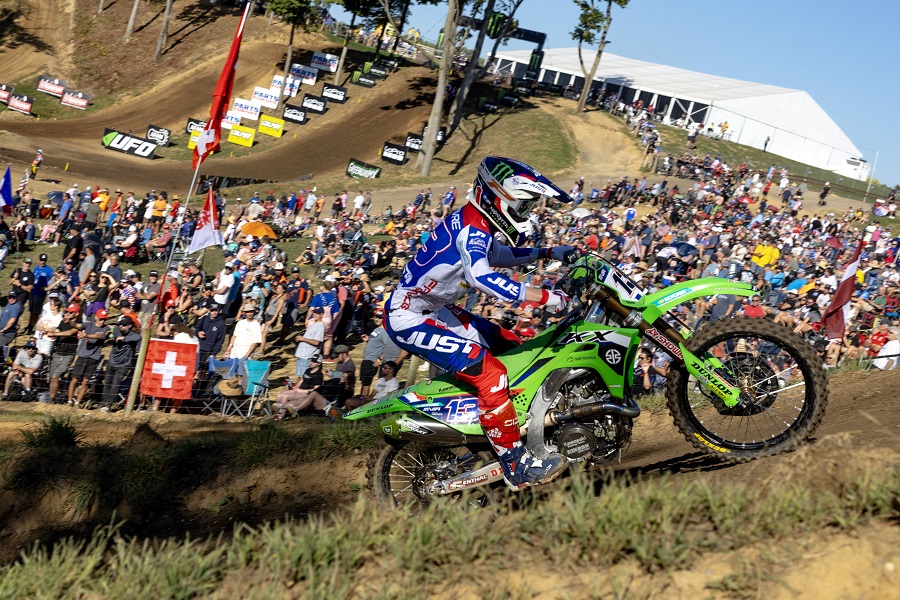
Dunlop has built a formidable recent record at the MXoN, having equipped riders from every winning nation over the past four editions. Team Australia took consecutive victories in 2024 and 2025, Team France claimed the title in 2023 and Team USA won in 2022. This year, Australia arrives with an entirely new lineup in Jed Beaton, Alex Larwood and Aaron Tanti, while the United States fields an all-Dunlop trio led by three-time 450 cc AMA Supercross champion Cooper Webb, joined by Julien Beaumer and Levi Kitchen.
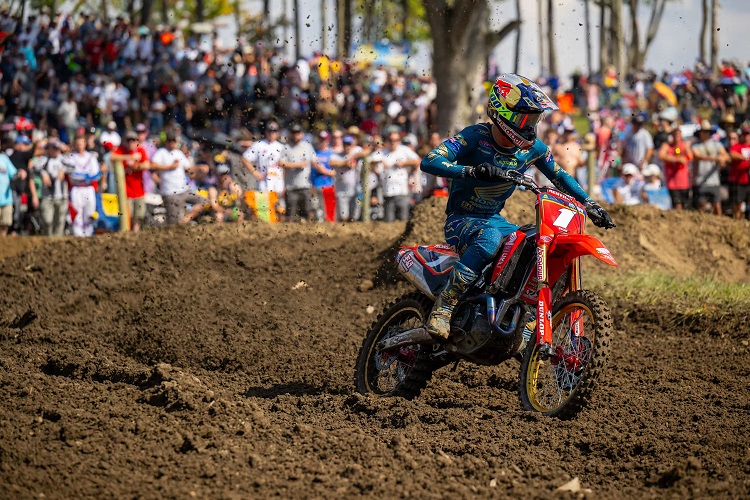
For France, MXGP runner-up Romain Febvre spearheads the Dunlop contingent and is joined by fellow Kawasaki Racing Team rider Mathis Valin. Two-time MXGP World Champion Jorge Prado will represent Spain alongside newly crowned MX2 World Champion Guillem Farres. A host of other leading MXGP and MX2 competitors will also run Dunlop, including Camden McLellan for South Africa, Liam Everts for Belgium, Pauls Jonass for Latvia and Jeremy Seewer for Switzerland.
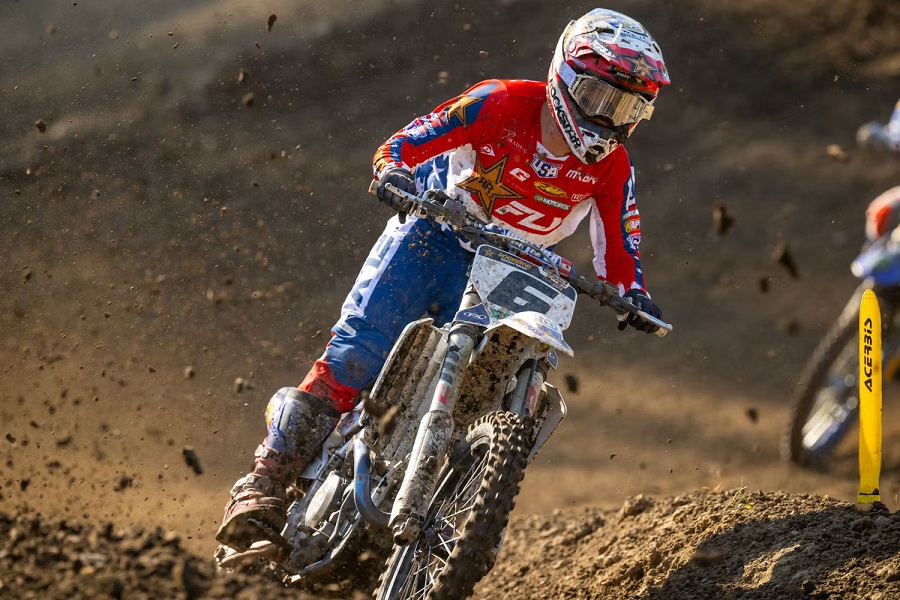
The MXoN serves as a fitting finale to a season of significant success for Dunlop across European and North American series. In the United States, Ken Roczen captured his first 450 cc AMA Supercross title on Dunlop, extending the brand’s streak of winning every AMA Supercross and Pro Motocross championship since 2010.
In the FIM Motocross World Championship, Guillem Farres secured the MX2 crown and led Triumph Racing to a one-two finish with teammate Camden McLellan. The pair combined for 11 of 19 Grand Prix victories. In MXGP, Romain Febvre finished runner-up, while Kiara Fontanesi narrowly missed a historic seventh WMX title, winning at Foxhills in July and adding three second-place finishes.
Wim Van Achter, Motorcycle Motorsport Manager EMEA, Dunlop Motorcycle Europe, “The fact that so many top riders continue to choose Dunlop Geomax tyres underlines the Geomax range’s performance credentials. We work closely with top riders to develop new Geomax products, using their feedback to refine our tyre technology. Our most recent innovation, Geomax MX54, makes the Geomax range our strongest and most versatile motocross range yet, drawing on our knowledge from winning top professional championships. With its broader scope, it could be the tyre of choice for Ernée’s traditional hardpack clay circuit this weekend.”
Eddy Seel, MXGP Event Leader, Dunlop Motorcycle Europe, said, “We are honoured that Dunlop Geomax tyres are the products of choice for 32 of the world’s most talented riders representing 16 different nations. The level of competition is always high at MXoN, but Dunlop has a history of success. Our riders have already proven the performance and reliability of the Dunlop Geomax range all season long, so we’re ready to continue with that this weekend. Allez!”









Comments (0)
ADD COMMENT