

KraussMaffei Technologies Appoints Dirk Musser As New Managing Director
- By TT News
- February 27, 2026
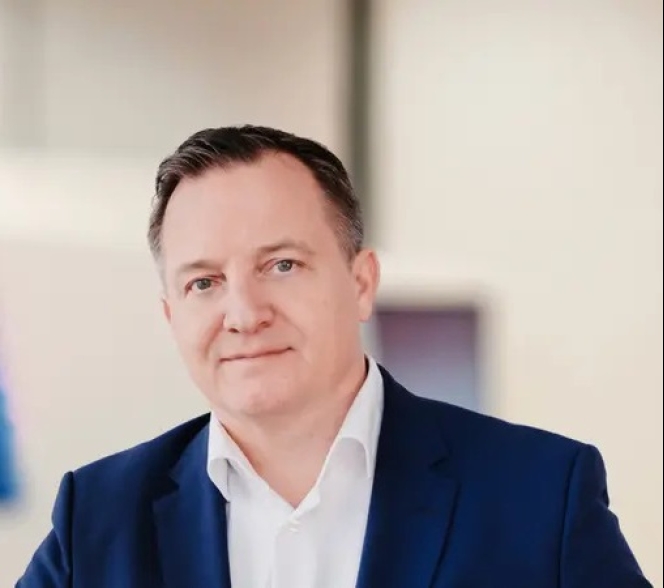
KraussMaffei Group is set to implement a leadership transition at its subsidiary, KraussMaffei Technologies, with a change at the board level. Jörg Stech, who has served as Chairman of the Board and global head of injection moulding, automation and additive manufacturing since 2023, will be departing on 31 March 2026 at his own request. He will be succeeded by Dirk Musser, the current Head of Group Transformation at the parent company, who has been appointed as the new Managing Director effective 1 April 2026. The leadership handover between Stech and Musser is already in progress, ensuring a seamless transition.
Stech’s tenure unfolded during a difficult economic period marked by financial losses and a contracting market. He responded with decisive measures aimed at margin enhancement and balance sheet improvement, which laid the groundwork for the company's long-term stability. Under his direction, the product lineup for injection moulding and automation was revitalised with the introduction of the LRXplus linear robot, the fully electric PX series and the MC7 control system, all launched in late 2025 alongside new artificial intelligence tools. He also launched a multi-year development initiative and pushed the company into new markets, such as aerospace and drone technology, by leveraging expertise in specialised processes like ColorForm. Through a focus on operational excellence, pricing discipline and capital efficiency, Stech guided the company to a significantly more resilient position compared to three years prior, despite the persistent downturn in injection moulding.
Musser brings to his new role extensive experience in transformation and finance. In his current capacity, he has already been closely involved with KraussMaffei Technologies, collaborating with its leadership to drive strategic initiatives and enhance operational performance. His qualifications include sharp analytical abilities, a strong grasp of industrial processes and a broad international perspective. An economist by training, Musser has accumulated over 20 years of leadership experience across various technology and industrial sectors. His background includes leading major transformation and turnaround projects at CRRC New Material Technologies, where he stabilised plant earnings in North America, as well as directing operational and financial restructurings during his time at Deloitte. He has also held roles with P&L responsibility, managing global supply chains and post-merger integrations at CRONIMET and has prior experience with automotive manufacturers including Daimler and Fujian Benz Automotive in China.
Alex Li, CEO, KraussMaffei Group, said, "Jörg Stech took on responsibility in a difficult situation, set clear priorities and launched decisive initiatives. The successful market launch of the LRXplus linear robot and the all-electric PX machine series, the consistent focus on profitability and the sustainable strengthening of our balance sheet are visible results of this work. We would like to express our sincere thanks to Jörg Stech for his leadership, integrity and team spirit. We value Dirk Musser as a leader who combines strategic clarity with operational excellence. In a short period of time, he has provided vital impetus for the transformation of the group and impresses with his analytical strength, decisiveness and deep understanding of our processes – not least through his successful collaboration with the managing directors of KraussMaffei Technologies. We are convinced that he will continue on this path with clarity and creative drive to successfully align KraussMaffei Technologies."
Stech said, "After many years in an environment full of technological, economic and geopolitical challenges, I look back with great gratitude on a time in which I was always surrounded by an exceptional workforce. Together, we achieved things that many initially thought were impossible. This cooperation, this willingness to push boundaries and create something new, was a joy for me. My special thanks go to all stakeholders in the company and, of course, to all employees. I leave with respect, gratitude and the conviction that this long-established company will continue to achieve great things in the future."
Musser said, "Together with my fellow managing directors Dr Frank Szimmat and Markus Bauer, I want to resolutely drive forward the further development of KraussMaffei Technologies. Our focus is on further expanding stability and performance and taking the necessary steps to successfully position the company in a dynamic market environment. I look forward to shaping this path together with our teams.”
Apollo Tyres CFO Gaurav Kumar Resigns After 22 Years
- By Sharad Matade
- August 07, 2026
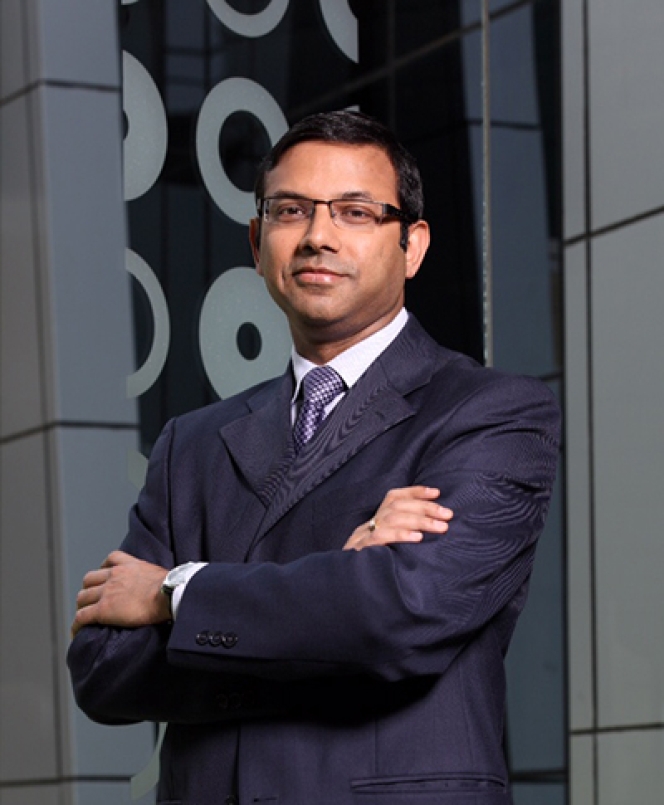
Gaurav Kumar has resigned as a whole-time director of Apollo Tyres, the Indian tyre manufacturer, after more than two decades with the company, though he will remain chief financial officer during a transition period.
The Gurugram-based company's board approved the resignation at a meeting on Thursday. Kumar steps down as a director, and consequently as a member of the risk management committee, with effect from the close of business the same day. The company said he had confirmed there was no material reason for his departure beyond that stated in his resignation letter.
Kumar will continue as chief financial officer for such period as is necessary to ensure a smooth transition, after which he will cease to be part of the company's senior management.
In his resignation letter, Kumar said: "It has been terrific to be part of the incredible journey at Apollo Tyres thus far. I have learned, and hopefully contributed in equal measure, and now seek to explore alternative and new challenges. I wish Apollo Tyres the very best for the journey ahead and will always be part of the Apollo Tyres Family." He added that he was grateful to Onkar Kanwar and Neeraj Kanwar for their support during his tenure of more than 22 years at the company.
Neeraj Kanwar, Vice-Chairman and Managing Director, said: "Gaurav deserves kudos for the critical role he has played in the growth of Apollo Tyres, both in India and overseas, in the last twenty years. While we do regret losing him, we are conscious of his personal aspirations and wish him the very best in his future endeavours."
The company said it was in the process of appointing a new chief financial officer.
Shrader Tire & Oil Expands Bob Feldbauer's Role To President And COO
- By TT News
- August 06, 2026

Shrader Tire & Oil (STO) has announced the appointment of Bob Feldbauer to the role of President, effective 1 August 2026. He will concurrently serve as Chief Operating Officer, while Joe Shrader maintains his position as Chief Executive Officer.
Feldbauer’s ascent follows his arrival at STO in early 2025 as Chief Operating Officer, a role built upon a robust industry resume. His prior engagements include a lengthy stint at the helm of Jack’s Tire & Oil in Utah and a substantial period with Michelin North America, where he handled sales and managerial assignments.
Under the new structure, Feldbauer’s purview widens to encompass both internal fleet management across 14 sites and outward-facing commercial development, including alliances and market expansion. With the founding family’s fourth generation now active within the firm, the succession plan reinforces the enduring principles established when the company opened in 1948.
Shrader said, “Bob has proven exactly what we hoped he would when we brought him on board – sharp operational instincts and a real drive to help this company grow. Putting him in the President seat lets us move faster on the growth plans we’ve been building towards.”
Feldbauer said, “It has been a fast year and a half at Shrader Tire & Oil. I have gained tremendous insight and valuable knowledge about our organisation’s structure, company culture and an understanding of our overall goals and commitments. One thing is clearly obvious – the commitment Shrader employees have to deliver the best customer experience each and every time. I appreciate this and look forward to supporting them as their President and COO.”
- Satish Sharma
- Balkrishna Industries Ltd.
- BKT
- Mumbai International Airport Limited
- Infectious Advertising
BKT Drives Beyond Off-Highway With Mumbai Airport Brand Showcase
- By TT News
- August 06, 2026
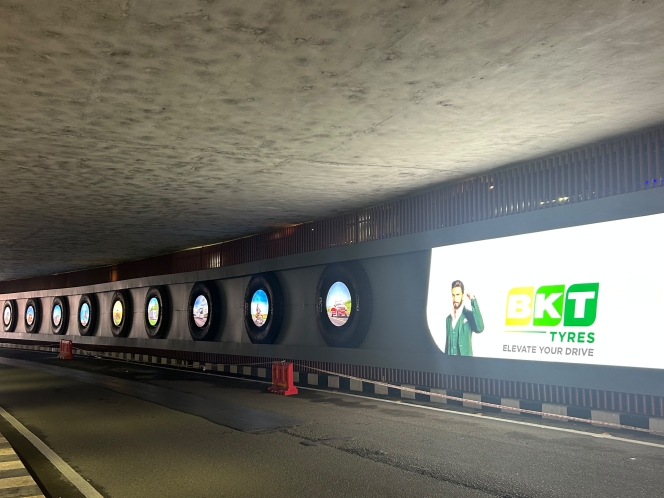
Balkrishna Industries Ltd. (BKT) has unveiled a brand installation at the Mumbai International Airport Limited (MIAL) T2 Elevated Road Underpass as the tyre manufacturer seeks to broaden its positioning beyond its traditional Off-Highway business and strengthen awareness of its expanding on-highway portfolio in India.
The 2,000 sq. ft. installation, inspired by the company's "Elevate Your Drive" philosophy, highlights BKT's portfolio across agriculture, construction, mining, earthmoving, commercial vehicles, two-wheelers and passenger vehicles. The activation comes as the company expands its presence in India's two-wheeler and commercial vehicle tyre segments.
Designed to move beyond conventional outdoor advertising, the installation features nine illuminated tyre-shaped displays, each 8 feet in diameter, using the tyre itself as the central storytelling element. It opens with a large-format visual featuring BKT brand ambassador Ranveer Singh, followed by a sequence of displays illustrating the company's expanding mobility portfolio. The installation will remain at the airport for 24 months.
Mumbai International Airport handled a record 55.5 million passengers in 2025, providing the company with sustained visibility among business travellers and consumers.
"For BKT, innovation goes beyond product engineering; it extends to how we tell our story. This installation reflects a simple yet powerful idea: our tyre itself becomes the medium through which travellers experience the breadth of BKT's world. As we expand our presence across India's mobility landscape, it is important that consumers see BKT not through a single product category, but as a brand that supports movement across diverse terrains, applications and journeys. Mumbai Airport provides an ideal stage for us to express that transformation in a memorable and distinctive way," said Satish Sharma, Senior President & Director – Business Development and Strategy, BKT.
The installation was conceptualised by Infectious Advertising and uses immersive design, sequential storytelling and its airport location to showcase the company's wider mobility portfolio. According to BKT, the activation is intended to connect its established Off-Highway business with its growing presence in India's on-highway mobility market.
Epsilon Carbon Reports 10% Reduction In Upstream Logistics Emissions In FY2026
- By TT News
- August 05, 2026
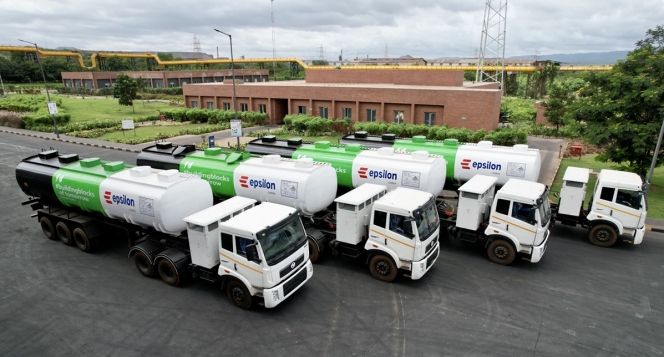
Mumbai-headquartered leading carbon black manufacturer Epsilon Carbon has reported a 10 percent reduction in carbon dioxide equivalent emissions across its upstream transportation operations during FY2025–26. The reduction was achieved through the deployment of an electric and liquefied natural gas freight fleet.
An independent third party certified the emissions data. The reductions achieved in transport logistics equate to carbon absorption figures associated with approximately 29,000 trees. The verified figures allow supply chain partners to include these reductions within Scope 3 emissions reporting frameworks and environmental disclosures.
Gaurav Mathur, Chief Executive Officer, Epsilon Carbon, said, “Decarbonising logistics is central to our climate strategy. What makes this milestone meaningful is that the results are independently verified with a 10 percent reduction in CO2e emissions within the upstream transportation category over a single financial year, driven by the adoption of electric and LNG fleets. These carbon reductions strengthen our own sustainability disclosures and those of our customers, and we intend to scale this model across our supply chain.”
Following Phase 1 operations, Epsilon Carbon intends to expand the number of electric and LNG vehicles in its transport fleet during FY 2026–27 to scale low-carbon freight transport across its supply chain network.
Comments (0)
ADD COMMENT